
GECs
Soaps – the violence within

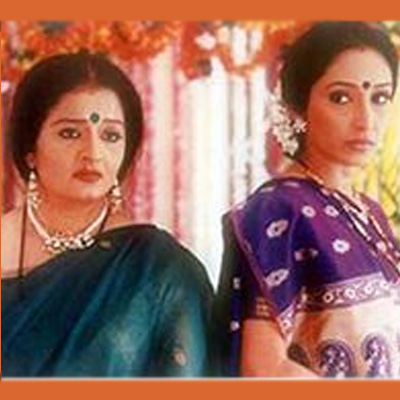
Violence, subtle and physical, has permeated the soaps of the small screen, according to a recent study.
In a monitoring study that spanned 30 episodes of various soaps on Star Plus, Sony and Zee in June 2002, the Delhi based Centre for Advocacy and Research found that there is a high presence of physical, verbal and psychological violence on screen. Most of this is directed at women. Marital discord, male female conflicts, male aggression and family honour are the reasons for the high quantity of violent acts on television, notes the study.
During the seven day study, the CFAR viewers‘ panel also looked at regional language channels like Alpha Bengali, Alpha Gujarati, Asianet and Sun TV. In the monitored sample, the panel noted 10 scenes depicting domestic violence in which women were the victims and men the aggressors. The nature/act of violence was physical or verbal. However, the psychological impact of the violence was to a major extent borne by the female victims, the study avers.
 Whether marital discord, anger and frustration of the man in his professional life, a misunderstanding or the honour of the family, the women were always at the receiving end, notes the study. The relationship between the aggressor and the victim is seen as mostly marital or through marriage, but in a few instances, even a brother was an aggressor.
The study also finds that women are often shown submitting to maltreatment and lacking the conviction to defend themselves. The ‘family court’, found the study, is a common occurrence. The woman is ‘accused’, judged and convicted by this ‘family court’ which consists of the woman’s in-laws. She has no recourse to any other agent, legal or otherwise.
Although bigamy is illegal in India, it is often depicted – with the onus on the wives. It is dramatised in a sensational and voyeuristic manner, without any respect for or mention of the law.
 In many instances, male and female characters are forced into marriage against their wishes. This results in domestic violence or extra-marital affairs. As upholders of the family honour, women are always expected to place the family ahead of their personal aspirations, claims the study.
Most of the viewers CFAR spoke to have said that a serial need not be violent in a bloody or in a destructive way without reason. Conflicts should be depicted in a ‘reasonable’ way and appropriate to the situation and not just to heighten the suspense and hook viewers. Violent situations are usually a way of creating excitement and expectations, viewers said.
 Citing examples, the study mentions Kasauti Zindagi Kay (Star Plus), in which Shivani, just married to Anupam, is slapped by him when she discovers a fraud he had committed. The new bride is shown howling when her brother visits her. The brother takes up the matter with her husband and her in-laws. But Shivani‘s in-laws don‘t intervene. Shivani folds her hands and pleads with her brother to leave.
The CFAR study raises the point that while the wife is mistreated by her husband, she is made to apologise instead of being consoled or the husband being chastised for his behaviour. Such scenes show women as submissive to any maltreatment and lacking in the ability to stand up for their rights, the study says.
 In another episode of Kasauti Zindagi Kay, Kajol is threatened and emotionally blackmailed by her boyfriend as well as her family. The parents and her elder brother are against her alliance with the boy. When the elder brother catches her red-handed with her boy friend, he pulls her away angrily and takes her to home. She is brought to the ‘family court‘ where the brother screams at her and threatens her with dire consequences unless she behaves properly.
Citing other similar cases, CFAR raises another issue – The ‘family court‘ is used in many serials like a “court martial”. The ‘accused‘ is judged and convicted by this ‘family court‘ which consists of her in-laws, without recourse to any other agent, legal or otherwise. Should such family courts be held and given the authority to judge an individual who has no one to fall back upon?
In Sanjjhi (Zee TV), Amar Singh uses physical and verbal means to threaten both his wives and their families when the first one files a suit of bigamy against him while the second testifies against him. He taunts and threatens his first wife, Kanak, by reminding her of her inability to bear a child. CFAR in its study asks whether such violations of the law be depicted in such a dramatic, sensational and voyeuristic manner, without any respect or mention of the law, which clearly prohibits bigamy?
 In Hubahu (Sony TV), Aditi‘s husband roughly pushes her towards the door and asks her to leave the house because he feels that she is not allowing him physical intimacy. The study points out that though the serials did not project a lot of physical violence against women, there are many instances of extreme and repeated mental pressure, threats, screaming and shouting and anger directed towards women. Women were shown constantly under a lot of stress and anxiety, the panel felt.
Tradition and societal pressures act as an aggressor in their own way, points out the study.
Anamika in Kahaani Ghar Ghar Ki is shown to undergo tremendous mental and societal pressure in trying to decide between her role as a wife (which is to protect her husband at any cost) or to side with the truth (and thereby reveal his crime). At no point does any family member counsel her. In Kkusum, Kasauti Zindagi Kay, Tu Kahe Agar, the three leading women are shown to be under constant stress and mental pressure owing to either their husband‘s affair with other women or due to some familial problem. In Bhabhi, Tilak and Pushpa pretend she is his wife. In one scene, he pushes her towards the wall and warns her never to tease him. 
In Kasauti Zindagi Kay, Kamolika is under constant physiological stress because she suspects that her husband, Anurag, is still in love with the girl he wanted to marry in the first place.
In all these instances and in other serials, the wife is placed under tremendous mental duress and even abuse because marriage is often founded on a misunderstanding or for some reason that is unacceptable to the man. Often her husband is in love with another woman and marries her under pressure from his family. What is supposed to be one of the happiest milestones in a woman‘s life, becomes a source of unhappiness and uncertainty and of future conflicts between the couple from the very first day of their marriage and justifies the husband‘s ill-treatment of the wife, the study notes.
In Choti Maa..ek anokha bandhan (Zee Tv), Kasauti Zindagi Kay (Star Plus), the boyfriends of the female characters physically, verbally and psychologically carry out violence against them. Koyna in Choti Maa becomes the victim to physical abuse by her boyfriend who takes her to a pimp.
In another example, an apparently progressive character who takes up cudgels for his sister in law against his own brother is also shown taking recourse in brute force. In Kahaani Ghar Ghar Ki (Star Plus), Om uses both verbal and psychological pressure along with his tough body language to force Anamika to reveal the truth about her husband raping a blind girl. She is reduced to hysteria in her pregnant state, and finally, breaks down. When she testifies in court, her husband Devan starts screaming at her. She cries and walks out of the courtroom all by herself. The CFAR study raises the pertinent issue of whether a family member be given the license to continuously pressurise or “torture” a woman on the justification that the ‘truth’ has to be established.
Impacts –
 Several female viewers interviewed by CFAR observed that many of the so-called safe family serials, which hook the viewers with very identifiable situations and characters, have their share of problems. Not only is the depiction of men and women lopsided or one-dimensional, it is highly exaggerated, unrealistic and inconsistent, the study claims. Besides, some female characters are portrayed in an extremely unconvincing manner, especially when portraying a scheming, unscrupulous and dominating character. Men are portrayed in a highly negative manner too and such negative behaviour is often glorified.
In many of these serials, extramarital affairs, bigamous relationships are shown as a matter of routine, and in some cases extremely casually. This gives children the impression that these are normal, acceptable or even desirable situations and expected adult behaviour, says the study. Mothers also found adverse impact on children’s lifestyles and their quality of life, and felt that children are getting increasingly prone to aggression. They constantly demand attention, exhibit severe mood swings and in some cases are prone to addictive habits. Finally, they behave in a highly precocious fashion, acting and behaving much older than they actually are, adopting adult postures and mannerisms. In most Indian homes, the mothers are at the receiving end of such behaviour.
This presumes greater importance because research studies show that most of the children are hooked to adult programming. According to CFAR’s recent five-city study on Media Habits of Children, it was found that 50 per cent of the most favourite serials mentioned by the children in the age group of 6-12 years fell in the category of adult programming. Delhi topped the list of children viewing family drama with Shaktimaan (Doordarshan) the only exception.
The study says that most soaps are exploiting reality to justify domestic violence – not normally condemned. Therefore, shown as ‘normal‘ within a family. The TV family is thus one in which violence is a day to day occurrence. No effort is made to correct this highly offensive and prejudicial behaviour. This justifies violence in real life and desensitises us to it and a future generation who will tend to believe that such personal liberties and violations are permissible in marriage and personal relationships, the study notes.
Legal steps are seldom shown, the study notes. “Family courts” are held instead, in which might is the norm. Violations of individuals and their legal rights are openly shown. They allow a whole host of individual violations as if it is acceptable behaviour. People, including children, are shown eavesdropping, violating people’s privacy, inflicting physical and verbal violence, taking recourse to hate-filled speeches etc, as if it is their individual prerogative to abuse as long as the person you are abusing is within the family, the study observed.
Finally, says the study, it gives men the power to resort to violent means to control their wives and teaches wives to submit to the violence in the larger interests of the family, which is at the core of these serials.
The one week sample included –
| Serial | Number of episodes | |
| Kahaani Ghar Ghar Ki | 5 | |
| Kasauti Zindagi Kay | 4 | |
| Bhabhi | 3 | |
| Kkusum | 4 | |
| Saanjhi | 1 | |
| Kitne Kool Hai Hum | 1 | |
| Choti Maa | 4 | |
| Tu Kahe Agar | 1 | |
| Kyunki Saas Bhi Kabhi Bahu Thi | 4 | |
| Kuntee | 2 | |
| Hubahu | 1 |










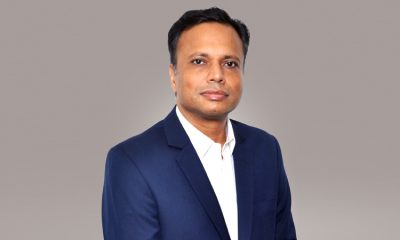

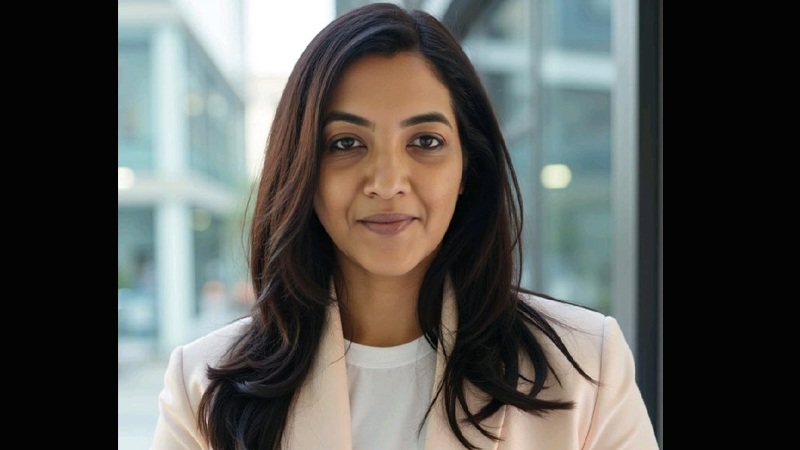
MUMBAI: Zee Entertainment Enterprises Limited has appointed Aparna Ramachandran as EVP and head of network digital, signalling a sharper focus on strengthening its digital and streaming ecosystem.
Ramachandran joins Zee from Balaji Telefilms, where she served as head of digital originals, leading content strategy and production for the company’s digital platforms. She announced the move on LinkedIn, marking a new chapter in her career spanning more than 15 years across media, entertainment and technology.
Her professional journey includes senior roles at Viacom18 Media, Viu, FremantleMedia, Miditech, BigSynergy, BBC Worldwide, CNBC-TV18 and Bloomberg UTV. She began her career in 2005 as a software engineer at Infosys before transitioning into media and digital content leadership.
With experience across streaming media, broadcast television, content development, digital strategy, project management and video production, Ramachandran is expected to play a key role in shaping Zee’s network-wide digital growth and content innovation.
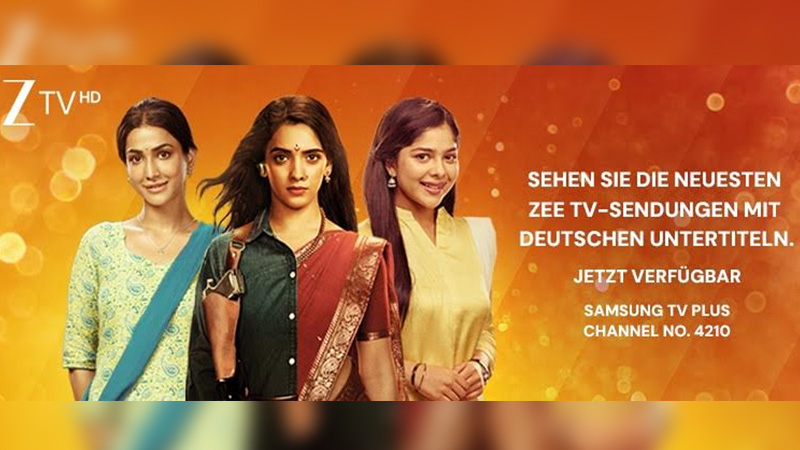
London: Zee Entertainment has launched its flagship Zee TV as a live FAST channel on Samsung TV Plus across Germany, Austria and Switzerland, marking a first for South Asian television in Europe with round-the-clock live German subtitles.
The move takes Zee TV beyond its core diaspora audience and into the German-speaking mainstream, offering dramas, reality shows and family entertainment without subscriptions or language barriers. For FAST platforms, it sets a new benchmark in accessibility and scale.
Amit Goenka, president, international and digital businesses at Zee Entertainment, said the launch marked a turning point in the company’s global strategy.
“Zee TV Germany is a flagship launch and a defining moment in our journey to make entertainment truly borderless. By going live on Samsung TV Plus with 24/7 German subtitles, we are breaking language barriers and setting a new international benchmark for FAST streaming,” he said, adding that the partnership reflects Zee’s ambition to lead the FAST revolution through innovation and technology.
The rollout builds on the strong regional presence of Zee One and Zee5, both of which have cultivated loyal audiences across the DACH markets. The live FAST model now closes long-standing access gaps, particularly for younger diaspora viewers and first-time German-speaking audiences.
Samsung TV Plus said the partnership deepens its content portfolio in the region. Benedict Frey, country lead DACH and Benelux at Samsung TV Plus, said the addition strengthens its South Asian offering while widening appeal.
“Launching flagship Zee TV on Samsung TV Plus brings even more premium South Asian entertainment to our customers. Making this content available with live German subtitles is a meaningful step in serving diverse audiences and enriching the viewing experience,” he said.
Samsung TV Plus is Samsung’s free ad-supported streaming service, offering hundreds of live channels and on-demand titles across Samsung TVs, Galaxy devices and smart monitors.
Zee already commands a strong digital following across Germany, Austria and Switzerland, with social platforms engaging hundreds of thousands of viewers. The live FAST launch is expected to amplify reach and drive appointment viewing at scale.
Zee TV is now available exclusively on Samsung TV Plus in Germany on channel 4210. With this launch, Zee TV Germany becomes the group’s ninth channel in Europe.
The signal is clear: FAST has gone mainstream—and Zee has arrived early, translated and ready to scale.

MUMBAI: Sri Adhikari Brothers Television Network has formally adopted a new corporate identity, rechristening itself Aqylon Nexus Limited after receiving clearance from the ministry of corporate affairs.
The company has informed the Bombay Stock Exchange that the MCA has approved the change of name, with effect from January 23, 2026. The update was disclosed in compliance with Regulation 30 of the Securities and Exchange Board of India’s Listing Obligations and Disclosure Requirements Regulations, 2015.
Confirming the approval, the company said the ministry had cleared the transition from Sri Adhikari Brothers Television Network Limited to Aqylon Nexus Limited following the necessary regulatory process.
Aqylon Nexus said it has begun the formal exercise of replacing the old name across statutory filings and regulatory records. The broadcaster added that it is coordinating with relevant authorities and departments to complete the transition.
Under Section 12 of the Companies Act, 2013, the MCA has directed the company to continue displaying its former name alongside the new one for a period of two years.
Founded in 1994 and based in Mumbai, the company has been a long-standing presence in India’s television and content ecosystem. The rebrand reflects a repositioning effort as the media and entertainment sector undergoes rapid consolidation and structural change.
The legacy name remains on paper—for now. The business, however, is clearly turning the page.

Mukesh Ambani, Larry Fink come together for CNBC-TV18 exclusive

Nielsen launches co-viewing pilot to sharpen TV measurement

Netflix celebrates a decade in India with Shah Rukh Khan-narrated tribute film

Delhivery chairman Deepak Kapoor, independent director Saugata Gupta quit board

Meta appoints Anuvrat Rao as APAC head of commerce partnerships

Brnd.me enters Europe as haircare brands power global expansion

TechnoSport taps quick commerce with launch on Slikk’s 60-minute platform

These ’90s fashion trends are making a comeback in 2017
The final 6 ‘Game of Thrones’ episodes might feel like a full season
According to Dior Couture, this taboo fashion accessory is back
The old and New Edition cast comes together to perform
Phillies’ Aaron Altherr makes mind-boggling barehanded play
Uber and Lyft are finally available in all of New York State
Disney’s live-action Aladdin finally finds its stars
Mukesh Ambani, Larry Fink come together for CNBC-TV18 exclusive
Nielsen launches co-viewing pilot to sharpen TV measurement
Netflix celebrates a decade in India with Shah Rukh Khan-narrated tribute film
Delhivery chairman Deepak Kapoor, independent director Saugata Gupta quit board
Meta appoints Anuvrat Rao as APAC head of commerce partnerships
Brnd.me enters Europe as haircare brands power global expansion
TechnoSport taps quick commerce with launch on Slikk’s 60-minute platform
-
 News Broadcasting3 days ago
Mukesh Ambani, Larry Fink come together for CNBC-TV18 exclusive
-
 iWorld6 days ago
Netflix celebrates a decade in India with Shah Rukh Khan-narrated tribute film
-
 MAM3 months ago
HoABL soars high with dazzling Nagpur sebut
-
 iWorld12 months ago
BSNL rings in a revival with Rs 4,969 crore revenue
-
 I&B Ministry3 months ago
India steps up fight against digital piracy
-
 iWorld3 months ago
Tips Music turns up the heat with Tamil party anthem Mayangiren
-
 MAM3 days ago
Nielsen launches co-viewing pilot to sharpen TV measurement
-
 News Broadcasting2 months ago
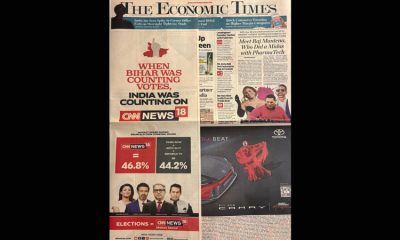
CNN-News18 dominates Bihar election coverage with record viewership

