
Hollywood
Top book adaptations to watch out for in 2026

MUMBAI: As the new year starts, it inevitably heralds the dawn of questions like “Have you seen the new..?”
Whether it’s a trailer dropped overnight, a casting announcement that sets social media buzzing, or a beloved book finally making its way to the screen, the year ahead is already brimming with anticipation.
We’re here to keep you as informed and as excited as possible. From seasoned professionals to first-time authors, here is a rundown of our picks for this year’s book adaptations. We’ve got some reliable box office hits in the charts, and are taking a chance on some newbies. Both domestic and international, we are offering you a selection of films spanning sci-fi to thriller, fantasy to romcom.
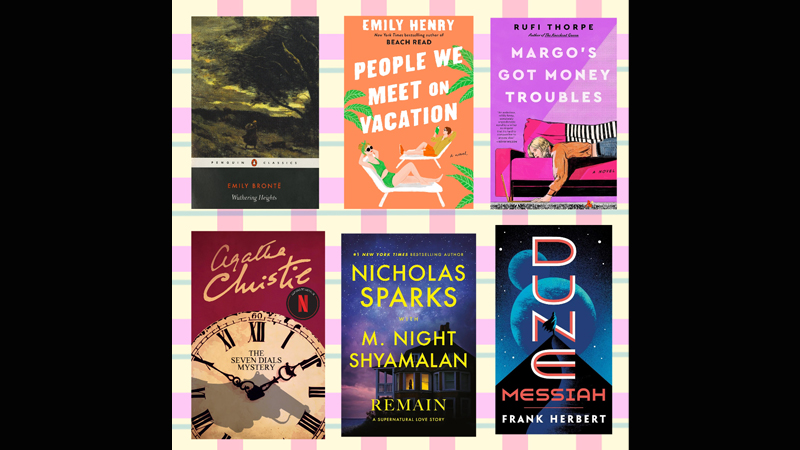
Wuthering Heights

Emily Brontë’s storm-lashed lovers are heading back to the screen—this time through the sharp, unsettling lens of Emerald Fennell. The filmmaker, known for Promising Young Woman and Saltburn, turns to Wuthering Heights for her third feature, reworking the 1847 gothic classic with her signature blend of obsession, cruelty and desire.
At the heart of the film is the feral bond between Heathcliff and Catherine Earnshaw: a love that is intoxicating, corrosive and impossible to escape. Margot Robbie and Jacob Elordi lead the cast, joined by Alison Oliver, Owen Cooper and Hong Chau.
Adding a modern jolt to the windswept moors, the film’s score will feature original music by Charli XCX, promising a soundtrack as disruptive and emotionally charged as the relationship it showcases. Fennell’s Wuthering Heights looks set to strip the story of nostalgia and deliver Brontë’s tragedy as something raw, contemporary and deeply unsettling.
Ramayana

One of Hinduism’s most revered epics is being reimagined on an epic cinematic scale. Ramayana unfolds as the tale of a just prince and his devoted bride, whose wedding is followed not by celebration, but by exile — a banishment that sets in motion a battle between righteousness and ambition, love and loss, mortals and gods.
Ranbir Kapoor steps into the role of Ram, while Sai Pallavi’s Sita anchors the film with grace. Opposing them is Yash’s Ravana: powerful, charismatic and terrifyingly human. The world around them is brought to life by Sunny Deol as the mighty Hanuman, Ravi Dubey as Lakshman, Lara Dutta as the conflicted Kaikeyi and Arun Govil, returning to the epic as King Dashrath. Amitabh Bachchan appears as the noble Jatayu, with Mohit Raina making a divine turn as Lord Shiva.
Nitesh Tiwari directs the ambitious adaptation, with legend Hans Zimmer composing the score. Early footage from the teaser has generated strong buzz, establishing Ramayana as a big-screen retelling designed for modern audiences while staying rooted in the mythology’s emotional and moral stakes.
Sense and Sensibility

Three decades after Emma Thompson and Ang Lee’s celebrated adaptation, Jane Austen’s Sense and Sensibility is heading back to cinemas with a new interpretation of the 1811 classic. The upcoming film features Daisy Edgar-Jones, Esmé Creed-Miles, Caitríona Balfe, Frank Dillane, Herbert Nordrum and George MacKay, and is set for release on September 25.
The story revisits the fortunes of the Dashwood sisters, whose lives are upended when their father’s death leaves them virtually destitute, their inheritance absorbed by a half-brother and his wife. As the family is forced to start anew, Elinor (Edgar-Jones) approaches love and loss with restraint and reason, while the impulsive Marianne (Creed-Miles) embraces emotion with abandon, determined to live — and love — on her own, unapologetically romantic terms.
People We Meet On Vacation

Tom Blyth and Emily Bader are packing their bags for a romantic reset. The duo will headline the big-screen adaptation of People We Meet on Vacation, one of Emily Henry’s most beloved novels, bringing its slow-burn chemistry and emotional tension to cinemas.
Bader, fresh off My Lady Jane, steps into the role of Poppy: restless, optimistic and quietly unhappy, while Blyth, seen in The Hunger Games: The Ballad of Songbirds & Snakes, plays Alex, her introverted, steady counterweight. For years, the pair shared a tradition: one week-long holiday every summer. Then something broke. Two years passed without a word.
The feature is directed by Brett Haley, with a screenplay by Yulin Kuang alongside Amos Vernon and Nunzio Randazzo. Production comes from Temple Hill’s Marty Bowen, Wyck Godfrey and Isaac Klausner.
Part romance, part second-chance drama, People We Meet on Vacation promises sun-soaked locations, unresolved feelings and the kind of emotional honesty Emily Henry readers have been waiting to see on screen.
Verity

Colleen Hoover’s most unsettling novel is headed to the screen with a starry trio and a thick sense of menace. Verity will see Dakota Johnson step into the role of Lowen Ashleigh, a struggling writer drawn into the eerie world of a bestselling literary dynasty after being hired to ghostwrite novels for Verity Crawford, played by Anne Hathaway. Josh Hartnett stars as Jeremy Crawford, Verity’s husband, whose offer promises salvation and something far darker.
The film is directed by Michael Showalter, with a screenplay by Nick Antosca, building on earlier drafts by Hillary Seitz, Angela LaManna, and writing duo Will Honley and April Maguire. Hathaway, Hoover and Showalter are among the producers, alongside Antosca, Alex Hedlund, Stacey Sher and Jordana Mollick.
Verity continues Hollywood’s rush for Hoover’s page-turners, following the commercial success of It Ends With Us and the forthcoming Regretting You, cementing the author’s status as one of the industry’s most bankable thriller-romance exports.
The Odyssey

Christopher Nolan is heading back to the myths, reworking Homer’s The Odyssey into a vast, time-bending cinematic epic. Fresh off the triumph of Oppenheimer, the filmmaker turns to ancient Greece, anchoring the saga with Matt Damon as Odysseus, the war-scarred king condemned to a decade-long struggle to find his way home after the Trojan War.
The ensemble is suitably mythic. Tom Holland, Zendaya, Lupita Nyong’o, Robert Pattinson, Charlize Theron, Jon Bernthal and Mia Goth orbit Damon’s wandering hero, populating a world of gods, monsters and moral tests.
Margo’s Got Money Troubles

Apple TV plus is turning Rufi Thorpe’s buzzy bestseller into an eight-part drama powered by star wattage and sharp provocation. Elle Fanning leads as a young mother cornered by money troubles, who takes an unexpected detour into OnlyFans—guided, improbably, by her estranged father’s lessons from the world of professional wrestling. Michelle Pfeiffer headlines alongside her, with Nick Offerman and Thaddea Graham rounding out the ensemble.
The series is steered by David E. Kelley, the multi-Emmy winner behind some of television’s most compulsive dramas, who serves as showrunner and writer. Backed by A24, the project boasts heavyweight producers including Nicole Kidman, also an executive producer, along with Elle and Dakota Fanning, Per Saari, and Thorpe herself— promising a slick, daring adaptation that leans into ambition, reinvention and modern survival.
Project Hail Mary

Amazon MGM Studios is blasting Andy Weir’s cerebral sci-fi bestseller Project Hail Mary onto the big screen, with Ryan Gosling taking the cosmic leap. Gosling stars as Ryland Grace, a schoolteacher who wakes up alone on a spacecraft, his past erased and his purpose a mystery. As his memories slowly return, so does the terrifying truth: he is humanity’s last shot at averting an extinction-level catastrophe.
Directed by Phil Lord and Christopher Miller, the film pairs high-concept science with wit and emotional punch. Grace’s lonely mission takes an unexpected turn when he encounters an alien with a crisis of its own, turning survival into an interspecies collaboration. Sandra Hüller and Milana Vayntrub co-star, with Drew Goddard adapting the screenplay. The project marks Lord and Miller’s long-awaited return to the director’s chair since 22 Jump Street, promising a smart, high-energy take on space-bound suspense.
Seven Dials

Netflix is returning to Agatha Christie’s world of intrigue with a fresh three-part limited series, reimagined by Broadchurch creator and former Doctor Who showrunner Chris Chibnall. At the centre of the mystery is Mia McKenna-Bruce, who steps into the role of Lady Eileen “Bundle” Brent: an unexpectedly sharp and relentlessly curious young woman who finds herself drawn into a deadly puzzle.
Set against the opulent backdrop of a high-society country house gathering, what begins as a seemingly harmless prank spirals into something far more sinister.
The series boasts an ensemble cast including Helena Bonham Carter, Martin Freeman, Corey Mylchreest, Ed Bluemel and Nabhaan Rizwan. Chibnall serves as executive producer through his banner Imaginary Friends, alongside Suzanne Mackie (The Crown), Chris Sussman (Good Omens) and director Chris Sweeney, who helms all three episodes.
Dune Messiah

With the first two films bringing Frank Herbert’s epic Dune to the big screen, the franchise is now turning its focus to the author’s 1969 sequel, Dune Messiah. The upcoming third instalment will draw directly from the second novel, expanding the saga beyond Paul Atreides’ rise to power.
Set in the aftermath of Dune: Part Two, Dune: Part Three finds Paul (Timothée Chalamet) grappling with the consequences of his rule — attempting to hold the galaxy together while facing visions of mass destruction, seeking justice for his father’s murder, and navigating the emotional fault lines between Princess Irulan (Florence Pugh) and Chani (Zendaya). The film is currently slated for a December 18 release.
Remain

It sounds like an unlikely pairing, but it’s very real: filmmaker M. Night Shyamalan and bestselling romance novelist Nicholas Sparks together wrote Remain, a supernatural romance novel released earlier this year.
The story follows Tate Donovan, an architect seeking refuge on the windswept shores of Cape Cod after his mother’s death. What begins as a quiet stay at a secluded bed-and-breakfast turns transformative when he strikes up a connection with Wren, an enigmatic local who seems to know more than she lets on. Love, grief and healing take centre stage — until the narrative tilts, and the shadows beneath the romance begin to surface in unmistakably Shyamalan fashion.
That tonal tightrope will carry over to the screen when Remain arrives in cinemas on October 23. Jake Gyllenhaal and Phoebe Dynevor lead the film as Tate and Wren, anchoring a project that promises equal parts heartache, intimacy and unsettling surprise.
The Love Hypothesis

At this point on the watchlist, we’re entering speculative territory. These adaptations don’t yet have locked release dates, but all signs suggest they’ll land sometime in 2026.
Leading the pack is The Love Hypothesis, Ali Hazelwood’s wildly popular 2021 novel that began life as a Star Wars fan fiction before snowballing into a phenomenon. Set in the harried world of academia, the story follows Olive Smith, a doctoral student whose carefully curated life implodes into a fake relationship with the intimidating—and inconveniently attractive—Dr Adam Carlsen, a senior faculty member at her university. What starts as a ruse, of course, refuses to stay that way.
The screen adaptation casts Lili Reinhart as Olive opposite Tom Bateman as Adam, a pairing that has already sent the internet into overdrive. Reinhart’s behind-the-scenes TikToks from the set have only fuelled the frenzy, turning a much-loved romcom into one of the most keenly anticipated book-to-film adaptations on the horizon.



Hollywood
A memoir of Moira: Catherine O’Hara passes away at 71, leaving behind a legacy of laughter
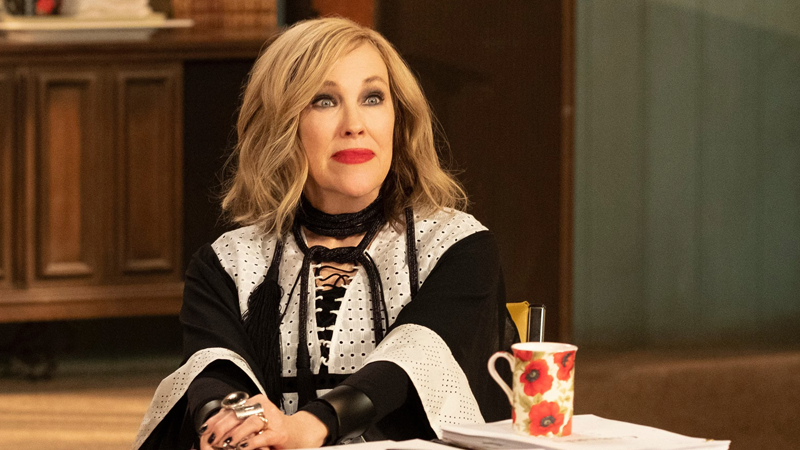
LOS ANGELES: The world of stage and screen feels a little quieter, and certainly less colourful, following the news that Catherine O’Hara has passed away at the age of 71. A performer of singular wit and boundless imagination, she died on 30 January 2026 at her home in Los Angeles after a brief illness.
While the official cause of death has not yet been disclosed, O’Hara’s long-standing health condition had been publicly known. She was born with a rare congenital condition called dextrocardia with situs inversus, in which the heart is positioned on the right side of the chest and other major organs are arranged in a mirror-image layout. Though the condition typically does not cause serious medical complications or symptoms, it remained a notable aspect of her medical history.
Her departure marks the end of an era for comedy, leaving behind a legacy that transformed the awkward, the eccentric, and the absurd into something profoundly human.
The world knew Catherine O’ Hara by many names: Moira Rose, the wildly dramatic and delightfully out-of-touch matriarch of the Rose family; Kate McCallister, the forgetful yet fiercely loving mother who crossed continents for her child; Delia Deetz, Tim Burton’s tragically stepmother chic with a flair for the bizarre; and Sally, forlorn yet quietly hopeful.

O’Hara’s characters were never perfect; they were messy, flawed, painfully human, and deeply empathetic. Through them, she showed us that motherhood doesn’t always look warm and doting, but it is steadfast in moments that matter most. She reminded us that it’s okay to be unhinged, unapologetically imperfect, and still accountable because that’s what makes people real.

Though comedy was her natural home, O’Hara possessed remarkable range. From her haunting turn as a grieving therapist in Season 2 of HBO’s dystopian drama The Last of Us to breathing life into a host of wonderfully strange characters across Tim Burton’s cinematic universe, she consistently left her mark.
From Toronto to the pantheon of greats
Born in Toronto in 1954, O’Hara was the sixth of seven children in a family where humour was not just a pastime but a necessity. Her career began in the fertile ground of the Second City improvisational troupe, where she worked alongside future icons such as Eugene Levy and John Candy. It was during the SCTV years that she established herself as a chameleonic force, creating characters that felt both impossibly strange and startlingly real. Her ability to inhabit a role entirely, from the frantic energy of Lola Heatherton to her razor-sharp celebrity impressions, set a new standard for ensemble comedy.
A career of iconic matriarchs
Her characters didn’t coddle. They stumbled into the room, said something wildly inappropriate, and somehow, against all odds, made you feel seen. In their chaos lived a quiet, stubborn devotion that felt more honest than any picture-perfect portrayal ever could. O’Hara’s characters taught us that being flawed wasn’t a flaw at all, it was the most human thing a person could be. Messy, unhinged, and empathetic: that was her signature.
While many actors spend a lifetime searching for one definitive role, O’Hara seemed to find them every decade. In 1988, she gave us the quintessential avant-garde snob Delia Deetz in Tim Burton’s Beetlejuice, a performance she revisited with characteristic panache in the 2024 sequel. To millions of families around the globe, however, she was Kate McCallister in Home Alone. She brought a genuine, frantic heart to the role of a mother desperately trying to reach her son, proving that she could anchor a slapstick blockbuster with real emotional weight.

Her collaborative work with Christopher Guest in mockumentaries like Best in Show and A Mighty Wind further showcased her genius. As Cookie Fleck or Mickey Crabbe, she navigated the thin line between caricature and character study, often finding the soul in the most ridiculous of circumstances.

She even brought her sharp wit to Seth Rogen’s biting Hollywood satire, playing Patty Leigh: a cutthroat studio executive unceremoniously ousted by her own underling. It was O’Hara doing what she does best: finding the humanity in power, and the absurdity in its collapse.

The Moira Rose renaissance
In the final chapter of her life, O’Hara experienced a cultural coronation that few performers enjoy so late in their careers. As Moira Rose in Schitt’s Creek, she created a masterpiece of television history. With her incomprehensible accents, a wardrobe of architectural wigs, and a vocabulary that required a dictionary to navigate, Moira became an instant icon. Yet beneath the feathers and the artifice, O’Hara found a woman who loved her family fiercely. Her sweep of the major acting awards in 2020 was a fitting tribute to a woman who had been the actor’s actor for nearly fifty years.

Even in her final year, she remained at the top of her craft, earning Emmy nominations for her work in The Last of Us and The Studio, proving that her creative fire had never dimmed.

A person of grace and humility
Beyond the wigs and the costumes, Catherine O’Hara was known as a woman of immense warmth and professional generosity. She remained married to production designer Bo Welch for over thirty years, a rarity in the industry, and raised two sons, Matthew and Luke, far from the glare of the tabloids. She was a collaborator who elevated every scene she was in, often stepping back to let others shine, though her presence was always the magnetic north of any production.

Her friend and lifelong collaborator Eugene Levy once remarked that she was the most naturally gifted person he had ever met. It was a sentiment echoed by the global outpouring of grief from colleagues and fans alike, who saw in her a rare kind of light, one that found joy in the weird and the dignity in the difference.

The final bow
Catherine O’Hara leaves behind a body of work that will be studied, quoted, and cherished for as long as people need a reason to laugh. She taught us that it is perfectly fine to be a little bit “off,” that family is found in the strangest of places, and that life, no matter how tragic or mundane, is always better with a touch of the theatrical.
The wigs have been boxed away and the lights have dimmed, but the laughter she sparked remains a permanent part of the atmosphere.
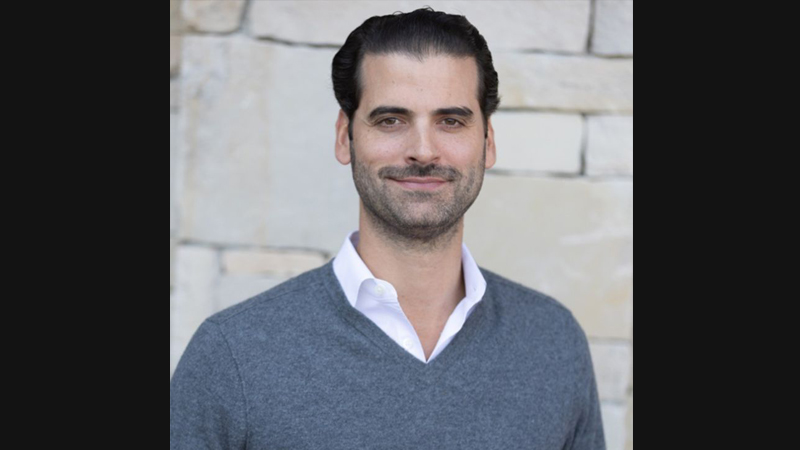
MUMBAI: From balance sheets to big screens, Paramount has made a decisive financial move. Paramount, a Skydance Corporation company, has appointed Dennis K. Cinelli as its chief financial officer, effective January 15, 2026, marking a significant leadership shift at the media giant.
Cinelli, who steps down from Paramount’s board to take on the executive role, brings heavyweight credentials from the technology and AI worlds. He previously played a central role in taking Uber public during his tenure leading its mobility business in the US and Canada, and most recently served as CFO at Scale AI, where he helped drive rapid revenue growth and strategic fundraising, including a landmark investment by Meta that valued the company at nearly $30 billion.
As CFO, Cinelli succeeds Andrew C. Warren, who has served as EVP and interim CFO since June 2025. Warren will remain closely involved as a strategic adviser. Paramount Chairman and CEO David Ellison said Cinelli’s experience across direct-to-consumer, media, industrial and AI-driven businesses makes him a natural fit as the company enters its next phase of growth and transformation.
Alongside the finance reshuffle, Paramount has also strengthened its board with the appointment of Andrew Campion as an independent director from January 13, 2026. Campion brings deep operational and strategic expertise from senior leadership roles at Nike and The Walt Disney Company, as well as board experience at Starbucks.
With a new finance chief and a seasoned board addition, Paramount appears keen to ensure that its next act is as tightly scripted financially as it is creatively.
CALIFORNIA: Hollywood’s annual pre-Oscar showcase returned with vengeance, spreading its accolades across film, streaming, and television in a strategic play to keep every major studio competitive heading into awards season.
Paul Thomas Anderson’s counterculture epic One Battle After Another and Netflix’s youth drama Adolescence emerged as the evening’s biggest winners, each claiming four trophies. Anderson secured his first-ever Golden Globe wins with best comedy or musical film, best director, and best screenplay.

Netflix’s Adolescence won best limited series alongside acting prizes for Stephen Graham, Owen Cooper and Erin Doherty. Writer Jack Thorne used his acceptance speech to frame the show as an indictment not of young people but of “the filth and the debris we have laid in their path”.

Big-ticket cinema was not shut out. The Shakespeare-inspired drama Hamnet won best drama film and best actress for Jessie Buckley, with producer Steven Spielberg praising director Chloé Zhao as the only film-maker who could have made it work.

Ryan Coogler’s period horror Sinners demonstrated its commercial might with wins for original score and box-office achievement.

Timothée Chalamet became the youngest winner of best lead actor in a comedy for Marty Supreme, while Rose Byrne took best lead actress in a comedy for the indie hit If I Had Legs I’d Kick You, which she joked was made for $8.50. Brazilian thriller The Secret Agent scored two wins, including best non-English language film and best actor in a drama for Wagner Moura — the first Brazilian to take the prize.
Television saw a generational shake-up. Hospital drama The Pitt won best drama series, with Noah Wyle named best actor, while Apple’s industry satire The Studio took best comedy series and a lead-actor win for Seth Rogen. Rhea Seehorn won best actress in a drama for Pluribus, and Jean Smart claimed her third Globe for HBO’s Hacks.


The ceremony also leaned into politics and culture-war signalling, with several stars wearing anti-ICE pins and the show introducing a new category for best podcast, won by Good Hang with Amy Poehler.

The Golden Globes 2026’s wildest, weirdest and most viral moments
Host Nikki Glaser opened by calling the ceremony “the most important thing happening in the world right now” before firing at targets ranging from George Clooney’s coffee habits to CBS News and the US justice department’s redacted Epstein files. Her Nicole Kidman cinema-ad parody and K-pop singalong kept the ballroom loose and social media buzzing.

Glaser also skewered Leonardo DiCaprio, turning his famously scrutinised dating history into one of the night’s biggest laughs. “The most impressive thing about Leo,” she joked, “is that he managed to do all that before his girlfriend turned 30.” She mock-apologised for the dig, calling it “cheap”, before adding, “But honestly, we don’t know anything else about you. Give us something to work with.”

The night’s emotional centre came early. Teyana Taylor completed the sweep with best supporting actress, delivering one of the night’s most powerful moments when she told “little brown girls watching tonight” that their softness and ambition needs no permission to exist.

A new Globes category — best podcast — also landed with a flourish. Good Hang With Amy Poehler took the inaugural prize, with Poehler wrapping Snoop Dogg in a celebratory hug before joking that NPR should “try harder” than simply letting celebrities phone it in. Backstage, she said her dream listener was Meryl Streep.

Timothée Chalamet became the youngest-ever winner of best lead actor in a comedy for Marty Supreme, raising eyebrows by thanking Shark Tank’s Kevin O’Leary—a playful nod to the Globes’ tendency to blend prestige with pop culture spectacle.

Netflix’s K-Pop Demon Hunters underlined its status as a commercial juggernaut by winning both best animated film and best song for Golden. The creators said they had simply poured everything they loved into the film and hoped to repeat the trick in a sequel, even if lightning rarely strikes twice.

Elsewhere, steamy TV breakout Heated Rivalry brought its fan-service straight onto the stage as stars Connor Storrie and Hudson Williams teased the audience while presenting, triggering whoops that would have been unthinkable at the Oscars.

Director Judd Apatow supplied the night’s sharpest industry critique, reminding the room that the Globes’ “comedy or musical” category once handed his Trainwreck a loss to The Martian. He joked that while the world had endured Covid and authoritarian drift since then, he was “still pretty focussed on this Martian thing”.
Melissa McCarthy and Kathryn Hahn delivered the slickest comic bit, flipping Hollywood’s gender politics by pretending men were an under-represented minority in film. “It’s about time,” McCarthy deadpanned, “that men finally got a seat at the table.”


Netflix celebrates a decade in India with Shah Rukh Khan-narrated tribute film

Delhivery chairman Deepak Kapoor, independent director Saugata Gupta quit board

Meta appoints Anuvrat Rao as APAC head of commerce partnerships

Brnd.me enters Europe as haircare brands power global expansion

TechnoSport taps quick commerce with launch on Slikk’s 60-minute platform

Jitendra Singh joins Reliance Industries as senior vice president, special projects

Tinder brings real-world dating experiences to North East India

These ’90s fashion trends are making a comeback in 2017
The final 6 ‘Game of Thrones’ episodes might feel like a full season
According to Dior Couture, this taboo fashion accessory is back
The old and New Edition cast comes together to perform
Phillies’ Aaron Altherr makes mind-boggling barehanded play
Uber and Lyft are finally available in all of New York State
Disney’s live-action Aladdin finally finds its stars
Netflix celebrates a decade in India with Shah Rukh Khan-narrated tribute film
Delhivery chairman Deepak Kapoor, independent director Saugata Gupta quit board
Meta appoints Anuvrat Rao as APAC head of commerce partnerships
Brnd.me enters Europe as haircare brands power global expansion
TechnoSport taps quick commerce with launch on Slikk’s 60-minute platform
Jitendra Singh joins Reliance Industries as senior vice president, special projects
Tinder brings real-world dating experiences to North East India
-
 iWorld3 months ago
Tips Music turns up the heat with Tamil party anthem Mayangiren
-
 iWorld12 months ago
BSNL rings in a revival with Rs 4,969 crore revenue
-
 I&B Ministry3 months ago
India steps up fight against digital piracy
-
 MAM3 months ago
HoABL soars high with dazzling Nagpur sebut
-

 News Broadcasting5 days ago
Palki Sharma leaves Firstpost: Reports
-
 iWorld2 days ago
Netflix celebrates a decade in India with Shah Rukh Khan-narrated tribute film
-
 News Broadcasting6 months ago
Wion marks Independence Day with global showcase of India’s spirit
-
 iWorld3 months ago
The Night Manager returns with new secrets, new spies and old scars