
Hindi
Lights Fantastic as Ravi Varman Shows How Emotion Steals the Scene

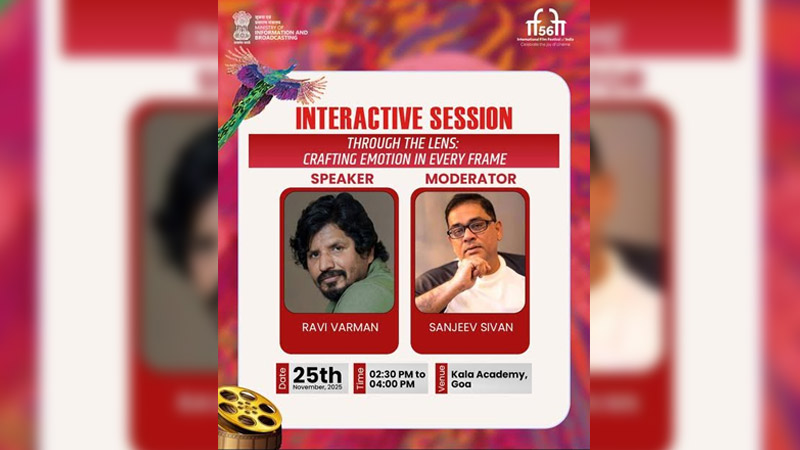
MUMBAI: If the magic of cinema lies somewhere between light and emotion, Ravi Varman seems to live right in that sliver, a place where morning sun, falling shadows, and sudden inspiration share equal billing. Over an expansive conversation, the cinematographer peeled back the curtain on his craft, revealing the quirks, philosophies, battles, and happy accidents that shape his imagery. And with every anecdote, he proved why filmmakers describe him as “a painter who uses light instead of brushes”.
From the very first moment of the interaction, Varman made it clear that nothing about his visual world is accidental. Even recreating Ramlila’s Haveli lighting that iconic hard sun slicing through dusty windows was not about dramatic flourish but discipline. Early mornings spent observing the way light broke across ageing walls became his personal laboratory. When Sanjay Leela Bhansali’s Ram Leela needed that look, he didn’t imitate it; he simply repeated what he had already trained his eyes to see.
Yet for someone so obsessed with light, he is dismissive of the “good light–bad light” binary. Light, for him, is like breath universal, impartial, constant. It becomes “good” or “bad” only because the human mind labels it so. Every second, he insists, holds a meaningful light if one learns how to look. The cinematographer who has shot epics, period dramas, and romantic fables speaks the way poets speak about the sea with awe, but also with ownership.
Even natural light, he argues, isn’t the unpredictable enemy filmmakers fear. The sun’s inconsistency is, for him, consistency itself. “Inconsistency is a consistency,” he says, almost amused at the contradiction, yet deadly serious. With enough observation and instinct, a filmmaker can make harsh noon and tender dawn coexist in the same world.
But magic doesn’t appear on set by accident, it is engineered. One of Varman’s most revealing anecdotes came from Ram Leela, where Bhansali wanted to shoot a song exclusively in morning and evening light. Twenty-five days were allotted just to chase those two windows. Varman’s solution was practical genius: build an engineered overhead canopy system fitted with movable flaps, controlled remotely, allowing him to soften, open, or block light at will. It took lakhs, iron pillars, engineers, improvisation, and doubt — but it turned an unpredictable outdoor set into a perfectly modulated stage. After that, he says, “India started using these cranes and systems.” He didn’t invent the idea, he insists. He simply brought it home.
Shifts between natural and artificial light, between harshness and glow, come to him instinctively but never without preparation. Before shooting any film, he collects 10 to 15 paintings, and from them, derives the visual compass for the movie. On set, he revisits each frame mentally and checks whether the image he is capturing mirrors the reference he has internalised. He may work with spontaneity, but it is spontaneity constructed on a bedrock of meticulous pre-visualisation.
Even colour something he once avoided became a chapter of reinvention. Early in his career, people called his frames “grey”. At first, he believed he disliked colour. Only later did he realise colour was not the enemy; indifference was. Today, he treats colours as emotional carriers, embracing surreal hues and heightened palettes because, as he puts it simply, “Life is surreal.” If magic can exist in real life, why shouldn’t it exist in the frame?
Despite his reputation for sweeping canvases and lavish films, Varman’s roots lie in small, near-zero-budget movies. His first films cost 7 lakhs and 12 lakhs. He shot them with minimal lights, often with no lights at all, a training ground that still shapes his work on the biggest sets. Even Ponniyin Selvan, a mammoth production, was lit with barely 20 kW because he relied on the studio’s natural sunlight. Blackened pillars, open doors, a few supplementary bulbs simplicity dressed up as grandeur.
What pushes him forward, however, is not scale but challenge. He recalls being battered by high waves during a Tamasha shoot in Croatia, holding a film camera for 45 minutes as everyone else gave up. Imtiaz Ali suggested returning. Varman insisted on shooting. Another time, on a film with Manisha Koirala, he shifted exposure 18 times in a single shot swinging from T2.5 to T22.5 and back while tracking a warplane soaring over a singing protagonist. The face looked seamless, but the background pulsed with changing light. Such risks fascinate him; comfort never does.
His philosophy extends to working with directors as well. Contrary to the industry’s “director–cameraman marriage” metaphor, he prefers respectful independence. He will fight, argue, disagree but only for the frame, never the ego. “I fight for quality, honesty,” he says. He has fought with directors, sometimes daily, but only because the moment demands that stubbornness. He cares nothing for temporary friction; he cares deeply for what remains: “The frame is what will stay. Not me. Not the fight.”
His journey from Kerala shaped him in more ways than one. Kerala’s culture of minimalism, punctuality, and blunt honesty became the bedrock of his discipline. He recalls light men telling directors: “Clip is gone close the shop.” It taught him to work fast, with little equipment, and trust instinct over machinery. “We have only six balls; we must hit six runs,” he says, likening Kerala’s filmmaking grit to a last-over chase.
Cinematographers worldwide inspired him especially Sergey Urusevsky (The Cranes Are Flying) and Néstor Almendros (Days of Heaven) but he admits he still cannot decipher how they achieved their frames with the technology of their time. Their films remain his reset button: whenever he watches a bad film, he revisits those classics to cleanse his palette.
Technology, though, does not intimidate him. He shot Ponniyin Selvan using both film and digital formats, sometimes switching lenses mid-scene cinema scope one moment, spherical the next purely to study differences. Digital, he believes, democratised filmmaking; without it, today’s generation of filmmakers wouldn’t exist. “The format doesn’t matter. The thought matters.”
Artificial intelligence, however, brings different questions not fear. AI is a support tool, he says, a fast reference, not a threat. “AI pretends to be real, but it is unreal. Mind is more important than AI.” He traces the history of painters who feared extinction when the camera arrived, only to become more celebrated later. AI, he insists, will follow the same pattern. Tools don’t eclipse creators; creators redefine tools.
And if there is one emotion that threads through his storytelling, it is humility. Even when talking about heartbreak, as he does while referencing the poignant scene involving the imagined children Rohan and Rohini, he quickly shifts back to craft. For him, art and life fold into each other constantly. The frame is not just an image, it is a lived moment. He doesn’t shoot scenes; he lives inside them.
In the end, that may be Ravi Varman’s secret: he treats light like memory, colour like emotion, exposure like rhythm. He approaches filmmaking not as labour but as meditation relaxed, empty, present. He may be known for grandeur, but his foundation lies in simplicity. The big canvas, the magical light, the monumental sets, they are only extensions of the small boy from Kerala who learned to shoot with no lights, no budget, and no fear.
And in every film, in every frame, the boy is still there chasing the morning light.



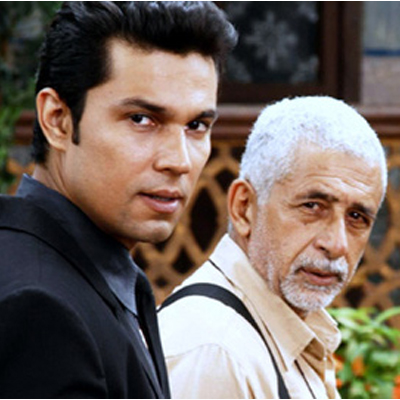


MUMBAI: Prime Video has found its next feel-good original, and it comes with a healthy dose of heart, humour and youthful chaos. The streaming platform has announced Don’t Be Shy, a coming-of-age romantic comedy produced by Alia Bhatt and Shaheen Bhatt under their banner, Eternal Sunshine Productions.
Written and directed by Sreeti Mukerji, the film follows Shyamili ‘Shy’ Das, a 20-year-old who believes her life is neatly mapped out until it suddenly is not. What follows is a relatable tumble through friendship, love and the awkward art of growing up, when plans unravel and certainty gives way to self-discovery.
The project is co-produced by Grishma Shah and Vikesh Bhutani, with music composed by Ram Sampath, adding to the film’s promise of warmth and energy. Prime Video describes the story as light-hearted yet emotionally grounded, with a strong female-led narrative at its core.
Prime Video India director and head of originals Nikhil Madhok, said the platform was delighted to collaborate with Eternal Sunshine on a story that blends sincerity with humour. He noted that the film’s fresh writing, earnest characters and infectious music make it an easy, engaging watch for audiences well beyond its young adult setting.
For Alia Bhatt, Don’t Be Shy reflects the kind of storytelling Eternal Sunshine set out to champion. She said the film stood out for its honesty, its coming-of-age perspective and Mukerji’s passion, which she felt was deeply woven into the narrative. Bhatt also praised Prime Video for supporting distinctive voices and bold creative choices.
With its breezy tone and familiar emotional beats, Don’t Be Shy aims to charm viewers whether they are rom-com regulars or simply in the mood for a warm, unpretentious story about life refusing to stick to the plan.

MUMBAI: Tips Films struggled to find its rhythm in the final quarter of 2025, as a spike in production costs and a new regulatory burden pushed the Mumbai-based outfit deeper into the red. According to results released on Tuesday, January 27, 2026, the company posted a net loss of Rs 286.87 lakh for the quarter ended 31 December, despite a modest bump in total income to Rs 456.29 lakh.
The bottom line was hit by the introduction of India’s New Labour Codes, which forced a Rs 37.37 lakh catch-up payment for employee benefits. Production costs also proved a heavy lift, gobbling up Rs 318.48 lakh during the period. On a nine-month basis, the picture looks even bleaker; the company has racked up losses of Rs 1,237.61 lakh, a sharp reversal from the Rs 1,269.17 lakh profit it managed in the same period last year.
Investors will be looking for a script change as the company enters the final stretch of the financial year, with basic earnings per share now languishing at minus Rs 6.64. For now, Tips Films remains a single-segment player, pinning its hopes entirely on the volatile world of film production and distribution.
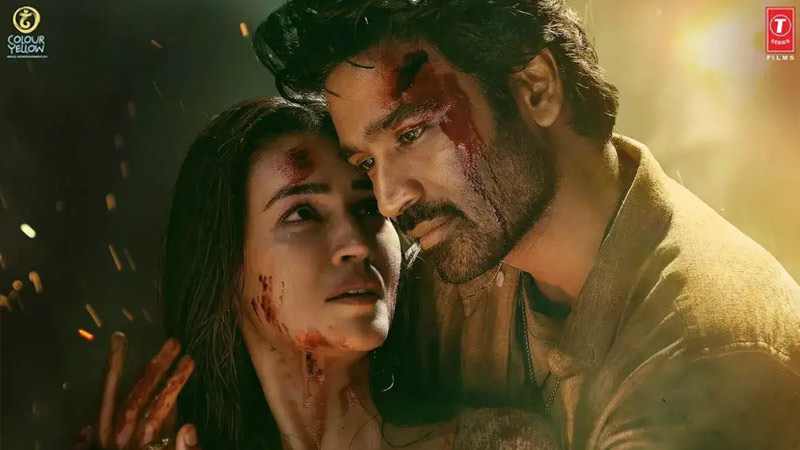
MUMBAI: Eros International Media Ltd has moved the Bombay high court against filmmaker Aanand L Rai and his production banner Colour Yellow Media Entertainment LLP, alleging unauthorised exploitation of the intellectual property of its 2013 blockbuster Raanjhanaa in the promotion and release of the 2025 film Tere Ishk Mein.
The studio is seeking damages of Rs 84 crore, claiming losses arising from what it describes as unlawful capitalisation on Raanjhanaa’s goodwill. According to a report in The Times of India, Eros has filed a commercial intellectual property suit along with an interim application, alleging trademark infringement, copyright infringement and passing off.
Eros contends that Tere Ishk Mein was deliberately marketed as a “spiritual sequel” to Raanjhanaa without authorisation. The suit names Aanand L Rai, Colour Yellow Media Entertainment LLP and Colour Yellow Productions, along with Super Cassettes Industries (T-Series), writer Himanshu Sharma and Netflix Entertainment Services India LLP, turning the dispute into a multi-party legal battle.
In its filing, Eros asserts that it is the producer and exclusive owner of all intellectual property rights in Raanjhanaa, including copyright, registered trademark rights, character rights in Kundan Shankar and Murari, and remake, prequel and sequel rights. The company alleges these rights were exploited while promoting Tere Ishk Mein, which released theatrically on November 28, 2025.
The legal action was triggered by a teaser released online in July 2025, which Eros claims used phrases such as “From the world of Raanjhanaa” and hashtags including #WorldOfRaanjhanaa. The interim application further alleges unauthorised use of footage, background score and music from Raanjhanaa, despite Eros no longer holding the film’s music rights.
Directed by Aanand L Rai, Tere Ishk Mein stars Dhanush, Kriti Sanon, Priyanshu Painyuli, Prakash Raj and Tota Roy Chowdhury. Neither Eros nor the defendants have issued an official statement so far.

Mukesh Ambani, Larry Fink come together for CNBC-TV18 exclusive

Nielsen launches co-viewing pilot to sharpen TV measurement

Netflix celebrates a decade in India with Shah Rukh Khan-narrated tribute film

Delhivery chairman Deepak Kapoor, independent director Saugata Gupta quit board

Meta appoints Anuvrat Rao as APAC head of commerce partnerships

Brnd.me enters Europe as haircare brands power global expansion

TechnoSport taps quick commerce with launch on Slikk’s 60-minute platform

These ’90s fashion trends are making a comeback in 2017
The final 6 ‘Game of Thrones’ episodes might feel like a full season
According to Dior Couture, this taboo fashion accessory is back
The old and New Edition cast comes together to perform
Phillies’ Aaron Altherr makes mind-boggling barehanded play
Uber and Lyft are finally available in all of New York State
Disney’s live-action Aladdin finally finds its stars
Mukesh Ambani, Larry Fink come together for CNBC-TV18 exclusive
Nielsen launches co-viewing pilot to sharpen TV measurement
Netflix celebrates a decade in India with Shah Rukh Khan-narrated tribute film
Delhivery chairman Deepak Kapoor, independent director Saugata Gupta quit board
Meta appoints Anuvrat Rao as APAC head of commerce partnerships
Brnd.me enters Europe as haircare brands power global expansion
TechnoSport taps quick commerce with launch on Slikk’s 60-minute platform
-
 iWorld4 days ago
Netflix celebrates a decade in India with Shah Rukh Khan-narrated tribute film
-
 I&B Ministry3 months ago
India steps up fight against digital piracy
-
 iWorld3 months ago
Tips Music turns up the heat with Tamil party anthem Mayangiren
-
 iWorld12 months ago
BSNL rings in a revival with Rs 4,969 crore revenue
-
 MAM3 months ago
HoABL soars high with dazzling Nagpur sebut
-

 News Broadcasting2 months ago
CNN-News18 dominates Bihar election coverage with record viewership
-

 MAM3 months ago
Kapil Sethi joins Network18 as head of technology
-

 eNews2 months ago
Aarohi crosses Rs 1,000 crore as women-led credit gathers pace