
News Headline
How 2025 broke Indian television news

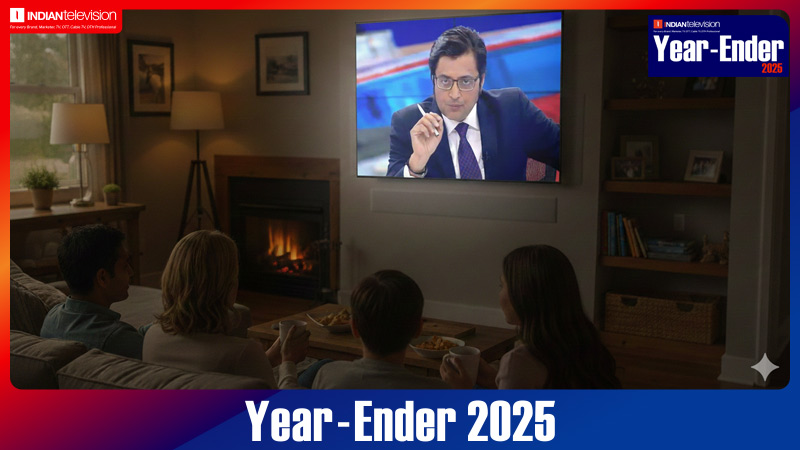
NATIONAL: As the dust settles on 2025, India’s television news industry resembles a gilded cage—grand in its architecture, yet increasingly confined by the shifting economics of attention. For the nation’s newsrooms, 2025 was the year the “linear-first” doctrine finally collapsed under the weight of an algorithmic insurgency and a tightening regulatory noose.
“If one word defines Indian journalism in 2025, it is fragmented,” noted Delcom News co-founder, chief journalist and chief platform architect Vikram Singh. “Attention, trust, language and platforms are all pulling in different directions.”
The year began with a paradox: viewership peaked, yet the traditional business model gasped for air. With the general elections of 2024 a fading memory, 2025 forced broadcasters to find “tentpole” moments in a fractured landscape. The Maharashtra and Delhi state elections provided the political theatre, while high-stakes geopolitical tensions in West Asia and the South China Sea offered global drama. However, it was the harrowing Air India crash in Amdavad that delivered the year’s most sombre high point, as viewers flocked to screens in a collective attempt to grasp the scale of the tragedy.

Yet, the news cycle is no longer owned by the 9:00 pm anchor. In 2025, for every household that tuned into a primetime debate, three more consumed the same moments via YouTube Shorts or WhatsApp.
“Distribution moved decisively from search to feeds, messaging apps and creator-led surfaces,” Singh said, referring to the shift in news consumption. “Short-form video drove reach, explainers and newsletters drove retention and habit.”
Total television news advertising spend for 2025 hovered around Rs 3,200 crore, a stagnant figure dwarfed by the double-digit explosion in digital news. Brands are no longer buying “slots”; they are buying “segments.” FMCG giants diverted nearly 15 per cent of their traditional news budgets to Quick-Commerce apps like Blinkit and Zepto, where the proximity to the transaction is immediate.
While TV news still reaches the masses, its cost per mille (CPM) remained depressed compared to the premium commanded by Connected TV (CTV) news apps, which saw a 22 per cent surge in ad rates this year. The English news genre, once the crown jewel of high-ARPU advertising, underwent a radical thinning. 2025 saw the quiet shuttering of two boutique English news channels that failed to bridge the digital divide. The market has consolidated into a three-horse race between Times Now, Republic World, and a revamped India Today, with the latter pivoting heavily toward a “Digital Video First” strategy.
“The single most important shift this year was the move from exposure metrics to engagement economics,” said Live Times founder Dilip Kumar Singh. “Advertisers and platforms increasingly looked beyond raw reach to parameters such as average time spent, repeat viewership, and cross-screen loyalty.”
While TV news still reaches the masses, CPMs remained depressed compared to Connected TV news apps, which saw a 22 per cent surge in ad rates. The English news genre underwent a thinning, with two boutique channels quietly shutting down. The market consolidated into a three-horse race between Times Now, Republic World and a revamped India Today, which pivoted heavily to a digital video–first strategy.
“People sampled widely in 2025 but committed deeply to just one or two brands they trusted,” said Vikram Singh, referring to audience behaviour across news websites, apps and social platforms.
If English news became a boutique, Hindi and regional news turned hypermarket. Aaj Tak, Republic Bharat, Zee News, TV9 and others spent the year shouting competing claims of leadership across micro-demographics. The real growth, however, lay in micro-regional expansion. Telugu and Tamil news ad spends grew 9 per cent, outpacing the national average, while Jio News quietly embedded itself into millions of smartphone lock screens.
“Regional platforms outperformed national players in relevance and intimacy. However, national channels that invested in regional depth, rather than generic narratives, performed better,” Dilip Kumar Singh noted.
2025 will also be remembered as the year television news definitively lost its editorial bite. The control exerted by the government shifted from overt censorship to subtle, structural pressure. The government, a massive advertiser through its various ministries and public sector undertakings (PSUs), used ad allocation as a primary lever. Channels perceived as critical found their ad flows mysteriously drying up, forcing financial compliance.
The “Responsible Reporting” Mandate: New regulations introduced under the guise of “accountability” and “preventing misinformation” gave the Information and Broadcasting (I&B) ministry unprecedented powers. Broadcasters faced swift penalties, including temporary license suspensions, for content deemed “anti-national” or “sensationalist” without adequate substantiation.
“It was the year misinformation became impossible to ignore and finally pushed platforms to react,” noted Vikram Singh.
Self-Censorship as Default: The real impact was a pervasive climate of self-censorship. Newsroom leaders, facing immense pressure from promoters more concerned with maintaining government goodwill for their other business interests, proactively softened criticism and prioritized “positive” government stories. The result was a homogenized, risk-averse news product across many major networks.
“History and current data suggest that in constrained environments, credibility becomes a differentiator. Live Times has seen trust deepen precisely because we chose consistency over convenience,” noted Dilip Kumar Singh. “Audiences are far more discerning than broadcasters assume—and fatigue is the price of ignoring that.”
The most significant development of 2025 was the total integration of the newsroom. The “Digital Desk” is no longer the TV Desks’ poor cousin; it is the boss. For major broadcasters, YouTube ad revenue now accounts for 18-22 per cent of total top-line earnings, up from 8 per cent three years ago.
Innovation has become a matter of survival. Over 40 regional channels now use AI avatars for late-night bulletins and weather, slashing overnight staffing costs by 30 per cent. Meanwhile, the urban middle class has moved to Smart TV apps, where “Live TV” is being replaced by “Live Segments”.
Meanwhile, the era of the “Mega-Anchor” is cooling as veteran editors move to start independent YouTube networks or Substack newsletters. 2025 saw seismic shifts in the C-suite:
• Rahul Kanwal made a blockbuster move from India Today to NDTV as CEO

• Raktim Das left TV9 to take the reins at Zee News as CEO.

• Ashish Sehgal stepped down from Zee Entertainment to join Times Network as CEO of TV and chief growth officer, a move seen as a desperate grab for traditional ad-sales expertise in a thinning market.

• Sudhir Chaudhary
joined DD News in April 2025, shortly after leaving Aaj Tak, to host a new prime-time show called ‘Decode’ as part of a major initiative by Prasar Bharati to revive Doordarshan’s influence, with his first show airing in May 2025.

To offset declining ad-slot revenue, channels leaned heavily into televised summits and sponsored events, transforming newsrooms into event businesses. CNN-News18, India Today, Republic and TV9 all scaled their conclaves into multi-day spectacles.
This year also saw Indian news channels and media organisations experimenting with new formats while grappling with recurring credibility challenges.
The Jubilee-fication of India Today
India Today recently rolled out Candid Constructive Conversations, a debate format inspired by the style popularised by Jubilee, the Los Angeles–based YouTube channel known for its Gen Z–focused, social-experiment-driven discussions. Jubilee built its global following through formats such as Middle Ground and Surrounded, which place people with sharply opposing views in the same room and foreground candid, often uncomfortable conversations rather than traditional studio debates.
Launched as a series within India Today’s NewsTrack specials, the platform brings together experts, stakeholders and commentators to unpack contemporary policy and social questions through a multi-perspective lens. For example, A recent episode on caste and reservation featured economists and social activists engaging in measured discussion—a departure from the heated exchanges typical of televised debates. Among the guests was Pankaj Dhavraiyya, a social activist from Hathras, UP, known for his controversial positions on caste-based reservations and statements related to the Hathras gangrape case. His past appearances have drawn sharp criticism from activists and civil society groups, who accuse him of trivialising structural caste discrimination and showing insensitivity toward gender violence.
Arnab is “pro people” now
Republic TV editor-in-chief Arnab Goswami publicly criticised the Centre and the Supreme Court for failing to protect the Aravalli range from what he described as “big billionaire companies”. He has also been openly criticising the Delhi government’s inability to better the AQI. Ironically, Arnab’s Republic TV has always faced scrutiny over their biased reporting and coverage.
His appeal to protect the Aravallis follows a recent Supreme Court ruling that has angered environmentalists by redefining the hill range using a 100-metre elevation threshold.
On air, he claimed the “Rs 15 crore anchor paid by the government” would not raise such questions, while state governments would hide behind the Supreme Court’s definition to evade accountability. “Under what rule of democracy can you destroy a two-billion-year-old ecological formation?” he asked, warning of intensifying water conflicts across north India.
Calling for intervention from the prime minister’s office and the environment ministry, Goswami framed the Aravallis debate as a test of governance itself. “If this continues, we will not be a Viksit Bharat. We will be an environmentally destroyed Bharat,” he said.
Later, responding to viewers during a live on-air interaction, Goswami rejected suggestions that his stance marked an anti-government turn, insisting his position was “pro-people” rather than partisan.

The pivot to YouTube
Indian news organisations are increasingly turning to podcast-first formats on YouTube, using long-form conversations to reach audiences seeking depth, personality and context beyond nightly bulletins. In 2025, several prominent broadcasters have sharpened this push with shows that marry journalism, analysis and storytelling.
NDTV, Ctrl + Alt + Defence brings together editors Vishnu Som and Shiv Aroor in a weekly, unscripted conversation on national security and geopolitics. Drawing on more than two decades of frontline reporting, from conflict zones to strategic installations, the podcast dissects military developments, defence policy and regional flashpoints in a conversational format that departs from studio-led television debates.
India Today has leaned into personality-led storytelling with UnPolitics with Preeti, anchored by executive editor Preeti Choudhry. Positioned as a relaxed, informal podcast, the series invites public figures to step away from official roles and discuss life beyond power and politics. Recent episodes featuring Sadhguru and Malaika Arora Khan underline the format’s intent: humanising influential personalities through candid discussions on family, failures, hobbies and personal influences.
If 2025 had a victor, it was The Lallantop. By December, it crossed 34.6 million YouTube subscribers. Its flagship shows, like Neta Nagri featuring Rajdeep Sardesai, regularly garner 1.5Ð2 million views per episode. With monthly earnings peaking above $200,000, it now rivals the revenue of mid-tier satellite channels without the overhead of satellite fees.
The platform has taken a culturally rooted approach with Madhyamvargiya, a humour-driven podcast on middle-class life, hosted by Sandeep Sinha and Ashish Mishra, which was released in 2025. Mixing satire with social commentary, the series tackles everyday anxieties, from housing and rent to financial stress, through audience questions and relatable storytelling.
On a side note, Faye D’souza and Barkha Dutt have built formidable independent empires, while Firstpost Studio has mastered the Instagram transition. By late 2025, Firstpost dominated Instagram with high-production Reels and AI-assisted explainers. Similarly, X (formerly Twitter) has become India’s “Live Newswire,” with editors like Marya Shakil hosting X Spaces to decentralise the “primetime” slot. Others such as Raj Shamani and Dhruv Rathee emerged as powerful current affairs commentators, podcasters, and hosts generating millions of followers and tens of millions of views for their exclusive interviews and viewpoints.
The misinformation brigade
One of the most prominent cases came during Operation Sindoor, when multiple mainstream Indian channels aired unverified and false information about military action and battlefield developments.
“During Operation Sindoor… Live Times recorded 2x to 4x spikes in concurrent viewership and average time spent compared to baseline days. Importantly, these spikes sustained well beyond the initial headline window—indicating trust-driven retention rather than curiosity-led sampling,” noted Dilip Kumar Singh.
Fact-checking organisations, including Alt News, documented instances where channels falsely reported that the Indian Navy had destroyed Karachi port: a claim that had no verified basis and was widely circulated with dramatic visuals and sound effects. Similar footage, circulated as “war visuals,” was later identified as unrelated or outdated.
Media monitoring groups highlighted that several channels also broadcast dramatic claims of explosions at Jaipur airport and alleged misquotes attributed to senior officials, which were later debunked by official sources such as district authorities and the Press Information Bureau’s fact-check unit.
Analysts described the coverage as sensational rather than evidence-based. A report by Al Jazeera’s Media Institute noted that during the same period Indian TV news was flooded with doctored visuals and unverified claims, contributing to public anxiety and misinformation.
In November 2025, Indian news channels became the centre of another fake news controversy after several outlets prematurely reported the death of veteran Bollywood actor Dharmendra, despite official clarification from his family that he was alive and recovering.
The actor had been hospitalised and placed under observation at Mumbai’s Breach Candy Hospital, leading to widespread speculation. Major media houses including India Today, ABP News and News18 reported his demise before any family or medical confirmation, prompting immediate backlash on social media.
Dharmendra’s daughter Esha Deol addressed the speculation on Instagram, stating that “the media seems to be in overdrive and spreading false news” and that her father was “stable and recovering”, while veteran actor and politician Hema Malini blasted the false reports as “unforgivable” and disrespectful to privacy.
The India Today Group later issued an official apology on its X account, acknowledging the error and saying the incorrect report was taken down once the clarification was received, though critics questioned why it took three days to correct (with prominent public figures initially offering condolences based on the inaccurate reports). The family’s statements and the delayed corrections highlighted persistent challenges in editorial verification amid breaking-news pressure.
The trend has spurred calls for stronger editorial standards. The Network for Women in Media India (NWMI) and other civil society groups have publicly condemned reckless media conduct, particularly in the reporting of terror attacks and national security issues, arguing that repeated cycles of unverified claims undermine public trust. The statement read, “The Network of Women in Media, India, unequivocally condemns the reckless and unprofessional conduct of numerous Indian television news channels and high-profile journalists in their coverage of “Operation Sindoor”, launched on 7 May 2025 in the aftermath of the tragic killing of 26 tourists at Pahalgam in Kashmir on 22 April, and the India-Pakistan border tensions that followed.”
“Television still dominates moments of national consequence,” said Dilip Kumar Singh. “But only when it behaves responsibly.”
As we enter 2026, the question is no longer who has the loudest voice, but who has the most data on the person listening. Television news in India is alive, but its heart now beats in the cloud, not on the satellite. The channels that thrived in 2025 were those that stopped thinking of themselves as “broadcasters” and started acting as “content refineries” and, increasingly, government-compliant event managers.
“In an age of infinite content,” Singh concluded, “trust is the only scarce currency.”








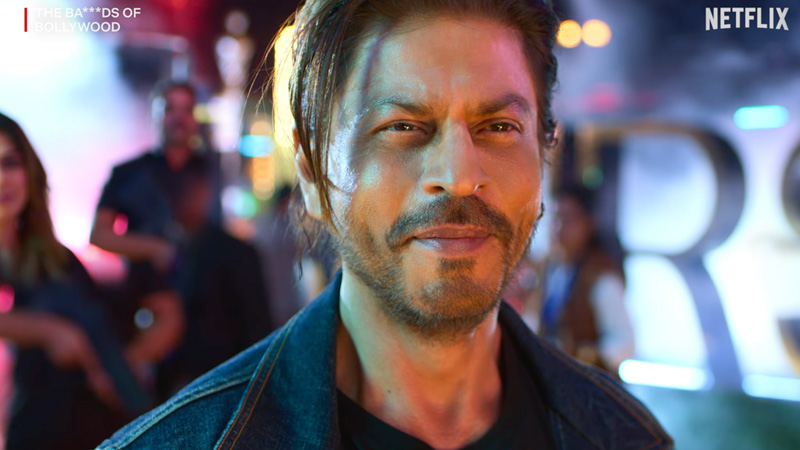
MUMBAI: Netflix is celebrating ten years in India with a slick anniversary film voiced by Shah Rukh Khan, a nostalgic sprint through a decade that rewired how the country watches stories. The campaign doubles as both tribute and reminder: streaming did not just enter Indian homes, it quietly rearranged them.
Roll back to 2016 and television still dictated schedules. Viewers waited weeks, sometimes months, for favourite films to appear on prime time. Family-friendly filters narrowed options further, and piracy often filled the gaps. Then Netflix arrived, softly but decisively, carrying a catalogue of international titles rarely seen in Indian theatres and placing them a click away. Old blockbusters and new releases suddenly coexisted on the same digital shelf.
The platform’s real inflection point came in 2018 with Sacred Games, a breakout series that refused to dilute India’s grit for global comfort. Audiences embraced its unvarnished tone, signalling readiness for stories that did not need box-office validation or censorship compromises. What followed was a steady procession of relatable narratives. Competitive-exam anxiety fuelled Kota Factory. College relationships unfolded in Mismatched. Everyday pressures, not grand spectacle, proved bankable.
Language barriers thinned as foreign series arrived with Hindi, Tamil and Telugu dubbing, expanding viewership beyond urban English-speaking pockets. Marketing mirrored the shift. For global releases such as Squid Game, Netflix leaned on regional creators and influencers to localise buzz and make international content feel native.
The library widened beyond fiction. Documentaries stepped out of festival circuits into living rooms. Stand-up comedians found scale. Established filmmakers, including Sanjay Leela Bhansali with Heeramandi, embraced the platform’s long-form canvas. Subscriber numbers swelled to 12.37 million in India, according to Demandsage, and behaviour followed suit. Late-night binges became routine. Friday release rituals loosened. Watch parties turned solitary screens into social events.
Economics demanded adjustment. Early subscription pricing carried a premium aura that deterred many households. Over time, Netflix recalibrated plans to align with Indian spending sensibilities, conceding that accessibility is as critical as content. To extend momentum around marquee titles, the platform also experimented with split-season releases, stretching anticipation and watch time.
The anniversary film, narrated by Shah Rukh Khan, captures the linguistic shift that mirrors the cultural one: from “Netflix pe kya dekha?” to “Netflix pe kya dekhein?” The question moved from recounting the past to planning the next binge. In ten years, Netflix morphed from foreign entrant to familiar fixture, exporting Indian stories abroad while importing global ones home. The remote no longer waits; it chooses, clicks and moves on. In the streaming age, patience is out, playlists are in, and the next episode is always one tap away.
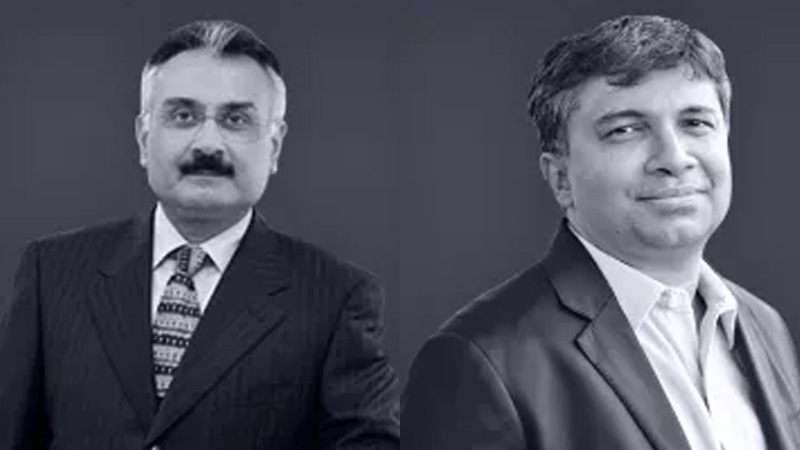
Gurugram: Delhivery’s boardroom is being reset. Deepak Kapoor, chairman and independent director, has resigned with effect from April 1 as part of a planned board reconstitution, the logistics company said in an exchange filing. Saugata Gupta, managing director and chief executive of FMCG major Marico and an independent director on Delhivery’s board, has also stepped down.
Kapoor exits after an eight-year stint that included steering the company through its 2022 stock-market debut, a period that saw Delhivery transform from a venture-backed upstart into one of India’s most visible logistics platforms. Gupta, who joined the board in 2021, departs alongside him, marking a simultaneous clearing of two senior independent seats.
“Deepak and Saugata have been instrumental in our process of recognising the need for and enabling the reconstitution of the board of directors in line with our ambitious next phase of growth,” said Sahil Barua, managing director and chief executive, Delhivery. The statement frames the exits less as departures and more as deliberate succession, a boardroom shuffle timed to the company’s evolving scale and strategy.
The resignations arrive amid broader governance recalibration. In 2025, Delhivery appointed Emcure Pharmaceuticals whole-time director Namita Thapar, PB Fintech founder and chairman Yashish Dahiya, and IIM Bangalore faculty member Padmini Srinivasan as independent directors, signalling a tilt towards consumer, fintech and academic expertise at the board level.
Kapoor’s tenure spanned Delhivery’s most defining years, rapid network expansion, public listing and the push towards profitability in a bruising logistics market. Gupta’s presence brought FMCG and brand-scale perspective during a period when ecommerce volumes and last-mile delivery economics were being rewritten.
The twin exits, effective from the new financial year, underscore a familiar corporate rhythm: founders consolidate, veterans rotate out, and fresh voices are ushered in to script the next chapter. In India’s hyper-competitive logistics race, even the boardroom does not stand still.
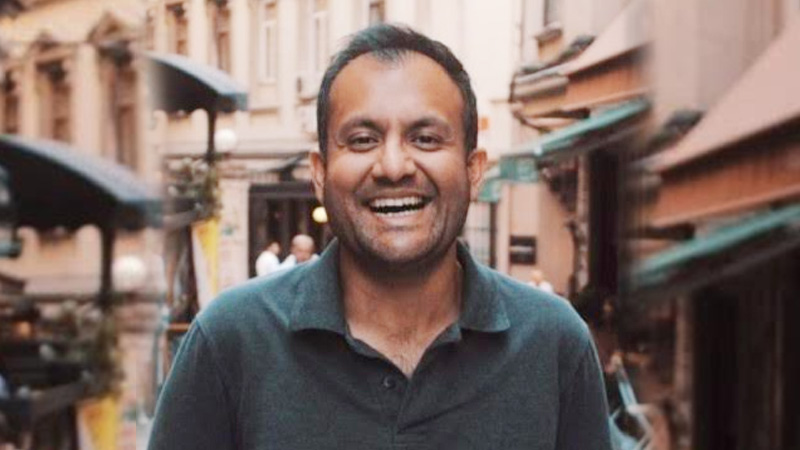
At Locofy.ai, Rao helped convert a three-year free beta into a paid engine, clocking 1,000 subscribers and 15 enterprise clients within ten days of launch in September 2024. The low-code startup, backed by Accel and top tech founders, is famed for turning designs into production-ready code using proprietary large design models.
Before that, Rao founded generative AI venture 1Bstories, which was acquired by creative AI platform Laetro in mid-2024, where he briefly served as managing director for APAC. Alongside operating roles, he has been an active investor and advisor since 2020, backing startups such as BotMD, Muxy, Creator plus, Intellect, Sealed and CricFlex through a creator-economy-led thesis.
Rao spent over eight years at Google, holding senior partnership roles across search, assistant, chrome, web and YouTube in APAC, and earlier cut his teeth in strategy consulting at OC&C in London and investment finance at W. P. Carey in Europe and the US.

Mukesh Ambani, Larry Fink come together for CNBC-TV18 exclusive

Nielsen launches co-viewing pilot to sharpen TV measurement

Netflix celebrates a decade in India with Shah Rukh Khan-narrated tribute film

Delhivery chairman Deepak Kapoor, independent director Saugata Gupta quit board

Meta appoints Anuvrat Rao as APAC head of commerce partnerships

Brnd.me enters Europe as haircare brands power global expansion

TechnoSport taps quick commerce with launch on Slikk’s 60-minute platform

These ’90s fashion trends are making a comeback in 2017
The final 6 ‘Game of Thrones’ episodes might feel like a full season
According to Dior Couture, this taboo fashion accessory is back
The old and New Edition cast comes together to perform
Phillies’ Aaron Altherr makes mind-boggling barehanded play
Uber and Lyft are finally available in all of New York State
Disney’s live-action Aladdin finally finds its stars
Mukesh Ambani, Larry Fink come together for CNBC-TV18 exclusive
Nielsen launches co-viewing pilot to sharpen TV measurement
Netflix celebrates a decade in India with Shah Rukh Khan-narrated tribute film
Delhivery chairman Deepak Kapoor, independent director Saugata Gupta quit board
Meta appoints Anuvrat Rao as APAC head of commerce partnerships
Brnd.me enters Europe as haircare brands power global expansion
TechnoSport taps quick commerce with launch on Slikk’s 60-minute platform
-
 iWorld4 days ago
Netflix celebrates a decade in India with Shah Rukh Khan-narrated tribute film
-
 I&B Ministry3 months ago
India steps up fight against digital piracy
-
 iWorld3 months ago
Tips Music turns up the heat with Tamil party anthem Mayangiren
-
 iWorld12 months ago
BSNL rings in a revival with Rs 4,969 crore revenue
-
 MAM3 months ago
HoABL soars high with dazzling Nagpur sebut
-
 News Broadcasting2 months ago
CNN-News18 dominates Bihar election coverage with record viewership
-
 MAM3 months ago
Kapil Sethi joins Network18 as head of technology
-

 eNews2 months ago
Aarohi crosses Rs 1,000 crore as women-led credit gathers pace