
Budget
Ficci pushes defence, exports and tax reform ahead of budget 2026

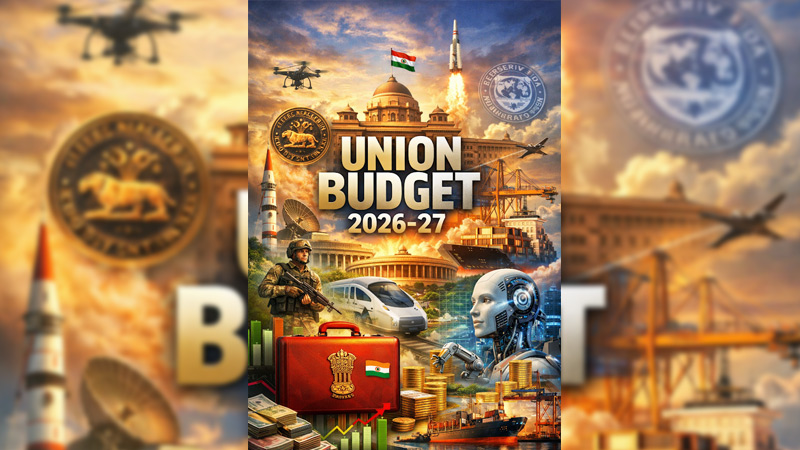
NATIONAL: Ficci has fired the opening salvo ahead of the Union Budget 2026–27, urging the government to double down on defence, exports and domestic capital as the global economy drifts into choppier waters.
The industry body’s pitch comes against a fragile global backdrop. The IMF now pegs world growth at 3.2 per cent in 2025, easing to 3.1 per cent in 2026, with protectionism, tariff volatility and geopolitical risk weighing on trade and investment. India, by contrast, remains the outlier: real GDP grew 6.5 per cent in FY25 and is tipped by the RBI to edge up to 6.8 per cent this year, keeping alive the near-8 per cent path needed for a ‘Viksit Bharat’ by 2047.
Ficci wants the budget to lean into that advantage. It has called for defence spending to rise by about 10 per cent, with capital outlay lifted to 30 per cent of the ministry of defence budget to fast-track drones, air defence, electronic warfare and border infrastructure. The lobby also wants an extra Rs 10,000 crore for the defence research and development organisation to bankroll deep-tech, from AI-enabled systems to autonomous platforms, and a new defence export promotion council to help hit the Rs 50,000-crore export target by 2028–29.
On manufacturing, Ficci is pushing for a mega electronics industrial park to replicate the dense supply chains of Shenzhen and Vietnam, and for cleaner customs codes and tariffs for printed circuit board assemblies to curb imports and lift value addition at home.
Critical minerals are another flashpoint. With clean energy, EVs and semiconductors driving demand for lithium, cobalt and rare earths, Ficci wants a dedicated tailings-recovery programme under the national critical minerals mission, backed by a geo-referenced atlas of mine waste and cheaper finance to turn old dumps into new supply.
Exports, rattled by US tariffs and carbon and deforestation rules, need more oxygen. Ficci says the Rs 18,233-crore outlay for the RoDTEP rebate scheme is too thin and should be lifted and locked in for at least three years to keep Indian goods competitive.
The group is also asking for a smarter tax play for India’s 1,600-plus global capability centres, whose rising R&D and digital roles are clashing with an outdated transfer-pricing regime. Clearer safe harbours and faster advance pricing agreements would, it argues, keep multinationals expanding in India.
To fund all this, Ficci wants a deeper bond market. It is lobbying to widen the pool of firms forced to tap debt markets, relax insurer and pension-fund limits so patient capital can flow into infrastructure, and restore favourable tax treatment for debt mutual funds, whose share of industry assets has slid below 25 per cent since 2023.
Add in a big push on drones, farm productivity and a national youth service scheme to plug last-mile delivery gaps, and the message to North Block is blunt: as global growth cools, India must spend, build and reform its way to resilience.
Ficci has also trained its sights on the tax system, arguing that clogged appeals, rigid recovery rules and patchy digital plumbing are choking investment just when the economy needs momentum.
At the heart of the complaint is a towering backlog at the commissioner of income tax (appeals), with 5.4 lakh cases involving Rs 18.16 lakh crore stuck as of April 1, 2025. What was meant to be a slick, faceless appeals system has instead produced serial notices, missing hearings and remand reports that go unanswered, leaving taxpayers in limbo and refunds frozen for years.
Ficci is pressing for a two-track disposal model, fast-tracking small and routine matters while forcing complex, high-value disputes through a stricter, time-bound process. It also wants 40 per cent of vacant appellate posts filled immediately and automatic stays — with refunds — when appeals drag beyond two years without taxpayer fault.
Cash-flow pain is being compounded by how tax demands are enforced. Although rules allow a stay once 20 per cent of disputed tax is paid, refunds are routinely adjusted by the central processing centre against stayed demands because orders are not digitally synced. Industry is asking for real-time integration between assessing officers and CPC, and for bank guarantees or insurance bonds to be accepted instead of cash deposits, following models used by tax authorities in Australia and other developed markets.
Corporate restructuring has become another fault line. Under the new income-tax code, fast-track demergers — introduced to unclog the NCLT and speed up intra-group restructurings — have been denied tax-neutral status. Ficci warns this makes the fast-track route pointless, and is pushing for section 233 of the Companies Act to be brought back into the tax-neutral framework so small and internal demergers can proceed without punitive tax bills.
On compliance, the lobby is calling time on India’s labyrinthine TDS regime, which has 37 different rates ranging from 0.1 per cent to 30 per cent. It wants the system collapsed into three slabs — salaries, sin-style winnings and two standard rates — and B2B payments under GST taken out of TDS altogether, arguing the current micro-deductions add paperwork but raise little revenue.
Multinationals, meanwhile, are demanding clarity on what constitutes a “business connection”. Foreign manufacturers remain wary of placing machinery or holding components in India because it can trigger local tax liability. Ficci wants explicit exemptions for just-in-time inventories and free-of-cost equipment used by Indian contract manufacturers, a promise already floated by the finance minister but not yet delivered.
Transfer-pricing rules have also become a flashpoint. The new tax code has quietly widened the definition of “associated enterprises”, potentially dragging in unrelated lenders and contract manufacturers. Industry is asking the government to revert to the older, narrower definition to prevent a fresh wave of litigation.
Even buybacks are under fire. Since last year’s changes, the entire payout from a buyback is treated as dividend, even when it comes from share premium or fresh capital rather than profits. That, Ficci argues, leads to the absurd result of shareholders being taxed on what is effectively a capital loss. It wants buybacks taxed only on the profit element, in line with practice in the UK, Australia and the Netherlands.











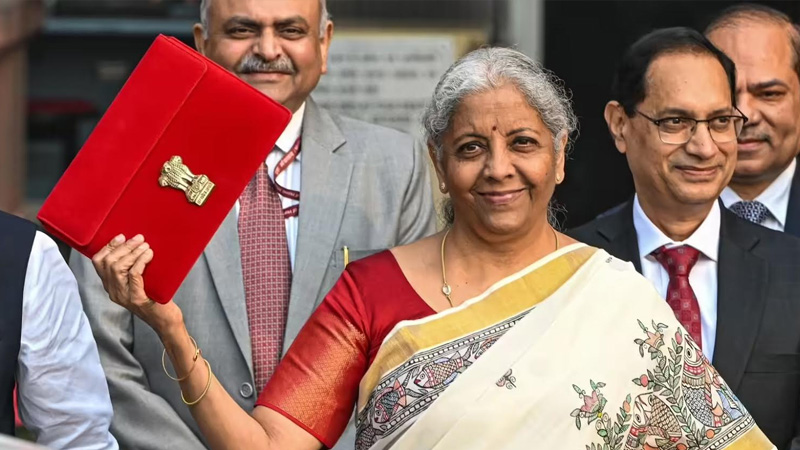
INDIA: As India gears up for the Union Budget 2026–27, scheduled to be presented on February 1, expectations are running high across industries amid strong macroeconomic momentum. The economy is projected to grow between 7 and 7.5 per cent, supported by resilient consumer demand, sustained infrastructure spending, and policy-led reforms.
Corporate activity remains buoyant, with mergers and acquisitions touching 61.3 billion dollars in the first half of FY25, while foreign investment inflows continue to strengthen. However, persistent challenges such as rising input costs, regulatory complexity, and over 5.4 lakh pending tax appeals underline the need for clarity, simplification, and faster dispute resolution. Against this backdrop, industry leaders are looking to Budget 2026 to deliver targeted reforms that boost manufacturing, formalisation, digital innovation, and inclusive growth.
Manufacturing and Infrastructure in Focus
For the furniture and manufacturing sector, cost pressures and competitiveness remain key concerns. Hettich India, Saarc, Middle East & Africa managing director Andre Eckholt said the upcoming budget presents a crucial opportunity to strengthen India’s furniture and manufacturing ecosystem.
“As India moves towards becoming a global manufacturing hub, the upcoming Union Budget 2026 presents a vital opportunity to further strengthen the furniture and manufacturing sectors. However, key challenges such as rising raw material costs and logistics expenses continue to impact competitiveness.We believe addressing these concerns through rationalised duties, stable input costs, and incentives for value-added manufacturing will be critical,” Eckholt noted. He also called for continued emphasis on infrastructure development, skill building, and ease of doing business to accelerate local production under the Make in India initiative.
Echoing the push for manufacturing-led growth, Stone Sapphire India MD & CEO Shobhit Singh, highlighted the need for policies that combine scale with innovation.
“The next phase of growth must focus on enabling innovation and full technology adoption, especially for MSMEs, on par with advanced global economies. For consumer categories such as toys, stationery, homeware and sports goods, targeted incentives for domestic manufacturing must be complemented by support for automation, digital infrastructure, R&D, and IP-led product development to create globally competitive Indian brands. A forward-looking budget that integrates manufacturing, technology, skills and exports will not only reduce import dependence but also position India as a trusted global sourcing and brand creation hub,” Singh said.
Financial Inclusion and Credit Flow
From the financial services sector, Muthoot FinCorp outlined a series of recommendations aimed at improving credit access in rural and semi-urban India. CEO Shaji Varghese urged the government to liberalise branch-opening norms for gold loan NBFCs and rationalise capital risk weights to reduce the cost of lending.
“Harmonising Sarfaesi Act applicability for NBFCs in line with banks and Housing Finance Companies (HFCs) to help drive rural housing credit and strengthen recovery mechanisms for smaller-ticket mortgage loans,” Varghese said, adding that targeted schemes should help bring temporarily defaulted borrowers back into the formal lending ecosystem while encouraging formalisation of gold lending.
Commodities, FMCG and retail seek policy balance
In the bullion sector, RiddiSiddhi Bullions Ltd managing director and India Bullion and Jewellers Association president and chairman Prithviraj Kothari, flagged the need for fair duty structures.
“The Indian bullion industry has highlighted three key policy demands to ensure fairness, competitiveness, and long-term sustainability. First, under the Tariff Rate Quota (TRQ) framework and FTAs such as the CEPA with the UAE, the 1 per cent customs duty benefit should be passed on equitably,” Kothari noted. “While Dubai imports around 180 tonnes of gold annually with a 1 per cent duty advantage, gold dore bars imported into India receive only a 0.65 per cent benefit, risking a sharp decline in dore imports. To correct this imbalance, we have proposed raising the duty on dore bar imports to 1.65 per cent.”
Within FMCG, DS Group emphasised a consumption-driven framework in Budget 2026, urging higher capital expenditure, corporate tax rationalisation, and targeted manufacturing incentives.
The group called for export-focused support alongside rural production initiatives such as capital subsidies, concessional land rates, GST relief on capital investments, and income tax benefits for new rural manufacturing units to drive decentralised and sustainable growth.
Joy Personal Care’s co-founder and chairman Sunil Agarwal also expressed optimism around policies that can sustain consumption recovery.
“A more balanced and consistent GST structure for personal care products, will play an important role in improving profitability while allowing companies to continue offering high-quality products at affordable prices. At the same time, e-commerce and modern trade have a strong opportunity to grow further, supported by increasing digital adoption and more efficient, integrated supply chains,” Agarwal said.
Meanwhile, HyFun Foods’ MD and Group CEO Haresh Karamchandani highlighted the need to strengthen India’s food processing ecosystem through outcome-linked policy support.
“PLI schemes, export incentives, cold chain investments, and backward integration can strengthen supply chains and unlock the full potential of value-added food sectors like frozen foods,” he said, positioning India as a dependable global supplier.
Gaming and Esports call for execution-focused support
India’s fast-growing gaming and esports ecosystem is looking for regulatory clarity, fiscal backing, and differentiated taxation. Nodwin Gaming co-founder and MD Akshat Rathee, said the sector has moved into the mainstream and now needs practical enablers.
“Fair taxation for esports on par with traditional sports, easier access to banking services, and targeted funding under the AVGC framework can help scale Indian game development and original IP creation,” Rathee said.
S8UL Esports co-founder and CEO Animesh Agarwal added that with the Promotion and Regulation of Online Gaming Act in place, the focus must now shift to capacity building.
“Investments in training infrastructure, grassroots competitions, incubation programmes, and creator-focused upskilling can strengthen India’s global position in esports and gaming,” he said.
LVL Zero Incubator’s head of incubation Sagar Nair, stressed the importance of moving from consumption to creation.
“Clear regulatory frameworks, budgetary commitment to the AVGC-XR mission, and incentives for local game development can unlock long-term capital and accelerate India’s emergence as a global development hub,” he noted.
CyberPowerPC India COO Vishal Parekh also pointed to the momentum created by recent regulatory moves, calling for esports prize money taxation in line with traditional sports and stronger grassroots participation through schools and state-level initiatives.
Digital Media and Creator Economy Seek Tech-Driven Reforms
From the digital media sector, Oneindia CEO Ravanan N, said the industry is looking for decisive support rather than broad policy statements.
“Content today runs on AI, automation, and data-driven distribution, yet incentives for tech-led publishing remain limited. A focused push on AI infrastructure, newsroom tools, and regional digital talent skilling will strengthen India’s information ecosystem,” he said.
In the creator economy, Hoopr CEO and co-founder Gaurav Dagaonkar highlighted the urgent need for modernised music licensing and copyright frameworks.
“Transparent, technology-led licensing systems, along with clear norms around AI-generated music and digital ownership, are essential to ensure fair creator compensation while enabling compliance for platforms and brands,” Dagaonkar said, also calling for targeted support for startups and MSMEs.
Healthcare Pushes for Preventive Focus
On the healthcare front, Global Cancer Care founder and chief vision officer Nivedita Basu, underlined the importance of increasing public health spending and shifting focus toward prevention and early detection.
“Public health expenditure remains below the National Health Policy target, while late-stage cancer detection continues to impose heavy human and economic costs. Budget 2026 should prioritise screening programmes, subsidised diagnostics, and expanded access to oncology services beyond Tier I cities,” Basu said. She also called for rationalised tax and regulatory structures for diagnostics and medical devices to improve affordability and innovation.
A Budget balancing growth and reform
As the government prepares its fiscal roadmap for 2026–27, expectations are high for a Budget that balances growth stimulus with structural reforms. While consumption-led sectors are pushing for tax relief and demand-boosting measures, capital-intensive industries are looking for sustained infrastructure spending and policy stability.
Across the board, the message from industry is clear: simplify tax laws, resolve disputes faster, support domestic manufacturing and continue investing in infrastructure. If these priorities are addressed, corporate leaders believe India will be well positioned to maintain its growth trajectory and strengthen its standing in the global economy.

Mumbai: As India heads into the Union Budget on February 1, consumers are no longer starry-eyed. They are alert, restrained and quietly anxious. Kantar’s fifth annual India Union Budget Survey shows optimism lifted by tax relief last year, but tempered by inflation, job insecurity and global uncertainty as Budget 2026 approaches.
Satisfaction with the 2025 Budget remains relatively strong, with 70 per cent of Indians saying it met expectations, largely due to tax reforms. That marked a rebound after sentiment slid from 73 per cent in 2023 to 67 per cent in 2025. Yet the mood has shifted from hope to hard-nosed realism. Households are now prioritising income stability and future preparedness over discretionary growth.
Inflation continues to bite. Concern has risen to 60 per cent in 2026, up from 57 per cent in 2024, while 36 per cent of respondents cited layoffs as a key worry, underscoring unease around job security. Demand for further personal tax relief remains steady, especially among the middle class. Key expectations include raising the standard deduction from Rs 75,000 to Rs 1 lakh, alongside enhanced Section 80 deductions and medical and health insurance rebates.
Economic caution is also reshaping consumption. Faith in India achieving its $5 trillion economy milestone has slipped from 2027–28 to 2028–29, reflecting a more grounded outlook. 51 per cent of Indians see global geopolitical conflicts as a threat to growth and stability, while views on US tariffs are split, with 58 per cent either confused or pessimistic. Business owners and the self-employed are more wary, even as salaried consumers show greater optimism around export diversification.
This uncertainty is translating into tighter spending. Intent to spend on discretionary categories such as dining out, shopping, entertainment and subscriptions has fallen to 55 per cent in 2026, down from 58 per cent in 2024. Appetite for big-ticket purchases including leisure travel, vehicles, property and luxury goods has dropped to 46 per cent, from 51 per cent two years ago.
Confidence in India’s broader growth narrative is also cooling. Expectations of improved performance from the startup ecosystem have eased to 67 per cent, down from 73 per cent in 2024. Market sentiment mirrors this restraint, with 63 per cent of consumers expecting the BSE Sensex to trade between 86,000 and 95,000 in 2026.
Artificial intelligence, meanwhile, has gone mainstream. 79 per cent of consumers now use AI multiple times a week. A majority, 54 per cent, believe it will drive upskilling, new skills and workplace efficiency, with ecommerce, education and cyber security seen as the biggest beneficiaries. Yet unease lingers. 18 per cent fear job losses or role reductions due to AI, while 54 per cent flag AI misuse and AI-led financial fraud as rising risks. More than half, 53 per cent, are calling for faster regulatory approvals and tax incentives for early-stage AI startups.
India’s march towards a cashless economy is accelerating too. Digital payment adoption has climbed from **53 per cent in 2024 to 67 per cent** now, led primarily by salaried consumers.
Policy awareness, however, remains uneven. Awareness of the new labour code reforms stands at 51 per cent, with eight in ten informed respondents expecting a positive impact. By contrast, awareness of the Digital Personal Data Protection Rules 2025 remains limited, pointing to gaps in government communication.
Sustainability intent is visible but constrained. 58 per cent of consumers plan to adopt electric vehicles, though limited charging infrastructure and battery safety concerns continue to slow wider adoption.
Commenting on the findings, Deepender Rana, executive managing director, south Asia, Kantar, said consumer sentiment has clearly matured. “Over the past few years, sentiment has shifted from optimism to a more pragmatic outlook. Concerns around inflation and job security persist, now compounded by global uncertainties and geopolitical tensions. While tax relief has lifted sentiment, households are increasingly focused on income stability and future preparedness,” he said.
Rana added that consumers expect sharper engagement from policymakers. “There is a clear expectation for the government to engage more closely with the middle class and taxpayers through targeted reforms, stronger economic safeguards and transparent communication. Policies that support upskilling, responsible AI adoption and digital trust will be critical to sustain confidence in India’s growth story.”
For Budget 2026, the message is blunt: Indians are no longer asking for grand promises. They want reassurance, resilience and rules that help them steady the ship as the world turns choppy.
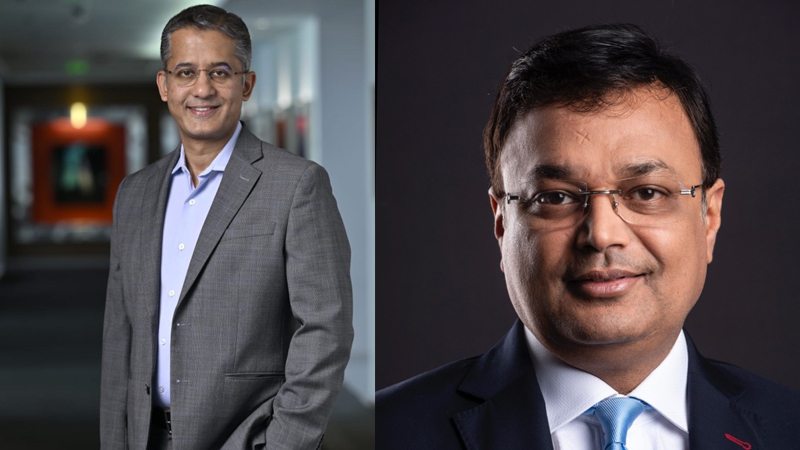
NEW DELHI: India’s embattled media industry has launched a pre-budget offensive, demanding sweeping tax relief to stop linear television from collapsing and digital platforms from drowning in disputes.
The Indian Broadcasting & Digital Foundation (IBDF) and the Indian Digital Media Industry Foundation (IDMIF) want the government to slash GST on subscriptions from 18 per cent to 5 per cent, warning that current rates are strangling affordability whilst trapping billions in working capital.
Traditional television is haemorrhaging cash. Rising costs, shrinking advertising revenue and brutal cash-flow constraints are squeezing broadcasters just as viewers migrate to streaming platforms. Digital services, meanwhile, face mounting litigation as complex supply chains and evolving business models trigger tax ambiguity at every turn.
Kevin Vaz, president of both foundations and chief executive of entertainment at JioStar, cast the appeal in national terms. “Television and online curated content services have become essential, mass-access platforms for millions of Indian households, providing dependable access to entertainment, sports, news and learning,” he said. “At a time when the media ecosystem is navigating structural shifts, it is important that the tax framework reflects the public value and scale of these services.”
Vaz argued that rational GST reform could drive adoption. “A more rational and contemporary GST approach can make subscriptions more affordable, support wider adoption, and meaningfully enhance disposable incomes, especially in price-sensitive markets,” he said. “Such reforms would not only help revive consumer demand and strengthen the media and entertainment value chain, but also advance national priorities of Digital India, ease of doing business and inclusive growth.”
The industry wants more than a rate cut. It demands parity across platforms—so broadcast and streaming services face identical tax treatment—and fixes for the inverted duty structure that leaves input tax credits stranded even when companies are owed refunds.
Working-capital relief sits at the heart of the pitch. Broadcasters want GST liability on government contracts tied to actual payment receipt, complaining that dilatory state agencies force them to fund tax bills upfront. They also seek permission to use input tax credits against reverse-charge liabilities, arguing the current ban drains cash whilst credits sit unused.
For operators working across multiple states, the groups proposed a large-taxpayer unit under GST to consolidate audits and end the chaos of overlapping state scrutiny. They flagged technical glitches in the GST network, particularly state-level validations that block input credit transfers during mergers, as needless barriers to consolidation.
On direct taxes, the industry pushed for an amendment to Section 72A of the Income Tax Act to allow loss carry-forwards in media mergers, bringing the sector into line with other services. It also wants the domestic definition of “royalty” aligned with tax treaties to settle recurring disputes over withholding tax on transponder hire charges.
Avinash Pandey, secretary general of IBDF, framed affordability as the lever for reach. “At the heart of IBDF-IDMIF budget submission is a simple principle: affordability drives accessibility,” he said. “When the cost of a television or digital subscription is reduced, its power to inform, educate, and unify the nation is multiplied.”
Pandey pressed the argument further. “A rationalisation of the GST structure is not just a fiscal correction; it is an investment in a more connected and digitally inclusive India,” he said. “It will put money back into the hands of consumers, stimulate the creative economy, and ensure that the primary screens of modern India are within reach of every household, thus truly powering the vision of a self-reliant and digitally empowered society.”
The foundations have set Budget 2026-27 as a litmus test. Without certainty, faster refunds and cash-flow relief, they warn, the sector’s ability to fund content and technology upgrades will remain crippled—and India risks watching its own media industry wither whilst global platforms feast.

Netflix celebrates a decade in India with Shah Rukh Khan-narrated tribute film

Delhivery chairman Deepak Kapoor, independent director Saugata Gupta quit board

Meta appoints Anuvrat Rao as APAC head of commerce partnerships

Brnd.me enters Europe as haircare brands power global expansion

TechnoSport taps quick commerce with launch on Slikk’s 60-minute platform

Jitendra Singh joins Reliance Industries as senior vice president, special projects

Tinder brings real-world dating experiences to North East India

These ’90s fashion trends are making a comeback in 2017
The final 6 ‘Game of Thrones’ episodes might feel like a full season
According to Dior Couture, this taboo fashion accessory is back
The old and New Edition cast comes together to perform
Phillies’ Aaron Altherr makes mind-boggling barehanded play
Uber and Lyft are finally available in all of New York State
Disney’s live-action Aladdin finally finds its stars
Netflix celebrates a decade in India with Shah Rukh Khan-narrated tribute film
Delhivery chairman Deepak Kapoor, independent director Saugata Gupta quit board
Meta appoints Anuvrat Rao as APAC head of commerce partnerships
Brnd.me enters Europe as haircare brands power global expansion
TechnoSport taps quick commerce with launch on Slikk’s 60-minute platform
Jitendra Singh joins Reliance Industries as senior vice president, special projects
Tinder brings real-world dating experiences to North East India
-
 iWorld3 months ago
Tips Music turns up the heat with Tamil party anthem Mayangiren
-
 iWorld12 months ago
BSNL rings in a revival with Rs 4,969 crore revenue
-
 I&B Ministry3 months ago
India steps up fight against digital piracy
-
 MAM3 months ago
HoABL soars high with dazzling Nagpur sebut
-
 iWorld2 days ago
Netflix celebrates a decade in India with Shah Rukh Khan-narrated tribute film
-
 News Broadcasting6 months ago
Wion marks Independence Day with global showcase of India’s spirit
-
 iWorld3 months ago
The Night Manager returns with new secrets, new spies and old scars
-

 I&B Ministry2 months ago
Centre drafts OTT rules to boost access for hearing disabled