Hindi
Gujarat in focus 2 documentaries released

MUMBAI: Film-maker Rakesh Sharma today released his latest films for previews in Gujarat.The two new films — Khedu Mora Re and Chet‘ta Rejo — have been researched over the last couple of years and shot during the last eight months. Speaking about his new films, Rakesh Sharma said, “Ever since I started showing Final Solution around, many people urged me to do follow-up films as well. I wanted to go beyond highlighting the events of 2002 and the State and Sangh Parivar‘s complicity, which by now has been well-documented, especially after the Tehelka expose . These films are also in the nature of my response to Mr. Modi and his propaganda as a member of civil society.”
Khedu Mora Re (62 minutes)
This film specifically deals with the myth of ‘Vibrant Gujarat‘. The film graphically documents the phenomenon of farmer suicides in Gujarat. It also deals with farmers‘ opposition to SEZs as well as widespread anger against the Modi government and its lopsided policies which many farmers in the film claim are tailored to suit corporates and industries. The much-hyped ‘ Sujalam Sufalam‘ scheme is probed at the ground level, especially during the recent floods in Saurashtra -where farmers squarely blame this scheme for their misfortune. Says a farmer in the film, “Till a couple of years ago, there was never a flood in Gokharwada (district Surendranagar) but ever since this ‘ Sujalam Sufalam‘, our village and lands get submerged every year due to these new check dams, faulty planning and construction. Modi keeps announcing packages worth hundreds of crores, but the reality is that the people are yet to receive even 5 Rupees out of the post-flood package announced for 2005! And now this flood in 2007 – it has destroyed us totally.”
A strand that runs through is a specific RTI (Right to Information ) campaign designed by the film-maker. Filed through activist Bharat Jhala, the information nails government lies and exposes its attempts to suppress the truly horrifying scale of farmer suicides in Gujarat. Says Rakesh Sharma, “Modi has been trying to reinvent himself as Vikaspurush, hoping that glitzy films and investor summits will whitewash his image as the butcher of Gujarat. I felt it was critical to examine the true story behind the hype, but also realized that the film is liable to be attacked and its credibility challenged. That‘s why I chose the RTI route to use the government‘s own figures to bring out the true story.”
“Modi claimed in a TV interview to NDTV on March 14, 2007 that no farmer commits suicide in Gujarat,” continues Rakesh Sharma. “A month later, he admitted to 148 suicides on the floor of the assembly. Official data that we finally got in Oct 10, 2007, five months after we filed queries, confirms 498 suicides formally. However, even this list is partial as it does not feature several suicide stories painstakingly documented in the film! As many suicides are passed off as accidents, we also filed RTI queries seeking details of all accidental deaths. Of the 6,695 farmers who died in “accidents”, over 4000 have not been paid any ‘Kisan Vima Yojana‘ money (we‘ve informally learnt that insurance companies have denied many such “accident” claims as many of these are suicides)! Amazingly, on Oct 10 itself, the day the Gujarat government gave us RTI data confirming 498 suicides, an official ad released on ETV categorically stated that there are no suicides in Gujarat and people should not believe in false propaganda. The ad was obviously in response to the media coverage, press conferences and film excerpts that appeared in end Sept and October!”
The film features several suicide stories done as very personal, intimate portraits. Opposition to land acquisition for SEZs in Bhavnagar district are intercut with the havoc unleashed by private companies in Kathivadar. The film itself reports 10-12 suicides in Amreli, Surendranagar, Bhavnagar, Rajkot, Bharuch and Surat. The RTI data reveals shocking district-wise figures – Rajkot (63 suicides), Junagad (85), Amreali (34), Mehsana (48), Nadiad (44), Jamnagar (55), Narmada (30) and even in Gandhinagar (13), right under the Chief Minister‘s nose!
Chet‘ta Rejo (72 minutes):
The back cover of the CD itself contextualizes the film – the saffronisation of the Dalit-OBC population and its consequent plight! The film looks specifically at the patterns of arrests and litigation since 2002. A majority of those charged with rioting, arson, murder etc are either tribals or Dalits and OBCs. An analysis of those arrested from 32 police stations in Ahmedabad suggests that of the 1577 detainees, only 30-odd were upper caste! Are these foot soldiers victims too? Cynically recruited, then discarded, left to rot in jails, what do the ‘perpetrators of the violence feel today about the VHP and the BJP?
The film has several personal portraits and conversations. Some of the issues that emerge:
1. 6-8 families of the deceased passengers of the fatal S-6 speak of how they were told people were going for a picnic tour, certainly not any karseva, that the VHP-BJP exploited their tragedy for electoral gains in 2002, how ever since then no one has come to help, how monies raised in their name never reached them…and how some of them who spoke in public about it have been threatened by the VHP!
2. VHP made tall promises to help the detained and the injured Hindutva cadre, but barring some rations and monetary help in the first month or two, not much came. The VHP/ BJP combine simply vanished. A telling account is of Kanti and Deepak from Gomtipur – both shot by the police, both appealed to the BJP for help (including the CM) but got nothing. When they went to the Togadia-owned Dhanvantri hospital for operations/ treatment, they were turned away, asked to bring a deposit of Rs 50,000 first!
3. Cops don‘t arrest the upper castes. They come and take away Dalits/OBCs – any men they can find in the area. The men are normally told to come along for haziri but then booked formally. Women in such families speak of the subsequent harassment and hardships.
4. Dalits ask why violence is engineered in their areas, and not in the posh upper caste areas? They ask a series of searching, probing questions and offer their own analyses throughout the film.
5. Dalit elders speak of how the Ram Mandir at Ayodhya doesn‘t mean much to them, as they cannot even enter the mandir in their own villages – upper castes prevent them from doing so till today!
7. An OBC Hindu boy and a Muslim boy, both friends, used to play cricket together in Behrampura. During the riots, both lost their right hands to bombs during the riots! The film ends with both of them appealing to the youth not to join such parties or get involved in such violence as no one lifts a finger to help — it is them and their families who will suffer forever.
The overall message that emerges through a range of voices – violence and politics of hate destroys the Dalit-OBC-Muslim communities; it is best to stay away from parties that preach hate.

Hindi
Boney Kapoor acquires remake rights of Tamil political satire Thalaivar Thambi Thalaimaiyil
Strong word-of-mouth turns Pongal satire into remake pick
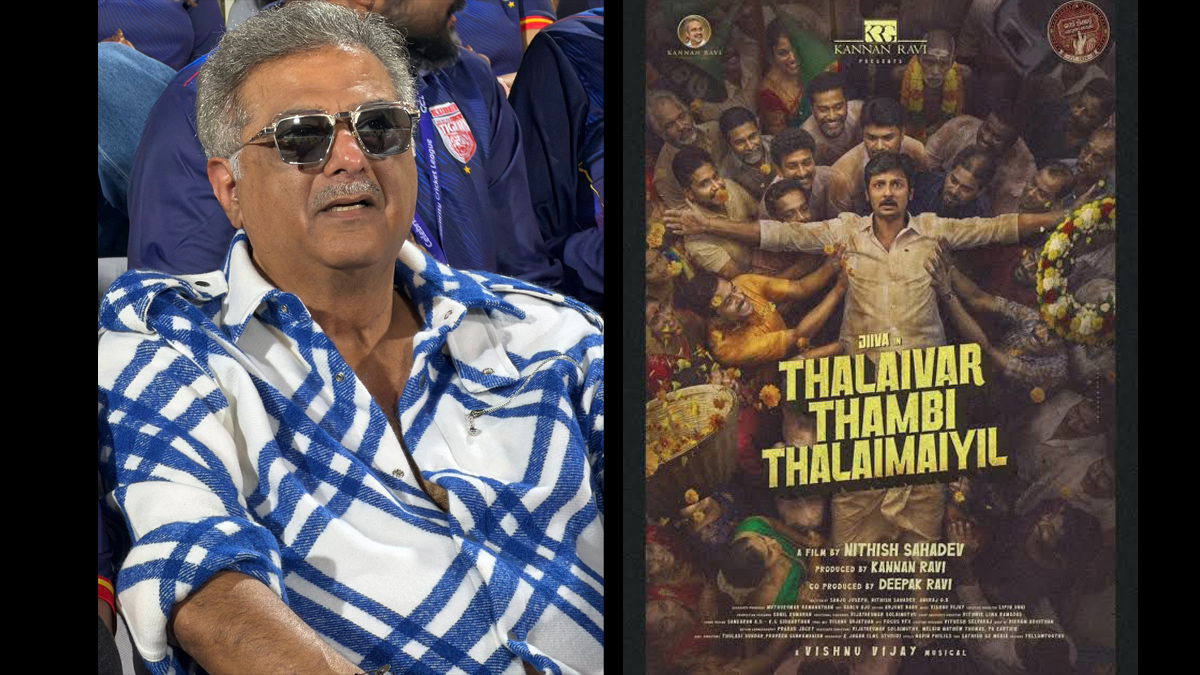
MUMBAI: A Pongal release, a village satire and a theatre visit in Coimbatore have turned into Boney Kapoor’s latest acquisition. The producer has secured the remake rights to the Tamil political satire Thalaivar Thambi Thalaimaiyil (TTT), a film that has been enjoying a strong theatrical run powered by word-of-mouth and praise for its sharp, rooted writing.
Set in a rural milieu, the story follows a panchayat leader thrown into disarray when a wedding and a funeral land on the same day. What unfolds is a swirl of satire and humour that skewers local politics, power games, bruised egos and family tensions, all anchored in the textures of everyday village life.
Kapoor first encountered the film earlier this year while in Coimbatore for the Celebrity Cricket League. With time to spare, he caught a screening at a local theatre. That viewing proved decisive. According to sources, the narrative style, performances and the film’s balance of political commentary and comedy caught his attention.
Interest quickly turned into intent. Kapoor reached out to the producers soon after to explore a remake. Talks gathered pace over the following weeks and came to a head last Friday at the film’s success party in Chennai, where Kapoor joined the celebrations and continued negotiations with the makers.
By the end of the evening, the deal was sealed, with Kapoor formally acquiring the remake rights.
For an industry constantly mining regional cinema for the next crossover story, the move is telling. A small-town satire with local flavour has found a national backer. And if Kapoor’s instincts hold, a tale born in one village may soon echo far beyond it.
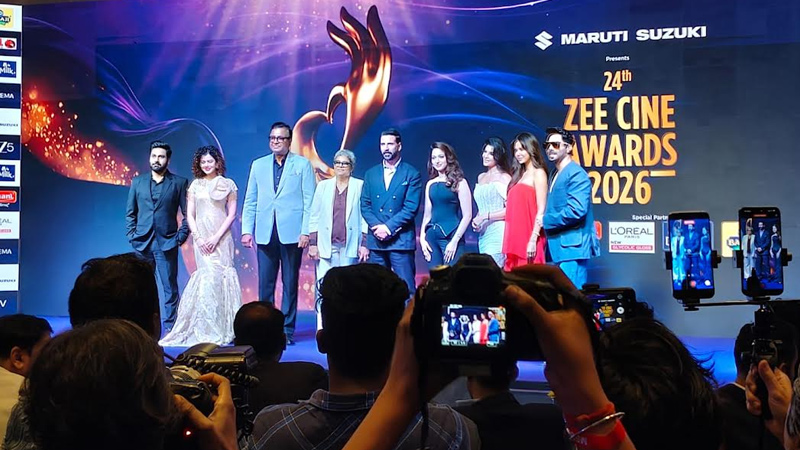
MUMBAI: When the applause gets louder than the dialogue, you know the fans have taken over. That was the unmistakable mood as Zee formally announced the Zee Cine Awards 2026, flipping the script to celebrate not just cinema’s stars, but the people who cheer them on the loudest.
The 24th edition of the awards marks a fresh chapter in Zee’s long-standing relationship with Hindi cinema, anchored in its fan-first philosophy, Fantertainment. This year’s theme, ‘Yeh Pal Hai Fans Ka’, reinforces a simple idea: cinema’s most powerful moments are shaped as much by audiences as by actors on screen. Presented by Maruti Suzuki, the awards aim to turn fandom into the main event.
The announcement, held in Mumbai, was anything but a routine press conference. Bollywood stars Akshay Kumar, Tamannaah Bhatia, Jacqueline Fernandez, Sonam Bajwa, Aparshakti Khurana, composer Mithoon and singer Palak Muchhal joined fans to kick off the celebrations, turning the launch into a high-voltage, participative spectacle.
Staying true to the theme, fans didn’t just watch the announcement, they drove it. Akshay Kumar took the lead, pulling fellow stars on stage and energising the room, before the unveiling of a live LED Fan Meter. Powered purely by audience cheers, the rising meter culminated in the reveal of the Zee Cine Awards 2026 ground event date, announced in unison with fans, blurring the line between performer and spectator.
The momentum continued as Tamannaah Bhatia, Jacqueline Fernandez, Sonam Bajwa and Aparshakti Khurana recreated iconic hook steps, joined by Mithoon and Palak Muchhal for music-led interactions. Games, spontaneous performances and playful banter kept the focus firmly on shared moments, underscoring the evolving bond between cinema and its audience.
Beyond the launch, the awards will roll out as a multi-platform journey across television, digital, print and fan-led experiences. The aim is sustained engagement from the first announcement to awards night cementing fandom as a cultural force rather than a footnote.
Commenting on the milestone edition Zee head of advertisement revenue, broadcast & digital Laxmi Shetty said the 24th Zee Cine Awards continue to draw strength from the network’s omni-channel ecosystem, reflecting how audiences consume content today across TV, digital and social platforms. She noted that long-standing brand associations, including Maruti Suzuki’s three-year partnership and support from brands such as Hell Energy, underline the platform’s scale, trust and cultural relevance.
As Zee Cine Awards 2026 gathers pace, one thing is clear: this year, the loudest cheers won’t just echo in the auditorium, they’ll shape the show itself.
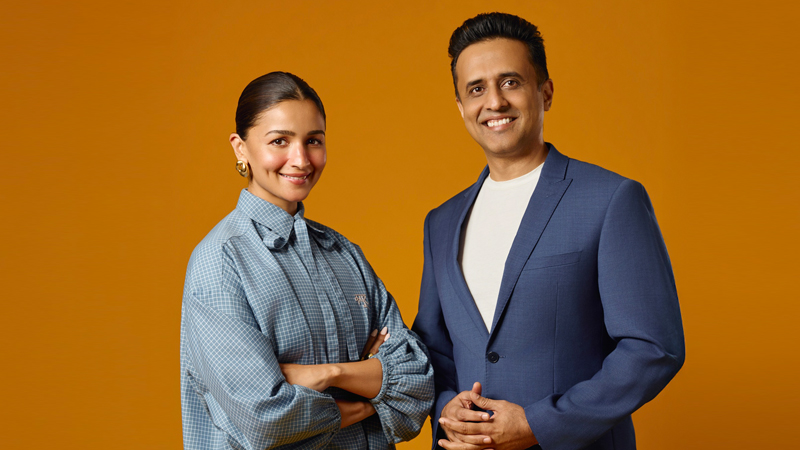
MUMBAI: Prime Video has found its next feel-good original, and it comes with a healthy dose of heart, humour and youthful chaos. The streaming platform has announced Don’t Be Shy, a coming-of-age romantic comedy produced by Alia Bhatt and Shaheen Bhatt under their banner, Eternal Sunshine Productions.
Written and directed by Sreeti Mukerji, the film follows Shyamili ‘Shy’ Das, a 20-year-old who believes her life is neatly mapped out until it suddenly is not. What follows is a relatable tumble through friendship, love and the awkward art of growing up, when plans unravel and certainty gives way to self-discovery.
The project is co-produced by Grishma Shah and Vikesh Bhutani, with music composed by Ram Sampath, adding to the film’s promise of warmth and energy. Prime Video describes the story as light-hearted yet emotionally grounded, with a strong female-led narrative at its core.
Prime Video India director and head of originals Nikhil Madhok, said the platform was delighted to collaborate with Eternal Sunshine on a story that blends sincerity with humour. He noted that the film’s fresh writing, earnest characters and infectious music make it an easy, engaging watch for audiences well beyond its young adult setting.
For Alia Bhatt, Don’t Be Shy reflects the kind of storytelling Eternal Sunshine set out to champion. She said the film stood out for its honesty, its coming-of-age perspective and Mukerji’s passion, which she felt was deeply woven into the narrative. Bhatt also praised Prime Video for supporting distinctive voices and bold creative choices.
With its breezy tone and familiar emotional beats, Don’t Be Shy aims to charm viewers whether they are rom-com regulars or simply in the mood for a warm, unpretentious story about life refusing to stick to the plan.


MIB sets OTT accessibility rules, mandates captions and audio description

Boney Kapoor acquires remake rights of Tamil political satire Thalaivar Thambi Thalaimaiyil

Netflix India names Rekha Rane director of films and series marketing

Zabeen signs off from TV9 after shaping the network’s public voice

Dhawan steps up to bat for Delhi’s grassroots sports push

Orient Beverages pops the fizz with steady Q3 gains and rising profits

Cheekatilo shines in the dark with record debut on Prime Video

These ’90s fashion trends are making a comeback in 2017
The final 6 ‘Game of Thrones’ episodes might feel like a full season
According to Dior Couture, this taboo fashion accessory is back

Swiggy Instamart’s GOV surges 103 per cent year on year to Rs 7,938 crore
The old and New Edition cast comes together to perform
Phillies’ Aaron Altherr makes mind-boggling barehanded play
Uber and Lyft are finally available in all of New York State
MIB sets OTT accessibility rules, mandates captions and audio description
Boney Kapoor acquires remake rights of Tamil political satire Thalaivar Thambi Thalaimaiyil
Netflix India names Rekha Rane director of films and series marketing
Zabeen signs off from TV9 after shaping the network’s public voice
Dhawan steps up to bat for Delhi’s grassroots sports push
Orient Beverages pops the fizz with steady Q3 gains and rising profits
Cheekatilo shines in the dark with record debut on Prime Video
-
 e-commerce3 weeks ago
Swiggy Instamart’s GOV surges 103 per cent year on year to Rs 7,938 crore
-

 News Headline2 months ago
From selfies to big bucks, India’s influencer economy explodes in 2025
-

 News Broadcasting2 weeks ago
Mukesh Ambani, Larry Fink come together for CNBC-TV18 exclusive
-
 iWorld5 months ago
Billions still offline despite mobile internet surge: GSMA
-

 News Headline2 months ago
2025: The year Indian sports saw chaos, comebacks, and breakthroughs
-

 Applications2 months ago
28 per cent of divorced daters in India are open to remarriage: Rebounce
-
 MAM2 years ago
Costa Coffee becomes official coffee partner of Olympic Games Paris 2024
-
 News Headline2 months ago
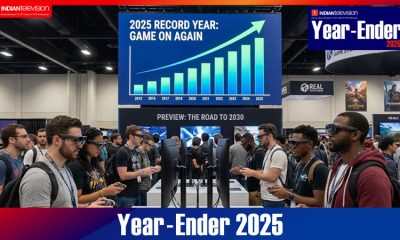
Game on again as 2025 powers up a record year and sets the stage for 2030