
MAM
Why modern dating is shorter, sharper and more honest: Ashley Madison report


MUMBAI: Romance, it seems, has had a reality check. In a world squeezed by inflation, job jitters and general life overload, people are rethinking what they want from relationships and how much energy they are willing to spend chasing them. The result is a new dating mood that favours honesty, discretion and shorter, sharper connections.
Welcome to the era of the microromance.
According to a recent Ashley Madison member survey, many people are no longer chasing the fairy tale of one partner meeting every emotional need. Instead, they are opting for brief, intense connections that offer comfort, excitement or escape, without the pressure of lifelong promises or neatly defined labels.
Nearly half of respondents, 49 per cent, said that during stressful periods such as a cost of living crisis, they seek additional relationships alongside their primary one. The motivation is not rebellion so much as relief. The thrill of meeting someone new, the boost of feeling desired, or simply a break from routine all ranked high. Women were even more likely to say this than men, with 50 per cent of female members compared to 43 per cent of male members reporting the same behaviour.
There is also a growing belief that spreading emotional needs across more than one partner can make life feel lighter. Forty one per cent of respondents said having multiple partners, each offering different positive qualities, would help them cope better during difficult times than relying on one person to have it all. In short, romance is being redesigned to reduce pressure on everyone involved.
The stress driving this shift is not hard to find. Inflation topped the list of concerns affecting how people approach relationships, cited by 27 pe rcent of members overall. Among women, the figure rose to 33 per cent. Other anxieties included recession fears, political uncertainty, housing instability and shaky employment prospects. With so much weighing people down, it is little wonder that many want to cut to the chase emotionally and connect faster.
At the same time, dating is getting more honest.
After years of carefully curated profiles and polished first dates, many people are tired of the performance. Dating app fatigue has set in, fuelled by mismatches between online personas and real life encounters, and the sting of being ghosted after early promise.
The response has been a renewed appetite for authenticity. People are increasingly upfront about who they are, what they want and what they definitely do not. Tammy Nelson, sex and relationship expert and consultant for Ashley Madison, said she sees this shift clearly in her clinical work.
People, she explained, are exhausted by pretending. Being real on a first date now means setting boundaries early, sharing values and being clear about emotional availability. It also means allowing someone to meet the real person, not a highlight reel designed to impress. This kind of honesty is especially important in discreet or nontraditional relationships, where transparency sets the tone for trust.
Still, authenticity has its limits. While openness with potential partners is in, oversharing with the wider world is firmly out.
Privacy has emerged as one of the most prized commodities in modern romance. After years of broadcasting every milestone online, many people are craving the luxury of keeping parts of their lives off camera. High profile viral moments and everyday incidents alike have shown how quickly private moments can become public property.
In a recent survey, 61 per cent of Ashley Madison members said they chose the platform specifically for its promise of discretion. As Nelson puts it, privacy has become more valuable than lavish dates or expensive gifts. Time spent with someone who understands caution around sensitive details now carries its own appeal.
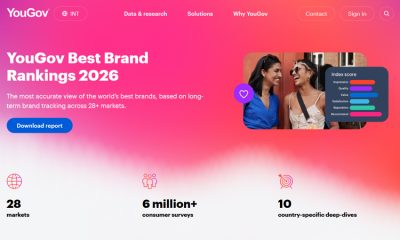
This desire for clear boundaries also extends to the workplace. Mixing business with pleasure has lost much of its shine, particularly for women. Data from a YouGov study across 11 countries found that almost one in four women said they would never consider a romantic relationship with a colleague, compared to about one in six men.
Women appear more concerned about professional consequences, while men are more likely to worry about personal fallout. Either way, the message is clear. Office romances come with real risks, and many are choosing to keep their love lives firmly off the CV.
As dating adapts to a more stressful world, the trends point in one direction. Less performance, less pressure and fewer illusions. In their place are shorter connections, clearer conversations and a renewed respect for privacy. Love, it turns out, is not disappearing. It is simply learning to travel lighter.







Gurugram: Delhivery’s boardroom is being reset. Deepak Kapoor, chairman and independent director, has resigned with effect from April 1 as part of a planned board reconstitution, the logistics company said in an exchange filing. Saugata Gupta, managing director and chief executive of FMCG major Marico and an independent director on Delhivery’s board, has also stepped down.
Kapoor exits after an eight-year stint that included steering the company through its 2022 stock-market debut, a period that saw Delhivery transform from a venture-backed upstart into one of India’s most visible logistics platforms. Gupta, who joined the board in 2021, departs alongside him, marking a simultaneous clearing of two senior independent seats.
“Deepak and Saugata have been instrumental in our process of recognising the need for and enabling the reconstitution of the board of directors in line with our ambitious next phase of growth,” said Sahil Barua, managing director and chief executive, Delhivery. The statement frames the exits less as departures and more as deliberate succession, a boardroom shuffle timed to the company’s evolving scale and strategy.
The resignations arrive amid broader governance recalibration. In 2025, Delhivery appointed Emcure Pharmaceuticals whole-time director Namita Thapar, PB Fintech founder and chairman Yashish Dahiya, and IIM Bangalore faculty member Padmini Srinivasan as independent directors, signalling a tilt towards consumer, fintech and academic expertise at the board level.
Kapoor’s tenure spanned Delhivery’s most defining years, rapid network expansion, public listing and the push towards profitability in a bruising logistics market. Gupta’s presence brought FMCG and brand-scale perspective during a period when ecommerce volumes and last-mile delivery economics were being rewritten.
The twin exits, effective from the new financial year, underscore a familiar corporate rhythm: founders consolidate, veterans rotate out, and fresh voices are ushered in to script the next chapter. In India’s hyper-competitive logistics race, even the boardroom does not stand still.
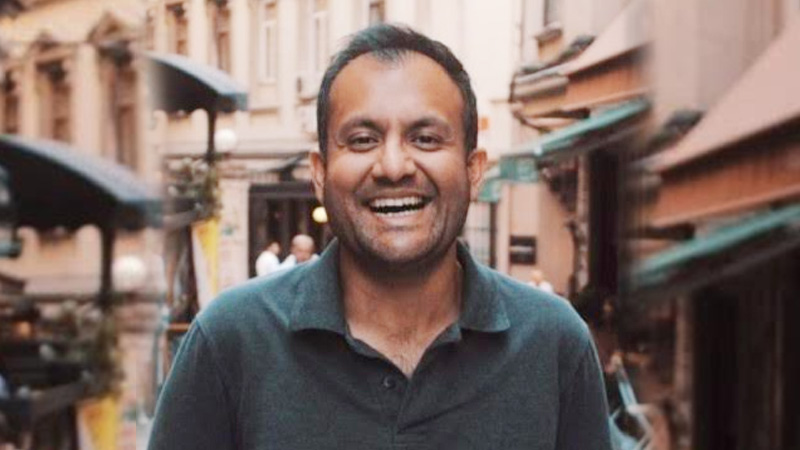
At Locofy.ai, Rao helped convert a three-year free beta into a paid engine, clocking 1,000 subscribers and 15 enterprise clients within ten days of launch in September 2024. The low-code startup, backed by Accel and top tech founders, is famed for turning designs into production-ready code using proprietary large design models.
Before that, Rao founded generative AI venture 1Bstories, which was acquired by creative AI platform Laetro in mid-2024, where he briefly served as managing director for APAC. Alongside operating roles, he has been an active investor and advisor since 2020, backing startups such as BotMD, Muxy, Creator plus, Intellect, Sealed and CricFlex through a creator-economy-led thesis.
Rao spent over eight years at Google, holding senior partnership roles across search, assistant, chrome, web and YouTube in APAC, and earlier cut his teeth in strategy consulting at OC&C in London and investment finance at W. P. Carey in Europe and the US.
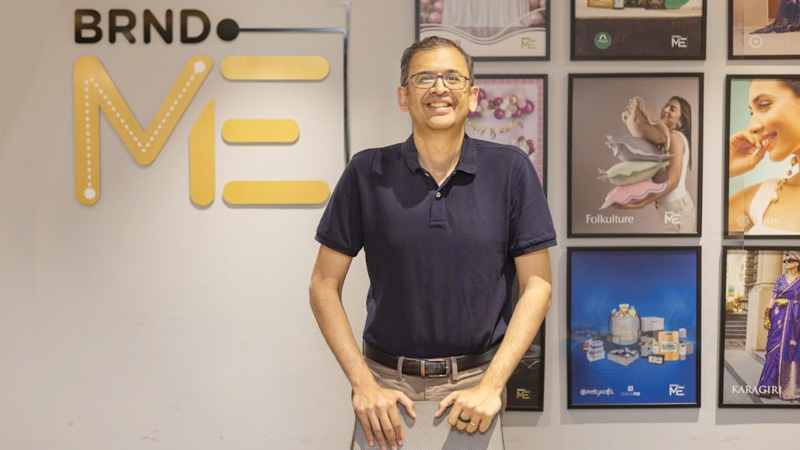
Bengaluru: Brnd.me, the global consumer brands company formerly known as Mensa Brands, has entered the European market following strong momentum across the Middle East, the United States and Canada.
The company has launched across the UK, Germany, France and Spain, with plans to expand into Italy, the Netherlands and Poland over the next year. The push is being led by its haircare and aromatherapy brands, Botanic Hearth and Majestic Pure, marking Brnd.me’s first structured expansion into Europe.
The European beauty market represents a total addressable opportunity of over $4 billion across haircare and aromatherapy, supported by high digital adoption and demand for accessible, performance-led products.
Brnd.me’s hair care and aromatherapy business currently operates at an annual run rate of around $6 million, with Botanic Hearth and Majestic Pure delivering roughly 10 per cent month-on-month growth, driven by expansion and rising repeat demand.
To support regional growth, the company has appointed a general manager based in Germany and is evaluating investments in warehousing and local team expansion.
Early traction has been strong. Within weeks of launch, Botanic Hearth’s rosemary hair oil ranked among the top five hair oils in Germany, signalling strong consumer pull in a competitive market.
Brnd.me founder and chief executive officer Ananth Narayanan, said Europe represents the next phase of the company’s international strategy. He added that the European business is expected to scale to a $10 million annual run rate by the end of 2026, with long-term ambitions to reach $60 million over the next six years.
The company’s Europe strategy centres on digital-first distribution, repeat demand and TikTok-led discovery, alongside direct-to-consumer expansion to strengthen brand equity and margins.
The move also aligns with growing EU–India trade engagement, supporting long-term sourcing and cross-border supply chains.

Netflix celebrates a decade in India with Shah Rukh Khan-narrated tribute film

Delhivery chairman Deepak Kapoor, independent director Saugata Gupta quit board

Meta appoints Anuvrat Rao as APAC head of commerce partnerships

Brnd.me enters Europe as haircare brands power global expansion

TechnoSport taps quick commerce with launch on Slikk’s 60-minute platform

Jitendra Singh joins Reliance Industries as senior vice president, special projects

Tinder brings real-world dating experiences to North East India

These ’90s fashion trends are making a comeback in 2017
The final 6 ‘Game of Thrones’ episodes might feel like a full season
According to Dior Couture, this taboo fashion accessory is back
The old and New Edition cast comes together to perform
Phillies’ Aaron Altherr makes mind-boggling barehanded play
Uber and Lyft are finally available in all of New York State
Disney’s live-action Aladdin finally finds its stars
Netflix celebrates a decade in India with Shah Rukh Khan-narrated tribute film
Delhivery chairman Deepak Kapoor, independent director Saugata Gupta quit board
Meta appoints Anuvrat Rao as APAC head of commerce partnerships
Brnd.me enters Europe as haircare brands power global expansion
TechnoSport taps quick commerce with launch on Slikk’s 60-minute platform
Jitendra Singh joins Reliance Industries as senior vice president, special projects
Tinder brings real-world dating experiences to North East India
-
 iWorld3 months ago
Tips Music turns up the heat with Tamil party anthem Mayangiren
-
 iWorld12 months ago
BSNL rings in a revival with Rs 4,969 crore revenue
-
 I&B Ministry3 months ago
India steps up fight against digital piracy
-
 MAM3 months ago
HoABL soars high with dazzling Nagpur sebut
-

 News Headline4 weeks ago
Preeti Sahni set to join TV9 Network in senior leadership role
-

 News Broadcasting5 days ago
Palki Sharma leaves Firstpost: Reports
-
 iWorld3 days ago
Netflix celebrates a decade in India with Shah Rukh Khan-narrated tribute film
-
 News Broadcasting6 months ago
Wion marks Independence Day with global showcase of India’s spirit