

Brands
Mass layoffs undoubtedly tarnish a brand’s image

Mumbai: Seems like Elon Musk’s takeover of Twitter has proved to be ominous! Ever since the business tycoon took the reins of the social media company in his hands and sacked a hefty number of employees, the news hasn’t been too favourable for the workforce of most digital and information technology (IT) companies. Not that it was any better before that. The last three months have been exceptionally bleak for IT personnel in India and across the globe. In a conversation with Indiantelevision.com, industry experts gauge factors concerning brand image and brand trust in such a situation.
To put things in perspective, as per Layoffs.fyi Tracker, around 787 companies across the world have let go of a total of 1,20,699 employees this year. Majority of them owe this to the global recession that the world is undergoing.
Meta, which had employed 87,000 people across the globe as of September, has fired the most number of employees ever done by any organisation—it sacked more than 11,000 employees, which is about 13 per cent of the social media firm’s global task force. Its Indian counterpart was affected too. The company has also decided to freeze hiring until Q1’24. The company’s feeble Q3 performance and a rise in the overall costs of the firm by a fifth in the previous quarter made Meta CEO Mark Zuckerberg take such a step.
After Musk stepped in at the helm of Twitter, he dismissed about 3,700 employees (including the top-level management of the firm), which amounts to about 50 per cent of the company’s overall working strength. The marketing and communications team of the social media company’s India bureau was shown the exit door; a total of 180 people were fired from the Indian office. Musk reasoned that he couldn’t let the firm lose four million dollars a day.
Very recently, media and entertainment conglomerate Walt Disney announced a layoff as well as a freeze in its hiring process. The firm’s chief executive, Bob Chapek, made this decision as part of a cost-cutting measure as the firm’s streaming business goes through losses.
Computer software major, Microsoft, fired around 1,000 employees across multiple divisions last month, owing to setting business priorities and making structural adjustments. According to some media reports, chip maker Intel, was also considering job cuts by 20 per cent in the previous month. The organisation went through a dip in sales and profits in its second quarter performance this year.
Salesforce, an enterprise software company that had previously thought of sacking about 2,500 people, has let go of about 1,000 personnel. In what could be termed as a hypocritical scheme of events, edtech company Byju’s has fired about 2,500 employees in the name of cost-cutting and in turn hired one of the most expensive brand endorsers in the world, celebrity footballer Lionel Messi, for its social initiative.
Unacademy, the SoftBank-backed edtech giant, laid off about 10 per cent of its workforce, or about 350 employees, in accordance with the current funding crisis that is being faced by start-ups.
Udaan, a B2B e-commerce platform that raised $120 million last month, decided to forego hiring about 350 employees.
Also, media reports suggest that Snap, the company that runs Snapchat, was considering downsizing its staff by 20 per cent, in August. This was due to the 80 per cent drop in its stock price this year.
Affecting brand image
Considering that these are not just sizeable firms but also successful brands in their respective domains, how does this chain of mass layoffs affect the brand image of these companies?
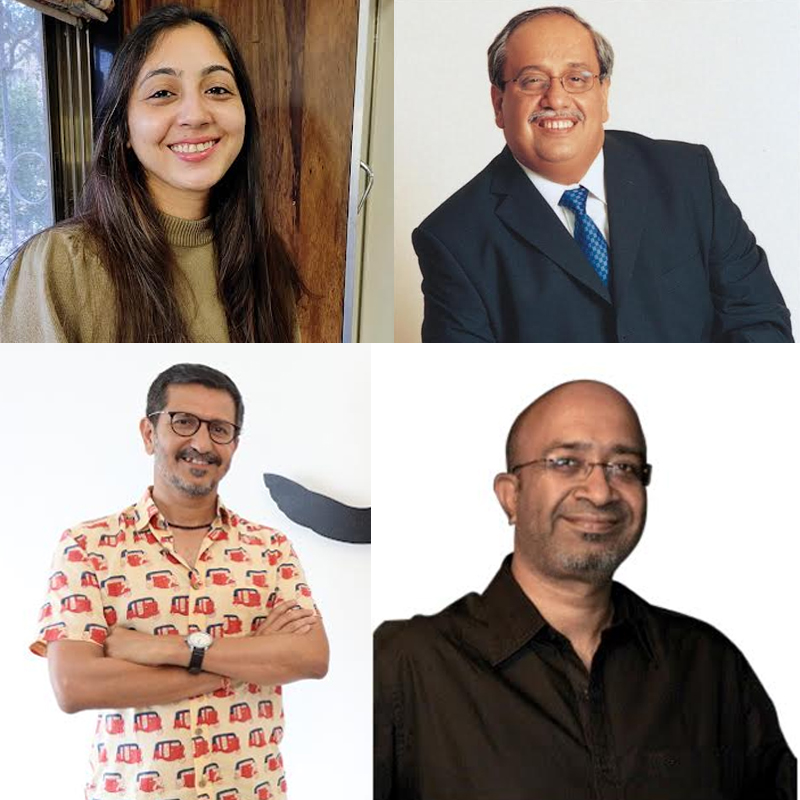
Brand guru and Samsika Marketing Consultants founder, chairman & managing director Jagdeep Kapoor explains that every company represented by a brand has two types of customers. External customers who are consumers. Internal customers who are employees.
“The brand’s image gets affected by both external customers (consumers) and internal customers (employees). Brands are built in the minds and hearts of customers. Any such large layoffs affect and shake hearts and minds, and hence the brand image does get affected,” he cites.
He adds, “Ultimately, companies are showcased through brands, which are served by employees and consumed by consumers. This kind of ‘earthquake’ leads to a ‘shake’ of internal and external confidence and faith. Instead of the brand being in the ‘make’ mode, it goes into the ‘shake’ mode.”
Sideways Consulting co-founder Abhijit Avasthi agrees that for certain brands, the image gets dented. “For the established tech companies, the consumer brand might not be affected that much, but the employer brand will take a beating for sure. For the newer ones, like the edtech ones, the consumer brand will suffer big time as well because it will raise questions about their ability to deliver the service well,” he points out.
Communications consultancy, Treize Communications founder & CEO Sonam Shah believes that while this does affect the brand’s image to a certain extent, employees today are more accepting of the fact that they can lose their jobs at any time.
She believes that if this is handled sensitively, the brand will not have a difficult time managing its public image. She goes on, “Public memory is short, and there is enough and more for the audience to read and talk about. Once people get new jobs and the situation gets better, the brand can work on reviving its brand image easily.”
Advocacy platform, Socxo chief marketing officer Ajit Narayan, feels that the layoffs all around will have a negative buzz, as is natural. And these are not one or two but in thousands. “People will talk about it. For a while. But then, as with everything else, people’s memories are short. And life goes on as usual. Depending on the company and how they manage the situation. And if they do turn around. Then all will be forgotten,” he emphasises.
He spells out, “The ‘be negative’ impact will be temporary. More like a setback. The ones that ease out of it better will be the ones that show empathy for those being told to go. And then there will be those who will be ego-driven. And if the turnaround does not bring results, they will carry the negative image with them.”
Building trust
By taking such harsh steps in terms of downsizing, how easy or difficult will it be for these firms to revive their brand name and build trust after being splashed about so negatively in the media and undoubtedly through word-of-mouth too?
Avasthi is of the opinion that it will take a fair bit of time. “Companies very often confuse increasing awareness with trust. Big budget splashes can help you build awareness, but earning trust takes time and patience and consistently delivering the goods with integrity,” he reiterates.
“Trust is another word for a brand. It takes decades to build brands and trust. It just takes a moment to let it slide. Building a brand or an organisation is difficult. Re-building it is even tougher because a lot of intangibles like feelings, emotions, and sentiments also need to be rebuilt, not only of internal and external customers but also of their families,” Kapoor highlights.
On the contrary, Shah thinks, “It will not be a very difficult road, but a lot of this depends on the business model of the company and if the company needs to restructure its core offerings or work on escalating the current ones.”
Narayan, too, thinks that this is a temporary phase, and most of the brands will come out of it over the next few quarters. “Also the market reality and future plans will have a major impact. There is a recession looming large, and this and other stories now will be washed away if that becomes a reality,” he specifies.
Layoffs particularly in the digital and IT industry
There is an economic recession across the globe, which has affected and continues to affect a lot of industries. Surprisingly, most of these layoffs seem to be happening in the digital and IT industries. What could be the reason behind this?
Avasthi mentions that the reasons for the layoffs vary from company to company, so one can’t attribute them to any generic reason. However, he brings out, “Broadly speaking, for some of the newer venture capital (VC) funded startups, it’s simply because they were badly run businesses that were trying to move ahead of themselves—trying to do too much in too little time—chasing unrealistic, unsustainable growth. There is a sense of misplaced arrogance that some of the founders had; it’s catching up with them.”
“For the big, established tech giants, I feel it’s another manifestation of insatiable capitalist greed. I can understand layoffs to save a sinking ship, but if you are sitting on billions of dollars, I can’t comprehend why it’s not okay to make a little less money for a few years and let people keep their livelihoods till optimal solutions are found. But then that’s a larger philosophical debate,” he expresses.
According to Narayan, tech is the industry which has given large scale employment and also the large paychecks. “The industry has been driven by the scale and adoption idea and not profitability. To achieve scale and the speed at which it is being envisaged, it needs people. So they hired for scaling plans,” he brings out.
Further, he points out, “The ‘what if’ of growth not leading to profitability had been discounted. And that is what is playing up as access to capital dries up. And demand for profitability goes up. Business is driven by profits. And the leaders of the business will have to keep that in focus as they run their businesses. Not just fancy talk of scale, growth, and adoption. This is the hard truth.”
Shah sheds light on some facts – the layoff spree has been frequently happening within the start-up and tech space. There was a phase for a few years, pre-pandemic, where IT companies and even start-ups had a series of layoffs. Pink slips were shown to employees.
She says, “The market and economic conditions are too dynamic for job stability, especially in the IT and tech sector. People who join here are aware of this. So what’s important here is how the process is executed and if all the HR policies and compensations are in place or not.”
“These things have happened in many industries. But the service sector, which is dependent on people, gets affected and highlighted more. But these companies and brands will rebound back after a time lag. One will have to watch to see whether these companies and brands have a permanent layoff or just a time lag off,” Kapoor signs off.









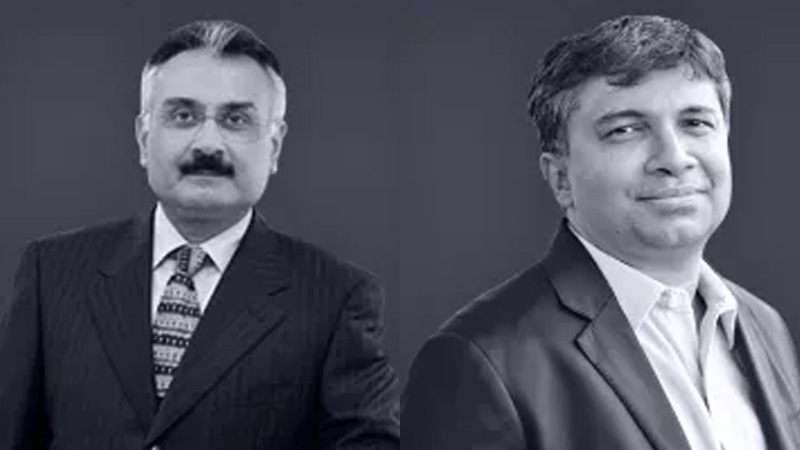
Gurugram: Delhivery’s boardroom is being reset. Deepak Kapoor, chairman and independent director, has resigned with effect from April 1 as part of a planned board reconstitution, the logistics company said in an exchange filing. Saugata Gupta, managing director and chief executive of FMCG major Marico and an independent director on Delhivery’s board, has also stepped down.
Kapoor exits after an eight-year stint that included steering the company through its 2022 stock-market debut, a period that saw Delhivery transform from a venture-backed upstart into one of India’s most visible logistics platforms. Gupta, who joined the board in 2021, departs alongside him, marking a simultaneous clearing of two senior independent seats.
“Deepak and Saugata have been instrumental in our process of recognising the need for and enabling the reconstitution of the board of directors in line with our ambitious next phase of growth,” said Sahil Barua, managing director and chief executive, Delhivery. The statement frames the exits less as departures and more as deliberate succession, a boardroom shuffle timed to the company’s evolving scale and strategy.
The resignations arrive amid broader governance recalibration. In 2025, Delhivery appointed Emcure Pharmaceuticals whole-time director Namita Thapar, PB Fintech founder and chairman Yashish Dahiya, and IIM Bangalore faculty member Padmini Srinivasan as independent directors, signalling a tilt towards consumer, fintech and academic expertise at the board level.
Kapoor’s tenure spanned Delhivery’s most defining years, rapid network expansion, public listing and the push towards profitability in a bruising logistics market. Gupta’s presence brought FMCG and brand-scale perspective during a period when ecommerce volumes and last-mile delivery economics were being rewritten.
The twin exits, effective from the new financial year, underscore a familiar corporate rhythm: founders consolidate, veterans rotate out, and fresh voices are ushered in to script the next chapter. In India’s hyper-competitive logistics race, even the boardroom does not stand still.
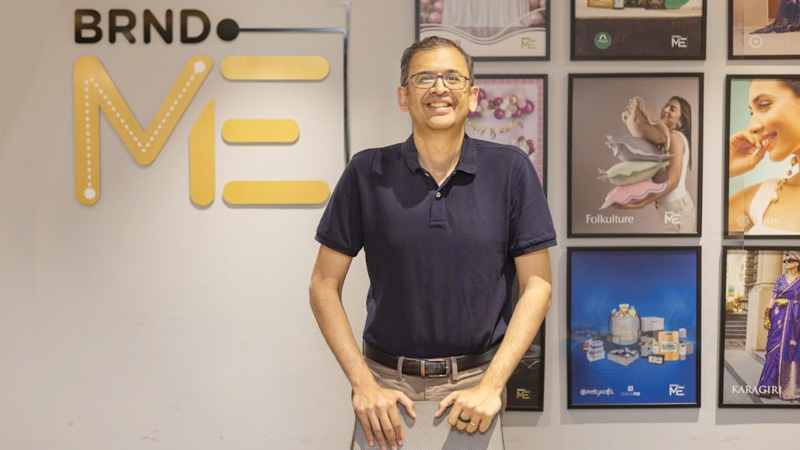
Bengaluru: Brnd.me, the global consumer brands company formerly known as Mensa Brands, has entered the European market following strong momentum across the Middle East, the United States and Canada.
The company has launched across the UK, Germany, France and Spain, with plans to expand into Italy, the Netherlands and Poland over the next year. The push is being led by its haircare and aromatherapy brands, Botanic Hearth and Majestic Pure, marking Brnd.me’s first structured expansion into Europe.
The European beauty market represents a total addressable opportunity of over $4 billion across haircare and aromatherapy, supported by high digital adoption and demand for accessible, performance-led products.
Brnd.me’s hair care and aromatherapy business currently operates at an annual run rate of around $6 million, with Botanic Hearth and Majestic Pure delivering roughly 10 per cent month-on-month growth, driven by expansion and rising repeat demand.
To support regional growth, the company has appointed a general manager based in Germany and is evaluating investments in warehousing and local team expansion.
Early traction has been strong. Within weeks of launch, Botanic Hearth’s rosemary hair oil ranked among the top five hair oils in Germany, signalling strong consumer pull in a competitive market.
Brnd.me founder and chief executive officer Ananth Narayanan, said Europe represents the next phase of the company’s international strategy. He added that the European business is expected to scale to a $10 million annual run rate by the end of 2026, with long-term ambitions to reach $60 million over the next six years.
The company’s Europe strategy centres on digital-first distribution, repeat demand and TikTok-led discovery, alongside direct-to-consumer expansion to strengthen brand equity and margins.
The move also aligns with growing EU–India trade engagement, supporting long-term sourcing and cross-border supply chains.

NATIONAL: TechnoSport has launched on Slikk, the ultra-fast fashion app offering 60-minute delivery, as the activewear brand accelerates its push into quick commerce to capture Gen Z and young millennial shoppers.
The debut brings more than 150 high-performance styles to Slikk’s platform, with an average selling price of Rs 450, expanding TechnoSport’s reach across over 80 pin codes.
The partnership follows strong momentum for TechnoSport across Q-commerce channels, where the brand has recorded around 60 per cent volume growth over the past six months. The company expects quick commerce to contribute nearly 20 per cent of its revenue in the coming years as hyperlocal delivery gains scale.
Slikk, which recently raised $3.2 million in seed funding led by Lightspeed, has rapidly gained popularity among youth consumers seeking speed, trend relevance and impulse-led shopping experiences.
Activewear remains one of Slikk’s fastest-growing categories, driven by shoppers increasingly treating fitness-led fashion as an everyday essential. The platform has reported a 30-fold year-on-year increase in items sold, reflecting rising demand for performance wear that blends comfort with style.
TechnoSport chief executive officer Puspen Maity, said the collaboration would help the brand engage more closely with young consumers whose fashion choices are shaped by instant needs and lifestyle aspirations. He added that rapid delivery bridges the gap between intent and purchase, allowing shoppers to access activewear exactly when they want it.

Mukesh Ambani, Larry Fink come together for CNBC-TV18 exclusive

Nielsen launches co-viewing pilot to sharpen TV measurement

Netflix celebrates a decade in India with Shah Rukh Khan-narrated tribute film

Delhivery chairman Deepak Kapoor, independent director Saugata Gupta quit board

Meta appoints Anuvrat Rao as APAC head of commerce partnerships

Brnd.me enters Europe as haircare brands power global expansion

TechnoSport taps quick commerce with launch on Slikk’s 60-minute platform

These ’90s fashion trends are making a comeback in 2017
The final 6 ‘Game of Thrones’ episodes might feel like a full season
According to Dior Couture, this taboo fashion accessory is back
The old and New Edition cast comes together to perform
Phillies’ Aaron Altherr makes mind-boggling barehanded play
Uber and Lyft are finally available in all of New York State
Disney’s live-action Aladdin finally finds its stars
Mukesh Ambani, Larry Fink come together for CNBC-TV18 exclusive
Nielsen launches co-viewing pilot to sharpen TV measurement
Netflix celebrates a decade in India with Shah Rukh Khan-narrated tribute film
Delhivery chairman Deepak Kapoor, independent director Saugata Gupta quit board
Meta appoints Anuvrat Rao as APAC head of commerce partnerships
Brnd.me enters Europe as haircare brands power global expansion
TechnoSport taps quick commerce with launch on Slikk’s 60-minute platform
-
 News Broadcasting2 days ago
Mukesh Ambani, Larry Fink come together for CNBC-TV18 exclusive
-
 iWorld5 days ago
Netflix celebrates a decade in India with Shah Rukh Khan-narrated tribute film
-
 I&B Ministry3 months ago
India steps up fight against digital piracy
-
 iWorld3 months ago
Tips Music turns up the heat with Tamil party anthem Mayangiren
-
 MAM2 days ago
Nielsen launches co-viewing pilot to sharpen TV measurement
-
 iWorld12 months ago
BSNL rings in a revival with Rs 4,969 crore revenue
-
 MAM3 months ago
HoABL soars high with dazzling Nagpur sebut
-
 News Broadcasting2 months ago
CNN-News18 dominates Bihar election coverage with record viewership
