
MAM
Digital warfare: Political parties sink over ₹56cr into ads ahead of crucial Maharashtra civic polls


MUMBAI: As Maharashtra prepares for one of its most high-stakes local elections on 15 January, political parties have shifted their primary battleground from the streets to the smartphone screen. Combined disclosures from Meta’s Ad Library and the Google Ads Transparency Centre reveal that political entities have spent a staggering ₹56–₹57 crore on digital advertising between mid-December 2025 and January 2026.
With polling set for 29 municipal corporations, including the “cash-rich” Brihanmumbai Municipal Corporation (BMC), the surge in digital outlays reflects a strategic shift toward last-mile voter outreach in urban India.
The spending breakdown: BJP’s digital dominance
The ruling Bharatiya Janata Party (BJP) and its allies have emerged as the heavyweights in the digital arena, significantly outspending the opposition Maha Vikas Aghadi (MVA).
• Meta platforms (Facebook & Instagram): The BJP Maharashtra unit accounted for the lion’s share, spending approximately ₹36.15 crore. When including linked pages like “DevGatha” (promoting Deputy CM Devendra Fadnavis) and the official BJP Mumbai page, the total party-linked spend on Meta crossed ₹37.7 crore.
• Google & YouTube: The BJP and its aligned agencies (such as Dreamworth Solutions) spent roughly ₹11.1 crore.
• Opposition outreach: The Shiv Sena (UBT), led by Uddhav Thackeray, utilized a more concentrated approach, spending approximately ₹2.46 crore on Google platforms and maintaining a steady presence on Meta to counter the ruling alliance’s narrative.
Key campaign strategies: AI and video content
Industry experts tracking the 2026 polls note that the nature of political advertising has evolved. This election cycle is characterized by:
• AI-driven micro-targeting: Parties are using sophisticated algorithms to deliver personalized messages to specific demographics—targeting first-time voters in Mumbai, the working class in Thane, and the agrarian-urban mix in Nashik and Pune.
• Short-form video surge: A significant portion of the budget is being funneled into Instagram Reels and YouTube Shorts. “Video delivers higher recall in dense urban markets,” noted a digital consultant.
• Third-party surrogates: A notable trend this year is the rise of “shadow spending,” where third-party agencies and “community” pages run ads that align with party ideologies without using official party handles.
Election logistics: A state at a standstill
The scale of the election has prompted unprecedented administrative measures. Beyond the digital noise, here is how the state is preparing for the 15 January vote:
• Public and market holiday: The Maharashtra government has declared a public holiday tomorrow. In a rare move, the BSE and NSE will also remain shut for trading to allow employees to exercise their franchise.
• Dry days & security: A four-day “dry spell” (liquor ban) is in effect across all 29 corporation areas until the counting concludes on 16 January.
• Voting infrastructure: Over 3.48 crore voters are eligible to vote. In Mumbai alone, 10,231 booths have been set up for its 1.03 crore voters.
Why these polls matter
These elections are being held after a significant delay of nearly 34 months, during which most corporations were run by state-appointed administrators. For the Mahayuti (BJP, Shinde Sena, Ajit Pawar NCP) and the MVA (Congress, UBT Sena, Sharad Pawar NCP), these results are seen as a litmus test for the state leadership ahead of future legislative battles.
With the digital campaign window now officially closed, the fate of the 2,869 seats across Maharashtra now rests with the voters, as counting begins early morning on 16 January.







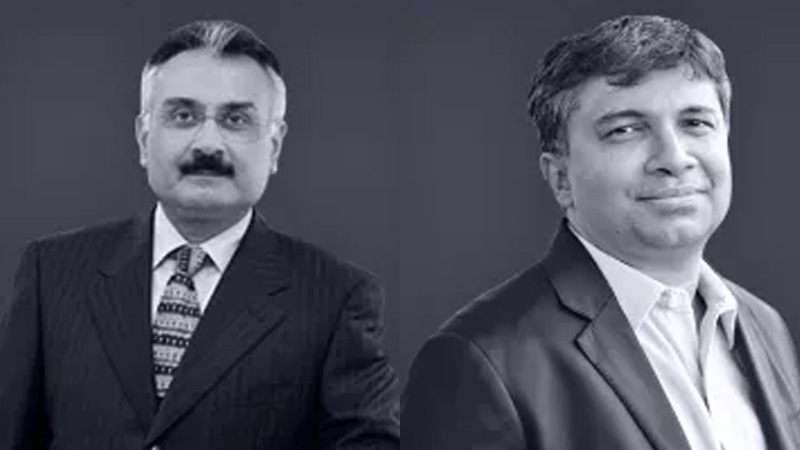
Gurugram: Delhivery’s boardroom is being reset. Deepak Kapoor, chairman and independent director, has resigned with effect from April 1 as part of a planned board reconstitution, the logistics company said in an exchange filing. Saugata Gupta, managing director and chief executive of FMCG major Marico and an independent director on Delhivery’s board, has also stepped down.
Kapoor exits after an eight-year stint that included steering the company through its 2022 stock-market debut, a period that saw Delhivery transform from a venture-backed upstart into one of India’s most visible logistics platforms. Gupta, who joined the board in 2021, departs alongside him, marking a simultaneous clearing of two senior independent seats.
“Deepak and Saugata have been instrumental in our process of recognising the need for and enabling the reconstitution of the board of directors in line with our ambitious next phase of growth,” said Sahil Barua, managing director and chief executive, Delhivery. The statement frames the exits less as departures and more as deliberate succession, a boardroom shuffle timed to the company’s evolving scale and strategy.
The resignations arrive amid broader governance recalibration. In 2025, Delhivery appointed Emcure Pharmaceuticals whole-time director Namita Thapar, PB Fintech founder and chairman Yashish Dahiya, and IIM Bangalore faculty member Padmini Srinivasan as independent directors, signalling a tilt towards consumer, fintech and academic expertise at the board level.
Kapoor’s tenure spanned Delhivery’s most defining years, rapid network expansion, public listing and the push towards profitability in a bruising logistics market. Gupta’s presence brought FMCG and brand-scale perspective during a period when ecommerce volumes and last-mile delivery economics were being rewritten.
The twin exits, effective from the new financial year, underscore a familiar corporate rhythm: founders consolidate, veterans rotate out, and fresh voices are ushered in to script the next chapter. In India’s hyper-competitive logistics race, even the boardroom does not stand still.
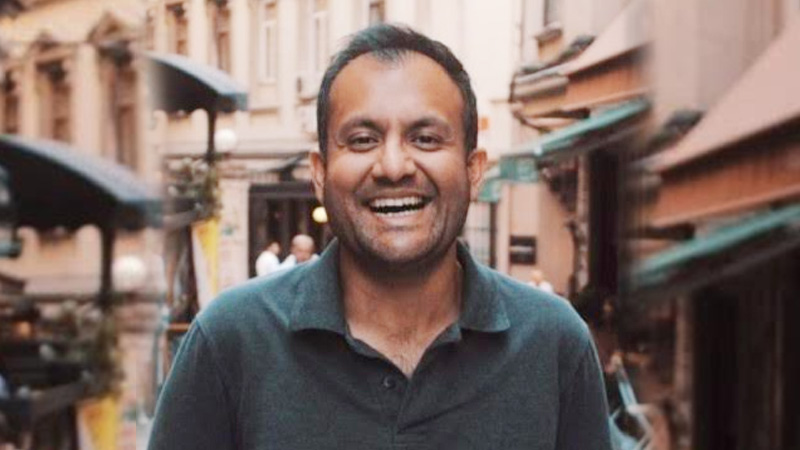
At Locofy.ai, Rao helped convert a three-year free beta into a paid engine, clocking 1,000 subscribers and 15 enterprise clients within ten days of launch in September 2024. The low-code startup, backed by Accel and top tech founders, is famed for turning designs into production-ready code using proprietary large design models.
Before that, Rao founded generative AI venture 1Bstories, which was acquired by creative AI platform Laetro in mid-2024, where he briefly served as managing director for APAC. Alongside operating roles, he has been an active investor and advisor since 2020, backing startups such as BotMD, Muxy, Creator plus, Intellect, Sealed and CricFlex through a creator-economy-led thesis.
Rao spent over eight years at Google, holding senior partnership roles across search, assistant, chrome, web and YouTube in APAC, and earlier cut his teeth in strategy consulting at OC&C in London and investment finance at W. P. Carey in Europe and the US.
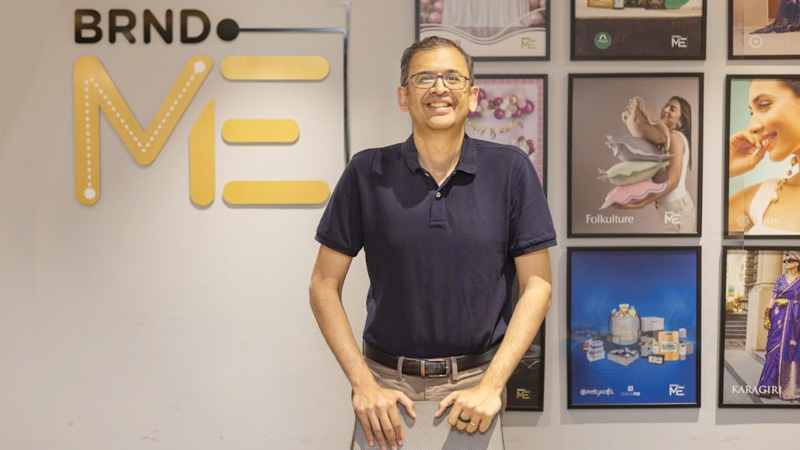
Bengaluru: Brnd.me, the global consumer brands company formerly known as Mensa Brands, has entered the European market following strong momentum across the Middle East, the United States and Canada.
The company has launched across the UK, Germany, France and Spain, with plans to expand into Italy, the Netherlands and Poland over the next year. The push is being led by its haircare and aromatherapy brands, Botanic Hearth and Majestic Pure, marking Brnd.me’s first structured expansion into Europe.
The European beauty market represents a total addressable opportunity of over $4 billion across haircare and aromatherapy, supported by high digital adoption and demand for accessible, performance-led products.
Brnd.me’s hair care and aromatherapy business currently operates at an annual run rate of around $6 million, with Botanic Hearth and Majestic Pure delivering roughly 10 per cent month-on-month growth, driven by expansion and rising repeat demand.
To support regional growth, the company has appointed a general manager based in Germany and is evaluating investments in warehousing and local team expansion.
Early traction has been strong. Within weeks of launch, Botanic Hearth’s rosemary hair oil ranked among the top five hair oils in Germany, signalling strong consumer pull in a competitive market.
Brnd.me founder and chief executive officer Ananth Narayanan, said Europe represents the next phase of the company’s international strategy. He added that the European business is expected to scale to a $10 million annual run rate by the end of 2026, with long-term ambitions to reach $60 million over the next six years.
The company’s Europe strategy centres on digital-first distribution, repeat demand and TikTok-led discovery, alongside direct-to-consumer expansion to strengthen brand equity and margins.
The move also aligns with growing EU–India trade engagement, supporting long-term sourcing and cross-border supply chains.

Netflix celebrates a decade in India with Shah Rukh Khan-narrated tribute film

Delhivery chairman Deepak Kapoor, independent director Saugata Gupta quit board

Meta appoints Anuvrat Rao as APAC head of commerce partnerships

Brnd.me enters Europe as haircare brands power global expansion

TechnoSport taps quick commerce with launch on Slikk’s 60-minute platform

Jitendra Singh joins Reliance Industries as senior vice president, special projects

Tinder brings real-world dating experiences to North East India

These ’90s fashion trends are making a comeback in 2017
The final 6 ‘Game of Thrones’ episodes might feel like a full season
According to Dior Couture, this taboo fashion accessory is back
The old and New Edition cast comes together to perform
Phillies’ Aaron Altherr makes mind-boggling barehanded play
Uber and Lyft are finally available in all of New York State
Disney’s live-action Aladdin finally finds its stars
Netflix celebrates a decade in India with Shah Rukh Khan-narrated tribute film
Delhivery chairman Deepak Kapoor, independent director Saugata Gupta quit board
Meta appoints Anuvrat Rao as APAC head of commerce partnerships
Brnd.me enters Europe as haircare brands power global expansion
TechnoSport taps quick commerce with launch on Slikk’s 60-minute platform
Jitendra Singh joins Reliance Industries as senior vice president, special projects
Tinder brings real-world dating experiences to North East India
-
 iWorld3 months ago
Tips Music turns up the heat with Tamil party anthem Mayangiren
-
 iWorld12 months ago
BSNL rings in a revival with Rs 4,969 crore revenue
-
 I&B Ministry3 months ago
India steps up fight against digital piracy
-
 MAM3 months ago
HoABL soars high with dazzling Nagpur sebut
-

 MAM2 months ago
Best Lightweight Sunscreens for Daily Use in India
-

 AD Agencies1 month ago
Divya Parkhi steps into client lead role at WPP Media
-

 Brands3 months ago
Casio times it right for modern love this wedding season
-

 Brands3 months ago
TCS unveils Team SDG Universe for young learners