
Digital Agencies
Culture Machine launches Intelligence Machine

MUMBAI: Culture Machine, one of the fastest growing digital video networks in Asia, which has always stood by its promise of providing quality content backed by cutting edge technology, takes its commitment further with the launch of Intelligence Machine platform.
Through its rich data driven insights, Intelligence Machine identifies the content recipe for brands and creators that resonates with their targeted audience and enables them to translate the insights into a reliable programming strategy. It indexes and analyzes over 1.5 billion videos across the digital universe on a daily basis.
Commenting on the launch, Culture Machine CEO and co-founder Sameer Pitalwalla said, “Social Platforms are the new cable operators; YouTube, Facebook and Twitter are all video platforms, and knowing what content to create, and to create that content at scale, across platforms, is at the heart of building a successful brand online. Intelligence Machine helps solve this problem and understand audiences and their taste preferences using cutting edge technology”.

“We at Culture Machine believe in the power of technology, which will be the key differentiator for success in the digital marketplace. Intelligence Machine provides unmatched insights on the best content type and format’s that resonates with the targeted audience for a given brand or product and enables the user to translate that insight into concrete actions. Think of it as a “moneyball” for content for brands & publishers”, added Culture Machine COO/CTO & co-founder Venkat Prasad.
Intelligence Machine’s key features include:-
· Identifying a brand’s share of voice across video platforms, in different geographies and online communities across earned and owned media.
· Benchmarking the brand against its industry on digital media and giving them a recipe to improve its standing.
· Discovering successful content formats for an audience segment in a given industry and topical trends in relation to them.
Founded in 2013 by Sameer Pitalwalla and Venkat Prasad, Culture Machine is a Digital Media Company that creates entertainment for the Internet generation by combining cutting edge technology with great content.
Culture Machine’s engineering team includes senior data scientists and some of the best software architects in the industry.
Culture Machine has offices and studio facilities in Mumbai, Delhi, Pune and Chennai and is a wholly owned subsidiary of The Aleph Group, Singapore.




BENGALURU: For years, creative teams have learned to live with ambiguity. Vague comments, last-minute changes, feedback that arrives without context, clarity, or conviction. It became part of the job – something teams worked around rather than getting it solved.
But as we head into 2026, that tolerance is wearing thin.
Creative work today moves faster, scales wider, and involves more stakeholders than before. Teams are producing more content across more formats, often with distributed collaborators and tighter timelines. In this environment, guesswork is no longer a harmless inconvenience. It’s a cost – to time, to budgets, and to creative mindspace.
The real problem isn’t feedback, it’s how it’s given
Most creative professionals you see today will tell you they’re not against feedback. In fact, they rely on it. Good feedback sharpens ideas, strengthens execution, and pushes work forward. The problem is ‘unclear’ feedback. When someone says “this doesn’t feel right” without context, they aren’t just revising – they’re basically decoding. They’re guessing what the problem might be, trying different directions, and burning time in the process. Multiply that by a few stakeholders and a few rounds, and suddenly days disappear.
In 2026, when teams are expected to deliver faster without compromising quality, interpretation is a luxury most can’t afford.
Scale has changed rverything
Creative projects used to be smaller and simpler. A designer, a manager, maybe one client contact. Feedback loops were short, even if they weren’t perfect.
Today, the same project might involve internal marketing teams, agencies, freelancers, brand reviewers, and regional teams. Everyone has a say. Everyone leaves comments. And often, those comments don’t agree. More people reviewing work means alignment matters more than ever. Clear feedback isn’t just about being nice to creative teams, it’s about keeping projects moving when complexity increases.
Guesswork quietly wears teams down
One of the less talked-about impacts of unclear feedback is what it does to people.
When feedback is vague or contradictory, creatives second-guess their decisions. They hesitate. They overwork. They keep extra time buffers “just in case.” Over time, confidence drops. Ownership fades. Work becomes safer, not stronger. Creative energy gets spent on managing uncertainty instead of pushing ideas forward. And in an industry already grappling with burnout, unclear feedback adds unnecessary mental load.
Actionable feedback is a shared skill
Clear feedback doesn’t mean controlling creative decisions or dictating every detail. It means being specific enough that someone knows what to do next.
Actionable feedback answers three basic questions:
What exactly needs attention?
Why does it matter?
What outcome are we aiming for?
This applies whether you’re reviewing a video frame, a design layout, or a copy draft. The clearer the feedback, the fewer follow-ups it creates. In 2026, teams that treat feedback as a skill and not an afterthought, will move faster with less friction.
Tools shape behaviour (whether we admit it or not)
The way feedback is delivered is often dictated by the tools teams use. Comments buried in long email threads, messages split across chat apps, or notes detached from the actual work all contribute to confusion.
When feedback lives outside the work, context often gets lost. When it’s disconnected from versions and timelines, decisions get questioned. When it’s scattered, accountability disappears. More teams are starting to realise that feedback problems aren’t just communication issues, they’re workflow issues. How work moves between people matters just as much as the work itself.
From Opinions To Alignment
One of the biggest shifts happening in creative teams is a move away from purely opinion-driven feedback. Instead of “I like this” or “I don’t,” teams are asking better questions:
● Does this meet the brief?
● Does this solve the problem?
● Does this align with the goal?
This change reduces unnecessary back-and-forth and helps feedback feel less personal and more productive. It also makes decisions easier to explain and defend. As creative work becomes more strategic, feedback has to support that shift.
2026 Is About Fewer Loops, Not Faster Loops
There’s a misconception that speed means moving through feedback cycles faster. In reality, the most creative teams aren’t just accelerating loops, they’re reducing them. Clear, actionable feedback upfront leads to fewer revisions later. Clear approval stages prevent last-minute surprises. Clear decisions stop work from circling endlessly.
In 2026, efficiency won’t come from working harder or longer. It will come from designing workflows that respect creative time and attention.
Ending guesswork is a mindset change
Ultimately, ending creative guesswork isn’t just about better tools or processes. It’s about mindset. It’s about recognising that clarity is an act of respect – for the work, for the people doing it, for the time invested and for the mindspace used. It’s about moving from “figure it out” to “here’s what we’re aiming for.”
Creative teams that embrace this shift will find themselves not only delivering faster, but also enjoying the process more. And in an industry built on imagination, that might be the most valuable outcome of all.
Digital Agencies
Kunal Wanvari steps up as senior brand and digital marketing manager at Franklin Templeton India

MUMBAI: Franklin Templeton India has elevated Kunal Wanvari to senior brand and digital marketing manager, signalling a continued push towards data-driven brand building and digital-first engagement in a crowded asset management market.
Wanvari has spent nearly eight years with Franklin Templeton India, steadily rising through the marketing ranks. Prior to this role, he served as marketing manager and assistant marketing manager, working across brand strategy, content, digital media and campaign execution from the firm’s Mumbai office.
Before joining Franklin Templeton, Wanvari built his digital credentials at WATConsult, where he handled brand strategy and account leadership roles, and earlier at Kush Infosystems, focusing on SEO and performance marketing. His career began in sales and marketing roles, giving him a ground-up understanding of commercial storytelling.
A computer engineer by training with deep digital marketing expertise, Wanvari’s elevation reflects Franklin Templeton’s bet on hybrid marketers—equal parts brand, data and digital—as competition for investor attention intensifies.
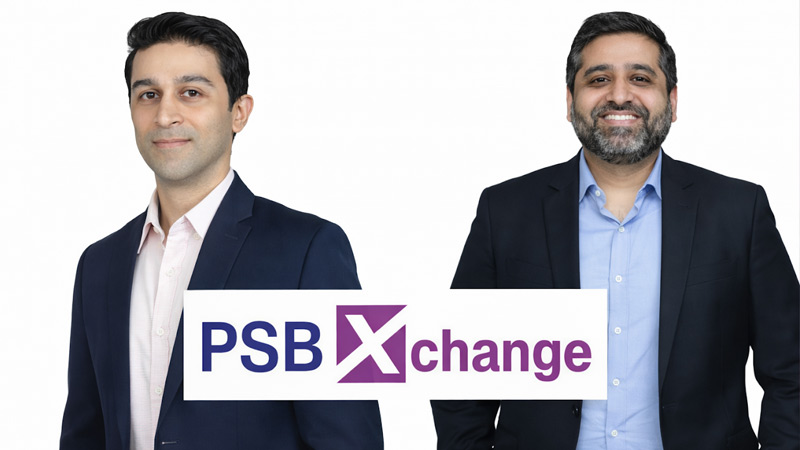
MUMBAI: PSB Xchange, India’s digital marketplace for financial solutions and a flagship platform of Veefin Solutions Limited, has reinforced its leadership team with two senior appointments as it prepares for its next phase of growth.
Ankush Aggarwal has been named chief experience officer, bringing with him more than 20 years of experience across corporate banking and the SME ecosystem. In his new role, he will focus on shaping simple, seamless and results-oriented experiences for banks, corporates and ecosystem partners. Aggarwal has previously held leadership roles at Kotak Mahindra Bank, IndusInd Bank and SG Finserve, where he led initiatives across customer onboarding, credit processes, servicing operations and digital transformation.
Widely recognised for connecting technology, operations and business strategy, Aggarwal has consistently built scalable and compliant experience models. At PSB Xchange, his focus will be on strengthening platform thinking, governance and continuous improvement to enhance efficiency and customer outcomes.
Alongside him, Sahil Sikka joins PSB Xchange as chief business officer and chief financial officer. With over 15 years of experience in banking and financial services, Sikka has played a key role in building and scaling businesses. He was part of the founding leadership team at SG Finserve, where he helped create a listed NBFC, overseeing business strategy, capital planning, product development and governance. His work earned him the best CFO financial services award at the India CFO Awards 2024.
Earlier in his career, Sikka worked with HDFC Bank, Aditya Birla Finance and Kotak Mahindra Bank, driving growth across corporate banking and structured finance. In his dual role at PSB Xchange, he will focus on strengthening growth strategy, scaling operations sustainably and delivering long-term value through strong governance and collaboration.
Commenting on the appointments, PSB Xchange and Veefin Solutions Limited CEO Sorabh Dhawan, said the additions reflect the platform’s ambitions as it expands its engagement with banks and financial institutions. He added that Aggarwal’s experience-led approach and Sikka’s strategic and financial expertise will be central to driving sustainable growth and value creation in the years ahead.


Hamdard honours changemakers at Abdul Hameed awards

Why the Best Campaigns Today Start With Insights, Not Ideas

Ahmad Muneeb elevated to VP – HR centre of excellence at Zepto

Fans Take Centre Stage as Zee Cine Awards Turns the Spotlight Around

GUEST COLUMN: How content leaders decide what gets greenlit

The man who dubbed Lord of the Rings in 50 languages is stunned by Mumbai traffic

Dell names Aishwarya Sudhakar director of marketing intelligence

These ’90s fashion trends are making a comeback in 2017
The final 6 ‘Game of Thrones’ episodes might feel like a full season
According to Dior Couture, this taboo fashion accessory is back
The old and New Edition cast comes together to perform
Phillies’ Aaron Altherr makes mind-boggling barehanded play
Uber and Lyft are finally available in all of New York State
Disney’s live-action Aladdin finally finds its stars
Hamdard honours changemakers at Abdul Hameed awards
Why the Best Campaigns Today Start With Insights, Not Ideas
Ahmad Muneeb elevated to VP – HR centre of excellence at Zepto
Fans Take Centre Stage as Zee Cine Awards Turns the Spotlight Around
GUEST COLUMN: How content leaders decide what gets greenlit
The man who dubbed Lord of the Rings in 50 languages is stunned by Mumbai traffic
Dell names Aishwarya Sudhakar director of marketing intelligence
-

 News Broadcasting4 days ago
Mukesh Ambani, Larry Fink come together for CNBC-TV18 exclusive
-

 iWorld1 week ago
Netflix celebrates a decade in India with Shah Rukh Khan-narrated tribute film
-
 MAM3 months ago
HoABL soars high with dazzling Nagpur sebut
-

 MAM4 days ago
Nielsen launches co-viewing pilot to sharpen TV measurement
-
 iWorld12 months ago
BSNL rings in a revival with Rs 4,969 crore revenue
-
 I&B Ministry3 months ago
India steps up fight against digital piracy
-
 iWorld3 months ago
Tips Music turns up the heat with Tamil party anthem Mayangiren
-

 Film Production1 week ago
UFO Moviez rides high on strong Q3 earnings
