
Fiction
GUEST COLUMN: How content leaders decide what gets greenlit

MUMBAI: As audiences spread across TV, OTT, and short-form platforms, deciding what gets greenlit has become more strategic than ever. Content leaders now weigh clarity of concept, platform fit, pacing, and distinctiveness to ensure a story connects with the right audience in the right format.
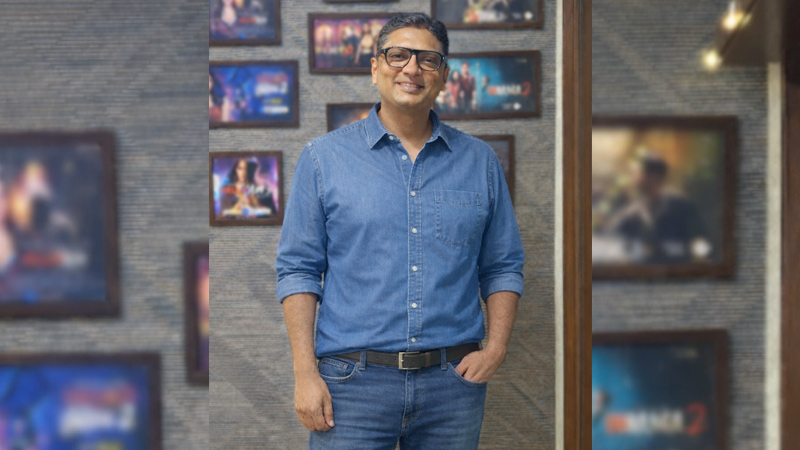
In this piece, Dhruv R Jain content head TV at Rose Audio Visuals, explains how greenlighting decisions are shaped by concept strength, platform behaviour, and the need for unique storytelling. Drawing from his experience at Rose Audio Visuals, he outlines how these factors influence which ideas move from pitch to production.
In recent times the Indian entertainment landscape has changed in many ways leading us to also modify our process in deciding what should be greenlit in terms of content. As the options for audiences to view content change from the traditional TV space to OTT and even social media the stories that are told on different platforms also differ. Multiple factors play a part in deciding not just the story told but also the way they will be told.
Firstly the primary filter in the process is the clarity of concept. Whenever content leaders approach a story they tend to simplify it in terms of it being written and told through the screen. The crew involved in making the story should have an inside out idea of all the factors of the story for it to resonate and be understood by the audiences. We dissect the story into the smallest components to spread it through the writing and format the story in a way that would build intrigue giving it hooks, drops points and defined execution. A concept that is executed properly with details will be understood and appreciated by the audience irrespective of its genre.
The content that is being chosen to be greenlit also highly depends on the platform it is being made for. Different mediums like TV channels, Ott platforms and short format apps etc have different sections of audiences that look for a specific kind of story to watch depending on multiple factors again. So while choosing a story for them one needs to study their audience, the structure that works for the platform, the pacing in which the story will be understood and the kinds of story that would fit the platform. While TV is a medium which is highly expository in its telling with slower pacing, on the other hand Ott platforms give us a space to tell a story with the approach of less is more with faster pacing of the story itself. This becomes an important factor in choosing stories and their way of telling.

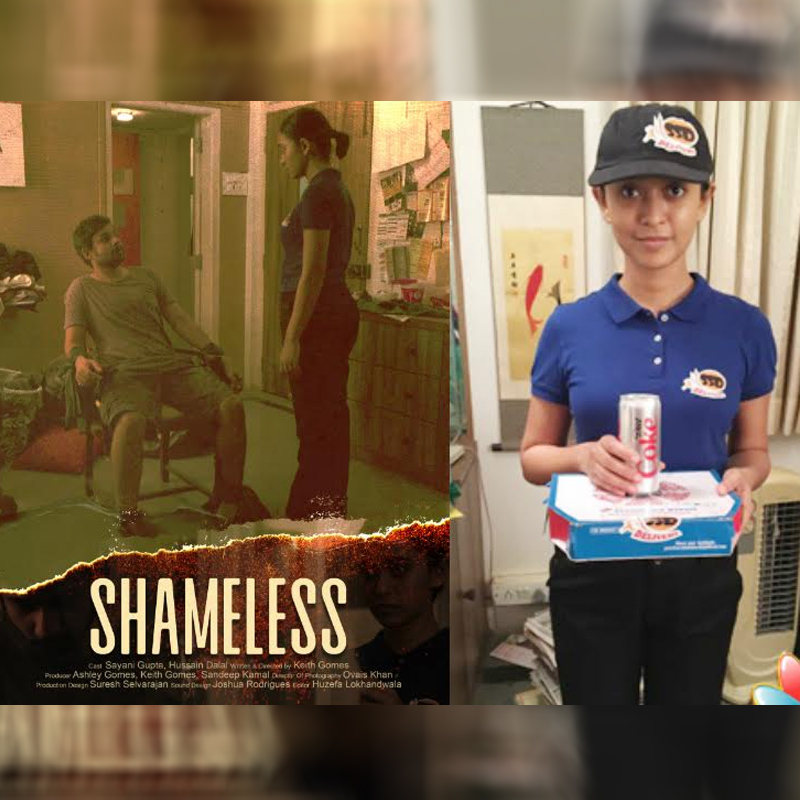
Another factor that plays an important role is the distinctiveness of a concept. A concept with a unique approach, set up and characters bring freshness. At Rose we have always attempted to tell stories that stand out with our most recent Itti Si Khushi by setting up the show in a unique location like Kotachiwadi, a historic unique set up in the south of Mumbai that has not been shown on TV before we gave the already iconic Shameless an interesting Indian twist. At the same time the show in itself follows an unique storyline that brought something different to the medium of TV. So telling a different and unique story that stands out always brings in curious audiences which we sustain then with strong characters, hooks and plot points.
In addition to these factors many others become prominent in deciding what gets greenlit. It is on the content leaders to find the right time and space for the concept that they believe will be received well by the audiences. One needs to be a multitasker to understand, organise and execute a project properly.
Note: The views expressed in this article are solely the author’s and do not necessarily reflect our own.


PARIS & LILLE, FRANCE: Series Mania Forum has named the Republic of Korea as its first-ever Country of Honour, marking a major milestone for the European television industry gathering set to run alongside the Series Mania Festival in Lille in March 2026.
The announcement was made by Laurence Herszberg, founder and general director of Series Mania, underscoring Korea’s rising influence in global content creation and distribution.
As part of the initiative, the Korea Creative Content Agency (KOCCA) will bring a delegation of eight leading companies to the forum, including Channel A Corporation, CJ ENM, EO Content Group, KBS Media, MBC, SLL Joongang, Studio S and Whynot Media. The programme will feature dedicated sessions spotlighting upcoming Korean projects, high-level conference panels, networking events and industry showcases.
The move is backed by France’s CNC following a memorandum of understanding signed with Kocca at Series Mania 2024, aimed at strengthening co-production, investment and cultural exchange between the two countries.
The honour coincides with the 140th anniversary of diplomatic relations between France and Korea and follows last year’s Broadcast Worldwide event in Seoul, which highlighted France as its guest country.
Korea’s content market was valued at $43.169 billion in 2024, up 5.7 per cent from the previous year, ranking eighth globally. Demand for Korean series in France has surged, with Netflix reporting viewing time up more than 200 per cent year on year.
Herszberg said the initiative reflects Korea’s recognised excellence in film and television, while Kocca France general director Moonju Kim, said the partnership would deepen cooperation across production and investment.

CALIFORNIA: Disney has finally named its next ruler and slapped a glossy price tag on the throne.
Josh D’Amaro, heir to Bob Iger, steps into the chief executive role on a base salary of $2.5m, before the real money kicks in. His annual bonus target is set at a punchy 250 per cent of salary, with long-term stock awards worth $26.2m a year. Add a one-off incentive grant of $9.7m to mark the promotion and D’Amaro’s opening package lands at about $38m.
Dana Walden, the other front-runner, does not leave empty-handed. Elevated to president and chief creative officer under a contract running to March 2030, she will earn a $3.75m base salary, with a performance bonus targeted at 200 per cent. Annual stock awards are valued at $15.75m, topped by a one-time incentive of $5.26m. All told, her first-year take comes to roughly $24m.
The board’s decision ends a two-year succession drama that has hovered over Disney’s share price and morale. D’Amaro, previously in charge of parks and consumer products, gets the top job. Walden, until now co-chair of Disney Entertainment, is handed a newly minted creative super-role, reporting directly to him.
Both appointments take effect on March 18, at Disney’s annual meeting. Iger slides into the background as senior adviser and board member, before bowing out for good in December.
The message from Burbank is unmistakable. Continuity, creativity and a very expensive handover. In the House of Mouse, the magic still pays.
BANGKOK: CreAsia Studios is stretching the boundaries of Asian entertainment—from the crime lab to outer space.
At the True Visions Now event in Bangkok, the Banijay Asia–EndemolShine India-backed studio unveiled two sharply contrasting yet equally ambitious projects, signalling its intent to push format innovation across scripted and unscripted television.
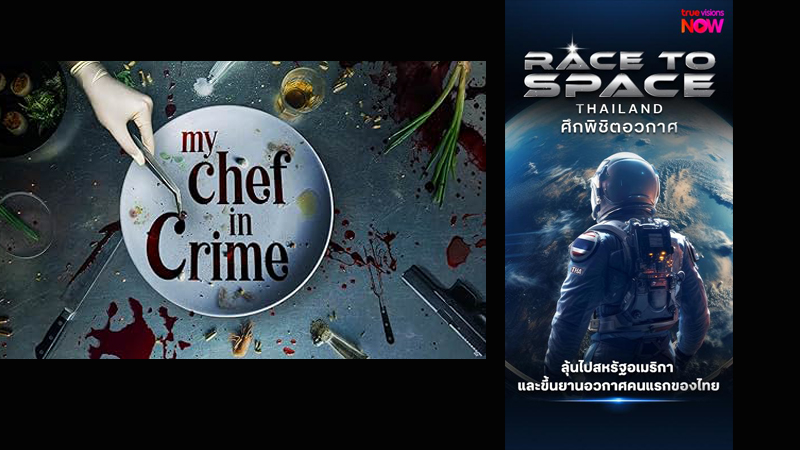
The first, My Chef In Crime, is an original crime thriller that fuses forensic science with food. Set against the backdrop of diverse Asian culinary cultures, the series explores how culinary science intersects with crime-solving, offering a fresh spin on the well-worn investigative genre. Backed by a strong cast, the show promises high suspense, originality and a distinctly regional flavour rarely seen in crime drama.
The second reveal went even bigger. Race to Space – Thailand is a reality series with a literal mission: to find and send the first Thai citizen into space. Designed as both entertainment and national milestone, the show will see Thai participants compete for the chance to become astronauts, turning space travel from distant aspiration into televised reality. The project is being developed in collaboration with the Space Exploration and Research Agency.
Both shows have been in development for some time, and the Bangkok event marked the first public unveiling of images and teasers, offering an early glimpse into their scale and ambition.
Deepak Dhar, founder and group ceo of Banijay Asia and EndemolShine India, described the moment as a milestone for CreAsia Studios, pointing to the breadth of storytelling, from grounded, science-led crime to aspirational, future-facing reality—as a reflection of where Asian content is headed.

From dissecting crimes through cuisine to launching dreams into orbit, CreAsia’s message is clear: safe bets are out, bold formats are in—and the ambition is only getting bigger.


Hamdard honours changemakers at Abdul Hameed awards

Why the Best Campaigns Today Start With Insights, Not Ideas

Ahmad Muneeb elevated to VP – HR centre of excellence at Zepto

Fans Take Centre Stage as Zee Cine Awards Turns the Spotlight Around

GUEST COLUMN: How content leaders decide what gets greenlit

The man who dubbed Lord of the Rings in 50 languages is stunned by Mumbai traffic

Dell names Aishwarya Sudhakar director of marketing intelligence

These ’90s fashion trends are making a comeback in 2017
The final 6 ‘Game of Thrones’ episodes might feel like a full season
According to Dior Couture, this taboo fashion accessory is back
The old and New Edition cast comes together to perform
Phillies’ Aaron Altherr makes mind-boggling barehanded play
Uber and Lyft are finally available in all of New York State
Disney’s live-action Aladdin finally finds its stars
Hamdard honours changemakers at Abdul Hameed awards
Why the Best Campaigns Today Start With Insights, Not Ideas
Ahmad Muneeb elevated to VP – HR centre of excellence at Zepto
Fans Take Centre Stage as Zee Cine Awards Turns the Spotlight Around
GUEST COLUMN: How content leaders decide what gets greenlit
The man who dubbed Lord of the Rings in 50 languages is stunned by Mumbai traffic
Dell names Aishwarya Sudhakar director of marketing intelligence
-

 News Broadcasting4 days ago
Mukesh Ambani, Larry Fink come together for CNBC-TV18 exclusive
-

 iWorld1 week ago
Netflix celebrates a decade in India with Shah Rukh Khan-narrated tribute film
-
 MAM3 months ago
HoABL soars high with dazzling Nagpur sebut
-

 MAM4 days ago
Nielsen launches co-viewing pilot to sharpen TV measurement
-
 iWorld12 months ago
BSNL rings in a revival with Rs 4,969 crore revenue
-
 I&B Ministry3 months ago
India steps up fight against digital piracy
-
 iWorld3 months ago
Tips Music turns up the heat with Tamil party anthem Mayangiren
-

 Film Production1 week ago
UFO Moviez rides high on strong Q3 earnings
