
Fiction
“Write down your goals and give deadlines. This is the roadmap to success”

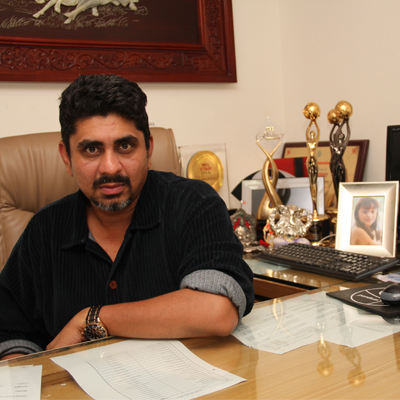
MUMBAI: The newest addition to his portfolio is Aur Pyaar Ho Gaya, which premiered on Zee TV last month. Known to have a keen eye for talent, director-turned-producer Rajan Shahi’s latest venture too serves as a launch pad for debutants Mishkat Varma and Kaanchi Singh who play the show’s lead pair.
Since making his directorial debut in 1999 with Dil Hai Ki Manta Nahi through launching his own production house Director’s Kut Productions in 2007 and till date, Shahi has seen a meteoric rise in the television industry.
Having directed clutter-breaking shows like Jassi Jaisi Koi Nahi, Hamare Tumhare, Ghar Ki Laxmi Betiyaan and Maayaka and gone on to produce a couple more such as Sapna Babul Ka… Bidaai and Yeh Rishta Kya Kehlata Hai, Shahi is a much sought after figure in the industry.
Ask him his success mantra and he says: “In the hustle and bustle of our everyday lives, we often forget what it is we are working so hard for! Write down your goals and give yourself deadlines. This is the roadmap to your success.”
Directorial dreams

The influence of his maternal grandfather and veteran actor P Jairaj led to Shahi’s fascination with the entertainment industry from an early age.
After graduating in English Literature from Hindu College, New Delhi, he moved to Mumbai, by which time, he was sure he wanted to become a director. Eventually, he landed up in the production department under Ravi Rai. Two years into production designing, Shahi got the opportunity to prove his mettle when asked to chip in for an absentee assistant director. Soon after, he graduated to assisting Rai in Thoda Hai Thode Ki Zaroorat Hai and Teacher.
Sometime in between, he met and fell in love with writer Pearl Grey, whom he later married. With her script of Dil Hai Ki Maanta Nahin finding a willing producer in Hemant Seth, Shahi too bagged his first project which propelled him into the big league. He then shot pilots of two other serials, Mera Ek Sapna and Ansh, following which, there was no looking back. Shahi proceeded to direct hit series including Jassi Jaisi Koi Nahi, Hamare Tumhare, Rishtey, Kareena Kareena, Reth, Mamtaa, Millee, Virasaat and Saathi Re and got to work as series director on Ghar Ki Laxmi Betiyaan and Maayaka on Zee TV.
Shahi believes that “a director is like the captain of the ship and more than anything else, needs to be extremely patient with all his crew members.”
Turning producer
Twelve years into direction and Shahi started his own production house which he christened Director’s Kut Productions (DKP).
Ask him why he decided to turn producer and he has several reasons to give. Firstly, in television, one needs to reinvent oneself every five years. “In films, you can say you are a director for 15-20 years, a producer for 15-20 years or a writer for 30 years. But in television, you need to rejuvenate yourself,” says he.
Secondly, production was the logical next step after directing for so many years. “While I learnt a lot under all the production houses and producers with whom I collaborated, personally, I wanted to have more control. Especially when there is creativity, I didn’t want to be restricted by the production part of it,” he explains.
 |
So when Bidaai came along on Star Plus, Shahi took the plunge as producer. “I owe my becoming producer largely to Uday Shankar who gave me the chance. Not that I did not express my desire to other big channel heads but he was the only one who had faith in me at a time when no other person would back me as a producer,” recalls Shahi, adding, “I was very happy that with Bidaai, a technician was given the opportunity to produce a show.” At the time, big production houses ruled the roost and creativity wasn’t exactly the first priority.
Lastly, with so many layers in television i.e. scripting, concept, shooting, editing and post production, Shahi wanted to minimise the chaos by being that one person in every department who is answerable for everything. “I wanted to multi-task. So in that area I scored where even today, I am personally answerable for everything in my company. They know there is just one person to be called instead of talking to 50 other people. With serials such as Bidaai and Yeh Rishta, these things got consolidated,” he elaborates.
Ask him about the name DKP and he says: “I have been in this industry for 21 years, but I have directed properly for 12 years. People used to identify me as a director and wanted to give a name which could identify with my character and the reason people know me for.”
About DKP
Shahi believes DKP is what it is today because of his team which is hungry for work and strives to deliver the best product. “Since DKP’s inception, we have done some very good shows and there is a certain reputation it enjoys. You may be the face of a company but it cannot run properly if you don’t have a good team,” he says.
The DKP office at Lakshmi Industrial Estate in Mumbai houses around 30 to 40 staff while the core team is about 100-strong constituted by creative and technical personnel at different levels.
“There is a definite core team in the company and DKP is synonymous with the excellent people working for it. Fortunately, the majority of them are the same since its inception; be it creative directors, creative people, editors and so on. Fact is in my 12 years as director, I have seen some of the best talent which I have retained while letting the rest go by,” he exults.
For Shahi, DKP is all about the goodwill and blessings and good wishes of all its actors, technicians and workers. He sincerely believes it is the workers’ support and hard work that has taken the production house to such dizzying heights.
“The biggest award or achievement you can say is my workers. Again, I have seen a lot of people who project a high-flying image by travelling in luxury cars and chartering private planes but keep workers’ money inside their own pockets. While I cannot keep everyone happy, each one of my workers knows that if there is a problem, I will be there to solve it. I don’t want DKP to be big if I don’t stay connected to my workers. My work exudes quality and it is straight from the heart. I might not have eight or nine shows with me today, I might not have the biggest cars with me today, but I have the goodwill of all my actors, technicians and creative people, most importantly, my workers,” he explains.
Having realised earlier on in his career that television is essentially about what happens on the sets, Shahi has set up office on the sets itself with most of his team concentrated there.
A bumpy ride
With dynamics changing from day to day, it is next to impossible to keep tab on the highs and lows of producing television shows but “it’s all part of the learning process,” says Shahi. Yet, when Bidaai and Yeh Rishta were number one or two across channels, it was a real high. “We were on a very big platform like Star Plus and it was a huge responsibility. For a technician who didn’t have crore in his bank, entering an arena where the big players were was a big thing,” he adds.
Bidaai had a successful run for more than two years till Yeh Rishta Kya Kehlata Hai took over variously as number one and number two across channels. For two years, these two shows were ruling the roost and in one particular week, both were number one across all channels and garnered TRP of 7.1. That was a big moment for the entire team; informs Shahi, pointing out that his highs come from people placing their faith in him which is what inspires him to give his 100 per cent to any project.
Speaking of the lows, Shahi recalls the time when Bidaai went off air in 2010. “We thought we were back to ground zero and anything is possible in this industry. But it was a conscious decision to end the show on a high. At the time, the actors… the entire unit… had tears in their eyes and were wondering why we were pulling the plug on the show when it was in the top five across channels. The moment was such when I knew I didn’t have an answer…” he says.
Lessons learnt
Shahi considers himself lucky to have interacted with some of the best producers in the industry and learnt so much from them. Even today, he doesn’t shy away from calling them whenever in need of advice. He has always believed in the adage: “Learn from the leaders, learn from the people you admire and learn from the people around you!”
Another key takeaway has been that audiences cannot be taken for granted any more, what with social media bringing producers and viewers closer to each other than ever before.
 |
“Today, we get instant feedback and don’t have to rely on the channel or probably the research team. Instantly, I get to know whether people have liked the track or not. Viewers are very vocal about what they like and what they don’t so you can’t take them for granted anymore,” he says. “This connect the media has brought about between me as a maker and my audience is the biggest thing that has happened.”
Road ahead
Shahi wants to be known as a producer who is creatively involved. “I have done a few shows, but each show is different from the other. I always look into scripts where I have a creative say. It’s not just about quantity but also quality in whatever we do,” he says.
With a handful of scripts lined up this year; some are in the scripting stage, others in the casting stage, and still others evolving.
The company plans to foray into other genres as well, comedy being one. Getting into films is also on the cards though TV is a priority. “Right now, my whole attention is towards consolidating Aur Pyaar Ho gaya which is our latest launch. And even consolidating Yeh Rishta, which now is showing six days a week,” he says.
Don’t daily soaps make for a very erratic shooting schedule? “Daily soaps are always hectic. In the past when Bidaai was on, shows were aired for one hour every day, five days a week. There have also been occasions when they have extended to six or seven days for one or two weeks. I look at it as a challenge to not only make them but also maintain the quality. We are used to such volume of work,” he signs off.
MediaSpeak
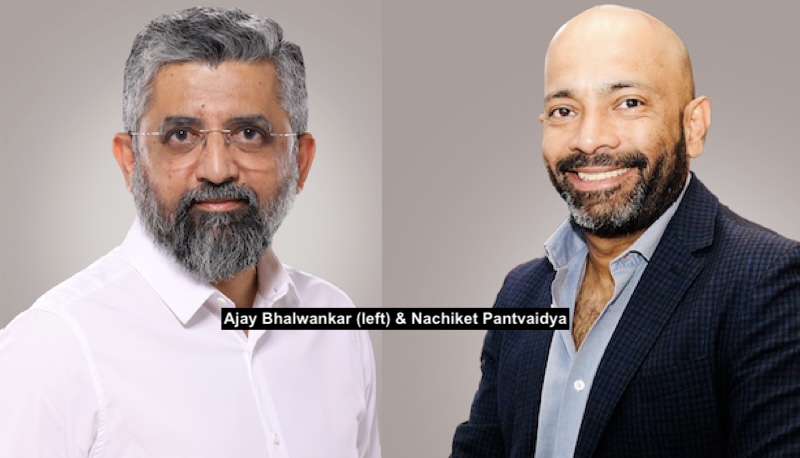
Former programming head at Zee TV Ajay Bhalwankar who is now chief creative officer at Sony Entertainment Television believes that it is always a great experience working with Shahi. “He is a very dedicated, passionate and gifted producer. It is somebody who is very sincere also and somebody who is extremely open to listen to your ideas and incorporate them. It has been wonderful working with him and is extremely talented.”
Shahi who has worked with cross section of producers and from each producer, he believes has learnt a lot. Whether it’s Deeya and Tony Singh from DJ’s Creative Unit or Sunjoy Waddhwa from Sphere Origins, all have been there for him always. They say:
DJ’s Creative Unit producer Deeya Singh opines: “My association with him has been extremely good. It is so nice to see when good talented people grow, it feels good. He understands the medium very well. The industry needs more such people and feels really nice when one sees so much success that comes to him. I have known him as a director and watched him as a producer and he is good at both. I think that is the special talent, because not everybody can do both. He has managed to do the impossible and be both.”
“With him, it’s been a very good association. I know him from the time we did Saath Phere and I know him more now as a Producer. He is a very easy-going and good guy. I feel very good for him because he has also come up from an independent director to a very good producer who has given some excellent shows to the industry. He is one of the very good producer’s who has a good thinking head,” expresses Sphere Origins producer Sunjoy Waddhwa.






MUMBAI: As audiences spread across TV, OTT, and short-form platforms, deciding what gets greenlit has become more strategic than ever. Content leaders now weigh clarity of concept, platform fit, pacing, and distinctiveness to ensure a story connects with the right audience in the right format.
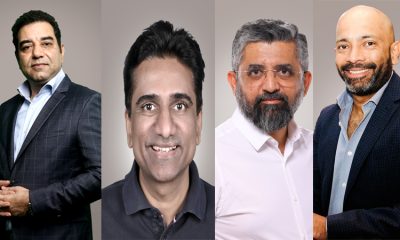
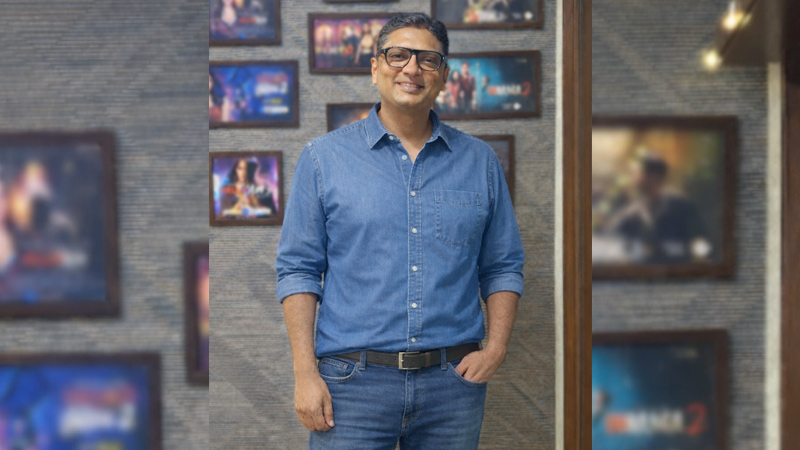
In this piece, Dhruv R Jain content head TV at Rose Audio Visuals, explains how greenlighting decisions are shaped by concept strength, platform behaviour, and the need for unique storytelling. Drawing from his experience at Rose Audio Visuals, he outlines how these factors influence which ideas move from pitch to production.
In recent times the Indian entertainment landscape has changed in many ways leading us to also modify our process in deciding what should be greenlit in terms of content. As the options for audiences to view content change from the traditional TV space to OTT and even social media the stories that are told on different platforms also differ. Multiple factors play a part in deciding not just the story told but also the way they will be told.
Firstly the primary filter in the process is the clarity of concept. Whenever content leaders approach a story they tend to simplify it in terms of it being written and told through the screen. The crew involved in making the story should have an inside out idea of all the factors of the story for it to resonate and be understood by the audiences. We dissect the story into the smallest components to spread it through the writing and format the story in a way that would build intrigue giving it hooks, drops points and defined execution. A concept that is executed properly with details will be understood and appreciated by the audience irrespective of its genre.
The content that is being chosen to be greenlit also highly depends on the platform it is being made for. Different mediums like TV channels, Ott platforms and short format apps etc have different sections of audiences that look for a specific kind of story to watch depending on multiple factors again. So while choosing a story for them one needs to study their audience, the structure that works for the platform, the pacing in which the story will be understood and the kinds of story that would fit the platform. While TV is a medium which is highly expository in its telling with slower pacing, on the other hand Ott platforms give us a space to tell a story with the approach of less is more with faster pacing of the story itself. This becomes an important factor in choosing stories and their way of telling.
Another factor that plays an important role is the distinctiveness of a concept. A concept with a unique approach, set up and characters bring freshness. At Rose we have always attempted to tell stories that stand out with our most recent Itti Si Khushi by setting up the show in a unique location like Kotachiwadi, a historic unique set up in the south of Mumbai that has not been shown on TV before we gave the already iconic Shameless an interesting Indian twist. At the same time the show in itself follows an unique storyline that brought something different to the medium of TV. So telling a different and unique story that stands out always brings in curious audiences which we sustain then with strong characters, hooks and plot points.
In addition to these factors many others become prominent in deciding what gets greenlit. It is on the content leaders to find the right time and space for the concept that they believe will be received well by the audiences. One needs to be a multitasker to understand, organise and execute a project properly.
Note: The views expressed in this article are solely the author’s and do not necessarily reflect our own.

PARIS & LILLE, FRANCE: Series Mania Forum has named the Republic of Korea as its first-ever Country of Honour, marking a major milestone for the European television industry gathering set to run alongside the Series Mania Festival in Lille in March 2026.
The announcement was made by Laurence Herszberg, founder and general director of Series Mania, underscoring Korea’s rising influence in global content creation and distribution.
As part of the initiative, the Korea Creative Content Agency (KOCCA) will bring a delegation of eight leading companies to the forum, including Channel A Corporation, CJ ENM, EO Content Group, KBS Media, MBC, SLL Joongang, Studio S and Whynot Media. The programme will feature dedicated sessions spotlighting upcoming Korean projects, high-level conference panels, networking events and industry showcases.
The move is backed by France’s CNC following a memorandum of understanding signed with Kocca at Series Mania 2024, aimed at strengthening co-production, investment and cultural exchange between the two countries.
The honour coincides with the 140th anniversary of diplomatic relations between France and Korea and follows last year’s Broadcast Worldwide event in Seoul, which highlighted France as its guest country.
Korea’s content market was valued at $43.169 billion in 2024, up 5.7 per cent from the previous year, ranking eighth globally. Demand for Korean series in France has surged, with Netflix reporting viewing time up more than 200 per cent year on year.
Herszberg said the initiative reflects Korea’s recognised excellence in film and television, while Kocca France general director Moonju Kim, said the partnership would deepen cooperation across production and investment.
CALIFORNIA: Disney has finally named its next ruler and slapped a glossy price tag on the throne.
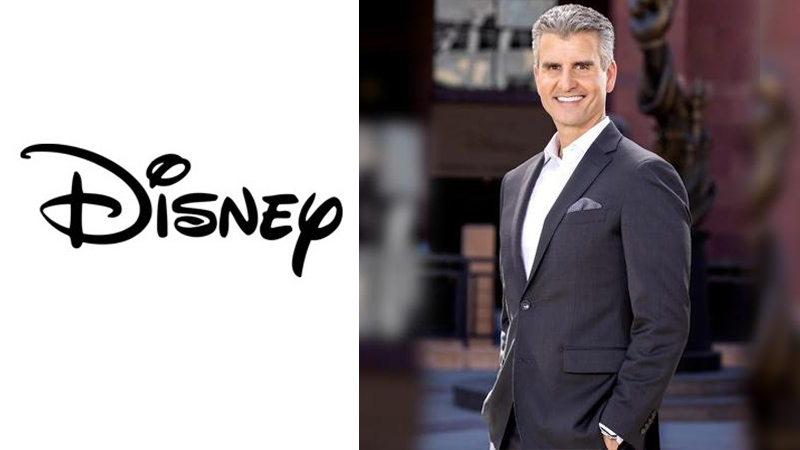
Josh D’Amaro, heir to Bob Iger, steps into the chief executive role on a base salary of $2.5m, before the real money kicks in. His annual bonus target is set at a punchy 250 per cent of salary, with long-term stock awards worth $26.2m a year. Add a one-off incentive grant of $9.7m to mark the promotion and D’Amaro’s opening package lands at about $38m.
Dana Walden, the other front-runner, does not leave empty-handed. Elevated to president and chief creative officer under a contract running to March 2030, she will earn a $3.75m base salary, with a performance bonus targeted at 200 per cent. Annual stock awards are valued at $15.75m, topped by a one-time incentive of $5.26m. All told, her first-year take comes to roughly $24m.
The board’s decision ends a two-year succession drama that has hovered over Disney’s share price and morale. D’Amaro, previously in charge of parks and consumer products, gets the top job. Walden, until now co-chair of Disney Entertainment, is handed a newly minted creative super-role, reporting directly to him.
Both appointments take effect on March 18, at Disney’s annual meeting. Iger slides into the background as senior adviser and board member, before bowing out for good in December.
The message from Burbank is unmistakable. Continuity, creativity and a very expensive handover. In the House of Mouse, the magic still pays.



MIB sets OTT accessibility rules, mandates captions and audio description

Boney Kapoor acquires remake rights of Tamil political satire Thalaivar Thambi Thalaimaiyil

Netflix India names Rekha Rane director of films and series marketing

Zabeen signs off from TV9 after shaping the network’s public voice

Dhawan steps up to bat for Delhi’s grassroots sports push

Orient Beverages pops the fizz with steady Q3 gains and rising profits

Cheekatilo shines in the dark with record debut on Prime Video

Swiggy Instamart’s GOV surges 103 per cent year on year to Rs 7,938 crore

These ’90s fashion trends are making a comeback in 2017
The final 6 ‘Game of Thrones’ episodes might feel like a full season
According to Dior Couture, this taboo fashion accessory is back

ATN International brings ATN Bangla to Canada
The old and New Edition cast comes together to perform
Phillies’ Aaron Altherr makes mind-boggling barehanded play
MIB sets OTT accessibility rules, mandates captions and audio description
Boney Kapoor acquires remake rights of Tamil political satire Thalaivar Thambi Thalaimaiyil
Netflix India names Rekha Rane director of films and series marketing
Zabeen signs off from TV9 after shaping the network’s public voice
Dhawan steps up to bat for Delhi’s grassroots sports push
Orient Beverages pops the fizz with steady Q3 gains and rising profits
Cheekatilo shines in the dark with record debut on Prime Video
-
 e-commerce1 month ago
Swiggy Instamart’s GOV surges 103 per cent year on year to Rs 7,938 crore
-
 iWorld1 year ago
Kuku TV transforms India’s OTT space with vertical microdrama boom
-
 News Headline1 year ago
TRAI puts a ‘stop’ to unsolicited calls and messages
-

 News Headline2 months ago
From selfies to big bucks, India’s influencer economy explodes in 2025
-
 Comedy2 years ago
Taarak Mehta Ka Ooltah Chashmah celebrates 4,000 episodes
-
 MAM2 years ago
OpenAI joins C2PA steering committee
-
 News Headline2 years ago
Odisha to host Ultimate Kho Kho Season 2 from December 24
-
 News Headline1 year ago
Abhishek Bachchan joins as co-owner of European T20 Premier League


