
English Entertainment
Time Warner numbers up for third quarter


BENGALURU: Time Warner Inc., (Time Warner) reported increase in revenues and income – both operating as well as adjusted – due to increase across these parameters by all its segments – Turner, Home Box Office (HBO) and Warner Bros. The company’s total revenue increased 6 percent for the quarter ended 30 September 2017 (Q3-17, current quarter) to $7,595 million from $7,167 million for the corresponding year ago quarter (y-o-y). Total operating income increased 11.5 percent y-o-y in the current quarter to $2,245 million from $2,014 million. Total adjusted operating income increased 13 percent y-o-y to $2,339 million from $2,070 million. It may be noted that the company continues to expect its pending merger with AT&T to close before yearend 2017.
Time Warner chairman and CEO Jeff Bewkes said, “We delivered very strong third-quarter results, keeping us on track to achieve our objectives for 2017. Both Turner and Home Box Office achieved double-digit gains in Subscription revenues, including HBO’s highest quarterly growth in 13 years, while Warner Bros. had a terrific quarter in theatrical, which all contributed to us increasing Operating Income by 11 percent and Adjusted Operating Income by 13 percent. Warner Bros.’ latest blockbuster, It, followed other box office successes, including Annabelle: Creation, Dunkirk and Wonder Woman, which have earned Warner Bros. the #1 spot at the domestic box office so far this year. Turner boasted the #1 comedy across all television among adults 18-34 with Adult Swim’s Rick and Morty and TNT’s NBA Opening Night doubleheader averaged 4.9 million total viewers, up 53 percent compared to last year. CNN also maintained its strength as the #1 news network among adults 18-49 in both primetime and total day, and had its most-watched third quarter ever among total viewers.”
Bewkes continued: “Home Box Office’s creative excellence was again recognized at the Primetime Emmy Awards where HBO received more Primetime Emmys than any other network for the 16th consecutive year. The seventh season of Game of Thrones concluded during the quarter with an average of 33 million viewers, a record for an HBO original series. Our results and these highlights reflect our continued focus on executing our strategy, which includes both creating the most engaging content and advancing the ways that consumers can enjoy and experience our content and brands across platforms. The ability to accelerate our pace of innovation and connect more directly with consumers are among the reasons we are excited about our proposed merger with AT&T, which remains on track to close before year end, pending regulatory review and consents.”
Segment results
Turner
The segment reported 6.1 percent ($158 million) y-o-y increase in revenue for the current quarter to $2,678 million from $2,610 million. Operating income for the segment increased 7 percent to $1,243 million in Q3-17 from $1,162 million in Q3-16. Adjusted operating income increased 5.3 percent y-o-y in the current quarter from $1,267 million from $1,203 million.
Time Warner says that revenue at Turner increased due to increases of 13 percent ($186 million) in subscription revenues and 4 percent ($5 million) in content and other revenues, partially offset by a decline of 3 percent ($33 million) in advertising revenues. Subscription revenues benefited from higher domestic rates and growth at Turner’s international networks, partially offset by lower domestic subscribers.Content and other revenues increased due to higher licensing revenues. The decline in advertising revenues was due to lower delivery at certain domestic networks, partially offset by increases at Turner’s news businesses.
The company says that operating income at Turner increased ($81 million) to $1.2 billion due to the growth in revenues partially offset by higher expenses, including increased programming and marketing costs. Programming expenses grew 8 percent primarily due to higher original programming costs at Turner’s domestic entertainment networks. Marketing expenses increased mainly to support original series on Turner’s domestic entertainment networks.
Home Box Office (HBO)
HBO revenue increased 12.6 percent ($179 million) y-o-y in Q3-17 to $1,605 million from $1,426 million. Operating profits increased in Q3-17 by 4.2 percent y-o-y to $552 million from $530 million. Adjusted operating profits increased in the current quarter by 6.6 percent y-o-y to $565 million from $530 million.
Time Warner says that HBO revenue increased due to increases of 12 percent ($156 million) in subscription revenues and 14 percent ($23 million) in content and other revenues. Subscription revenues increased due to higher domestic subscribers and rates and international growth. The increase in content and other revenues was primarily due to higher international licensing and home entertainment revenues.
Operating income at HBO increased 4 percent ($22 million) to $552 million. The growth in revenues more than offset increased expenses, including higher marketing and programming costs. Programming expenses increased 7 percent due to higher original programming costs, primarily related to the timing of original series. The increase in marketing costs was related to HBO’s OTT products and original programming.
Warner Bros.
Warner Bros. is Time Warner’s largest segment in terms of contribution to overall revenue. Warner Bros revenue increased 1.7 percent y-o-y in the current quarter to $3,460 million from $3,402 million. Operating profit increased 25.7 percent to $538 million from $428 million. Adjusted operating profit increased 33 percent to $576 million from $433 million.
Time Warner says that Warner Bros. revenue increase of the segment reflected higher theatrical and videogames revenues partially offset by lower television revenues. Theatrical revenues increased due to higher home entertainment and television licensing revenues of theatrical product. Videogames revenues increased primarily due to carryover revenue from Injustice 2. The decrease in television revenues was mainly related to lower initial telecast revenues. 5
Operating Income at Warner Bros. increased due to the increase in revenues and higher contributions from this quarter’s box office releases, including It and Annabelle: Creation, as well as lower print and advertising costs due to fewer releases.









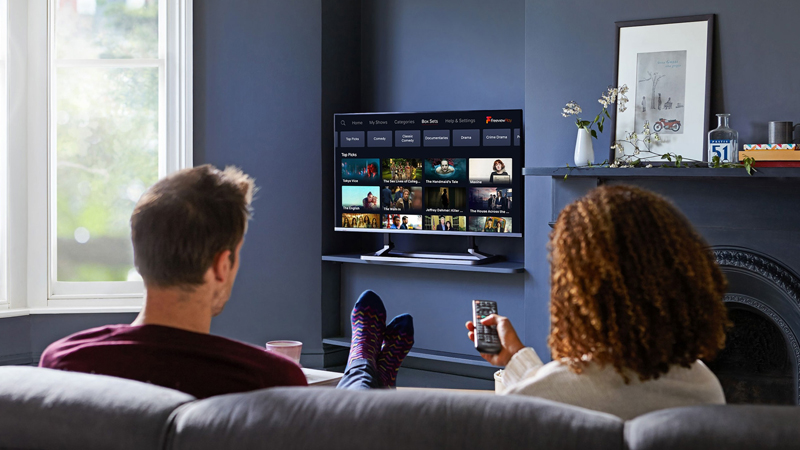
UK: The aerial is losing its grip. As broadband becomes the default way Britons watch television, the UK is edging towards a decisive, and divisive, question: should Freeview be switched off by 2034? The issue, highlighted in reporting by The Guardian, has exposed deep fault lines over access, affordability and the future of public service broadcasting.
For nearly 25 years, Freeview has delivered free-to-air television from the BBC, ITV, Channel 4 and Channel 5 to almost every corner of the country. Even now, it remains the UK’s largest TV platform, used in more than 16m homes and on around 10m main household sets. Yet the same broadcasters that built it are now pressing for its closure within eight years.
Their case rests on a structural shift in viewing. Smart TVs, superfast broadband and the Netflix-led streaming boom have pulled audiences online. Advertising economics have followed. By 2034, the number of homes using Freeview as their main TV set is forecast to fall from a peak of almost 12m in 2012 to fewer than 2m, making digital terrestrial television, or DTT, increasingly costly to sustain.
But critics say the rush to switch off risks abandoning those least able, or least willing, to move online.
“I don’t want to be choosing apps and making new accounts,” says Lynette, 80, from Kent. “It is time-consuming and irritating trying to work out where I want to be, to remember the sequence of clicks, with hieroglyphics instead of words. If I make a mistake I have to start again.”
Lynette is among nearly 100,000 people who have signed a “save Freeview” petition launched by campaign group Silver Voices. She fears the government is about to “take [Freeview] away from me and others who either don’t like, can’t afford, or can’t use online versions”.
Official figures underline the fault lines. A report commissioned by the Department for Culture, Media and Sport estimates that by 2035, 1.8m homes will still depend on Freeview. Ofcom’s analysis shows those households are more likely to be disabled, older, living alone, female, and based in the north of England, Wales, Scotland and Northern Ireland.
Freeview is owned by the public service broadcasters through Everyone TV, which also operates Freesat and the newer streaming platform Freely. After two years of review, DCMS is expected to set out its position soon, drawing on three options proposed by Ofcom: a costly upgrade of Freeview’s ageing technology; maintaining a bare-bones service with only core PSB channels; or a full switch-off during the 2030s.
The broadcasters have rallied behind the third option. They argue that 2034 is the logical cut-off, when transmission contracts with network operator Arqiva expire. By then, they say, the cost of broadcasting to a dwindling audience will far outweigh the returns from TV advertising.
Ofcom agrees a crunch point is approaching. In July, the regulator warned of a “tipping point” within the next few years, after which it will no longer be commercially viable for broadcasters to carry the costs of DTT.
Others see risks beyond economics. Questions remain over whether internet TV can reliably deliver emergency broadcasts, such as the daily Covid updates, in the way that universally available DTT can. The UK radio industry has also warned that an internet-only future for TV could push up distribution costs and force some radio stations off air if PSBs no longer share Arqiva’s mast network.
“It is a political hot potato,” says Dennis Reed, founder of Silver Voices, who says he has “dissociated” his organisation from the government’s stakeholder forum, which he believes is “heavily biased” towards streaming.
The Future TV Taskforce, representing the PSBs, counters that moving online could “close the digital divide once and for all”. “We want to be able to plan to ensure that no one is left behind,” a spokesperson says, adding that rising DTT costs could otherwise mean cuts to programme budgets.
The numbers show the scale of the challenge. Of the 1.8m Freeview-dependent homes projected for 2035, around 1.1m are expected to have broadband but not use it for TV. The remaining 700,000 are forecast to lack a broadband connection altogether.
Veterans of the analogue switch-off, completed in 2012 after 76 years, recall similar fears of “TV blackout chaos”. Around 6 per cent of households were labelled “digital refuseniks”, yet a targeted help scheme and a national campaign, fronted by a robot called Digit Al voiced by Matt Lucas, delivered a largely smooth transition.
This time, the BBC is less keen to foot the bill. Tim Davie, the outgoing director general, has said the corporation should not fund a comparable support programme for a Freeview switch-off.
Research for Sky by Oliver & Ohlbaum suggests that with early awareness campaigns and digital inclusion measures, only about 330,000 households would ultimately need hands-on help ahead of a 2034 shutdown.
Meanwhile, viewing habits continue to fragment. Audience body Barb says 7 per cent of UK households no longer own a TV set, choosing to watch on other devices. In December, YouTube overtook the BBC’s combined channels in total UK viewing across TVs, smartphones and tablets, albeit measured at a minimum of three minutes.
That shift may accelerate. YouTube has recently blocked Barb and its partner Kantar from accessing viewing session data, limiting transparency just as online platforms consolidate power.
“When the government chose British Satellite Broadcasting as the ‘winner’ in satellite TV it was Rupert Murdoch’s Sky instead that came out on top,” says a senior TV executive quoted by The Guardian. “There already is such an outsider ready to be the winner in the transition to internet TV; it is YouTube.”
Freeview’s future now hangs on a familiar British dilemma: modernise fast and risk exclusion, or protect universality and pay the price. Either way, the aerial’s days as king of the living room look numbered.
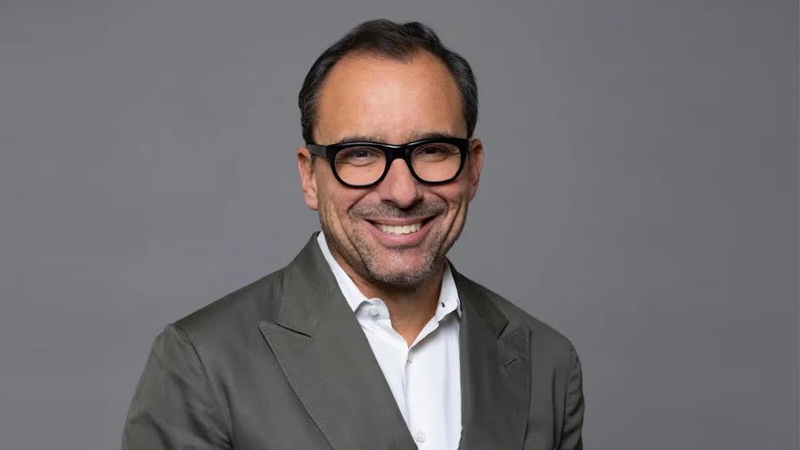
LONDON: Christian Vesper is leaving Fremantle after ten years as ceo, global film and drama, ending a tenure that turned the company into an internationally recognised centre of excellence for drama and film. Since joining in 2016, Vesper expanded Fremantle’s scripted footprint, overseeing or exec producing over 80 films and series in the last five years, with the 100th slated for release in 2026.
Vesper shepherded hits including Bugonia, Pillion, Queer, Maria, The Chronology of Water, Picnic at Hanging Rock, The Luminaries, On Becoming a Guinea Fowl, and the upcoming Rachel Weisz starrer Séance on a Wet Afternoon. Festival favourites and critical darlings under his watch include Without Blood (Angelina Jolie, Salma Hayek), M. Son of the Century (Joe Wright, Luca Marinelli), Faithless (Tomas Alfredson, Frida Gustavsson), Cannes winner My Father’s Shadow, and The Listeners (Janicza Bravo, Rebecca Hall). He also set up the Fox revival of Baywatch.
Vesper forged a formidable slate of first-look and creative collaborations with global talent, including Emma Stone and Dave McCary’s Fruit Tree Production; Kristen Stewart, Dylan Meyer and Maggie McLean’s Nevermind Pictures; Pablo and Juan de Dios Larraín’s Fabula; Rachel Weisz and Polly Stokes’ Astral Projection; Edward Berger’s Nine Hours; Johan Renck and Michael Parets’ Sinestra Films; Sarah Condon’s Fair Harbour; and Richard Yee and Krishnendu Majumdar’s Me+You Productions.
Based in London, Vesper reported to Andrea Scrosati, group coo and ceo continental Europe, who will now oversee the film and drama division on an interim basis alongside the wider leadership team.
Scrosati said: “Christian’s vision has built the credibility of our drama and film slate. With him at the helm, we delivered consistent success and critical acclaim. We appreciate that he now wishes to focus on new horizons, and we all wish him well.”
Vesper said: “After 10 years, the time is right to step down. Fremantle has been a huge part of my life. I’m proud of what we’ve achieved — the 100th film this year underlines the progress made. We’ve built a dedicated, talented team, and I know they will take our film and drama business to even greater heights. Now is the perfect moment for my next adventure.”
Before Fremantle, Vesper spent 14 years at Sundance TV overseeing scripted projects and co-productions including Rectify, The Honorable Woman, The Last Panthers, Top of the Lake and Deutschland 83. He also held roles at HBO, iFilm, October Films and USA Films.
From festival acclaim to awards galore — four academy awards, two golden globes, five baftas, eight cannes winners, seven venice winners including the golden lion — Vesper leaves Fremantle’s film and drama operations in a position of strength, a legacy of ambition, vision and global impact, and a company poised for even bigger hits.

NEW YORK: Paramount Skydance has gone on the offensive against Warner Bros Discovery, calling its amended merger with Netflix an admission of weakness and still a bad deal.
In a sharply worded filing late on January 22, Paramount said the revised Netflix agreement “falls well short” of its own $30-per-share all-cash offer and urged WBD shareholders to vote it down at a forthcoming special meeting. The company has also extended its tender offer to February 20, buying time as it presses for regulatory clearance.
At the heart of the attack is money and certainty. Under the Netflix transaction, WBD shareholders would receive $27.75 a share in cash, assuming the group can offload $17bn of debt on to the spun-out Discovery Global business. If that assumption fails, the payout shrinks, dollar for dollar.
Paramount argues it almost certainly will fail. Based on leverage levels at Versant Media, a close peer, Discovery Global could sustain only about $5.1bn of net debt. That would push roughly $11.9bn back on to WBD’s studios and streaming arm, cutting the implied cash consideration from Netflix to about $23.20 a share.
WBD’s own advisers appear to share the scepticism. Discounted cash-flow analyses valued Discovery Global’s equity as low as $0.72 a share. Paramount has previously pegged it at between zero and 50 cents. Yet WBD is asking shareholders to approve the Netflix deal without disclosing the final capital structure of Discovery Global, despite admitting they “will not know or be able to determine” the actual merger consideration at closing.
Paramount says that rush is no accident. Once approved, the Netflix deal would shut the door on what it calls a value-maximising alternative, a $108.4bn enterprise-value transaction, all cash, with far less regulatory baggage than Netflix’s $82.7bn-equivalent proposal.
That baggage matters. Paramount warns that a Netflix-WBD tie-up would further entrench market concentration, handing Netflix an estimated 43 per cent of global subscription video-on-demand customers. Prices would rise, creators would lose leverage and cinemas would suffer, it argues. Regulators, especially in Europe where Netflix already dominates and HBO Max is its main rival, are unlikely to be persuaded by Netflix’s attempt to define the market as including YouTube, TikTok and Instagram.
By contrast, Paramount pitches its own bid as pro-competitive, bolstering theatrical output and strengthening Hollywood’s creative ecosystem.
The gloves also come off on governance. Paramount says the WBD board publicly defended the original Netflix deal even as it renegotiated it, refused to engage with Paramount once talks with Netflix reopened and continues to withhold “highly material” information while racing to a vote.
Shareholders appear to be listening. As of late on January 21, more than 168.5m WBD shares had been tendered into Paramount’s offer.
The message from Paramount is blunt. The Netflix deal is smaller, shakier and riskier. The cash is on the table, the clock is ticking and shareholders now have a choice to make.

Mukesh Ambani, Larry Fink come together for CNBC-TV18 exclusive

Nielsen launches co-viewing pilot to sharpen TV measurement

Netflix celebrates a decade in India with Shah Rukh Khan-narrated tribute film

Delhivery chairman Deepak Kapoor, independent director Saugata Gupta quit board

Meta appoints Anuvrat Rao as APAC head of commerce partnerships

Brnd.me enters Europe as haircare brands power global expansion

TechnoSport taps quick commerce with launch on Slikk’s 60-minute platform

These ’90s fashion trends are making a comeback in 2017
The final 6 ‘Game of Thrones’ episodes might feel like a full season
According to Dior Couture, this taboo fashion accessory is back
The old and New Edition cast comes together to perform
Phillies’ Aaron Altherr makes mind-boggling barehanded play
Uber and Lyft are finally available in all of New York State
Disney’s live-action Aladdin finally finds its stars
Mukesh Ambani, Larry Fink come together for CNBC-TV18 exclusive
Nielsen launches co-viewing pilot to sharpen TV measurement
Netflix celebrates a decade in India with Shah Rukh Khan-narrated tribute film
Delhivery chairman Deepak Kapoor, independent director Saugata Gupta quit board
Meta appoints Anuvrat Rao as APAC head of commerce partnerships
Brnd.me enters Europe as haircare brands power global expansion
TechnoSport taps quick commerce with launch on Slikk’s 60-minute platform
-
 News Broadcasting3 days ago
Mukesh Ambani, Larry Fink come together for CNBC-TV18 exclusive
-
 iWorld6 days ago
Netflix celebrates a decade in India with Shah Rukh Khan-narrated tribute film
-
 MAM3 months ago
HoABL soars high with dazzling Nagpur sebut
-
 MAM3 days ago
Nielsen launches co-viewing pilot to sharpen TV measurement
-
 iWorld12 months ago
BSNL rings in a revival with Rs 4,969 crore revenue
-
 I&B Ministry3 months ago
India steps up fight against digital piracy
-
 iWorld3 months ago
Tips Music turns up the heat with Tamil party anthem Mayangiren
-
 News Broadcasting2 months ago
CNN-News18 dominates Bihar election coverage with record viewership

