
Reality
The seven season itch

T he daggers are drawn and the battle field is set for what promises to be one of the most closely watched fights in recent television history.
We’re talking about the ensuing tussle between two of the small screen’s hottest properties: Sony Entertainment’s Kaun Banega Crorepati season seven vs. Colors’ Bigg Boss season seven.
 |
|---|
While there really are no guesstimates as to which among these two shows will succeed in grabbing more eyeballs (… and TVTs), both Hindi general entertainment channels (GECs) are more than ready for the kill.
Sony is betting big on the seventh season of KBC which comes to drawing rooms beginning 6 September, in a new and improved avatar. Not to be outdone, Colors is kick-starting Bigg Boss season seven – The ‘Wow’ and the ‘Aow’ barely nine days later i.e. 15 September.
 |
|---|
|
We identify our strengths and weaknesses, and then see how we can complement our strengths with new shows, says confident Raj Nayak
|
Rechristened Saptakoti Mahadhani… Kaun Banega Mahacrorepati, KBC will be aired every Friday to Sunday at 8:30 pm. whereas Bigg Boss season seven will be telecast Monday to Sunday at 9:00 pm.
So what is the USP of this particular season, which the GECs are banking on?
KBC aims to create a platform of opportunities for Indians across ages, genders and socio-economic groups, and has had a makeover in terms of its format and prize money, which is now a whopping Rs 7 crore, among others.

Bigg Boss, on the other hand, arrives with a novel theme of heaven vs hell – The ‘Wow’ associated with the former and the ‘Aow’ with the latter.
A quick look at what’s new in both the shows:
KBC’s money tree will now comprise 15 questions and it will boast a brand new lifeline called ‘Power Paplu’ to aid those who seek to revive an already used lifeline. ‘Flip the question’ (Alat Palat) will replace ‘Ask the expert’ while ‘50:50’ will replace ‘Double Dip’.
In the entire game play, a hot seat contestant may now use only four of the five lifelines on offer.
A new feature ‘Play along’ has been introduced for the Fastest Finger First contestants who do not make it to the hot seat.
 |
|---|
|
Well, competition is a reality. Within the very aggressive, competitive market, you have to differentiate the niche, says N.P Singh
|
Using ‘Play along’, they can play with the hot seat contestant and the one who answers the maximum number of questions in the minimum amount of time gets to win one lakh rupees at the end of the episode.
Additionally, the time limit for the ‘Phone a friend’ lifeline has been increased from 30 to 45 seconds. What’s more, audiences can win by playing the Ghar Baithe Jeeto Jackpot.
In contrast, Bigg Boss promises to be a roller-coaster ride for audiences, what with the heaven vs hell theme.
Of the 14 contestants, seven will be new names residing in a separate heaven themed house while the remaining seven will be old members, staying under one roof in another hell themed house, who’ve already been members of the Bigg Boss house during the last six seasons. The contestants from both the houses would be pitched against eachother in a series of tasks.
Among the newbies entering the Bigg Boss house are Shekhar Suman, Vatsal Seth, Suraj Pancholi, Kushal Tandon, Pratyusha Banerjee and Sonarika Bhadoria. The seventh newcomer is still to be identified.
Blast from the past: Hellcat Pooja Mishra is among the old members who will continue to occupy the house. Other members are still not confirmed.
 |
|---|
|
There will be some amount of competition and fragmentation between the two shows, says Deepak Netram
|
Apart from programming frills, the channels themselves seem super confident about their respective properties. Moreso considering Bigg Boss has had a successful run last season with an opening of 4.0 TVR (television viewership ratings); ditto for KBC’s last season which opened with 6.1 TVR.
Colors CEO Raj Nayak says the channel is very clear and conscious in its strategy to be a complete household entertainment channel. “Today if you do a FPC (Fixed Point Chart) check across all channels, you will see Colors has the maximum variety. While strategy is one part, everything we do involves risks. But when I say risks, we take calculated risks. We identify our strengths and weaknesses, and then see how we can complement our strengths with new shows. If we succeed, they become better. If not, we keep trying,” he exults.
Asked if Sony has any particular strategy to beat the competition, SET chief operating officer N.P Singh says, “Well, competition is a reality. Within the very aggressive, competitive market, you have to differentiate the niche. Sony in its last 17 years has always run shows which are different from the rest and that has set us apart and we continue to follow that strategy.”
 |
|---|
|
Since it is the seventh season, both shows have a great following and it will be very hard to choose one, says Ashish Bhasin
|
While Lodestar UM vice president Deepak Netram agrees there will be some amount of competition and fragmentation between the two shows, he is quick to point out that they cannot be compared. “They are unique in their own way. From the past what we have seen is KBC ratings have been there year on year. So we hope to maintain that. Bigg Boss on the other hand is looking bigger; the promotions are really huge and have happened way in advance. So it will be interesting to see how this pans out,” he observes.
Aegis Group plc chairman India and CEO southeast Asia Ashish Bhasin echoes Netram’s sentiments saying it will be a tough call between two very established properties. “Since it is the seventh season, both shows have a great following and it will be very hard to choose one. What viewers always believe in is content. If the content is of the viewers’ interest, people will definitely opt for that. The main competition will be when something else comes at that time – say a big movie is being launched by another channel or any big news event – which show loses out in that instance is going to be more interesting to watch,” he opines.
peaking from the point of view of advertisers, Bhasin says this particular slot is becoming increasingly attractive to them as it is also the hub of reality shows. “Advertisers will go where the eyeballs are and choose the most cost-effective way to get them. That’s how pricing will be done. And that can vary depending upon what the market rates are for that channel around that point of time. I don’t think finding advertisers for any of these shows will be an issue,” he says.
On his part, Nayak maintains Colors’ non-fiction shows generate more traction from advertisers than its fictional shows and Bigg Boss gets some of the biggest brands. However, he adds that it works as a loss leader and the channel has been investing in it because it is a cult show. This apart, it generates a lot of buzz. Estimates are that it is in the region of Rs 15-20 crore.
Most advertisers across categories agree that since both KBC and Bigg Boss are big properties and have local audiences across age groups, they cannot afford to ignore any one of them.
“Who would not want to take advantage of these shows to reach out to their target group? People are waiting for the shows to start and with festivals coming up; no one would be a fool to favour one over the other. Maximum eyeballs give us maximum reach,” says an advertiser who didn’t wish to be named.
As things stand, both the shows have gone viral on various digital platforms. Bigg Boss seven’s official Facebook page boasts around 1.8 million likes and more than 30,000 people talking about it. KBC Seven is not far behind with 1.6 million likes. Both are popular on Facebook but don’t seem to be trending that much on twitter.
Whether Big B’s charisma will work or Salman Khan’s swagger, only time will tell…










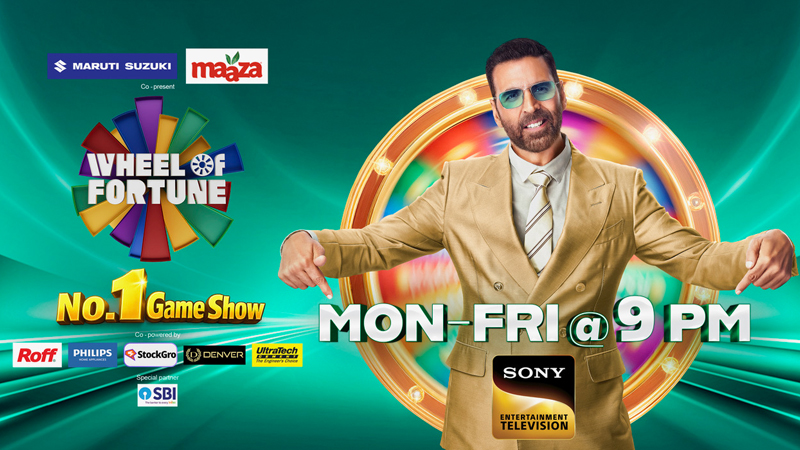
MUMBAI: In an age of endless scrolling and solitary screens, Sony Pictures Networks India (Spni) is betting on togetherness. The broadcaster is reimagining game shows and reality TV to turn them into family-friendly events that pull viewers off their devices and back into the living room.
Spni is leaning into participation-led formats where audiences can play, predict, learn, and even aspire. Shows like the newly adapted Wheel of Fortune, hosted by Akshay Kumar, invite viewers to join in, creating shared excitement across generations. Meanwhile, Kaun Banega Crorepati celebrated 25 years this year, proving that interactivity and emotional storytelling remain powerful hooks, especially with its Play Along feature connecting urban and smaller-town audiences alike.
Spni head of linear distribution Makarand Palekar said, “The future of linear television lies in creating moments families want to experience together. When shows evolve while keeping their emotional heart intact, they appeal across generations. Interactivity, cultural relevance, and momentum are key to drawing younger viewers while staying true to family favourites.”
By blending emotion with engagement, Spni aims to prove that linear TV still matters, offering shared moments that streaming alone cannot replicate.
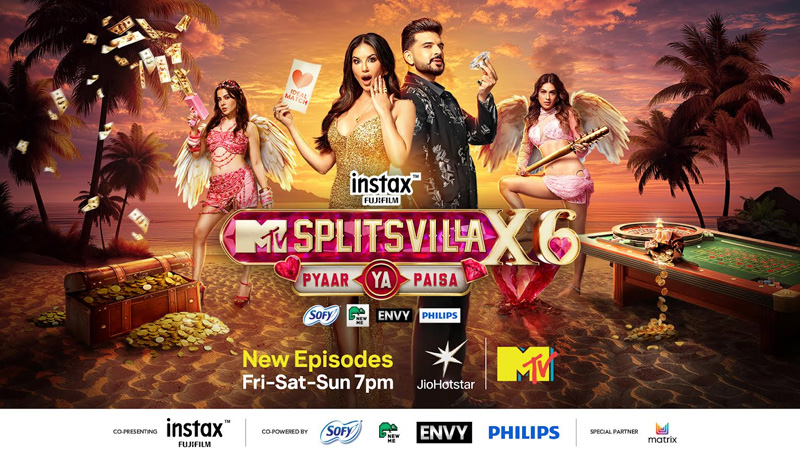
MUMBAI: MTV Splitsvilla is back in business and Season X6 is playing for keeps. The long-running youth reality favourite returns with a sharper format, louder emotions and a formidable line-up of six sponsors, underlining the show’s continued grip on young India.
Instax by Fujifilm steps in as presenting sponsor, while Sofy, Newme Asia, Envy and Philips join as co-powered by sponsors. Matrix rounds out the roster as a special partner. The show streams on JioHotstar and airs on MTV India.
This season, titled MTV Splitsvilla X6: Pyaar ya Paisa, leans into a question as old as romance itself. Do you follow your heart or cut the smarter deal? With 32 contestants navigating alliances, attraction and ambition, the game raises the stakes by forcing choices between emotional connection and financial advantage. The result is a faster, fiercer version of Splitsvilla where feelings and strategy collide at every turn.
JioStar head of entertainment sales Mahesh Shetty said, the show’s staying power lies in reinvention. According to him, Season 16 sharpens both emotional and strategic gameplay while keeping brand integrations organic and engaging rather than intrusive.
For Instax by Fujifilm, the partnership feels like a natural match. Fujifilm India associate director Arun Babu said, Splitsvilla captures raw emotion and spontaneous moments, values that align closely with the brand’s focus on preserving real memories.
Returning partner Newme Asia also sees continuity as a win. CEO and co-founder Sumit Jasoria notes that the collaboration’s second year promises fresh ideas at the intersection of content and commerce.
Sofy’s assistant general manager Ai Mizushima highlights the show’s ability to open honest conversations with Gen Z, particularly around confidence and hygiene, while Envy’s managing director and CEO Saurabh Gupta points to Splitsvilla as a cultural space where identity, attraction and first impressions matter.
Philips views the association as a natural extension of modern dating culture. Senior general manager for male grooming and skin care Sakshi Jha said, confidence should be effortless and grooming should not add to the drama. Matrix, part of L’Oréal India, echoes the sentiment, with general manager Amrita Sundar calling the show a powerful platform for self-expression through style.
On screen, the familiar faces return. Sunny Leone hosts her tenth season, joined by Karan Kundrra, while Nia Sharma and Uorfi Javed stir the pot as mischief makers, entering the game to unsettle equations and test loyalties.
Premiered on January 9, 2026, the show airs every Friday, Saturday and Sunday at 7 pm on MTV India, with streaming available on JioHotstar. With a refreshed format and strong brand backing, MTV Splitsvilla X6 looks set to reclaim its place at the centre of youth pop culture conversations.
News Headline
Luminate research reveals TV show production in 2025 shrank by a third since 2022 peak
MUMBAI: The American television industry’s production decline accelerated in 2025, with the total number of original series falling for the third consecutive year, according to research agency Luminate’s year-end report released last week.
The data firm found that 1,122 shows premiered across networks and streaming services in 2025, an 11 per cent drop from the 1,266 premieres in 2024. Since hitting a peak of 1,695 shows in 2022, the television landscape—excluding live sports and news programming—has contracted by a third.
The declines cut across all platforms. Streaming shows, including both subscription video-on-demand services and free platforms, fell 11 per cent from 653 in 2024 to 584 last year. CableTV slipped nearly eight per cent from 417 shows to 384. Broadcast networks experienced the steepest percentage drop at 21 per cent, from 196 shows in 2024 to 154 in 2025—though Luminate noted this figure matches 2023 levels.
The report attributed some of 2024’s inflated numbers to the dual labour strikes of 2023, which “pushed a number of shows that would have premiered in the autumn of that year into 2024,” Luminate said.

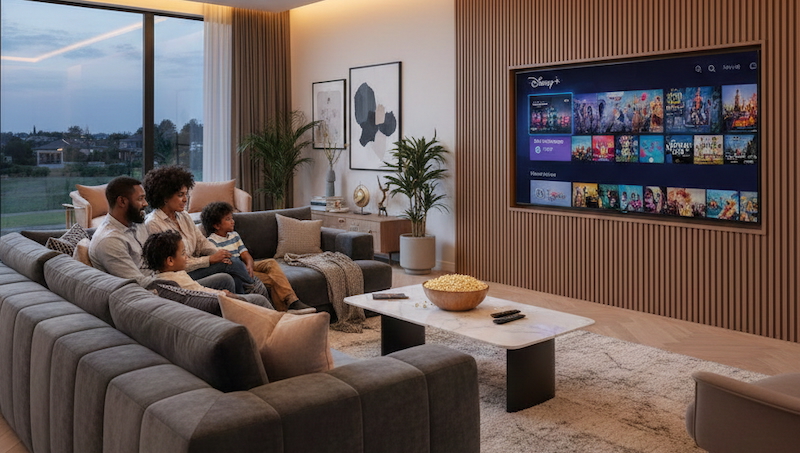
Among major subscription streamers, HBO Max suffered the most dramatic contraction, halving its original programming from 32 shows to 16. Only two platforms bucked the downward trend: Prime Video, which increased output from 42 to 59 shows, and Disney+, which grew from 10 to 14 programmes.
Apple TV+ held steady at 37 originals. Netflix, whilst remaining the industry leader, debuted 133 shows in 2025, down eight from the previous year. Hulu declined by three shows (from 48 to 45), Paramount+ by 10 (from 36 to 26), and Peacock by seven (from 38 to 31). Free streaming services premiered just 13 series in 2025 versus 18 in 2024.
International productions provided some relief but also retreated. Of nine countries—Germany, Argentina, Mexico, Japan, Spain, France, India, Britain and South Korea—that Luminate identified as supplying multiple shows to American streamers, only Argentina increased output year-on-year. South Korea led with over 40 shows for American subscription platforms, yet even this figure declined from 2024.
Overall television production remained depressed in 2024, falling seven per cent from 2023, “as the entertainment industry continues to find its footing after a couple of rough years,” according to Luminate’s analysis, which measures television viewership in America.
 The report validated “the contraction in production following the dual WGA and Sag-Aftra strikes, which has impacted every area of film and television,” whilst also examining which genres and platforms suffered most.
Broadcast television proved “surprisingly resilient,” Luminate noted, recovering from the work stoppages faster than streaming and cable with a 25 per cent year-on-year increase. This likely reflected networks’ efforts to return broadcast episodes to air by early 2024.
Cable television, by contrast, has “suffered the most”, Luminate said. Original series on cable TV plummeted 15 per cent from 2023 to reach a new low, which Luminate attributed to the “cratered” audience for cable series as streaming has displaced the format.
Streaming production in America “is still down significantly from pre-strike levels”, the report stated. Netflix alone produced 22 per cent fewer American-based series in 2024 than in 2022, though it “remains far ahead of its competitors in that arena”. Prime Video emerged as “the only streamer that hasn’t reduced U.S.-based production output in the last two years.”
The contraction extends beyond series counts to total programming volume. According to Luminate, “the drop in total episodes and total hours of programming between 2023 and 2024 has escalated from 17 per cent to 20 per cent”. For drama series alone, orders declined from nearly 3,400 episodes in 2019 to just 2,492 in 2024.
“Drama appears to be the least impacted genre, with comedy, animated and unscripted all suffering greatly in the last year”, Luminate found. Between 2022 and 2024, total unscripted episodes produced fell 33 per cent, whilst over five years the total number of comedy episodes produced declined 47 per cent.
“It’s not just less series being produced but also less episodes overall of TV that is contributing to this ongoing contraction, even as long-running series continue to prove most valuable”, according to the report.
Netflix claimed seven of 2024’s top 10 most-watched series, led by ,Fool Me Once which accumulated 12 billion minutes watched. Taylor Sheridan’s programmes also performed strongly, with Landman and Tulsa King both ranking in the top five.
Landman‘s performance proved particularly notable given its mid-November premiere. “In just about six weeks, it managed nearly 10 billion minutes viewed, illustrating just how popular that particular series was,” Luminate observed. Fallout rounded out the top 10 with nearly eight billion minutes viewed.
Luminate noted that “streaming franchises—including Marvel, Star Wars and Rings of Power—all underperformed last year”. The second season of Prime Video’s Lord of the Rings series “was down 60 per cent in total minutes watched compared to Season 1.”
Disney+ “didn’t fare much better with offerings like Echo and Agatha All Along, which underperformed previous Marvel streaming series”, the report found.

Yet these intellectual properties remained Disney+’s best performers. Percy Jackson and the Olympians “was top dog on Disney+ last year with over three billion minutes viewed”, and The Acolyte “came in second place with 2.7 billion.”
Love Island “emerged as the first unscripted and non-Netflix streaming original to top the yearly rankings”, Luminate reported. “For the first time, the most-watched streaming original TV season of the year did not come from Netflix.”
Universal’s Wicked “dominated U.S. streaming as a major draw for Peacock and Prime Video throughout 2025, building on its success at the box office and on PVOD”, according to the report.
Whilst “licensed theatrical titles, rather than SVOD originals, typically rule the streaming film charts—as historical data from 2023-24 shows—Netflix original films showed a new strength in 2025,” Luminate noted. “The major standout, of course, was the surprise smash KPop Demon Hunters, which became the service’s most-watched film release ever.”
The film’s soundtrack “proved highly popular in both the domestic and global markets”, the report found. “Once the film took off, daily on-demand audio streams for the soundtrack album did not dip below 10 million in the U.S. until late November, and the record was racking up four times that internationally at its peak.”

“This type of multimedia success is what all studios aspire to nowadays, and it would not be surprising to see Demon Hunters spawn a wave of imitators and perhaps launch a renaissance for the tie-in movie soundtrack”, Luminate suggested.
Overall, “original streaming film releases have contracted considerably as the legacy studios reinvested in theatrical titles,” the report stated. Netflix also reduced its film slate by almost 20 per cent year-on-year in 2025. “The service’s long-discussed shift toward quality over quantity for film has begun to manifest, it seems, which paid off with Netflix’s best showing among the most-watched films in several years.”
Wide theatrical film releases “ticked upward in 2025 vs. 2024 and have rebounded from their Covid-depressed levels earlier in the decade,” Luminate observed, though “major studio output remains far depressed from its mid-2000s peak.”
“This has perpetuated a vicious circle in which a shortage of available movies in theaters is blamed for reduced theatrical attendance, and vice versa, as box office revenue has struggled to reach pre-pandemic heights”, the report noted.
Of 2025’s theatrical successes, Jurassic World Rebirth “saw the biggest opening week on streaming, with more than 1 billion minutes watched, an impressive feat given Peacock’s relatively slim U.S. subscriber base (41 million). Meanwhile, Warner Bros’ R-rated horror films Sinners and Weapons “saw some of the best debut weeks on streaming for 2025.”
Sinners “drew more engagement in its first week on HBO Max than the latest Captain America did on Disney+,” the report found, demonstrating that “the kind of word-of-mouth success observed in theaters can translate to streaming as well, making HBO Max a popular platform for adult audiences”.
About a quarter of American consumers identify as “casual” movie fans, “rating their interest in watching movies as one to three on a scale of one to five,” Luminate reported. When asked what would entice them to cinemas, “more than any other genre, comedy could be the ticket”, though “it’s also possible that this audience is simply not as well served by current studio slates.”
“In a positive signal for theater chains, avid and die-hard movie fans skew slightly younger relative to casual fans,” the report found. Millennials account “for more than a fourth of avid and die-hard fans, versus just 18 per cent of casual fans,” whilst boomers “make up only 19 per cent of the die-hard contingent.” The data also showed “healthy representation from Gen Z in the avid and die-hard categories, a striking contrast to the conventional wisdom that the cohort doesn’t care about movies.”
.
“The biggest determining factor in enticing a more casual movie fan to get out to theaters is simply having a good story, followed by the genre and positive word of mouth,” Luminate concluded. However, 21 per cent reported “none of the listed options would bring them to see a movie in theater.”
The report also examined consumer attitudes towards generative artificial intelligence in content creation. “The biggest segment (39 per cent) of consumers aware of generative AI say they’d be less interested in watching a movie or TV show if they knew it was written with gen AI,” Luminate found.
Yet “a majority are either more interested (25 per cent) or ambivalent (36 per cent)”. Notably, “as avid movie and TV fanship increases, fans are actually more likely to express interest in an AI-written movie or show and less likely to be ambivalent, perhaps driven by curiosity about the tech’s applicability.”
When asked about various AI applications in production, “consumers consistently tended toward discomfort over comfort, though there were significant pockets of indifference,” the report stated. “The most discomfort tended to register with scenarios that involved digital replication or replacement of actors.”


MIB sets OTT accessibility rules, mandates captions and audio description

Boney Kapoor acquires remake rights of Tamil political satire Thalaivar Thambi Thalaimaiyil

Netflix India names Rekha Rane director of films and series marketing

Zabeen signs off from TV9 after shaping the network’s public voice

Dhawan steps up to bat for Delhi’s grassroots sports push

Orient Beverages pops the fizz with steady Q3 gains and rising profits

Cheekatilo shines in the dark with record debut on Prime Video

These ’90s fashion trends are making a comeback in 2017
The final 6 ‘Game of Thrones’ episodes might feel like a full season
According to Dior Couture, this taboo fashion accessory is back
The old and New Edition cast comes together to perform
Phillies’ Aaron Altherr makes mind-boggling barehanded play
Uber and Lyft are finally available in all of New York State
Disney’s live-action Aladdin finally finds its stars
MIB sets OTT accessibility rules, mandates captions and audio description
Boney Kapoor acquires remake rights of Tamil political satire Thalaivar Thambi Thalaimaiyil
Netflix India names Rekha Rane director of films and series marketing
Zabeen signs off from TV9 after shaping the network’s public voice
Dhawan steps up to bat for Delhi’s grassroots sports push
Orient Beverages pops the fizz with steady Q3 gains and rising profits
Cheekatilo shines in the dark with record debut on Prime Video
-

 News Broadcasting1 week ago
Mukesh Ambani, Larry Fink come together for CNBC-TV18 exclusive
-

 News Headline1 month ago
From selfies to big bucks, India’s influencer economy explodes in 2025
-

 iWorld2 weeks ago
Netflix celebrates a decade in India with Shah Rukh Khan-narrated tribute film
-

 Hollywood6 days ago
The man who dubbed Harry Potter for the world is stunned by Mumbai traffic
-
 I&B Ministry3 months ago
India steps up fight against digital piracy
-
 MAM3 months ago
HoABL soars high with dazzling Nagpur sebut
-
 iWorld12 months ago
BSNL rings in a revival with Rs 4,969 crore revenue
-
 iWorld5 months ago
Billions still offline despite mobile internet surge: GSMA
