
Regional
Suvarna scripts a programming turnaround

Star’s Kannada offering Suvarana is on a roll these days. The channel seems to be on the path to entrenching itself, at least for now, in the number two slot in the Kannada GEC space. The top three positions were for long occupied by the Sun Network’s Udaya TV, the number one player by far; Ramoji Rao’s ETV Kannada at No 2; and Zee Kannada, a relatively newer entrant at the third spot.
“Suvarna stands for fresh entertainment. Call it fiction or non-fiction or any program for that matter; our approach is to offer differentiated and fresh concepts as programs,” says Suvarana business head Anup Chandrasekharan.
The channel says that it is attempting through a planned strategy that it calls a ‘Threshold Strategy’ to grow its viewership by attracting the 15-24 age group, which did not consume Kannada television. “We decided that once we had the people to sample our offering through reality shows, we will ensure that stickiness prevails in the form of fiction,” reveals Chandrasekharan.
 “Our reality shows such as ‘Pyete Hidigir Halli Lifu’ (PHHL), ‘Halli Hyda Pyeteg Banda’ (HHPB) ‘Pyete Mandi Kadige Bandru’ (PMKB) have helped bring in younger and newer audiences – the 15-24 year olds, to Kannada television. To our pleasant surprise we find that even the 25 plus age groups are glued to PMKB during the 8-9 pm time slot,” avers Chandrasekharan.
 “Also to to attract the youngster, we have NGC programs with a Kannada voice over on air for an hour. We have brought in successful soaps such as ‘Lakumi’, a weekend comedy talk show ‘Maja with Sruja’, mythology shows like ‘Guru Raghvendra Vaibhava’, a weekend horror reality show ‘Shhh’, Tulu language shows, etc., into our programming mix,” informs Chandrasekharan.
He adds: “To present soaps in a new light and form to Kannada viewers, we have set our own rules for producing. For example, the protagonist has to be in the age group of 15-25, she has to be new to the television. Similarly, new to TV yet experts as directors are introduced. Four out of the six soap directors are from cinema, and have made their debut on the small screen through Suvarna.”
He clarifies that while reality shows have been bringing in the numbers for Suvarna, the effort has been to reduce the number of hours per week of reality programming. “Contrary to perception, we have only one daily reality show Monday to Friday during the 8-9 pm slot and one weekend horror reality show,” states Chandrasekharan.
The channel experimented with fresh programming concepts such as the tribal theme series with PHHL in May this year. The show had 10 city girls experience 50 days of village life with one winner for the finale. It immediately followed that with HHPB wherein it took the reverse tack in the show. Eight tribal boys were mentored by eight city girls to find who amongst them survived the best in the city.
The third and culminating sequel this year to the tribal theme is the currently on air PMKB which has 12 city bred Bangalore youngsters-young men and women in their twenties, to rough it out like tribal folk in a dense forest in Karnataka for 60 days. This is a first by any channel in a forest in India – other forest-theme programs have been shot abroad.
Another first by the channel in the Kannada GEC space is that the grand finale episodes of the two completed tribal reality show sequels have been aired on a Sunday, with each final episode being over 14 hours in duration. This has helped the channel rake in huge mid week GRPs and a leading position for that period in the Kannada GEC space.
For bringing in new audiences and to ensure viewership involvement and stickiness, the channel has initiated proceedings to help people indentify and associate themselves with the channel. It has started ‘Ladies Clubs’ in various towns and cities in the state.
“We have started the Ladies Club initiative to involve audiences, to try and understand its pulse, to find out what is that they want,” explains Chandrasekharan.
Membership to the Ladies Club has strict and special eligibility conditions. Chandrasekharan says the team has so far met and brainstormed with the Ladies Club members in three cities on weekends. To build continued loyalty, during meetings, Suvarna has also given an opportunity to some of the talented Ladies Club members to display any special skill sets they have on air.
Suvarna has also focused on high intense innovative activities over print and outdoor to promote its soaps. Its religious story ‘Guru Raghavendra Vaibhava’ has been promoted through activities like projecting the episodes on a giant screen everyday between 6.30 pm and 9.30 pm at Mantralaya temple where thousands of devotees gather. The channel has distributed the Mantralaya Prasadam to 200,000 homes in 10 towns along with information on the show.
 Suvarna claims that it has set a record with the world‘s biggest friendship band as part of its initiative to promote the show ‘Classmates.’ ‘Classmates’ has friendship at schooldays as its core theme. It has also implemented classroom-to-classroom promotions in over 170 colleges in 10 towns.
These efforts seem have borne rich fruit for the channel. TAM ratings furnished by the Suvarana management indicate that over almost four years (starting from calendar year 2007 to week 48 of the current year) viewership for the Kannada GEC space has shrunk. Suvarana has, however, managed to grow its own numbers by double digits year on year, bucking the overall negative trend.
|

As per the chart above, Kannada CS 4+ viewership fell from 4147 in 2007 to 4079 in 2009 and to 4014 till the 48th week of this year, while Suvarna moved from the last position in 2007 with ratings of 84 to 251 GRPs (week 48 of 2010).
Suvarana’s ten week average GRPs from September 2010 to November 2010 are 335. Thanks to the 14 hour long marathon grand finale on a Sunday of HHPB, the channel reached its peak GRPs for the year at 418.
To quite an extent the channel has nibbled away numbers from Udaya, ETV, Zee and even Kasturi which stood at number four in 2008 just before Star took a controlling stake in Suvarana.
In 2007, Udaya’s mean GRPs for the year stood at an unassailable 780. The following year they stood at 637, in 2009 at 545, and during the first 48 weeks of the current year, they were at 502. Comparable figures for ETV Kannada during the same period are 372, 283, 246 and 208 GRPs, while those of Zee Kannada are 85, 209, 194 and 169 GRPs. Kasturi’s figures for the same period are 107, 143, 107 and 96 GRPs.
“The channel (Suvarana) has been producing quality serials and shows at very low cost. Its reality show cost per episode is one-tenth of what it would cost a national level channel to produce,” informs an industry source who has worked with the channel. The source further informs Indiantelevision.com, “This year the channel should turn the corner and show a very decent profit.”
“From nowhere Suvarna has come up to a respectable position in the Kannada space,” adds a senior Bangalore-based media executive. “Its programming seems to be working well for it.”





MUMBAI: When the house fills up, so does the brand roster. Bigg Boss Marathi Season 6 has signed on nine leading sponsors, underlining the franchise’s pull as one of Maharashtra’s most influential entertainment properties across television and digital. The latest season once again positions the show as a magnet for brands looking to blend scale with cultural relevance in a market that rewards regional nuance.
The sponsor lineup is spread across multiple tiers. Danube Properties and Santoor Soap come on board as co-powered partners, while MYK Laticrete, Pitambari, P. N. Gadgil & Sons, Gemini Cooking Oil and Cotton King have joined as special partners. Society Tea and Tunwal E-Motors complete the lineup as associate sponsor.
For returning sponsors, the appeal lies in the show’s ability to deliver repeatable impact. Danube Properties, which previously partnered Bigg Boss 19, said the Marathi edition allows it to deepen engagement with regional audiences built on aspiration and trust. Santoor Soap echoed that view, pointing to strong recall and engagement from past integrations and highlighting the show’s value in reinforcing its progressive woman narrative within culturally rooted storytelling.
Other brands see the show as a platform that goes beyond visibility. MYK Laticrete described the association as a way to build trust through sustained presence, while Pitambari said the partnership coincides with the launch push for its Dishwash Gel, leveraging the show’s reach into everyday households. Jewellery major P. N. Gadgil & Sons returns for a second consecutive season, citing the programme’s cultural stature and the added appeal of host Riteish Deshmukh.
From kitchen staples to clothing and EVs, the diversity of categories reflects the show’s broad audience base. Gemini Cooking Oil called the partnership a natural alignment between two No.1 brands in Maharashtra, while Cotton King sees the association as a springboard to build recall and relevance. Society Tea continues its long-standing relationship with the franchise, and Tunwal E-Motors is using the platform to push its message of affordable electric mobility to mass audiences.
With Season 6 assembling a crowded sponsor house, Bigg Boss Marathi once again demonstrates why regional entertainment has become prime real estate for marketers. In a cluttered media landscape, the show’s mix of scale, loyalty and cultural currency continues to make it one of the safest bets on the brand board.
Danube Group founder & chairman Rizwan Sajan said, “After the overwhelming response to our association with Bigg Boss 19, we are delighted to extend our partnership to Bigg Boss Marathi. At Danube Properties, we believe in meeting our audience where they are, and this collaboration allows us to connect more deeply with regional audiences who share our values of aspiration, trust, and progress. This partnership reinforces our commitment to building meaningful relationships across cultures and communities.”
Wipro Santoor (Wipro Consumer Care) CMO Prasanna Rai said, “Santoor’s growth to become the largest soap brand in India, has been driven by deep consumer connections. High-impact regional programs like Bigg Boss Marathi allow us to build these bonds authentically with culturally rooted audiences in ways that broader national properties miss. Our integration last year delivered strong engagement and exceptional recall. We are excited to partner with Bigg Boss Marathi once again, continuing to weave Santoor’s progressive woman narrative into the show’s storytelling and further strengthening our presence in every Marathi household.”
MYK Laticrete president of sales & marketing Amarbir Palta said, “Bigg Boss Marathi offers a deeply regional and culturally rooted audience. Our partnership with this show goes beyond visibility, it’s about connecting with culture and building trust through sustained visibility. This association reinforces one clear promise: Any tile, any surface, MYK LATICRETE delivers unmatched excellence in tile adhesives.”
Pitambari Products Pvt. Ltd. DGM Priya Prabhudesai said, “We are proud to be associated with Bigg Boss Marathi, a platform that truly connects with millions of Indian homes. Through this association, we are launching Pitambari Dishwash Gel with the aim of reaching every household. With its unmatched reach and strong entertainment value, this collaboration allows us to engage with consumers in a fresh and impactful way.”
P. N. Gadgil & Sons Limited CFO & COO Aditya Modak said, “We are proud to associate with Bigg Boss Marathi Season 6 for the second consecutive year. The show commands a distinct cultural stature with a loyal following, and the presence of Riteish Deshmukh as host has further elevated its appeal and scale. This partnership enables us to engage meaningfully with a new generation of discerning audiences while reinforcing our legacy of trust across Maharashtra.”
Cargill Foods India senior director for GTM Retail Shailesh Khurana said, “Gemini has always been the first choice of Maharashtra’s kitchens. Partnering with Bigg Boss Marathi, the state’s most loved show, is a natural fit when two No.1 brands come together, it creates a winning story for millions of households.”
Cotton King Pvt. Ltd. managing director Koushik Marathe said, “Cotton King is proud to associate with Bigg Boss Marathi for the first time. The show offers a powerful platform to connect with millions of viewers and strengthen brand recall. We’re excited to drive visibility, relevance, and deeper consumer affinity through this partnership.”
Society Tea senior marketing manager Chandrashekhar Bhosle said, “Our association with Bigg Boss Marathi has been a strong and rewarding journey. With the show’s growing scale and engagement, we are confident Season 6 will deliver an even bigger impact for Society Tea.”
Tunwal E-Motors chairman and managing director Jhumarmal Tunwal said, “Tunwal E Motors Limited has always been committed to making sustainable and affordable electric mobility accessible to the masses. This association reflects our vision of driving Bharat towards a cleaner, smarter future by bringing reliable EV solutions closer to consumers across the country.”
News Headline
Celebrating World Hindi Day: Guess which country besides India officially speaks Hindi?
MUMBAI: Every January 10, millions of Hindi speakers pause to celebrate a language that is far older than its official tags and far wider in reach than its South Asian origins might suggest. World Hindi Day honours the cultural legacy and expanding global presence of Hindi, a language that connects people across continents and generations.
The idea for World Hindi Day was born more than four decades ago at the first World Hindi Conference, held on January 10, 1975, in Nagpur, Maharashtra, with delegates from around 30 countries gathering to promote Hindi beyond India’s borders. Two decades later, in 2006, the Indian government formalised the observance, giving the language its own annual moment on the global calendar.
A language without borders
Hindi’s reach today is remarkable. Spoken by hundreds of millions, it ranks among the most spoken languages globally, trailing only behind Mandarin Chinese and English in sheer number of speakers. Estimates suggest that roughly 600 million people use Hindi in some form, whether as a first or additional language.
While India remains the heartland of Hindi, its influence stretches far beyond. Fiji stands out as a singular testament to the language’s overseas journey: in 1997, Hindi was enshrined as one of the island nation’s official languages, recognising the linguistic heritage of its Indo-Fijian community, whose ancestors carried Hindi dialects with them more than a century ago.
Across South Asia and beyond, Hindi resonates in everyday life. In Nepal, it is widely understood and spoken, especially in border regions; in countries such as Mauritius, Trinidad and Tobago, Suriname and Guyana, it lives on through generations of diaspora communities, where Indian traditions remain woven into the cultural fabric. In the United States, the UK and Singapore, Hindi classrooms and community hubs reflect a growing appetite among younger generations to engage with the language of their forebears.
Roots in history, wings in culture
Back home, Hindi’s story predates modern nationhood. As a descendant of Sanskrit and a mosaic of dialects such as Awadhi, Bhojpuri and Khariboli, the language evolved and spread over centuries, absorbing influences and adapting to local cultures. Its script, Devanagari, is recognised for its phonetic clarity and literary heritage.
In India, Hindi was adopted as an official language under Article 343 of the Constitution in 1950, written in Devanagari, and today it serves as a major medium of communication, administration and education across much of northern and central India.
World Hindi Day celebrates these roots and the vast cultural landscape built upon them. It is marked by seminars, workshops, poetry recitals, youth contests and academic exchanges not only in India but in embassies, universities and cultural centres worldwide. The aim is simple but ambitious, to honour Hindi’s heritage while encouraging its use as a vehicle of global communication and intercultural dialogue.
A language in the digital age
Hindi’s rise has not been confined to temples, lecture halls and diasporic festivals. In the digital age, Hindi content has exploded across the internet, from social media to video platforms, blogs to online publications. Hindi is now one of the most visible languages on the web, with millions of users creating and consuming content daily.
This digital presence reinforces Hindi’s living nature, it is not a museum piece but a language that continues to grow and adapt. Whether in informal chat, academic discourse, cinema, television or social media, Hindi remains vibrant, expressive and deeply connected to the lives of its speakers.
More than words
World Hindi Day is not merely an ode to vocabulary or grammar. It is a celebration of identity, memory and community. For many, Hindi is a bridge between past and present, home and diaspora, tradition and innovation.
Across classrooms in India and cultural forums abroad, the message is the same: Hindi is not just a language of heritage, it is a dynamic force in contemporary culture and global conversation.
Hindi in popular culture and entertainment
Hindi’s influence extends far beyond classrooms and diaspora communities; it thrives in everyday entertainment and global pop culture. Daily soaps on Indian television have played a major role in spreading the language, not just in India but across the world. Many popular serials are dubbed into local languages or subtitled to reach international audiences, airing in countries such as Nepal, Mauritius, the UAE, the UK, the USA, and parts of Africa and Southeast Asia. Diaspora communities often tune in to these shows to stay connected with Indian culture, while local audiences are drawn to the stories, music, and traditions portrayed. These soaps bring Hindi into homes daily, reinforcing vocabulary, idioms, and cultural references, while shaping social conversations and entertainment habits. From family dramas to mythological epics, Hindi television has become a vibrant vehicle for both cultural preservation and global reach.
The language has also captured the attention of global celebrities and influencers. Stars like Nick Jonas have been spotted jamming to Hindi tracks, while other international musicians and social media personalities incorporate Hindi music into performances and content. This crossover into mainstream global entertainment highlights Hindi’s appeal as a vibrant, expressive language that resonates across cultures, making it not just a language of heritage, but a dynamic force in contemporary global culture.
On January 10 each year, as events unfold from Nagpur to Nairobi, from Suva to San Francisco, that force is recognised and celebrated. Hindi’s journey from village speech to global stage continues, nuanced, powerful and unmistakably human.
In nations such as Mauritius, Hindi enjoys cultural significance and is commonly spoken, but it is not listed as a constitutional language. Similarly, in Nepal, Hindi is widely understood and used, yet Nepali remains the official language. In Suriname, the Indian-origin community predominantly speaks Sarnami Hindustani, a variant of Hindi. Other countries, including Guyana, Trinidad and Tobago, South Africa, the UAE, the USA and the UK, also have sizable Hindi-speaking populations, and in some cases, Hindi is recognized in limited contexts, such as court proceedings in Abu Dhabi, but it does not hold national official status.
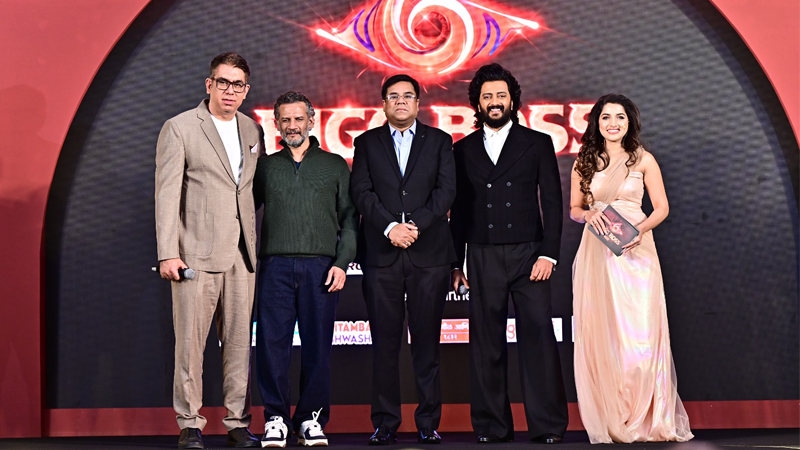
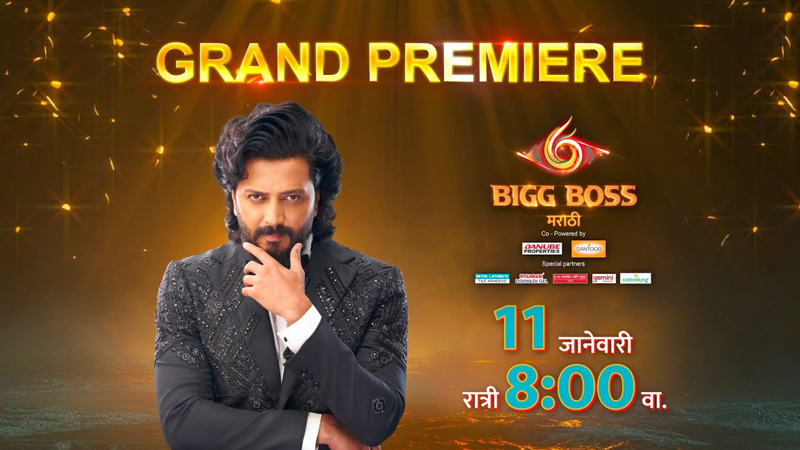
MUMBAI: When doors creak open in the Bigg Boss house, chaos usually follows and this season, destiny itself is up for negotiation. One of Marathi television’s most formidable reality franchises, Bigg Boss Marathi, is back with Season 6, promising sharper twists, louder drama and a house designed to play mind games of its own. The new season premieres with a grand launch on January 11 at 8 pm on Colors Marathi and streams simultaneously on JioHotstar, with daily episodes to follow every night at the same time.
This year’s theme “Doors will open, destinies will change” is not just a tagline but the backbone of the format. Spread across 13,000 sq ft, the redesigned house features multiple doors, each concealing challenges, shocks or turning points capable of altering the game overnight. More than 16 contestants will live under the constant gaze of 100 plus cameras during an intense 100-day journey marked by alliances, betrayals, friendships, feuds and high-stakes eliminations.
Anchoring the chaos once again is Riteish Deshmukh, who returns as host after striking a chord last season with his candid, no-nonsense and distinctly Maharashtrian style. Balancing humour with hard truths, Deshmukh is expected to reprise his role as confidant, critic and conscience of the house. “No one knows which door will change whose destiny,” he said, hinting at a season packed with unpredictability, emotion and drama.
Behind the scenes, the format continues to be produced by Banijay Asia and EndemolShine India, with creators promising tighter gameplay and deeper integration of the theme into tasks and nominations. According to the producers, every door in the house is a potential game-changer, reinforcing the idea that survival this season will hinge as much on instinct as on strategy.
From a business perspective, the show remains a magnet for advertisers. Season 6 is co-powered by Danube Properties and Santoor, with a robust roster of special and associate partners spanning FMCG, jewellery, home improvement and apparel underlining the franchise’s continued pull with both viewers and brands.
As contestants from diverse backgrounds step into the house, weekly nominations driven by housemate choices and audience votes will determine who stays and who walks out. Only one will survive till the finale to claim the Bigg Boss Marathi Season 6 crown.
With bigger doors, bolder moves and fate woven into the floor plan itself, Bigg Boss Marathi returns to do what it does best turn everyday disagreements into prime-time obsession, one destiny at a time.

Mukesh Ambani, Larry Fink come together for CNBC-TV18 exclusive

Nielsen launches co-viewing pilot to sharpen TV measurement

Netflix celebrates a decade in India with Shah Rukh Khan-narrated tribute film

Delhivery chairman Deepak Kapoor, independent director Saugata Gupta quit board

Meta appoints Anuvrat Rao as APAC head of commerce partnerships

Brnd.me enters Europe as haircare brands power global expansion

TechnoSport taps quick commerce with launch on Slikk’s 60-minute platform

These ’90s fashion trends are making a comeback in 2017
The final 6 ‘Game of Thrones’ episodes might feel like a full season
According to Dior Couture, this taboo fashion accessory is back
The old and New Edition cast comes together to perform
Phillies’ Aaron Altherr makes mind-boggling barehanded play
Uber and Lyft are finally available in all of New York State
Disney’s live-action Aladdin finally finds its stars
Mukesh Ambani, Larry Fink come together for CNBC-TV18 exclusive
Nielsen launches co-viewing pilot to sharpen TV measurement
Netflix celebrates a decade in India with Shah Rukh Khan-narrated tribute film
Delhivery chairman Deepak Kapoor, independent director Saugata Gupta quit board
Meta appoints Anuvrat Rao as APAC head of commerce partnerships
Brnd.me enters Europe as haircare brands power global expansion
TechnoSport taps quick commerce with launch on Slikk’s 60-minute platform
-
 News Broadcasting3 days ago
Mukesh Ambani, Larry Fink come together for CNBC-TV18 exclusive
-
 iWorld6 days ago
Netflix celebrates a decade in India with Shah Rukh Khan-narrated tribute film
-
 MAM3 months ago
HoABL soars high with dazzling Nagpur sebut
-
 iWorld12 months ago
BSNL rings in a revival with Rs 4,969 crore revenue
-
 I&B Ministry3 months ago
India steps up fight against digital piracy
-
 iWorld3 months ago
Tips Music turns up the heat with Tamil party anthem Mayangiren
-
 MAM3 days ago
Nielsen launches co-viewing pilot to sharpen TV measurement
-
 News Broadcasting2 months ago
CNN-News18 dominates Bihar election coverage with record viewership

