
News Broadcasting
Stress 24×7?

On a typical day, you could see Sujay Gupta juggling three phones, hurriedly taking notes and issuing advisories to his team of reporters. The chief of Mumbai bureau’s job in a premier news channel like NDTV 24×7 is much sought after but not so for 38-year-old Gupta. One day, on a drive back home, he took a considered view and gave it all up. He ended the lease of his cosy apartment in Bandra, and took the first flight to Goa.
“The nature of the news television market in India is such that there is very little scope of decreasing stress levels,” rues Gupta. “Pressures to perform are a part of newsrooms across the globe, but in India it’s different given the number of channels we have. The demand is no more on doing big or better researched stories; it’s all about breaking stories.”
It is indeed

There was a time when viewers were left with no choice but to watch national channel Doordarshan. But with Indian television going through a revolution and given the arrival of as many as 80 news channels it’s a very different story now.
 While there are no specific recruitment forecasts available for the sector, global staffing services firm Manpower says the media and entertainment industry has the highest employment potential in the country, with 58 per cent employers intending to hire more people in the third quarter this year.
So while viewers are flooded with a variety of options when it comes to watching news on the small screen, the rise of so many channels has also given birth to greater stress in the newsrooms.
Every channel is under pressure to deliver something new, that little extra which is more relevant to its viewers… a story that is perhaps the first of its kind!
 Says Gupta, “We have more news channels than whole of Europe put together. The trouble is that the competition is not just between offerings of the same genre. National channels compete with even regional news channels. For instance, in Mumbai, NDTV not only locks horns with CNN-IBN but also with a Marathi channel like Star Majha.”
Evidently, the concept of a straightforward story doesn’t exist any more. The objective is to look at every conceivable angle and generate at least three stories from what would be just one. Plus, the pressure to break news.
Veteran journalist and media educator Paranjoy Guha Thakurta puts the blame on media owners. “These days, proprietors do not want to invest in human resources. Consequently, a person is forced to multitask. The technology too ensures that a person can easily do the tasks that two or three people would do earlier. So with media owners not investing enough in experienced manpower, even though the younger lot of people are intelligent, hardworking and very talented, they do not necessarily have a good judgment of the important news. This leads to an increase in stress levels.”
Some media professionals who are currently sailing in the same boat too corroborate the view that young journalists are impatient and this attitude also often leads to stress.
Says CNN-IBN deputy foreign editor Suhasini Haider, “There is no single reason behind the rise in stress levels. One of the major factors is a huge increase in competition. Apart from this, people today have no personal opinion about a particular subject or topic. There are no niches. So journalists are made to do stories on a wide range of issues. Also, newsrooms these days are younger than ever. Young journalists do not prepare themselves mentally before joining. They just want to report as soon as they join.”
IBN7 executive editor Sanjeev Paliwal believes that the stress is caused by the demands of the job. “We are living in a very competitive and challenging environment and the entire country relies on us to bring news to them in an accurate and timely manner. With expectations soaring, it is obvious that pressure in a newsroom is bound to be high. New channels ask for newer ways of gathering market intelligence being devised. This is good for the industry but is also leading to a lot of extra pressure.”
What’s more, this greater stress has also at times directed to loss of life. Senior journalists Appan Menon and S P Singh, who were stars in the early days of non-Doordarshan-run news programming, lost their lives at an early age. And one of the reasons cited was mounting newsroom pressure.
Thakurta, 52, feels that though stress is escalating it also depends on individuals and their way of dealing with stress. “Late S P Singh and Appan Menon were brilliant journalists. Yes, it is true that they died at a young age. Both of them worked at a time when Indian news television industry was at a nascent stage and I presume that both of them faced stress. I too suffered a heart attack last year. Having said this I would like to emphasise that though stress is prevalent in this industry, it’s also a state of mind. And it depends on individuals on how they cope with stress.”
But there are many in the profession who feel that media is all about stress, and those who do not have the capacity to endure the pressure, should not enter the profession. “I do not agree that stress is increasing,” says Times Now editor-in-chief Arnab Goswami. “In fact it is wrong to use the word stress,’’ he adds. Television newsrooms, says Goswami, are now “buzzing with excitement”. “A newsroom does not operate like a bank… it’s more animated. There is more action, a zeal to do something exciting. Therefore, people who cannot face the heat should not enter the kitchen.”
 According to NewsX newsroom head Arup Ghosh, stress is not a new entrant to the newsroom, “I don’t think that stress is something new for journalists; it was always there. The longer hours of work also impacts personal life. One reason for this is increase in competition because of presence of so many channels. Another fact leading to rise is stress is dearth of talent. The established and the experienced management is under pressure to nurture fresh talent; at the same time retaining talent is also stressful because the moment the young talent pool that comes in learns the technique, the tendency to switch jobs increases.”
Just chill!
Some medical practitioners feel that its about time that news channels take the responsibility towards providing an opportunity to destress. Dr Sanjay Pattanayak, a psychiatrist at Delhi’s Vidyasagar Institute of Mental Health and Neuro-Sciences (Vimhans), says work and peer pressure are the two basic reasons for stress levels going north. “Journalists now have less time to relax. Thus, it is important for them to have a good social support, good diet and exercise regularly to unwind.”
Leading psychiatrist Dr Sanjay Chug explains, “These days’ news channels give greater focus on TRPs than the actual job. Also this has led to much competition which in turn has erased the concept of fixed working hours. Moreover, it should not be forgotten that, the nature of the work in journalism is stressful enough and all these factors have added to increase in stress.”
And what is the solution to beat stress? Says Dr Chug, “Ideally, there’s need for a change in the work culture of our channels, but since that is a long-term task, there are smaller steps that can be taken to cut down pressures and prevent breakdowns.”
He advises the mandatory and routine drug tests for all, mandatory and routine psychological assessments covering anxiety like depression levels, suicide risk assessment, adjustment problems. “It would also help if a counseling cell is provided to employees. Also, news channels can have 10 minutes of destressing every few hours which can be applicable uniformly to the entire workforce wherein people can do on-desk exercises, power naps, guided relaxations etc.”
Even as there are conflicting views from practitioners on stress levels in the profession, many newsroom HR heads seem to be aware of the problems on hand. Says India Today group corporate head – human resource Geetanjali Pandit Gupta, “In this business, the performance is reviewed daily. Hence it increases stress levels. Destressing has to begin with correct manning and solving the external factors.”
At some organisations, the first step has already been taken towards ensuring employees have few reasons to complain.
Network 18 Group head – HR Rajneesh Singh elucidates, “At Network18, we understand the pressures. So at the basic level, we provide our employees with facilities like cr?che, shuttle service, cabs and 24-hour availability of food, water and security. At the next level, we have a gym and offer facilities for games so that employees can unwind. We also organise workshops, celebrate birthdays, have monthly parties and off-sites that gives everyone a chance to enjoy together, have fun and relax.”
But INX media head – human resources Dhruva Sen believes that parties or get togethers need not be the right prescription for bringing down stress levels. “They only divert attention for a bit.” So what’s his solution? “Possibly establish a recreation room where people can enter and read or sit simply loosen up.”
The onus of destressing employees, India Today’s Gupta hastens to add, should not fall only on the HR of a company as employees are aware of what they are getting into. “There is only one way of getting rid of stress. And that is to provide employees enough resources to do their work,” she says.
 Thakurta says tensions are an inherent part of any news channel as one can never know what is going to happen next. Also the fact that media owners do not wish to invest in experienced people leads to increase in stress as young people might be intelligent, hardworking and talented but they are not better judge of importance of news. Experienced people know which piece of news is more important to cover. This has further lead to dilution of standards including ethical standards.”
And while some in this profession have learnt to cope with stress, there are others like Gupta who have succumbed to the mounting pressure and have either left or are continuing with much difficulty. Gupta chose to opt out, and is chronicling the Scarlett Keeling saga for a leading London daily, advising a corporate group on starting a local channel and an assorted number of things to achieve nirvana. “It’s important to enjoy what you are doing,” he says while revealing plans to promote the Goan feni. Nirvana, surely.
The story first appeared in Indiantelevision.com‘s The NT Magazine. The PDF of the magazine can be accessed at http://www.ntawards.tv/y2k8/nt_mag.pdf.








News Broadcasting
Mukesh Ambani, Larry Fink come together for CNBC-TV18 exclusive
Reliance and BlackRock chiefs map the future of investing as global capital eyes India

MUMBAI: India’s capital story takes centre stage today as Mukesh Ambani and Larry Fink sit down for a rare joint television conversation, bringing together two of the most powerful voices in global business at a moment of economic churn and opportunity.
The Reliance Industries chief and the BlackRock boss will speak with Shereen Bhan, managing editor of CNBC-TV18, in an exclusive interaction airing from 3:00 pm on February 4. The timing is deliberate. Geopolitics are tense, technology is disruptive and capital is choosier. India, meanwhile, is pitching itself as a long-term bet.
The pairing is symbolic. Reliance straddles energy transition, digital infrastructure and consumer growth in the world’s fastest-expanding major economy. BlackRock, the world’s largest asset manager, oversees more than $14 tn in assets and sits at the nerve centre of global capital flows. When the two talk, markets tend to listen.
Fink’s appearance marks his third India visit, a signal of the country’s rising strategic weight for the Wall Street-listed firm, which carries a market value above $177 bn. His earlier 2023 trips included an October stop in New Delhi, where he met both Ambani and Narendra Modi.
India is now central to BlackRock’s expansion plans, notably through its joint venture with Jio Financial Services. Announced in July 2023, the 50:50 venture, JioBlackRock, commits up to $150 mn each from the partners to build a digital-first asset-management platform aimed at India’s swelling investor class.
The backdrop is robust. BlackRock ended 2025 with record assets under management of $14.04 tn, helped by $698 bn in net inflows, including $342 bn in the fourth quarter alone. Scale gives Fink both heft and a long lens on where money is moving.
He has been openly bullish on India. At the Saudi-US Investment Summit in Riyadh last year, Fink argued that the “fog of global uncertainty is lifting”, with capital returning to dynamic markets such as India, drawn by reforms, demographics and durable return potential.
Expect the conversation to range beyond balance sheets, into technology’s role in finance, access to capital and the mechanics of sustainable growth in a fracturing world order. For investors and policymakers alike, it is a snapshot of how big money is thinking about India.
At a time when capital is cautious and growth is contested, India wants to be the exception. When Ambani and Fink share a stage, it is less a chat and more a signal. The world’s money is still looking for its next big story, and India intends to be it.
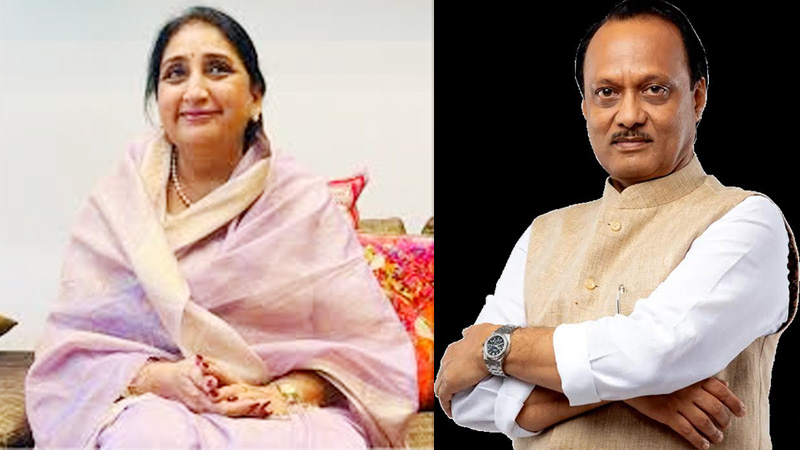
MUMBAI: Sunetra Pawar, wife of the late Ajit Pawar, will take oath as Maharashtra’s deputy chief minister on Saturday, media reports say, two days after his death in a plane crash.
According to reports, the Nationalist Congress Party (NCP) has summoned a legislature party meeting at 2pm on Saturday, where Sunetra Pawar, a Rajya Sabha member, is expected to be elected as leader. She is then likely to be sworn in as deputy chief minister at around 5pm at Raj Bhavan, as preparations are underway at the governor’s residence.
Ajit Pawar, Maharashtra’s deputy chief minister and a veteran NCP leader, died when a chartered Learjet 45 carrying him and four others crashed near Baramati on 28 January. The aviation regulator confirmed that all on board were killed when the aircraft burst into flames during a second landing attempt.
The sudden loss of one of Maharashtra’s most experienced politicians has prompted swift consultation among NCP leaders. Party figures, including working president Praful Patel, have been involved in talks on succession and organisational continuity. Reports suggest that several senior leaders support Sunetra Pawar’s elevation, viewing it as a unifying choice at a fraught moment.
According to party allies, Sunetra Pawar may also be considered for additional responsibilities within the state government. Some sources indicate that she would oversee portfolios such as excise and sports, while the finance brief could move to chief minister Devendra Fadnavis. Observers see this as a pragmatic division of duties intended to balance governance and political stability.
The transition unfolds against the backdrop of wider speculation over the future of the NCP, including talks about reconciling rival factions that split in recent years. Close aides of Ajit Pawar had been exploring avenues to bring the party’s different strands back together before his death, and that conversation may now gain fresh impetus.
Ajit Pawar’s demise has left a notable vacuum in Maharashtra politics. As a long-serving deputy chief minister, he had overseen key portfolios, including finance and planning, and played a central role in the state’s coalition government. His unexpected death has triggered intense reflection among allies and critics alike on both his legacy and the path ahead.
As Maharashtra prepares for Sunetra Pawar’s swearing-in, the NCP faces its most urgent test in years: turning tragedy into cohesion and navigating a new chapter in state leadership.
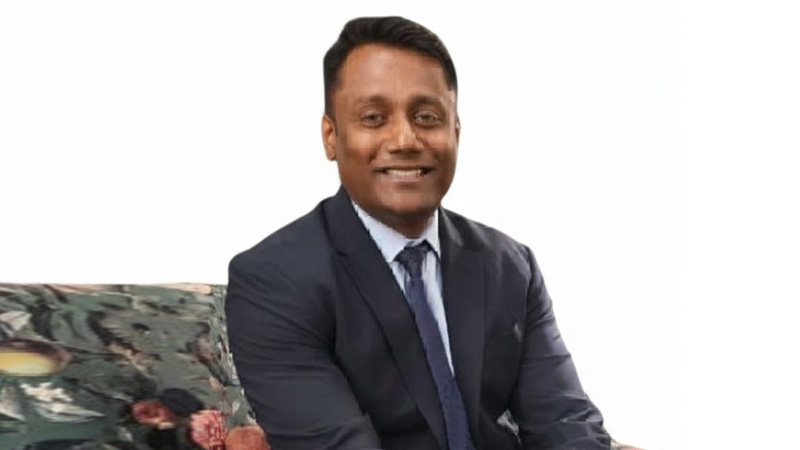
NEW DELHI: According to media reports, Firstpost has appointed senior journalist Binoy Prabhakar as its new chief content officer, bringing seasoned editorial expertise on board as the digital news platform embarks on its next phase of growth.
Prabhakar joins from Hindustan Times, where he spent nearly three years as chief content officer, shaping editorial strategy and guiding content for a rapidly evolving digital audience.
Earlier, he served as editor at Moneycontrol and CNBCTV18.com, and spent over a decade at The Economic Times in senior editorial roles. His career also includes leadership positions at Network18, The Indian Express and The Times of India.
A fellow of the Tow Knight Center for Entrepreneurial Journalism in New York, Prabhakar combines newsroom experience with a keen understanding of digital storytelling.
At Firstpost, he is expected to strengthen editorial depth, sharpen the platform’s voice, and drive content innovation as readers increasingly look for clarity in a crowded news landscape.


Mukesh Ambani, Larry Fink come together for CNBC-TV18 exclusive

Nielsen launches co-viewing pilot to sharpen TV measurement

Netflix celebrates a decade in India with Shah Rukh Khan-narrated tribute film

Delhivery chairman Deepak Kapoor, independent director Saugata Gupta quit board

Meta appoints Anuvrat Rao as APAC head of commerce partnerships

Brnd.me enters Europe as haircare brands power global expansion

TechnoSport taps quick commerce with launch on Slikk’s 60-minute platform

These ’90s fashion trends are making a comeback in 2017
The final 6 ‘Game of Thrones’ episodes might feel like a full season
According to Dior Couture, this taboo fashion accessory is back
The old and New Edition cast comes together to perform
Phillies’ Aaron Altherr makes mind-boggling barehanded play
Uber and Lyft are finally available in all of New York State
Disney’s live-action Aladdin finally finds its stars
Mukesh Ambani, Larry Fink come together for CNBC-TV18 exclusive
Nielsen launches co-viewing pilot to sharpen TV measurement
Netflix celebrates a decade in India with Shah Rukh Khan-narrated tribute film
Delhivery chairman Deepak Kapoor, independent director Saugata Gupta quit board
Meta appoints Anuvrat Rao as APAC head of commerce partnerships
Brnd.me enters Europe as haircare brands power global expansion
TechnoSport taps quick commerce with launch on Slikk’s 60-minute platform
-
 News Broadcasting4 days ago
Mukesh Ambani, Larry Fink come together for CNBC-TV18 exclusive
-
 iWorld1 week ago
Netflix celebrates a decade in India with Shah Rukh Khan-narrated tribute film
-
 MAM3 months ago
HoABL soars high with dazzling Nagpur sebut
-
 MAM4 days ago
Nielsen launches co-viewing pilot to sharpen TV measurement
-
 iWorld12 months ago
BSNL rings in a revival with Rs 4,969 crore revenue
-
 I&B Ministry3 months ago
India steps up fight against digital piracy
-
 iWorld3 months ago
Tips Music turns up the heat with Tamil party anthem Mayangiren
-

 Film Production1 week ago
UFO Moviez rides high on strong Q3 earnings
