
Case Study
Streets ahead on child connect

|
That Hindi is our national language is a given. Yet today urban Indian kids are more comfortable with English and ‘Hinglish‘ but not Hindi. Sample this: “Aaj mera History ka exam hai.” Now we don‘t expect our kids to say “ithihass” for History but hello… ever heard of the word “pariksha”? How many kids use these basic Hindi words in their day to day lives? And this is just one such example.
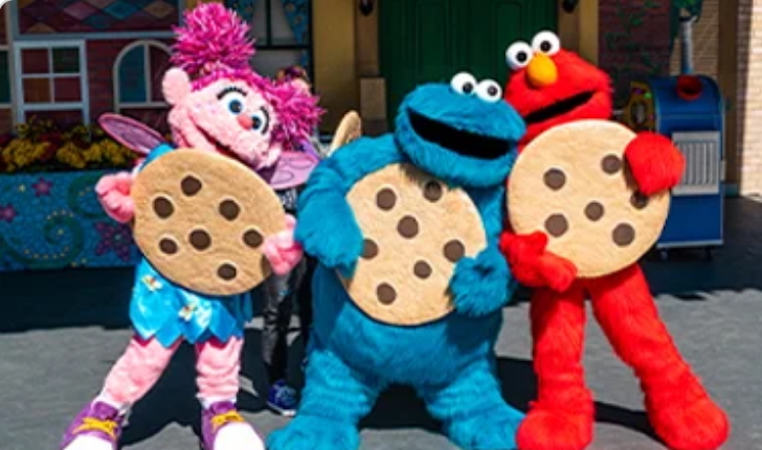
This is where Galli Galli Sim Sim, the Indian version of the world renowned children‘s television series Sesame Street, will play a vital role in developing the language, communication, cognitive and social skills of Indian kids. |
|||||||||||||||||||
|
In addition to this, Galli Galli Sim Sim will be attempting represent the vibrancy of India‘s multi-culturalism. “The series will celebrate the similarities and differences that are part of children‘s every day lives,” says Turner Entertainment Networks Asia senior vice president regional ad sales and marketing and Sesame India project director Soumitra Saha. The series will air on Cartoon Network and Pogo this summer. This is a joint initiative by Sesame Workshop, Turner and Miditech. Also, in order to garner a wider reach, Turner is in talks with Doordarshan to air the series on DD‘s terrestrial network. The first season of the series will have 65 half hour episodes and these will be repeated considerably on Turner‘s two kids‘ channels. Also, plans are in progress to launch the series in another Indian language next year. However, the language has not yet been decided upon. 
Four Muppets have been specially created for India – Chamki, Aanchoo, Googly and Boombah. They portray certain positive attitudes and have characteristics that are universal and endearing to all.
Chamki is a learner, Aanchoo a day dreamer, Googly likes to spend time alone and Boombah the lion is very health-conscious. “Each of the muppets has special characteristics that are representative of Indian kids. The idea is to create characters who transcend geographical, communal and other distinctions,” says Saha. Apart from the four main muppet characters, Galli Galli Sim Sim residents include human characters representing different genders, regions and religions. Jugaadu, likes to find innovative solutions to fix problems and does not view his disability as a handicap. Basha Bhaijaan owns a corner store and knows several Indian languages whereas his wife Dawa Di, who is from North East India, teaches dance. Kabir, Basha Bhaijaan and Dawa Di‘s son, is an active and curious eight-year-old. Other key characters include: Col. Albert Pinto and his wife, Rukmini (Doctor Aunty). Col. Pinto, a retired army person, is an advocate for healthy living and civic sense. Rukmini, a doctor by profession, is a combination of contemporary and traditional wisdom.
Galli Galli Sim Sim is aimed at serving the 157 million children under the age of six in India and will support India‘s Sarva Shiksha Abhiyan (universal access to education). The primary aim of the show is to make learning fun and add elements of learning into everything that is fun – learning to count and read, about real life situations, about emotions and problems will all be shown via entertaining and light hearted stories. “One of our priorities is to teach basic spoken Hindi to the kids of India apart from numeric skills, counting and basic hygiene,” says Miditech president Niret Alva. Another aim of the series will be to build bridges between urban and rural India by making rural seem cool and exciting to urban kids and vice versa. “The idea was to focus on what united children of India rather than what divides them. What are the issues that kids are worried about, language and social skills, the diversity of the Indian culture etc was what we zeroed in on,” Alva added.
While most of the muppets have been specially created for Indian audiences; four popular muppets from the international version will also make appearances on Galli Galli Sim Sim. They are: Ernie (Earny), Bert (Barth), Grover (Grover) and Count Von Count (Count Gilli Sheikh). “We chose these four characters from the international series because they are not culture specific and don‘t have cultural nuances. They are also the funniest and great care has been taken as far as their voice-overs are concerned. It‘d not be just the run of the mill dubbing. We have adapted them to Indian sensibilities. For example the muppet called Grover will be a Punjabi in the Indian series,” explains Alva. A specific curriculum has been drafted for Galli Galli Sim Sim, which will be strictly adhered to. New stories have been created specifically for India. “What‘s exciting about what we‘ve done is that we‘ve given the animators a chance to create their own stories and characters using their rich Indian aesthetic. While they work within the parameters of the curriculum, they definitely have the freedom to use their creativity,” says Sesame Workshop executive producer for Galli Galli Sim Sim Nadine Zylstra. Training workshops were conducted with the National Institute of Design, attended by a select group of young adults 18-23 years from all over India. “Our goal was to infuse a youthful voice into some of the animation. We talked them through the curriculum and they created many storyboards for us. We wound up incorporating seven of their films into the series,” Zylstra added.
The Indian series, like its international counterparts, has identified some relevant social issues and will be presenting situations around the same in the series. To begin with, Turner commissioned Indian educational experts to write a series of topical papers outlining practical concerns related to topics of relevance to children living in India. “This was followed by an Educational Content Seminar in May last year, which brought together over 60 individuals representing a wide variety of backgrounds and areas of expertise related to child development and children‘s concerns. These advisors included teachers, language specialists, artists, academics and others,” said Saha.
Equal importance will be given to rural and urban India in story representations. “We want one to be a mirror to the other. The aim is to make sure that urban kids see rural kids as cool, exciting, dynamic and different, and something that they want to be interested in and vice versa. At the same time we want the things that link kids. Wherever there are different communities, different groups, there are some things that kids have in common – a problem you are dealing with or something you are excited about or want to be shown, so these are things that we will definitely do on the show,” elaborates Saha.
The rural-urban bridge would be achieved by looking at games in a different setting and activities that children do. For example: How cricket is played in different settings? “I go back to the point that there are certain universals – play, enjoyment, singing, music – and we will be linking these universals among Indian children in different places through different aesthetic sensibilities, the artform of different regions, the music, live action films of children in different settings, taking children to different areas, going to school etc,” he adds. In addition to the TV series, which will launch in mid 2006, Sesame India is also committed to a long-term educational outreach campaign to reach India‘s young children, particularly those most in need. The educational outreach materials and activities will reinforce the educational potential of the series and promote public awareness; preview key messages and ways children can benefit from the show; and provide tools and information on various platforms that are accessible to parents, caregivers, and early childhood focused NGOs and educators. Saha informs that this initiative would be through television, alternative distribution strategies and educational outreach to villages and slums, supported by print materials.
A project the size of Sesame Street obviously comes with a bagful of challenges. The biggest challenge that the parties involved faced was the sheer cultural diversity of our country. “This is one of the reasons why it was a tedious task for us to identify the needs of kids in this country and then create a show that would relate to these children,” explains Saha. The other challenge, Alva points out, was that of finding people who were genuinely passionate about working on this project. “To find a team of writers, animators and voice-over artists and have them all under one roof was one of the other challenges that we faced. The entire process was highly dynamic and creative. It was like a three way complicated marriage between Turner, Sesame and Miditech,” Alva says.
In addition to teaching basic cognitive skills, such as literacy, Galli Galli Sim Sim will represent the vibrancy of India‘s multiculturalism The series will celebrate the similarities and differences that are part of children‘s every day lives.
“The content seminar helped us a great deal in identifying five broad curricular objectives that embody the India Statement of Educational Objectives for Sesame India, which are: cognition, emotion, physical well being, social relations and culture,” informs Saha. Cognition: stimulating and enriching mental functions – This section highlights objectives related to the stimulation of the mental functions such as literacy and communication, mathematics, intuition, thinking and reasoning and creativity. Emotion: caring, sharing and nurturing – This goal area concerns objectives such as recognising emotions and coping with emotions. Physical Well-Being: body care and safety – Objectives highlighted here include relate to basic health practices and safety, including good hygiene and traffic safety. Social Relations: independence and interdependence – This area concerns objectives that relate to modeling positive relationships, such as basic interactions, friendship, conflict resolution and caring for common facilities and spaces. Culture: harmonising diversity – This section is oriented towards objectives that relate to embracing diversity, including culture and the arts, ethnic variability and bridging diversity, forging unity. In the Indian context, the fifth section – Culture – is unique to India in the Sesame Street scheme of things. “The requirement for such a section was thrown up for the first time at the India content seminar. More importantly, Sesame globally was very impressed with the importance and relevance of such a section and hence they are planning to include the same in the curricula for other Sesame projects across the world,” says Saha.
Galli Galli Sim Sim will have a mix of live action and original animation programming and the production of the series is handled by a robust team. Miditech‘s Prakash Moorthy is in charge of the in-house team of animators in Delhi.
Noted educationalist DR Asha Singh is the education and research director for Galli Galli Sim Sim and has played a very important role in developing the curriculum for the series. Miditech vice president Pria Somiah is the supervising producer for Galli Galli Sim Sim. Umesh Bist, Soumitra Dasgupta and Bhavya Nidhi Sharma are segment directors, whereas Samir Chanda has been responsible for building the expansive sets of Galli Galli Sim Sim. Anurag Dhingra is the director of photography and the head writer for the show is Sehba Imam. The music for the series has been composed by Julius Packiam, whereas Paramangsu Mukherjee is in charge of live action films. “The animators are trained in a variety of styles that are reflected in the series. We made a conscientious effort to reflect these styles so there is a good mix of stop motion, 3D, classic line drawings, oil on glass, paper cut outs, and so on,” informs Zylstra.
Internationally, Sesame Street muppets actually take to the road and perform for kids in live shows, which are a huge success. Once the show launches in India, it is likely that Turner will be exploring these opportunities too. However, Saha declined to comment on the same. “At the moment we are focusing on the launch of the show in mid 2006 and have nothing to announce at the moment,” he said. In terms of merchandising and licensing around the show too, there are huge opportunities. Games, toys, learning material, books etc are some of the products that have been successful internationally. The home video market is yet another area waiting to be tapped via Galli Galli Sim Sim. But the Indian aim at present is to launch the show. The series has been a runaway success in almost all the countries it has been launched in and given the extensive research and dedication that has gone into for the Indian adaptation of the same, it is sure to repeat its success story in India too. |






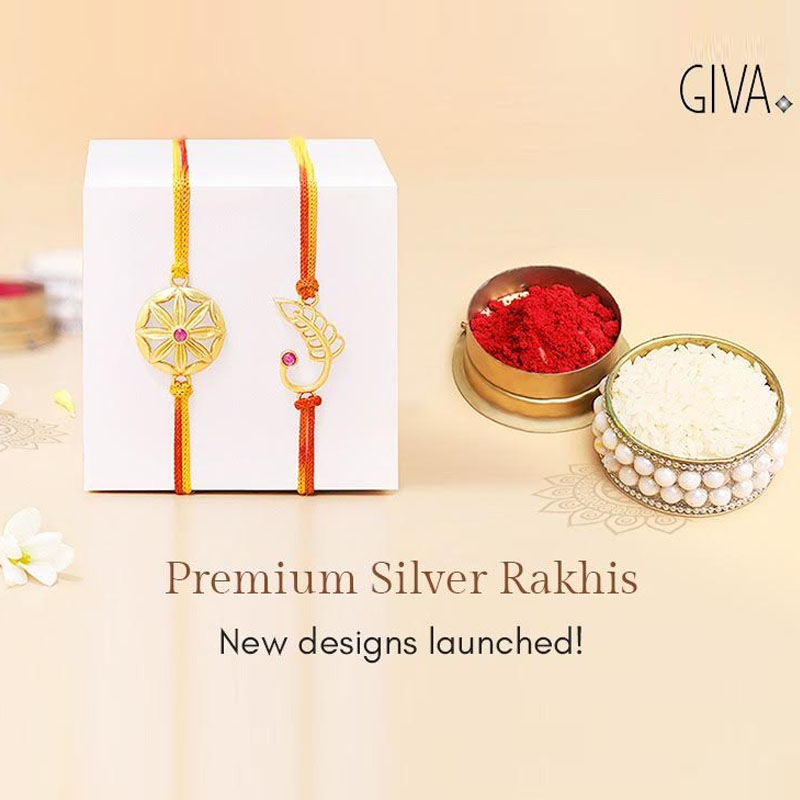
Mumbai: GIVA, a premium jewellery brand aiming to make authentic, elegant, and fine silver jewellery accessible in India, launched their latest line of Rakhi collections, for the upcoming Raksha Bandhan festivities in India. Renowned for redefining the art of presenting exquisite sterling silver jewellery, GIVA takes immense pride in launching an emotive campaign that honours the profound sibling connection. Aptly named “Ties of Love,” the campaign transcends being a mere collection; it is an exploration of the emotional connection that siblings share. This campaign artfully encapsulates the essence of sibling relationships through meticulously crafted 925 silver jewellery rakhis, serving as poignant symbols of affection, protection, and enduring love.
GIVA has embraced a digital advertisement that eloquently portrays the deep and meaningful love that siblings share. This ad serves as a heartfelt depiction of the profound bond that exists between brothers and sisters, further resonating with the brand’s dedication to celebrating and cherishing these special relationships. The ad beautifully captures the essence of a sibling duo celebrating a long-distance Raksha Bandhan and highlights the range of emotions amidst virtual and real-time celebrations. The campaign’s strategic blueprint leverages modern communication platforms such as influencer marketing, Youtube and Instagram advertising.
In a strategic move, GIVA enlisted the support of prominent social media influencers and celebrities Ridhhi Dogra, Pooja Gor and Sreejita De to convey the campaign’s key messages to their target audience. To honour this enduring bond between siblings, GIVA has created an Instagram filter named #TiesofLove. This filter is a tribute to the unbreakable bond we share with our siblings and with this, GIVA aims to witness countless siblings sharing their own delightful and hilarious anecdotes all through August.
GIVA has introduced an exclusive Rakhi collection complemented by exquisite fine silver jewellery choices, with prices beginning at just Rs 899 only. This assortment encompasses a diverse range of options to cater to various preferences, featuring personalized rakhis designed to strengthen the sibling bond. These personalised rakhis can showcase intricately embedded names of brothers and sisters, alongside specially crafted Lumba rakhi designs for beloved sisters-in-law. Moreover, their innovative Convertible rakhis offer a unique transformation into stunning pendants, reflecting a blend of sustainability and style.
GIVA founder Ishendra Agarwal said, “GIVA’s Ties of Love Rakhi campaign embodies GIVA’s mission: celebrating the timeless with a modern twist. This year, we sought to extend Rakhi’s warmth beyond a day by crafting convertible rakhis that can transform into cherished pendants. We also extended our shipping to over 20+ countries to truly celebrate sibling love across borders.
It is more than a campaign. It’s a call for togetherness. It’s a shared tribute to love, tradition, and cherished moments. Our curated collection of gift hampers, personalised rakhi and rakhi gifts are a testament that gifts should know no boundaries.”
To extend a perfect gesture towards both sisters and brothers-in-law, their Bhaiyya-Bhabhi combo stands as an ideal selection. The Rakhi Box is an exclusive gifting choice that presents a personalized rakhi and kumkum, encapsulating a heartfelt touch. Additionally, they also have Bracelet rakhis that seamlessly fuse tradition with fashion, adding to their charm.
Ensuring no one is left out, GIVA has an exclusive Kids’ collection that presents a delightful array of rakhis, starting at just 699 INR. This collection is tailored for younger siblings, capturing the spirit of sibling love playfully.
GIVA’s Raksha Bandhan campaign seeks to highlight the profound emotional value of the rakhi tradition in India, positioning the brand as a provider of thoughtfully crafted and meaningful silver jewellery. The brand’s objective is to establish a heartfelt connection with customers, nurturing a deeper understanding of sibling connections while showcasing the brand’s impeccable artistry. GIVA has always prioritized individuality and self-expression in its design ethos. This Raksha Bandhan, the brand is particularly attentive in presenting a diverse range of top-notch, hypoallergenic rakhis, all certified by GIVA. This effort is dedicated to cherishing the enduring bond, as precious as silver, that exists between siblings.

If you own a car or are planning to get one, you cannot take it on the roads without obtaining valid insurance for the same. Though there are two types of car insurance, third-party insurance is considered the most basic insurance that no vehicle owner can do without. If you’re ever caught driving an uninsured car, you will be heavily penalized by the authorities.
Third-party insurance for car is comparatively affordable compared to other car insurance, but it also offers limited coverage. If you’re contemplating getting third-party car insurance from a well-known insurance provider but want to gather necessary information before making any purchase, this article is here to guide you.
Also Read – New to Insurance? Keep these 5 Things in Mind While Purchasing life Insurance
Third-Party Car Insurance: Things to Know
The Indian Motor Vehicle Act mandates car owners to get at least third-party insurance for their registered vehicle if they don’t want to go ahead with comprehensive insurance. Third-party insurance primarily covers the vehicle owner against losses/damages caused to a third party during an accident. Like other insurance policies in the market, even third-party insurance for car has specific inclusions and exclusions that you should be aware of.
● Inclusions in a Third-Party Car Insurance
Irrespective of your driving skills, driving on chaotic Indian roads can sometimes be challenging. And with so much crowd and traffic around, chances of unfortunate events, like road accidents, increase manifold. In such a situation, if you end up hurting/damaging a third party or his property, you will be liable to pay the damage cost to the other individual. It is during such cases when third-party insurance comes to the rescue. They cover car owners for:
Also Read – Government Should Address The Long Pending Insurance Bill Sanjay Tripathy
1. Personal Damages to Third-Party
If a person gets hurt during an accident because of your car, you will have to bear his medical and other associated expenses. If you have taken third-party insurance, you can claim the financials involved from your insurance provider, and they’ll take care of the rest.
2. Property Damages to Third-Party
Similar to personal damages, you are also required to pay the property damage cost to the third party. Whether you accidentally hit another vehicle or a street lamp post, you will be liable to pay for the damages caused because of your car. Luckily, it is also covered in third-party insurance, so policyholders don’t have to bear the brunt of such unexpected out-of-pocket expenses.
● Exclusions in Third-Party Car Insurance
While third-party car insurance covers the vehicle owner for personal and property damages caused to a third party, it doesn’t cover the damage caused to the policyholder. But this negative can be turned into a positive by adding a personal accident cover to your basic third-party car insurance. You will have to pay for personal accident cover separately, but the extra payment will be worth it, as it will bring along peace of mind.
Also Read – Insurance A Push Product in India Says Indiafirst Lifes Rushabh Gandhi
● Difference Between Comprehensive and Third-Party Car Insurance
The fundamental difference between comprehensive and third-party insurance lies in coverage. While the third-party insurance protects the car owner from a property and third-party damage caused by his vehicle, the comprehensive insurance covers policyholders for both third-party and own damages. You should purchase comprehensive car insurance if you want maximum coverage. The insurance premium varies proportionately to the inclusions/coverage a policy offers, so don’t worry if you have to pay more for comprehensive insurance.
But before you purchase any insurance for your vehicle, always remember that no claim will be entertained if the policyholder was found driving in a drunken state or the driver had no valid driving license. Also, if a minor was found driving the car at the time of the accident, no claim will be fulfilled. So always be responsible while driving to avoid any unpleasant surprises during claim settlement.
How does Third-Party Car Insurance Work?
If a person meets an accident after taking third-party car insurance, the policyholder can raise a claim for the damage caused to a third party or his property. For claim settlement, the policyholder should inform the insurance company about the accident within the stipulated time as mentioned in the policy document and also furnish an FIR so the insurance company can take things forward. A surveyor will then be sent from the insurance provider’s end to assess the monetary damage caused and verify the same before sharing a detailed report with the insurance company. Based on the final report, the claim amount will be processed.
You can either call the representative you’ve been in touch with from the insurance provider’s side or simply email them on their official email id with the necessary details. Having a good insurance company by your side is important if you want faster claim settlement and excellent customer support. So take your time and do the due diligence before purchasing third-party insurance from any insurance provider.
Taking third-party car insurance from a trustworthy insurance provider will enable you to drive legally on the Indian roads without any worry of traffic penalties or fines and save you from unexpected and unavoidable out-of-pocket expenses in case of a road accident. With so many benefits on the table, you shouldn’t think twice before getting your vehicle insured.
Also Read – Covid-19 Uplifts Health insurance Sector, But Premium Segment Sees Decline
MUMBAI: As the Indian Premier League (IPL) gathers full speed, American Appraisal has released a concise report called “On a sticky wicket” on the brand values in IPL. While many expected that the latest round of controversies will shake the belief that advertisers and corporates had put in the million dollar cricketing extravaganza, the report is upbeat about the IPL and tags the event as most popular and anticipated event around, which advertising campaigns are run despite the launch of several rival sporting leagues in the country during the last 12 months.
As per the report, Shah Rukh Khan co-owned franchisee Kolkata Knight Riders (KKR), grabs pole position in the brand valuation chart, followed by Mumbai Indians (MI). KKR’s brand value increased from $69 million to $86 million, while MI was stagnant at $72 million. Chennai Super Kings dropped to number three slot as their brand value declined to $69 million as compared to $72 million in 2014. Royal Challengers Bangalore (RCB) and Rajasthan Royals (RR) were also stagnated at fourth and fifth berth with $51 million and $45 million respectively.
Meanwhile, Kings XI Punjab after their strong performance in the 2014 edition, rose to number six position as their brand value hiked from $32 million to $41 million in the 2015 edition. Sunrisers Hyderabad (SRH), at penultimate position, also secure growth as their valuation rose to $35 million from $25 million. Positioned at the bottom of the table in terms of brand valuation, Delhi Daredevils saw the biggest dip following an underperformed 2014, with a brand valuation of $34 million, which dipped from $40 million in 2014.
The report also depicts that player selection is not just limited to skills and performance but also to the ability of a player to garner sponsorships, case in point being Delhi Daredevils’ acquisition of Yuvraj Singh for a record Rs 160 million. Yuvraj has all the abilities to change the fate of a match single handedly with either batting or bowling but in recent times he failed to step up to his ability as he registered average performances. He started his IPL career with Kings XI Punjab then went to Pune Warriors before Royal Challengers paid a hefty amount for his services. However, his stint with RCB didn’t last for long as the Vijay Malya owned franchisee decided to let him go following his exclusion from India’s World Cup team. In the current season, Yuvraj is a part of Delhi Daredevils and the franchise will hope that he can change both his and the team’s luck with strong performance. The irony is that despite not showing a satisfactory performance, Yuvraj’s value kept increasing year after year.

There is a clear sense of maturity and business intent by franchises in selecting their teams, evident in the way player auctions took place earlier this year. With almost all social media platforms set to be awash with IPL content over the next few weeks, and the fact that the Indian national cricket team did unexpectedly well at the recently concluded World Cup, there is no surprise that the real winner of the next IPL will be cricket.
Viewership
The cumulative reach of the IPL increased from 155 million for the 2013 edition to 190 million for the 2014 edition. The TV reach of IPL has been consistently growing at a compound annual growth rate (CAGR) of 10 per cent since the first edition, despite the fact that the IPL’s TV ratings have been consistently falling every year since the first edition suggests the report. The report describes 2014 as a tremendous year for India when it comes to sport and entertainment, driven by the success of the IPL, the country saw a plethora of new sporting leagues, some of which have seen unexpectedly high levels of popularity. The Pro Kabbadi League (PKL) and the Hero Indian Super League (ISL), both of which had their first editions in 2014, saw viewership numbers large enough to rival even the IPL. The PKL garnered viewership of 435 million viewers for its first edition, a shade more than the ISL’s 429 million viewership, while season seven of the IPL garnered close to 552 million viewers, despite the controversies and changes in venue.
Emergence of Digital
In a recent development, the global digital media rights (excluding the US region, which were sold separately to ESPN for an estimated $12.4 million for a three year contract) for the IPL were sold to a Star Group company for a staggering Rs 302 crores for a three year contract. This represents a 50 per cent increase in previous deal value. With the TV broadcasting rights for the IPL due for renewal in a few years, we could be looking at a TV broadcasting deal of record proportions in India. Some food for thought here would be the 83 per cent increase in the annual broadcasting fees for the English Premier League paid by Sky and BT for a league whose viewership has been increasing at a fraction of the growth seen in the IPL.

Understanding The Brand Value
Great sporting brands across the world have been built over several decades of fan following, successful performances, the ability of a team to attract great talent, and continued association with large companies, partners and sponsors. Teams like the New York Yankees, Dallas Cowboys, Manchester United, Chelsea, Real Madrid, Barcelona, Los Angeles Lakers and the like have become much sought after brands by advertisers and represent brand values in the billion dollar range.
In the IPL, brand value is derived from a wider variety of reasons, keeping in mind the Indian viewer’s association preference for vernacular proclivities, cricketing knowledge and celebrity influence. Accordingly, drivers of brand value in the IPL can be categorised under the following broad headings.
Management Strength and On Field Performance
For an advertiser / sponsor, being associated with a team that is consistently performing at the top of the table is a key factor in assessing brand potential. A look at the largest deals in the sponsorship space not only in the IPL, but also internationally, will reveal that teams that are better on field performers garner higher sponsorship values In the IPL, the estimated lead sponsorships (lead chest and limited player promotions) were valued at a 100 per cent premium for a top ranked team over its lower rung peer.
Of course, a team that consistently performs at the top of the table is not the result of a prefixed formula. Team management plays an important role in squad selection, talent acquisition, performance management and administrative support. Clearly, a winning team is the result of a combination of several factors including the strength of the management team.
Marketing Strategy
Based on an analysis, it is estimated that, on average, franchises spend anywhere between 15 and 25 per cent of their revenues towards marketing and promotion. Some teams, like Kolkata Knight Riders, who invested significantly towards brand building in the early part of their IPL existence, have seen fantastic support from sponsors and partners. IPL events, television advertisements, merchandising, in stadium freebies and other such promotional activities driven by the franchise go a long way in garnering exposure and support translating into brand gains. Merchandising in the IPL is presently in a nascent stage, and most franchises are still coming to terms with the best possible way to monetise different streams. The reports suggests that this will be a game changer for franchises that are able to crack this difficult market and identify new monetisation streams by tapping into their existing fan base.
Celebrity Influence and Marquee Players
The presence of key marquee players and celebrity owners in a franchise brings additional popularity to the individual team brands. However, it may be added that cricket is a team game, and no one person can change the fortunes of a badly performing franchise. In addition, while franchise brands may be able to ride on the brand of a celebrity owner or a marquee player, they are also open to the risk of damage in cases where said individual is embroiled in a controversy, even if that controversy is outside of the IPL.
Geographical Location
The geographical location of the franchise determines the population of its support base and is an important factor in assessing the strength of an individual team brand. In general, it is likely that higher density of teams in a particular region of the country will split the fan base and impact the ability of a team to garner support outside of its immediate location. While the intention of the IPL was never to split support on the basis of vernacular lines, this does seem to be the current situation with every team in the current season belonging to a different state of the country. While this makes support for each team more intense, it remains to be seen how support will be impacted once a few more franchises are added to the current format.
Governance and Transparency
Over the last few months, teams or promoters of teams accused of professional misconduct or embroiled in any controversy have had a negative impact on brand perception. Last year, as part of the survey, respondents were asked to rate their preferred IPL franchises on the basis of their perceived brand strength and the quality and transparency of their management teams. The results were interesting, to say the least.
Social Media Engagement
The ability of a franchise to engage fans on a regular basis, particularly during the IPL season, has been crucial in building positive brand perception. Over the last few seasons, dedicated Twitter campaigns and “player battles” organised by the franchises have been seen with the intention of engaging fans regularly and keeping them up to date with the events of the individual teams.




MIB sets OTT accessibility rules, mandates captions and audio description

Boney Kapoor acquires remake rights of Tamil political satire Thalaivar Thambi Thalaimaiyil

Netflix India names Rekha Rane director of films and series marketing

Zabeen signs off from TV9 after shaping the network’s public voice

Dhawan steps up to bat for Delhi’s grassroots sports push

Orient Beverages pops the fizz with steady Q3 gains and rising profits

Cheekatilo shines in the dark with record debut on Prime Video

These ’90s fashion trends are making a comeback in 2017
The final 6 ‘Game of Thrones’ episodes might feel like a full season
According to Dior Couture, this taboo fashion accessory is back
The old and New Edition cast comes together to perform
Phillies’ Aaron Altherr makes mind-boggling barehanded play
Uber and Lyft are finally available in all of New York State
Disney’s live-action Aladdin finally finds its stars
MIB sets OTT accessibility rules, mandates captions and audio description
Boney Kapoor acquires remake rights of Tamil political satire Thalaivar Thambi Thalaimaiyil
Netflix India names Rekha Rane director of films and series marketing
Zabeen signs off from TV9 after shaping the network’s public voice
Dhawan steps up to bat for Delhi’s grassroots sports push
Orient Beverages pops the fizz with steady Q3 gains and rising profits
Cheekatilo shines in the dark with record debut on Prime Video
-

 News Broadcasting7 days ago
Mukesh Ambani, Larry Fink come together for CNBC-TV18 exclusive
-
 I&B Ministry3 months ago
India steps up fight against digital piracy
-

 iWorld1 week ago
Netflix celebrates a decade in India with Shah Rukh Khan-narrated tribute film
-
 MAM3 months ago
HoABL soars high with dazzling Nagpur sebut
-
 iWorld12 months ago
BSNL rings in a revival with Rs 4,969 crore revenue
-
 iWorld3 months ago
Tips Music turns up the heat with Tamil party anthem Mayangiren
-
 MAM7 days ago
Nielsen launches co-viewing pilot to sharpen TV measurement
-

 Hollywood3 days ago
The man who dubbed Harry Potter for the world is stunned by Mumbai traffic
