Star Plus is today the numero uno cable and satellite television channel in India. A year or so ago, industry watchers and rivals would have laughed their guts out if someone had dared mention this would be the scenario in May 2001.
But the fact is that it is, and the faces of rivals are grim as Star Plus continues to occupy its perch at the top of the TV ratings chart. The man at the helm has been Peter Mukerjea, the CEO Of Star India, who has simply left alone the professional who has been the key driver of Star Plus’ turnaround to do as he pleases with the programming of Star Plus and the Star Network. Meet Sameer Nair, executive vice-president, content and communications, Star India.
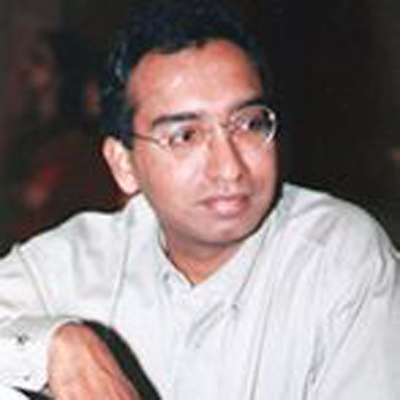
Nair normally prefers to dress down – totally in contrast to the others of his ilk in the television industry. Tall, lanky (more filled out now than earlier in his career) and bespectacled, Nair definitely does not epitomise the programming head of a channel. A stranger would think he was probably a number cruncher or an IT geek.
He probably could have been one of those too had he chosen to. But advertising and filmmaking excited him. And after a rather circuitous journey, he ended up as head of programming at Star.
Indiantelevision.com’s Anil Wanvari spoke to Nair to try to understand what it is that makes him the brightest television programming mind in the country today. Excerpts from the interview:
What is television programming all about?
People talk so much about creativity. But the core fact is that creativity is a function of the environment. Programming likewise is a function of the environment. Environment dictates strategy – whether you do it well or not will decide its outcome.
Can you elaborate on that?
Take for example Star Plus. In February 1999, we had a 50:50 agreement with Zee TV. Mr (Rathikant) Basu was the CEO then. We were forced to air 50 per cent of our shows in Hindi and 50 per cent in English. There was a lot of gripe about Star having a DD (Doordarshan) like environment. We decided to use what was considered as a negative against us – the restrictive environment – as a positive. We decided to streamline what we had, bring gloss to the product and yet work with both Hindi and English.
We did a lot of research, used examples from advertising, MNCs, the growth of mobile telephones, and proved that the future is in a Hindi and English programming mix. We told a story that we are doing programming for the classes, that we wanted to be the Shah Rukh Khan and not Govinda. And that in two to three years the results would start showing. We got rave reviews, we were on a roll.
My beliefs about programming are further cemented by what happened to us later. In January 2000 we split from Zee TV. At that time we were presented with a different environment. We did not want to lose the gloss, the upmarket feel, and yet go populist with our programmes. We decided let’s ditch one of our most popular and revenue earning shows on Star Plus – Star News. Everyone thought we were mad, but we did it.
People often say that the world is not letting us do it, so we won’t do it. Remember, the world is never going to let you do it. You have to do it.
There is a saying that luck is a residue of diligence. You work hard you get lucky. You can’t forget that you have to work hard to find the rainbow, and then only will you find the pot of gold behind it.
What are the challenges you face as a programming head?
TV – like film – is a collaborative art form and it is an expensive one at that. You have to work with a group to make a creative product. You have to manage their minds. You have to take a bunch of people towards a unified creative goal – there’s the inhouse production team, the schedulers, the suppliers. You can say ‘forget it’ to them – just follow the leader and not let them have any input. But that’s not utilising resources well. You have to motivate people, reduce errors, and go easy on expenses and extravagance – you can go haywire, and it can be a very expensive call that you make, because people are often jerking off on creativity.
How do you achieve that?
My biggest plus is that I am very good at working with a large bunch of people. And it’s not to do with the ‘follow me blindly’ factor. One thing that irks me is debate, theorising, discussions. I get edgy when somebody is theorising. I work fast. I set the pace. For instance, I tell my team, let’s meet on Sunday 9 am. Or let’s work the Easter weekend. The fact is it disrupts your life. Some keep up with me some don’t. Those that don’t fall by the wayside. Those that do grow. I believe my model is like a benevolent dictatorship.
People often say don’t waste your time with fools. I believe that you need fools. They are basically a wonderful contrast to you. There are three types of creative people: the superstars – eccentric bunch who come up with bright ideas a lot of the time. Then there are the loyalist grinds, the solid ant workers, who have the capability to move up. They are not as great as the superstars, but they chip away, plod and do it. The jerks are the completely stupid guys. You take good care of the superstars, keep them happy, massage their egoes. You look after the loyalist grinds. The jerks, well, you get rid of them at the earliest. But bear in mind, the person with impeccable credentials – the superstar – can turn out to be a jerk. Within Star, therefore the guy who gets the idea, need not be the one to implement it. He may not have the ability to do so – take it to fruition.
Who are your favourite producers?
My two major favourites are Ekta Kapoor and Siddharth Basu. One has a background from films, populist and is of the soap serial variety. The other is from Delhi, the intellectual mind, BBC, MasterMind and all that. Both are producing highly popular shows for us. Both have a different work ethic. They are as different as chalk and cheese. With the two I can go from sublime to you know what.
Neena Gupta is another great and fun person to work with. She is a powerful character. Rajat Sharma is an interesting person. You can vibe with him, talk to him – the Hindi heartland journalist. Actually, all the producers are good. I have met so many producers. They all come with that magic moment, that magic product. Ninety-nine per cent of the time it never really turns out like that. I need solidity, the ability to follow through and deliver.
Not that these people are my favourites for the sake of being favourites. I never have magic moments with Siddharth Basu. He is an argumentative type, almost a shrew. But we wanted someone with that kind of an attitude – a worrier. We did not want a cocky person who was confident, and telling us not to worry. KBC is huge in scale, in size, we used to worry about everything. He is a perfectionist.
Can you spot a winner?
You cannot spot a winner. It’s a function of the environment. Asha Parekh came to us first with Mehandi Tera Naam Ki which is now one of the big successes on Zee TV. I liked it. But everyone in my team rejected it. It did not fit with the typical Hindi English upscale programming on Star Plus at that time. It would have flopped on Star Plus.
|
|

Spotting a winner is also about hard work and effort. When Steve Askew suggested the (Who Wants To Be A ) Millionaire show, I told him to go get a licence from the rights owners (Celador). It took him nine months to get it. We hired Siddharth Basu. And then I had this crazy idea to go with AB (Kaun Banega Crorepati host Amitabh Bachchan) for Millionaire. But I wasn’t just thinking of the Millionaire show. I was thinking of AB as an icon to take Star Plus from elitist to populist. And there is no one better than him to do that. We would place him next to the Star logo and we would reach the masses. We build a huge castle around that idea.
But we put our best efforts into the show. We were clear that we did not want to sit on 4 July and hold our head in our hands and say if we only had done that.
How do you grow your programming skills?
I watch TV. I read. I meet people and I listen to everyone. I have an open door policy. I meet producers even now. They get psyched out. Producers come up with comedy, some stupid crap and I listen. You won’t believe the amount of time I spend with mythology producers. They think they are the pantheon of Hinduism. They believe in their own divinity. They are time warped in the era when their shows used to get TRPs of 20-30. But now those days are gone.
You may not be able to tell what is good but you can learn to tell what is bad over time. And when you find out that the product is bad, you switch off, you tell the producer, thanks a million, let’s meet next Friday.
How is the programming department in Star structured? How is the programming department different from that in other channels?
I look after both content and communications. There are individual heads for all the channels. They have executive producers below them and the promo guys. The channels are Star Plus, Star Gold, Star World, Star Movies, Channel V. And then I have marketing and PR reporting to me. And finally there’s interfacing with indya.com in which we have invested.
The advantage with Star is that there is a single unified vision. And I am really lucky to have Peter Mukerjea as a boss. He just let’s me be. The management let’s you do your job. I am also lucky to be part of News Corp. Here you are left alone once you are given a task, you are left alone to create a strategy. Of course I have to sell it. If they buy it, they back it to the full. If they buy it, you can’t hem and haw. You have to see it through.
| What do you see is the problem with Zee? There is no single unified vision. They are very bad at communications. Creating a successful programme is about telling a good story, spinning a yarn, and then packaging and promoting it well. They lack in this area too. |
 |
Who are your favourite TV producers – in India and globally?
None. My favourite filmmaker is Steven Speilberg. You know the guy never got an Oscar. So he did Schindler’s List, which got him his Oscar. All the critics went to town saying he was maturing as a filmmaker. And what does he do next: he comes up with Jurassic Park, showing a finger to the Academy. Spielberg is something else.
What do you want out of life?
No idea. In the long run we are all dead. I only have a short-term objective. And that is to take all the Star channels to the No 1 status. And increase the distance between them and any of their rivals.
What is more important in television – marketing, programming or distribution?
Content is king. But then somebody else said distribution is God. In television however, it starts with content. You have to get it on the box and then market it and distribute it.
 |
Do you think programming, marketing and ad sales should work closely with each other like the Times of India? They should as closely as possible. Different departments have different targets. And because of this there are interdepartmental frictions. The consumer does not see quarter one or quarter two. He watches a show and he enjoys or hates it at the end of the day. But there has to be smooth working behind it. |
How do you see programming in India evolving?
The Indian TV audience is maturing. Programming is maturing. The audience was ahead of the curve initially. From a one-channel scenario, Indian television leapfrogged to a 100-channel scenario. The Indian viewer was presented with a wide range of choices. Local programming did not keep pace. Production values, post-production effects and concepts did not evolve fast enough. But now these are (evolving). And even programming is catching up.
How much of a television channel’s budget should be invested in programming?
I would say about 80 per cent of a channel’s investment should be in programming. The remaining would go into basic technology, marketing, distribution and other overheads.
Do you believe in importing foreign products and adapting it to Indian tastes?
I do. Tell me if there is a good foreign product available for adaptation. After all, why should we reinvent the wheel. Remember recreating is harder than creating. In art school you are first taught to copy the masters. If you can copy a Van Gogh well, you can be sure you have talent.
(To Be Continued)
Leave a Reply