
People
Siblings bond on Raksha Bandhan


For many it is a daily struggle – how to balance their daily routines between work and perosnal life. But there are occasions when even the wealthiest man, the most powerful CEO or politician has to forget the position his/her occupation has given him/her. When he/she is at home, the role they enact is simply that of a father or a mother or a son or a daughter and for those who are fortunate enough of a brother and a sister.
Raksha Bandhan – a day that reminds brothers and sisters that they share a bond – for a lifetime. She ties a string on his wrist. She annoints his forehead with tikka, and does his pooja. The brother in turn promises to look after his sister, no matter what, and gives her a gift – and seeks her blesssing. A moment that helps us connect and reminds us that we are human, that all is equal.
On the eve of Raksha Bandhan, a pious festival, we take a look at some of the well-known brother-sister combinations in the industry. Over the years, they have created their own identities in the media and entertainment sector. Whether it be broadcast, television, films or the government, these siblings have become powerhouses in their respective fields.
On this special day, Indiantelevision.com features a few siblings in the media industry.
 |
Vandana Malik and Raghav Bahl
The two together built an empire that recently shifted hands to another powerful person in the country. Indeed, brother sister duo Vandana Malik and Raghav Bahl gave their all to the Network 18 group in the span of two decades.

In early 1990s when Raghav started producing shows for BBC including India Business Report, he roped in his sister Vandana to head operations from Mumbai. Vandana, a housewife, knew zilch about the industry, took a bold step with her brother’s help and went on to be a core member of the group’s expansion in the years to come.
Raghav stormed into the media industry with JVs with some of the big names across the world- Viacom, CNBC, CNN, Forbes, GS Home Shopping etc.
Now with Network 18 being in the hands of one of India’s richest industrialists – Reliance Industries’ chairman Mukesh Ambani, Raghav has ventured into the hand held personalised news space while Vandana’s next venture is not yet known.
 |
Anurradha and Ravi Shankar Prasad
She is the managing director of the BAG Network while her brother is the current Union Minister of Ministry of Communications and Information Technology. Anurradha Prasad and Ravi Shankar Prasad have both excelled in their fields, making their presence known wherever they go.
While the sister is a power woman in the field of news and entertainment television, the brother is one of the country’s top leaders of Bharatiya Janata Party.
Anurradha runs two TV channels, News 24 and E24 as well as a production house called BAG. Ravi helped establish Goa as the destination for holding the International Film Festival of India as well as led the Indian delegation to film festivals in Cannes, Venice and London.
 |
Ila Arun and Piyush Pandey
The godfather of Indian advertising, Piyush Pandey, is brother of Ila Arun, the queen of Indian contemporary music. Born in Jaipur, both Piyush Pandey and Ila Arun are one of the most dynamic brother-sister duos in the media industry.
While Ila, the singer who turned folk-pop into a craze is also a very talented writer, music director and actor, her ad-guru brother Piyush is Ogilvy & Mather India south Asia executive chairman and creative director. It was under his leadership O&M has become one of the largest advertising agencies in India. He has also penned a patriotic song ‘Mile Sur Mera Tumhara’ for the National Literacy Mission of India in 1988.
And as Ila blends the rural and the urban traditions of India; Piyush brings the nation together through his addictive campaigns.
 |
Madhu Trehan and Aroon Purie
The euphemism, two sides of the same coin, aptly suits the combination of brother sister duo Aroon Purie and Madhu Trehan. The Doon school educated Aroon is well known as the founder of the India Today group while Madhu is arguably one of India’s fiercest media critics today.
Their father, the late Vidya Vilas Purie was a former film financer and owner of the Thompson Press who in 1975 launched a tabloid newspaper called India Today. Aroon and Madhu revived the tabloid into a fortnightly magazine initially targeting NRI’s.
In 1977 when Madhu was pregnant she decided to move abroad to start a family. She handed over the magazine’s complete operations to her brother. When she returned to India in 1988, she launched Newstrack, a video news magazine and in 2012 she went on to launch Newslaundry a web portal that keeps a sharp check on the country’s media houses and people including those owned by her brother.
 |
Ekta and Tusshar Kapoor
She is the queen of television. Ekta Kapoor, who late into her teens was only known as Jeetendra’s daughter, is today the CEO of one of the finest production houses Balaji Telefilms in India. She was just 17 when she started working and since then, she has breathed, eaten and slept only television. Today, she also has a film production house – Balaji Motion Pictures – to her credit.
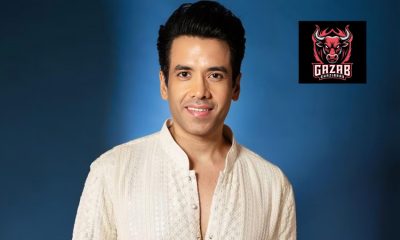
Ekta shares a very strong bond with her brother Tusshar who is an actor. He has over 30 films under his belt. He is also the executive director of Balaji Motion Pictures.
 |
Nalini Singh and Arun Shourie
They are the son and daughter of consumer rights activist, HD Shourie. Nalini Singh is a TV celebrity and senior Indian journalist who is known for her anchoring of the popular television show Ankhon Dekhi on Doordarshan. Her sibling, intrepid journalist Arun Shourie,is known for his writing in Indian Express during the emergency. He has now moved out of media to grace the hallowed corridors of power in New Delhi. He is a powerful politician, columnist and ex-Union Minister.
 |
Divya and Yogesh Radhakrishnan
Known for always being on the two opposing ends of the table, Divya and Yogesh Radhakrishan are forces to be reckoned with in their respective fields. Divya set up her own specialty company, Helios Media for broadcasters after working in an agency model for over two decades. On the other hand, Yogesh, the former CEO of Prime Connect is now the director of Pioneer Channel Factory.
 |
Shavon Barua and Kaustav Niyogi
She loves most things old world, fashion, travel off the map, her boys are her world and also happens to be the Havas Worldwide West + South India president. Shavon with over 15 years of experience has led major global brands like Pepsi, Nestle, Colgate, Palmolive and Lakme Lever (Unilever) at various agencies such as JWT, Publicis, Y&R, and SSC&B Lintas. Her brother is the Mad Man of the advertising fraternity. Kaustav Niyogi aka Kausti has worked with the big names like McCann Erikson, Rediffusion Y&R and Publicis as creative head. He is currently, busy directing Pooja Bhatt’s next film Cabaret.






BENGALURU: Artificial intelligence is doing to media what smartphones once did to telecom—quietly, irreversibly and at scale.
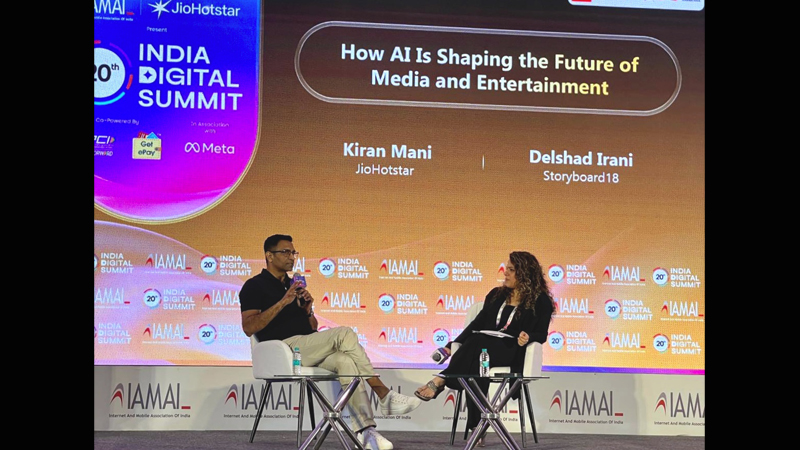
That was the thrust of Kiran Mani, ceo – digital at Jiostar, speaking at the IAMAI India Digital Summit 2026 in Bengaluru on Thursday. AI, he argued, is transforming how audiences discover, consume and interact with content, shifting media from instruction-led to instinctive.
In a session moderated by Delshad Irani, Mani likened the current moment to the move from BlackBerry-era buttons to intuitive smartphones. “AI is doing to media what smartphones did to telecom,” he said, describing a shift where technology fades into the background and experiences become simpler, faster and more natural.
The biggest change, Mani said, is unfolding at the consumer level. AI is slashing the effort required to find something worth watching by responding to behaviour in real time. Instead of leaning on static markers such as age, geography or viewing history, platforms are increasingly reading live signals—pauses, skips, searches and questions—to surface content instantly. The result: shorter browsing loops and quicker decisions.
AI is also reshaping second-screen behaviour. What was once a distraction is becoming a seamless extension of viewing, allowing audiences to explore actors, characters, match statistics and key moments without leaving the primary screen. Curiosity, Mani said, is being woven directly into the experience.
India’s fragmented media ecosystem adds complexity. Mani noted that AI must perform across a vast spectrum—from connected televisions in urban homes to low-cost smartphones in smaller towns. The real challenge, he said, is not building intelligence for a privileged few, but making it work reliably across millions of screens.
On the creation side, AI is lowering long-standing barriers to entry. Stories that once demanded large budgets can now be visualised and produced far more efficiently, freeing creators to focus on ideas rather than constraints. As a result, the line between premium and short-format content is blurring.
“Good stories don’t need to be long to be impactful. A short format can be just as powerful if the idea connects,” Mani said.
Addressing fears around job losses and creative erosion, Mani argued that AI is reshaping roles rather than replacing them. By automating repetitive and execution-heavy tasks, it is allowing people to concentrate on higher-value creative work. Some of the most promising advances, he added, are emerging where technologists and creative teams work closely together.
From a platform standpoint, the focus is shifting from being everywhere to being intelligent everywhere. Once infrastructure is in place, AI enables platforms to understand intent and respond to it across screens. Content can now be analysed in real time, allowing relevant information, highlights and interactions to surface while viewers remain engaged.
Interactivity is becoming central to this evolution. Tools such as voting, meme creation and interactive features are pushing audiences from passive consumption to participation. Given the space, Mani noted, viewers often invent forms of engagement platforms they themselves did not anticipate.
Personalisation, too, is evolving. Rather than slotting users into fixed categories, AI is learning from moment-to-moment behaviour, making recommendations feel fresher and less repetitive—and discovery faster.
Looking ahead, Mani flagged conversational AI and voice as the next frontier. True conversational experiences, he said, go beyond voice search, enabling dialogue-driven interaction with content. As voice, text and video converge, media is set to become more immersive and personal.
Success, however, will not be measured by adoption alone. “If we can turn every screen into a meaningful interaction and help creators build more sustainable careers, we would have genuinely moved the industry forward,” Mani said.
In the AI era, the media’s future will not be defined by bigger libraries or louder platforms—but by quieter intelligence that knows exactly what the viewer wants, when they want it.
NEW DELHI: New Delhi Television Limited showed signs of revenue traction in the December 2025 quarter, but rising costs ensured the broadcaster remained firmly in loss territory, underlining the tough economics of running a 24×7 news operation.
For the three months ended December 31, 2025, NDTV reported standalone revenue from operations of Rs 97.88 crore, a sharp sequential jump from Rs 68.38 crore in the September quarter and higher than Rs 77.93 crore in the same period last year. Including other income, total income for the quarter stood at Rs 99.93 crore.
The topline cheer, however, was quickly drowned out by an even faster rise in expenses. Total costs climbed to Rs 175.78 crore during the quarter, driven by higher production outgo, employee expenses, marketing spends and finance costs. As a result, the company posted a net loss of Rs 80.07 crore for the quarter, widening from a loss of Rs 76.35 crore in the preceding quarter and Rs 59.64 crore a year ago.
Marketing, distribution and promotional expenses remained the single largest pressure point, coming in at Rs 48.89 crore for the quarter, as NDTV continued to push visibility across platforms. Employee benefits expense was close behind at Rs 34.55 crore, reflecting the manpower-heavy nature of news broadcasting.
On a nine-month basis, the story followed a similar script. For the period ended December 31, 2025, NDTV reported revenue from operations of Rs 220.50 crore, compared with Rs 194.55 crore in the corresponding period last year. Yet net loss for the nine months widened to Rs 228.14 crore, from Rs 162.02 crore a year earlier.
The company also recorded an exceptional gain of Rs 4.22 crore during the quarter, offering some relief, though not enough to alter the broader picture. Other comprehensive income remained negative, largely due to remeasurement losses on defined benefit plans.
Earnings per share for the December quarter stood at a loss of Rs 11.84 on a basic and diluted basis, compared with a loss of Rs 10.10 in the September quarter.
While NDTV’s improving revenue suggests traction in advertising and operations, the latest numbers make one thing clear. In the battle between income and expenditure, costs are still calling the shots. For now, the news business remains exactly that. Costly news.
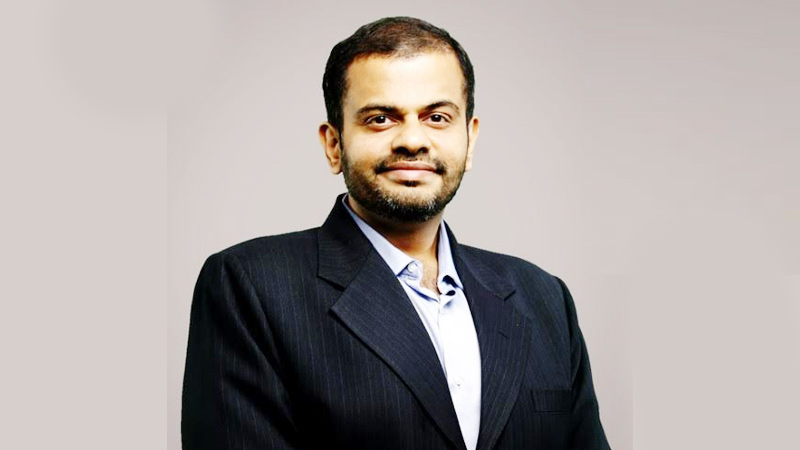
MUMBAI: Mihir Sanghvi is set to exit Sony Pictures Networks India, drawing the curtain on a near 10-year run at one of India’s largest broadcast networks.
Sanghvi’s last working day is expected to be March 31, marking the end of a tenure that spanned expansion, restructuring and a sharper focus on cost discipline across Sony’s television and digital businesses.
Joining SPNI in 2015, Sanghvi most recently served as executive vice president and head of commercial, procurement and sustainability. In that role, he oversaw commercial strategy, sourcing, cost management and sustainability initiatives across the network, becoming a central figure in how Sony balanced scale with efficiency in a crowded media market.
Before Sony, Sanghvi spent over five years at Johnson and Johnson India, where he held senior leadership roles across procurement and commercial operations, including associate director and country lead for procurement. Earlier stints at American Express and FedEx added to a career built across FMCG, media, logistics and financial services.
At Sony, Sanghvi rose steadily through the ranks, moving from vice president and head of commercial to senior vice president before taking on his most expansive role in 2022. His mandate extended beyond procurement to include sustainability, where he worked closely with global teams to align Indian operations with Sony Corporation’s Road to Zero goals.
The exit comes amid broader leadership realignments at Sony Pictures Networks India, as the company recalibrates its structure following a period of industry disruption and intensifying competition from digital-first rivals.
Details of Sanghvi’s next move remain unclear. But after two decades across blue-chip multinationals, his departure signals not just the end of a chapter at Sony, but another reshuffle in an industry where experience, efficiency and execution are back in fashion.


Mukesh Ambani, Larry Fink come together for CNBC-TV18 exclusive

Nielsen launches co-viewing pilot to sharpen TV measurement

Netflix celebrates a decade in India with Shah Rukh Khan-narrated tribute film

Delhivery chairman Deepak Kapoor, independent director Saugata Gupta quit board

Meta appoints Anuvrat Rao as APAC head of commerce partnerships

Brnd.me enters Europe as haircare brands power global expansion

TechnoSport taps quick commerce with launch on Slikk’s 60-minute platform

These ’90s fashion trends are making a comeback in 2017
The final 6 ‘Game of Thrones’ episodes might feel like a full season
According to Dior Couture, this taboo fashion accessory is back
The old and New Edition cast comes together to perform
Phillies’ Aaron Altherr makes mind-boggling barehanded play
Uber and Lyft are finally available in all of New York State
Disney’s live-action Aladdin finally finds its stars
Mukesh Ambani, Larry Fink come together for CNBC-TV18 exclusive
Nielsen launches co-viewing pilot to sharpen TV measurement
Netflix celebrates a decade in India with Shah Rukh Khan-narrated tribute film
Delhivery chairman Deepak Kapoor, independent director Saugata Gupta quit board
Meta appoints Anuvrat Rao as APAC head of commerce partnerships
Brnd.me enters Europe as haircare brands power global expansion
TechnoSport taps quick commerce with launch on Slikk’s 60-minute platform
-
 News Broadcasting3 days ago
Mukesh Ambani, Larry Fink come together for CNBC-TV18 exclusive
-
 iWorld7 days ago
Netflix celebrates a decade in India with Shah Rukh Khan-narrated tribute film
-
 MAM3 months ago
HoABL soars high with dazzling Nagpur sebut
-
 MAM3 days ago
Nielsen launches co-viewing pilot to sharpen TV measurement
-
 iWorld12 months ago
BSNL rings in a revival with Rs 4,969 crore revenue
-
 I&B Ministry3 months ago
India steps up fight against digital piracy
-
 iWorld3 months ago
Tips Music turns up the heat with Tamil party anthem Mayangiren
-

 Film Production1 week ago
UFO Moviez rides high on strong Q3 earnings
