
GECs
Screen, preen, routine


Are the days of the subtly portrayed Laajojis on Indian television over? Has physical perfection taken precedence over histrionic talent?
Indiantelevision.com speaks to various players in the industry in an attempt to analyze the casting scenario and the current trends in the industry.
The battle for the attention of the fickle television viewer seems to be driving software makers away from underplayed roles and subtle storylines towards loud characters and plots that can swing this way and that with every TRP-determining week.
Not surprisingly, the stress on looks that can hook the audience gets louder by the day. The demand for efficient acting abilities comes a poor second, although channels and production houses alike bemoan the fact that the marriage of the two is not easily found in the available talent pool.
|
So, what exactly goes behind the making of the television faces that are a household name today? 
The right look and the right mix of faces that make up a serial is a mammoth task. With most shows on screen following a similar trend; casting has become one of the critical success factors of a show. Programmes now demand interesting and fresh faces all the time, to ensure an edge and creative differentiation over others. The final act of seeing the glam dolls and hunks on air is preceded by a lot of effort that the production house puts in, agree all the casting heads of channels and software houses. The route of roping in artists starts from an audition process followed by screen tests to channel approvals and finally negotiations on rates and dates. Producers are constantly on the lookout for fresh faces, which entails contacting model coordinators, talent agencies and theatre groups. Most producers spoken to say they rely on their database with the only exception being UTV. “Considering the look factor has become extremely important in drawing up a cast and model coordinators not being very good at identifying interesting and beautiful faces, I tend to keep touring different cities and visiting college campuses to discover new faces for our shows,” says UTV casting director Lal Vijay.
Interestingly, leading production house Balaji Telefilms uses a different strategy. www.screentestindia.com, a Balaji Telefilms subsidiary, is an attempt at creating a platform for artistes interested in working with the company. An aspiring artiste needs to register himself on the website, and only thereafter will he be considered for an audition. The interesting bit here is the actor needs to pay Rs 1,100 as registration fee. Balaji Telefilms is the only production house that charges an artiste for an audition. Says Balaji Telefilms COO Rajesh Pavithran, “There is nothing wrong in the website charging artistes to register, as the funds generated are used for the maintenance of the site.” On the other side of the fence, an aspiring artiste, Atrayee Lahiri says, “I think it is very unfair for an artiste to be charged an amount of Rs 1,100, as individuals have different kinds of financial pressures, and come from all over the country to Mumbai to try their hand at acting. Secondly, there is no real guarantee that this investment you make will reap returns. It‘s not worth it.” Nevertheless, Balaji still receives a lot of registrations each month and seems to have an organized setup and database when it comes to casting. Talking to a number of production houses and channels, the trend emerges is that, today, while everyone sings paens to talent, it is looks that in reality carries more weight. This is precisely what makes or breaks an artiste‘s career. Not totally disregarding the importance of acting however, industry experts say emoting is as essential a quality as the latter. But if one questions the hierarchy of priority, it definitely is the skin-deep persona that emerges the winner. Vijay says “If you ask me, I would definitely give more points to talent, but today‘s trend demands that the look be given the status of extreme importance and therefore so be it.” While some producers and channel representatives give a diplomatic response stating that the story demands what‘s essential, others are frank and vociferous about ‘the look‘ taking a lead among other facets of casting. Want to be a highflying executive, get an MBA! Want to be an actor – don‘t bother with a degree! “If you are from the NSD (National School of Drama) or the FTII (Film and Television Institute of India), then its worth talking about, all the others are humbug,” says Siddhant Cinevision founder Manish Goswami. With more and more acting schools popping up, aspiring artistes now get themselves enrolled to learn how to emote, face the camera and learn the basic technical aspects. A lot of producers however, feel that acting is an inborn gift. Most feel that drama schools today are money making ventures, providing no real value addition to the artist. “Acting academies are sprouting up everywhere and misguided youth are becoming prey in the hope of getting a good break. Ninety per cent of these schools are commercial ventures and I have not come across any actors who feel they have gained,” says producer writer Vipul D Shah of Optimystix. Is there a dearth of talent? There seems to be a mixed opinion on this one. Most casting directors claim that there is a definite improvement from the 90s, but the mass production of soaps, and the unremitting launches of more and more channels, has led to juggling of the limited supply of actors. Another interesting point to note is that with more and more serials being launched, the current trend does not permit shows to go through a gestation phase and shows are expected to generate TRPs within an increasingly limited time frame. This puts a lot of pressure on the channels and production house‘s shoulders, who in turn try and limit their casting to bankable, established and popular names. This boom in the television industry has in turn caused the dearth of actors, the number of which has remained constant resulting in only a limited supply of artistes to be played around with. “A flood of people have entered the acting market, but the sad part is that they are very below average. It is very difficult to get the right combination of looks and talent,” says SABTNL creative director Charu Singh. To avoid the risk factor of playing with new names and faces, a lot of production houses abstain from casting fresh faces and stick with the tried and tested. BAG Films Mumbai head Rajesh Chaddha states, “We only deal with known and established faces, we are not in the league of promoting new faces.”
Sony Entertainment Television executive vice president, content and response, Tarun Katial says “There is a serious need for improvement in the ‘line up‘ crew. The main leads today have tremendous pressure as the track essentially revolves around them due to lack of supporting artists.” This is the primary reason why one sees so much of the protagonist on the screen. What faces are production houses on the hunt for? What faces do channels want to brandish as their identity? Are the two talking the same language? One major finding is that channels seem to be apprehensive in casting artistes who have struck a cord with other channels. The reason is that artistes usually tend to become synonymous with that channel. For instance, Mona Singh of Jassi fame has become a Sony icon, while Ronit Roy popularly known as Bajaj or Mihir Virani is a Star icon.
Says Katial, “It is true that it is difficult to break the mould with strong characters on other channels, but this is definitely a bad trend in the business.” Chaddha believes that channels should look at this as an opportunity to gauge how that artiste rubs off with the viewers, its loyal viewer base and then it makes it easier to take a call. This is a sad fact for actors, as fundamentally speaking, they are freelancers, whose future prospects often get tied to the channel they are associated with. Are Indian soaps transporting us to our aspirational dreamlands? Does the pancake clad, glittering damsel on the small screen connect with the housewife? Garment shops stock up on Kkusum salwar kameezes, Tulsi saris, Kumkum saris and Kasautii kurtas. The mangalsutra and stylised sindoor have come into vogue; intricate bindis and ornaments are a rage. So yes, maybe television is becoming our audiovisual catalogue comparable to the likes of Elle, Cosmopolitan and Vogue.
Star TV senior vice president Deepak Segal says “TV is like a catalogue, comparable to any fashion magazine and one wants to be constantly updated on what the current trend is, what‘s in and what‘s out, so to give a realistic picture on screen would make the whole packaging very dull.” The template is set. Every show looks at making its look glossier and very up-market. This divorce from middle-class realities is more than evident today with lavishly mounted, upmarket dramas bombarding the tube. The justification is the herd mentality among Indians. With one formula sending the adrenalin rush to the TRPs, others feel motivated to follow. The focus is on keeping the aspirational look intact, which viewers get glued on to. Nimbus creative producer Mamta Patnayak says “This trend has trickled down from cinema, and secondly, considering the vast numbers of the female viewers, the shows are meant to touch a chord with the women‘s fantasies.” Does the casting couch exist in TV land? Apparently, it does, but in a very small area of the television industry. As the industry evolves, more actors are willing to talk about this otherwise taboo subject. The couch does play a role in casting when the competition for the scarce lead roles gets intense, agree many artistes. Saara Akaash actor Sai Deodhar told indiantelevision.com recently, “I have not personally encountered any whackos in the TV industry, but these things happen due to the fact that the stakes in this profession are growing by leaps and bounds every day.” Another artiste Rupali Ganguly who acts in Star Plus‘ Sanjivani says, “Luckily I have not been thrown into this predicament. But yes, I have heard weird stories from co-artistes. But who knows, it could be a case of sour grapes, for these co-artistes always talk about others and never about themselves.”
22-year-old mothers followed by 30-year-old grandmothers? What has the industry come to? Ridiculous? But as our family dramas get into their super fast forward mode, we see young stars in ancient roles. Production houses and channels say that artistes don‘t want to put gray in their hair and they don‘t want to look their character, so you have a mismatch between the role of the character and its look. Actors are also very reluctant to be put into this bracket, and justifiably so.
Why should an artiste be typecast into a mother‘s or grandmother‘s role, at the onset of his career? To this, Segal says, “The track has to go on, and one cannot be a 23-year-old for life.” The argument is that after one explores all ends of that particular role, there is no choice but to go forward in time. So, there are essentially two choices: a) You change the whole cast A producer, on condition of anonymity says, “The fault lies with the channel, as they must take a call and bring the serial to an end. Placing such young characters in an elderly role only insults the intellect of the viewer.” Other industry representatives feel that as long as there is potential in the story, the show must go on. Judging by the TRPs, audiences are yet to give up on the long winding sagas, however. Heroines are sugar and spice and all things nice, what about the vamp? The small screen is flooded with shows where character differentiation between the good and bad is getting starker.
If one just takes a glance at the popular antagonists of today, you can‘t miss Komalika (Kasautii), Pallavi (Kahaani Ghar Ghar Kii) and Sheetal (Lipstick) all of whom come under the ‘villainous‘ genre. The character trademarks are playing up the glamour, loudness and the ‘modernity‘ in garb, so as to imply that a only a negative character subscribes to the outgoing, glamorous, sexy westernised look, and the protagonist continues to be demurely clad woman in a sari or a salwar kameez, exhibiting her naivete and always trying to do the right thing. Producers say they look at women with sharp and striking features when on the look out for negative characters. The more outgoing, aggressive and vociferous a woman is, the more suited she becomes for the role. Goswami says, “I first check out what the artist is wearing. If she is wearing a skirt or jeans and is very comfortable in it, then I would consider her more for the negative shade, but a girl who wears a salwar kameez is more suited for my main lead.” Pavithran says, “I need my villain to be bitchy, mean and flashy, and my main lead to be soft and innocent.” To sum it up, glamour is the key essential; the character needs to be very flashy so that it catches the viewer‘s eye. This is the stark reality of how India may shine but even 50 years post-independence the Indian mentality will remain true to itself. Is it transition time? Change is the only constant they say and if Jassi is anything to go by, the sands are shifting, albeit too slowly for some. Programming cycles dictate that a change is in the offing. By just how much though, the year ahead should tell. |
||||||||||||||||||













CHENNAI: It appears there is still plenty of Sun to go around in the Indian broadcasting landscape, even if a few clouds have drifted across the financial horizon. Sun TV Network Limited, the Chennai-based behemoth that dominates airwaves across seven languages, has tuned into a steady frequency for the quarter ending 31 December 2025. While the numbers show a resilient revenue stream, the company’s latest broadcast reveals a few static-filled spots in its profit margins.
For the quarter in question, Sun TV’s total income climbed by approximately 3.31 per cent, reaching Rs 958.39 crores compared to Rs 927.66 crores in the same period last year. Revenue from operations also saw a healthy bump, rising 4.32 per cent to Rs 827.87 crores.
The real star of the show, however, was domestic subscription revenue, which surged by 8.86 per cent to Rs 472.99 crores. This growth highlights the enduring appetite for Sun’s diverse content, which spans everything from daily soaps in Tamil and Telugu to its burgeoning OTT platform, Sun NXT.
Despite the revenue growth, the picture quality of the profits was slightly blurred by rising costs. Eitda for the quarter stood at Rs 409.79 crores, a dip from the Rs 432.14 crores recorded in the corresponding 2024 quarter.
The profit after tax followed a similar downward trend, settling at Rs 316.44 crores against the previous year’s Rs 347.17 crores. Advertisers also seemed to have switched channels slightly, with advertisement revenues sliding to Rs 291.94 crores from Rs 332.17 crores.
Sun TV isn’t just playing on home turf; its sporting ambitions are becoming increasingly global. The network now owns three major cricket franchises: SunRisers Hyderabad in the IPL, SunRisers Eastern Cape in SA20, and SunRisers Leeds Limited in The Hundred (UK).
The foray into British cricket saw the company acquire a 100 per cent stake in Northern Superchargers Limited (now SunRisers Leeds) for approximately £100 million. While these franchises brought in Rs 14.61 crores this quarter, they also incurred corresponding costs of Rs 19.89 crores. Over the nine-month period, however, the cricket business is a major player, contributing Rs 487.64 crores in income.
The company’s bottom line took a minor hit from exceptional items, including a Rs 4.23 crore charge related to India’s new Labour Codes, which consolidated 29 existing labour laws. Additionally, the consolidated results reflect the amalgamation of Kal Radio Limited with Udaya FM, a move that became effective in May 2025 and required a restatement of previous figures.
To keep investors from reaching for the remote, the Board has declared an interim dividend of 50 per cent, that’s Rs 2.50 per equity share. This comes on top of earlier dividends of 100 per cent (Rs 5.00) and 75 per cent (Rs 3.75) declared in August and November 2025, respectively.
With a massive cash reserve and a dominant position in the South Indian market, Sun TV continues to shine, even if the current quarter required a bit of fine-tuning. For now, shareholders can sit back, relax, and enjoy the show.
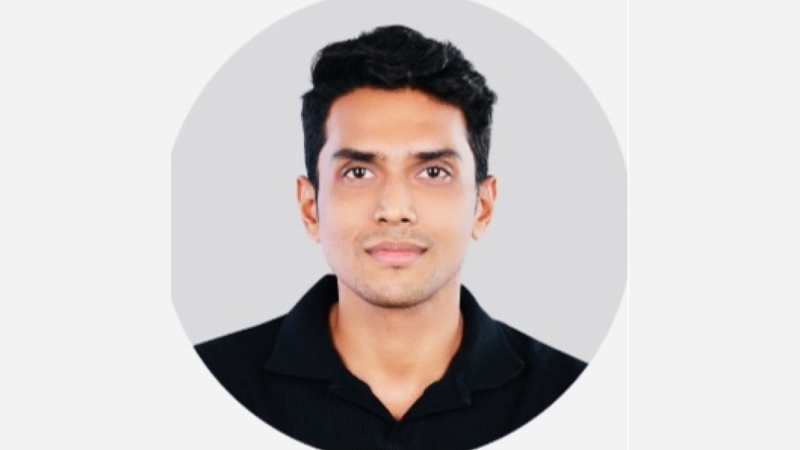
MUMBAI: Sony Pictures Networks India has hired Pradeep M to handle standards and practices for its southern market, bolstering its compliance bench as content rules tighten across platforms.
Pradeep, who has nearly 13 years in the entertainment media industry, takes on responsibility for content standards in a region that is both linguistically diverse and regulatorily sensitive. His brief spans television, OTT, sports and digital platforms.
He specialises in content review and compliance across shows, commercials, on-air promotions and international feeds, ensuring alignment with broadcast, OTT and advertising codes. He has also handled brand approvals and sponsorship integrations for heavily regulated categories—including online gaming, cryptocurrency, NFTs and lottery brands—offering guidance shaped by fast-evolving rules.
Before Sony, Pradeep worked at Jiostar as assistant manager for content regulation from November 2024 to January 2026. Earlier, he spent nearly seven years at Viacom18 Media, rising from senior executive to assistant manager in content regulation between 2018 and 2024. There he served as a key compliance touchpoint for the network.
His career began on the creative side. Between 2013 and 2018, he worked as executive producer on feature films and television shows, gaining hands-on exposure to production. He also had a stint as a non-fiction show director at Star TV Network in 2017. That mix of creative and regulatory experience gives him a dual lens—how content is made and how it must be managed.
As regulators, platforms and advertisers all tighten the screws, broadcasters are investing more in gatekeepers who can keep creativity within the lines. Sony’s latest hire shows where the industry is heading: in the streaming age, compliance is content’s quiet co-star.
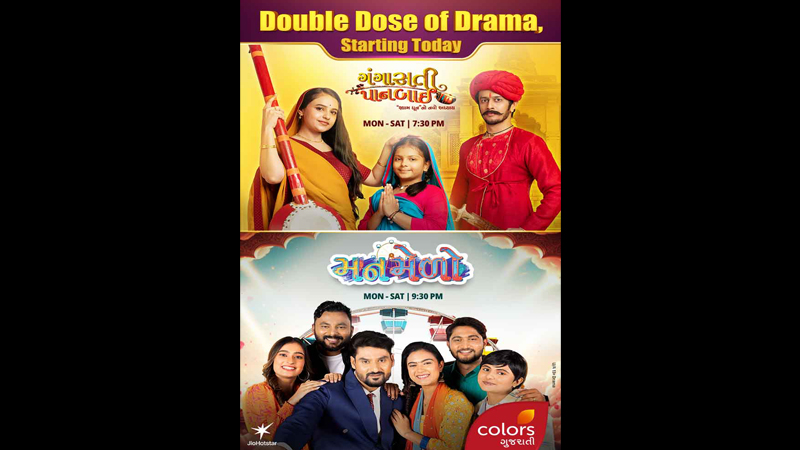
MUMBAI: Colors Gujarati has unveiled two new prime-time shows as part of its push to strengthen culturally rooted storytelling for regional audiences. The channel will premiere the devotional saga Gangasati–Paanbai at 7.30 pm, followed by the romantic family drama Manmelo at 9.30 pm from February 2.
Inspired by Gujarat’s spiritual and literary heritage, Gangasati–Paanbai: Shyam Dhun No Navo Adhyay draws from the timeless bhajans and poetry of saint-poetesses Gangasati and Paanbai, weaving devotion and human values into a contemporary narrative aimed at younger viewers.
In contrast, Manmelo explores love and responsibility across social divides, tracing the lives of three middle-class sisters whose relationships with three affluent brothers reshape their futures. The show delves into ambition, emotional conflict and the realities of married life, offering a layered family drama.
A Colors Gujarati spokesperson said the new launches reflect the channel’s commitment to authentic Gujarati entertainment that blends cultural values with modern storytelling.



MIB sets OTT accessibility rules, mandates captions and audio description

Boney Kapoor acquires remake rights of Tamil political satire Thalaivar Thambi Thalaimaiyil

Netflix India names Rekha Rane director of films and series marketing

Zabeen signs off from TV9 after shaping the network’s public voice

Dhawan steps up to bat for Delhi’s grassroots sports push

Orient Beverages pops the fizz with steady Q3 gains and rising profits

Cheekatilo shines in the dark with record debut on Prime Video

Swiggy Instamart’s GOV surges 103 per cent year on year to Rs 7,938 crore

These ’90s fashion trends are making a comeback in 2017
The final 6 ‘Game of Thrones’ episodes might feel like a full season
According to Dior Couture, this taboo fashion accessory is back
The old and New Edition cast comes together to perform
Phillies’ Aaron Altherr makes mind-boggling barehanded play
ATN International brings ATN Bangla to Canada
MIB sets OTT accessibility rules, mandates captions and audio description
Boney Kapoor acquires remake rights of Tamil political satire Thalaivar Thambi Thalaimaiyil
Netflix India names Rekha Rane director of films and series marketing
Zabeen signs off from TV9 after shaping the network’s public voice
Dhawan steps up to bat for Delhi’s grassroots sports push
Orient Beverages pops the fizz with steady Q3 gains and rising profits
Cheekatilo shines in the dark with record debut on Prime Video
-
 e-commerce1 month ago
Swiggy Instamart’s GOV surges 103 per cent year on year to Rs 7,938 crore
-
 iWorld1 year ago
Kuku TV transforms India’s OTT space with vertical microdrama boom
-
 News Headline1 year ago
TRAI puts a ‘stop’ to unsolicited calls and messages
-

 News Headline2 months ago
From selfies to big bucks, India’s influencer economy explodes in 2025
-
 Comedy2 years ago
Taarak Mehta Ka Ooltah Chashmah celebrates 4,000 episodes
-
 MAM2 years ago
OpenAI joins C2PA steering committee
-
 News Headline2 years ago
Odisha to host Ultimate Kho Kho Season 2 from December 24
-
 News Headline1 year ago
Abhishek Bachchan joins as co-owner of European T20 Premier League


