
GECs
Sahara aims to go One up


on 15 June, Sahara chairman Subrato Roy called Percept IMC joint managing director Shailendra Singh for a meeting at a hotel in Mumbai. The agenda: how to grow his media and entertainment businesses.
For almost two hours, senior officials of Sahara and Percept heard Roy speak of his vision to expand the Sahara brand‘s reach as he prepared to become aggressive on four fronts – television, motion pictures, radio, and a film institute. He wanted Percept to formulate a business plan and pump in market-driven content.
“The mandate was to speed up the business and have a big game plan in place,” says Sahara India Entertainment Management chief operating officer Peter Isaac.
 |
It is easy to find out why. Sahara earned a paltry Rs 400 million in 2003-04 from its television business, after spending Rs 1.15 billion on programming. The scenario has not changed much this fiscal either. The first six months of the year have garnered a piffling Rs 150 million. And mega shows like Karishma – A Miracle of Destiny and Malini Iyer have done nothing to change the channel‘s fortunes.
But Roy did not feel the channel had performed poorly. The objectives of the star-led shows had been achieved with the channel gaining prime band carriage in cable networks. He now needed Percept to manage operations and give his entertainment-related businesses the extra push. And he announced an investment of Rs 15 billion to be made over three years to support this makeover.
The Percept IMC corporate team met the next day to discuss how the relationship with Sahara could be structured. Singh came up with the concept of a joint venture company to manage the operations and in less than four days this won Roy‘s approval.

From this was born Sahara India Entertainment Management, a 50:50 joint venture between Sahara and Percept, formed to ideate, plan and supervise the execution of different projects. It would have a 30-member team with Singh at the helm. Sahara‘s individual business silos – television, motion pictures, radio and special projects such as film city – would fund the joint venture company.
Why the need for a super-structure team? “In the past, decisions at Sahara Media & Entertainment had to be taken to the headquarters in Lucknow for approval. But the Group is involved in multiple businesses and chief executive officer Sushanto Roy was given additional charge of housing and infrastructure. So there was need for a local board structure in Mumbai. The joint venture will speed up the process,” says Isaac.
Sahara India Entertainment Management will present an annual plan, after the board meeting in October-end. A monthly review meeting will be held and quarterly targets will be set for evaluation.
The first “big idea” the super-team came out with was the concept of an umbrella brand, SaharaOne, which would spread across the media and entertainment products of the Group. The idea was to expose the integrity of the brand so that it had a cumulative effect and exceed the sum of the different pieces of the business. “It will have a cascading effect and filter down to all our audiences,” says Sahara Media & Entertainment sales, marketing and distribution president Satish Menon.
A meeting was organised with the old team of Sahara Media & Entertainment to unveil the new brand identity. SaharaOne suited the fundamental need within the organization to believe that the Group could occupy the top position. Also, there was a fundamental need to believe that it is not a two-tiered structure and the old and new members belong to one team. “We need to make everybody here feel that we are one,” Singh is reported to have said in the meeting.
Part of that exercise is to move to a 30,000 sq ft space in Kamla Mills at Lower Parel in central Mumbai. Currently, the teams are spread across the western suburbs of Mumbai. “The synergies are just beginning. After all, there is a new management, new people are in, and the new chemistry has to work,” says chief operating officer of Sahara‘s TV business Karuna Samtani.
A new team structure is being put in place. Shashanka Ghosh (earlier with Channel [V]) has joined as creative director in charge of imaging, packaging and promos while Kalyan Sundaram (MTV and B4U Music) has been put in charge of non fiction programming. Sandeep Bhargava (UTV) has joined as head of Motion Pictures. The radio and film city projects is under Isaac, but the hunt is on to get operating heads. The head of content for radio is Vera Masceranhas (Win) while Alastair Monteith-Hodge (involved in radio, TV and movies in Hong Kong) will assist in the Film city project.
The task of the team is to put systems, structures and processes in place. Global consultant companies Ernst & Young and KPMG have also been roped in. While Ernst & Young will put the IT processes in place, KPMG is expected to submit the business plan for the Group by October-end.
Another challenge is to upgrade the image of Sahara‘s media and entertainment business. “We attract a lot of mass, but are limited in image. We are changing the way the mass perceives us. And we want to have that unifying image hammer consistently across what we do,” says Isaac.
Let us take a look at the strategies that are put in place for each of the four businesses – TV, Motion Pictures, Radio and Film City.
Television Business – banking on youth
 |
One problem that Sahara‘s general entertainment channel (Sahara Manoranjan is now SaharaOne) has historically faced is that it took on the likes of Star Plus, Sony Entertainment Television and Zee TV without finding a distinct and separate positioning.
The first big “differentiating” effort was to overload the channel with Bollywood star-led shows. Karishma – The Miracle of Destiny was the most expensive programme, but it didn‘t work. Nor did Sridevi‘s Malini Iyer and Raveena Tandon‘s Sahib Biwi Gulam. Sahara had identified 9-10 pm band to launch an attack as it felt that the other channels were not dominating the slot at that time. “The expectation of having a channel driver didn‘t work. Neither did we succeed in bringing in audiences nor did we rake in substantial revenues,” says a company source.
Among the first decisions the new management team made was to dump the “star” shows. Says Samtani, “Television is all about concepts. Stars can‘t be owners of the content.”
The new programmes that channel is launching do not have Bollywood stars. On the refreshed programming menu are product offerings like Kuch Love Kuch Masti (Clapstem Productions), Ken Ghosh‘s Aada (Percept Production Company), Power Trip (PPC) and Dona Milake Dus (a humour-driven countdown show from PPC). The new producer list includes Sooraj Barjatiya. Also commissioned to produce shows for the channel are Girish Mallik, Sachin Pligoankar, Ravi Rai, Suhail Tatari, and Miditech productions. Ravi Rai has joined hands with K Sera Sera productions to produce Kashish. The common thread of all these shows – no Hindi film stars, retired or active.
While daily soaps will be launched on Mondays-Thursdays at prime time, Sahara also has a weekend strategy. Power Trip, a chat show with Shobhaa De where she interviews business barons, is slotted in the Sunday day part. Telefilms are another weekend offering the channel is throwing up to be screened on Saturdays at 7.30 pm. The channel is also all keen on the Friday movie slot.
The plan is to launch a show a month. “We are not taking a radical shift. But what we have done immediately is to change the programming matrix from bi-weeklies to Monday-Thursday format. We are also creating shows across genres,” says Samtani.
 |
|
Sahara Sangeet Awards 2004 held at Royal Albert Hall in London
|
The “transformation” process has already begun with the launch of SaharaOne‘s new logo on 10 October, which coincided with the telecast of the Sangeet Awards 2004 (held at the Royal Albert Hall in London). “Never has Sahara held an event on such a large scale. Sahara earned Rs 35 million from the event, says Menon.
Sahara also used the four-day Amitabh Bachchan festival that began the following day (11 October) to tweak the programme timing of its existing prime time shows. The timing of Saathiya has been changed. Prratima, an afternoon show, has now moved to prime time.
Though the channel has brought in flirting audiences, the problem has been to retain them. Hindi feature films have fared better and helped increase the cumulative reach of the channel more than the shows, according to TAM. But the overall reach of the channel has not seen much difference. For the two-month period between 18 July to 25 September in 2003, it stood at 26-27 million, according to TAM data in C&S 4 plus, Hindi speaking markets. During the same period this year, after the new management has come in place, there has been very little difference.
One clear area that the new team has identified is as regards the channel‘s positioning, which is being skewed towards the young. “We are looking through the eyes of the youth. We will also have event-based programming. There are ready audiences for the channel, as our mega shows were sampled by viewers. We have to see that they get stuck to the channel,” says Samtani.
How? “Our programming strategy is to keep it simple and stupid. We don‘t want to be seen as being too intelligent. While 85 per cent of our programming will be entirely entertainment-based, we will have 15 per cent of non-fiction content like Haqueeqat,” says Samtani.
Sahara is also planning to launch a movie channel in January, 2005, which will help it bundle with its general entertainment channel. Acquisition for movies are being speeded up since September, says Isaac.
Motion Picture Business – spreading their bets
 |
|
Sahara India Entertainment Management COO Peter Isaac
|
Sahara has decided to produce movies within four genres – classic, comedy, children and commercial. “We have a team which will evaluate scripts,” says Isaac.
The strategy is to mainly commission production houses while funding the projects as a de-risking model. But Sahara will have a dedicated executive producer so as to have an influence on the content. The company has already entered into exclusive tie-ups with leading film producers and directors like Ram Gopal Verma and Boney Kapoor. Sahara, in fact, has committed Rs 350 million for 10 movies to K Sera Sera and a stake of over 10 per cent in the company.
“We are evaluating all the projects for which we have committed funding. For instance, we will look at how much budget should be allocated for each movie and how it can be market-driven,” says Isaac.
The plan is to produce 70 movies over two years. The average cost per movie will be Rs 35 million, says Isaac. The movies produced under SaharaOne brand can be used as content for its television channel.
Whether this is physically possible remains a question though since what this entails is rolling out an average of three movies a month over the next 24 months.
Radio Business – an eye on satellite
SaharaOne is betting big on satellite radio. The company will soon talk with WorldSpace Satellite Network to work out a deal on how to partner for subscription-driven and free-to-air satellite radio stations.
Currently, SaharaOne Radio owns fours channels – general entertainment music channel, old Hindi film songs and two instrumental music channels – on WorldSpace. The company is planning to revamp the content for the radio channels. “We are going to have a general entertainment channel, a global Indian channel with footprint over the Indian subcontinent and the Middle East, a classic Hindi music channel and on Western Railway an instrumental music channel,” says Isaac.
So far, Sahara has spent Rs 30 million on its radio business. Though the Group has big plans, all this will depend on how the regulatory environment changes and the market grows. Till then, it will attract low investment and attention from the Group.
Special Projects
 |
|
Sahara One Television COO Karuna Samtani
|
The Sahara Group plans to develop a fully digital film production facility, together with an academy for film and television arts in India. The idea is to provide a single-window film production and finishing service to film producers and others involved in film making. The academy promises to provide courses in cinematography and lighting, production sound and picture, directing, FX motion graphics, motion capture and post production, and web animation.
“The design for the film city is ready. We are waiting for land. We hope to have the largest film city up and running in the next 30 months,” says Isaac.
So what is Roy‘s big plan? To build up an integrated media empire with the television channels feeding on the SaharaOne movies and promoting them. Radio would support the cross-promotion while developing its own properties. And Sahara can source creative talent from its film institute.
Will the super-structure management concept work for Sahara this time? So far, few of the new launches on SaharaOne channel have shown success. Kambakth Piracy, for instance, didn‘t do well. And there is internal criticism that the changes are being done in haste. The logo, for instance, which was launched on 10 October, will be up for further change in November.
Explains Samtani: “It is an interim logo. We have commissioned Billy, a specialist from Los Angeles, to design the new one. The changes, like that in the logo, are going to be gradual and put out in the market to be tested for audience response. In television, you can‘t say you are totally prepared. You will be wrong if you say that. That doesn‘t mean that we do not have a plan. Planning is different from preparation. And the logo won‘t be totally different. It will only be made to look better.” Adds Isaac: “Evaluate us after 10 October.”
The first test will be when ratings for the Sangeet Awards event come in. Also, the new programme launches will be watched with keen interest. But, undoubtedly, the direction is being set. SaharaOne will increasingly drive at synergy and brand expansion as it strives for success in content and prepares for big investments in media and entertainment.
Well, with Rs 15 billion in cash to bankroll what will principally be the television and movies business, what the new management team cannot complain of is lack of funding. But the question that still begs an answer is – can Sahara find the recipe that will crack on content?
(With additional inputs from Trupti Ghag)








CHENNAI: It appears there is still plenty of Sun to go around in the Indian broadcasting landscape, even if a few clouds have drifted across the financial horizon. Sun TV Network Limited, the Chennai-based behemoth that dominates airwaves across seven languages, has tuned into a steady frequency for the quarter ending 31 December 2025. While the numbers show a resilient revenue stream, the company’s latest broadcast reveals a few static-filled spots in its profit margins.
For the quarter in question, Sun TV’s total income climbed by approximately 3.31 per cent, reaching Rs 958.39 crores compared to Rs 927.66 crores in the same period last year. Revenue from operations also saw a healthy bump, rising 4.32 per cent to Rs 827.87 crores.
The real star of the show, however, was domestic subscription revenue, which surged by 8.86 per cent to Rs 472.99 crores. This growth highlights the enduring appetite for Sun’s diverse content, which spans everything from daily soaps in Tamil and Telugu to its burgeoning OTT platform, Sun NXT.
Despite the revenue growth, the picture quality of the profits was slightly blurred by rising costs. Eitda for the quarter stood at Rs 409.79 crores, a dip from the Rs 432.14 crores recorded in the corresponding 2024 quarter.
The profit after tax followed a similar downward trend, settling at Rs 316.44 crores against the previous year’s Rs 347.17 crores. Advertisers also seemed to have switched channels slightly, with advertisement revenues sliding to Rs 291.94 crores from Rs 332.17 crores.
Sun TV isn’t just playing on home turf; its sporting ambitions are becoming increasingly global. The network now owns three major cricket franchises: SunRisers Hyderabad in the IPL, SunRisers Eastern Cape in SA20, and SunRisers Leeds Limited in The Hundred (UK).
The foray into British cricket saw the company acquire a 100 per cent stake in Northern Superchargers Limited (now SunRisers Leeds) for approximately £100 million. While these franchises brought in Rs 14.61 crores this quarter, they also incurred corresponding costs of Rs 19.89 crores. Over the nine-month period, however, the cricket business is a major player, contributing Rs 487.64 crores in income.
The company’s bottom line took a minor hit from exceptional items, including a Rs 4.23 crore charge related to India’s new Labour Codes, which consolidated 29 existing labour laws. Additionally, the consolidated results reflect the amalgamation of Kal Radio Limited with Udaya FM, a move that became effective in May 2025 and required a restatement of previous figures.
To keep investors from reaching for the remote, the Board has declared an interim dividend of 50 per cent, that’s Rs 2.50 per equity share. This comes on top of earlier dividends of 100 per cent (Rs 5.00) and 75 per cent (Rs 3.75) declared in August and November 2025, respectively.
With a massive cash reserve and a dominant position in the South Indian market, Sun TV continues to shine, even if the current quarter required a bit of fine-tuning. For now, shareholders can sit back, relax, and enjoy the show.
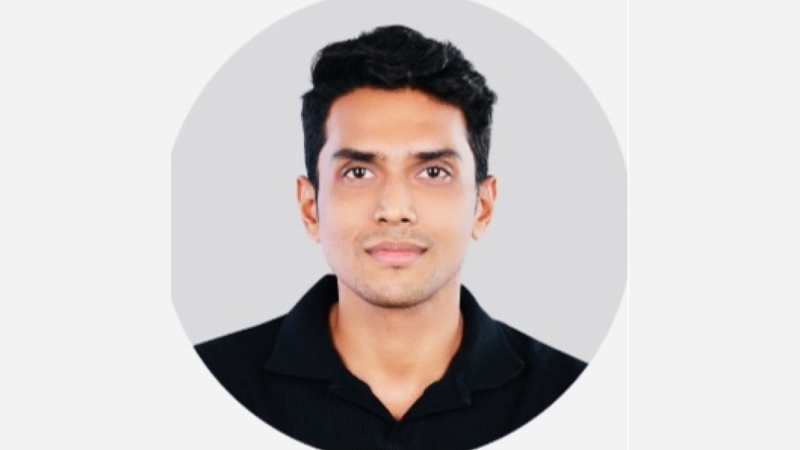
MUMBAI: Sony Pictures Networks India has hired Pradeep M to handle standards and practices for its southern market, bolstering its compliance bench as content rules tighten across platforms.
Pradeep, who has nearly 13 years in the entertainment media industry, takes on responsibility for content standards in a region that is both linguistically diverse and regulatorily sensitive. His brief spans television, OTT, sports and digital platforms.
He specialises in content review and compliance across shows, commercials, on-air promotions and international feeds, ensuring alignment with broadcast, OTT and advertising codes. He has also handled brand approvals and sponsorship integrations for heavily regulated categories—including online gaming, cryptocurrency, NFTs and lottery brands—offering guidance shaped by fast-evolving rules.
Before Sony, Pradeep worked at Jiostar as assistant manager for content regulation from November 2024 to January 2026. Earlier, he spent nearly seven years at Viacom18 Media, rising from senior executive to assistant manager in content regulation between 2018 and 2024. There he served as a key compliance touchpoint for the network.
His career began on the creative side. Between 2013 and 2018, he worked as executive producer on feature films and television shows, gaining hands-on exposure to production. He also had a stint as a non-fiction show director at Star TV Network in 2017. That mix of creative and regulatory experience gives him a dual lens—how content is made and how it must be managed.
As regulators, platforms and advertisers all tighten the screws, broadcasters are investing more in gatekeepers who can keep creativity within the lines. Sony’s latest hire shows where the industry is heading: in the streaming age, compliance is content’s quiet co-star.

MUMBAI: Colors Gujarati has unveiled two new prime-time shows as part of its push to strengthen culturally rooted storytelling for regional audiences. The channel will premiere the devotional saga Gangasati–Paanbai at 7.30 pm, followed by the romantic family drama Manmelo at 9.30 pm from February 2.
Inspired by Gujarat’s spiritual and literary heritage, Gangasati–Paanbai: Shyam Dhun No Navo Adhyay draws from the timeless bhajans and poetry of saint-poetesses Gangasati and Paanbai, weaving devotion and human values into a contemporary narrative aimed at younger viewers.
In contrast, Manmelo explores love and responsibility across social divides, tracing the lives of three middle-class sisters whose relationships with three affluent brothers reshape their futures. The show delves into ambition, emotional conflict and the realities of married life, offering a layered family drama.
A Colors Gujarati spokesperson said the new launches reflect the channel’s commitment to authentic Gujarati entertainment that blends cultural values with modern storytelling.



MIB sets OTT accessibility rules, mandates captions and audio description

Boney Kapoor acquires remake rights of Tamil political satire Thalaivar Thambi Thalaimaiyil

Netflix India names Rekha Rane director of films and series marketing

Zabeen signs off from TV9 after shaping the network’s public voice

Dhawan steps up to bat for Delhi’s grassroots sports push

Orient Beverages pops the fizz with steady Q3 gains and rising profits

Cheekatilo shines in the dark with record debut on Prime Video

Swiggy Instamart’s GOV surges 103 per cent year on year to Rs 7,938 crore

These ’90s fashion trends are making a comeback in 2017
The final 6 ‘Game of Thrones’ episodes might feel like a full season
According to Dior Couture, this taboo fashion accessory is back
The old and New Edition cast comes together to perform
Phillies’ Aaron Altherr makes mind-boggling barehanded play
Uber and Lyft are finally available in all of New York State
MIB sets OTT accessibility rules, mandates captions and audio description
Boney Kapoor acquires remake rights of Tamil political satire Thalaivar Thambi Thalaimaiyil
Netflix India names Rekha Rane director of films and series marketing
Zabeen signs off from TV9 after shaping the network’s public voice
Dhawan steps up to bat for Delhi’s grassroots sports push
Orient Beverages pops the fizz with steady Q3 gains and rising profits
Cheekatilo shines in the dark with record debut on Prime Video
-
 e-commerce1 month ago
Swiggy Instamart’s GOV surges 103 per cent year on year to Rs 7,938 crore
-
 iWorld1 year ago
Kuku TV transforms India’s OTT space with vertical microdrama boom
-

 News Headline2 months ago
From selfies to big bucks, India’s influencer economy explodes in 2025
-
 News Headline1 year ago
TRAI puts a ‘stop’ to unsolicited calls and messages
-
 Comedy2 years ago
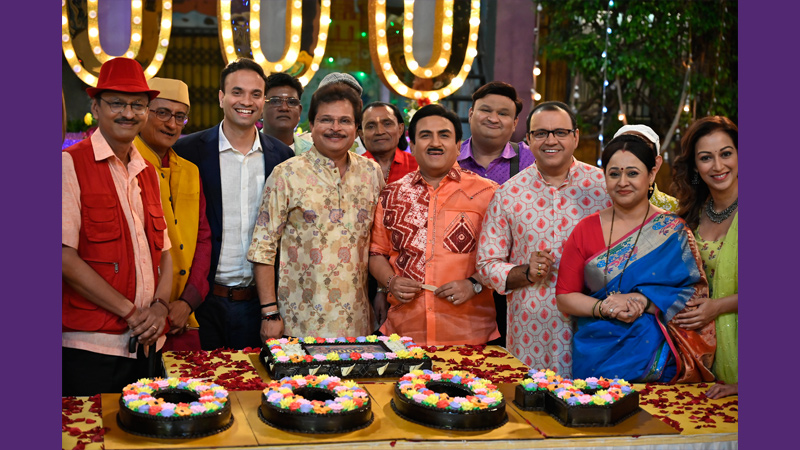
Taarak Mehta Ka Ooltah Chashmah celebrates 4,000 episodes
-
 MAM2 years ago
OpenAI joins C2PA steering committee
-
 News Headline1 year ago
Abhishek Bachchan joins as co-owner of European T20 Premier League
-
 News Headline2 years ago
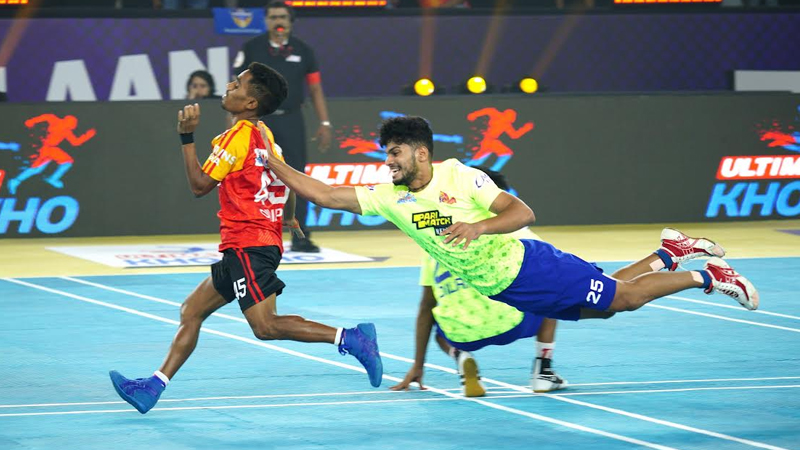
Odisha to host Ultimate Kho Kho Season 2 from December 24


