
Fiction
Saat Phere: The Dark Girl Theory

|
The Thought
|
“We want a serial on the dark skin theme. Give us a dark girl‘s story,” said the one-liner brief that reached producer Sunjoy Waddhwa from Zee TV.
It was February 2005 and Subhash Chandra‘s general entertainment channel was standing at the crossroads. A new year had begun, and at the helm was the newly appointed CEO and marketing wiz Pradeep Guha with lots of expectations pinned on him.
A slipping market share and a few under-performing prime time properties, except the long running Sa Re Ga Ma Pa, had put Zee TV under tremendous pressure. What aggravated the situation was the nearest rival Sony‘s success with properties such as Jassi Jaisi Koi Nahin and Indian Idol.
And as luck would have it, the brief came Waddhwa‘s way at a time when he was in search of that big break to catapult his three-year old production house Sphere Origins into the big league. Though he had designed a series of successful properties under the banner of Karnik Communications, which he floated with his cousin in 1997, Waddhwa wanted a big show from his own company. Star Plus‘ Des Mein Niklla Hoga Chand, which he took up from actress-turned-producer Aruna Irani mid-way, was a very good experience and the need of the moment was another solid property to carry the success forward.
 |
For both the channel and the production house, the dark girl concept was a tough as well as a sensitive assignment since such a theme had never been attempted on Indian television. Hence, there was no yardstick available to check how the project would work in a space driven by tearjerker plots woven around glam-doll heroines.
“I had an intuition that this would work. It was purely a gut feeling. The theme was bothering us (at Zee TV) for some time. Personally, I know many women who are suffering from skin colour complexes. Then take a look at the consumer market. How come all these fairness creams are doing so well? That means we have a sizeable section of our audience suffering from this skin complex. So, we decided to blend this social issue with a Cinderella story,” Zee TV programming head Ashwini Yardi says, explaining the channel‘s interest in the project.

 |
Taking up the Zee project meant a homecoming of sorts for Waddhwa. “My very first production Neeyat, under Karnik Communications‘ banner, was for Zee TV. Then we had Arth on the channel and then the mega Arabian night fantasy and costume drama Thief of Baghdad. The call from Zee TV meant my independent venture Sphere Origins‘ debut on the channel,” says the producer.
“Whether number three or two in the market, Zee always had its share of loyal producers. Sunjoy had done some good shows for Zee earlier. He is very good at his work and we wanted him back on the channel. So when this challenging project came up, we decided to opt for him,” says Yardi.
|
The Plot
|
As soon as the creative brief reached Sphere Origins, Waddhwa swung into action. The producer called an emergency meeting of his writers in his Andheri office and a bunch of ideas were thrown in. After burning the midnight oil for many days that followed, the first draft was born. Titled Saat Phere, the soap dealt on the the social stigmas attached to the central character Saloni‘s dark complexion. The opening storyline portrayed Saloni‘s family‘s quest for a suitable match for her.
“We were supposed to present the channel a first draft of the plot at the earliest. It was a huge challenge for my writers as they were dealing with an off-beat subject. The character of Saloni was difficult to conceive. Finally, we decided to project her as a collage of personalities – she is vulnerable, lovable, brave and compassionate. The first draft was approved. The channel keeps a close watch on the proceedings and their key inputs have shaped the final product,” says Waddhwa.
 |
The skeleton of the project was ready and now the challenge was to bring in the flesh – the cast. What made the task extremely difficult was the choice of a dark girl in the title role. The serial required a charismatic actress with unconventional looks. But they found an answer soon.
“We screen-tested about 80 to 90 girls and we finally spotted our heroine Rajshree Thakur within a month. She had done a bit of acting, and hence, we were not worried about her acting skills. However, as and when Saat Phere grew, she developed her skills marvelously. Within two months, we completed our entire casting process,” says Waddhwa.
|
The Slot
|
It took eight months of hard work and intense planning before the channel finally zeroed in on October 2005 to launch Saat Phere. But, by then, there were signals of change in the Hindi GEC space, in favour of Zee. Sinndoor, launched in the 7:30 pm slot in mid-2005 clicked, powering Zee TV to the number one position in that particular slot.
 |
|
The Saat Phere team celebrating the completion of 200 episodes
|
Sa Re Ga Ma Pa Challenge 2005, which later played a significant role in the Zee TV‘s climb along with Saat Phere, was about to launch. Hence, it was a perfect setting for the ‘dark girl‘ to kick off her innings.
The channel and the production house were keeping their fingers crossed.
“Sindoor had picked up really well in the 7:30 pm slot and then we wanted to bring something new in the 9:30 pm slot. As Kareena Kareena, the existing soap in the 9:30 pm slot was about to wind up, we had kept a couple of options open for the slot and the final decision went in favour of Saat Phere. I was keeping the 9 pm slot reserved for Ekta for Kasamh Se,” reveals Yardi.
The decision to replace a successful property such as Kareena Kareena with an experimental project Saat Phere required a lot of guts. “We knew that Saat Phere was going to be an important show for us as well as for Zee TV. The very moment the plot was developed, we all, including the channel executives, realised the significance of the project and we all went full on with it,” says Waddhwa.
The month of September saw the first series of Saat Phere promos hitting television. And there was an immediate response with NGOs and women activists opposing the projected theme. “It was a sensitive subject. Hence, as and when the promos started appearing, NGOs and various women activists came out with objections on the skin discrimination. We asked them to wait till the launch. And we were right,” Yardi says.
|
The Shot
|
But there was one problem. The news spread that Zee TV‘s Saat Phere had got a not-so-good-looking heroine as the protagonist. Naturally, comparisons were drawn between Saat Phere and Jassi Jaisi Koi Nahin. But it died down quickly when the soap was unveiled.
Listen to Yardi. “The media jumped into this conclusion because the Jassi lead character was an average looking person. In fact, our story was never about a good looking or bad looking female. Actually, I thought we had a heroine who is very good looking.”
 |
|
Rajshree (in red) with co-stars of Saat Phere
|
The different positioning of the soap and the mystery attached to a new face (Rajshree Thakur) provided Zee TV a lot of scope to do well with the marketing efforts. The Zee TV marketing team acknowledged Saat Phere with one of the best ever marketing campaigns the channel initiated in the recent times.
“It required a clutter breaking campaign to promote such a clutter breaking theme. The story had to stick. We started off with teasers and gradually unveiled the central character. We still continue with our best efforts for the soap. In fact, we have now decided to promote every twist and turn that comes with the story. Our effort is not to let the soap go out of people‘s mind. We even promoted Saat Phere in our recent Zee Astitva Awards,” says Zee TV marketing head Tarun Mehra.
|
The Vote
|
Saat Phere got off to an average start in the Hindi general entertainment space with TRPs ranging from 1.8 to 2. However, that was still an impressive beginning for Zee TV since the soap was just launched and its other prime time soaps, except Sinndoor, were faring below the 1 TVR mark. Then in the first month itself, the soap picked up really well to break into an average of 2 to 3 TVRs. However, after the initial glory, the ratings started slipping.
“We felt Zee viewers were finding it difficult to stick to this different kind of show. The stickiness factor was missing. We gave extra thrust to the content and also initiated various innovative audience contact techniques. We asked our viewers to voice their opinions on how the story would move forward. During this time, we also started adding spikes as well as beefing up the drama element. And we were back on track with lots of improvement,” says Yardi.
 |
|
I thought we had a heroine who is very good looking: Yardi (in blue jeans) with Rajshree (in red) & Waddhwa (in black).
|
“The gradual increase in TRPs meant steady viewership and this inspired us to better our product for better results. We always made our best efforts to surprise the viewer and catch him unawares. Actually we were telling a simple story, which people could very easily relate their life with. We never stressed on the drama parts, but never let a good opportunity go. Be it Salomi‘s wedding or the door mystery, the spikes were all woven very well with the story. The spikes actually helped the story to progress. We never added anything out of context,” Waddhwa reveals.
“Audience feedback also played a key role in Saat Phere‘s success. The viewers were instrumental in certain key changes in the story line. Based on their feedback, we have changed the tracks for certain characters. As I mentioned, we incorporated lots of their ideas in the early stages of the serial,” Yardi adds.
|
The Hot
|
Ten months have gone by since Saat Phere hit Indian television. The soap, all of 200 episodes old, continues doing wonders for Subhash Chandra‘s flagship channel. Saat Phere presently finds itself floating in the range of 6 TVRs in the CS4+ Hindi Speaking market.
 |
|
“We actually cut it big time!”
|
The pathbreaking success of Saat Phere also set new standards for the properties that Zee TV launched later. Kasamh Se, which followed, is today running neck and neck with Saat Phere for top show bragging rights in the Zee TV line up, while Tony and Deeya Singh‘s Jab Love Hua has also been accepted by audiences. Same is the case with shows such as Johny Aala Re and Sabaash India. With Saat Phere and Kasamh Se taking good care of the 9 pm – 10 pm band, Zee TV is now gearing up to do something big in the 8 pm to 9 pm band.
Coming back to the soap in question, what next? Is there a life span for Saat Phere? “No,” is the instant reply from Yardi. “We don‘t have a climax for Saat Phere right now. The story is moving really well with a natural flow and we want the serial to go on for many years,” she says.
“My writing team, including Purnendu, Rajesh, Usha, Raghuvir and Rahul have been putting their best efforts to retain the freshness of the project. We are expanding our story, not stretching it,” adds Waddhwa.
As they say, the show must go on. Obviously… since Saloni‘s story is presently driving the proceedings at Zee TV.


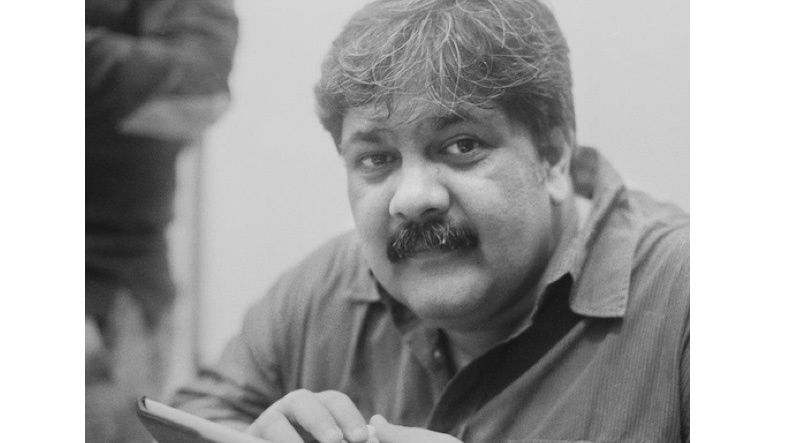
MUMBAI: On Christmas morning, whilst most of Mumbai slept off festive cheer, Satyam Tripathi’s heart gave out. 25 December proved cruelly ironic for a man who’d spent his career crafting drama—this time, there would be no second take. He was only 57.
Tripathi was a scriptwriter’s scriptwriter. Within India’s chaotic television industry, where writers are treated rather like spare parts, he’d carved out something rare: respect. For years, he sat on the executive committee of the Screen Writers Association, helping transform along with other leaders, what was once a talking shop into an organisation with teeth. When writers’ rights were little more than punchlines, Tripathi helped pen a different ending.
His credits read like a greatest hits of Indian telly: Hitler Didi, 12/24 Karol Bagh, Ek Mutthi Aasman, Parvarrish Kuchh Khattee Kuchh Meethi. Millions laughed, cried and switched channels to his work. He also championed the association’s Screen Writing Awards, ensuring that good writing didn’t go unnoticed in an industry obsessed with ratings and revenue.
Those who knew him speak of an affable soul, generous with time and advice. In a cut-throat business, Tripathi was that rarest of creatures: genuinely helpful.
His remains were cremated the same evening in the presence of industry associates and friends. The credits rolled quickly. But his final script—a better deal for India’s writers—continues to play out. That’s the sort of ending he’d have appreciated.
(Scriptwriters, producers and friends will be getting together to honour Satyam Kumud Tripathi’s memory and to hold a prayer meeting on 29 December. The location: Shri Guru Singh Sabha Gurudwara, 4 Bungalows, Andheri West, Mumbai. The time: between 3:30 PM and 5:00 PM.)
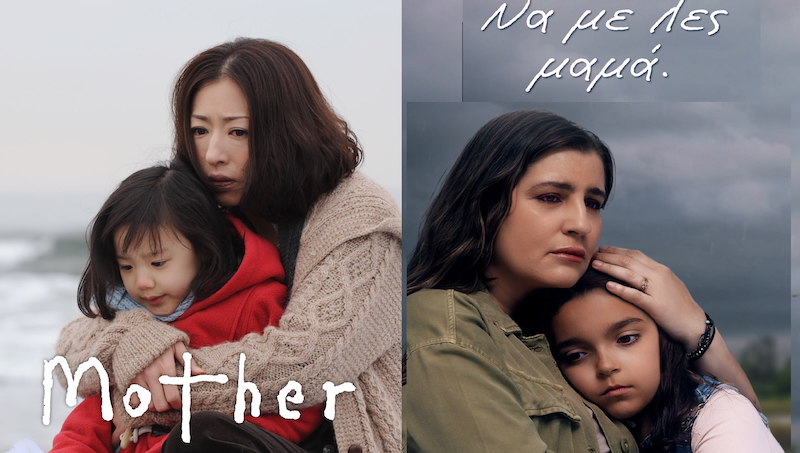
ATHENS: Greece has become the latest country to embrace one of Japan’s most emotionally charged television dramas. Mother, a series that tackles the harrowing subject of child abuse through the story of a teacher who kidnaps her student to save her from domestic violence, premiered on Alpha TV on September 25th.
The Greek adaptation, titled Na me les mama (Call me mom), marks the 11th international remake of the Nippon TV original—making it the most globally adapted Asian scripted format on record. Filmiki, the Greek production company behind the series, worked closely with Nippon TV to maintain the show’s emotional core whilst adapting it for local audiences.
“Mother is a story that has transcended cultures,” said Nippon TV scripted format sales and licensing executive Sally Yamamoto. The series has already conquered markets across Asia, Europe and the Middle East, with versions airing in South Korea, Turkey, Ukraine, Thailand, China, France, Spain, Saudi Arabia, Mongolia and the Philippines.
The original Japanese drama follows a woman in her mid-thirties who lives an apathetic existence until she discovers one of her pupils is being abused at home. Unable to understand her own impulses, she kidnaps the child and attempts to raise her as her own daughter whilst on the run from authorities.
Alpha TV programme director Christos Kompos described the series as “one of these stories that we feel really honoured to share with our audience.” The adaptation will stream simultaneously on Alpha TV’s HbbTV platform.
The show’s unflinching examination of society’s tendency to ignore child abuse has struck a chord with international audiences, proving that some stories need no translation to resonate across cultural boundaries.
VENICE: Television’s finest have been crowned at the Venice TV Awards 2025, with productions from 32 countries proving that quality programming knows no boundaries. The ceremony, backed by the Association of Commercial Television and Video on Demand Services in Europe, the International Music + Media Centre, and the European Group of Television Advertising, celebrated another bumper year for the box.
Britain emerged as a standout performer, claiming four categories including the coveted documentary prize for The Man Who Definitely Didn’t Steal Hollywood from Wonderhood Studios and the BBC. The corporation also triumphed in comedy with Ludwig, starring David Mitchell, whilst securing wins in performing arts and children’s programming.
Japan flexed its creative muscles with three victories, including the television film award for Driving into the Storm and animation honours for Luka and the Flower of the Sun. The country’s technical prowess shone through in the cinematography category with Deep Ocean: Kingdom of the Coelacanth.
Canada’s Empathy from Trio Orange took the series crown, whilst South Korea’s Couple Palace dominated light entertainment. France claimed both sport and technology categories, with Canal+’s Giroud and TF1’s innovative 8 May 1945 respectively.
The awards spanned 18 categories, from traditional documentary and news coverage to cutting-edge cross-platform content and branded entertainment. America’s CBS News won recognition for its Red Sea reporting, whilst NBCUniversal’s Peacock platform scored with its Paris Olympics coverage.
Smaller television markets also punched above their weight. Finland’s Queen of Fucking Everything earned the direction prize, whilst Germany’s film school production If I could fly claimed the new talent award.
The ceremony underscored television’s resilience and creativity in an increasingly fragmented media landscape. As streaming platforms continue to reshape viewing habits, traditional broadcasters and digital natives alike demonstrated that compelling storytelling remains the industry’s beating heart.
With productions ranging from hard-hitting documentaries to frothy entertainment, the winners reflected television’s remarkable breadth and ambition in 2025.


MIB sets OTT accessibility rules, mandates captions and audio description

Boney Kapoor acquires remake rights of Tamil political satire Thalaivar Thambi Thalaimaiyil

Netflix India names Rekha Rane director of films and series marketing

Zabeen signs off from TV9 after shaping the network’s public voice

Dhawan steps up to bat for Delhi’s grassroots sports push

Orient Beverages pops the fizz with steady Q3 gains and rising profits

Cheekatilo shines in the dark with record debut on Prime Video

These ’90s fashion trends are making a comeback in 2017
The final 6 ‘Game of Thrones’ episodes might feel like a full season
According to Dior Couture, this taboo fashion accessory is back
The old and New Edition cast comes together to perform
Phillies’ Aaron Altherr makes mind-boggling barehanded play
Uber and Lyft are finally available in all of New York State
Disney’s live-action Aladdin finally finds its stars
MIB sets OTT accessibility rules, mandates captions and audio description
Boney Kapoor acquires remake rights of Tamil political satire Thalaivar Thambi Thalaimaiyil
Netflix India names Rekha Rane director of films and series marketing
Zabeen signs off from TV9 after shaping the network’s public voice
Dhawan steps up to bat for Delhi’s grassroots sports push
Orient Beverages pops the fizz with steady Q3 gains and rising profits
Cheekatilo shines in the dark with record debut on Prime Video
-

 News Broadcasting1 week ago
Mukesh Ambani, Larry Fink come together for CNBC-TV18 exclusive
-

 News Headline1 month ago
From selfies to big bucks, India’s influencer economy explodes in 2025
-
 iWorld5 months ago
Billions still offline despite mobile internet surge: GSMA
-

 Applications2 months ago
28 per cent of divorced daters in India are open to remarriage: Rebounce
-

 iWorld2 weeks ago
Netflix celebrates a decade in India with Shah Rukh Khan-narrated tribute film
-
 Hollywood6 days ago
The man who dubbed Harry Potter for the world is stunned by Mumbai traffic
-

 News Headline2 months ago
Game on again as 2025 powers up a record year and sets the stage for 2030
-
 I&B Ministry3 months ago
India steps up fight against digital piracy
