
News Broadcasting
Regionalism Rules

There‘s no business like news business. Or at least that’s what it appears given the way new players are surfacing with amazing regularity. The national news market is already packed with players besides new entrants still waiting in the wings. It doesn’t come as a surprise then that regional news channels too are hopping on to the bandwagon.
The growth in the regional news markets – specifically Maharashtra, West Bengal and the Southern states of Tamil Nadu, Kerala, Karnataka and Andhra Pradesh – is remarkable.
This is why even national news broadcasters are eyeing the regional spaces. Star and Zee already have a presence in West Bengal and Maharashtra. Network18 has just joined the party in Maharashtra with IBN Lokmat.
The regional news market, year-on-year basis, has grown 13.3 per cent in 2006 and 41.2 per cent in 2007. The first six months of 2008 have seen growth being pegged at 16.7 per cent, leading to the regional news audience share touching 2.8 – which is a doubling from 1.4 per cent in 2004.
Moreover, ad volume is also seeing exponential growth, according to Tam Adex. It says that ad volume on regional news channels (combined Marathi, Bengali, Southern) in 2006 was 17,682 seconds.The amount virtually doubled in 2007 to touch 31,167 seconds. Even in the first five months of 2008, the ad volume was 18,843 seconds.

South Rules!
The southern broadcast news market is the most lucrative amongst Indian regional plays. Apart from the subcontinent, the channels have viewership in Sri Lanka, China, the Middle East, UK, Canada, Europe, Australia and parts of South Africa and the United States.
Recently, the southern market has seen much activity: launches, announcements of launches, changes in political equations and an increased intensity of competition in almost every language segment –Tamil, Malayalam, Kannada or Telugu.
The Tamil news segment for instance is just opening up following the public parting of ways between Kalanidhi Maran‘s Sun Network and his grand-uncle and Tamil Nadu chief minister M Karunanidhi.
As of now, Tamil Nadu has three major players: Sun News from Sun Network, Jaya Plus from the AIADMK backed Jaya TV and
Raj News from Raj TV. The DMK backed Kalaignar TV also runs its own news bulletins. The free-to-air Mega TV, a 24-Tamil news, current affairs and entertainment channel, promoted by State Congress MP KV Thangabalu, completes the Tamil news pack.
An interesting point to note is that the market is nascent and players are taking it easy: Raj News, for instance, has invested Rs 300 million, but has yet to start generating revenues. “Our investment is about Rs 300 million, and break even will be in three years. From next year we will start billing,” says Raj TV Network promoter Rajendran.
The other large southern language news segment is Telugu with competition intense in Andhra Pradesh. The Telugu news leader TV9 (backed by Associated Broadcasting Corporation) appears to have ambitions to launch news channels in almost every language segment. It is followed by ETV2 – the news channel from ETV. The other big players are NTV News, TV5 News and Sun’s Gemini News.
Even Zee News Limited is planning its own Telugu offering Zee 24-Ghantalu, following its Bangla and Marathi launches.
TV9, meanwhile, has shown incredible growth in Karnataka, where it is much ahead of Sun’s Udaya Varthegalu and Suvarna News.
In Kerala, Manorama News is leading the comparatively smaller market. Among other players are Asianet News, People TV and India Vision. Even the state unit of the Congress recently launched Jai Hind TV with much fanfare.
Jai Maharashtra
The Marathi news market is a little less than Rs 80 million in ad revenues with three 24-hour news channels, Star Majha, Zee 24-Taas and IBN Lokmat. ETV Marathi, Mi Marathi, and state broadcaster DD Sahyadri also produce news but they are part of what are essentially Marathi entertainment channels.
Industry observers say that the Marathi news segment is still in the teething stage as it accounts for a measely 5 per cent of the entire Marathi advertising market (including entertainment television) estimnated at Rs 2 billion. “It is yet to get over its initial hiccups and grow to achieve its true potential,” says an observer.
With the launch of more Marathi news channels, the category will possibly have better representation and may lead to more moolah.
“I see a huge growth potential in the Marathi news segment,” says Zee News CEO Barun Das. “Marathi 24-hour news channels are now gaining acceptance among viewers as well as advertisers. The future of this market seems far better than what it is now.”
Tam data suggests that Star Majha was the Marathi news leader (in terms of relative share) before the launch of Global Broadcast News’ IBN Lokmat.
Within three months of its launch, IBN Lokmat has captured a significant market share. Star Majha and Zee 24-Taas are running neck-and-neck with IBN Lokmat not lagging far behind.
Marathi news channels agree that content-wise the needs of local viewers are different.They cannot be fobbed off with infotainment; what they look for is hardcore news – be it regional, national or international. For informative entertainment, they have the option of tuning in to other Marathi and Hindi GECs.
A major chunk of the news, around 70 per cent comes from the region or state, while national news share is 20 per cent. The balance 10-odd per cent is from international developments.
Aamar Shonaar Bangla
The Bangla news market is much bigger than its Marathi counterpart with media analysts pegging it at more than Rs 600 million. The reason lies in the common belief that the Bengali channels targeting West Bengal are also watched in neighbouring Bangladesh, making it lucrative for broadcasters.
“The Bengalis’ appetite for news in the mother tongue is higher than that in Maharashtra. Also, Kolkata is less cosmopolitan as compared to Mumbai,” points out Das.
Interestingly, Bengalis tend to have a penchant for news rather than general entertainment. That’s why Tara Bangla split itself into two channels – Tara Newz and Tara Muzik (a music entertainment channel).
The other players in the arena are Star Ananda, Zee 24-Ghanta, Kolkata TV and the recently launched NE News. Star Ananda clearly is leading the pack in this market.
Even ETV, for instance, has dedicated 20 per cent of its programming to news on the Bengali channel.
Apart from that, state broadcaster DD7, or DD Bangla channel delivers news.
Media Content and Communications Services (MCCS), the company that runs Star Ananda, is bullish about the future. And what about the space getting crowed?
“In fact, I see competition helping the market to expand even further,” says MCCS CEO Ashok Venkataramani. That perhaps is the dictum across all the channel segments.
The story first appeared in Indiantelevision.com‘s The NT Magazine. The PDF of the magazine can be accessed at http://www.ntawards.tv/y2k8/nt_mag.pdf.






News Broadcasting
Mukesh Ambani, Larry Fink come together for CNBC-TV18 exclusive
Reliance and BlackRock chiefs map the future of investing as global capital eyes India

MUMBAI: India’s capital story takes centre stage today as Mukesh Ambani and Larry Fink sit down for a rare joint television conversation, bringing together two of the most powerful voices in global business at a moment of economic churn and opportunity.
The Reliance Industries chief and the BlackRock boss will speak with Shereen Bhan, managing editor of CNBC-TV18, in an exclusive interaction airing from 3:00 pm on February 4. The timing is deliberate. Geopolitics are tense, technology is disruptive and capital is choosier. India, meanwhile, is pitching itself as a long-term bet.
The pairing is symbolic. Reliance straddles energy transition, digital infrastructure and consumer growth in the world’s fastest-expanding major economy. BlackRock, the world’s largest asset manager, oversees more than $14 tn in assets and sits at the nerve centre of global capital flows. When the two talk, markets tend to listen.
Fink’s appearance marks his third India visit, a signal of the country’s rising strategic weight for the Wall Street-listed firm, which carries a market value above $177 bn. His earlier 2023 trips included an October stop in New Delhi, where he met both Ambani and Narendra Modi.
India is now central to BlackRock’s expansion plans, notably through its joint venture with Jio Financial Services. Announced in July 2023, the 50:50 venture, JioBlackRock, commits up to $150 mn each from the partners to build a digital-first asset-management platform aimed at India’s swelling investor class.
The backdrop is robust. BlackRock ended 2025 with record assets under management of $14.04 tn, helped by $698 bn in net inflows, including $342 bn in the fourth quarter alone. Scale gives Fink both heft and a long lens on where money is moving.
He has been openly bullish on India. At the Saudi-US Investment Summit in Riyadh last year, Fink argued that the “fog of global uncertainty is lifting”, with capital returning to dynamic markets such as India, drawn by reforms, demographics and durable return potential.
Expect the conversation to range beyond balance sheets, into technology’s role in finance, access to capital and the mechanics of sustainable growth in a fracturing world order. For investors and policymakers alike, it is a snapshot of how big money is thinking about India.
At a time when capital is cautious and growth is contested, India wants to be the exception. When Ambani and Fink share a stage, it is less a chat and more a signal. The world’s money is still looking for its next big story, and India intends to be it.
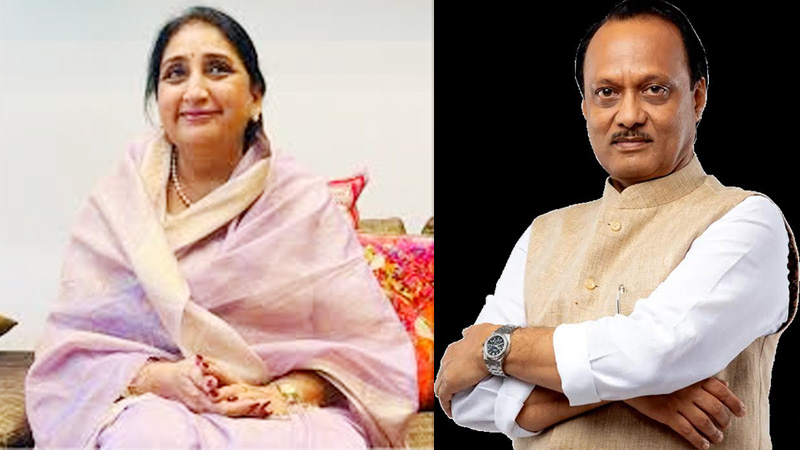
MUMBAI: Sunetra Pawar, wife of the late Ajit Pawar, will take oath as Maharashtra’s deputy chief minister on Saturday, media reports say, two days after his death in a plane crash.
According to reports, the Nationalist Congress Party (NCP) has summoned a legislature party meeting at 2pm on Saturday, where Sunetra Pawar, a Rajya Sabha member, is expected to be elected as leader. She is then likely to be sworn in as deputy chief minister at around 5pm at Raj Bhavan, as preparations are underway at the governor’s residence.
Ajit Pawar, Maharashtra’s deputy chief minister and a veteran NCP leader, died when a chartered Learjet 45 carrying him and four others crashed near Baramati on 28 January. The aviation regulator confirmed that all on board were killed when the aircraft burst into flames during a second landing attempt.
The sudden loss of one of Maharashtra’s most experienced politicians has prompted swift consultation among NCP leaders. Party figures, including working president Praful Patel, have been involved in talks on succession and organisational continuity. Reports suggest that several senior leaders support Sunetra Pawar’s elevation, viewing it as a unifying choice at a fraught moment.
According to party allies, Sunetra Pawar may also be considered for additional responsibilities within the state government. Some sources indicate that she would oversee portfolios such as excise and sports, while the finance brief could move to chief minister Devendra Fadnavis. Observers see this as a pragmatic division of duties intended to balance governance and political stability.
The transition unfolds against the backdrop of wider speculation over the future of the NCP, including talks about reconciling rival factions that split in recent years. Close aides of Ajit Pawar had been exploring avenues to bring the party’s different strands back together before his death, and that conversation may now gain fresh impetus.
Ajit Pawar’s demise has left a notable vacuum in Maharashtra politics. As a long-serving deputy chief minister, he had overseen key portfolios, including finance and planning, and played a central role in the state’s coalition government. His unexpected death has triggered intense reflection among allies and critics alike on both his legacy and the path ahead.
As Maharashtra prepares for Sunetra Pawar’s swearing-in, the NCP faces its most urgent test in years: turning tragedy into cohesion and navigating a new chapter in state leadership.
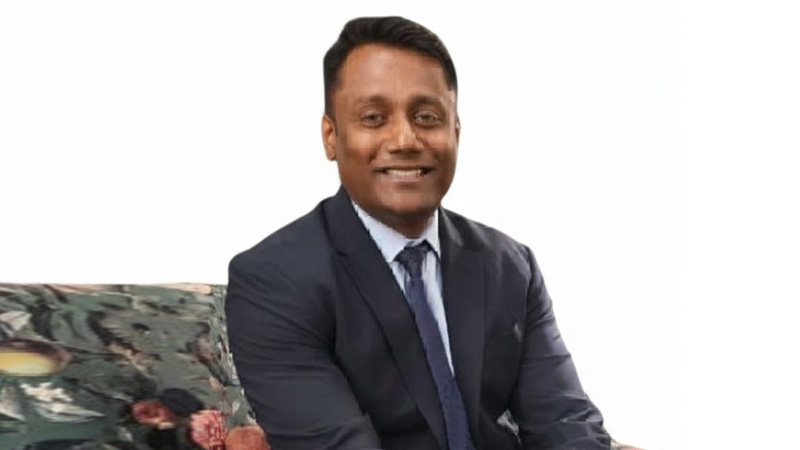
NEW DELHI: According to media reports, Firstpost has appointed senior journalist Binoy Prabhakar as its new chief content officer, bringing seasoned editorial expertise on board as the digital news platform embarks on its next phase of growth.
Prabhakar joins from Hindustan Times, where he spent nearly three years as chief content officer, shaping editorial strategy and guiding content for a rapidly evolving digital audience.
Earlier, he served as editor at Moneycontrol and CNBCTV18.com, and spent over a decade at The Economic Times in senior editorial roles. His career also includes leadership positions at Network18, The Indian Express and The Times of India.
A fellow of the Tow Knight Center for Entrepreneurial Journalism in New York, Prabhakar combines newsroom experience with a keen understanding of digital storytelling.
At Firstpost, he is expected to strengthen editorial depth, sharpen the platform’s voice, and drive content innovation as readers increasingly look for clarity in a crowded news landscape.


Mukesh Ambani, Larry Fink come together for CNBC-TV18 exclusive

Nielsen launches co-viewing pilot to sharpen TV measurement

Netflix celebrates a decade in India with Shah Rukh Khan-narrated tribute film

Delhivery chairman Deepak Kapoor, independent director Saugata Gupta quit board

Meta appoints Anuvrat Rao as APAC head of commerce partnerships

Brnd.me enters Europe as haircare brands power global expansion

TechnoSport taps quick commerce with launch on Slikk’s 60-minute platform

These ’90s fashion trends are making a comeback in 2017
The final 6 ‘Game of Thrones’ episodes might feel like a full season
According to Dior Couture, this taboo fashion accessory is back
The old and New Edition cast comes together to perform
Phillies’ Aaron Altherr makes mind-boggling barehanded play
Uber and Lyft are finally available in all of New York State
Disney’s live-action Aladdin finally finds its stars
Mukesh Ambani, Larry Fink come together for CNBC-TV18 exclusive
Nielsen launches co-viewing pilot to sharpen TV measurement
Netflix celebrates a decade in India with Shah Rukh Khan-narrated tribute film
Delhivery chairman Deepak Kapoor, independent director Saugata Gupta quit board
Meta appoints Anuvrat Rao as APAC head of commerce partnerships
Brnd.me enters Europe as haircare brands power global expansion
TechnoSport taps quick commerce with launch on Slikk’s 60-minute platform
-
 News Broadcasting3 days ago
Mukesh Ambani, Larry Fink come together for CNBC-TV18 exclusive
-
 iWorld7 days ago
Netflix celebrates a decade in India with Shah Rukh Khan-narrated tribute film
-
 MAM3 months ago
HoABL soars high with dazzling Nagpur sebut
-
 MAM3 days ago
Nielsen launches co-viewing pilot to sharpen TV measurement
-
 iWorld12 months ago
BSNL rings in a revival with Rs 4,969 crore revenue
-
 I&B Ministry3 months ago
India steps up fight against digital piracy
-
 iWorld3 months ago
Tips Music turns up the heat with Tamil party anthem Mayangiren
-

 Film Production1 week ago
UFO Moviez rides high on strong Q3 earnings
