
Fiction
Production houses feel the CAS crunch


Makers of software for the television industry will be among those to be hit by reduced budgets and a demand for more quality programming once CAS sets in. Indiantelevision.com talks to production houses across the country to gauge the mood in the fraternity.
Caught in the crossfire between the cable industry and the broadcasters‘ fraternity over the conditional access issue is that curious tribe that provides nearly all the software needed to glue the viewers to the telly – the production houses. With less than 50 days between now and the proposed implementation of CAS, apprehension, confusion and chaos among the software makers is escalating. One sentiment overrules all others – that of being the losers in the game, at least in the short term, as budgets stand poised for a nosedive.
Star India COO Sameer Nair recently told indiantelevision.com that “The TRP game will go out of the window post-CAS. If viewership goes down on account of chaos and confusion all around, then we will obviously stop and consider our decision to spend so much money on a particular show. Why should I buy an expensive movie if nobody is going to see it?” Needless to say, production houses are going to need to feel the heat of slashed budgets and tighter controls from broadcasters. WPP Marketing Communications CEO South Asia Andre Nair was equally vocal when speaking to indiantelevision.com recently when he said, “I think that production houses are in general overpaid.” Production houses are thus wary of the impending doom which will invariably have an adverse effect on their business. “CAS will give the channel another means of putting pressure on production houses. Now to stand out in CAS, you will need to be specifically chosen by the viewer. So, obviously it is only the best – in terms of quality and production that will be chosen, so one cannot compromise on standards already set,” says InHouse Productions CEO Uday Sinhwala.
But for Sinhwala and others, CAS means big trouble more than anything else in the short term. “CAS is a black hole. There is no clarity whatsoever. Who is going to control it? How is it going to be implemented? Who is investing in the set top boxes? Is it going to be a centralised technique? These are some of the many questions which are yet to be answered,” laments Sinhwala. Aditya Singh of Contiloe Films is equally vocal. “There have been talks about CAS but the fact that it is finally happening is hitting us now. Every action has a reaction. In my view, since everything is so sudden the aftereffects are bound to be drastic. As a production house, we will be following the wait-and-watch procedure as we did not have much time to mull over it and chalk out a strategy. Although the implementation is early and should have been thought over thoroughly, nevertheless it is a step in the right direction. The cable operators had been holding both the channels and the viewers to ransom for quite some time now.” 
Meanwhile Ektaa Kapoor, creative head of the production house which has most of its soaps scaling high on the TRP-Balaji Telefilms, also opines that though CAS is drastic step it opens a lot of possibilities. According to her, CAS should be first tried and tested in one city, then gradually moved on to more cities, and so on. There should be a scheme implemented wherein no subscriber pays more than Rs 150 a month. Kapoor also add that the production houses are unlikely to suffer as the channels will pay if they want quality stuff and therefore decent quota of advertisers. The production houses otherwise might just opt for Sahara or Doordarshan.
Shobhna Desai Productions Story & Creative head Vipul Amrutlal Shah says, “Everybody has been kept in the dark as far as CAS is concerned. It is going to have an adverse effect on the channels and consequently on production houses as well. The government should reconsider its decision to implement CAS in all four metros at one go, instead it could be done in a phased manner city by city. CAS will kill ad revenues which comes from these four metros and this will damage the backbone of the industry. It is not a happy situation to work in. Lots of peoples‘ hopes and careers‘ are at stake here.” Although Shah does not admit it, sources say that one of his serials Lakeerein which was supposed to have gone on air by now, has been kept on hold by Star Plus, as the channel is waiting to see how CAS unfolds.
With most of the production houses having no other option but to wait and watch, UTV COO, TV content, Manish Popat presents an alternative viewpoint “We are watching the developments and are talking to our customers and our affiliates too. Everyone is aware of the short term challenges that CAS could throw up if it is not rolled out in a pragmatic manner. But, the fact remains that everyone is in favour of CAS and its implementation. Depending on how the the CAS roll out unfolds, I think everyone knows the mid and long term gains of the post CAS era. There might be some short term pain or cost for this long term gains.” Commenting on the effect that CAS could have on the production values and quality of the serials/soaps, Popat says that, “Broadcasters in a post CAS era will be more and more conscious that only great programming will get customers to ask and pay for their bouquet. There will lead to a pronounced need for “tentpole” programming – where there will be more of a pursuit for those two or five programmes that will set the channel apart; or where consumers are willing to pay for that “particular” channel. There will be only a greater demand for better programming post CAS.”
Agrees BAG Films‘ CMD Anurradha Prasad. “CAS is certainly good for the industry, but in the short term it would have telling effects on private producers whose margins are likely to get squeezed by at least 15 per cent straight-away. Though no formal communication has yet come from broadcasters like Star, for which we do programming, informally it has been conveyed to us that post-CAS the commissioning rates would fall.” “At present, we do programming for Star, Sahara Manoranjan and Doordarshan (Rozana, a news and current affairs programming under the sponsored slot on DD2) and talks are on with Sony as also Zee for some possible programming. I think it would be slightly unfair to penalise the private producers — and that too immediately — just because a certain section of the industry feels that CAS is not being sought to be implemented in the right way,” she adds.
Contrary, to this viewpoint, serial director Girish Mallik , currently doing Sahara‘s Mission Fateh says, “With the channels made to face the heat after they become pay, the first reaction will be tightening the producer‘s allowance. Naturally, a producer will, instead of reducing his income, cut corners in the production. You will have more and more of average daily soaps being churned out. As of the actors‘ pay cut, the newer and inexperienced lot is bound to feel the pinch. The big actors might just switch to cinema”. Will CAS result in channels toning down their fees to various production houses? Will soaps be forced to stick to home ground rather than foreign locales? Will characters on television be forced to wear less expensive outfits rather than the seemingly expensive designer wear and consequently be forced tone down the loud make-up adorned by them? One can only wait and watch. |




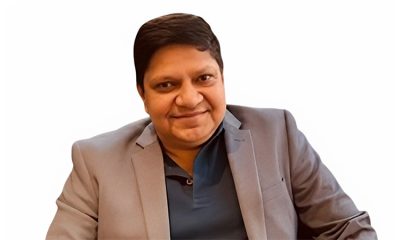

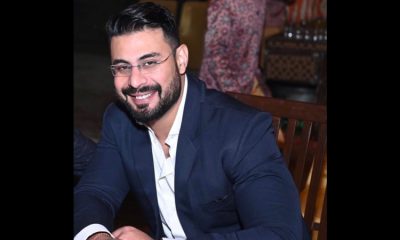







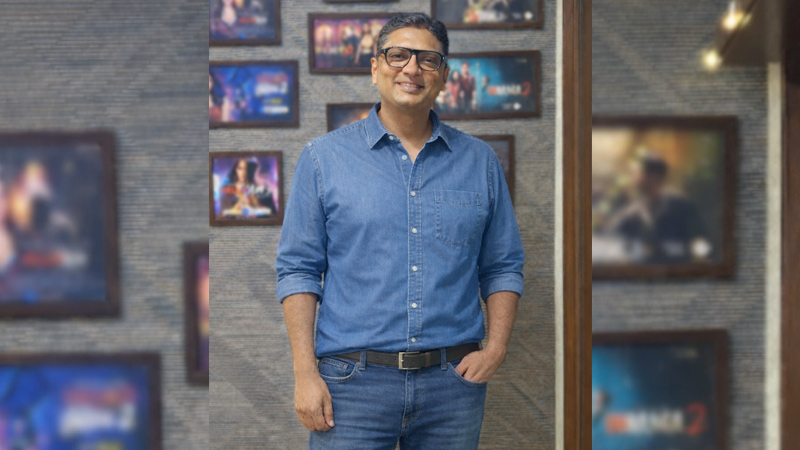
MUMBAI: As audiences spread across TV, OTT, and short-form platforms, deciding what gets greenlit has become more strategic than ever. Content leaders now weigh clarity of concept, platform fit, pacing, and distinctiveness to ensure a story connects with the right audience in the right format.
In this piece, Dhruv R Jain content head TV at Rose Audio Visuals, explains how greenlighting decisions are shaped by concept strength, platform behaviour, and the need for unique storytelling. Drawing from his experience at Rose Audio Visuals, he outlines how these factors influence which ideas move from pitch to production.
In recent times the Indian entertainment landscape has changed in many ways leading us to also modify our process in deciding what should be greenlit in terms of content. As the options for audiences to view content change from the traditional TV space to OTT and even social media the stories that are told on different platforms also differ. Multiple factors play a part in deciding not just the story told but also the way they will be told.
Firstly the primary filter in the process is the clarity of concept. Whenever content leaders approach a story they tend to simplify it in terms of it being written and told through the screen. The crew involved in making the story should have an inside out idea of all the factors of the story for it to resonate and be understood by the audiences. We dissect the story into the smallest components to spread it through the writing and format the story in a way that would build intrigue giving it hooks, drops points and defined execution. A concept that is executed properly with details will be understood and appreciated by the audience irrespective of its genre.
The content that is being chosen to be greenlit also highly depends on the platform it is being made for. Different mediums like TV channels, Ott platforms and short format apps etc have different sections of audiences that look for a specific kind of story to watch depending on multiple factors again. So while choosing a story for them one needs to study their audience, the structure that works for the platform, the pacing in which the story will be understood and the kinds of story that would fit the platform. While TV is a medium which is highly expository in its telling with slower pacing, on the other hand Ott platforms give us a space to tell a story with the approach of less is more with faster pacing of the story itself. This becomes an important factor in choosing stories and their way of telling.
Another factor that plays an important role is the distinctiveness of a concept. A concept with a unique approach, set up and characters bring freshness. At Rose we have always attempted to tell stories that stand out with our most recent Itti Si Khushi by setting up the show in a unique location like Kotachiwadi, a historic unique set up in the south of Mumbai that has not been shown on TV before we gave the already iconic Shameless an interesting Indian twist. At the same time the show in itself follows an unique storyline that brought something different to the medium of TV. So telling a different and unique story that stands out always brings in curious audiences which we sustain then with strong characters, hooks and plot points.
In addition to these factors many others become prominent in deciding what gets greenlit. It is on the content leaders to find the right time and space for the concept that they believe will be received well by the audiences. One needs to be a multitasker to understand, organise and execute a project properly.
Note: The views expressed in this article are solely the author’s and do not necessarily reflect our own.

PARIS & LILLE, FRANCE: Series Mania Forum has named the Republic of Korea as its first-ever Country of Honour, marking a major milestone for the European television industry gathering set to run alongside the Series Mania Festival in Lille in March 2026.
The announcement was made by Laurence Herszberg, founder and general director of Series Mania, underscoring Korea’s rising influence in global content creation and distribution.
As part of the initiative, the Korea Creative Content Agency (KOCCA) will bring a delegation of eight leading companies to the forum, including Channel A Corporation, CJ ENM, EO Content Group, KBS Media, MBC, SLL Joongang, Studio S and Whynot Media. The programme will feature dedicated sessions spotlighting upcoming Korean projects, high-level conference panels, networking events and industry showcases.
The move is backed by France’s CNC following a memorandum of understanding signed with Kocca at Series Mania 2024, aimed at strengthening co-production, investment and cultural exchange between the two countries.
The honour coincides with the 140th anniversary of diplomatic relations between France and Korea and follows last year’s Broadcast Worldwide event in Seoul, which highlighted France as its guest country.
Korea’s content market was valued at $43.169 billion in 2024, up 5.7 per cent from the previous year, ranking eighth globally. Demand for Korean series in France has surged, with Netflix reporting viewing time up more than 200 per cent year on year.
Herszberg said the initiative reflects Korea’s recognised excellence in film and television, while Kocca France general director Moonju Kim, said the partnership would deepen cooperation across production and investment.

CALIFORNIA: Disney has finally named its next ruler and slapped a glossy price tag on the throne.
Josh D’Amaro, heir to Bob Iger, steps into the chief executive role on a base salary of $2.5m, before the real money kicks in. His annual bonus target is set at a punchy 250 per cent of salary, with long-term stock awards worth $26.2m a year. Add a one-off incentive grant of $9.7m to mark the promotion and D’Amaro’s opening package lands at about $38m.
Dana Walden, the other front-runner, does not leave empty-handed. Elevated to president and chief creative officer under a contract running to March 2030, she will earn a $3.75m base salary, with a performance bonus targeted at 200 per cent. Annual stock awards are valued at $15.75m, topped by a one-time incentive of $5.26m. All told, her first-year take comes to roughly $24m.
The board’s decision ends a two-year succession drama that has hovered over Disney’s share price and morale. D’Amaro, previously in charge of parks and consumer products, gets the top job. Walden, until now co-chair of Disney Entertainment, is handed a newly minted creative super-role, reporting directly to him.
Both appointments take effect on March 18, at Disney’s annual meeting. Iger slides into the background as senior adviser and board member, before bowing out for good in December.
The message from Burbank is unmistakable. Continuity, creativity and a very expensive handover. In the House of Mouse, the magic still pays.



MIB sets OTT accessibility rules, mandates captions and audio description

Boney Kapoor acquires remake rights of Tamil political satire Thalaivar Thambi Thalaimaiyil

Netflix India names Rekha Rane director of films and series marketing

Zabeen signs off from TV9 after shaping the network’s public voice

Dhawan steps up to bat for Delhi’s grassroots sports push

Orient Beverages pops the fizz with steady Q3 gains and rising profits

Cheekatilo shines in the dark with record debut on Prime Video

Swiggy Instamart’s GOV surges 103 per cent year on year to Rs 7,938 crore

These ’90s fashion trends are making a comeback in 2017
The final 6 ‘Game of Thrones’ episodes might feel like a full season
According to Dior Couture, this taboo fashion accessory is back
The old and New Edition cast comes together to perform
Phillies’ Aaron Altherr makes mind-boggling barehanded play

ATN International brings ATN Bangla to Canada
MIB sets OTT accessibility rules, mandates captions and audio description
Boney Kapoor acquires remake rights of Tamil political satire Thalaivar Thambi Thalaimaiyil
Netflix India names Rekha Rane director of films and series marketing
Zabeen signs off from TV9 after shaping the network’s public voice
Dhawan steps up to bat for Delhi’s grassroots sports push
Orient Beverages pops the fizz with steady Q3 gains and rising profits
Cheekatilo shines in the dark with record debut on Prime Video
-
 e-commerce1 month ago
Swiggy Instamart’s GOV surges 103 per cent year on year to Rs 7,938 crore
-
 iWorld1 year ago
Kuku TV transforms India’s OTT space with vertical microdrama boom
-
 News Headline1 year ago
TRAI puts a ‘stop’ to unsolicited calls and messages
-

 News Headline2 months ago
From selfies to big bucks, India’s influencer economy explodes in 2025
-
 Comedy2 years ago
Taarak Mehta Ka Ooltah Chashmah celebrates 4,000 episodes
-
 MAM2 years ago
OpenAI joins C2PA steering committee
-
 News Headline2 years ago
Odisha to host Ultimate Kho Kho Season 2 from December 24
-
 News Headline1 year ago
Abhishek Bachchan joins as co-owner of European T20 Premier League


