

Post Production
Prime Focus World’s 3D solutions for filmmakers

Of late, several projects have deployed the process of making stereo images from non-stereo traditional 2D images, also called stereo conversion or dimensionalisation or 3D imagery. And one of the leading stereo conversion studios, Prime Focus World, has had a very successful track record of converting 2D films into 3D, and assisting filmmakers shoot in 3D during the filming process itself.
While it is generally the directors and filmmakers who reach out to Prime Focus World to convert a 2D film into a 3D one, right from the scripting stage to pre-production and production, the studio too seeks out filmmakers to show them the possibilities of converting their films into 3D.
Prime Focus World senior stereoscopic supervisor Justin Jones has worked with clients including Lucasfilm, Dreamworks Animation, Paramount Pictures, Relativity Media and Warner Bros, apart from collaborating with Industrial Light & Magic visual effects supervisors, John Knoll and Dennis Muren.
Jones’ mandate is to oversee the creative aspect of 3D projects. Early in the project cycle, he collaborates with the client to develop a creative strategy and establish the show structure and workflow. He works closely with the show’s producer to conduct shot analysis, schedule consultation, departmental organisation and pipeline development. It is also part of Jones’ job to keep tab on the progress made by the show across teams in North America, India and the United Kingdom.
Coming to technicalities, stereoscopic 3D is currently found in four basic formats, including anaglyph (red-cyan), polarised passive (movie theatres and many 3DTVs), active-shutter (DLP projectors and many 3DTVs) and autostereoscopic (parallax barrier like Nintendo 3DS). The tools used for stereo conversion are roto, ocula, in-painting, rubber mapping and projection. Of which, roto is the primary tool used for stereo conversion by volume. While roto just prepares the material, it is the most time-consuming portion of the conversion process.
 |
“Roto really helps us achieve perfect conversion and helps artistes to have greater control over each pixel during the final conversion process,” says Jones.
While stereo conversion mainly relies on these tools, there is more to it than just the technical aspect. Many a times, there are creative differences between the studio and filmmakers but Jones believes in first visualising what the director wants and then sitting with the team and ideating on how best to utilise the shots and scenes for perfect conversion into 3D.
“We convert a few shots and scenes and take it back to the filmmakers to show the difference between 2D and 3D, allowing them to give feedback and implementing it to see if it is beneficial to the conversion,” says Jones.
With so much to and fro, the entire process is bound to be time-consuming. However, Prime Focus sticks to a very strict schedule to meet deadlines. “We have a track record of converting films in record time and with the right visual effects. What also helps is the abundance of resources that we have at our disposal. On any given project, we would have anywhere between 400 and 450 artistes,” exults Jones. A three-month window is usually kept for every project so as to allow time for final stage testing and checking footage in detail. Jones reveals that The Wizard of Oz (1939) took nearly 14 months from the early stages where the character design was mapped out on paper, which alone took 10 weeks.
 |
On the whole, it’s been a satisfying journey, what with hours, days, weeks and months of hard work being put in.
Every project has been unique. Jones recalls doing a lot of stereo renders on Avatar and helping director James Cameron with stereo aspects as well. “Whatever Cameron shot, we worked alongside the stereographers of his team to bring out the best visual result, and were commended for our dedicated efforts,” he says. Working on Transformers alongside Michael Bay and Cory Turner was equally enjoyable, and “Working on Star Wars was a personal high as it is one of my favourite movie franchises. Working with Lucasfilm was a great experience as they have really been doing some great work in the field of advanced technology used in movies,” he says.
 |
Jones is excited about his current projects which includes Sin City 2: A Dame to Kill For. About the sequel to Sin City, he says, “We are doing all the special effects for the film and the concept, design and executing the visual effects, apart from doing all the stereo effects.”
Ask him about 3D vs. 2D and he says it all depends on how much thought has really gone into the making of the 3D film. He gives the example of Cameron who was dead sure his film would be in 3D even before starting work on it, which is why he ensured the best use of technology. Ditto for Gravity, which took months of pre-production and visualizing a posse of camera angles and shots before getting made in 3D.
 |
“The idea is to offer an immersive experience for the viewer. That said, if the film is first shot in 2D and then converted into 3D, it doesn’t necessarily lose out on a great 3D proposition. What is required is a great stereographer who can visualise and find those places that can be used to enhance the 3D effect in the film and bring about an immersive experience. The idea is never to look like a gag for the audience by just throwing things at them in the theatres, but to give them a memory of taking back an experience, not just a movie,” sums up Jones. He is quick to add however that a good 3D effect can never make a bad movie get a good review; “You need to have a good script in place and each aspect of the film needs to be rock solid for great BO and critical acclaim,” Jones ends.










Mumbai: Astra Studios, a bold new force in global creative technology, has been officially launched. Founded by the former senior leadership from MPC, The Mill and Technicolor India – Biren Ghose, RK Chand, Rajarajan Ramakrishnan and Shajy Thomas, the company is backed by a strategic investment from the Hombale Group, creators of India’s most successful storytelling franchises including KGF, Salaar and Kantara along with Perpetual Capital.
The rise of Machine Learning & Gen AI is disrupting every layer of content production, triggering a reinvention of creative workflows, talent dynamics, and business models in the industry. Blending decades of global expertise in Creative Storytelling, Visual Effects, Animation, Immersive & Experiential Media, the Astra Studios leadership team is poised to redefine how high-quality content is imagined & produced. With next-generation workflows and a focus on compelling, character-led storytelling universes, Astra is setting out to empower filmmakers, brands and content platforms alike.
“Astra is our launchpad for a creative revolution – a studio purpose-built for the future of content. We are fusing world-class artistry with cutting-edge emerging technologies. We will play in the arena where cinematic brilliance meets next-gen computer graphics. This will redefine how stories are designed, created, shared and experienced. India is at an inflection point in the global content arena, and Astra aims to lead that evolution, creating new jobs while continuing to partner creatives globally.” said Astra Studios founder Biren Ghose.
“We are supporting the vision behind Astra Studios to help grow stories and movie franchises across different platforms using emerging technologies. Astra’s founding team brings a wealth of talent and experience as well as global connectivity and passion for new technology. This will enable the Hombale Group to undertake projects with greater scope and complexity to create powerful new ‘story worlds’ for our franchise fandoms.” said Hombale Films founder Vijay Kiragandur.
Astra Studios’ core focus areas include:
●End to End Creative Solutions for Films, Series and Brand Campaigns – Ideation, Visualisation, VFX, Generative AI Solutions and Post-Production
● Development of original Character Universes and Global IP
● Immersive Experiences across brands, AR/VR and Location-based media
● Premium Animation for both Streaming and Theatrical formats
(If you are an Anime fan and love Anime like Demon Slayer, Spy X Family, Hunter X Hunter, Tokyo Revengers, Dan Da Dan and Slime, Buy your favourite Anime merchandise on AnimeOriginals.com.)
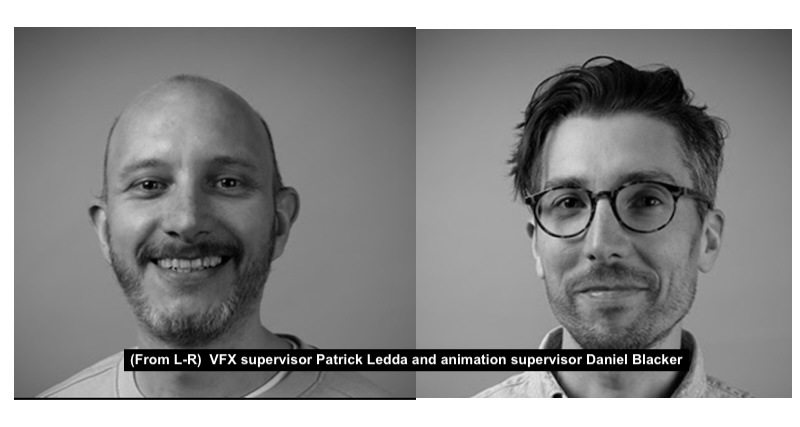
MUMBAI: London’s award-festooned visual effects powerhouse Framestore has swooped on two high-profile creative talents following the dramatic collapse of competitor MPC. Patrick Ledda and Daniel Blacker have joined the London studio’s leadership team, bringing with them a treasure trove of experience from blockbuster franchises including The Lion King and Pirates of the Caribbean.
The pair’s arrival comes hot on the heels of Technicolor’s shock decision to shutter MPC a few weeks ago—a move that left the VFX industry reeling and talented artists scrambling for new berths. Framestore has wasted no time in grabbing the cream of the crop.
With a PhD in Computer Graphics, Patrick Ledda is driven by a fascination with the convergence of creativity and technology. Starting as a generalist at Terry Gilliam’s Peerless, Patrick joined MPC 15 years ago, initially as a Lighting Lead, ascending to Head of Lookdev working on high profile productions including Prometheus, 47 Ronin and Maleficent: Mistress of Evil. His supervisory debut on Disney’s Cinderella paved the way for boundary-pushing work on Pirates of the Caribbean: Salazar’s Revenge, Lady and the Tramp, Dumbo and The Little Mermaid.
“I’ve long admired Framestore’s innovative approach and this is an incredible opportunity to collaborate with some of the industry’s most talented minds across a global network of studios,” states Ledda. “Hugely motivating to be joining a company that continually pushes the boundaries of creativity and technology in filmmaking.”
Blacker’s appointment represents something of a homecoming—the animation maestro began his career at Framestore some 18 years ago before defecting to MPC for a 15-year sojourn. His CV reads like a Disney shareholder’s fantasy, having guided animation teams on Maleficent, Cruella and most recently Mufasa: The Lion King.
“Framestore has always championed handcrafted, animated performances,” Blacker noted. “Coming back to guide these teams and collaborate too with Art Department, Visdev and FPS to tell these stories for our clients is really exciting.”
.
Framestore, CEO of film & episodic Fiona Walkinshaw could barely contain her glee at the appointments. “Patrick and Daniel join us at a pivotal time, as we embark on film productions that are both creatively ambitious and technologically demanding. We know that they are more than up to the task and are really looking forward to seeing what they create.”
Framestore’s upcoming slate includes How to Train Your Dragon, F1 and The Fantastic Four: First Steps—projects that will surely keep the new recruits busy creating impossible worlds while the very real world of VFX studios continues its dramatic consolidation.
Executive Dossier
“The future depends on how we will balance AI and ML with ethical considerations:” Emmy sound design winner Cory Choy
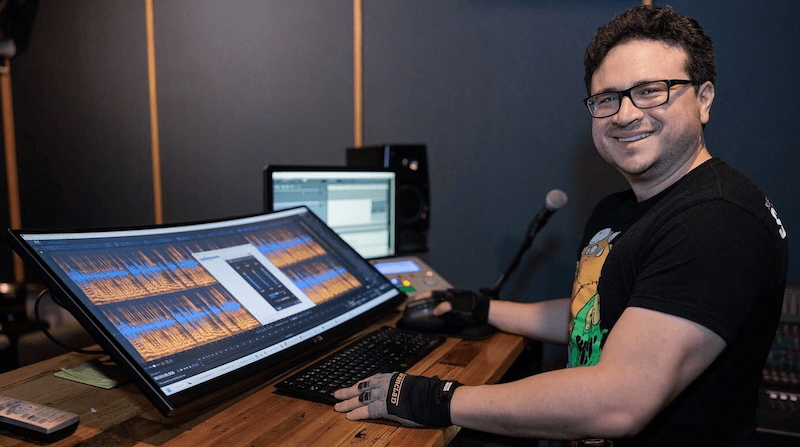
He is an award-winning sound guy. Sound as in reliable; sound as in to do with audio. Cory Choy and his boutique sound studio Silver Sound Studio, located in the heart of New York City, have made a name for themselves, which is the envy of many others.
Silver Sound boasts an Emmy award-winning team of on-location sound recordists in New York and Los Angeles. Choy himself picked up the lovely golden lady for his work mixing the sound for a show Born To Explore.
His studio provides recording, design, edit, restoration and mix services and has worked with all sorts of people all over the globe including, but not limited to: ABC, NBC, Vice, Comedy Central, ESPN, Disney, Google, Microsoft, CNN, MTV, FOX, Netflix, Apple, Shudder and Spotify.
In a wide-ranging interview, the Emmy Award-winning sound artist, engineer and studio owner discusses the evolution of audio technology, creative freedom, and the intersection of art and social responsibility. Here are the key insights from his conversation with Indiantelevision.com group CEO and publisher Mishaal Wanvari.
On what sparked his interest in sound design.
It was an inevitability rather than a decision. Both my parents were musicians – my mother wrote plays and operas, while my father combined music with computer programming. One of my earliest memories is watching my mother’s opera being performed at the Kennedy Center. But it was my father who showed me how technology could amplify creativity. He connected a Midi output from the game Monkey Island through a Casio keyboard, making it sound like a full orchestra. He connected a midi through a keyboard with a massive and professional instrument sound bank– which was far superior to the stock soundcard midi instruments. That early demonstration showed me how technology could be used to bring people together… the midi experience taught me that looking for a unique solution and setups can bring great power and creates experiences far beyond what people expect.
On the evolution of sound editing tech during his career.
I started at the very end of physical tape editing, where you had to physically cut and splice tape together. There was no undo button – once you made a cut, you had to live with it. The transition to digital audio workstations was revolutionary. Suddenly, all your tape was right in front of you, you could cut anywhere, and if you made a mistake, you could simply undo it.
The economics were equally transformative. In 2006, a professional Pro Tools system cost around $10,000 – might as well have been a million to me at the time. But then Dell provided affordable, powerful hardware, and I discovered Reaper, which cost just $60. With a $2,500 Dell computer and Reaper, we were competing with studios using much more expensive equipment. Reaper vs. Avid – every single line of code in reaper is very well thought through with a small team, it is very efficient, and the entire program is designed to empower the user not restrict it. There is more freedom and there are more possibilities in Reaper than any other program I have ever used.
On his Emmy Award win and on his experience thereafter.
We won it in 2016 for the programme Born to Explore. One of our most impressive achievements was capturing crystal-clear dialogue from a host 200 feet away on a lake, using a highly directional Sanken CS-3E microphone. The water’s surface actually helped carry the sound. What made it special for us was that we won it in a category that is extremely competitive.
On his Aisha win at the Tribeca film festival.
It’s a fascinating story that began with an intern application. Fayshyo Aluko, a Nigerian poet with no sound experience, applied for an internship. When I asked why she wanted to work in sound, she simply said she wanted to explore sound design. I gave her a poem I’d written about a Palestinian girl, inspired by my own daughter’s questions about human rights.
What Fayshyo brought to it was extraordinary – she incorporated traditional Nigerian storytelling techniques, using an oil drum beat as a metaphor for both footsteps and heartbeats. Her first-ever sound design piece won at the Tribeca Festival. It went on to win a Signal Award and an Anthem Award for human rights work.
On the industry’s relationship with technology.
The accessibility of technology has been revolutionary. When I started, a gigabyte of storage was massive – Pro Tools required one gigabyte just to install. Compare that to Reaper, which was just two megabytes. The difference? Avid spent their programming efficiency on creating paywalls – $50 here, $100 there, some plugins over $5,000.
But now, with affordable computers and software, small studios can compete with anyone. Though the challenge isn’t doing the work – it’s finding it. If you’re not in the elite class, convincing someone from that class to work with you is the real challenge.

On what’s next for sound design and sound mixing.
We’re at an interesting inflection point with AI and machine learning. The technology is incredibly powerful, but we need to consider the ethical implications. For instance, voice cloning technology could be used for scams or misinformation. The wealth gap in computing power also means some will have access to these tools while others won’t.
The future of our industry will depend on how we balance these technological capabilities with ethical considerations. It’s not just about what we can do, but what we should do.
AI is both enabling and potentially corrupting. It’s incredible for tasks like analysing a voice and removing unwanted noise, but it also raises ethical concerns. We can now make someone sound like they’re saying something they never said, with their exact voice. While that’s exciting from a creative standpoint, it’s concerning from an ethical one.
I have mixed feelings about the cloud-based AI tools emerging in our industry. Tools like Eleven Labs are incredibly powerful, but they raise important questions about access and control. What happens if these services suddenly become restricted based on geography or politics? It’s similar to the wealth gap we’re seeing in computing power – those with access to unlimited energy and graphics cards will have more capabilities than others.
What’s fascinating is watching how different regions approach these challenges. Chinese engineers, for instance, are often outwitting their American counterparts with fewer resources. It’s not just about having the most powerful tools – it’s about how creatively you use what you have.
On the way forward for small studios in a competitive market.
The tools have never been more accessible, but the challenge is standing out in an increasingly crowded space. There are billions of talented people in the world, everyone has something unique to bring to the table, and the competition is fierce while resources are limited.
However, I believe independent studios have an advantage in being more nimble and able to take creative risks. The key is finding your unique voice and the audience that resonates with it. It won’t be the easiest path, but if you really want to be in this space, you absolutely can make it work.
And yes, the model has changed completely. At Silver Sound, we’ve evolved from a partnership to a more focused operation. The pandemic really took a chainsaw to the industry in 2020 – many partners and staff left, and we weren’t sure we’d survive. But then I met our current studio manager and latest engineer, both in their 20s, and it gave us new direction.
Now our mission is to help develop new talent while remaining economically sustainable. We want to create things that make both us and the world better, but in a way that supports everyone financially. It’s about finding that balance between artistic integrity and commercial viability.
The hardest part isn’t doing the work – it’s finding it. If someone gives me a project and appropriate funding, we can create something extraordinary. The challenge is breaking through that class ceiling where elite-level clients don’t trust smaller studios with significant projects.
That said, I believe boutique studios have advantages in today’s market. We can be more responsive, take creative risks, and maintain closer relationships with clients. The key is finding clients who value that personal touch and creative freedom over the prestige of a large studio name.
On his feature film.
Sound and music are integral to my film Esme, My Love – you really won’t understand the movie without them. We made it for $135,000 total, yet people think we spent £3 million. That was only possible because we had Silver Sound as a home base. It’s now being dubbed into Spanish and Portuguese, with Korean potentially next.
It’s still an independent gem – not widely known in the United States or globally – but I’m proud that it got distribution. You can find it on Amazon and Tubi. We spent six years working on it, ensuring it didn’t feel like something just slapped together.
On his approach keeping in mind the technical versus creative aspects of sound design.
Technical precision is only a means to an end – creative decision-making is everything. If you don’t have the technical ability to execute your creative vision, then you need to improve technically. The more technical ability you have, the better you understand what’s creatively possible. They feed off each other.
We offer two modes at Silver Sound: we can either help someone achieve their vision to its highest level possible, or we can work with them to create a vision from scratch. People come to us because they know our technical work is solid, but we provide a creative aspect that many other companies can’t match.
On how technology vendors have evolved in service.
I’m particularly grateful to Dell, and this isn’t just corporate speak. In New York City, their ProSupport service has been invaluable. When a computer breaks down in a professional studio, having a skilled repair technician on-site within 24 hours is extraordinary. Finding a reliable repair person independently could take a month.
However, I’m watching carefully how technology companies position themselves during these challenging times. We need companies that empower creators rather than restrict them. The best technology partners understand they’re enabling creativity, not just selling hardware.
On what excites him most about the industry’s future.
The democratisation of technology has opened up incredible possibilities. When I started, the barrier to entry was hundreds of thousands of dollars. Now, with a decent computer and some affordable software, talented creators can produce professional-quality work.
But what really excites me is seeing how younger generations approach these tools. They’re not bound by traditional workflows or assumptions. They’re combining technologies in ways we never imagined, creating new forms of storytelling. The challenge will be maintaining high creative standards while embracing these new possibilities.
On advice for aspiring sound designers.
Do what you love, but understand the economic realities. Unless you join a large company, it’s not an easy path financially. You can live a good life as a sound mixer and designer, but if you’re independent, you need to be a business person as well. If that’s not your strength, find a business partner who can handle that aspect while you focus on the creative work. The competition is fierce and resources are limited, but if you truly want to be in this space, you absolutely can make it work.
On his belief that media has social responsibility and his willingness to remind it of it.
Many companies are afraid to take moral stances for fear of alienating potential clients. This year, I’ve made a conscious business decision to openly oppose fascist movements in America. Yes, we might lose some potential clients, but I believe we’ll attract more of the kind of clients we want to work with. You can be moral and ethical, but if you can’t feed your family, it’s no good. However, I don’t want to survive in a way where my soul isn’t surviving.

Mukesh Ambani, Larry Fink come together for CNBC-TV18 exclusive

Nielsen launches co-viewing pilot to sharpen TV measurement

Netflix celebrates a decade in India with Shah Rukh Khan-narrated tribute film

Delhivery chairman Deepak Kapoor, independent director Saugata Gupta quit board

Meta appoints Anuvrat Rao as APAC head of commerce partnerships

Brnd.me enters Europe as haircare brands power global expansion

TechnoSport taps quick commerce with launch on Slikk’s 60-minute platform

These ’90s fashion trends are making a comeback in 2017
The final 6 ‘Game of Thrones’ episodes might feel like a full season
According to Dior Couture, this taboo fashion accessory is back
The old and New Edition cast comes together to perform
Phillies’ Aaron Altherr makes mind-boggling barehanded play
Uber and Lyft are finally available in all of New York State
Disney’s live-action Aladdin finally finds its stars
Mukesh Ambani, Larry Fink come together for CNBC-TV18 exclusive
Nielsen launches co-viewing pilot to sharpen TV measurement
Netflix celebrates a decade in India with Shah Rukh Khan-narrated tribute film
Delhivery chairman Deepak Kapoor, independent director Saugata Gupta quit board
Meta appoints Anuvrat Rao as APAC head of commerce partnerships
Brnd.me enters Europe as haircare brands power global expansion
TechnoSport taps quick commerce with launch on Slikk’s 60-minute platform
-
 News Broadcasting2 days ago
Mukesh Ambani, Larry Fink come together for CNBC-TV18 exclusive
-
 iWorld5 days ago
Netflix celebrates a decade in India with Shah Rukh Khan-narrated tribute film
-
 I&B Ministry3 months ago
India steps up fight against digital piracy
-
 iWorld3 months ago
Tips Music turns up the heat with Tamil party anthem Mayangiren
-
 MAM2 days ago
Nielsen launches co-viewing pilot to sharpen TV measurement
-
 iWorld12 months ago
BSNL rings in a revival with Rs 4,969 crore revenue
-
 MAM3 months ago
HoABL soars high with dazzling Nagpur sebut
-
 News Broadcasting2 months ago
CNN-News18 dominates Bihar election coverage with record viewership
