
News Broadcasting
Ormax Media changes gear; talks expansion

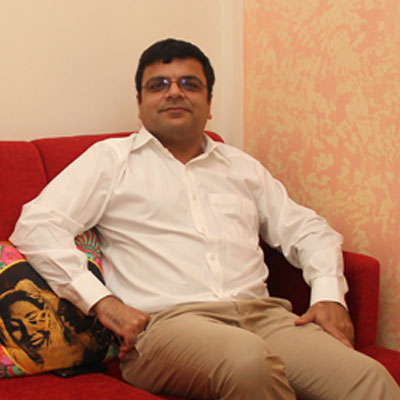
Five years is not a long time to learn the ropes of a business. But media insights firm, Ormax Media seems to have not just learnt the tricks of the trade but is also branching out well. Just a little over five years, the company already boasts of a clientele including big names in the film and television industry. The agency has witnessed continuous growth of 30 to 40 per cent year-on-year with annual turnover having grown three-fold in the last three years.
Now, the company is busy reaching out to more markets with its different tools. It is also doing a lot of research work for the Marathi and Bengali film industry and soon wants to expand its operations to the South, Gujarati and other regional markets.
Also, while till now the company has mostly been catering to the big film studios, it now plans to work with smaller producers who aren’t a part of the studios. Also on the anvil are many new products – one of its ambitious products is a “Promo Testing Tool” that will help test the promos of films and TV shows within a short span of two-three days.
With Cinematix, one of the most popular tools for the film industry in its basket, it plans to expand to more markets by this weekend. It started by tapping six different markets, moved to 19 and now plans to spread to 29.
Apart from general entertainment channels (GECs), kids and infotainment channels too are now coming on board. Recently, Ormax started working with National Geographic Channel, AXN, and has also entered the regional market.
 |
|
Colors' carries out extensive research along with Ormax to study the market. A still from 'Balika Vadhu'
|
The best part is that almost the entire industry is admiring the organisation for its work. Recently, with its research, Ormax helped NGC understand the equity of the brand NGC and dive deeper into analysing interesting insights about the channel’s loyalists and what kind of variety seekers is it reaching out to. “With this research findings, we are well-armed while aligning the strategy and focusing on the target markets for the channel,” says National Geographic Channel VP, marketing Debarpita Banerjee, who thinks the company is target-oriented as far as achieving the objectives of the research study is concerned.
Ormax Media has seen a meteoric rise under the leadership of CEO Shailesh Kapoor, an alumnus of IIT-Delhi and IIM-Kolkata.
Always a TV and film fanatic, Kapoor’s heart beats for anything that is related to entertainment. However, that isn’t the reason he started Ormax Media. Growing up in the 90s, Kapoor instinctively knew that the entertainment industry was going to witness a boom with lot of scope for experimentation and thus after nearly 10 years of occupying key positions across functions like content, marketing, sales and strategy in channels such as Filmy, Zoom, Zee Cinema, indya.com and Sony Entertainment Television, Kapoor realised that just like in any other industry, even in media, “Consumers needed to be at the heart of a lot of decisions that a company takes.”
That’s when he joined hands with Vispy Doctor, already into consumer research since a quarter of a century, to start Ormax Media in July 2008. “Doctor’s experience in the consumer sector helped us hugely in growing. He is still one of the driving forces,” says Kapoor, who also thinks that understanding the client’s perspective has worked in favour of the company.
 |
|
Arnab Das from Colors says that the research for TV is very different
|
Over the years, Ormax has developed many different products to study the audience’s mindset. One of its most popular products is Ormax Brand Matrix (OBM), a viewership maximisation tool (VMT) that is used by broadcasters to increase their consumer base by up to 50 per cent. OBM can be used by channels across genres, such as GECs, news, movies, youth, music, infotainment, lifestyle, etc. The project design, such as markets and target audience demographics, is customised to the channel’s requirement.
Colors head strategy and research Arnab Das informs that the channel has very strategically used the “Ormax Brand Matrix” to get a detailed understanding of its brand health. The channel has also used tools like “Showtracks” that is used to make content and communication changes to a running program for improved viewership, “Showbuzz” and “Character India Loves”.
“We have worked with them across most of our major shows, including fiction and non-fiction, including Balika Vadhu, Bigg Boss, Sasural Simar Ka, Madhubala, Uttaran, Khatron Ke Khiladi, Aamna Saamna, etc.,” says Das, who is of the view that research in TV space is very different from other categories, purely due to the dynamic nature of the day-to-day business. “It is extremely important for any research agency to understand and work around these limitations – something that Ormax definitely has an edge on over others,” he says.
 |
|
NGC's Debaprita Banerjee thinks Ormax Media is target-oriented
|
Even other channels have used its products well. Sony Max senior VP Neeraj Vyas says that they often work with Ormax Media with many different tools. “It’s quite a frequent affair to conduct a research along with them to study the consumer behaviour. The best part is that we get a fairly deep insight in to the consumers’ mind. Once the research on a certain programme is conducted, we model our campaign accordingly. It just doesn’t give us an organised way to go about it, but at times also gives us a reality check,” he says.
After starting out as a TV research firm, Ormax spread it wings in 2010 and expanded to the film industry as well. However, it proved to be trickier terrain considering there was no concept of consumer research for films at all. “But once we started, we realised working on films is easier. Now, 30-35 per cent of our revenue comes from films,” says Kapoor, whose tryst with films started with Yash Raj’s Lafangey Parindey, Ra.One, Dum Maaro Dum and Khichdi: The Movie, among others.
Interestingly, the Ormax Cinematix tool worked really well for the company with nine studios having subscribed to it. Cinematix tracks a film’s weekly report and measures awareness and interest of audiences to watch it.
Yash Raj Films VP Marketing and Communications Rafiq Gangjee says that Ormax Media is their agency of first choice. “This largely stems from the fact that they are willing to listen and understand the brief. Often this becomes difficult in such a passionate industry,” he says and adds, “The film industry has always believed in ‘gut feels’ and it is nice to see someone factor in that aspect when chatting with us and come back with a grounded approach to the research required.”
 |
|
Lafangey-Parindey was one of the first films for which Ormax Media conducted a study
|
Yash Raj recently commissioned an exclusive and extremely pertinent study with Ormax for its film Shuddh Desi Romance aptly titled – Shuddh Desi India ki Romantic Soch. “This was done essentially to figure out the changing face of perceptions, tolerance and acceptance of social and romantic norms we have so far held sacrosanct. We had done this to understand if we needed to approach our marketing somewhat differently since we were going out exclusively to the youth,” says Gangjee.
After being so inclusively involved with its client, it doesn’t come as a surprise that Ormax has close to 40 clients in the film industry and they have tested 275 films in the last three years.
“In the last one month, we have tested the marketing strategy, concept, TG, etc. for nine films. Unlike TV where channels don't talk to each other, the movie industry is very close-knit where word of mouth spreads very fast. We have grwon in the industry through such word of mouth,” says Kapoor.
Besides working with its permanent products, Ormax also conducts research from time to time to test certain aspects of viewers. For instance, a particular research was: ‘And the remote goes to…’ where it studied ‘who controls the remote control in the Indian household’.
 |
|
Ormax Media recently conducted a research for Yash Raj Films for Shudh Desi Romance
|
“These tools or products are developed to help the industry in whichever way we can. When we were taking up the study on who controls the remote, we didn’t really get a good response from the industry as most of them thought they knew the answer. But the revelations were surprising as unlike the general perception that youngsters handle the remote, it was women up to 35 years of age who controlled it,” says Kapoor.
Since the company has tested waters in almost all areas in some way or the other, it is hoping that all its expansion plans will work well. “Now, at any stage, we don’t feel handicapped. In the five years of working, we have developed our resources well to take up multiple projects, big projects and go into the areas that were thought to be unreachable till sometime back,” he says.










News Broadcasting
Mukesh Ambani, Larry Fink come together for CNBC-TV18 exclusive
Reliance and BlackRock chiefs map the future of investing as global capital eyes India

MUMBAI: India’s capital story takes centre stage today as Mukesh Ambani and Larry Fink sit down for a rare joint television conversation, bringing together two of the most powerful voices in global business at a moment of economic churn and opportunity.
The Reliance Industries chief and the BlackRock boss will speak with Shereen Bhan, managing editor of CNBC-TV18, in an exclusive interaction airing from 3:00 pm on February 4. The timing is deliberate. Geopolitics are tense, technology is disruptive and capital is choosier. India, meanwhile, is pitching itself as a long-term bet.
The pairing is symbolic. Reliance straddles energy transition, digital infrastructure and consumer growth in the world’s fastest-expanding major economy. BlackRock, the world’s largest asset manager, oversees more than $14 tn in assets and sits at the nerve centre of global capital flows. When the two talk, markets tend to listen.
Fink’s appearance marks his third India visit, a signal of the country’s rising strategic weight for the Wall Street-listed firm, which carries a market value above $177 bn. His earlier 2023 trips included an October stop in New Delhi, where he met both Ambani and Narendra Modi.
India is now central to BlackRock’s expansion plans, notably through its joint venture with Jio Financial Services. Announced in July 2023, the 50:50 venture, JioBlackRock, commits up to $150 mn each from the partners to build a digital-first asset-management platform aimed at India’s swelling investor class.
The backdrop is robust. BlackRock ended 2025 with record assets under management of $14.04 tn, helped by $698 bn in net inflows, including $342 bn in the fourth quarter alone. Scale gives Fink both heft and a long lens on where money is moving.
He has been openly bullish on India. At the Saudi-US Investment Summit in Riyadh last year, Fink argued that the “fog of global uncertainty is lifting”, with capital returning to dynamic markets such as India, drawn by reforms, demographics and durable return potential.
Expect the conversation to range beyond balance sheets, into technology’s role in finance, access to capital and the mechanics of sustainable growth in a fracturing world order. For investors and policymakers alike, it is a snapshot of how big money is thinking about India.
At a time when capital is cautious and growth is contested, India wants to be the exception. When Ambani and Fink share a stage, it is less a chat and more a signal. The world’s money is still looking for its next big story, and India intends to be it.
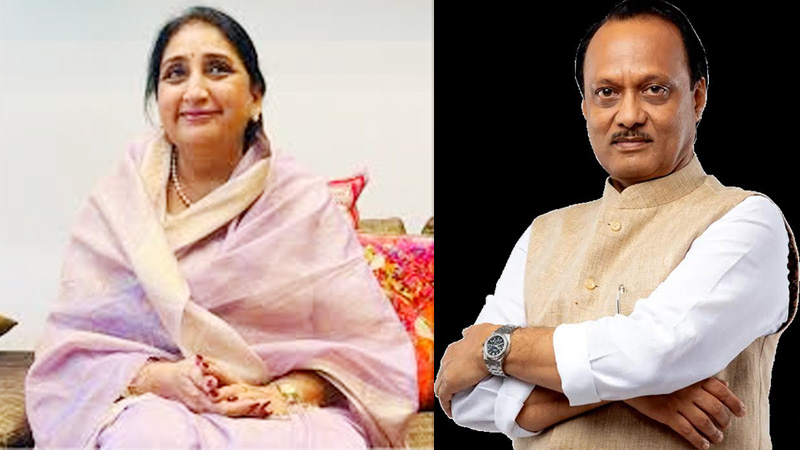
MUMBAI: Sunetra Pawar, wife of the late Ajit Pawar, will take oath as Maharashtra’s deputy chief minister on Saturday, media reports say, two days after his death in a plane crash.
According to reports, the Nationalist Congress Party (NCP) has summoned a legislature party meeting at 2pm on Saturday, where Sunetra Pawar, a Rajya Sabha member, is expected to be elected as leader. She is then likely to be sworn in as deputy chief minister at around 5pm at Raj Bhavan, as preparations are underway at the governor’s residence.
Ajit Pawar, Maharashtra’s deputy chief minister and a veteran NCP leader, died when a chartered Learjet 45 carrying him and four others crashed near Baramati on 28 January. The aviation regulator confirmed that all on board were killed when the aircraft burst into flames during a second landing attempt.
The sudden loss of one of Maharashtra’s most experienced politicians has prompted swift consultation among NCP leaders. Party figures, including working president Praful Patel, have been involved in talks on succession and organisational continuity. Reports suggest that several senior leaders support Sunetra Pawar’s elevation, viewing it as a unifying choice at a fraught moment.
According to party allies, Sunetra Pawar may also be considered for additional responsibilities within the state government. Some sources indicate that she would oversee portfolios such as excise and sports, while the finance brief could move to chief minister Devendra Fadnavis. Observers see this as a pragmatic division of duties intended to balance governance and political stability.
The transition unfolds against the backdrop of wider speculation over the future of the NCP, including talks about reconciling rival factions that split in recent years. Close aides of Ajit Pawar had been exploring avenues to bring the party’s different strands back together before his death, and that conversation may now gain fresh impetus.
Ajit Pawar’s demise has left a notable vacuum in Maharashtra politics. As a long-serving deputy chief minister, he had overseen key portfolios, including finance and planning, and played a central role in the state’s coalition government. His unexpected death has triggered intense reflection among allies and critics alike on both his legacy and the path ahead.
As Maharashtra prepares for Sunetra Pawar’s swearing-in, the NCP faces its most urgent test in years: turning tragedy into cohesion and navigating a new chapter in state leadership.
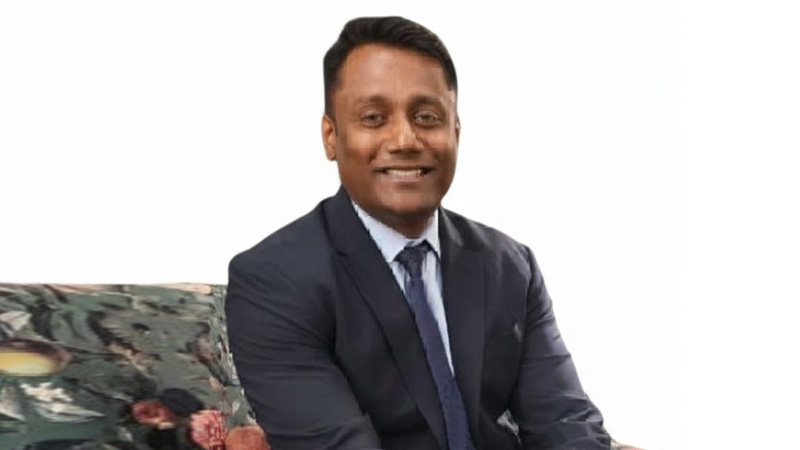
NEW DELHI: According to media reports, Firstpost has appointed senior journalist Binoy Prabhakar as its new chief content officer, bringing seasoned editorial expertise on board as the digital news platform embarks on its next phase of growth.
Prabhakar joins from Hindustan Times, where he spent nearly three years as chief content officer, shaping editorial strategy and guiding content for a rapidly evolving digital audience.
Earlier, he served as editor at Moneycontrol and CNBCTV18.com, and spent over a decade at The Economic Times in senior editorial roles. His career also includes leadership positions at Network18, The Indian Express and The Times of India.
A fellow of the Tow Knight Center for Entrepreneurial Journalism in New York, Prabhakar combines newsroom experience with a keen understanding of digital storytelling.
At Firstpost, he is expected to strengthen editorial depth, sharpen the platform’s voice, and drive content innovation as readers increasingly look for clarity in a crowded news landscape.

Mukesh Ambani, Larry Fink come together for CNBC-TV18 exclusive

Nielsen launches co-viewing pilot to sharpen TV measurement

Netflix celebrates a decade in India with Shah Rukh Khan-narrated tribute film

Delhivery chairman Deepak Kapoor, independent director Saugata Gupta quit board

Meta appoints Anuvrat Rao as APAC head of commerce partnerships

Brnd.me enters Europe as haircare brands power global expansion

TechnoSport taps quick commerce with launch on Slikk’s 60-minute platform

These ’90s fashion trends are making a comeback in 2017
The final 6 ‘Game of Thrones’ episodes might feel like a full season
According to Dior Couture, this taboo fashion accessory is back
The old and New Edition cast comes together to perform
Phillies’ Aaron Altherr makes mind-boggling barehanded play
Uber and Lyft are finally available in all of New York State
Disney’s live-action Aladdin finally finds its stars
Mukesh Ambani, Larry Fink come together for CNBC-TV18 exclusive
Nielsen launches co-viewing pilot to sharpen TV measurement
Netflix celebrates a decade in India with Shah Rukh Khan-narrated tribute film
Delhivery chairman Deepak Kapoor, independent director Saugata Gupta quit board
Meta appoints Anuvrat Rao as APAC head of commerce partnerships
Brnd.me enters Europe as haircare brands power global expansion
TechnoSport taps quick commerce with launch on Slikk’s 60-minute platform
-
 News Broadcasting3 days ago
Mukesh Ambani, Larry Fink come together for CNBC-TV18 exclusive
-
 iWorld6 days ago
Netflix celebrates a decade in India with Shah Rukh Khan-narrated tribute film
-
 MAM3 months ago
HoABL soars high with dazzling Nagpur sebut
-
 iWorld12 months ago
BSNL rings in a revival with Rs 4,969 crore revenue
-
 I&B Ministry3 months ago
India steps up fight against digital piracy
-
 iWorld3 months ago
Tips Music turns up the heat with Tamil party anthem Mayangiren
-
 MAM3 days ago
Nielsen launches co-viewing pilot to sharpen TV measurement
-

 News Broadcasting2 months ago
CNN-News18 dominates Bihar election coverage with record viewership

