

Executive Dossier
”Music channels need to differentiate themselves’ : Amit Jain- MTV India managing director

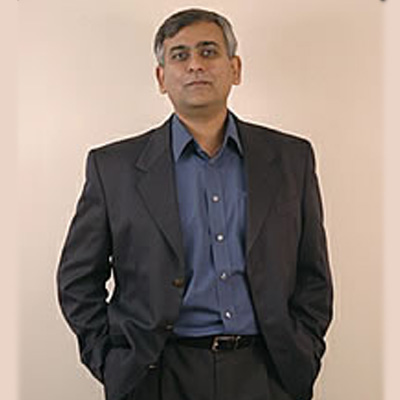
Viacom’s channels in India have not had an easy time in the last couple of years. For starters, the music genre has been stagnating in terms of viewership. Nick, which is being given a push now, had also failed to compete with the likes of Turner and Disney.
The company’s recent focus has been to improve operating margins by removing unproductive costs. It is also looking at its brand solutions business as a way forward.
Indiantelevision.com’s Ashwin Pinto caught up with MTV India MD Amit Jain to find out more about the company’s growth plans.
Excerpts:
MTV globally has positioned itself as a brand solutions provider. What is the strategy to transpose that to India?
As a backgrounder, we have brands in the music, kids and entertainment space. The challenge is to evolve this into a business model which is viable, profitable and works in the long-term. MTV globally is different from other channels. We don’t believe that we simply air content. We are brands. Our channels stand for a specific brand promise to a specific audience.
We are not about simply putting a pipe out and putting in content that tests well. We have a whole consumer focus which is investment in consumer insight, investigating tastes and preferences of audiences, their lifestyles. We are then able to take decisions based on insight as opposed to taking a show concept and doing research.
We looked at whether we could take the attitudes of our listeners which is talent, careers and getting double big results in half the time and use that as an insight into our positioning and channels.
You have brands, research and most importantly in-house creativity. A typical channel thinks of a show concept and gives it out to a production house.
We, however, have a deep rooted philosophy where we create our own content. 90 per cent of our content is in-house and this allows us to get more aggressive in our programming. We have only outsourced news from a learning perspective. You have everything from A-Z under one roof. On Nick, while we haven’t done local productions before we now have the confidence to do it ourselves.
Finally instead of being space sellers our team over a period of time has been very client focussed in terms of offering solutions and client integration. While everybody does it here you have a small repertoire of clients. Our managers sit down and discuss with them. They are invited to meetings.
Agencies take us for client meetings. We are invited to talk about youth branding. We are in a position to understand consumers and clients requirements when we create solutions in-house. We are not a middleman who puts things together and gives it somebody else.
We use our VJs, events, international properties to create solutions. We are in a position to create value for clients that goes beyond plain vanilla advertising.
In this manner, we are feeding of our own competence. Viacom Brand Solutions is a premium service for select clients. We are not going out there and making pitches. We work with clients who seek us out and want to do innovations. Our top 10 clients want to work with us in a more effective manner.
When was the service launched and who are the clients?
We launched it in January. We have a roster of over five clients. We have worked with Cadbury’s, Unilever, Nokia. The most interesting one was what we did for xBox.
xBox invited us to popularise the concept of gaming. With MTV we did a short film. It was featured on MSN’s desktop ads. VH1 created modified videos which had gaming characters. Nick had Jimmy Neutron making gaming simple for children. We extended this to the web and now we are looking at other applications. Nokia wanted to position a phone brand strongly in the music space. We tied up with a band pentagram and they gave us the music score. We invited user generated content and a video was to be created. We were stunned at the sheer creativity of untrained minds. The rub off that VHI and Nokia got through the advertising, on the website was good. VH1 did a creative job of making the first user generated music video in the country. Any of around 50-60 entries could have been used.
Cadbury’s was very different. They wanted to do an innovation around Bytes. It launched with a new package and on purchase of the package it gave the consumer an opportunity to download an MTV ringtone.
It brings together our expertise in partnerships in the mobile space, our creative expertise. We got seven mobile operators for this deal and around 85-90 per cent of the country’s mobile users were covered by the promotion. Cadbury’s also asked us to work with agency and create a commercial spot. This is an A-Z solution. The technical delivery across different platforms was very good. We had some operators calling up and complaining that the download of the ring tone was not working.
Our guys were scrambling in places like Madhya Pradesh where the ringtone was not activated on Idea Cellular. There were tense moments but when it came together it rocked. Most recently we worked with HLL. This was Lux Body Wash. They worked with our team to create music videos. They wanted to own the space of dancing, music. We created a music video for them based on their brand positioning. The music video is called Friday Night Fever. The song was written in-house and produced within our own studios. They have asked to make one more video and this time around we are working with an internationally famous VJ. We have international scriptwriters. While it is early days if clients are saying that they want to do more, it is a pretty good report card. We have three more upcoming projects.
So a recent media report that says that MTV is looking to outsource ad sales is rubbish?
Yes! You could not have summarised it better. I don’t know where that came from. It doesn’t make logical sense. The beauty of the Brand Solutions division is that we are not in conflict with anyone. The client and media agency welcome us. We are in a joint venture with the creative agency. It is a truly collaborative effort and we are not substituting anyone at anytime. Brand managers constantly look at ways to activate consumers in a unique way. There aren’t too many options of activating consumers in a relevant manner. We offer solutions to address youth and kids. The solution will never be mass market though.
MTV globally is in restructuring mode. Is this impacting India in any way?
We now report directly to MTV international. Earlier we reported to London. Bob Bakish who is the head of MTV International is my boss. There is better focus and we get a lot of support from MTV International. For a lot of our brand solutions we are getting excellent help from our global digital team. There is a lot of sharing of experience.
Could you talk about the new team that has been put in place?
This is my favourite topic. The big challenge is that while we have always had a creative team, how do you convert it into a business? We have put in place a completely empowered matrix structure. There are three general managers. They are Ashish, Keertan and Nina. Then you have functional experts – head of ad sales, distribution. The general manager and functional expert jointly run the channel. This is the innovation that we have brought in. I do not make too many decisions.
I set the policy and hire people. My job is to drive the culture and set a course for the future direction. I look at the vision three months to a year. We are a collaborative organisation. I run a skip level lunch for those who have been with the company for a couple of months. There are no bosses and no hierarchy. Everybody for a secretary to a general manager attends the lunch. We have freewheeling dialogue about how the experience has been. We are a young organisation. All our general managers are in their mid-30s. Sanjeev Hiremath and myself are the only 40 plus grey hairs in this organisation.
One of MTV’s key goals globally is to increase operating margins. What is the gameplan in this regard in India?
It is simple. Identify unproductive costs and convert them into productive costs. Drive the yields. We used to outsource 40 per cent of production, editing and post production work. We have invested in an integrated production and editing facility. The easiest thing that I see people do is outsource jobs that they do not want to do. That is not what we are doing. We are among the most cost effective content producers in the country today. We also cut costs. Last year the entire leadership team including myself did not stay in a five star hotel or fly business class. While these measures will not affect the bottomline, they are symbols of the importance of belt tightening.
We took out overheads and invested them back into the business. We focussed on remunerative clients. We were not afraid of letting clients go who were not paying us a remunerative rate. We improved our client mix in a challenging year. We brought down our inventory by 30 per cent as we wanted to clean the environment. We took down our inventory and took up our use. We now have a strong revenue line on the back of less inventory, We are looking at a high double digit revenue growth.
Tam data indicates that ratings for music channels are falling. What is the way forward for MTV?
This is the most important question. The genre has been stagnating for quite a while. So what do you do about it? There is a lot of fragmentation happening in this genre. Last year four more music channels launched. We have held on to our share. Now you have 16 music channels. Typically the leader gets affected. We have however managed to avoid that.
In difficult times Ashish and his team have done a creditable job in keeping up in the midst of competitive pressures. After eight years what generally happens is that new entrants take bites out of the leader. It is never number three or four that is hit. We however have not been hit despite being the leader. We are sitting on 34 per cent of viewership.
A few things need to happen. From an industry point of view music channels need to differentiate themselves. This is critical. Being the leader, we have to show the way. Consumers listen to Bollywood music. You cannot be presumptuous and tell them to listen to other stuff like ghazals instead of Bollywood music. Led by consumer insight, we found that for youngsters getting up in the mornings is the most dreary part of the day. Getting a lift is very important.
So we launched MTV Kickass Mornings. It starts with a high energy promotion with two ninjas. We have hits, humour, horoscopes and health. Most content here is audio driven. For instance health tips like how to cut down on spicy food, how much water to drink are spoken. Whatever you are doing, you will not miss out.
Music channels get 30 second, 60 second clips as an entry point. As they do not have to pay, they are happy to play them. We are investing in content though. We are doing full length music videos. Thanks to our relationship with music labels we normally get a first look. The entire Kickass Mornings is about new music. From 100 videos a maximum of 30 are chosen. We are offering a newer and richer music experience than anybody else. And we are packaging the whole proposition. MTV helps your day get brighter and better. This is our message.
We also recently started Soundcheck. As a leader we want to take a call and put our reputation on the line by saying what works and what does not. It is a music ratings service. There are speakers that determine the rating. Music experts are helping us make these choices as to what is emerging music as opposed to what is selling. We are not afraid to take on big names saying that their music is absolute rubbish. Some popular videos have been thrashed by us.
 |
How important is MTV’s reality portfolio in the programming mix and is it mostly males tuning for this?
Research shows that youth are tiring of fiction. They genuinely see soaps as there is no alternative. If they are given quality programming in their space they will switch despite the presence of single TV homes. Last year we took a punt on ramping up Roadies. There was an 18 city audition and covered 3600 km from Kerala to Kashmir down to Sikkhim. It was niot stage managed. We did not handpick good looking faces.
There were kids selected by the sheer dint of their talent. We had a fantastic partnership with Hero Honda. Their ability to manage large selection was invaluable. The show had a rating of 1.9 in the metros which is really good for a special interest channel. The Roadies finale got a rating of six. Reality among the urban youth is a conceopt that will work really well.
How would you describe your relationships with the Indian music labels and film producers who always want more in terms of license fees?
We have a win-win relationship with them. A lot of labels look at us as an extension of them. That is because we are careful about partners. We see ourselves as a marketing arm. If you look at the likes of Yash Raj Films most of them give us a first look.
We premiered the making of Tara Rum Pum on MTV. If it is in the youth space, film producers give us a first look. We are not victims of hard bargaining. They see the value we deliver in marketing to the right audiences. We do not have the buyer seller relationship. It is a genuine partnership.
Could you talk about how taking up social causes like Aids has helped boost MTV’s brand image and perception?
In terms of perception it come down to whether it is fun and frolic or does MTV have a larger meaning. It adds a reason for our existence. We are now going into an additional initiative and we are taking up the cause of illegal human trafficking on an international level across borders. We are looking to build awareness around that.
The Indian government recently banned FTV and earlier AXN on the grounds of obscene content. What steps has MTV taken to ensure that its music videos and shows do not offend anyone?
I must admit that early last year we faced this challenge. We got a notice. Our response was to fly down and apologise. We promised that it would not happen. We later told them why it would not happen.
The entire MTV team showed them a new system that has been put in place. Since that incident the Ministry has complimented us for the work that we have done.
I would appreciate your views on the proposed content code.
This should be formulated by dialogue involving all parties. Accountability should not rest with one party. Besides the broadcaster the content cerator should also be held accountable.
Could you elaborate on Nick’s strategy to challenge Turner and Disney?
I am a believer in doing the basics and not trying to do too many things at one time. We will not take on Disney in the South. We have to be a serious player among the first two to three channels in the Hindi Speaking Markets. Now we are not yet there. But six months back we were the number seven market player. Now we are going to be number four.
In six months the stickiness on Nick has doubled. The time spent has moved form the 50’s to the 90’s. Distribution, time spent, promos are in place. Now we are focussing on marketing and brand building. In the last four months a strong brand building promos are in place. They are not multi crore promos. We did a Bakra Pakdi initiative and got 80,000 entries.
Nick has appropriate and safe content. We take our responsibility as a broadcaster seriously. We avoid violence. We are the safest babysitter available. If a mother is to leave her child in front of the television it would most likely be Nick. I can say that with confidence. We like to be the best destination for comedy. So Nick is about fun, smiles and seen from a child’s point of view. I would be surprised if we are not number three by the end of the year.
Has the deal for ad sales with NDTV worked?
Well our MTV and VHI teams have fared so well people wondered what we were doing. Here is where I come from. When you grow a business you need a portfolio approach. You have to make choices.
Strategy is about what to do and what not to do. That is what I tell my team. You cannot do a little bit here, a little bit there and hope to succeed. Last year people were shocked that nick did not invest in marketing. We were focussed on building up content.
Now in the priorities of Nick do we want to make a multi crore investment in a sales team or do we want to put the same money into brand building? We have chosen to do the latter. The deal with NDTV allows us access to several hundred clients for a share of revenue. We have limited resources and we decided to build the brand and let an expert handle client management.
How is VH1 faring?
It is a uniquely different brand in the Western music and lifestyle space. There is no brand close to it in this space. BH1 is delivering the highest quality audience in the country. While it may be small it delivers the highest incidence of car, refrigerator, mobile owners etc. We target a high propensity to consume buyers. Clients get no wastage. Its wastage factor is the lowest in the industry.
On the distribution front what progress has been made to boost the reach of the channels across Asia?
When we launched in Pakistan late last year people were sceptical. But if you look at it over the last three years with the growth in the Pakistan economy siome disposable income has come into the hands of the youth.
Economic growth leads to a more Westernised consumption culture. Over the last three to four years the McDonalds, KFCs, Pepsis, Cokes and mobile operators have opened the doors of consumer culture. Their economy is growing as fast as ours. This has formed a middle class.
The television industry in Pakistan is ad driven. If you do not have consumption expenditure among a large audience you cannot have an ad sales proposition. MTV was also waiting to have enough content to have a sustainable 24 hour channel. Their music video content is as good as ours. Sometimes it is better. We have Indus Television as our partner. We did research about the brand MTV. Will it be rejected? Are there going to be any negative connotations by some elements of society?
The consequences have been positive. We trained the Pakistan team in terms of promotions, packaging.
Then we launched Nick in Pakistan with Ary. It launched this year in English. Our markets are all licensing deals except for Pakistan which is ad driven. The tourism economy has helped us grow in the Maldives. A lot of our revenue comes from the resorts there.
With India going through digitisation with Cas and DTH the time seems ripe to bring in more channels. Are there any plans in this regard?
We are waiting for the digital platforms to consolidate. Let DTH reach four million homes and then we will examine options. Comedy Central is one channel I would look at bringing in. Spike TV is a channel for men is another as it is a clear differentiator. There is a correct time to do things.
VH1 launched at the right time. I come back to the point about what I tell my team – strategy is not only about what to do. It is also about what not to do. In hindsight one can say that Nick should not have been launched so many years ago. If the management team at that time was not going to invest in it then the launch should have happened later. It is now that we are investing in it and giving it a clear direction and goals that it is moving towards.









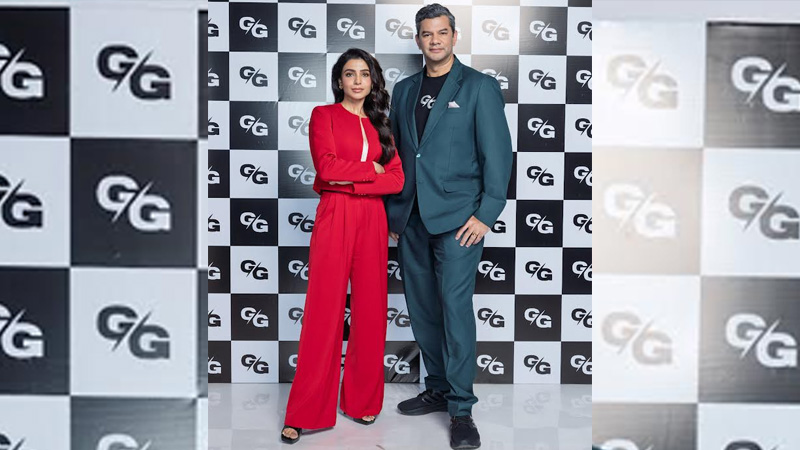
MUMBAI: Game faces on, pressure high India’s gaming ambitions are levelling up. Good Game, billed as the world’s first as-live global gaming reality show, has officially launched in India with a bold mission: to crown the country’s first Global Gaming Superstar.
Blending esports with mainstream entertainment, the show brings together competitive gaming, creativity and on-camera performance in a format that tests more than just joystick skills. Contestants will be judged on gameplay, screen presence and their ability to perform under pressure, reflecting how gaming has evolved from pastime to profession and pop culture currency.
Fronting the show are three high-profile ambassadors: actor and entrepreneur Samantha Ruth Prabhu, Indian cricket star Rishabh Pant, and gaming creator Ujjwal Chaurasia. The winner will take home Rs 1 crore ($100,000) among the largest prize pools for any Indian reality show along with the chance to represent India on a global stage.
Backed by a planned annual investment of up to Rs 100 crore, Good Game is also courting brand partners, promising a minimum reach of 500 million among India’s core youth audience. The creators position the show as a bridge between entertainment and interactive culture, offering long-format content, community engagement and commercial scale.
Auditions are now open to Indian citizens aged 18 and above, inviting amateur and professional gamers, creators and performers alike. Shortlisted candidates will be called for in-person auditions in Mumbai on 14 and 15 February, and in Delhi on 28 February and 1 March 2026.
With big money, big names and even bigger ambition, Good Game signals a shift in how India views gaming not just as play, but as performance, profession and prime-time spectacle.
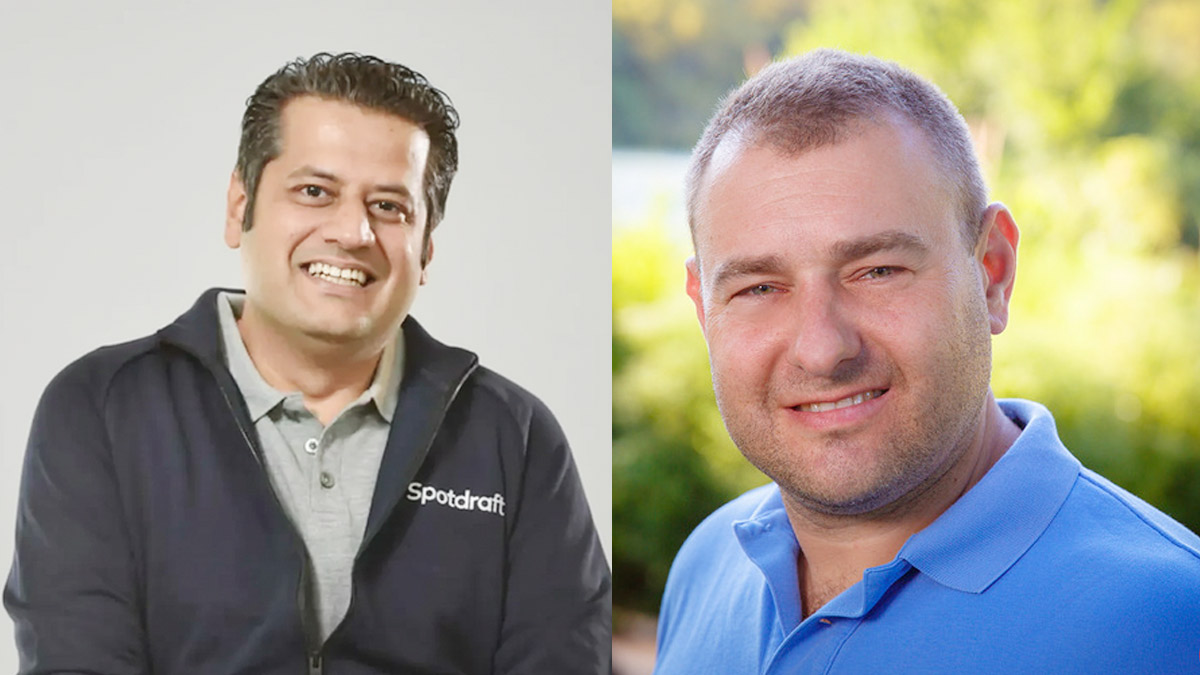
INDIA: SpotDraft has strengthened its senior ranks as it gears up for faster global expansion, naming Alon Waks as chief marketing officer and Amit Sharma as chief financial officer. The appointments follow the firm’s $54 million Series B round earlier this year and mark a push to scale across the Americas, EMEA and India.
The AI-powered contract-lifecycle-management platform has posted 100 per cent year-on-year growth in customer acquisition, counting Apollo.io, IPSY, Mixpanel, Oyster and Panasonic among its global clients. The firm processes more than one million contracts annually, with volumes up 173 per cent and nearly 50,000 monthly active users.
Waks, a veteran of Kustomer, Bizzabo, CreatorIQ, LivePerson and ZoomInfo, will steer global marketing and category positioning as legal teams adopt AI-driven tools. Sharma, who has led finance across scaling tech firms since 2016, will guide financial strategy, investor relations and market expansion.
Both hires aim to sharpen SpotDraft’s bid for a larger slice of the fast-growing legal-tech market, expected to exceed $63 billion by 2032. Co-founder and chief executive Shashank Bijapur said the company is focused on scaling go-to-market operations in the Americas, deepening leadership in EMEA, and accelerating AI capabilities for general counsels and legal-operations leaders.
Clients report shorter deal cycles and better alignment between legal and business teams. “What used to take weeks now happens in days,” said Abnormal Security senior legal operations manager Susan Koenig. DeepL head of legal operations André Barrow, said SpotDraft has helped reframe legal “from a cost centre to a generator of revenue”.
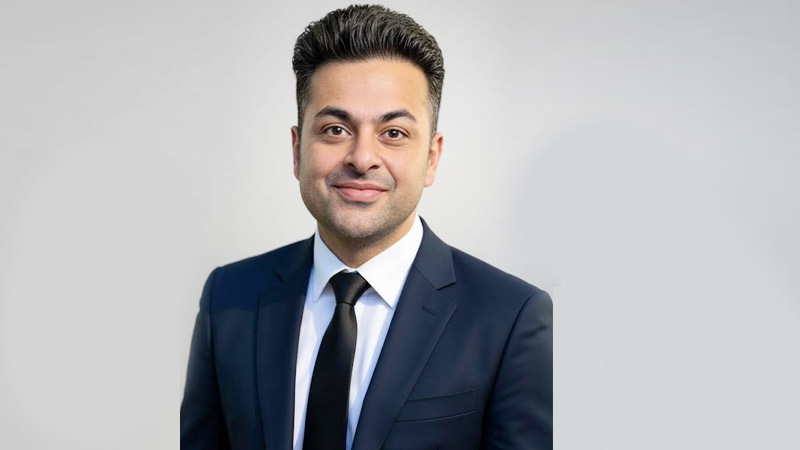
MUMBAI: Out-of-home ads were once the wallflowers of marketing seen by everyone, noticed by few. But in an age where attention has become the world’s most fought-over currency, even billboards are getting a brain upgrade. Enter LOC8, OSMO’s AI-powered attention engine, quietly reshaping the old OOH playbook by measuring not just who could have looked at an ad, but who actually did. The shift is subtle but seismic: impressions are out, impact is in and data, not gut instinct, is calling the shots.
In a landscape where marketers question every rupee spent outdoors, LOC8 is turning lampposts, flyovers and traffic islands into precision-mapped attention laboratories. By crunching dwell time, visibility zones, perceptual size and real-world obstructions, the platform is dragging OOH into a future where creativity meets computer vision and where the best ideas aren’t just eye-catching, but eye-measured. From automotive facelifts to FMCG novelty and real estate trust-building, the message is clear, outdoor has stopped shouting and started listening. Indian Television Dot Com explores more about it in an Interview interview with OSMO co-founder Nipun Arora.
On how OSMO is shifting outdoor advertising from a visibility-led medium to an attention-led one through LOC8.
Traditional OOH has long been measured by visibility and impressions i.e how many people could see an ad. OSMO, through its proprietary AI platform LOC8, is shifting that narrative more towards likelihood of being noticed. Using computer vision and machine learning, LOC8 analyzes real-world video data to measure visibility zones, obstructions, dwell time and perceptual size; bringing precision to how attention is quantified outdoors. It moves the focus from mere impressions to quality of impressions, making OOH a data-verified, attention-led medium comparable to digital in accountability.
On how marketers can use LOC8’s dwell-time, visibility and perception insights to craft more effective, emotionally resonant OOH campaigns.
LOC8 helps brands understand how people truly experience outdoor media how long they look, from what distance, and under what conditions. By quantifying dwell time, visibility duration, and perceptual size; marketers can plan campaigns that align with real human viewing behavior. This empowers creative and strategy teams to design emotionally resonant storytelling where messaging, visual hierarchy and placement are optimized for how people actually notice and process OOH creatives.
About what LOC8 has revealed through campaigns like Renault Triber and Namaste India on how categories such as auto, FMCG and real estate use attention metrics to drive outcomes.
Each category uses attention data differently but all share one common goal: to convert outdoor visibility into measurable engagement.
• Automotive | Renault Triber
For the new Renault Triber facelift, bold creative met data-led planning through LOC8. By analyzing on-ground video data, LOC8 measured real audience attention across placements factoring in visibility zones, obstructions, traffic speed and perceptual size. This enabled Renault to identify corridors that delivered maximum reach, saliency and engagement, optimizing media efficiency and ROI.
• FMCG | Namaste India
In OOH, innovation is the hook and assets are the bait. But bait often hides the hook. With Loc8’s attention metrics, we ensured the bait wasn’t a hurdle, rather it became the perfect stage for innovation to deliver its full impact! The insight proved that creative novelty, when validated by attention data, drives deeper engagement and measurable brand lift.
• Real Estate
For luxury and real estate campaigns targeting HNI/UHNI audiences, attention patterns differ especially between front and rear passengers, who are often the core audience segment for premium sites. LOC8’s ability to distinguish rear vs. front visibility plays a critical role here. It helps identify sites that offer longer viewing windows and stronger perceptual dominance from the rear seat where decision-makers are most likely seated making it a key differentiator for premium and trust-led categories. Together, these insights prove that auto optimizes for impact, FMCG for recall, and real estate for trust visibility showing how attention metrics adapt to category goals while ensuring measurable outcomes.
On how attention analytics will shape the future of brand storytelling and media planning as OOH becomes more digitised and data-driven.
As outdoor digitizes, attention analytics will inform not just where to advertise but how stories are told in public spaces. This evolution transforms OOH from a static broadcast channel into a dynamic attention ecosystem, where creativity is optimized through evidence-based insight.
On how LOC8’s data-led framework helps marketers quantify OOH impact and make outdoor a more accountable, ROI-driven medium.
LOC8 bridges the gap between intuition and evidence. By quantifying metrics like visibility duration, attention opportunity index, and visual saliency rank, it allows brands to benchmark site performance and justify investment. This data-led approach brings transparency, comparability and ROI measurement to a medium historically driven by perception.
On how OSMO ensures AI and computer vision enhance creativity rather than reduce it to numbers.
OSMO believes that technology should enhance creativity, not overshadow it. LOC8’s attention models reveal what naturally draws the human eye helping creative teams refine design cues, contrast, and visual hierarchy for greater impact. By merging art and science, LOC8 empowers creativity with intelligence.
About the creative best practices and design cues LOC8 has uncovered regarding what truly captures consumer attention outdoors.
LOC8’s visual cognition analysis has surfaced clear patterns across campaigns:
• High contrast and minimal messaging outperform cluttered designs.
• Motion cues draw significantly longer dwell times.
• The first two seconds are critical, creatives must establish focus instantly.
• Contextual alignment between the creative and its environment increases attention by over 30%.
These learnings offer a scientific foundation for creative effectiveness helping brands design OOH that’s visually magnetic and emotionally memorable.
On how attention metrics will integrate into omnichannel planning where OOH, digital and social work together for unified brand impact.
Attention can become the unifying KPI across OOH, digital and social to creates seamless storytelling continuity, where outdoor triggers digital engagement. The future of omnichannel planning lies in attention-led integration ensuring that campaigns don’t just reach audiences everywhere but truly capture and hold their focus.

Mukesh Ambani, Larry Fink come together for CNBC-TV18 exclusive

Nielsen launches co-viewing pilot to sharpen TV measurement

Netflix celebrates a decade in India with Shah Rukh Khan-narrated tribute film

Delhivery chairman Deepak Kapoor, independent director Saugata Gupta quit board

Meta appoints Anuvrat Rao as APAC head of commerce partnerships

Brnd.me enters Europe as haircare brands power global expansion

TechnoSport taps quick commerce with launch on Slikk’s 60-minute platform

These ’90s fashion trends are making a comeback in 2017
The final 6 ‘Game of Thrones’ episodes might feel like a full season
According to Dior Couture, this taboo fashion accessory is back
The old and New Edition cast comes together to perform
Phillies’ Aaron Altherr makes mind-boggling barehanded play
Uber and Lyft are finally available in all of New York State
Disney’s live-action Aladdin finally finds its stars
Mukesh Ambani, Larry Fink come together for CNBC-TV18 exclusive
Nielsen launches co-viewing pilot to sharpen TV measurement
Netflix celebrates a decade in India with Shah Rukh Khan-narrated tribute film
Delhivery chairman Deepak Kapoor, independent director Saugata Gupta quit board
Meta appoints Anuvrat Rao as APAC head of commerce partnerships
Brnd.me enters Europe as haircare brands power global expansion
TechnoSport taps quick commerce with launch on Slikk’s 60-minute platform
-
 News Broadcasting1 day ago
Mukesh Ambani, Larry Fink come together for CNBC-TV18 exclusive
-
 iWorld5 days ago
Netflix celebrates a decade in India with Shah Rukh Khan-narrated tribute film
-
 I&B Ministry3 months ago
India steps up fight against digital piracy
-
 iWorld3 months ago
Tips Music turns up the heat with Tamil party anthem Mayangiren
-
 MAM1 day ago
Nielsen launches co-viewing pilot to sharpen TV measurement
-
 iWorld12 months ago
BSNL rings in a revival with Rs 4,969 crore revenue
-
 MAM3 months ago
HoABL soars high with dazzling Nagpur sebut
-
 News Broadcasting2 months ago
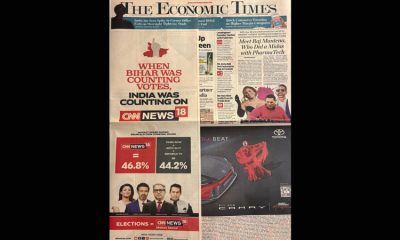
CNN-News18 dominates Bihar election coverage with record viewership
