
Film Production
Media education space in focus as industry biggies take aim

The Indian media and entertainment industry is expected to grow at 19 per cent compound annual growth rate to reach Rs 837.4 billion by 2010 from Rs 353 billion at present, says a study by FICCI and PricewaterhouseCoopers. As market analysts point out, one area, which is going to capitalise immensely on this expansion will be the media education sector.
 So, that explains the kind of boom that this particular stream of education has been witnessing since the last two years. Some of the listed media firms in the country such as Zee and B.A.G. have also chosen the occasion to explore the media education space while more players are gearing up to make their entries.
B.A.G. invested to the tune of Rs 120 million to launch its International School of Media and Entertainment Studies (iSOMES), Noida, in collaboration with Missouri School of Journalism, USA in August 2004. Zee Interactive Learning Systems Ltd (ZILS), the education arm of the Subhash Chandra-promoted Essel Group, launched its own media institute, the Zee Institute of Media Arts (ZIMA), in the same year in November on an initial investment of Rs 30 million.
 The latest to join the bandwagon is the Subhash Ghai promoted Mukta Arts Ltd which will unveil its Whistling Woods International Ltd (WWIL) in July this year. Mukta Arts has invested Rs 500 million to set up what it claims is Asia‘s biggest film, television, animation and media arts institute in Mumbai.
Balaji Telefilms is another player, which is seriously looking at the media education sector. According to market sources, the production house will be launching its institute in Pune within another year or two.
 |
|
B.A.G Film‘s iSOMES at Noida
|
Looking at the kind of investments made by these media firms on media education, the thought would occur that if they are considering the space as a natural extension of their main area of business. Does a firm hold on the media space and the right understanding of the industry enable them to give a better performance in this area? Are they able to translate the kind of talent accessible to improved business performance in the areas of production and broadcasting? How much does it help them to forget the worries of head-hunting for their own organisations? Are their final products competitive enough to survive in the uncertain industry (here films)?
“The media industry is now driven by the techniques of convergence and I would say a well-trained talent pool is the key for survival,” says B.A.G. Films promoter Anurradha Prasad. “Earlier, we used to hire fresh trainees and spend a lot of time and effort to get them equipped. Now, we are able to source well-rounded professionals from our institute and that helps our cause to an extent. It saves a lot of trouble because they are already trained. That way, the whole industry is also benefited.”
ZILS CEO Arun Khetan says his institute follows a standalone business model irrespective of Zee‘s interest in the broadcast business. “Irrespective of our parent company‘s interest in the broadcast business, we have access to all the major players in the industry,” he says.

Speaking on the advantages, Khetan adds it brings a certain kind of synergy into the business. “You can get the right kind of feedback on the programming and other areas from your student community. They can be very good critics. You can use this talent pool for your research as well.”
 Subhash Ghai‘s Mukta Arts has followed the theory that, expert knowledge should be passed on to the right hands. Explains Chaitanya Chinchlikar, who heads the marketing division of WWIL, on the rational behind Mukta extending to film education: “If one knows how to make a qualitatively good film and turn a profit while doing so, it would make sense to teach others how to do so.”
When queried on the kind of revenues that these initiatives chip into the kitty of their parent companies, the general feedback is that there is not much dependence as such for the initial years. “We are not looking at WWIL as a revenue resource at this point of time. The idea is to invest in quality education, which keeps up to the international standards, and boosts the whole industry by offering well-trained talents,” says Ghai.
Khetan reveals that, Zima was launched as a high level pilot project and major expansion plans are on the anvil. “We made an initial investment of about Rs 30 million to launch this project. Now the plan is to convert it as a complete academy through a gradual process of expansion. We are planning to pump in at least Rs 350 million more over a peiod of three years,” he says.
 |
|
WWIL dean Kurt Inderbitzinn
|
While Zima is mainly targeting Indian students, WWIL and iSOMES (remember the Missouri connection) keep an eye on the international aspirants as well. That fact is reflected in the fees structure that these institutes follow. Zima charges about Rs 150,000 for its one-year Diploma course in Television Direction, according to Khetan.
“While offering a competitive curriculum, we have also made it a point to attract the right Indian talent through an affordable fees structure. Presently we are not targeting international students,” says Khetan.
On the other hand, the two-year film direction course in WWIL costs about Rs 1 million. On an aggressive note — in order to attract global attention — WWIL has gone ahead and associated with most of the leading entertainment technology providers on the infrastructure front. The institute also has its dean in the internationally renowned film-television professional Kurt Inderbitzin.
“There is a clear lack of International level of technical expertise. Hence India falls behind in a truly global economy,” reasons Chinchlikar.
 At a time when media institutes mushroom as each and everyone – be it media firms, media personalities or independent aspirants – try a hand in the seemingly lucrative space, what should be the criterion for choosing an effective educational platform?
“I agree that lots of shops are being opened these days and they are charging some unbelievable amounts as fees. It is up to the aspirants to decide between boys and men. The criteria one should look at to choose an institute would be, exposure, experience and quality of curriculum. Work experience in a live environment is very important,” says Prasad.
So much said and done, there remains the most important element in any education – placements. Khetan feels that the television industry‘s growth in the recent past and the eagerness to rope in the right talent has boosted the placement side really well. “The concept of campus interviews is now gradually coming into this space. Well trained students will really benefit from this trend,” he says.
 |
|
Visualisation of the reception area at WWIL
|
“An Indian Film, TV, Animation & Media Arts institute having campus placements akin to MBA schools and Engineering colleges will be commonplace. The industry is hungry for professionally trained talent,” confirms Chinchlikar.
Prasad feels that this has become true to an extent for television, while it is not the same for film aspirants. “People who are trained in television-related streams are able to fetch jobs very easily and the payment is also decent. An assistant director earns in the range of Rs 12,000 to Rs 16,000 and that is not very bad if that person is a new entrant. However, it is still difficult in films,” says Prasad.
Film industry aspirants indiantelevision.com spoke to call for an organised professional set up to drive recruitments and a competitive payment structure. They feel that firms such as Zee, Mukta and B.A.G. should take an initiative in this regard. “If the industry is coming up with so many courses, the main question is – are they prepared to offer job and pay on merit? Or do they expect their students to work free-of-cost for them? Industry contacts should not be the criteria, but the right talent. Opportunities should be given on merit,” says a qualified film aspirant in condition of anonymity.
“It matters what training has been imparted to the student – students who are taught expired knowledge, will not be valued heavily in the industry, and hence will be paid less. Time will tell that well-trained, technically brilliant freshers will be able to command a much higher price in the market than their current peers,” Chinchlikar responds.
That seems a valid question and a valid explanation at a time the industry is witnessing an explosion of growth. However, lot would depend on how these companies plan their growth in this space.



MUMBAI: Balaji Telefilms has rolled out Hoonur, a dedicated talent management arm under its digital division, sharpening its push to build an integrated entertainment ecosystem spanning content, platforms and artists.
The new vertical is aimed at structured career development in an industry increasingly driven by digital reach, brand partnerships and multi-platform visibility. Hoonur will focus on long-term representation, strategic positioning and audience engagement for talent across broadcast and streaming formats.
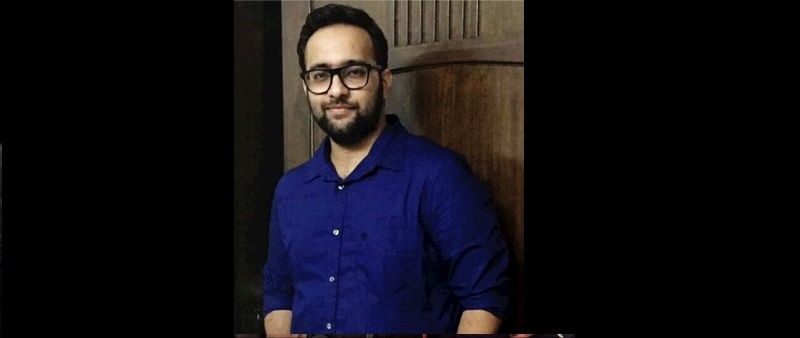
The initiative will be led by Mohammed Nagman Lateef, a talent strategist with more than 11 years of experience, who earlier founded Iconic Entertainment. His appointment signals a more organised, forward-looking approach to artist management within the Balaji Telefilms fold.
Balaji Telefilms joint managing director Ekta Kapoor, said, “At Balaji, we have always believed that every artist deserves the right environment to grow. Talent thrives when it is supported by a platform that understands its individuality and long-term potential. With Hoonur, we are creating a curated space where artists receive focused attention, strategic guidance, and opportunities that are aligned with who they are and where they can go. It’s about shaping meaningful journeys, not just managing assignments.”
Hoonur has already signed a diverse roster of television and digital stars, including Madalsa Sharma, Sahil Uppal, Rohit Chandel, Simba Nagpal, Tejasswi Prakash and Shubhangi Atre.
Several of its artists: Urvashi Dholakia, Ridhi Dogra, Shiv Thakre and Shiny Doshi, also feature in The 50, one of India’s most anticipated new reality television shows.
Balaji Telefilms chief revenue officer Nitin Burman, said the new vertical would enable closer collaboration between content, brands and platforms, placing talent at the centre of long-term partnerships and audience engagement strategies.
With Hoonur, Balaji Telefilms is doubling down on its integrated model, blending content creation, digital strategy and talent representation to shape the next generation of media stars.
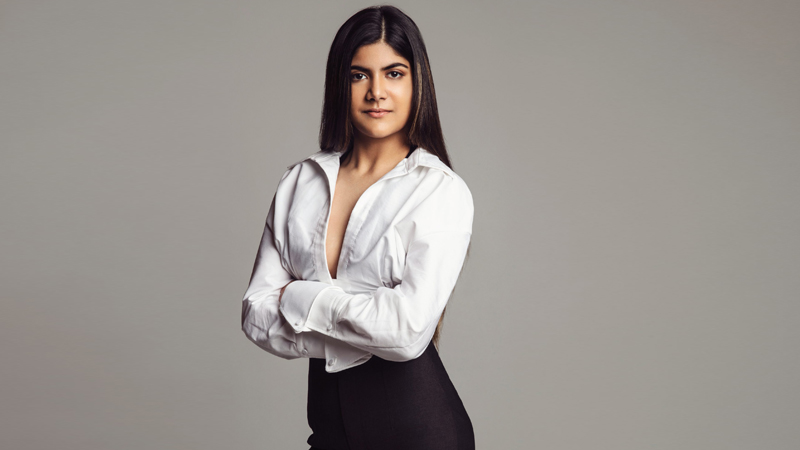
MUMBAI: Ananya Birla is rolling the camera on a new act. The entrepreneur and singer has launched Birla Studios, a film production house pitched at the sweet spot between artistic heft and box-office muscle, as India’s content boom lures fresh capital and ambition.
Based in Mumbai and launched in 2026, the studio sets out to produce high-concept, prestige-driven commercial cinema that pairs broad audience appeal with artistic distinction. The pitch is clear: culturally relevant stories, emotional immediacy and films designed to linger in the mind long after the credits roll.
Birla Studios will champion narratives that spark instant connection while offering long-term resonance. Its mandate blends creative ambition with commercial viability, alongside a stated commitment to nurture new talent and amplify fresh voices across genres.
The venture is rooted in Ananya Birla’s view of cinema as a serious medium of expression and influence, not merely spectacle. The studio positions itself as a platform for meaningful but widely engaging storytelling that mirrors contemporary cultural sensibilities.
“We are all stories. Cinema is one of the most powerful mediums through which those stories are told. At its most powerful, cinema creates an immediate connection while leaving a lasting resonance,” Ananya Birla said. She added that the focus is on curating a slate that balances cultural significance with strong entertainment value, while taking “a conscious stand to nurture new talent, explore genres, and amplify fresh voices and diverse perspectives”.
As the slate takes shape, she noted the “kindness and receptiveness” encountered across the industry, calling it a privilege to play even a small role in taking Indian cinema forward.
The content strategy is deliberately wide. Birla Studios is assembling a multi-language slate spanning Hindi, Gujarati and Malayalam films, alongside international English-language projects. The idea is to travel across regions, languages and borders rather than stay in one cinematic lane.
Genre is no barrier. The studio describes itself as genre-agnostic, backing stories with depth and commercial potential while prioritising craft, scale and careful execution. Details of specific projects remain under wraps, with announcements promised in the coming months.
India’s film business is in flux, with streaming platforms, pan-Indian hits and global audiences reshaping what travels and what sells. Into that churn steps Birla Studios, betting that stories with cultural specificity and universal emotion can do both.
The script, for now, is aspirational. The real test will be on screen. In a crowded market chasing the next big story, Birla Studios wants to make films that do not just open well—but endure.

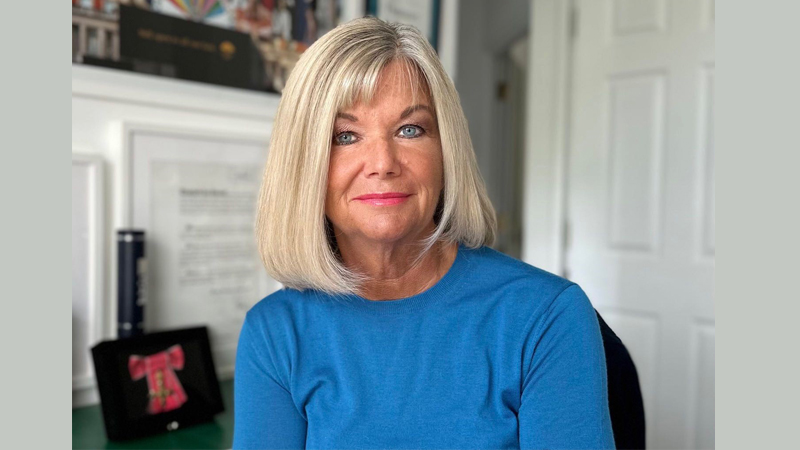
MUMBAI: Warner Bros Discovery has elevated Agnieszka Veriga, widely known as Aga, to vice president, program management for Apac global experiences, placing her at the helm of the company’s fast-expanding experiences business across the region.
Based in Dubai and working closely with teams across Asia Pacific, Veriga will lead Warner Bros Discovery’s portfolio of owned and licensed experiences. Her remit includes the Warner Bros Studio Tours in Tokyo and Shanghai, alongside shaping the company’s long-term growth strategy for experiences in Asia.
The appointment follows a landmark year in which Veriga worked closely with Sarah Roots to deliver the Harry Potter Studio Tour Shanghai project. Developed in partnership with Chinese hospitality major JingJiang, the project marked a major step in Warner Bros Discovery’s global experiences ambitions and stood out for its scale and complexity.
In her new role, Veriga will partner with Tony Qiu and the regional leadership team, focusing on strong programme delivery, clear governance and close collaboration across markets as the experiences portfolio continues to grow.
Veriga brings deep international experience to the position. Prior to joining Warner Bros Discovery, she served as director, strategic project management and business operations for Asia at Paramount, where she led major transformation initiatives and played a key role in launching Paramount Plus in South Korea and Japan. Her earlier career spans senior strategy and operations roles across Asia, Europe and the Middle East within the Discovery ecosystem and beyond.
Sharing the news, Veriga said she was grateful for the trust and support she has received and excited about what lies ahead. With studio tours and immersive entertainment gaining traction across Asia, her expanded mandate signals Warner Bros Discovery’s intent to scale experiences with precision and pace.



MIB sets OTT accessibility rules, mandates captions and audio description

Boney Kapoor acquires remake rights of Tamil political satire Thalaivar Thambi Thalaimaiyil

Netflix India names Rekha Rane director of films and series marketing

Zabeen signs off from TV9 after shaping the network’s public voice

Dhawan steps up to bat for Delhi’s grassroots sports push

Orient Beverages pops the fizz with steady Q3 gains and rising profits

Cheekatilo shines in the dark with record debut on Prime Video

Swiggy Instamart’s GOV surges 103 per cent year on year to Rs 7,938 crore

These ’90s fashion trends are making a comeback in 2017
The final 6 ‘Game of Thrones’ episodes might feel like a full season
According to Dior Couture, this taboo fashion accessory is back
The old and New Edition cast comes together to perform
Phillies’ Aaron Altherr makes mind-boggling barehanded play

ATN International brings ATN Bangla to Canada
MIB sets OTT accessibility rules, mandates captions and audio description
Boney Kapoor acquires remake rights of Tamil political satire Thalaivar Thambi Thalaimaiyil
Netflix India names Rekha Rane director of films and series marketing
Zabeen signs off from TV9 after shaping the network’s public voice
Dhawan steps up to bat for Delhi’s grassroots sports push
Orient Beverages pops the fizz with steady Q3 gains and rising profits
Cheekatilo shines in the dark with record debut on Prime Video
-
 e-commerce1 month ago
Swiggy Instamart’s GOV surges 103 per cent year on year to Rs 7,938 crore
-
 iWorld1 year ago
Kuku TV transforms India’s OTT space with vertical microdrama boom
-
 News Headline1 year ago
TRAI puts a ‘stop’ to unsolicited calls and messages
-

 News Headline2 months ago
From selfies to big bucks, India’s influencer economy explodes in 2025
-
 Comedy2 years ago
Taarak Mehta Ka Ooltah Chashmah celebrates 4,000 episodes
-
 MAM2 years ago
OpenAI joins C2PA steering committee
-
 News Headline2 years ago
Odisha to host Ultimate Kho Kho Season 2 from December 24
-
 News Headline1 year ago
Abhishek Bachchan joins as co-owner of European T20 Premier League


