
Comment
May be news channels also need a disaster management plan

Sad but true. Moving from the regular mundane breaking news; it is natural calamities, war and violence that make for classic ‘live news’ TV drama. No, I am not saying news channels exactly look forward to deluge and devastation but they definitely thrive on tragedies for viewership and reach.
Also, what better opportunity for hungry and adrenaline charged TV crews to prove themselves. A real testing time to showcase their skills, be first with the news, get the best footage, look for human interest stories and of course provide the real link between the junta and the government.
Last week’s ‘Terrible Tuesday’ provided exactly this opportunity for news channels. As the God’s went crazy and the monsoon fury brought life to a standstill in Mumbai, channels tried their best to be first off the block. And since then, till yesterday perhaps, there hasn’t been anything else to watch for on news channels.
So, coming to the moot point, how did the channels fare last week; as they went about covering the floods, death and destruction?
Though I missed the initial part of the coverage on Tuesday night (I was also stuck on the roads), going by the next day’s footage it looked as if just like the ‘aam junta’, the channels and reporters too were caught unawares and panic struck. One got to see the same footage almost on all the channels, with people braving the weather and chest deep water desperately trying to get home, upturned vehicles, etc.

Then there were the regular stories, of course, which brought out the plight of people across the city and the total breakdown of the administrative machinery. Most of the channels had stories revolving around people stranded at airports, flights being cancelled, trains not working and how the government was doing nothing to help the citizens. At this stage, the real job was dissemination of the right information to viewers; of which a clutch of channels did do a fairly good job. There were phone-ins, studio based anchor shows and some over-excited reporters doing their PTCs.
The differentiators in the reportage were mostly in terms of presentation and scripting really to break the clutter and conformity. So, while Aaj Tak had a plasma screen explaining the `dehsat’ the Mumbai rains had caused, NDTV had Baarish ka kahar, Zee Marathi Nako Nako Re Paaus.
Though, one didn’t really get to see too many of the reporters braving the weather or taking risks to get on to some different stuff. But, then this could also be because of the geographical constraints. The geographical reach of the disaster, coupled with lack of road access to some of the worst-hit areas, made it one of the most challenging assignments to be undertaken.
But one expected the stories to move on by Thursday and Friday. More of human interest stories, point to point coverage of different areas, more matured and in-depth stories; but instead what one got was the old footage being recyled with studio news. Harried reporters thrusting microphones at wailing people and trying to get their comments. There were repeats of old footage and sound bytes which sort of gave a slightly skewed picture of the whole situation. So, while you had a reporter actually saying that the situation was getting under control the picture that went with the story gave a different picture.
Regional channels score
Here somehow the regional channels ETV Marathi, Zee Marathi, and Sahara Samay Mumbai (in that order) scored above the others. There were reports from places like Panel, Raigad, Thane, which most of the national networks didn’t devote much attention to. This probably could also be because of the fact that most of the channel offices are on the Western lines. From the mainline news channels what one got to see as far as panoramic coverage was concerned were aerial shots.
At times, the basic dictum followed by most channels seemed to be to give the stories and be finished with it. To point out a few glitches, not a single channel got down to really explaining the real geographical structure of Mumbai to the outside world. Now, what sense would places like Sion, Thane, Kalina or Dahisar make to the outside world? Here, perhaps channels need to take cues from the likes of BBC World and CNN.
As the story moved on over to the weekend, when most of us thought things were coming to normal; channels focused on creating sensitivity across the country and to undertake the right relief measures to help those who were affected by the disaster.
But then the rain gods unleashed their fury one more time on Sunday and Monday. And this time around, most of the channels stayed on with the old news and carried it forward with the newer events. But it was unfortunate that over the whole of last week there were rare instances of reportage that really rose above the predictable.
So, does the coverage of the calamity show a tale of progression for the news channels or for the television industry? I think this is really the second phase of the industry where the channels have increased in numbers and so have the stories. But, the depth and the quality of news leave much to be desired. There’s definitely a need for more trained broadcast journalists who can get on with their jobs when a calamity strikes.
So, as the Maharashtra government gears up for a disaster management plan, it’s also time perhaps for news channels to get their act together; considering in the coming years they could well be setting the agenda for the nation.



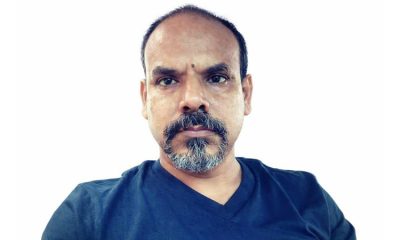



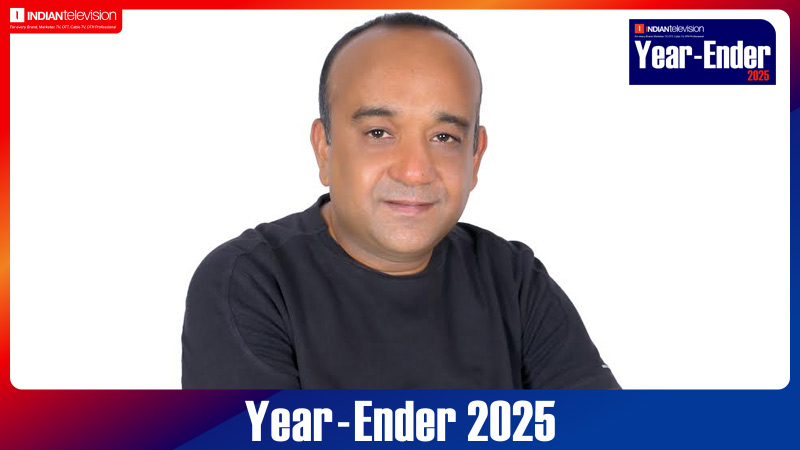
MUMBAI: 2025 will be remembered as the year India’s OTT industry stopped chasing scale for its own sake and began reckoning with how audiences actually consume content. Completion rates fell, patience wore thin and the limits of long-form excess became impossible to ignore. In this guest column, Pratap Jain, founder and CEO of ChanaJor, traces how micro-drama moved from the fringes to the centre of viewing behaviour, why short-form fiction emerged as a retention engine rather than a trend, and how platforms that respected time, habit and emotional payoff were the ones that truly grew up in 2025.
If there is one thing 2025 will be remembered for in the Indian OTT industry, it’s this: the industry finally stopped pretending.
Stopped pretending that bigger automatically meant better.
Stopped pretending that viewers had endless time.
Stopped pretending that scale without retention was success.
What began as a quiet reset in 2023 and a cautious correction in 2024 turned into a very visible shift in 2025. Business models matured. Content strategies tightened. And most importantly, platforms started aligning themselves with how Indians actually watch content, not how the industry wished they would.
At the centre of this shift was micro-drama—not as a trend, but as a behavioural inevitability.
When OTT finally understood the time problem
For years, long episodes were treated as a marker of seriousness. A 45–60 minute runtime was almost a badge of credibility. Shorter formats were pushed to the margins, labelled as “snack content” or “mobile-only.”
That belief quietly collapsed in 2025.
What platform data showed very clearly was not a drop in interest—but a drop in patience. Viewers weren’t rejecting stories. They were rejecting commitment.
Across platforms, the same patterns appeared:
* First-episode drop-offs on long-form shows kept increasing
* Completion rates continued to slide
* Viewers were sampling more titles but finishing fewer
At the same time, shows with episodes in the six to 10 minute range started showing the opposite behaviour: higher completion, higher repeat viewing, and stronger daily habit formation.
Micro-drama didn’t win because it was short. It won because it respected time.
Micro-Drama didn’t arrive loudly. It took over quietly.
There was no single moment when micro-drama “launched” in India. It crept in through dashboards and retention charts.
By mid-2025, it was clear that viewers were happy watching four, five, sometimes six short episodes in one sitting—even when they wouldn’t finish a single long episode. Romance, relationship drama, slice-of-life conflict, and grounded comedy worked especially well.
This wasn’t disposable content. It was compressed storytelling.
In shorter formats, there was no room for indulgence. Every episode had to move the story forward. Weak writing was punished faster. Strong writing was rewarded immediately.
Micro-drama raised the bar instead of lowering it.
Where ChanaJor naturally fit into this shift
ChanaJor didn’t pivot to micro-drama in 2025 because the market demanded it. In many ways, the platform was already built around the same viewing behaviour.
From the beginning, ChanaJor focused on short-to-mid-length fictional stories that felt close to everyday Indian life—hostels, rented flats, office romances, small-town relationships, young people figuring things out. Stories that didn’t need heavy context or cinematic scale to connect.
What worked in ChanaJor’s favour in 2025 was clarity:
* A clearly defined audience
* Tight episode lengths
* Storytelling that prioritised emotion and pace over spectacle
While several platforms rushed to copy global micro-drama formats, ChanaJor stayed rooted in familiar Indian settings and conflicts. That familiarity mattered. Viewers didn’t have to “enter” the world of the show—it already felt like theirs.
Why audiences started responding differently
One of the biggest misconceptions going into 2025 was that audiences wanted shorter content because their attention spans had reduced. That wasn’t entirely true.
What viewers actually wanted was meaningful payoff per minute.
On platforms like ChanaJor, episodes didn’t waste time setting the mood for ten minutes. Conflicts arrived early. Characters were recognisable within moments. Emotional hooks landed fast.
A typical consumption pattern looked like real life:
* One episode during a break
* Two more before sleeping
* A few the next day
This is how viewing habits are built—not through marketing spends, but through comfort and consistency.
Viewers came back not because every show was a blockbuster, but because they knew what kind of experience to expect.
2025 was also the year OTT faced business reality
The other big change in 2025 was on the business side. Subscriber growth slowed. Discounts stopped hiding churn. Customer acquisition costs rose.
Platforms were forced to ask harder questions:
* Are viewers finishing what they start?
* Are they returning without reminders?
* Is this content worth what we’re spending on it?
This is where micro-drama began outperforming expectations. A well-written short series could deliver sustained engagement without massive budgets. It didn’t peak for one weekend and disappear—it stayed alive through repeat viewing.
Platforms like ChanaJor benefited because they weren’t chasing inflated launch numbers. The focus was on consistency and retention, not noise.
Failures Became Visible Faster
2025 also exposed weaknesses brutally.
Several platforms assumed micro-drama was a shortcut—short episodes, quick shoots, instant traction. What they discovered was that bad writing fails faster in short formats than in long ones.
Viewers dropped off within minutes. Episodes were abandoned mid-way. Weak stories had nowhere to hide.
Micro-drama didn’t forgive laziness. It amplified it.
The platforms that survived were the ones that treated short storytelling with the same seriousness as long-form—sometimes more.
OTT Stopped Chasing Prestige and Started Chasing Habit
Perhaps the most important shift in 2025 wasn’t technical or creative—it was psychological.
OTT stopped trying to look like cinema. It stopped chasing validation through scale and awards alone. It began behaving like what it actually is in people’s lives: a daily companion.
Platforms like ChanaJor found their space here because that mindset was already baked in. The goal wasn’t to dominate a weekend launch. It was to quietly become part of someone’s everyday viewing routine.
That shift changed everything—from release strategies to how success was measured.
What 2025 Ultimately Taught the Industry
By the end of the year, three truths were impossible to ignore:
* Time is the most valuable thing a viewer gives you
* Retention matters more than reach
* Format must follow behaviour, not ego
Micro-drama didn’t take over because it was fashionable. It took over because it fit real life.
Looking Ahead
Micro-drama is not replacing long-form storytelling. It is redefining the baseline of engagement.
Longer shows will survive—but only when they earn their length. Short-form fiction will continue to evolve, becoming sharper, more emotionally confident, and better written.
Platforms like ChanaJor have shown that it’s possible to grow without shouting—by understanding the audience, respecting their time, and telling stories that feel real.
2025 wasn’t the year OTT became smaller. It was the year it became smarter.
Note: The views expressed in this article are solely the author’s and do not necessarily reflect our own.
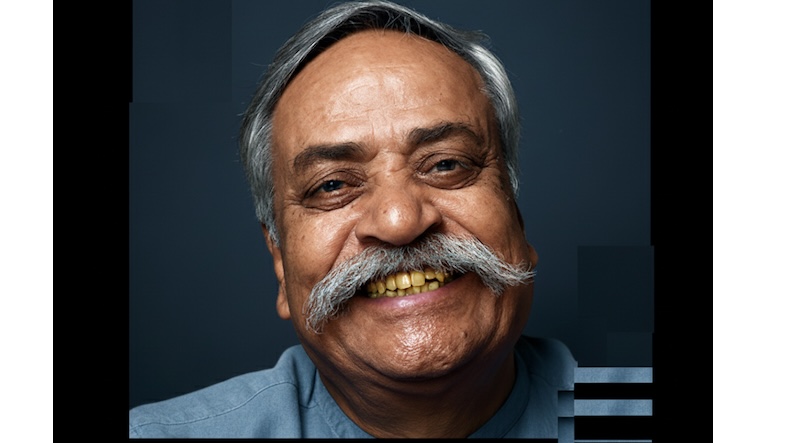
MUMBAI: The lights went out on Indian advertising this Diwali. Piyush Pandey, the wordsmith who turned bus rides and roadside tea into unforgettable campaigns, died on Friday aged 70. Just four months earlier, at the Emvies awards in Mumbai, veterans had touched his feet for blessings while young hopefuls queued for selfies. He looked frail but smiled through every encounter. Humility was his signature; genius was his secret.
Pandey never claimed special talent. His gift was simpler and rarer: he kept his eyes open. The famous Fevicol advertisement—a Jaisalmer bus groaning under passengers clinging to every inch—came from a real sighting. The magic was slapping a Fevicol poster on the back of the bus. “Keep your eyes open, keep your ears to the ground and have a heart willing to accept,” he told newcomers at Ogilvy. It wasn’t a slogan. It was scripture.

He joined Ogilvy & Mather in 1982 at 27, after failing at cricket, tea tasting and construction. When Mani Iyer, who headed the agency, introduced him to me as creative director in the late 1980s, Pandey’s deep, soft voice belied a fierce passion for the craft. Like Roda Mehta, who ran media at Ogilvy, he was generous with his time, patiently explaining the thought behind many a campaign to me. Those campaigns moved hundreds of thousands of crores worth of products off shelves over their lifespans.
His method was observation turned into emotion. The Dum Laga Ke Haisha Fevicol spot was originally made for a smaller brand called Fevitite. The Parekhs, who owned Pidilite, told him the ad was too good to waste. Reshoot it for Fevicol, they urged. He did. That single decision spawned a series of award-winning campaigns and turned Fevicol into the category itself.
His philosophy was disarmingly simple: love life. “Whether you are sipping tea from a roadside vendor or in a five-star hotel, whether you are travelling by second class or in a Mercedes-Benz,” he would say. Great ideas came from loving all of it—the chaos, the mundane, the sublime. “Be open to accepting ideas from the world. Be open to sharing ideas with the world. Learn to talk but most importantly also learn to listen.”
 Pandey despised lazy advertising. Technology for its own sake was pointless; celebrities without ideas were useless. “Many TVCs are pathetic these days when they use celebrities. They are made very lazily,” he once said. For him, the idea came first. Technology could enhance it; fame could amplify it. But without a core truth, it was just expensive noise.
He believed consumers, not suits or pony-tailed creatives, made advertising great. “It’s when he or she accepts the product and emotionally bonds with it, the product becomes a brand,” he said. His advice to brand managers was blunt: stop being salesmen. Build brands, not just products.
I lost touch with him for decades as I went about building the indiantelevision.com group and all its ancillary services. Journalism and writing as I used to practice when I was younger was relegated to the background. It was during the pandemic that I reached out to him and requested him to spare some time for an online interview. To my surprise, he remembered me and he readily agreed. It was an interesting conversation about how Ogilvy was serving clients during the pandemic and how its creative edge was being maintained. We had agreed we would speak for 30 minutes, but the conversation went on for an hour. It was peppered with Pandey-isms. But that was the last time we spoke at length to each other, though we said hello to each other at advertising industry get-togethers which I rarely attended. Sadly, for me.
The man who taught India to watch, listen and love has gone silent. But his voice echoes still—in every vernacular tagline, every slice-of-life commercial, every campaign that dares to see India as it truly is. Pandey didn’t just sell products. He gave an entire nation permission to speak in its own accent, to find poetry in the everyday, to believe that the roadside and the boardroom could meet and make magic.
The lights dimmed this Diwali, but the spark he lit—built on observation, fuelled by empathy, sustained by love—will burn for generations. That’s not advertising. That’s immortality.
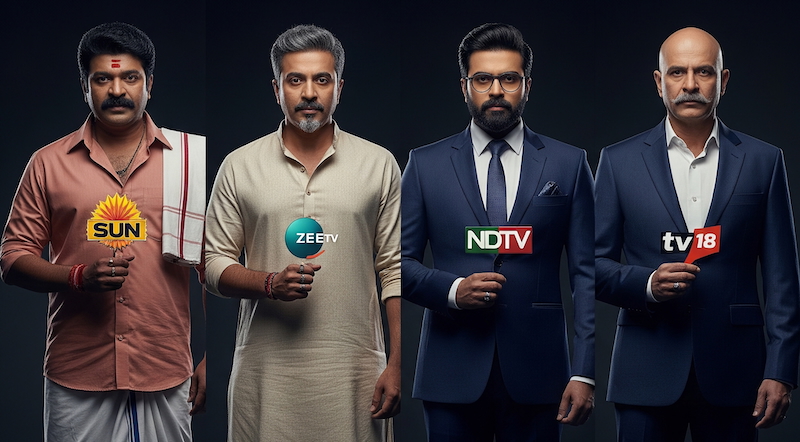
MUMBAI: Once, they blazed across the Indian media landscape with the swagger of pioneers. Entrepreneur-led behemoths like Subhash Chandra’s Zee Entertainment, Kalanithi Maran’s Sun TV, Prannoy Roy’s NDTV, and Raghav Bahl’s Network18 weren’t just market leaders — they were institutions, holding their own even as foreign giants circled hungrily.
Today, those stars are fading. Some have already fallen.
Network18 and TV18 are now firmly in the grip of Reliance Industries and Disney Star. NDTV, long a bastion of editorial independence, is under the control of the Adani Group. Its founders — Roy and Radhika — have exited stage left, their names now relics of an era that once prized journalistic idealism.
Zee, once the crown jewel of Indian broadcasting, is barely hanging on. The Chandra family — once majority owners — now clutch a meagre four-odd per cent stake. It’s a dramatic fall from grace fuelled by Subhash Chandra’s ill-advised adventures into infrastructure. To bankroll these forays, he pledged Zee shares, opening the gates to lenders who came calling. The result: a sharp dilution of promoter ownership and a credibility crisis. The failed merger with Sony’s Indian arm, Culver Max Entertainment, only added insult to injury — scuppered reportedly due to concerns about Zee’s financial hygiene. A company once viewed as squeaky clean had its reputation muddied.
Sun TV, the fourth of the old guard, is also showing cracks. Helmed with iron discipline by Kalanithi Maran, it long stood as a symbol of stability. But the facade is now under strain. A family feud has burst into public view, with brother Dayanidhi Maran accusing Kala of wresting control of Sun TV through backdoor share acquisitions. Legal notices have flown, regulatory filings issued, and the company insists all was above board. Still, some reputational damage has been done — and the gossip mills are churning.
The result is a media map being redrawn in real time. Where once these founders shaped the narrative, today they’re either sidelined, embattled, or ousted. And as corporate titans and conglomerates take over, the question is whether passion-led media can survive in an era of balance sheets, bottom lines, and boardroom power plays.
India’s media isn’t short on ambition. But nostalgia alone won’t stop the sun from setting on yesterday’s giants.



MIB sets OTT accessibility rules, mandates captions and audio description

Boney Kapoor acquires remake rights of Tamil political satire Thalaivar Thambi Thalaimaiyil

Netflix India names Rekha Rane director of films and series marketing

Zabeen signs off from TV9 after shaping the network’s public voice

Dhawan steps up to bat for Delhi’s grassroots sports push

Orient Beverages pops the fizz with steady Q3 gains and rising profits

Cheekatilo shines in the dark with record debut on Prime Video

Swiggy Instamart’s GOV surges 103 per cent year on year to Rs 7,938 crore

These ’90s fashion trends are making a comeback in 2017
The final 6 ‘Game of Thrones’ episodes might feel like a full season
According to Dior Couture, this taboo fashion accessory is back
The old and New Edition cast comes together to perform
Phillies’ Aaron Altherr makes mind-boggling barehanded play
Uber and Lyft are finally available in all of New York State
MIB sets OTT accessibility rules, mandates captions and audio description
Boney Kapoor acquires remake rights of Tamil political satire Thalaivar Thambi Thalaimaiyil
Netflix India names Rekha Rane director of films and series marketing
Zabeen signs off from TV9 after shaping the network’s public voice
Dhawan steps up to bat for Delhi’s grassroots sports push
Orient Beverages pops the fizz with steady Q3 gains and rising profits
Cheekatilo shines in the dark with record debut on Prime Video
-
 e-commerce1 month ago
Swiggy Instamart’s GOV surges 103 per cent year on year to Rs 7,938 crore
-
 iWorld1 year ago
Kuku TV transforms India’s OTT space with vertical microdrama boom
-

 News Headline2 months ago
From selfies to big bucks, India’s influencer economy explodes in 2025
-
 News Headline1 year ago
TRAI puts a ‘stop’ to unsolicited calls and messages
-
 Comedy2 years ago
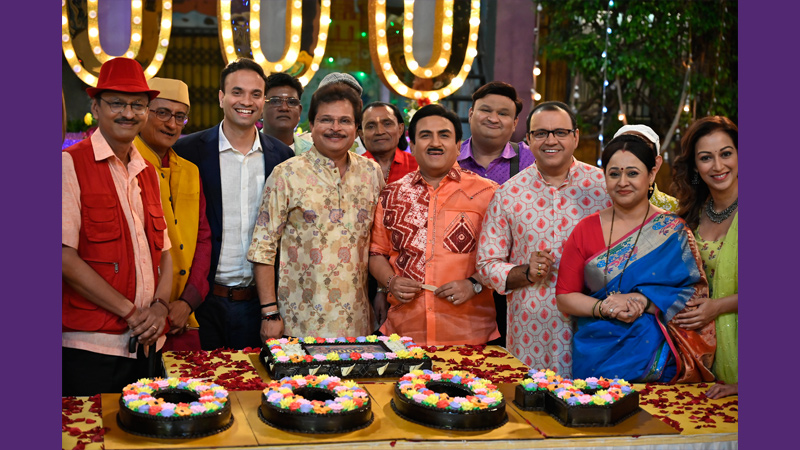
Taarak Mehta Ka Ooltah Chashmah celebrates 4,000 episodes
-
 MAM2 years ago
OpenAI joins C2PA steering committee
-
 News Headline1 year ago
Abhishek Bachchan joins as co-owner of European T20 Premier League
-
 News Headline2 years ago
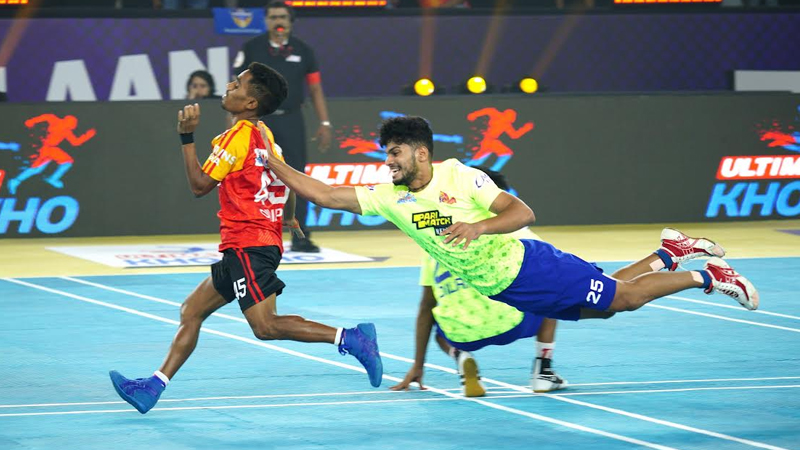
Odisha to host Ultimate Kho Kho Season 2 from December 24


