
News Broadcasting
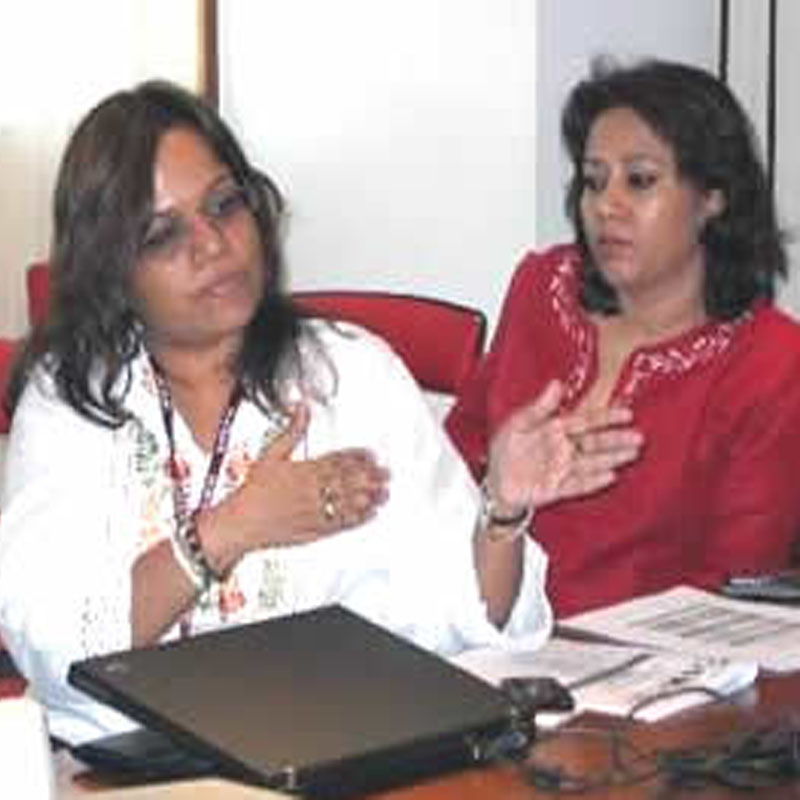
Madison Media Group CEO Punitha Arumugam.

Life is not measured by the number of breaths you take, but by the moments that take your breath away.
It is a brave and determined person who decides to move out of his or her comfort zone into a job having a profile alien to him or her. And in the competitive world of media and advertising it requires steely courage. But there are many who do so and the net benefit for them: a more rounded view of the industry.
Take, for example, Punitha Arumugam, the CEO of the Sam Balsara- founded Madison Group, arguably one of the three most powerful media agencies in the country. Punitha – as everyone calls her – has switched from being a media planner to managing the business of media and advertising, and so far, she has enjoyed the journey, smooth or bumpy, to the hilt.
In 1990, she joined O&M (Chennai) as a trainee, moved to Lintas’ Initiative Media soon after as media manager and moved out as media director. Then she joined Madison as Media Services director (West) in 2000, and in a six year span, has risen from COO (West) to CEO (West) and is currently Group CEO for all India.
Early Years in Media
Born, raised and educated in Chennai, Punitha’s father was in business and her mother is a housewife. She completed her graduation in BSC (Physics) and went on to study management from Madras University. Punitha started work in media right from the start and adapted to it like a fish to water. While doing her MBA, she was assigned a summer project with Chennai- based ad agency RK Swamy and it was there that her tryst with advertising began. She hopped on to O&M on completing her education and stayed on there for a full five years soaking up all she could in her media planning job, even though her heart was in servicing.

“I realized that I liked advertising – primarily its servicing aspect. But, back then, the opportunities were rare for servicing and I joined the agency hoping to get a backdoor entry into servicing,” says Punitha.
 The protective environment at O&M gave her ample scope to learn the fundamentals of media. Says she, “O&M groomed me”.
She recalls working on some small accounts. The head of O&M Chennai R. Lakshminarayan taught her one important lesson. “I learnt from him how simplicity works and arrogance does not, however brilliant you may be at your job.”
But, after four-five years, the sense of security at O&M was a little stifling. “One just felt protected from harsh realities.”
A call from the head of Lintas Chennai, came through, dangling an opportunity to get rid of the ennui that was creeping in. She grabbed it with both hands. In those days Lintas was the agency of choice for many; the experience of working in a larger role with a larger agency was something very few could say no to. With the proliferation of media outlets and increasing spread of satellite television, the media planner/buyer was coming even more centrestage in advertising as compared to earlier. And Lintas’ was at the cutting edge of media. Agencies had started setting up specialist media units to service growing client budgets effectively. The disintermediation of media was just about beginning.
“I was raring to test new waters, so moved to Lintas as media manager,” she recollects.
The water proved testing indeed as the culture in Lintas was very different from the one she had been used to. There was a lot of new learning, and some unlearning too. “I was thrown into the waters and had to learn to swim. I learnt how to service a client at Lintas,” she says.
By nature, Punitha is unafraid to push the boundaries. She has all the qualities needed to be a successful media planner: strategic understanding, ability to grasp industry knowledge and expertise across all media. Additionally, over the years she has developed a comprehensive understanding of marketing communications which can be effectively translated into developing media goals, objectives and strategies.
Punitha moved to Bangalore from Chennai solely because the latter had limited clients, whereas Bangalore offered much more in terms of learning experience and growth. She started in Lintas’ Initiative Media handling the Britannia account; five years later when she moved out she was heading the Bangalore office.
It was the first time that she was handling sizable accounts. And she climbed steeply up the learning curve. She explains: “Britannia was a favourite client. I learnt a lot from Sunil Alagh, Vikram Kaushik, Atul Sinha and many others there.”
She recalls an incident. “The team had prepared a huge presentation to convince Alagh not to associate with a program titled “Britannia All The Best” as it was not working. But, even before he saw the presentation, he asked us, ‘Give me an option if we aren’t using this.’ And, I had no answer. We had been so busy trying to convince him to disassociate, that, we realised that there is no point in highlighting a problem without having a solution in hand.”
 She adds: “I came into my own handling the Britannia account. I got great work done in terms of strategy and media innovations. And, after that it was sheer word of mouth from people who worked with me, my clients and the media sellers who made me known in the industry.”
She decided to quit when Lynn DeSouza moved out of Initiative Media. She explains: “I look upon her as my godmother. I idolize and worship her and I felt unsettled when she left.”
Plus, Punitha felt she had nothing more to offer or do in Bangalore, so the move to Mumbai was inevitable.
“In Mumbai, I joined Carat for a month and then had a call from Sam Balsara and moved to Madison.” Her enthusiasm for the medium made her the “perfect” choice when Balsara needed someone as Media Services director (West) and Arumugam joined Madison in 2000.
She elaborates: “Generally, the skills needed are quite different. Media agencies demand individuals who are strategic thinkers, diplomatic and prepared to work long hours. And those employed by media owners tend to enjoy a sales-based environment, like to see quick results for their efforts, and will usually earn more money.”
Madison
 Punitha talks at breakneck pace, barely pausing for breath, whether she’s discussing the controversial subject of commissions or winning at Cannes.
“My growth in Madison has been phenomenal and the learning has not stopped,” she points out. At Madison, all the pitches that she led and won have made people take notice of her. “When I joined, the Mumbai office was just handling Godrej and Proctor & Gamble. Today, we have most of the blue chip accounts like Asian Paints, Cadbury’s, Essel Group, TVS, Tata Tea, General Motors, Mother Diary, Mcdonalds, Marico, Airtel, Tata AIG, Radio Mirchi, Kotak among many others.”
Punitha has helped Madison Media grow more than treble in growth from a mere Rs 3 billion in billings to Rs 10 billion in the space of just five years.
“When I first joined, we were concentrating on consolidating our current businesses like Procter & Gamble, Coke and Godrej, then over a period of time realized that we need to grow. So, we focused on new businesses and started participating in pitches. We had to grow for our own learning experience and as a confidence building measure for our existing clients.”
This passion for looking after advertisers’ interests has an air of poacher turned gamekeeper about it, given her time on the agency side of life. There’s no doubt however, that it has given her a keen understanding of the industry, and she still tries to bring that “service” aspect to Madison.
She agrees that the best thing about agencies is that one is surrounded by very bright people and one gets to see the thinking that goes on behind different clients. On her achievements in Madison, she says, “Retaining our existing clients and keeping them happy is my first achievement. When we grow, we tend to lose perspective of all who help us in our initial stages, and it’s all because of the client one expects to gain in the future. For me, it is important to hold on to our current businesses as we grow.”
 Considering her current job as her ideal job, she says, “Work is the only thing that matters to Sam. Managing this organization is great as it’s a place of great integrity. There is no conning, inside and outside the system, neither with clients. When one works in such an healthy environment where there is no politics and no pressures to make money at the cost of someone else, and, all we need to know is how to do a good job, there is very little scope of going wrong.”
Says she, “The toughest part about becoming senior is having to let go of the fun that one gets when you handle the nitty-gritties of media planning and buying on a client… I would rather be a media planner than a CEO at heart… but, guess one needs to move up to let others who work with you grow. Even today, the toughest thing for me is to let someone work on a presentation or plan or analysis instead of pulling it and doing it myself.”
Punitha has been ranked amongst the top ten influential persons in media for the last two years in The Brand Equity Agency reckoner. Her motto for success is straightforward. She says: “Apart from working hard, we don’t play games. As a corporate philosophy, we don’t pitch with rates. We work within a set framework and at times, and we often refuse clients whose philosophy and expectations are so different from ours. She gives importance to honesty and fairness and strongly believes in “letting others around you succeed and grow so that you automatically grow.” And to keep herself on her toes, she surrounds herself with people who challenge her.
 “I am very clear that if I am in the agency business in India, then there is no place to be in other than Madison,” says Punitha emphatically.
Among her best moments so far, she says, “Not losing a business that I have directly worked on and winning the Media Lions at the Advertising Festival in Cannes this year. But, I think, managing people, clients, media owners and egos everyday and being able to deliver to keep them happy is a constant high by itself.”
She admits that days of being a complete workaholic and leaving office at 2-3 am are a rarity as she makes it a point to leave office at 7 pm to make time for family and friends. Says she: “Lynn used to always say that as great it is to have a career, its that important to have other interests, too.”
On decisions at a career level, she says, “Sam did offer me the opportunity to head Madison (all India) a few years back when CVL Srinivas had left. But, I took the decision of not going for it, as I felt I was not ready for it and thought it was not in the larger interest of the organisation. So, we gave others in our system the opportunity to grow up to that level. As tough a decision it was for my personal career, but, I think looking back it was the right decision, as today, I am a better professional and Madison a stronger organisation because of it. Sam and I have always been able to discuss anything.”
And, speaking of lessons learnt dealing with clients, Punitha says, “At times when a client was being unreasonable I took a stance so that it become confrontational. Over the years, I have realised that one must never reduce any situation to a confrontation but always make it a dialogue.”
Any career decision is a combination of personal, business and timing issues. She believes there are benefits in working both sides of the fence. Punitha sums up her experiences in all three agencies as having “learnt media basics” in O&M, “learnt to manage media and clients” at Lintas and “learnt to manage a business” at Madison.
 Punitha considers herself lucky to have worked with the best media minds in India like Roda Mehta, Lynn Dsouza, Ambika Srivastava, and now Sam Balsara. She holds them in high respect and speaks of what she has learnt from them.
Roda Mehta: “Everybody looked up to her. I never really worked with her except when I was sent to Mumbai for a training session and I was exposed to her style of working. “
Lynn DeSouza: “The credit of my becoming the media professional I have solely goes to her. She gave me tremendous freedom. She was always there when if a problem arose. “
Ambika Srivastava: “I admire Ambika’s analytical skills.”
Sam Balsara: “He has taught me to be a great manager. One can’t ask for a better boss. There are no secrets between us. He would never take a step concerning me without taking me into confidence and likewise, I trust him with everything. Madison matters to both of us and we both work to see it grow.”
She lists a few current issues that are on top of her agenda:
- Paucity of people: To overcome this, we go to institutes and recruit freshers as trainees.
- Data vs Instinct: Too much dependence on data that we are losing our instincts.
- Break boundaries: There is a sense of doing the same thing better and better over the years instead of attempting to do them differently. We need to create a competitive difference that works in the market as media plans across agencies have all started looking similar.
- Breaking the 3.5 per cent barrier in terms of commission: The traditional split of the 15 per cent commission between the creative agency and the media agency is 11.5 per cent and 3.5 per cent. However, over the decades, media has become a lot more expensive in terms of people, databases, systems, infrastructural requirements etc and this industry benchmark of 3.5 per cent commission makes operating the media business profitably a little difficult. A creative agency needs minds whereas a media agency needs minds and infrastructure.
 Punitha says it is a pleasure to be a woman in this industry as “it sometimes makes it difficult for the others to say a ‘NO’. Adding that, today, the males have it tougher in media as they fight the increasing female dominance in the industry.”
In these times of increased viewer choices and audience fragmentation, she says that it is the best time to be in media as it has never been more challenging or confusing. She says, “The chaos will increase, disruptive thinking is the way of the future. More than numbers it will be consumer media insights that will drive the media decisions in future.”
Punitha likes to be extremely low profile and hates to be quoted in any Madison press releases. She is known to give the right angle to any story and guiding journalists when asked for stories or quotes, rather than seeing her name in print. She explains: “I would rather Sam and the others in the team take the limelight rather than me. As long as I know that I have contributed to the success am happy, I don’t feel the need to prove myself to others outside the system.”
She also credits Sam Balsara with getting her to socialize and attend corporate dos. “Before coming to Madison, I would always duck all the media sellers’ bashes. Sam has been instrumental in making me change as he believes that when a person takes the effort to invite you, it is courtesy to accept and attend the do.”
She agrees that it has helped make her a more extroverted person and, more importantly, has helped her in building strong relationships.
Though good at managing the agency’s finances, she admits to have very little sense managing what she earns. She whispers: “Sam is aghast and has threatened to keep away a part of my earnings. All I had were a few LIC policies. Even today, I am broke at the end of the month. As I was when I was a fresher… just don’t know where the money goes.”
She used to hate traveling (“I need my bed at the end of a long day and there is no concept of home when one is on the move”) but, she has learnt to enjoy the frequent and long journeys as “they give her time to reflect, relax and meet new people.”
She is a Hindi movie buff and makes it a point to regularly go to a multiplex – and forget about the intricacies of media and running a business – and get involved with what’s happening on the big screen – a catharsis of sorts. Says she: “Every Saturday night is spent watching a Hindi film with a friend, however trashy it may be.”
Punitha is a hopeless romantic. Though she avoids reading business magazines, she is an avid reader of fiction and non-fiction books, especially of the romantic genre. That explains her desire to one day set up a bookshop with a café where couples can sit, listen to music and read romantic bestsellers.
When asked why she has not tested any other medium, she says, “The reason I stick to media despite all the pressures and daily crisis, is because it makes my adrenaline pump all the time. I would not know how to handle a non-pressure job. I probably will wilt away due to boredom I think.”
With 16 years in this field, she has both the experience and the confidence to have her own fully developed take on a wide range of issues. Balsara’s instincts about her taking on a managerial role proved right as she has shown that she has the skills to work on both sides. Getting to where she is by doing the right thing, the right way is what matters most professionally to her. “I would prefer to compromise on success and fail knowing that I have tried hard…knowing that I have not had to resort to any hanky-panky to reach where we are,” she points out.

She shares close ties with her entrepreneur sister and her 12 year old niece Priyanka (in pic above), who she says, ‘is the most pampered brat in the whole world.’
“Chatting with my mother, sister and niece, music and reading trash romances, meeting with my friends, gyming and swimming are what I enjoy doing.” |
Punitha is currently working on overcoming all her fears. “I have a fear of water so am learning swimming. I also have a fear of pets so am currently getting a Yorkshire Terrier and am planning to learn flying and driving on Mumbai roads. Another stress buster for her is shopping. “I can shop forever for trinkets, clothes and yes diamonds.” She is not one to hold grudges, She forgets and forgives easily. “I am the first to say a sorry when I am in the wrong, irrespective of how young or old, the other person is.” On her single status: I moved very fast in my career and marriage just did not happen. Today, I love my space too much. Pet peeve: Getting no time to relax and can never hold onto my maid and driver for long. Dream gizmo: The treadmill. Favourite holiday spot: Currently Egypt and home in Chennai. Worst nightmare: Boredom with nothing to do. How you view India today: The best place to live in and work. One drawback: We are so much better than what we project ourselves to be. What makes you laugh: Anything and everything when I am in a great mood, Sometimes nothing can. Two guests you would love to dine with? |



KERALA: A forensic audit commissioned by the Broadcast Audience Research Council (BARC) India has emerged as the centrepiece of the government’s response to fresh allegations of television rating point manipulation involving a regional news channel in Kerala, with both the audit findings and a parallel police investigation still awaited.
Replying to a query in the Lok Sabha, minister of state for information and broadcasting L Murugan, said Barc had appointed an independent agency to conduct a forensic probe into the conduct of senior personnel allegedly linked to the case.
The move followed media reports claiming that a Barc employee had accepted bribes to manipulate viewership data in favour of a regional television news channel.
“The report from BARC is still awaited,” Murugan told Parliament, signalling that the forensic exercise remains ongoing.
Industry specialists say forensic audits are crucial in alleged TRP fraud cases, as they examine internal controls, data access trails, panel household integrity, staff communications and financial transactions. The outcome could determine whether the alleged manipulation was an isolated breach or a deeper systemic weakness in India’s television measurement framework.
Running alongside the audit, the Kerala Police has formed a special investigation team to probe the allegations. The ministry has sought a preliminary report from the state’s director general of police, including details of action taken on the first information report. That report, too, is yet to be submitted.
The episode has revived long-standing concerns over the vulnerability of India’s TRP system, particularly in regional news markets where competition for ratings is fierce and advertising revenues hinge on weekly viewership rankings.
India’s sole television audience measurement body Barc, has faced scrutiny before, most notably during the nationwide TRP controversy involving news channels in 2020. While tighter compliance norms were introduced in the aftermath, the latest allegations suggest enforcement challenges may persist.
On regulatory consequences, the government said any punitive action against television channels, including suspension or cancellation of uplinking and downlinking permissions, would be governed by the Policy Guidelines for Uplinking and Downlinking of Television Channels issued in November 2022, and would depend on investigation outcomes and due process.
The ministry also pointed to ongoing efforts to overhaul the ratings ecosystem. Television measurement continues to be regulated under the Policy Guidelines for Television Rating Agencies, 2014. Draft amendments were released for public consultation in July 2025, followed by a revised version in November 2025, aimed at tightening audit mechanisms and improving transparency and representativeness.
In November 2025, Barc said it had taken note of allegations aired by Malayalam news channel Twenty-Four, which linked an internal employee to irregularities in audience measurement. The council said it had engaged a “reputed independent agency” to conduct a comprehensive forensic audit, underscoring the seriousness of the claims.
The ratings system sits at the heart of India’s broadcast advertising economy, shaping billions of rupees in annual ad spends. With trust in audience data once again under strain, advertisers, broadcasters and regulators are closely watching the outcome of the investigations.
Barc has urged industry stakeholders and media organisations to exercise restraint while the probe is underway, calling for an end to “unverified or speculatory claims” and reiterating its commitment to integrity and accountability.
Until the forensic audit and police findings are submitted and reviewed, the government said it would refrain from drawing conclusions.
News Broadcasting
Rajat Sharma defamation row: Delhi court summons Congress leaders Ragini Nayak, Pawan Khera and Jairam Ramesh
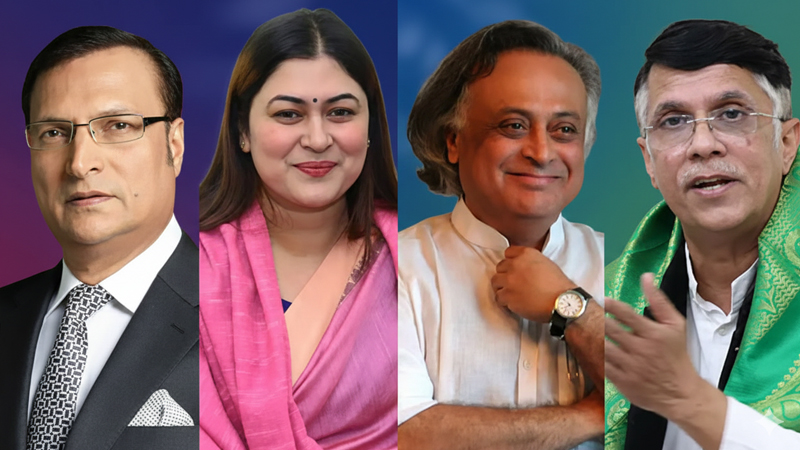
NEW DELHI: A Delhi court has ordered the summoning of senior Congress leaders Ragini Nayak, Pawan Khera and Jairam Ramesh in a criminal case filed by veteran journalist Rajat Sharma, sharpening a legal battle over alleged defamation and doctored digital content.
The order was passed on Monday by Devanshi Janmeja, judicial magistrate first class at Saket Courts, after the court found prima facie grounds to proceed under multiple sections of the Indian Penal Code, including forgery, creation of false electronic records and defamation.
Sharma, chairman and editor-in-chief of India TV, had approached the court over allegations made in June 2024 that he had used derogatory language against Congress spokesperson Ragini Nayak during a live television debate. He denied the charge, claiming it was fuelled by a manipulated video circulated online.
According to the complaint, a clipped version of the broadcast carrying superimposed captions, which were not part of the original programme, was first shared on social media platform X by Nayak and later amplified through retweets and public statements by Khera and Ramesh. Sharma said the viral spread caused serious reputational harm and personal distress.
The court took note of forensic science laboratory findings that pointed to visible post-production alterations in the video, including added titles and captions. It also cited witness testimonies from those present during the live broadcast, who stated that no abusive or objectionable language had been used.
In a related civil matter, the Delhi High Court had earlier observed a prima facie absence of abusive remarks and directed the removal of the disputed social media posts.
With criminal proceedings now set in motion, the case adds to mounting scrutiny around political messaging, digital manipulation and accountability on social media platforms.
News Broadcasting
Mukesh Ambani, Larry Fink come together for CNBC-TV18 exclusive
Reliance and BlackRock chiefs map the future of investing as global capital eyes India

MUMBAI: India’s capital story takes centre stage today as Mukesh Ambani and Larry Fink sit down for a rare joint television conversation, bringing together two of the most powerful voices in global business at a moment of economic churn and opportunity.
The Reliance Industries chief and the BlackRock boss will speak with Shereen Bhan, managing editor of CNBC-TV18, in an exclusive interaction airing from 3:00 pm on February 4. The timing is deliberate. Geopolitics are tense, technology is disruptive and capital is choosier. India, meanwhile, is pitching itself as a long-term bet.
The pairing is symbolic. Reliance straddles energy transition, digital infrastructure and consumer growth in the world’s fastest-expanding major economy. BlackRock, the world’s largest asset manager, oversees more than $14 tn in assets and sits at the nerve centre of global capital flows. When the two talk, markets tend to listen.
Fink’s appearance marks his third India visit, a signal of the country’s rising strategic weight for the Wall Street-listed firm, which carries a market value above $177 bn. His earlier 2023 trips included an October stop in New Delhi, where he met both Ambani and Narendra Modi.
India is now central to BlackRock’s expansion plans, notably through its joint venture with Jio Financial Services. Announced in July 2023, the 50:50 venture, JioBlackRock, commits up to $150 mn each from the partners to build a digital-first asset-management platform aimed at India’s swelling investor class.
The backdrop is robust. BlackRock ended 2025 with record assets under management of $14.04 tn, helped by $698 bn in net inflows, including $342 bn in the fourth quarter alone. Scale gives Fink both heft and a long lens on where money is moving.
He has been openly bullish on India. At the Saudi-US Investment Summit in Riyadh last year, Fink argued that the “fog of global uncertainty is lifting”, with capital returning to dynamic markets such as India, drawn by reforms, demographics and durable return potential.
Expect the conversation to range beyond balance sheets, into technology’s role in finance, access to capital and the mechanics of sustainable growth in a fracturing world order. For investors and policymakers alike, it is a snapshot of how big money is thinking about India.
At a time when capital is cautious and growth is contested, India wants to be the exception. When Ambani and Fink share a stage, it is less a chat and more a signal. The world’s money is still looking for its next big story, and India intends to be it.


MIB sets OTT accessibility rules, mandates captions and audio description

Boney Kapoor acquires remake rights of Tamil political satire Thalaivar Thambi Thalaimaiyil

Netflix India names Rekha Rane director of films and series marketing

Zabeen signs off from TV9 after shaping the network’s public voice

Dhawan steps up to bat for Delhi’s grassroots sports push

Orient Beverages pops the fizz with steady Q3 gains and rising profits

Cheekatilo shines in the dark with record debut on Prime Video

These ’90s fashion trends are making a comeback in 2017
The final 6 ‘Game of Thrones’ episodes might feel like a full season
According to Dior Couture, this taboo fashion accessory is back
The old and New Edition cast comes together to perform
Phillies’ Aaron Altherr makes mind-boggling barehanded play
Uber and Lyft are finally available in all of New York State
Disney’s live-action Aladdin finally finds its stars
MIB sets OTT accessibility rules, mandates captions and audio description
Boney Kapoor acquires remake rights of Tamil political satire Thalaivar Thambi Thalaimaiyil
Netflix India names Rekha Rane director of films and series marketing
Zabeen signs off from TV9 after shaping the network’s public voice
Dhawan steps up to bat for Delhi’s grassroots sports push
Orient Beverages pops the fizz with steady Q3 gains and rising profits
Cheekatilo shines in the dark with record debut on Prime Video
-

 News Broadcasting6 days ago
Mukesh Ambani, Larry Fink come together for CNBC-TV18 exclusive
-
 I&B Ministry3 months ago
India steps up fight against digital piracy
-

 iWorld1 week ago
Netflix celebrates a decade in India with Shah Rukh Khan-narrated tribute film
-
 iWorld3 months ago
Tips Music turns up the heat with Tamil party anthem Mayangiren
-
 MAM3 months ago
HoABL soars high with dazzling Nagpur sebut
-
 iWorld12 months ago
BSNL rings in a revival with Rs 4,969 crore revenue
-

 MAM6 days ago
Nielsen launches co-viewing pilot to sharpen TV measurement
-

 Film Production2 weeks ago
UFO Moviez rides high on strong Q3 earnings
