
Kids
Kid’s TV up for big battle

|
As the path ahead for television in India is to adopt the ‘niche’ approach, here’s a look at one such genre: kids channels. An audience (4 – 14 year olds) that was previously underserved, now has its platter full with Turner dishing out two channels (Cartoon Network and Pogo), Disney three (Disney Channel, Jetix and locally acquired Hungama TV) and Viacom beefing up Nick. Joining the bandwagon is Sun TV’s Tamil kids channel Chutti TV. What’s more, it will soon have three little siblings in Telegu, Kannada and Malayalam. To add to this, BBC has also brought forth its preschool channel CBeebies to India. It, however, remains on the direct-to-home platform and has not yet penetrated into the mass market through cable. As the activity in the kid’s TV space heats up, Indiantelevision.com takes an in-depth look at the disposition of this segment over the last six months from January to June 2007, with support from the ratings scorecard that clearly dissects the country into iits two core markets (HSM and Southern region).  The analysis takes into account the implications of Tam’s extended TV universe with the addition of peoplemeters coupled with DTH expansion and Cas penetration. Now that the scenario seems to have settled down, the ratings of the last six months will weave a new story for the players in this space. What is also interesting is that this duration (summer vacations April-May) is among the busiest seasons for this genre with every broadcaster punting on his best properties. Turner stays ahead; Nick sees max growth in Hindi belt While the battle in the Hindi speaking markets has been intense between the two networks Turner and Disney oscillating between top ratings, its Viacom that is leapfrogging its way up the ladder. Nick has, in fact, been the fastest growing channel in the kid’s category as it opened the year with a relative channel share of eight per cent to close at 11 per cent in June (Tam C&S 4+ HSM 4-14 years).
Much of Nick’s growth story can be attributed to its focused efforts to win over its TG through contests and relationship building activities conducted month on month since January.
|
||||||||||||||||||||||||||||||||||||||||||||||||||||||||||||||||||||||
|
||||||||||||||||||||||||||||||||||||||||||||||||||||||||||||||||||||||
|
Walt Disney Television International (India) director production and programming Aparna Bhosle said that Hungama TV did drop to the third spot in January as a result of Tam expansion. “Through a huge exercise that spanned marketing, distribution and programming changes, we have found our ground and hereon I can only see us growing upward.” Hungama TV is now betting on comedy to take it up on the ratings front, as earlier attempts at pre-school programming, action anime and even Bollywood blockbusters failed to work for the channel. “I would admit to the fact that 90 per cent of all experiments were a failure! Now that we have overcome that phase I don’t see any room for more. We are resting our foundation on comedy and are looking to heavily concentrate on this genre that will cut across sexes. While we cater to the 4 -14 age demographic, our core audiences are 8 – 12 year olds.”
From an All India perspective, Cartoon Network and its sibling Pogo on continued to dominate the kid’s market across the six months.
“Therefore, if you look at our overall performance through the year, it has been positive and we have been number one and number two channels with Cartoon Network at 26 per cent channel share and Pogo at 22 per cent, (January-June 2007 All days, All India, 24 hours, All SEC). Moreover, during the crucial summer months, when kids’ viewing is at its peak Cartoon Network and POGO, delivered a hatrick by topping the TAM charts, three years in a row.” Chutti makes its mark in the South
Chutti TV was launched on 29 April but over the next two months a clear migration of audiences can be observed. The worst hit appears to be Cartoon Network which slipped from a share of 31 per cent in April to 18 and 20 per cent in the months of May and June respectively. Meanwhile, Pogo slipped from 33 per cent in April to 25 and 21 per cent in the subsequent months. One reason for Chutti TV’s success is that it is a free-to-air channel. Says Tata, “As far as Chutti TV’s leadership position in the Southern region is concerned, I don’t think it is fair to compare a free to air channel, which Chutti TV is in the South, with a paid one such as Cartoon Network. The ratings would be skewed in favour of the FTA channel simply because of more reach and distribution.”
Sun network also controls distribution in Tamil Nadu with its cable company SCV holding a strong grip in the market. It is also a strong brand among the southern audiences.
Observers say when Sun rolls out the other three versions of its kid’s channel template to cover the regional markets of the South, the fortunes of both Turner and Disney may be toppled. “They are a formidable opposition in the South, but this will only mean that we will be have to work much harder to maintain our position in the region,” opines Bhosle. Potential threat from upcoming youth centric channels? While kid’s channels are still trying to attract viewers from adult general entertainment channels, separate youth centric television channels are coming to the fray. The kid’s space may have to brace up to a bigger challenge from the slew of upcoming youth entertainment brands that are likely to snatch a large share of the older age demographic of their TG or what’s popularly referred to as the ‘tweens.’ Responding to this Bhosle states, “We will probably see a drift in audiences and a loss of older kids but that will also be the challenge going forward.” Tata says, “With increased competition, there is always fragmentation. We were expecting this at some point. Any new brand has an added advantage of novelty, newness of content and high-decibel brand visibility. It does have an impact on viewers, especially when they are of such an impressionable age.” Amidst the growing competition within the kids arena and the threat from upcoming youth targeted GECs, is the kid’s TV space already experiencing saturation? While some industry experts are of the opinion that the kid’s space has saturated and the time has come to tap into another underserved section of the populace in India’s ‘youth,’ the proponents in the kid’s TV market differ on the same. Bhosle believes that it’s still too early for saturation of the kid’s television market in India. “We can not stop cannibalization of the market. That’s why we as a network have charted out a clear cut positioning for each of our three channels.”
|
||||||||||||||||||||||||||||||||||||||||||||||||||||||||||||||||||||||
 Explaining toIndiantelevision.com Nick India VP and GM Nina Jaipuria says, “We have made a conscious effort to do what we promised at the beginning of the year, that is to connect to our loyal audiences and to acquire new audiences via our on-air and on-ground activities. This has helped increase the affinity of kids to the channel. On the ratings front, we have witnessed 67 per cent growth in TVRs which makes us the fastest growing the category across Hindi speaking markets. We have also grown by 54 per cent in reach, while the reach of the category as a whole has stagnated at 64 per cent from January to June 2007.”
 Coming back to the two top networks, Disney did overthrow the long standing player at the helm Turner in February and June, but what’s intriguing is that the fortunes of Disney appear to be mostly tied into the fate of its adopted baby Hungama TV which peaked during these two months clocking a share of 24 and 25 respectively. In North India Jetix has been slipping from a share of 7 to 5, while Disney Channel has been fairly consistent with an average share of 15.5. Hungama TV has emerged as the chart topper in the Hindi markets in the month of June.
 When queried on the pitfalls that the channel encountered, Bhosle elaborated that her attempts at a pre-school block in August 2006 did not take off well, even though she re-tried this strategy in June this year as well. Additionally, action anime and Bollywood flicks were not received well by her audiences. “Besides kid’s centric Bollywood films are too few and only provide one-off spikes. I would rather focus on building properties that will consistently deliver,” she adds.
 Turner International India VP advertising sales and networks, India and South Asia Monica Tata says, “Cartoon Network and Pogo have never looked at short-term measures or short-term results, even when it was the only kids’ channel in India. As far as ratings are concerned, we have always played fair and looked at long-term ratings rather than just a few weeks.
 Steering our analysis towards South India, we find that the new Tamil kid from the Sun stable has rattled up the market, especially eating into a substantial chunk of both Cartoon Network and Pogo’s audiences.
 Making up for its dipping numbers in the North is Walt Disney’s Jetix which held on to its position in the South. Jetix garnered a share of 26 and 27 for May and June, despite the onslaught of FTA newcomer Chutti TV that gobbled up a share of 21 for the two months after launch.
 Bracing up for the months ahead Tata concludes, “We have always led from the top and not shifted or changed our strategies in reaction to competition. Our vision is to be a major kids’ lifestyle brand in the next few years. And we have been working very hard this past year to move aggressively and rapidly towards that vision. We are no longer taking baby steps but extending the brands across various platforms to ensure that we reach out to kids at every possible access point.”











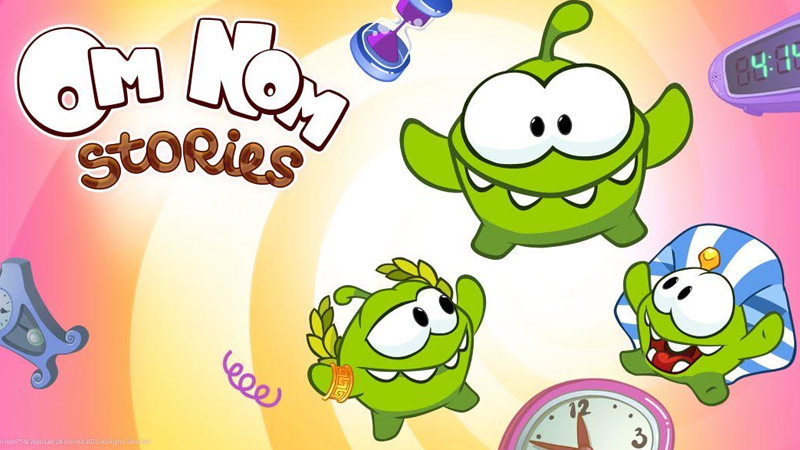
MUMBAI: The little green hero is making a big leap east. Zeptolab has struck a major distribution deal with Warner Bros. Discovery, bringing its hit animated series Om Nom Stories to audiences across the Indian subcontinent.
Under the agreement, Warner Bros. Discovery has acquired the series for exclusive Pay TV broadcast and non-exclusive digital streaming in India, Pakistan, Bangladesh, Bhutan, Nepal and Sri Lanka. The move marks a significant expansion for Zeptolab as it pushes one of its most successful original IPs into one of the world’s fastest-growing entertainment markets.
As part of the deal, all 26 seasons of Om Nom Stories will be rolled out across Cartoon Network, Pogo, Discovery Kids and Discovery+, offering both linear and digital access to the franchise’s slapstick humour and expressive, dialogue-free storytelling.
“We’re incredibly excited to partner with Warner Bros. Discovery to bring Om Nom Stories to the Indian subcontinent,” said Zeptolab executive producer Manaf Hassan, noting that the broadcaster’s reach and legacy make it a strong fit for the series’ growing global fanbase.
Warner Bros. Discovery, meanwhile, sees the acquisition as a natural addition to its children’s portfolio. Warner Bros. Discovery head of factual entertainment, lifestyle and kids for South Asia Sai Abishek, said the series aligns with the network’s focus on cheerful, imaginative and universally appealing content for families across the region.
The timing adds an extra layer of significance. The expansion coincides with Om Nom’s 15th anniversary, underlining the franchise’s staying power and its evolution from a mobile game character into a global animation brand. With this latest bite at the Indian subcontinent, Om Nom’s adventures look set to find a whole new generation of fans.
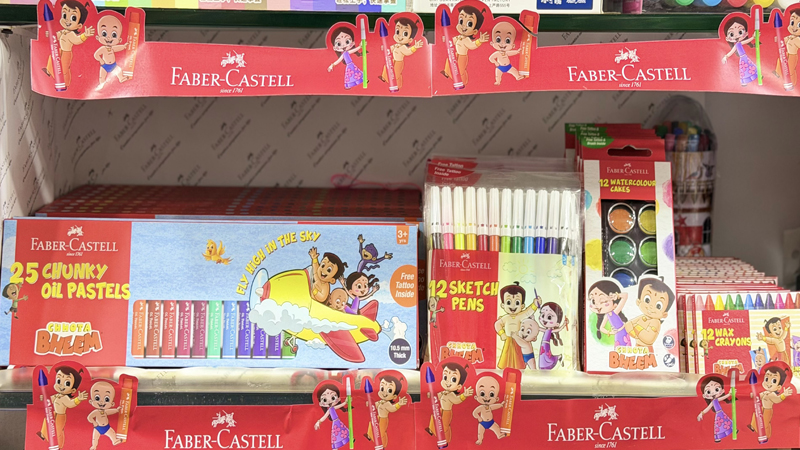
MUMBAI: If childhood memories had a colour palette, Chhota Bheem would likely be right in the middle of it and now, quite literally, in children’s pencil boxes too. Green Gold Animation has announced a landmark licensing partnership with Faber-Castell India, marking the global stationery major’s first-ever licensed character collaboration. The association brings Chhota Bheem to a specially curated range of student art and creative products, blending everyday learning tools with one of India’s most recognisable homegrown characters.
The move is a notable expansion of Chhota Bheem’s footprint beyond screens, reinforcing the character’s status as a multi-generational IP that has steadily grown from a television favourite into a cultural constant. For Green Gold Animation, the partnership signals a sharpened focus on extending its intellectual property into daily touchpoints, where entertainment meets education and habit.
In its first phase, the collaboration will roll out Chhota Bheem-themed products across key student art categories, including watercolour cakes, wax crayons, poster colours, sketch pens, oil pastels and creative bundling kits. The range is aimed squarely at school-going children, tapping into Bheem’s strong emotional connect while encouraging imagination, creativity and hands-on expression.
Green Gold Animation founder and CEO Rajiv Chilaka noted that Chhota Bheem’s journey has long moved beyond episodic storytelling. He said the partnership reflects a deliberate attempt to embed the character into moments of learning and creativity, while building a more purpose-led licensing ecosystem around Indian IP through collaboration with a globally established brand.
From Faber-Castell India’s perspective, the tie-up marks a strategic first. Faber-Castell India director marketing Sonali Shah said the collaboration opens a new chapter by pairing the brand’s long-standing reputation for quality and safety with a character that already commands trust and affection among Indian children. The aim, she added, is to make creativity more engaging and relatable without diluting product standards.
The launch will be backed by a 360-degree promotional push, spanning digital campaigns, social media storytelling, creative usage content and on-ground retail activations across select markets. Both companies have confirmed that this is only the starting point, with additional Chhota Bheem-themed products across new categories planned in the months ahead.
Headquartered in Hyderabad, Green Gold Animation continues to scale its ambition of building globally competitive Indian IPs, with Chhota Bheem leading the charge. This latest collaboration suggests that the brand’s next phase of growth may be less about what children watch and more about what they create.
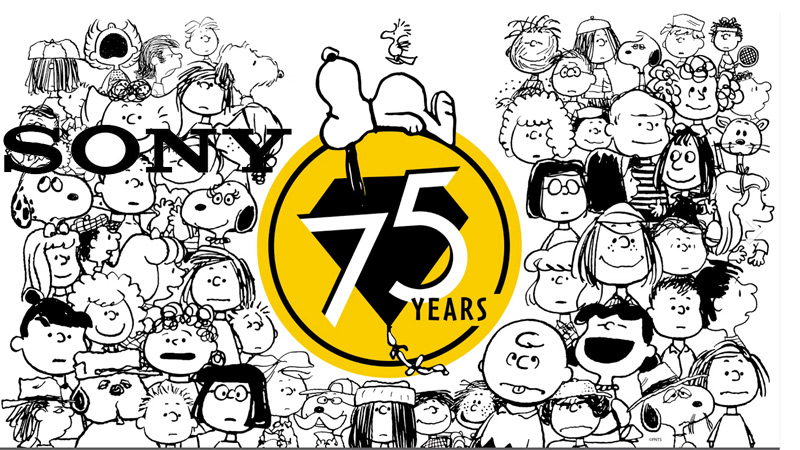
JAPAN: Sony has doubled down on the power of legacy brands, snapping up a majority stake in the Peanuts intellectual property in a late-year deal valued at about $457 million.
Sony Pictures Entertainment and Sony Music Entertainment Japan have acquired the roughly 41 per cent holding in Peanuts Holdings LLC previously owned by Canadian children’s entertainment company WildBrain. The move lifts Sony’s ownership to 80 per cent, with the Schulz family retaining the remaining 20 per cent.
The deal brings one of pop culture’s most durable franchises, home to Charlie Brown, Snoopy and the rest of the Peanuts gang, firmly under the Sony umbrella. The characters were created by Charles M Schulz, whose daily comic strip ran for half a century before ending in 2000.
Sony had already been a long-time partner in the business. The latest transaction consolidates control and sharpens the group’s hand as it looks to keep the characters front and centre across film, television, music and consumer products.
President and group ceo of Sony Music Entertainment Japan, Shunsuke Muramatsu, said the additional stake would allow Sony to further elevate the Peanuts brand by drawing on the group’s global reach and creative expertise, while preserving the legacy of Schulz and his family.
President and ceo of Sony Pictures, Ravi Ahuja, said the combined ownership gives Sony the ability to protect and shape the future of the characters for new generations, expanding their relevance without diluting their charm.
Peanuts long ago escaped the confines of the comic strip, cementing its place in popular culture through perennial television specials such as A Charlie Brown Christmas and It’s the Great Pumpkin, Charlie Brown. More recently, WildBrain kept the franchise active with animated series including Snoopy in Space and The Snoopy Show.
Now, with Sony firmly in control, the message is unmistakable. In an industry obsessed with the next big thing, nostalgia still sells and Sony is betting big on a doghouse that refuses to age.


MIB sets OTT accessibility rules, mandates captions and audio description

Boney Kapoor acquires remake rights of Tamil political satire Thalaivar Thambi Thalaimaiyil

Netflix India names Rekha Rane director of films and series marketing

Zabeen signs off from TV9 after shaping the network’s public voice

Dhawan steps up to bat for Delhi’s grassroots sports push

Orient Beverages pops the fizz with steady Q3 gains and rising profits

Cheekatilo shines in the dark with record debut on Prime Video

These ’90s fashion trends are making a comeback in 2017
The final 6 ‘Game of Thrones’ episodes might feel like a full season
According to Dior Couture, this taboo fashion accessory is back
The old and New Edition cast comes together to perform
Phillies’ Aaron Altherr makes mind-boggling barehanded play
Uber and Lyft are finally available in all of New York State
Disney’s live-action Aladdin finally finds its stars
MIB sets OTT accessibility rules, mandates captions and audio description
Boney Kapoor acquires remake rights of Tamil political satire Thalaivar Thambi Thalaimaiyil
Netflix India names Rekha Rane director of films and series marketing
Zabeen signs off from TV9 after shaping the network’s public voice
Dhawan steps up to bat for Delhi’s grassroots sports push
Orient Beverages pops the fizz with steady Q3 gains and rising profits
Cheekatilo shines in the dark with record debut on Prime Video
-
 e-commerce3 weeks ago
Swiggy Instamart’s GOV surges 103 per cent year on year to Rs 7,938 crore
-

 News Headline1 month ago
From selfies to big bucks, India’s influencer economy explodes in 2025
-

 News Broadcasting2 weeks ago
Mukesh Ambani, Larry Fink come together for CNBC-TV18 exclusive
-
 iWorld5 months ago
Billions still offline despite mobile internet surge: GSMA
-

 News Headline2 months ago
2025: The year Indian sports saw chaos, comebacks, and breakthroughs
-

 Applications2 months ago
28 per cent of divorced daters in India are open to remarriage: Rebounce
-
 MAM2 years ago
Costa Coffee becomes official coffee partner of Olympic Games Paris 2024
-

 News Headline2 months ago
Game on again as 2025 powers up a record year and sets the stage for 2030
