
Kids
Kids programming: The boy factor!

What are little girls made of? “Sugar and spice and all that‘s nice.” And little boys? “Frogs and snails and puppy-dogs‘ tails.”
Most of us would be familiar with the old nursery rhyme but ask any kid today to choose between “sugar…” and “frogs…” and like as not they would probably go for the latter – boys and girls, both. So much more cool it is, if you get the drift.
Still, keeping in mind the disparity in tastes of boys and girls, are kids channels catering to both the sexes on a fair and equal basis? Or is it that boys are being attended to more with giant action packed bubbles surfacing more from the kids channel programming pond?
 |
|
Boys hook on to kids channels more than girls
|
It is a fact that boys hook on to kids channels more than girls. If the data for the last five months (January to May 2005) is taken as a reference, it is found that while 65 per cent of kids‘ channels viewership in all SECs comes from boys (4-14 years), only 35 per cent comes from girls (4-14 years). In a scenario like this, it would only be logical for the channels to cater more to boys than girls. This is the question that Indiantelevision.com sought answers for.
But before getting the channels‘ perspective in, we did a small dipstick asking boys and girls of various ages their favourite cartoon character/show. This is what we found:
|
Name
|
Age
|
Favourite Cartoons
|
|
Tanya
|
5
|
The Powerpuff Girls, Tom & Jerry, Sabrina, Pokemon |
|
Raviraj
|
5
|
Tiny TV‘s Noddy, Bob the Builder, Oswald, Pokemon |
|
Parth
|
6
|
Bob the Builder, Noddy, Oswald, Kipper, Hero, Beyblade, Superman, Spiderman and Batman |
|
Sahir
|
8
|
Pokemon, Beyblade, SonicX, Hero |
|
Sacchit
|
8
|
Richie Rich, Pokemon, Scooby Doo, Teen Titans, Beyblade, Sabrina |
|
Mishaal
|
9
|
Samurai Jack, Scooby Doo, Beyblade, Teen Titans, Spiderman, Superman, Batman, Sabrina |
|
Shreya
|
12
|
Tom & Jerry, Richie Rich, M.A.D, Powerpuff Girls, The Flintstones, Dexter‘s Laboratory |
About the only, insight one gets from this admittedly inadequate “survey” is that kids programming choices are not clearly gender-driven. Channel executives also stress on the fact that they are all vying for a share of the kids‘ pie – boys and girls alike!

|
Viewership by gender
|
||
|
Channel
|
Boys
|
Girls
|
| Cartoon Network |
66%
|
34%
|
| Disney Channel |
70%
|
30%
|
| Hungama TV |
67%
|
33%
|
| Pogo |
61%
|
39%
|
| Toon Disney |
70%
|
30%
|
| Nickelodeon |
54%
|
46%
|
| Any Channel |
54%
|
46%
|
| Kids channels |
65%
|
35%
|
| Market: All India, All SECs, Period: Week 02-22 (Jan – May ‘05), Age Group: 4-14 years. Source: Tam | ||
|
Click here for age-wise breakup of viewership on kids‘ channels |
||
Says Nick India business and operations head Pradeep Hejmadi, “When kids‘ shows are being developed, they are made with both boys and girls in mind. Once the show launches, it is tested in the market with regards to the local interest of kids.”
And if one were to talk of gender-specific programming, at present, Nick and Disney are the only channels that have a special hour dedicated to girls. Nick has a slot called Hello Girls, which is aired at 4 pm daily and features shows where girls play lead roles. On the other hand, Disney‘s Princess Hour is aired at 10 am on Saturdays and Sundays, which features shows like Mermaid and Aladdin.
Speaking on his channels‘ content, Turner International India Pvt. Ltd. managing director Anshuman Misra says, “Both Cartoon Network and Pogo offer content relevant to young Indian viewers; targeting kids aged 4-14. In my opinion, the single most important ingredient is compelling programming content that appeals to our target audience – all kids – whether boys or girls.”
While, kids‘ channels do try and cater to boys and girls alike through their programming, an interesting observation that came forth while speaking to the channel heads was that girls‘ preferences across different age groups vary highly. This may be one of the reasons that kids‘ broadcasters may dwell more on shows that boys can relate with. Says Hejmadi, “Girls‘ preferences across demographics are not homogenous and it varies as they mature and grow older. Whereas boys tend to stick to the programmes they have been watching for longer periods of time.”
Concurs Walt Disney Television International (India) head of programming and production Nachiket Pantvaidya, “It is a fact that girls (4-14 years) tend to mature faster. By the time a girl reaches the age of nine, she tends to tune out of kids shows and tunes into other channels. On the other hand, boys (4-14 years) are a consistent lot as far as watching cartoon shows is concerned.”
Sony Pictures Television International, Asia senior vice president and managing director Todd Miller has a different perspective to offer, which in actual fact only buttresses the point as to why channels tilt towards male-skewed programming. “In general, there is a higher tendency for girls willing to watch boy-skewed titles or action-oriented titles and not the other way round,” Miller says.
And while the amount of ‘evil-bashing‘ that goes on on kids channels may be the cause of concern of many a parents as the action sequences and fights may have a negative effect on kids, Miller points out that there is an important distinction between violence and action and the channel does keep that in mind before putting a show on air.
Stresses Misra, “As a responsible broadcaster, we have very stringent S&Ps, and air programming that has been approved and cleared for KID viewing. Also, we do not air any programming that is mean spirited and culturally insensitive. Additionally, we strongly advocate parental supervision and discretion during television viewing.”
 Pantvaidya, too, emphasises that Disney does not show violence but focusses on action. “More often than not, we show good v/s evil where good always triumphs. Guns are never fired and there is no injury shown,” he says.
 Hejmadi says that when J Bole To Jadoo, the plot of which revolves around magic, was launched on Nick; a Synovate study showed that both boys and girls wanted action and thrilling moments to be a part of the show.
Channels stress on the fact that their aim is to appeal to both boys and girls. “We try and produce shows that are made with elements that cater to both boys and girls. Our research has indicated that there are a whole lot of interesting meeting points between the preferences of girls and boys. We will be inculcating these findings in our programming strategies,” says Hejmadi.
 Speaking on the anime channel Animax, Miller says, “A lot of our titles are quite gender neutral and appeal to both boys and girls, e.g., Astro Boy, Conan Boy from the future, Arjuna, Cardcaptor Sakura, Baby B-chan, UFO Baby, Twin Spica, etc. For boy-skewed titles, I will name Mobile Suit Gundam, Getbackers, Captain Tsubasa, Samurai X, etc. Girls skewed titles are Little Women, Princess Sarah, Princess Comet, Princess Tutu, Ultra Maniac, Nobody‘s Girl.”
 Asserting on the universal appeal of most of the shows on Cartoon Network and Pogo, Misra says, “We have franchises such as Toonami that are action-packed, and therefore give the perception that such franchises may appeal to only boys, but interestingly,
  research has revealed that even if Pokemon is followed by Sabrina and The Winx Club, we do not see a dip in audiences. The Winx Club, which follows the adventures of teenage magical fairies, is popular with both girls and boys. Further, our New Generations 2004 survey (Cartoon Network‘s annual patented lifestyle survey) has shown that our characters resonate with both girls and boys in India.”
 Also, some shows that may have female protagonists like The Powerpuff Girls are more popular with boys that with girls belying popular misconception. “The Powerpuff Girls rate equally well with both girls and boys. In fact as per New Generations 2004, The Powerpuff Girls rate higher with boys than with girls,” adds Misra.
While channel officials solemnly vouch for the fact that they cater to boys and girls equally, it cannot be ruled out that in five-seven years from now, there may be different kids‘ channels catering to girls and boys. As UTV programming head Zareena Mehta had pointed out at FICCI Frames this year, “By 2010, there is a possibility that there would be 20 dedicated kids‘ channels catering to individual age groups and also girls and boys separately.”
However, a lot of it depends on whether addressability in cable systems comes into effect and the penetration of direct-to-home (DTH) television increases in Indian homes. “Separate kids channels catering to boys and girls coming in depends on the viability and feasibility of the same. At present, for commercial reasons it is going to be very difficult to make it viable as this will mean splitting revenues on both by half. Advertisers will not be very happy with this situation now. Also cable operators and multi-system operators (MSOs) will be instrumental in creating the viability of separate channels catering to boys and girls,” says Hejmadi.
Pantvaidya says, “I don‘t see it happening as of now. It largely depends on how the market grows. Segmenting within a niche will not get the market excited. Also when DTH penetration increases, you can charge for your niche. But right now, it doesn‘t seem a viable proposition.”
For the present though, kids channel fare will remain all about high-energy excitement, outrageous humor, good versus evil, action adventure and excitement. And there is really no getting away from the truth that the programming is ever so subtly boy-skewed. Whatever the channels may claim to the contrary. But hey, the girls aren‘t complaining. Cross my heart… the channel guys would with some justification tell you.







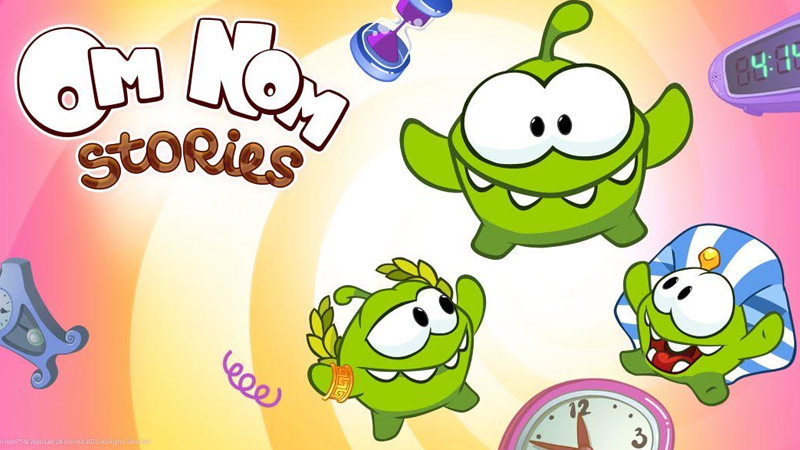
MUMBAI: The little green hero is making a big leap east. Zeptolab has struck a major distribution deal with Warner Bros. Discovery, bringing its hit animated series Om Nom Stories to audiences across the Indian subcontinent.
Under the agreement, Warner Bros. Discovery has acquired the series for exclusive Pay TV broadcast and non-exclusive digital streaming in India, Pakistan, Bangladesh, Bhutan, Nepal and Sri Lanka. The move marks a significant expansion for Zeptolab as it pushes one of its most successful original IPs into one of the world’s fastest-growing entertainment markets.
As part of the deal, all 26 seasons of Om Nom Stories will be rolled out across Cartoon Network, Pogo, Discovery Kids and Discovery+, offering both linear and digital access to the franchise’s slapstick humour and expressive, dialogue-free storytelling.
“We’re incredibly excited to partner with Warner Bros. Discovery to bring Om Nom Stories to the Indian subcontinent,” said Zeptolab executive producer Manaf Hassan, noting that the broadcaster’s reach and legacy make it a strong fit for the series’ growing global fanbase.
Warner Bros. Discovery, meanwhile, sees the acquisition as a natural addition to its children’s portfolio. Warner Bros. Discovery head of factual entertainment, lifestyle and kids for South Asia Sai Abishek, said the series aligns with the network’s focus on cheerful, imaginative and universally appealing content for families across the region.
The timing adds an extra layer of significance. The expansion coincides with Om Nom’s 15th anniversary, underlining the franchise’s staying power and its evolution from a mobile game character into a global animation brand. With this latest bite at the Indian subcontinent, Om Nom’s adventures look set to find a whole new generation of fans.
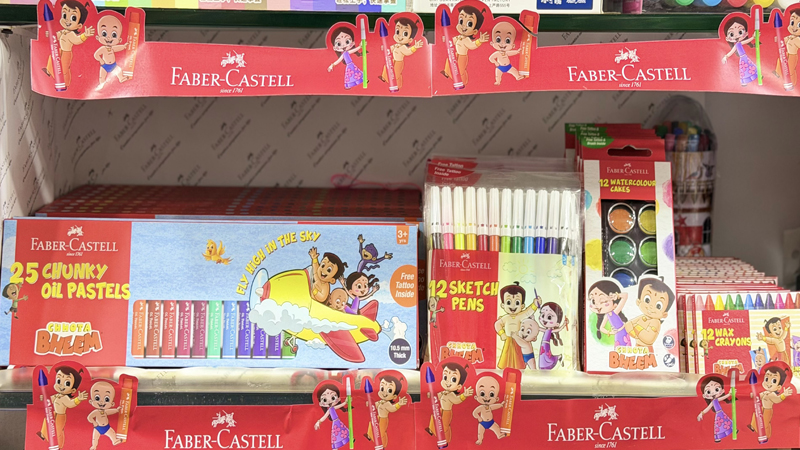
MUMBAI: If childhood memories had a colour palette, Chhota Bheem would likely be right in the middle of it and now, quite literally, in children’s pencil boxes too. Green Gold Animation has announced a landmark licensing partnership with Faber-Castell India, marking the global stationery major’s first-ever licensed character collaboration. The association brings Chhota Bheem to a specially curated range of student art and creative products, blending everyday learning tools with one of India’s most recognisable homegrown characters.
The move is a notable expansion of Chhota Bheem’s footprint beyond screens, reinforcing the character’s status as a multi-generational IP that has steadily grown from a television favourite into a cultural constant. For Green Gold Animation, the partnership signals a sharpened focus on extending its intellectual property into daily touchpoints, where entertainment meets education and habit.
In its first phase, the collaboration will roll out Chhota Bheem-themed products across key student art categories, including watercolour cakes, wax crayons, poster colours, sketch pens, oil pastels and creative bundling kits. The range is aimed squarely at school-going children, tapping into Bheem’s strong emotional connect while encouraging imagination, creativity and hands-on expression.
Green Gold Animation founder and CEO Rajiv Chilaka noted that Chhota Bheem’s journey has long moved beyond episodic storytelling. He said the partnership reflects a deliberate attempt to embed the character into moments of learning and creativity, while building a more purpose-led licensing ecosystem around Indian IP through collaboration with a globally established brand.
From Faber-Castell India’s perspective, the tie-up marks a strategic first. Faber-Castell India director marketing Sonali Shah said the collaboration opens a new chapter by pairing the brand’s long-standing reputation for quality and safety with a character that already commands trust and affection among Indian children. The aim, she added, is to make creativity more engaging and relatable without diluting product standards.
The launch will be backed by a 360-degree promotional push, spanning digital campaigns, social media storytelling, creative usage content and on-ground retail activations across select markets. Both companies have confirmed that this is only the starting point, with additional Chhota Bheem-themed products across new categories planned in the months ahead.
Headquartered in Hyderabad, Green Gold Animation continues to scale its ambition of building globally competitive Indian IPs, with Chhota Bheem leading the charge. This latest collaboration suggests that the brand’s next phase of growth may be less about what children watch and more about what they create.
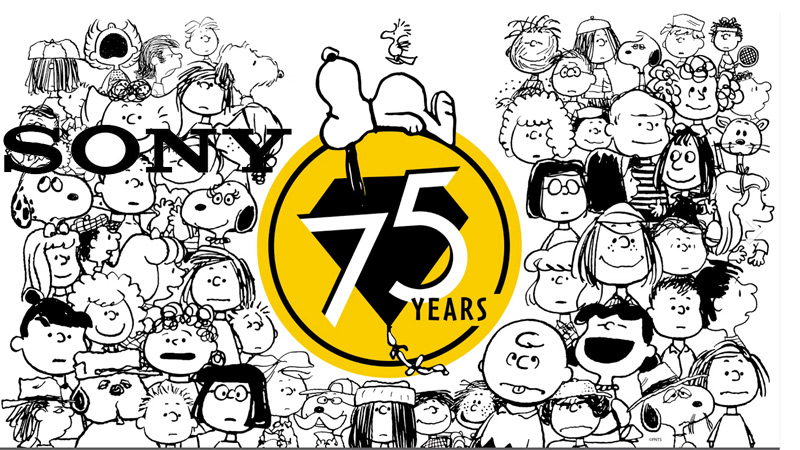
JAPAN: Sony has doubled down on the power of legacy brands, snapping up a majority stake in the Peanuts intellectual property in a late-year deal valued at about $457 million.
Sony Pictures Entertainment and Sony Music Entertainment Japan have acquired the roughly 41 per cent holding in Peanuts Holdings LLC previously owned by Canadian children’s entertainment company WildBrain. The move lifts Sony’s ownership to 80 per cent, with the Schulz family retaining the remaining 20 per cent.
The deal brings one of pop culture’s most durable franchises, home to Charlie Brown, Snoopy and the rest of the Peanuts gang, firmly under the Sony umbrella. The characters were created by Charles M Schulz, whose daily comic strip ran for half a century before ending in 2000.
Sony had already been a long-time partner in the business. The latest transaction consolidates control and sharpens the group’s hand as it looks to keep the characters front and centre across film, television, music and consumer products.
President and group ceo of Sony Music Entertainment Japan, Shunsuke Muramatsu, said the additional stake would allow Sony to further elevate the Peanuts brand by drawing on the group’s global reach and creative expertise, while preserving the legacy of Schulz and his family.
President and ceo of Sony Pictures, Ravi Ahuja, said the combined ownership gives Sony the ability to protect and shape the future of the characters for new generations, expanding their relevance without diluting their charm.
Peanuts long ago escaped the confines of the comic strip, cementing its place in popular culture through perennial television specials such as A Charlie Brown Christmas and It’s the Great Pumpkin, Charlie Brown. More recently, WildBrain kept the franchise active with animated series including Snoopy in Space and The Snoopy Show.
Now, with Sony firmly in control, the message is unmistakable. In an industry obsessed with the next big thing, nostalgia still sells and Sony is betting big on a doghouse that refuses to age.



MIB sets OTT accessibility rules, mandates captions and audio description

Boney Kapoor acquires remake rights of Tamil political satire Thalaivar Thambi Thalaimaiyil

Netflix India names Rekha Rane director of films and series marketing

Zabeen signs off from TV9 after shaping the network’s public voice

Dhawan steps up to bat for Delhi’s grassroots sports push

Orient Beverages pops the fizz with steady Q3 gains and rising profits

Cheekatilo shines in the dark with record debut on Prime Video

Swiggy Instamart’s GOV surges 103 per cent year on year to Rs 7,938 crore

These ’90s fashion trends are making a comeback in 2017
The final 6 ‘Game of Thrones’ episodes might feel like a full season
According to Dior Couture, this taboo fashion accessory is back

ATN International brings ATN Bangla to Canada
The old and New Edition cast comes together to perform
Phillies’ Aaron Altherr makes mind-boggling barehanded play
MIB sets OTT accessibility rules, mandates captions and audio description
Boney Kapoor acquires remake rights of Tamil political satire Thalaivar Thambi Thalaimaiyil
Netflix India names Rekha Rane director of films and series marketing
Zabeen signs off from TV9 after shaping the network’s public voice
Dhawan steps up to bat for Delhi’s grassroots sports push
Orient Beverages pops the fizz with steady Q3 gains and rising profits
Cheekatilo shines in the dark with record debut on Prime Video
-
 e-commerce1 month ago
Swiggy Instamart’s GOV surges 103 per cent year on year to Rs 7,938 crore
-
 iWorld1 year ago
Kuku TV transforms India’s OTT space with vertical microdrama boom
-
 News Headline1 year ago
TRAI puts a ‘stop’ to unsolicited calls and messages
-

 News Headline2 months ago
From selfies to big bucks, India’s influencer economy explodes in 2025
-
 Comedy2 years ago
Taarak Mehta Ka Ooltah Chashmah celebrates 4,000 episodes
-
 MAM2 years ago
OpenAI joins C2PA steering committee
-
 News Headline1 year ago
Abhishek Bachchan joins as co-owner of European T20 Premier League
-
 News Headline2 years ago
Odisha to host Ultimate Kho Kho Season 2 from December 24


