
Executive Dossier
“ISL teams to breakeven in two-four years”: Andy Knee

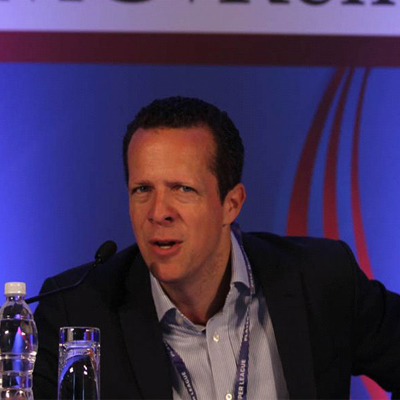
International Management Group or simply known as IMG has been a world renowned leader in sports, fashion and media management with operations in more than 30 countries.
In 2014, IMG was acquired by WME a global entertainment and media agency. In India, the company has formed a joint venture with Reliance Industries. The JV was formed between good buddies Mukesh Ambani and former IMG chairman Teddy Forstmann who died of brain cancer in November 2011.
IMG Reliance has signed a 15 year partnership with the All India Football Federation (AIFF) to improve and popularise football in India beginning from the grassroots to the professional level. One of its initiatives is the Hero Indian Super League- an IPL styled tournament for football that is slated to begin from 12 October 2014.
Present at the international and domestic player draft was IMG football vice president Andy Knee. His previous stint was at electronic giant Phillips where he was the head of sponsorship. In 2006 he was appointed as director of the Football Championship League where he was responsible to raise the profile for the 24 clubs and improving the competitions revenue.
Though the league is highly pressurising, one will find Knee always at ease and silently observing team owners replying to hard hitting questions from journalists. On the day of the international player draft, Knee speaks exclusively to indiantelevision.com’s Herman Gomes.

 |
Excerpts
The league will kick off in October this year. How is IMG-Reliance developing the league for the first time in India?
We are doing something unique. We are taking a lot more risks than we typically do in a project. So we are investing in buying rights, in the infrastructure, marketing and putting up an expert team of football from India and abroad to help galvanize the league for the first time. We want to make the Hero ISL an astounding success and generate value and return more importantly for our clubs and the league to be a catalyst for football to explode interest and participation here.
In China, IMG has stake in the Chinese Football Association promoted Super League. Commercially the league there is secure and financially controlled by the government. Why have you chosen a private drive model here?
What we do in China is very different. There we have a 10 year deal with the Association where we represent rights and sell those rights to sponsors. They have an existing league and therefore we do not have an ownership position in China. IMG works with them to help generate more revenue from the league. We also advise them on how to improve their administration and governance of the sport. In India it is very different. It is not typical of what IMG normally indulges in. Usually we have clients or we work with or on the behalf of partners. We have had business in India for a very long time and we have been successful in the creation of the IPL. We now looked at football and thought how is it possible that a country of this importance and size does not have advanced football infrastructure industry? So our former owner Ted Forstmann along with Mukesh Ambani discussed it together and decided to do something great in football by coming up with the ISL.
China has certain advantages. They have got some great stadia and they are fortunate from that point of view, but China hasn’t been in the world cup in recent memory. Japan and Korea have also risen fast and it proves it can be done. So I think if everyone is pulling in the same direction it will be a very big help.
IMG has a presence in almost 30 countries. What are the global learnings you have put in to develop the sport in India?
Globally, we have been representing TV, sponsorship and licensing rights. We have also worked with player business, TV production, hospitality, ticketing, commercialisation of stadia over multiple markets. We bring that experience to India. Frankly speaking only some of it is relevant here. For example we helped the financing and seat sale of the Wembley stadium. Is that relevant to India? Unfortunately not! Sadly we are away from our teams being in a position to invest in a significant new stadium. I hope that opportunity comes but that’s a little bit down the chain. So we take the expertise we have all gained through working many years in football and apply those bits that are relevant for India.
Sports fans and analysts are of the opinion that the ISL will reduce the I-League tournament to an inconsequential format. What are your thoughts?
 |
I understand that when a new format is introduced it can be seen as a threat to the established leagues. My view is that it can’t be a threat to the I-League because the football pie in the country is very small at the moment. I do not know what is the size of the football industry here but all I know is that it is very small. We could all fight over a small slice of the football pie but actually there is just not much there to get there. We all need to make that pie 100 times bigger and there is plenty to go around. So it is about the game at the moment. It’s not about who gets what bit. Co existence can happen very easily but I hope the ISL will popularise the sport unbelievably. So people would want to watch Delhi Dynamos and then go and watch Mohun Bagan at different time of the year. They are just football fans who watch the Premiere League but they also love the fact that India has a real football league they can support and be proud of.
How much will IMG-Reliance be investing for the infrastructure of the game in India?
Well we are not spending too much money on the grassroots facilities. I would love us to be in a position to do so but we are not going around building pitches. We need some far better football facilities but we are not doing that. We hope that will happen organically because people are getting greater interest in football so more space is given to football. Whether its I-League or ISL teams there will be greater money coming for the sport but that money will be reinvested for the football ecosystem to grow, develop and expand.
It is understood that each of the eight teams have to annually spend Rs 2 crore to invest in grassroots programme to develop football. How will that amount be utilised?
This is what the teams have to do. Teams bought the rights to run their respective teams and the money they have paid is for a 10 year period and they pay it in 10 equal slices in one year. On top of that there is a requirement to invest in grassroots. This is the requirement we put on teams but at the same time actually we probably didn’t need to because all the teams understood how important this is. The teams know they have to invest in grassroots, in local football programmes in local communities. The teams have got to spend on two requirements- grass roots and marketing. The teams do not have to send us that money. Absolutely not! That’s for the teams to build their brand, popularity and love of the game in their local cities.
 |
IMG ran a three day Grassroots Developmental Programme in Kolkata where we conducted theory as well as practical sessions. We are going to roll that out farther to other cities and teams will do their bit in local cities.
What is the age group you are planning to target through the Grassroots Developmental programme?
Typically we look towards the age group of 11 or 12 year olds. This is not certain but we may go a little older because the U-17 World Cup is a very focal point. The teams and we would like to play our part in helping India to produce a team to be proud of in 2017.
Will the Hero ISL have a league ambassador?
We had talks if we wanted a league ambassador a big name who just works on the behalf of the league but we decided not to. The teams have got some great owners and some great marquee players so there is no magic celebrity we are planning to unveil. We want the league owners to stand out and the teams themselves. Yes we know we need some stardust but we have people like Ranbir Kapoor and Sachin Tendulkar to do that.
How did the league go about deciding a fixed price for each of the players?
Well we had a base price for each of the players that the teams agreed. There is pressure on the business models of the teams. They will lose money for the first couple of years but this is an investment. But we agreed on a price that will make the teams happy. This is the sport where if you want the best you have to spend eye watering sums of money. We found a point where we said not all of these guys are a big name but they are going to be of very good quality. So we will get great playing products and market these guys so that Indians appreciate. They might not be the Beckhams , Messis or Ronaldos but these guys are fantastic players in their own rights. But more importantly than that we need to showcase Indian talent and reassure the country and sports fans that we might be 150th in the FIFA rankings but there is talent here and reasons for real optimism about the future.
India will be hosting the under 17 World Cup in 2017. What is the Indian government planning for the World Cup and how will it be contributing to the league?
From what I have heard the government has some plans in terms of upgrading the stadia. I assume the stadia will be good. Well we have got some great team owners and known companies who are behind the league. We have got support of the government and so there will be greater investment in the sport from that point of view. It’s funny how 20 to 30 years ago you could find the typical teams in an U 17 World Cup like England, East Germany, France and Spain. But now, those teams can come from anywhere. Everyone is developing football unbelievably fast and India has a big gap and it’s not like we can close it. With the third highest number of people playing football (I think only Germany and the States has more active footballer) Don’t tell me there is no talent here. Of course there is talent. We just need to put the processes and infrastructure in place in developing the talent.
By when do you see the teams breaking even?
 |
We hope that will happen in two-four years and that depends on certain factors. If India properly embraces football and fans turn on their TV and come to the stadia, it will happen faster. If the reception takes a little bit longer to get warmed up it will happen a bit later. We realise this will not be a success overnight. We will love it if it explodes interest in the first year but at the same time there is the acceptance that Rome wasn’t built in a day. So every team and the league knows you have got to have some patience here.
How do you see Star’s association helping the league and will there be localisation of the sport in terms of commentary?
This is a sport that must succeed on TV. We have got the most powerful Indian TV network that is going to publicise the ISL across all its channels in different languages. We have got a partner that really believes in it and has invested significant money. There will be some localization, I am sure, but I do not know how many languages. Star is desperate to take the game to people across India. They have got their skin in the game and their bosses in the states are looking at it closely and there is pressure on us too and we have a partner that is very committed for this league to succeed.
On a parting note what message would you like to give to football fans in India?
Tune in, come and have a look and enjoy it. I think this is going to be something that India has never seen from a quality and show point of view and I hope people embrace it, whether they watch 20 minutes of one game or whether every single game of the ISL.










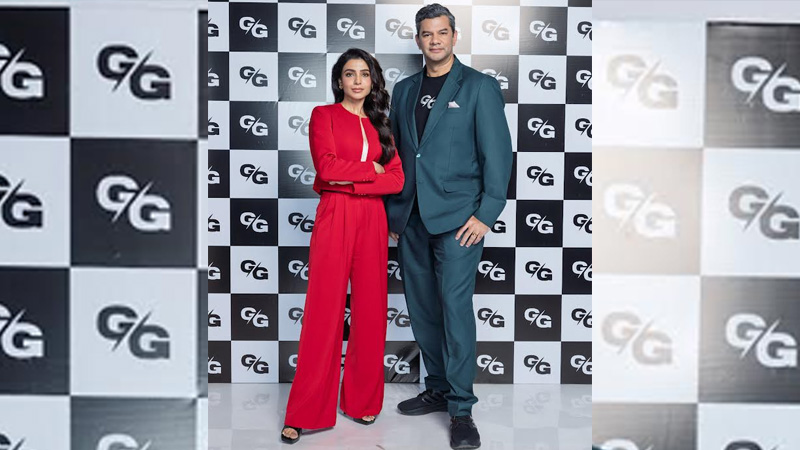
MUMBAI: Game faces on, pressure high India’s gaming ambitions are levelling up. Good Game, billed as the world’s first as-live global gaming reality show, has officially launched in India with a bold mission: to crown the country’s first Global Gaming Superstar.
Blending esports with mainstream entertainment, the show brings together competitive gaming, creativity and on-camera performance in a format that tests more than just joystick skills. Contestants will be judged on gameplay, screen presence and their ability to perform under pressure, reflecting how gaming has evolved from pastime to profession and pop culture currency.
Fronting the show are three high-profile ambassadors: actor and entrepreneur Samantha Ruth Prabhu, Indian cricket star Rishabh Pant, and gaming creator Ujjwal Chaurasia. The winner will take home Rs 1 crore ($100,000) among the largest prize pools for any Indian reality show along with the chance to represent India on a global stage.
Backed by a planned annual investment of up to Rs 100 crore, Good Game is also courting brand partners, promising a minimum reach of 500 million among India’s core youth audience. The creators position the show as a bridge between entertainment and interactive culture, offering long-format content, community engagement and commercial scale.
Auditions are now open to Indian citizens aged 18 and above, inviting amateur and professional gamers, creators and performers alike. Shortlisted candidates will be called for in-person auditions in Mumbai on 14 and 15 February, and in Delhi on 28 February and 1 March 2026.
With big money, big names and even bigger ambition, Good Game signals a shift in how India views gaming not just as play, but as performance, profession and prime-time spectacle.
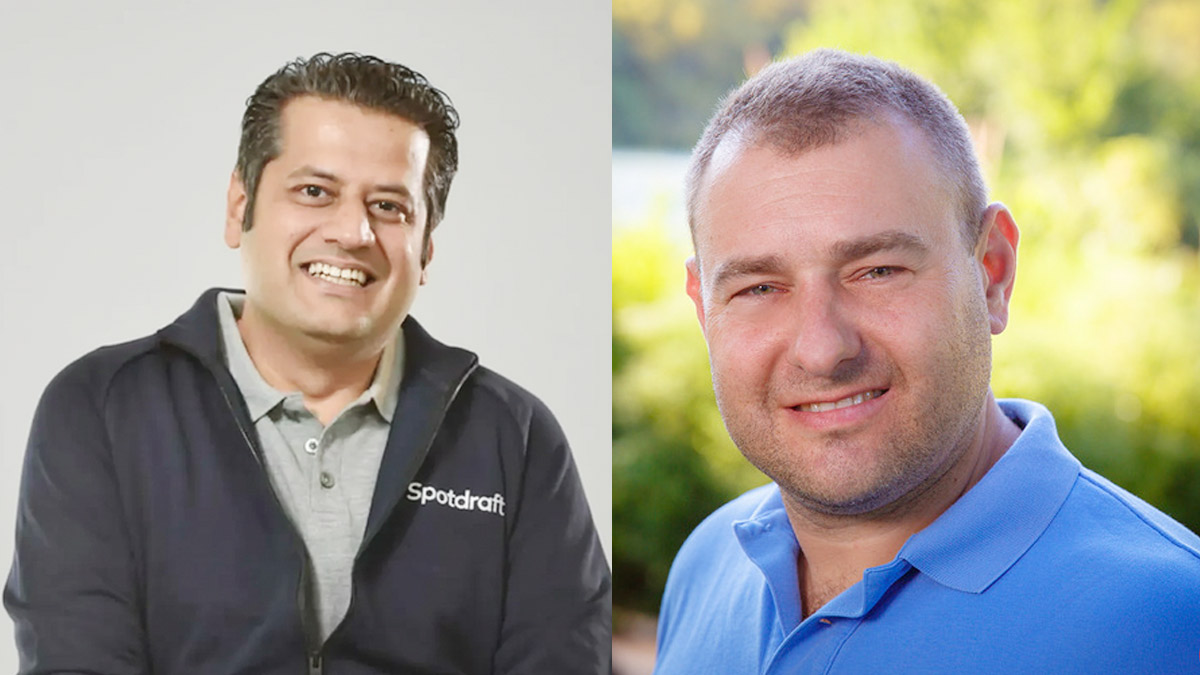
INDIA: SpotDraft has strengthened its senior ranks as it gears up for faster global expansion, naming Alon Waks as chief marketing officer and Amit Sharma as chief financial officer. The appointments follow the firm’s $54 million Series B round earlier this year and mark a push to scale across the Americas, EMEA and India.
The AI-powered contract-lifecycle-management platform has posted 100 per cent year-on-year growth in customer acquisition, counting Apollo.io, IPSY, Mixpanel, Oyster and Panasonic among its global clients. The firm processes more than one million contracts annually, with volumes up 173 per cent and nearly 50,000 monthly active users.
Waks, a veteran of Kustomer, Bizzabo, CreatorIQ, LivePerson and ZoomInfo, will steer global marketing and category positioning as legal teams adopt AI-driven tools. Sharma, who has led finance across scaling tech firms since 2016, will guide financial strategy, investor relations and market expansion.
Both hires aim to sharpen SpotDraft’s bid for a larger slice of the fast-growing legal-tech market, expected to exceed $63 billion by 2032. Co-founder and chief executive Shashank Bijapur said the company is focused on scaling go-to-market operations in the Americas, deepening leadership in EMEA, and accelerating AI capabilities for general counsels and legal-operations leaders.
Clients report shorter deal cycles and better alignment between legal and business teams. “What used to take weeks now happens in days,” said Abnormal Security senior legal operations manager Susan Koenig. DeepL head of legal operations André Barrow, said SpotDraft has helped reframe legal “from a cost centre to a generator of revenue”.
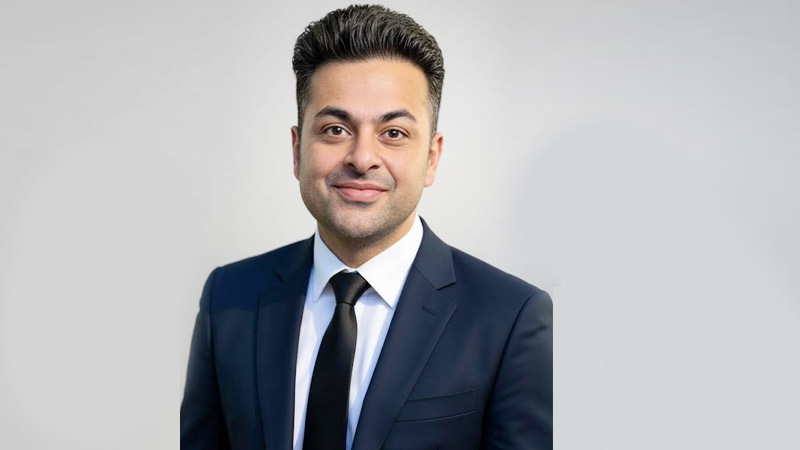
MUMBAI: Out-of-home ads were once the wallflowers of marketing seen by everyone, noticed by few. But in an age where attention has become the world’s most fought-over currency, even billboards are getting a brain upgrade. Enter LOC8, OSMO’s AI-powered attention engine, quietly reshaping the old OOH playbook by measuring not just who could have looked at an ad, but who actually did. The shift is subtle but seismic: impressions are out, impact is in and data, not gut instinct, is calling the shots.
In a landscape where marketers question every rupee spent outdoors, LOC8 is turning lampposts, flyovers and traffic islands into precision-mapped attention laboratories. By crunching dwell time, visibility zones, perceptual size and real-world obstructions, the platform is dragging OOH into a future where creativity meets computer vision and where the best ideas aren’t just eye-catching, but eye-measured. From automotive facelifts to FMCG novelty and real estate trust-building, the message is clear, outdoor has stopped shouting and started listening. Indian Television Dot Com explores more about it in an Interview interview with OSMO co-founder Nipun Arora.
On how OSMO is shifting outdoor advertising from a visibility-led medium to an attention-led one through LOC8.
Traditional OOH has long been measured by visibility and impressions i.e how many people could see an ad. OSMO, through its proprietary AI platform LOC8, is shifting that narrative more towards likelihood of being noticed. Using computer vision and machine learning, LOC8 analyzes real-world video data to measure visibility zones, obstructions, dwell time and perceptual size; bringing precision to how attention is quantified outdoors. It moves the focus from mere impressions to quality of impressions, making OOH a data-verified, attention-led medium comparable to digital in accountability.
On how marketers can use LOC8’s dwell-time, visibility and perception insights to craft more effective, emotionally resonant OOH campaigns.
LOC8 helps brands understand how people truly experience outdoor media how long they look, from what distance, and under what conditions. By quantifying dwell time, visibility duration, and perceptual size; marketers can plan campaigns that align with real human viewing behavior. This empowers creative and strategy teams to design emotionally resonant storytelling where messaging, visual hierarchy and placement are optimized for how people actually notice and process OOH creatives.
About what LOC8 has revealed through campaigns like Renault Triber and Namaste India on how categories such as auto, FMCG and real estate use attention metrics to drive outcomes.
Each category uses attention data differently but all share one common goal: to convert outdoor visibility into measurable engagement.
• Automotive | Renault Triber
For the new Renault Triber facelift, bold creative met data-led planning through LOC8. By analyzing on-ground video data, LOC8 measured real audience attention across placements factoring in visibility zones, obstructions, traffic speed and perceptual size. This enabled Renault to identify corridors that delivered maximum reach, saliency and engagement, optimizing media efficiency and ROI.
• FMCG | Namaste India
In OOH, innovation is the hook and assets are the bait. But bait often hides the hook. With Loc8’s attention metrics, we ensured the bait wasn’t a hurdle, rather it became the perfect stage for innovation to deliver its full impact! The insight proved that creative novelty, when validated by attention data, drives deeper engagement and measurable brand lift.
• Real Estate
For luxury and real estate campaigns targeting HNI/UHNI audiences, attention patterns differ especially between front and rear passengers, who are often the core audience segment for premium sites. LOC8’s ability to distinguish rear vs. front visibility plays a critical role here. It helps identify sites that offer longer viewing windows and stronger perceptual dominance from the rear seat where decision-makers are most likely seated making it a key differentiator for premium and trust-led categories. Together, these insights prove that auto optimizes for impact, FMCG for recall, and real estate for trust visibility showing how attention metrics adapt to category goals while ensuring measurable outcomes.
On how attention analytics will shape the future of brand storytelling and media planning as OOH becomes more digitised and data-driven.
As outdoor digitizes, attention analytics will inform not just where to advertise but how stories are told in public spaces. This evolution transforms OOH from a static broadcast channel into a dynamic attention ecosystem, where creativity is optimized through evidence-based insight.
On how LOC8’s data-led framework helps marketers quantify OOH impact and make outdoor a more accountable, ROI-driven medium.
LOC8 bridges the gap between intuition and evidence. By quantifying metrics like visibility duration, attention opportunity index, and visual saliency rank, it allows brands to benchmark site performance and justify investment. This data-led approach brings transparency, comparability and ROI measurement to a medium historically driven by perception.
On how OSMO ensures AI and computer vision enhance creativity rather than reduce it to numbers.
OSMO believes that technology should enhance creativity, not overshadow it. LOC8’s attention models reveal what naturally draws the human eye helping creative teams refine design cues, contrast, and visual hierarchy for greater impact. By merging art and science, LOC8 empowers creativity with intelligence.
About the creative best practices and design cues LOC8 has uncovered regarding what truly captures consumer attention outdoors.
LOC8’s visual cognition analysis has surfaced clear patterns across campaigns:
• High contrast and minimal messaging outperform cluttered designs.
• Motion cues draw significantly longer dwell times.
• The first two seconds are critical, creatives must establish focus instantly.
• Contextual alignment between the creative and its environment increases attention by over 30%.
These learnings offer a scientific foundation for creative effectiveness helping brands design OOH that’s visually magnetic and emotionally memorable.
On how attention metrics will integrate into omnichannel planning where OOH, digital and social work together for unified brand impact.
Attention can become the unifying KPI across OOH, digital and social to creates seamless storytelling continuity, where outdoor triggers digital engagement. The future of omnichannel planning lies in attention-led integration ensuring that campaigns don’t just reach audiences everywhere but truly capture and hold their focus.



MIB sets OTT accessibility rules, mandates captions and audio description

Boney Kapoor acquires remake rights of Tamil political satire Thalaivar Thambi Thalaimaiyil

Netflix India names Rekha Rane director of films and series marketing

Zabeen signs off from TV9 after shaping the network’s public voice

Dhawan steps up to bat for Delhi’s grassroots sports push

Orient Beverages pops the fizz with steady Q3 gains and rising profits

Cheekatilo shines in the dark with record debut on Prime Video

Swiggy Instamart’s GOV surges 103 per cent year on year to Rs 7,938 crore

These ’90s fashion trends are making a comeback in 2017
The final 6 ‘Game of Thrones’ episodes might feel like a full season
According to Dior Couture, this taboo fashion accessory is back

ATN International brings ATN Bangla to Canada
The old and New Edition cast comes together to perform
Phillies’ Aaron Altherr makes mind-boggling barehanded play
MIB sets OTT accessibility rules, mandates captions and audio description
Boney Kapoor acquires remake rights of Tamil political satire Thalaivar Thambi Thalaimaiyil
Netflix India names Rekha Rane director of films and series marketing
Zabeen signs off from TV9 after shaping the network’s public voice
Dhawan steps up to bat for Delhi’s grassroots sports push
Orient Beverages pops the fizz with steady Q3 gains and rising profits
Cheekatilo shines in the dark with record debut on Prime Video
-
 e-commerce1 month ago
Swiggy Instamart’s GOV surges 103 per cent year on year to Rs 7,938 crore
-
 iWorld1 year ago
Kuku TV transforms India’s OTT space with vertical microdrama boom
-
 News Headline1 year ago
TRAI puts a ‘stop’ to unsolicited calls and messages
-
 News Headline2 months ago
From selfies to big bucks, India’s influencer economy explodes in 2025
-
 Comedy2 years ago
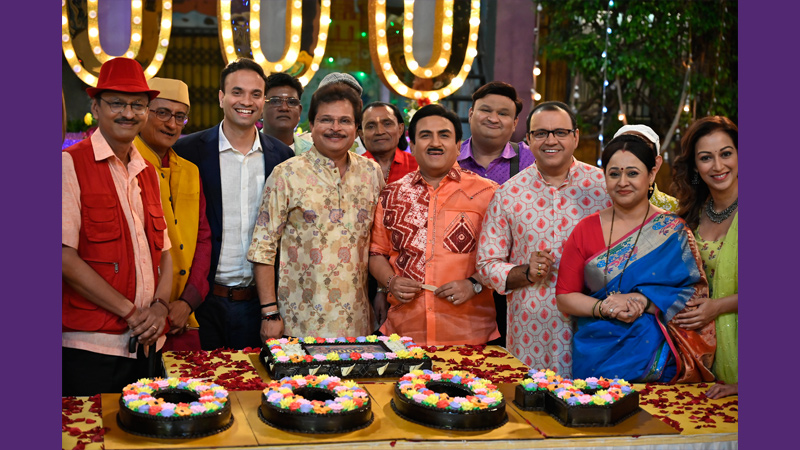
Taarak Mehta Ka Ooltah Chashmah celebrates 4,000 episodes
-
 MAM2 years ago
OpenAI joins C2PA steering committee
-
 News Headline1 year ago
Abhishek Bachchan joins as co-owner of European T20 Premier League
-
 News Headline2 years ago
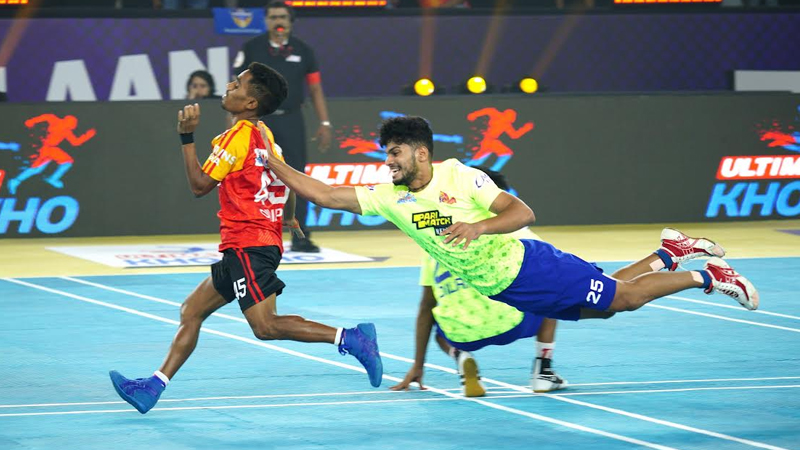
Odisha to host Ultimate Kho Kho Season 2 from December 24


