Kids
Indian kids love to watch TV: Study

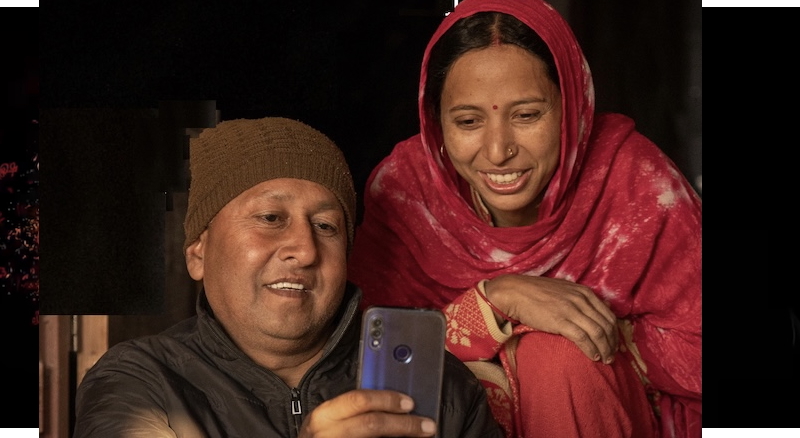
MUMBAI: Indian kids are more connected than ever as 79 per cent of respondents are mobile phone users and 92 per cent of kids have mobile phones in their homes–compared to just 17 per cent a decade ago.
Television continues to remain the top medium with 95 per cent of the respondents having watched TV yesterday, according to Cartoon Network’s New Generations 2011 study released at the Ficci-Frames summit.
With more access to consumer electronics, the number of kids with computers at home has increased from 6 per cent in 2001 to 22 per cent in 2011, the study said. Only 2 per cent of homes surveyed had DVD Players in 2001 which has leapfrogged to 61 per cent today.
The study was presented by South Asia Turner International India Entertainment Networks VP and Deputy GM Monica Tata and Bollywood’s director and producer Yash Chopra.
Cartoon Network’s patented kids’ lifestyle research analyses the evolution of Indian kids, including their behaviour, attitudes and preferences, over the past 10 years.
Tata said, “We are extremely proud of this landmark achievement as it has been an enriching journey closely observing Indian kids evolve over the last 10 years. As the largest study of its kind, we’re pleased to not only be part of kids’ lifestyles but also contribute to society valuable insights on this dynamic consumer segment, which is tomorrow’s decision maker.”
The findings also revealed that kids in India are more likely to interact with computers and online than their parents. Amongst Internet users, 22 per cent of kids access the Internet daily and 67 per cent of kids play online games followed by 51 per cent of kids listening to or downloading music.
The report also said that 45 per cent of kids go online to search for information, 26 per cent for emailing, 23 per cent for homework and 19 per cent for social networking. Girls are just as active gamers as boys with 68 per cent playing games online compared to 66 per cent of boys. Mobile emerged as the most commonly used platform for gaming by kids (50 per cent), followed by gaming consoles (35 per cent).
In the social network space, Facebook emerged as the number one social network website (93 per cent), followed by Orkut (50 per cent).
According to the survey, Indian kids’ spending power is increasing with pocket money going up by 201 per cent over the past 10 years. Girls’ average monthly pocket money is as much (Rs. 280) as boys (Rs. 277).
Also, 58 per cent kids receive gift money and the average annual gift money stood at Rs 845 in 2010 vis-?-vis Rs 567 in 2009 and Rs 306 in 2006. 55 per cent of kids save part of their pocket money. with the survey indicating that girls tend to save more of it (59 per cent) as compared to boys (52 per cent). The most preferred financial tool for kids’ saving by parents is insurance (51 per cent).
Said Turner International Asia Pacific Research and Market Development Vice President Duncan Morris, “Today‘s kids are more connected and more influential than ever before, but while one in 10 has their own mobile phone, and 8 in 10 homes have Internet access, New Generations will no doubt chart continued growth as Indian kids start to rival their connected cousins in other countries like Australia and the USA, where more than 50% have their own mobile, and 8 in 10 are Internet users.”
48 per cent of parents are likely to consider their child’s opinion while buying a mobile phone. Further, parents involving their kids in car purchase decision making has grown from 25 per cent in 2001 to 63 per cent in 2011.
After the Cartoon Network’s study was launched, Dr Kersi Chavda spoke about the negative effects of violent games and the side effects of getting addicted to Internet and other media.
Chavda highlighted the problems that parents are facing due to some irresponsible actions on part of gaming industries; primarily he spoke about the rating standards used for games, which he said were too lenient.
This stance was vigorously challenged by Reliance Entertainment Digital Business CEO Rohit Sharma, who said that the Doctor’s findings were irrelevant in contemporary times.
The dynamic debate was laid to rest by Perfetti Van Melle India MD Sameer Suneja, who emphasised the importance of self-regulation by the media and gaming industry.
The research surveyed a total of 3759 kids of 7-14 years of age and 1121 parents of 4-6 years old kids in SEC A, B and C across 19 centers including, New Delhi, Mumbai, Bangalore, Chennai, Kolkata, Nasik, Ahmedabad and Lucknow.
Launched as a pan-Asia Pacific initiative in 1998, New Generations is currently conducted in India, Pakistan, Australia, Taiwan and Philippines in the region. In India, it was launched in 2001.

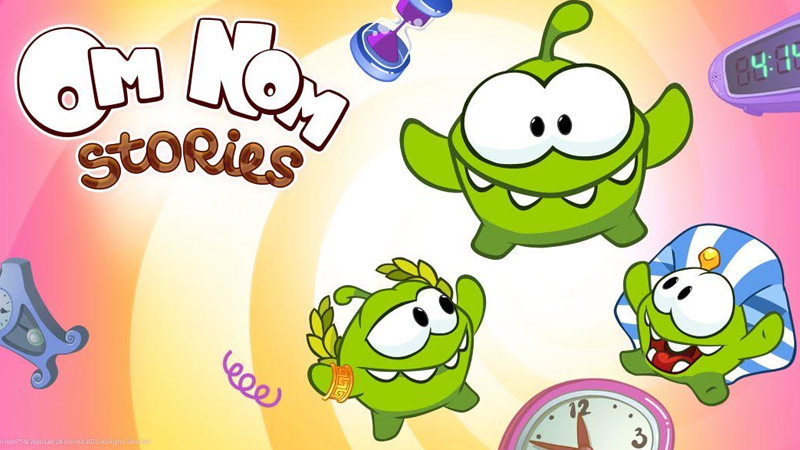
MUMBAI: The little green hero is making a big leap east. Zeptolab has struck a major distribution deal with Warner Bros. Discovery, bringing its hit animated series Om Nom Stories to audiences across the Indian subcontinent.
Under the agreement, Warner Bros. Discovery has acquired the series for exclusive Pay TV broadcast and non-exclusive digital streaming in India, Pakistan, Bangladesh, Bhutan, Nepal and Sri Lanka. The move marks a significant expansion for Zeptolab as it pushes one of its most successful original IPs into one of the world’s fastest-growing entertainment markets.
As part of the deal, all 26 seasons of Om Nom Stories will be rolled out across Cartoon Network, Pogo, Discovery Kids and Discovery+, offering both linear and digital access to the franchise’s slapstick humour and expressive, dialogue-free storytelling.
“We’re incredibly excited to partner with Warner Bros. Discovery to bring Om Nom Stories to the Indian subcontinent,” said Zeptolab executive producer Manaf Hassan, noting that the broadcaster’s reach and legacy make it a strong fit for the series’ growing global fanbase.
Warner Bros. Discovery, meanwhile, sees the acquisition as a natural addition to its children’s portfolio. Warner Bros. Discovery head of factual entertainment, lifestyle and kids for South Asia Sai Abishek, said the series aligns with the network’s focus on cheerful, imaginative and universally appealing content for families across the region.
The timing adds an extra layer of significance. The expansion coincides with Om Nom’s 15th anniversary, underlining the franchise’s staying power and its evolution from a mobile game character into a global animation brand. With this latest bite at the Indian subcontinent, Om Nom’s adventures look set to find a whole new generation of fans.
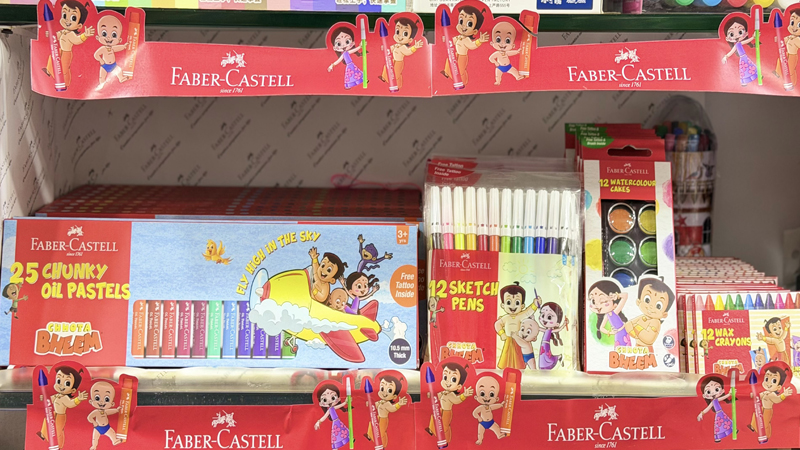
MUMBAI: If childhood memories had a colour palette, Chhota Bheem would likely be right in the middle of it and now, quite literally, in children’s pencil boxes too. Green Gold Animation has announced a landmark licensing partnership with Faber-Castell India, marking the global stationery major’s first-ever licensed character collaboration. The association brings Chhota Bheem to a specially curated range of student art and creative products, blending everyday learning tools with one of India’s most recognisable homegrown characters.
The move is a notable expansion of Chhota Bheem’s footprint beyond screens, reinforcing the character’s status as a multi-generational IP that has steadily grown from a television favourite into a cultural constant. For Green Gold Animation, the partnership signals a sharpened focus on extending its intellectual property into daily touchpoints, where entertainment meets education and habit.
In its first phase, the collaboration will roll out Chhota Bheem-themed products across key student art categories, including watercolour cakes, wax crayons, poster colours, sketch pens, oil pastels and creative bundling kits. The range is aimed squarely at school-going children, tapping into Bheem’s strong emotional connect while encouraging imagination, creativity and hands-on expression.
Green Gold Animation founder and CEO Rajiv Chilaka noted that Chhota Bheem’s journey has long moved beyond episodic storytelling. He said the partnership reflects a deliberate attempt to embed the character into moments of learning and creativity, while building a more purpose-led licensing ecosystem around Indian IP through collaboration with a globally established brand.
From Faber-Castell India’s perspective, the tie-up marks a strategic first. Faber-Castell India director marketing Sonali Shah said the collaboration opens a new chapter by pairing the brand’s long-standing reputation for quality and safety with a character that already commands trust and affection among Indian children. The aim, she added, is to make creativity more engaging and relatable without diluting product standards.
The launch will be backed by a 360-degree promotional push, spanning digital campaigns, social media storytelling, creative usage content and on-ground retail activations across select markets. Both companies have confirmed that this is only the starting point, with additional Chhota Bheem-themed products across new categories planned in the months ahead.
Headquartered in Hyderabad, Green Gold Animation continues to scale its ambition of building globally competitive Indian IPs, with Chhota Bheem leading the charge. This latest collaboration suggests that the brand’s next phase of growth may be less about what children watch and more about what they create.
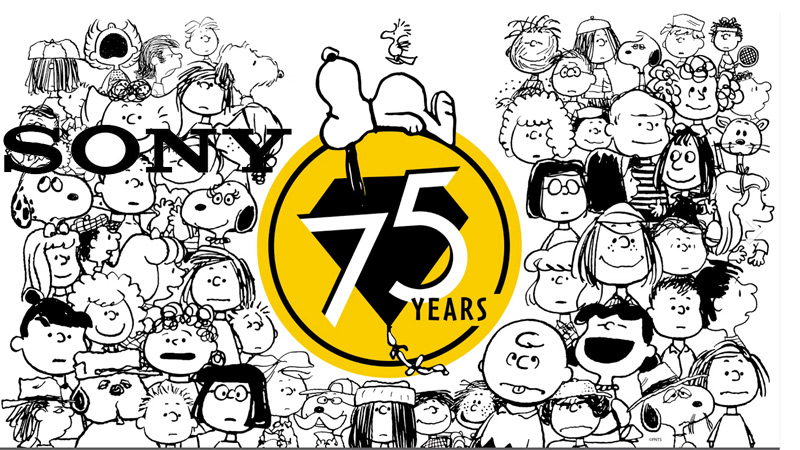
JAPAN: Sony has doubled down on the power of legacy brands, snapping up a majority stake in the Peanuts intellectual property in a late-year deal valued at about $457 million.
Sony Pictures Entertainment and Sony Music Entertainment Japan have acquired the roughly 41 per cent holding in Peanuts Holdings LLC previously owned by Canadian children’s entertainment company WildBrain. The move lifts Sony’s ownership to 80 per cent, with the Schulz family retaining the remaining 20 per cent.
The deal brings one of pop culture’s most durable franchises, home to Charlie Brown, Snoopy and the rest of the Peanuts gang, firmly under the Sony umbrella. The characters were created by Charles M Schulz, whose daily comic strip ran for half a century before ending in 2000.
Sony had already been a long-time partner in the business. The latest transaction consolidates control and sharpens the group’s hand as it looks to keep the characters front and centre across film, television, music and consumer products.
President and group ceo of Sony Music Entertainment Japan, Shunsuke Muramatsu, said the additional stake would allow Sony to further elevate the Peanuts brand by drawing on the group’s global reach and creative expertise, while preserving the legacy of Schulz and his family.
President and ceo of Sony Pictures, Ravi Ahuja, said the combined ownership gives Sony the ability to protect and shape the future of the characters for new generations, expanding their relevance without diluting their charm.
Peanuts long ago escaped the confines of the comic strip, cementing its place in popular culture through perennial television specials such as A Charlie Brown Christmas and It’s the Great Pumpkin, Charlie Brown. More recently, WildBrain kept the franchise active with animated series including Snoopy in Space and The Snoopy Show.
Now, with Sony firmly in control, the message is unmistakable. In an industry obsessed with the next big thing, nostalgia still sells and Sony is betting big on a doghouse that refuses to age.


MIB sets OTT accessibility rules, mandates captions and audio description

Boney Kapoor acquires remake rights of Tamil political satire Thalaivar Thambi Thalaimaiyil

Netflix India names Rekha Rane director of films and series marketing

Zabeen signs off from TV9 after shaping the network’s public voice

Dhawan steps up to bat for Delhi’s grassroots sports push

Orient Beverages pops the fizz with steady Q3 gains and rising profits

Cheekatilo shines in the dark with record debut on Prime Video

These ’90s fashion trends are making a comeback in 2017
The final 6 ‘Game of Thrones’ episodes might feel like a full season

Swiggy Instamart’s GOV surges 103 per cent year on year to Rs 7,938 crore
According to Dior Couture, this taboo fashion accessory is back
The old and New Edition cast comes together to perform
Phillies’ Aaron Altherr makes mind-boggling barehanded play
Uber and Lyft are finally available in all of New York State
MIB sets OTT accessibility rules, mandates captions and audio description
Boney Kapoor acquires remake rights of Tamil political satire Thalaivar Thambi Thalaimaiyil
Netflix India names Rekha Rane director of films and series marketing
Zabeen signs off from TV9 after shaping the network’s public voice
Dhawan steps up to bat for Delhi’s grassroots sports push
Orient Beverages pops the fizz with steady Q3 gains and rising profits
Cheekatilo shines in the dark with record debut on Prime Video
-
 e-commerce3 weeks ago
Swiggy Instamart’s GOV surges 103 per cent year on year to Rs 7,938 crore
-

 News Headline2 months ago
From selfies to big bucks, India’s influencer economy explodes in 2025
-

 News Broadcasting2 weeks ago
Mukesh Ambani, Larry Fink come together for CNBC-TV18 exclusive
-
 iWorld5 months ago
Billions still offline despite mobile internet surge: GSMA
-

 News Headline2 months ago
2025: The year Indian sports saw chaos, comebacks, and breakthroughs
-
 MAM2 years ago
Costa Coffee becomes official coffee partner of Olympic Games Paris 2024
-

 News Headline2 months ago
Game on again as 2025 powers up a record year and sets the stage for 2030
-

 Applications2 months ago
28 per cent of divorced daters in India are open to remarriage: Rebounce