
Animation
Indian animation needs a global outlook

MUMBAI: Among the key issues addressed by the recently concluded FICCI MEBC (Media and Entertainment Business Conclave) (South) in Bengaluru on 29 and 30 October was the state of the animation industry in India and what can be done to improve its lot.
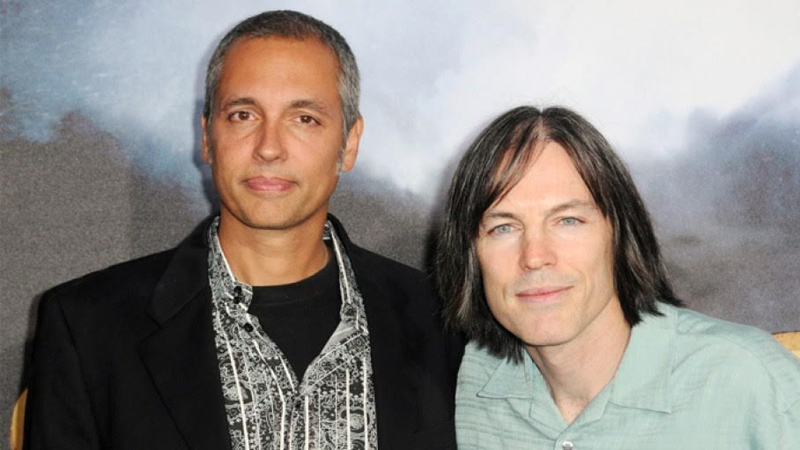
The second day of the conclave saw a dedicated session titled ‘Emerging trends of Indian IP in animation and their exploitation’ with Turner International India senior director and network head for kids in south Asia Krishna Desai, Graphic India co-founder and CEO Sharad Devarajan, Shemaroo Entertainment director Jai Maroo, Krayon Pictures co-founder Nisith Takia and Greengold Animation founder and MD Rajiv Chilaka and Reliance Animation CEO Ashish Kulkarni as moderator.
Devarajan began by highlighting the need for a cohesive ecosystem favouring the country’s animation industry.
 |
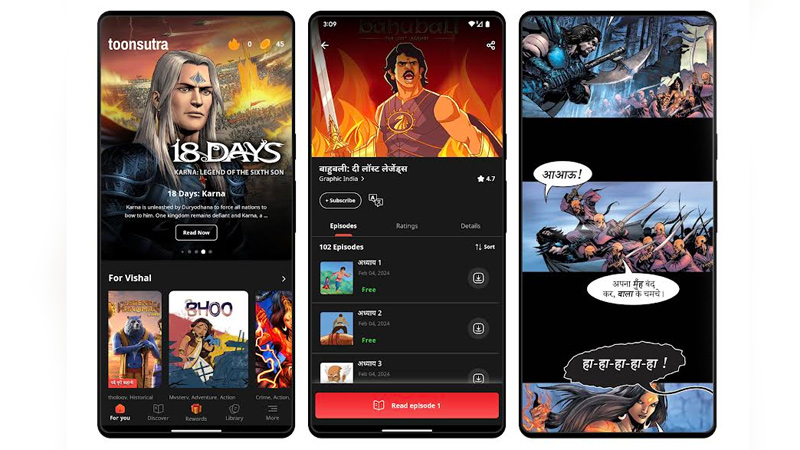
“Indian consumers today are used to seeing the best of the world and so, we need to transcend the national market and go to the international market,” he said, stressing the need to create content like that made by Stan Lee or Steven Spielberg. “Multi platform and global is how you have to think of stories today,” he said, pointing out how a version of Mahabharat was launched as 18 days, a re-imaging of the original by Graphic India at the San Diego Comic Con and went straight to Youtube.
Chilaka made a special reference to Chhota Bheem as a kids’ icon while speaking of Greengold’s huge success in the field of animation. “We have grown from just four to over 300 in 12 years. No one knows which show will work, so we have to just give it a shot. Chhota Bheem started off as just 10 products and now it is available in more than 3000 across 30 country stores. We didn’t realize that it would be a phenomenon but now we are confident about making a movie every year,” he said, pointing out that while IP monetisation was happening, it was equally important to build good infrastructure around it to help harness IP better.
Maroo said Shemaroo would help in distribution and marketing even though it wasn’t actively involved in the creation of animation. “There are people with great production and artistic capacity for whom we can work on aspects like music, distribution and marketing. The reason why characters like Bal Ganesh and Chhota Bheem work well is because of their sheer stickiness. We should have IP with an Indian soul but an international story. What the west has is sharp screenplay that translates across boundaries. That is what we lack,” he said.
Desai opined there wasn’t enough investment in animation and pointed out the difficulties in creating animated content. “There is less advertising revenue for a kids channel (Turner), so we also have less money to invest in new content,” he said.

Kulkarni said, “In India, animation is positioned as a kids’ genre,” to which, Devarajan gave an example of the Japanese, who have moved Anime from kids to a sophisticated audience. “Their characters have elasticity and a soul that appeals to various demographics. Why aren’t we creating any Clash of the Titans or Lord of the Rings?” asked Devarajan.
Chilaka said they needed to come up with interesting ways of promotion to grab eyeballs, citing the example of Raju. “We timed Raju to release three weeks before the football world cup and on TV, we did a premiere during the semi-final,” he said.
Maroo pointed out that very few screens were available across the country for animated movies, thereby restricting viewership. “This industry is the best when commerce meets creativity,” he said. Takia felt not many people understood the business even if they were superlative on the creative front. “We can call ourselves successful only when we galvanise the creative population,” added Devarajan. Maroo rounded off saying: “The future will be about how many different revenue platforms you build.”

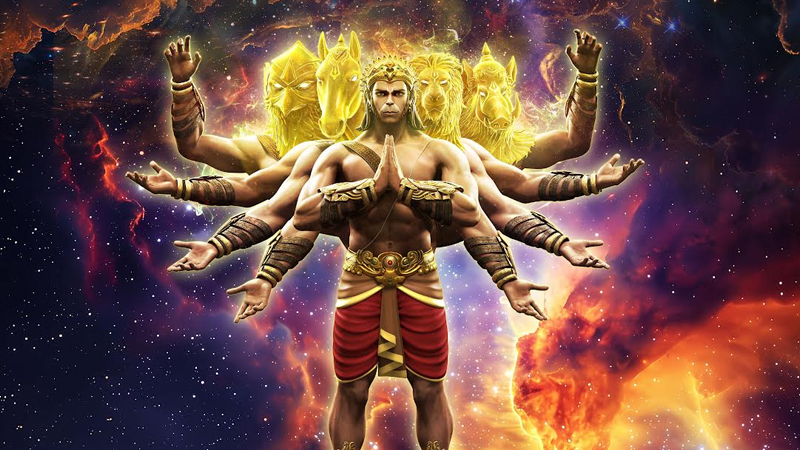
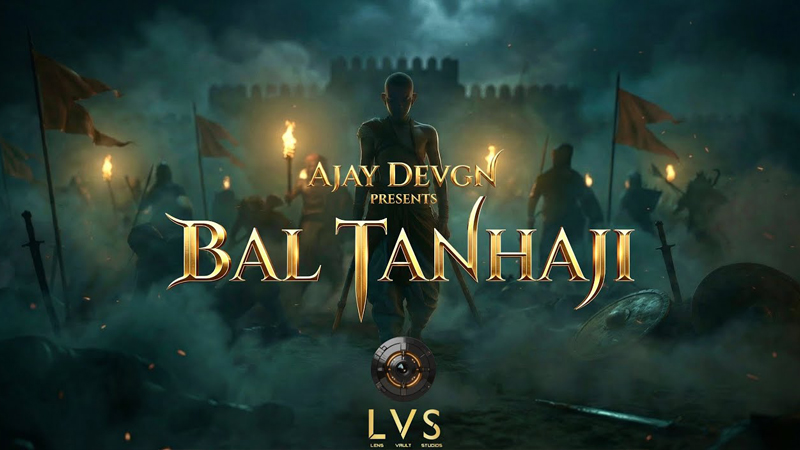
MUMBAI: History is getting a fresh rewrite this time with code, creativity and a longer arc in mind. Lens Vault Studios has announced its first original production, Bal Tanhaji, marking the official entry of the newly launched, tech-driven studio into India’s evolving entertainment landscape.
Arriving six years after the box-office success of Tanhaji: The Unsung Warrior, the new project expands the universe rather than revisiting familiar ground. Bal Tanhaji explores uncharted narrative territory, signalling a clear shift from one-off cinematic spectacles to long-format, world-building storytelling designed for digital-first audiences.
At the heart of this ambition is Prismix Studios, the in-house generative AI and technology arm powering the creative engine behind the show. The studio’s approach blends storytelling with next-generation tools, aiming to reimagine how Indian IPs are created, scaled and sustained beyond theatrical releases.
For Lens Vault Studios chairman Ajay Devgn the new venture represents a deliberate step beyond traditional cinema. The focus is firmly on building long-form intellectual properties across fiction and non-fiction, tailored to changing viewing habits and platform-led consumption. He said the studio intends to explore formats that remain largely untapped, while drawing on the team’s experience with large-scale cinematic storytelling.
Lens Vault Studios founder and CEO Danish Devgn echoed that sentiment, describing Bal Tanhaji as the studio’s first generative-AI-led IP and the starting point of a broader vision. The aim, he noted, is to carry forward the legacy of the Tanhaji universe while connecting with younger audiences through a blend of powerful narratives and emerging technologies.
With Bal Tanhaji, Lens Vault Studios is planting its flag early not just launching a show, but signalling a larger play for cinematic universes that live, grow and evolve across platforms. If this debut is any indication, the future of Indian storytelling may be as much about imagination as it is about innovation.
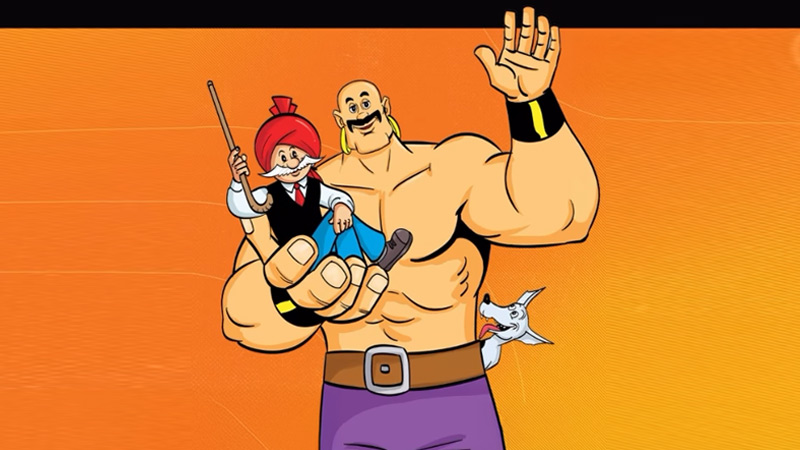
MUMBAI: EiPi Media has struck a licensing partnership with Pran’s Features LLP and Toonz Media Group to create AI-powered digital content featuring Chacha Chaudhary and his inseparable sidekick Sabu, signalling a new phase in the monetisation of India’s legacy intellectual property.
Under the agreement, Pran’s Features LLP, the copyright holder of the iconic comic characters created by the late cartoonist Pran Kumar Sharma, has licensed EiPi Media to develop short-form, AI-driven animated microfilms for branded and platform-native use. The effort aims to preserve the humour, values and visual identity of the originals while adapting them for a digital-first audience.
The initiative sits at the intersection of three converging trends: the untapped commercial potential of India’s legacy IP, a maturing animation and storytelling ecosystem, and AI-led production tools capable of delivering cinematic realism at scale and speed. The resulting content is designed for high engagement across social and digital platforms, with brand integration woven into narrative rather than bolted on.
EiPi Media founder and chief executive Rohit Reddy, said the partnership is about extending cultural relevance, not novelty. “By harnessing AI, we are creating emotionally resonant stories at digital speed, while keeping the characters’ original charm and values intact,” he said, adding that the goal is to build long-term narrative value across platforms and generations.
Pran’s Features LLP director Nikhil Pran, said Chacha Chaudhary has always evolved with changing media, from print to television and now AI-powered animation. “This step allows us to embrace new technology while staying true to a character that became part of everyday cultural literacy across India,” he said.
Viswanath Rao of Toonz Media Group said the collaboration reimagines the duo as hyper-realistic, performance-driven AI personas built for digital-first platforms, avoiding both dated animation styles and superficial AI gimmicks.
Planned outputs include branded short films, narrative-led brand campaigns and seamless IP integrations across digital ecosystems. In an overcrowded attention economy, EiPi Media is positioning Chacha Chaudhary and Sabu not as revived icons, but as living characters: familiar, trusted and engineered for the future of storytelling.
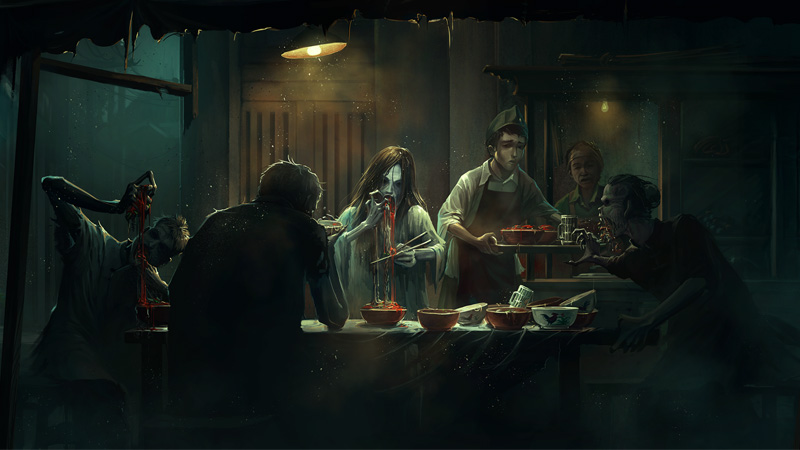
SINGAPORE: The cauldron of Asian horror just got a potent new ingredient. A Banquet for Hungry Ghosts, the animated Singapore–Taiwan–Ireland horror anthology, has welcomed Indonesia’s powerhouse IP studio Kucing Hitam as co-producer, expanding its regional footprint at this year’s Asia TV Forum.
The 90-minute feature, adapted from Chinese-American author and chef Ying Chang Compestine’s acclaimed book, weaves four standalone yet interconnected tales steeped in tradition, terror and food folklore. Already tipped as one of the region’s most anticipated films, the project recently won the NMEA Award at Taiwan Creative Content Fest for its cross-disciplinary creative approach.
Kucing Hitam, founded in 2019, has carved a niche in Southeast Asian genre storytelling and is best known for shaping cultural blockbusters such as KKN di Desa Penari, Indonesia’s highest-grossing horror film. The company has built a strong IP pipeline by nurturing creators with massive grassroots followings, and in recent years it has expanded decisively into film production and original IP development.
Founder Charles Johannes said the anthology resonated deeply with Indonesia’s current wave of horror storytelling, which blends tradition with contemporary anxieties. He said the team was eager to help broaden the film’s global reach.
Kucing Hitam brings a track record linked to more than US $20 million in cumulative Indonesian box office revenue. For the film’s Indonesia-set segments, LMN VFX in Jakarta and Indonesia–Singapore investment firm Goshen Group will join the production team.
Singapore’s Mediacorp has supported the project from its earliest days, backing it during its infancy as a television pilot under the broadcaster’s Creatives Assembly initiative. Chief customer and corporate development officer, Angeline Poh, praised the project’s evolution from local concept to international collaboration.
Further strengthening the film’s finish is Telegael, the award-winning Irish studio under the Toonz Media Group, which will lead post-production. The partnership brings European technical finesse to the heart of Asian storytelling, enhancing the film’s global appeal.
Robot Playground Media co-founder Ervin Han, who created the project, said Kucing Hitam’s instinct for Asian horror adds depth to the film’s lore, while producer Justin Deimen emphasised the franchise potential of the Banquet universe across formats and brand partnerships.
For Indonesia specifically, Goshen Group’s managing director Allen Jordan noted that the film’s twin themes of food and fear make it a natural fit for local audiences.
A Banquet for Hungry Ghosts is expected to haunt theatres in early 2027, with Toonz Media Group and Robot Playground Media steering regional pre sales as the project returns to its Asian creative roots.


MIB sets OTT accessibility rules, mandates captions and audio description

Boney Kapoor acquires remake rights of Tamil political satire Thalaivar Thambi Thalaimaiyil

Netflix India names Rekha Rane director of films and series marketing

Zabeen signs off from TV9 after shaping the network’s public voice

Dhawan steps up to bat for Delhi’s grassroots sports push

Orient Beverages pops the fizz with steady Q3 gains and rising profits

Cheekatilo shines in the dark with record debut on Prime Video

These ’90s fashion trends are making a comeback in 2017
The final 6 ‘Game of Thrones’ episodes might feel like a full season
According to Dior Couture, this taboo fashion accessory is back
The old and New Edition cast comes together to perform
Phillies’ Aaron Altherr makes mind-boggling barehanded play
Uber and Lyft are finally available in all of New York State
Disney’s live-action Aladdin finally finds its stars
MIB sets OTT accessibility rules, mandates captions and audio description
Boney Kapoor acquires remake rights of Tamil political satire Thalaivar Thambi Thalaimaiyil
Netflix India names Rekha Rane director of films and series marketing
Zabeen signs off from TV9 after shaping the network’s public voice
Dhawan steps up to bat for Delhi’s grassroots sports push
Orient Beverages pops the fizz with steady Q3 gains and rising profits
Cheekatilo shines in the dark with record debut on Prime Video
-

 News Broadcasting1 week ago
Mukesh Ambani, Larry Fink come together for CNBC-TV18 exclusive
-

 News Headline1 month ago
From selfies to big bucks, India’s influencer economy explodes in 2025
-

 iWorld2 weeks ago
Netflix celebrates a decade in India with Shah Rukh Khan-narrated tribute film
-

 Hollywood6 days ago
The man who dubbed Harry Potter for the world is stunned by Mumbai traffic
-
 I&B Ministry3 months ago
India steps up fight against digital piracy
-
 iWorld5 months ago
Billions still offline despite mobile internet surge: GSMA
-
 MAM3 months ago
HoABL soars high with dazzling Nagpur sebut
-
 Brands4 days ago
Netflix India names Rekha Rane director of films and series marketing
