
GECs
‘Idol’ Worship!


Though not exactly an Indian Idol watcher, I took to watching the show towards the fag end just when the whole world around me seemed to be divided into the Abhijeet ya Amit camp.Come to think of it; after the Kaun Banega Crorepati phase, “Kaun Banega Apna Indian Idol” is the next big punchline which has caught the imagination of the masses.
 As the show peaks to its grand finale on March 5; frenzied viewers‘ (Sab Kuch bhula ke) continue to vote in and the lucky duo finalists prepare for the final “Mahayudh” on Friday night. And that‘s not all, Abhijeet and Amit are campaigning really hard across various cities to garner votes. Afterall, its all about getting the public votes now and the stakes here are really high; the Indian Idol will walk away with a Rs 10 million recording contract.
Time now to reap the harvest for the channel? With audiences swelling and the last show itself generating an average of 3 million votes (nearly 1.2 million came in on sms from viewers‘ mobiles) Idol has managed to propel Sony into the top 10 show league, long (seems like forever) the exclusive preserve of Star Plus.
So, what‘s it about this Fremantle‘s Pop Idol show which has captured the imagination of networks across the world? Simon Fuller‘s concept, which has emerged as the most lucrative non fiction format show cutting across boundaries in more than 30 countries. Many bet it has emerged as one of the hottest categories of reality TV around. A tried and tested concept where localised versions of Idol were done and channel fortunes turned around dramatically. Till date, Rupert Murdoch‘s Fox network in the US has been the biggest gainer in this respect.
The beauty of the ‘phenomenon‘ perhaps being that Idol takes a localised form in each country that it goes to. It‘s all about unearthing real talent, a dramatic rags to riches story, a high level of viewer interactivity and emotional involvement. An unscripted drama that‘s all about jumping in and making your mark. A decision making, destiny deciding, show in which the drama unfolds with each episode. And it‘s not at all about good looks or personality but all about getting your notes right.
The connect happens along the way as viewers not just empathise but get emotionally attached to the contestants. So, when a Ravinder Ravi, a house painter from Jalandhar was voted out followed by a Rahul Vaidya, there were many who wept with them. Couple this with the unique interaction of the judges, hosts and the contestants. Also, Idol is a very positive concept unlike the ones like Big Brother and Temptation Island, which seem to be turning America into a ‘nation of voyeurs‘.The Indian Story
 Since the concept has tasted nothing but success in other parts of the world, the challenge perhaps was in the Indianisation and implemention. For this, the channel roped in Optymystix Entertainment Ltd and Miditech – both of which had a proven track record and understanding of format shows. “We spent more than six months just understanding what makes the format tick across the world,” explains Optymystix‘ Sanjeev Sharma. He further adds, “Things were also a bit easier since our interaction with Fremantle goes back to Khulja Sim Sim days, which is also a Fremantle format.”
The next step in the journey was really the tough exercise of vetting the thousands of aspiring singers from across the country. Music composer Anu Malik, singer Sonu Nigam and choreographer-cum-director Farah Khan were roped in to select the best talent. Finally the number of contestants was brought down to 30, and that‘s when the viewers took over. And here is where the “culture-sensitive” aspect of localization really comes through.
If on an American Idol it was the uncouth nature of the judge Simon Cowell that gave the show its edge; here the judges were just being themselves – Farah was sometimes rude and funny, Sonu was pretty straightforward and Malik was the hard man given to poetic one-liners. And of course, presenters Aman Yatan Verma and Mini Mathur also played a key role. They were the ones who took the singers through the smiles and tears backstage and travelled across the nooks and corners of the country asking people to vote.
 Many feel the show has definitely cut across various TGs. Very excited about the response the show has evoked, Sanjeev Sharma exclaims, “I‘ve been getting calls from across a cross section of society. Some of the calls were people like Bal Thackeray, Sachin Tendulkar and Sunil Gavaskar who have been involved with the show. It‘s the show‘s ability to get the humane side of the contestants that has been the real high point. On the other hand it could be also be a vendor on the roadside who is equally involved.” He further says, “But if it weren‘t for the singing abilities of the contestants, the show would not have clicked. It‘s amazing how the youngsters never gave up till the end.”
One issue the show did confront was that recent attempts in the genre had failed. Some of the adaptations that come to mind are Russian Roulette (Sony‘s Bachke Rehna) and The Weakest Link (Star Plus‘ Kamzor Kadii Kaun). Then there was also the fact that many in the industry drew comparisons with rival Star‘s Super Singer talent hunt.

Putting things in perspective, Tarun Katial, Business Head, SET says, “Idol is definitely not about finding another pop band (a la Channel [V]‘s Popstars). It‘s about real people, real emotions and a good platform for somebody to become a rag to riches story. A very high involvement and high emotion drama. It‘s not just a talent hunt but a reality show; as real as it can get.”
Offering a perspective on why some other reality shows had not created such a market buzz, he explains, “Bollywood is the name of the game in India. And music is the staple diet of the young generation. The reality hunt is really weaved around that theme and totally based on it. It serves as a route for a nobody to become a somebody. The show definitely marks the advent of the reality genre in India.”
Throwing light on the Indian experience with Idol, Gavin Wood, Fremantle‘s representative in India, says, “I have been involved with the show in many countries across the world. In India, the cultural differences are very apparent. For instance, there was a contestant called Trynece in US who picked the wrong song and the judge told her that. And she was equally rude to the judge. And people voted for her. But that would not happen in India as here you‘re taught to respect your elders.”
TAKING STOCK, HAS THE GAMBIT WORKED?
A show of this calibre obviously doesn‘t come cheap. Apart from the cost of the property, it was accompanied with a heavy marketing initiative. The channel had obviously left no stone unturned in creating the right market buzz. There were strategic partnerships, to increase the sampling and penetration into lower SECs and roping in audiences who don‘t feed on mass channels.
The figures being thrown around on the per-episode expenses (factoring in format acquisition cost, marketing and promotion activities both on-air and off-air, and production expenses) have gone as high as Rs 6 million. Indiantelevision.com however, believes it is more likely in the Rs 3.5 million to 4 million range. Even that is a huge figure, any way you cut it.
And while the channel is predictably tightlipped about the cost of acquisition, a source, on condition of anonymity, reveals, “Across the world networks who want to spruce up the channel prospects go in for the format. The cost of the Indian acquisition has been very high as compared to some other countries.”
 Says Katial, “Though I cannot get into the economics of it. All I can say is that it has been extremely well received in terms of numbers and it has brought in a new set of audiences into the loop.”
And they have been many. The first episode itself received over 420,000 votes polled in just 2 ? hours. The highest viewer response that the channel claims has been more than 3.6 million in a night and 25 million over a week. Sony seems to be enjoying not only a rise in viewership, but also the benefits of an alternate revenue stream (via SMSs). In fact, many feel that while there have been a number of SMS initiatives that have taken place earlier, none have thrown up such a response.
While the debate will continue on whether the investment in Idol matched the returns the channel achieved, Katial is emphatic that the show will at have another run on SET. “There will definitely be a second season to the show,” he stresses.
The way the show has shaped up and viewer interactivity swelling by the day, has the show been every advertiser‘s dream? Says Natasha Narad, Mindshare, “The show has definitely created the right market buzz and even for the advertisers has delivered fantastic results. The channel had also created more spots towards that end.The TRP‘s have been increasing. But then, it hasn‘t achieved what KBC did for the rival channel. It‘s also a time bound property and the channel has to see how to sustain future growth.”
While comparisons to KBC will always be made (a tad unfair considering that such phenomenal success is a once in a lifetime happening), there‘s no doubt in anyone‘s mind that Idol has marked out its own territory, it‘s own space in the consciousness of the Indian viewer.







CHENNAI: It appears there is still plenty of Sun to go around in the Indian broadcasting landscape, even if a few clouds have drifted across the financial horizon. Sun TV Network Limited, the Chennai-based behemoth that dominates airwaves across seven languages, has tuned into a steady frequency for the quarter ending 31 December 2025. While the numbers show a resilient revenue stream, the company’s latest broadcast reveals a few static-filled spots in its profit margins.
For the quarter in question, Sun TV’s total income climbed by approximately 3.31 per cent, reaching Rs 958.39 crores compared to Rs 927.66 crores in the same period last year. Revenue from operations also saw a healthy bump, rising 4.32 per cent to Rs 827.87 crores.
The real star of the show, however, was domestic subscription revenue, which surged by 8.86 per cent to Rs 472.99 crores. This growth highlights the enduring appetite for Sun’s diverse content, which spans everything from daily soaps in Tamil and Telugu to its burgeoning OTT platform, Sun NXT.
Despite the revenue growth, the picture quality of the profits was slightly blurred by rising costs. Eitda for the quarter stood at Rs 409.79 crores, a dip from the Rs 432.14 crores recorded in the corresponding 2024 quarter.
The profit after tax followed a similar downward trend, settling at Rs 316.44 crores against the previous year’s Rs 347.17 crores. Advertisers also seemed to have switched channels slightly, with advertisement revenues sliding to Rs 291.94 crores from Rs 332.17 crores.
Sun TV isn’t just playing on home turf; its sporting ambitions are becoming increasingly global. The network now owns three major cricket franchises: SunRisers Hyderabad in the IPL, SunRisers Eastern Cape in SA20, and SunRisers Leeds Limited in The Hundred (UK).
The foray into British cricket saw the company acquire a 100 per cent stake in Northern Superchargers Limited (now SunRisers Leeds) for approximately £100 million. While these franchises brought in Rs 14.61 crores this quarter, they also incurred corresponding costs of Rs 19.89 crores. Over the nine-month period, however, the cricket business is a major player, contributing Rs 487.64 crores in income.
The company’s bottom line took a minor hit from exceptional items, including a Rs 4.23 crore charge related to India’s new Labour Codes, which consolidated 29 existing labour laws. Additionally, the consolidated results reflect the amalgamation of Kal Radio Limited with Udaya FM, a move that became effective in May 2025 and required a restatement of previous figures.
To keep investors from reaching for the remote, the Board has declared an interim dividend of 50 per cent, that’s Rs 2.50 per equity share. This comes on top of earlier dividends of 100 per cent (Rs 5.00) and 75 per cent (Rs 3.75) declared in August and November 2025, respectively.
With a massive cash reserve and a dominant position in the South Indian market, Sun TV continues to shine, even if the current quarter required a bit of fine-tuning. For now, shareholders can sit back, relax, and enjoy the show.
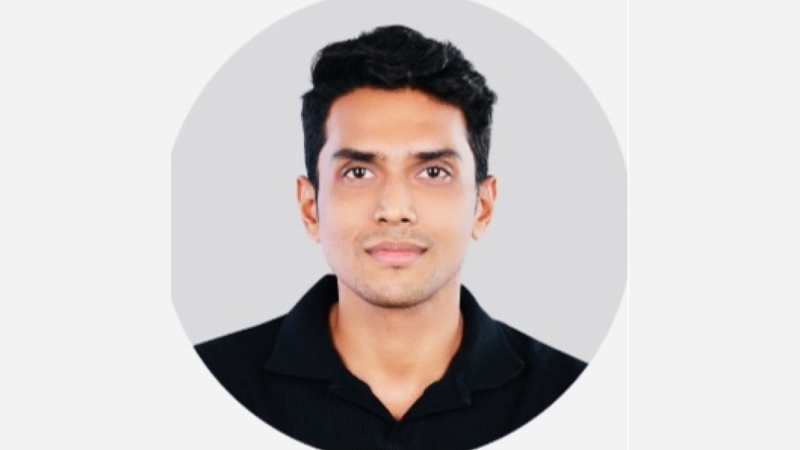
MUMBAI: Sony Pictures Networks India has hired Pradeep M to handle standards and practices for its southern market, bolstering its compliance bench as content rules tighten across platforms.
Pradeep, who has nearly 13 years in the entertainment media industry, takes on responsibility for content standards in a region that is both linguistically diverse and regulatorily sensitive. His brief spans television, OTT, sports and digital platforms.
He specialises in content review and compliance across shows, commercials, on-air promotions and international feeds, ensuring alignment with broadcast, OTT and advertising codes. He has also handled brand approvals and sponsorship integrations for heavily regulated categories—including online gaming, cryptocurrency, NFTs and lottery brands—offering guidance shaped by fast-evolving rules.
Before Sony, Pradeep worked at Jiostar as assistant manager for content regulation from November 2024 to January 2026. Earlier, he spent nearly seven years at Viacom18 Media, rising from senior executive to assistant manager in content regulation between 2018 and 2024. There he served as a key compliance touchpoint for the network.
His career began on the creative side. Between 2013 and 2018, he worked as executive producer on feature films and television shows, gaining hands-on exposure to production. He also had a stint as a non-fiction show director at Star TV Network in 2017. That mix of creative and regulatory experience gives him a dual lens—how content is made and how it must be managed.
As regulators, platforms and advertisers all tighten the screws, broadcasters are investing more in gatekeepers who can keep creativity within the lines. Sony’s latest hire shows where the industry is heading: in the streaming age, compliance is content’s quiet co-star.
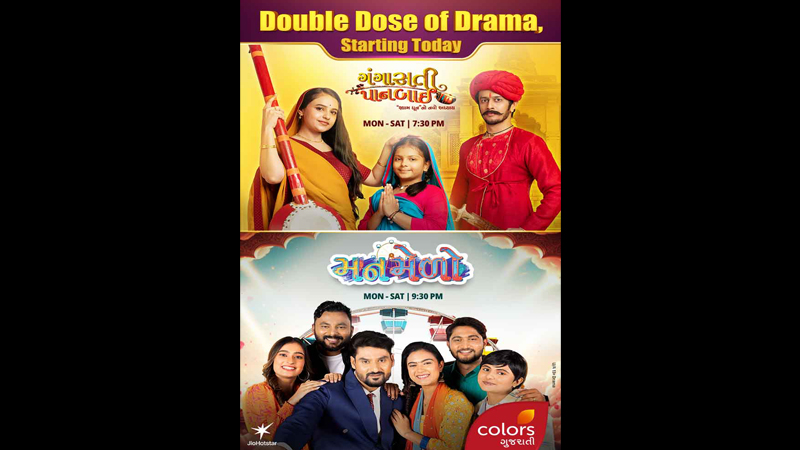
MUMBAI: Colors Gujarati has unveiled two new prime-time shows as part of its push to strengthen culturally rooted storytelling for regional audiences. The channel will premiere the devotional saga Gangasati–Paanbai at 7.30 pm, followed by the romantic family drama Manmelo at 9.30 pm from February 2.
Inspired by Gujarat’s spiritual and literary heritage, Gangasati–Paanbai: Shyam Dhun No Navo Adhyay draws from the timeless bhajans and poetry of saint-poetesses Gangasati and Paanbai, weaving devotion and human values into a contemporary narrative aimed at younger viewers.
In contrast, Manmelo explores love and responsibility across social divides, tracing the lives of three middle-class sisters whose relationships with three affluent brothers reshape their futures. The show delves into ambition, emotional conflict and the realities of married life, offering a layered family drama.
A Colors Gujarati spokesperson said the new launches reflect the channel’s commitment to authentic Gujarati entertainment that blends cultural values with modern storytelling.



MIB sets OTT accessibility rules, mandates captions and audio description

Boney Kapoor acquires remake rights of Tamil political satire Thalaivar Thambi Thalaimaiyil

Netflix India names Rekha Rane director of films and series marketing

Zabeen signs off from TV9 after shaping the network’s public voice

Dhawan steps up to bat for Delhi’s grassroots sports push

Orient Beverages pops the fizz with steady Q3 gains and rising profits

Cheekatilo shines in the dark with record debut on Prime Video

Swiggy Instamart’s GOV surges 103 per cent year on year to Rs 7,938 crore

These ’90s fashion trends are making a comeback in 2017
The final 6 ‘Game of Thrones’ episodes might feel like a full season
According to Dior Couture, this taboo fashion accessory is back

ATN International brings ATN Bangla to Canada
The old and New Edition cast comes together to perform
Phillies’ Aaron Altherr makes mind-boggling barehanded play
MIB sets OTT accessibility rules, mandates captions and audio description
Boney Kapoor acquires remake rights of Tamil political satire Thalaivar Thambi Thalaimaiyil
Netflix India names Rekha Rane director of films and series marketing
Zabeen signs off from TV9 after shaping the network’s public voice
Dhawan steps up to bat for Delhi’s grassroots sports push
Orient Beverages pops the fizz with steady Q3 gains and rising profits
Cheekatilo shines in the dark with record debut on Prime Video
-
 e-commerce1 month ago
Swiggy Instamart’s GOV surges 103 per cent year on year to Rs 7,938 crore
-
 iWorld1 year ago
Kuku TV transforms India’s OTT space with vertical microdrama boom
-
 News Headline1 year ago
TRAI puts a ‘stop’ to unsolicited calls and messages
-

 News Headline2 months ago
From selfies to big bucks, India’s influencer economy explodes in 2025
-
 Comedy2 years ago
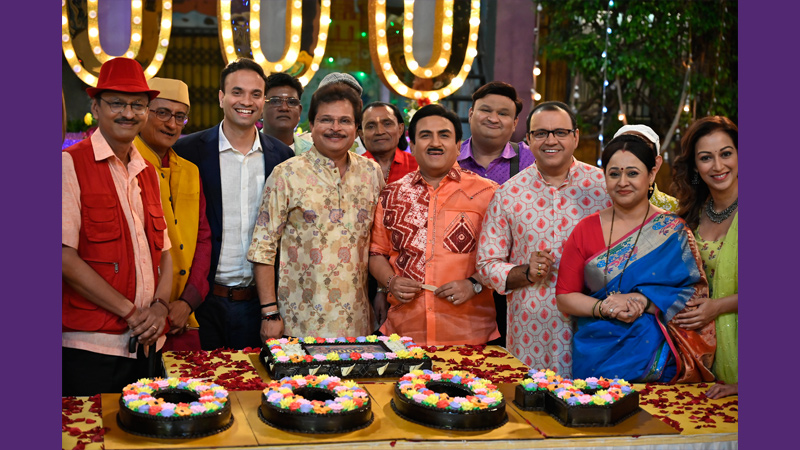
Taarak Mehta Ka Ooltah Chashmah celebrates 4,000 episodes
-
 MAM2 years ago
OpenAI joins C2PA steering committee
-
 News Headline1 year ago
Abhishek Bachchan joins as co-owner of European T20 Premier League
-
 News Headline2 years ago
Odisha to host Ultimate Kho Kho Season 2 from December 24


