
GECs
Hindi entertainment space shrinking?


Have Hindi general entertainment channels (GEC) reached a stage of saturation? Will 2005 see a further regression of this genre or is this space going to be consolidating?
Hindi general entertainment television is touted as the fuel that drives growth in the television industry. With cable penetration today estimated at 50 per cent, currently the GEC genre commands 38 per cent of the total viewership pie.
Flashing back to 2002, the GEC genre accounted for 47 per cent of total viewership. Interestingly, 2003 saw a whopping dip of 11 per cent with GEC being reduced to 36 per cent of the total viewership pie according to TAM data.
|
Segal also pointed out that another threat to GECs are outdoor entertainment avenues. When queried as to how they are addressing the issue, Segal said,”The launch of Star One is essentially to address this issue and look at increasing the overall viewership pie.”
Misra expects 2005 to see the Hindi GEC space probably going up to 40 – 41 per cent and stabilising there. “It will now be about consolidation and development of the genre.”  Set India EVP Sunil Lulla states, “I think one of the largest growing genres today is news, and the dip in mass entertainment channels was not surprising but expected. With the numbers three, four and five in the GEC space not showing any growth, the underbelly of this will have to be borne by the top two players. Although, among all the players, Sony is the only one that has shown a growth and in the last 6-8 months, the least amount of drop.” Coming to alternate sources of entertainment apart from TV, Lulla points out that today cable and satellite is still the cheapest form of entertainment and although the category may have become softer, Sony is still going strong. “There are going to be peaks and drops and the days of double digit ratings is something of the past.” Lulla also states that across all GECs the endeavour to offer unique and innovative programming is quite the name of the game, hence this genre will hold its stead. Audience fragmentation without doubt is one of the primary reasons for the dip. But is the overall viewership also falling? Starcom‘s TV buying head Gautam Rajgopal says, “Lesser amount of people are watching TV with the emergence of multiplexes, malls, amusement parks. The total viewership pie is definitely coming down, hence GECs are bound to take a beating.” Another reason attributed for the shrinking general entertainment pie are the burst of niche channels. Rajgopal also states that mass entertainment channels will now go through a consolidation phase. A crucial point not covered is the emergence and gaining popularity of regional channels. Regional channels account for the second largest viewership pie and as of 2004 account for 36 per cent, just two per cent lower that Hindi mass entertainment channels. Mindshare‘s investment director Amol Dighe validates this point. “Mass entertainment channels have reached their saturation point. If one looks at the West Bengal, Maharashtra and Punjab market the regional players there have shown a very good growth in viewership. News channels are also a genre that pose as a potential threat to GECs. I see mass entertainment channels now stabilising at this point and maybe even dropping further,” says Dighe. Coming to revenue implications for general entertainment channels, 2002 saw this genre account for 57 per cent of the entire revenue share. 2003 saw it dip to 47 per cent and 2004 revenue shares remain status quo at 47 per cent. Genres that have seen a significant spike in revenue are news and sports. Now, with viewership sliding in the mass entertainment arena, is it fair to say that an advertisers ROI has come down? Looking at the figures, one can see that although volume has dipped significantly, the value share has dipped in tandem, hence advertisers today are paying only a marginal premium on GECs Misra states, “With fragmentation of viewership and supply increasing, the pressure on revenue is definitely higher. Although, things are now in a stabilization mode and there are indications that this genre has stabilized. If you are looking at GECs, there is a slight premium but the value share is not out of line.” Rajgopal on the other hand seems more optimistic, saying that with so many channels, rates have now become very competitive. Also revenues this year have already gone up. “This year inspite of the India – Pakistan matches revenue shares have already accounted for 47 per cent and with the festive season in the latter half of the year, revenues on GECs will definitely reach the 50 per cent mark.” Interestingly, when one looks at news channels and the return on investment an advertiser draws from there, the premium paid for a news channel seems to be a lot higher that GECs. In 2002, news channels accounted for two per cent of the entire viewership pie and 11 per cent of the revenue share, whereas in 2004, while the viewership has increased to 6 per cent, revenue has gone up to 15 per cent. Hence, today while GECs‘ fall in value share is more or less in line with its viewership, news channels are charging a much higher premium compared to volumes delivered. Regional players on the other hand seem to account for a lot less in terms of revenue when compared to the volumes that they deliver. The premium that is offered by them is also very marginal. All in all, one can conclude that most see the general entertainment genre in a consolidating phase and a stage when now these players will stabilise. Channel heads though, don‘t seem very perturbed by the downslide that the the genre has seen. Also, given the fact that mass entertainment channels are the highest revenue pullers, they also have the maximum resources to innovate and develop the genre. Speaking to TAM India‘s S-group vice president Atul Phadnis points out, ” The channel shares might have gone down but the overall universe base has increased, so there has been real growth in terms of more households and newer areas getting access to cable and satellite television.” Phadnis also admits that with viewership becoming more and more specialist, the task for general entertainment channels becomes more complex as they have to keep identifying new genres of programming which cuts across all SECs, all age groups and markets. So, clearly the task at hand is the introduction of newer concepts and content.” Also, with every new genre of mass entertainment that does well, the potential of it becoming a stand alone channel becomes very high. Hence, the task for GECs become all the more difficult as they provide for the birth of specialist channels. Innovation seems to be the name of the game as the lines that define entertainment get blurred, and unless GECs pace up, a downslope is always lurking around the corner, whether it be in terms of other genres eating into their pie or the total television viewership falling. |

 January – June 2004 has seen a marginal rise in the GEC share, the viewership up by two per cent at 38 per cent. The audience lost by this genre seems to have been taken up by news channels, Hindi movie channels and sports channels. The Hindi movie genre over the last two years has seen a spike of 3.5 per cent. News channels have grown 4 per cent and sports by about 7 per cent.
 Speaking to Indiantelevision.com, Star India‘s EVP content and communication Deepak Segal admits, “Sports and news are event driven. Yes, mass entertainment channels have witnessed a slight blip but will eventually settle down. General entertainment channels will now go through a phase of consolidation and viewership will grow gradually. Also, the kind of programming being churned out by not only Star but others in this space too, is definitely going to have viewers glued.”
 Initiative Media associate vice president Manas Misra points out, “Mass entertainment channels have significantly been affected by news channels. Also movie entertainment channels have taken away a chunk. So, although today GECs have evolved and have come a long way from the Hum Log and Buniyaad days, and a lot more variety is being offered, TV consumption has not gone up. So, unless someone does something dramatically different, mass channels total reach is not going to go up beyond this.”
 Misra also added that the type of highs that GECs have touched previously will not be seen again. Another point made was the stark difference in the next generations viewing patterns. “With audiences maturing in terms of their own choices, it is bound to lead to fragmentation, and the one who suffers the first are GECs, but finally these are also the ones who will congregate viewership considering the fact that family viewing occasion will not go away.”


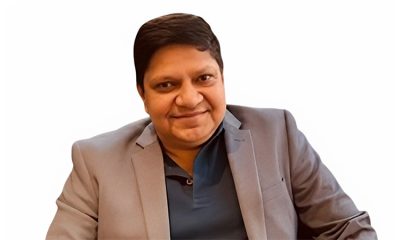










CHENNAI: It appears there is still plenty of Sun to go around in the Indian broadcasting landscape, even if a few clouds have drifted across the financial horizon. Sun TV Network Limited, the Chennai-based behemoth that dominates airwaves across seven languages, has tuned into a steady frequency for the quarter ending 31 December 2025. While the numbers show a resilient revenue stream, the company’s latest broadcast reveals a few static-filled spots in its profit margins.
For the quarter in question, Sun TV’s total income climbed by approximately 3.31 per cent, reaching Rs 958.39 crores compared to Rs 927.66 crores in the same period last year. Revenue from operations also saw a healthy bump, rising 4.32 per cent to Rs 827.87 crores.
The real star of the show, however, was domestic subscription revenue, which surged by 8.86 per cent to Rs 472.99 crores. This growth highlights the enduring appetite for Sun’s diverse content, which spans everything from daily soaps in Tamil and Telugu to its burgeoning OTT platform, Sun NXT.
Despite the revenue growth, the picture quality of the profits was slightly blurred by rising costs. Eitda for the quarter stood at Rs 409.79 crores, a dip from the Rs 432.14 crores recorded in the corresponding 2024 quarter.
The profit after tax followed a similar downward trend, settling at Rs 316.44 crores against the previous year’s Rs 347.17 crores. Advertisers also seemed to have switched channels slightly, with advertisement revenues sliding to Rs 291.94 crores from Rs 332.17 crores.
Sun TV isn’t just playing on home turf; its sporting ambitions are becoming increasingly global. The network now owns three major cricket franchises: SunRisers Hyderabad in the IPL, SunRisers Eastern Cape in SA20, and SunRisers Leeds Limited in The Hundred (UK).
The foray into British cricket saw the company acquire a 100 per cent stake in Northern Superchargers Limited (now SunRisers Leeds) for approximately £100 million. While these franchises brought in Rs 14.61 crores this quarter, they also incurred corresponding costs of Rs 19.89 crores. Over the nine-month period, however, the cricket business is a major player, contributing Rs 487.64 crores in income.
The company’s bottom line took a minor hit from exceptional items, including a Rs 4.23 crore charge related to India’s new Labour Codes, which consolidated 29 existing labour laws. Additionally, the consolidated results reflect the amalgamation of Kal Radio Limited with Udaya FM, a move that became effective in May 2025 and required a restatement of previous figures.
To keep investors from reaching for the remote, the Board has declared an interim dividend of 50 per cent, that’s Rs 2.50 per equity share. This comes on top of earlier dividends of 100 per cent (Rs 5.00) and 75 per cent (Rs 3.75) declared in August and November 2025, respectively.
With a massive cash reserve and a dominant position in the South Indian market, Sun TV continues to shine, even if the current quarter required a bit of fine-tuning. For now, shareholders can sit back, relax, and enjoy the show.
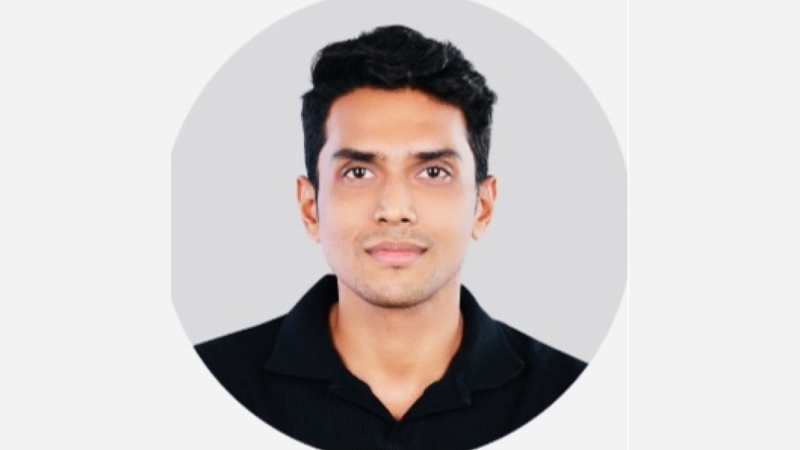
MUMBAI: Sony Pictures Networks India has hired Pradeep M to handle standards and practices for its southern market, bolstering its compliance bench as content rules tighten across platforms.
Pradeep, who has nearly 13 years in the entertainment media industry, takes on responsibility for content standards in a region that is both linguistically diverse and regulatorily sensitive. His brief spans television, OTT, sports and digital platforms.
He specialises in content review and compliance across shows, commercials, on-air promotions and international feeds, ensuring alignment with broadcast, OTT and advertising codes. He has also handled brand approvals and sponsorship integrations for heavily regulated categories—including online gaming, cryptocurrency, NFTs and lottery brands—offering guidance shaped by fast-evolving rules.
Before Sony, Pradeep worked at Jiostar as assistant manager for content regulation from November 2024 to January 2026. Earlier, he spent nearly seven years at Viacom18 Media, rising from senior executive to assistant manager in content regulation between 2018 and 2024. There he served as a key compliance touchpoint for the network.
His career began on the creative side. Between 2013 and 2018, he worked as executive producer on feature films and television shows, gaining hands-on exposure to production. He also had a stint as a non-fiction show director at Star TV Network in 2017. That mix of creative and regulatory experience gives him a dual lens—how content is made and how it must be managed.
As regulators, platforms and advertisers all tighten the screws, broadcasters are investing more in gatekeepers who can keep creativity within the lines. Sony’s latest hire shows where the industry is heading: in the streaming age, compliance is content’s quiet co-star.

MUMBAI: Colors Gujarati has unveiled two new prime-time shows as part of its push to strengthen culturally rooted storytelling for regional audiences. The channel will premiere the devotional saga Gangasati–Paanbai at 7.30 pm, followed by the romantic family drama Manmelo at 9.30 pm from February 2.
Inspired by Gujarat’s spiritual and literary heritage, Gangasati–Paanbai: Shyam Dhun No Navo Adhyay draws from the timeless bhajans and poetry of saint-poetesses Gangasati and Paanbai, weaving devotion and human values into a contemporary narrative aimed at younger viewers.
In contrast, Manmelo explores love and responsibility across social divides, tracing the lives of three middle-class sisters whose relationships with three affluent brothers reshape their futures. The show delves into ambition, emotional conflict and the realities of married life, offering a layered family drama.
A Colors Gujarati spokesperson said the new launches reflect the channel’s commitment to authentic Gujarati entertainment that blends cultural values with modern storytelling.



MIB sets OTT accessibility rules, mandates captions and audio description

Boney Kapoor acquires remake rights of Tamil political satire Thalaivar Thambi Thalaimaiyil

Netflix India names Rekha Rane director of films and series marketing

Zabeen signs off from TV9 after shaping the network’s public voice

Dhawan steps up to bat for Delhi’s grassroots sports push

Orient Beverages pops the fizz with steady Q3 gains and rising profits

Cheekatilo shines in the dark with record debut on Prime Video

Swiggy Instamart’s GOV surges 103 per cent year on year to Rs 7,938 crore

These ’90s fashion trends are making a comeback in 2017
The final 6 ‘Game of Thrones’ episodes might feel like a full season
According to Dior Couture, this taboo fashion accessory is back
The old and New Edition cast comes together to perform
Phillies’ Aaron Altherr makes mind-boggling barehanded play
ATN International brings ATN Bangla to Canada
MIB sets OTT accessibility rules, mandates captions and audio description
Boney Kapoor acquires remake rights of Tamil political satire Thalaivar Thambi Thalaimaiyil
Netflix India names Rekha Rane director of films and series marketing
Zabeen signs off from TV9 after shaping the network’s public voice
Dhawan steps up to bat for Delhi’s grassroots sports push
Orient Beverages pops the fizz with steady Q3 gains and rising profits
Cheekatilo shines in the dark with record debut on Prime Video
-
 e-commerce1 month ago
Swiggy Instamart’s GOV surges 103 per cent year on year to Rs 7,938 crore
-
 iWorld1 year ago
Kuku TV transforms India’s OTT space with vertical microdrama boom
-
 News Headline1 year ago
TRAI puts a ‘stop’ to unsolicited calls and messages
-

 News Headline2 months ago
From selfies to big bucks, India’s influencer economy explodes in 2025
-
 Comedy2 years ago
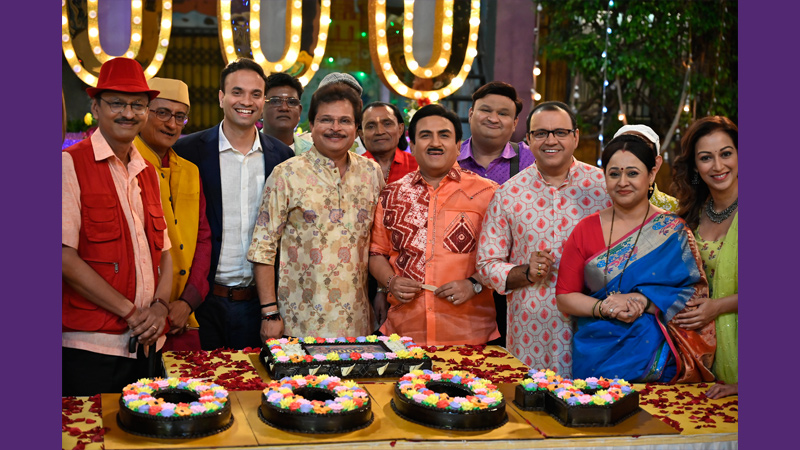
Taarak Mehta Ka Ooltah Chashmah celebrates 4,000 episodes
-
 MAM2 years ago
OpenAI joins C2PA steering committee
-
 News Headline2 years ago
Odisha to host Ultimate Kho Kho Season 2 from December 24
-
 News Headline1 year ago
Abhishek Bachchan joins as co-owner of European T20 Premier League


