
GECs
GEC 2 to woo migrating viewers

The declining importance of the conventional Hindi general entertainment channel (GEC) on Indian television has thrown up considerable challenges for all broadcasters.Confronting the gradual fall of this reigning genre as drifting audiences move towards niche specific offerings, most channels are looking to aggregate viewers one way or another. In this attempt, most broadcasters are looking to pull back migrating audiences by dissecting the GEC space into sub-genres and giving rise to the second GEC.
This phenomenon has given rise to a host of niche entertainment offerings through the support structure of a ‘flanking‘ channel. Here‘s a look at how industry experts perceive this growing trend within the dynamic television space of which GEC occupies 27-28 per cent of the total ad revenue pie.
The Scrum
The leading Hindi entertainment player in the country Star Plus was among the first to enter the fray with the launch of sister channel Star One in 2004. Sony was also looking to tread the same path with its acquisition of Sri Adhikari Brothers‘ Sab TV in 2005.
Action will start again two years later as Zee TV will unveil its sibling Zee Next, while Sahara is also poised to introduce a sister entertainment channel Firangi.

 Sab TV business head Anooj Kapoor admits that a ‘fatigue‘ factor has set in to the GEC space as the main programming formula across frontline GECs is on the Saas-bahu theme.
Thus, entertainment networks are looking at a second entertainment channel to provide different genres of drama.
While some players are more willing to play around with new concepts, others prefer to play it safe with serials. Sab TV, for instance, is putting up a varied fare of youth focussed shows. Sahara‘s Firangi is also willing to give International dubbed a shot.
Star One, on the other hand, is betting on soaps as the main driver. “Soaps will always be the staple of this country and Star One will continue to focus in that direction. While there would be add-ons and new shows, soaps will be the main driver,” says Star India president content and new media Ajay Vidyasagar.
From a media agency‘s perspective, GECs are adding second channels as an attempt to prevent audience migration. Says Mindshare MD R. Gowthaman, “Audiences are getting segmented into distinct types and channels are catering to their specific needs. Meanwhile, GEC is losing its reach potential and broadcasters are using the route of a flanking channel to avoid losing their share to the competitor.”
Experimentation platform & Low risk factor
Rather than a mere add-on to the channel bouquet, the concept of a flanking channel serves a larger purpose of ‘experimentation at a lower risk,‘ which would not otherwise be possible on a flagship GEC. In order to service a segmented audience, the conventional GEC has been forced to slice up and dish out modifications of the same genre.
Starcom MD India – West and South Manish Porwal said, “The trend over the last three to four years in the GEC space indicates that the genre has been de-growing by 10 per cent, besides GEC programmes are also losing their importance. Networks have sensed the challenge and are creating niche platforms of special sub-genres within GEC to allow for experimentation.”
According to media planners, this is a cyclic trend seen across mature markets. It allows networks to provide viewers with more choices within a genre.
The model also allows networks to take risks since the second channel is not a key revenue driver. Agrees Kapoor, “A second entertainment channel provides a platform for innovation and experimentation without the fear of greatly affecting business revenues of the network. It allows you to take risks, which can‘t otherwise be taken on the flagship channel.”
Hit & miss approach
In this scramble to appease audiences, channels are attempting to fathom where their viewers are navigating to.
 Star One was conceived as an upscale channel for metro audiences. Now it is attempting to broadbase the channel and is looking to tap the top 20 cities across the country.
“We do not want to be known as an urban niche channel. Star One is eyeing the Hindi heartland as a differentiated mass entertainment brand,” says Star India VP Prem Kamath.
Ahead of several entertainment channel launches, Star One is infusing a host of fresh shows to combat the growing number of players entering the game.
Kamath, however, does not agree that the channel‘s attempt to expand its presence beyond the top metros is a response to mounting competition.
“The launch of new shows is a natural process to rekindle the content flow. That is what we are doing on Star One,” Kamath says.
Sony also has repositioned Sab with the march of time. When it acquired Sab, it wanted the ‘male skewed comedy‘ channel to strengthen the network‘s position in the Hindi heartland. It soon dropped the ‘Only smiles, no tears baggage‘ to give way to light humour.
But sensing opportunity in the youth segment, Sab in 2007 went through a brand surgery and the channel was repositioned as an urban aspirational brand in the 15-35 age bracket.
 ZeeNext will be pursuing still younger audiences (15-25 year olds) and has the tagline ‘Dil Wahi, Dhadkan Nayi‘. While the genre will largely remain the same as Zee TV, the upcoming channel is looking to tap into a more progressive segment of its female dominated audience base with more contemporary themes.
“We would like to offer our loyal audiences shows that give a younger treatment to the traditional stories. Zee Next will carry the attributes if being young, fresh and contemporary channel,” said Zee TV business head and Zee Group director Punit Goenka.
Sahara, on the other hand, is looking to adopt a differentiated approach to entertainment with its offering. Firangi business head Rajeev Chakrabarti prefers to label it as a World television channel in Hindi rather than a GEC per se.
Chakrabarti says that the content would be spread across a variety of genres, one of them being GEC. He, too, agrees with Kapoor‘s stance that fatigue has cast a shadow in the overall GEC space. Firangi‘s attempt, thus, is to go beyond that and expose viewers to contemporary relevant content, he adds.
However, some media analysts say the drive is not just to get in a flanking channel. Says Lodestar Universal CEO Shashi Sinha, “This trend need not be thought of as a flanking channel concept. Broadcasters are realizing that audiences differ in their mindsets as some groups are more progressive than others.”
Spot the drifters?
Although it is difficult to pin point which segment of the audience is abandoning GEC in favour of other channels, it is evident that the ‘youth‘ seem dissatisfied.
According to Sinha, the youth segment represents a fleeting audience base that are fickle and disillusioned. But the upside to this is that India is increasingly becoming a younger country, posing a massive opportunity for channels.
The attempt to win over these viewers is steeply rising among all television players even though youth television habits are often categorized as ‘snacking consumption.‘
During the repositioning this year, Sab came out with the “Buddha Tera Baap” campaign. Kapoor states, “Research suggests that 60 per cent of the population is below 35 years and for the network it made logical business sense to design programming for that age group. Besides, Sony Entertainment Television (SET) already offers full family viewing.”
It works well as a network offering and as India progresses towards a two TV household it is advantageous to have differentiated entertainment channels for housewives and younger viewers, he adds.
Challenges Ahead
With each network looking to consolidate its position in the GEC space and garner the most eyeballs, the space is likely to give way to more clutter.
However, Sinha believes that there is enough room for more players and foresees no major cannibalization. “In fact, new segments will be created and the GEC market will grow.”





CHENNAI: It appears there is still plenty of Sun to go around in the Indian broadcasting landscape, even if a few clouds have drifted across the financial horizon. Sun TV Network Limited, the Chennai-based behemoth that dominates airwaves across seven languages, has tuned into a steady frequency for the quarter ending 31 December 2025. While the numbers show a resilient revenue stream, the company’s latest broadcast reveals a few static-filled spots in its profit margins.
For the quarter in question, Sun TV’s total income climbed by approximately 3.31 per cent, reaching Rs 958.39 crores compared to Rs 927.66 crores in the same period last year. Revenue from operations also saw a healthy bump, rising 4.32 per cent to Rs 827.87 crores.
The real star of the show, however, was domestic subscription revenue, which surged by 8.86 per cent to Rs 472.99 crores. This growth highlights the enduring appetite for Sun’s diverse content, which spans everything from daily soaps in Tamil and Telugu to its burgeoning OTT platform, Sun NXT.
Despite the revenue growth, the picture quality of the profits was slightly blurred by rising costs. Eitda for the quarter stood at Rs 409.79 crores, a dip from the Rs 432.14 crores recorded in the corresponding 2024 quarter.
The profit after tax followed a similar downward trend, settling at Rs 316.44 crores against the previous year’s Rs 347.17 crores. Advertisers also seemed to have switched channels slightly, with advertisement revenues sliding to Rs 291.94 crores from Rs 332.17 crores.
Sun TV isn’t just playing on home turf; its sporting ambitions are becoming increasingly global. The network now owns three major cricket franchises: SunRisers Hyderabad in the IPL, SunRisers Eastern Cape in SA20, and SunRisers Leeds Limited in The Hundred (UK).
The foray into British cricket saw the company acquire a 100 per cent stake in Northern Superchargers Limited (now SunRisers Leeds) for approximately £100 million. While these franchises brought in Rs 14.61 crores this quarter, they also incurred corresponding costs of Rs 19.89 crores. Over the nine-month period, however, the cricket business is a major player, contributing Rs 487.64 crores in income.
The company’s bottom line took a minor hit from exceptional items, including a Rs 4.23 crore charge related to India’s new Labour Codes, which consolidated 29 existing labour laws. Additionally, the consolidated results reflect the amalgamation of Kal Radio Limited with Udaya FM, a move that became effective in May 2025 and required a restatement of previous figures.
To keep investors from reaching for the remote, the Board has declared an interim dividend of 50 per cent, that’s Rs 2.50 per equity share. This comes on top of earlier dividends of 100 per cent (Rs 5.00) and 75 per cent (Rs 3.75) declared in August and November 2025, respectively.
With a massive cash reserve and a dominant position in the South Indian market, Sun TV continues to shine, even if the current quarter required a bit of fine-tuning. For now, shareholders can sit back, relax, and enjoy the show.
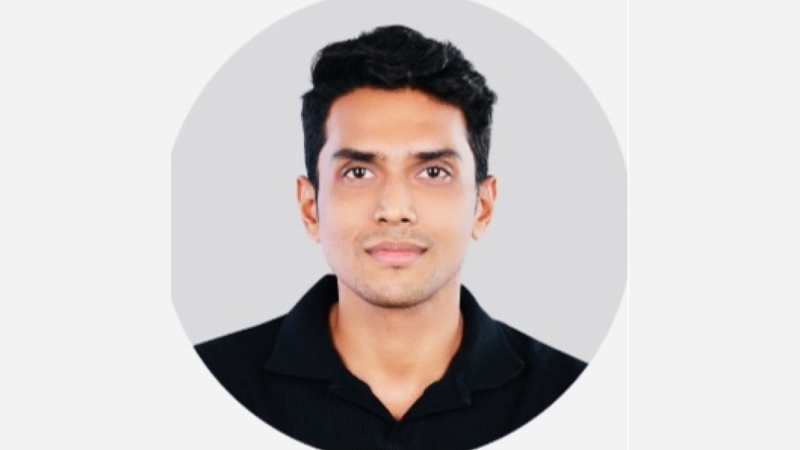
MUMBAI: Sony Pictures Networks India has hired Pradeep M to handle standards and practices for its southern market, bolstering its compliance bench as content rules tighten across platforms.
Pradeep, who has nearly 13 years in the entertainment media industry, takes on responsibility for content standards in a region that is both linguistically diverse and regulatorily sensitive. His brief spans television, OTT, sports and digital platforms.
He specialises in content review and compliance across shows, commercials, on-air promotions and international feeds, ensuring alignment with broadcast, OTT and advertising codes. He has also handled brand approvals and sponsorship integrations for heavily regulated categories—including online gaming, cryptocurrency, NFTs and lottery brands—offering guidance shaped by fast-evolving rules.
Before Sony, Pradeep worked at Jiostar as assistant manager for content regulation from November 2024 to January 2026. Earlier, he spent nearly seven years at Viacom18 Media, rising from senior executive to assistant manager in content regulation between 2018 and 2024. There he served as a key compliance touchpoint for the network.
His career began on the creative side. Between 2013 and 2018, he worked as executive producer on feature films and television shows, gaining hands-on exposure to production. He also had a stint as a non-fiction show director at Star TV Network in 2017. That mix of creative and regulatory experience gives him a dual lens—how content is made and how it must be managed.
As regulators, platforms and advertisers all tighten the screws, broadcasters are investing more in gatekeepers who can keep creativity within the lines. Sony’s latest hire shows where the industry is heading: in the streaming age, compliance is content’s quiet co-star.
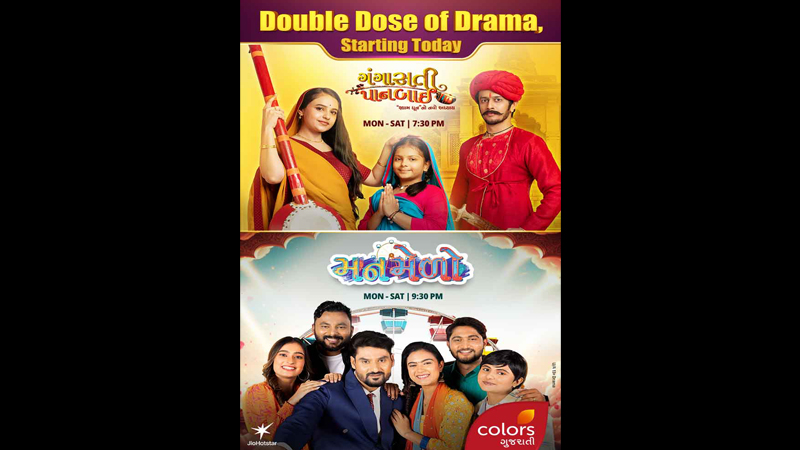
MUMBAI: Colors Gujarati has unveiled two new prime-time shows as part of its push to strengthen culturally rooted storytelling for regional audiences. The channel will premiere the devotional saga Gangasati–Paanbai at 7.30 pm, followed by the romantic family drama Manmelo at 9.30 pm from February 2.
Inspired by Gujarat’s spiritual and literary heritage, Gangasati–Paanbai: Shyam Dhun No Navo Adhyay draws from the timeless bhajans and poetry of saint-poetesses Gangasati and Paanbai, weaving devotion and human values into a contemporary narrative aimed at younger viewers.
In contrast, Manmelo explores love and responsibility across social divides, tracing the lives of three middle-class sisters whose relationships with three affluent brothers reshape their futures. The show delves into ambition, emotional conflict and the realities of married life, offering a layered family drama.
A Colors Gujarati spokesperson said the new launches reflect the channel’s commitment to authentic Gujarati entertainment that blends cultural values with modern storytelling.


MIB sets OTT accessibility rules, mandates captions and audio description

Boney Kapoor acquires remake rights of Tamil political satire Thalaivar Thambi Thalaimaiyil

Netflix India names Rekha Rane director of films and series marketing

Zabeen signs off from TV9 after shaping the network’s public voice

Dhawan steps up to bat for Delhi’s grassroots sports push

Orient Beverages pops the fizz with steady Q3 gains and rising profits

Cheekatilo shines in the dark with record debut on Prime Video

These ’90s fashion trends are making a comeback in 2017
The final 6 ‘Game of Thrones’ episodes might feel like a full season
According to Dior Couture, this taboo fashion accessory is back
The old and New Edition cast comes together to perform
Phillies’ Aaron Altherr makes mind-boggling barehanded play
Uber and Lyft are finally available in all of New York State
Disney’s live-action Aladdin finally finds its stars
MIB sets OTT accessibility rules, mandates captions and audio description
Boney Kapoor acquires remake rights of Tamil political satire Thalaivar Thambi Thalaimaiyil
Netflix India names Rekha Rane director of films and series marketing
Zabeen signs off from TV9 after shaping the network’s public voice
Dhawan steps up to bat for Delhi’s grassroots sports push
Orient Beverages pops the fizz with steady Q3 gains and rising profits
Cheekatilo shines in the dark with record debut on Prime Video
-

 News Broadcasting1 week ago
Mukesh Ambani, Larry Fink come together for CNBC-TV18 exclusive
-

 News Headline1 month ago
From selfies to big bucks, India’s influencer economy explodes in 2025
-
 iWorld5 months ago
Billions still offline despite mobile internet surge: GSMA
-

 Applications2 months ago
28 per cent of divorced daters in India are open to remarriage: Rebounce
-

 iWorld2 weeks ago
Netflix celebrates a decade in India with Shah Rukh Khan-narrated tribute film
-
 Hollywood1 week ago
The man who dubbed Harry Potter for the world is stunned by Mumbai traffic
-
 News Headline2 months ago
Game on again as 2025 powers up a record year and sets the stage for 2030
-
 I&B Ministry3 months ago
India steps up fight against digital piracy
