
Kids
Charact’o’mania

|
Inching in slowly, the forces of Mickey Mouse, Power Puff Girls, SpongeBob, Barbie and many others have come together to invade the lives of every Indian kid! They are everywhere, on their toys, stationary, clothes, bed sheets and even underwear… this mighty world of characters is tracking these kidlings down, longing to be a part of the air they breathe. In the same way, kids are wholeheartedly welcoming their favourite television characters to have a frolicking time – a phenomena I would like to call “Charact‘o‘mania.”
The children‘s entertainment market is fast gaining pace in India, and apart from television and cinema, kid‘s centric broadcasters are channeling their energy towards building a strong foothold in the licensing and merchandising space. The emergence of organized retail in India has set this process in motion and is laying the foundation of a new era for kid‘s entertainers! There are really no boundaries to the scope for merchandising activities which can extend far beyond the cliché toys and board games to apparel, accessories, publishing, stationery, home décor and home videos. Kid‘s entertainment permeates into every aspect of a child‘s existence and capitalizing on this trend are kid‘s broadcasters that look to take their brand and characters into the daily lives of children. |
|||||||||||||||||||
|
|||||||||||||||||||
|
Although it is difficult to ascertain the size of this vast merchandise market in India, Cartoon Network Enterprises India and South Asia licensing director Jiggy George estimates that the size for both character and non character licensed products at organized retail would be in the region of Rs 3.5 billion.
Unfortunately, a large section of this market is swamped by several small unorganized players that rule the roost. Mattel Toys India head marketing Rahul Bhomik says that the market for licensed kids entertainment properties is still not yet fully recognized in India. Besides, the organized retail sector only comprises a mere 4-5 per cent. Hence it is difficult to arrive at an accurate figure of the size of the entire merchandise market. However, the size of the organized toy market alone is in the worth between Rs 250 -300 million. With two years experience in the Indian market, Walt Disney Company (India) Pvt Ltd director consumer products Roshini Bakshi applies a different approach to understanding the undersized organized sector. She says, “The market in India for character and non character based merchandise is not as large as Japan and the US, the reason for this is that generations of kids in India have not grown up with most of these characters and therefore a strong affinity and emotional connect has not yet been established.”
But just as every cloud has a silver lining, there emerges a consensus among experts to the fact that this industry is likely to see 15-20 per cent growth year-on-year. “Although organized retail is still in its embryonic stage, we are beginning to see growth in this sector. Besides, organized retail will help to insure that intellectual property is respected,” adds George.
In the last two years kids channels have flooded the market with a host of products in various categories. In 2005, Cartoon Network Enterprises (CNE) partnered with Funskool India to unleash a craze that swept across the toy market with Beyblade. The merchandising arm of Cartoon Network CNE, boasts of having sold over 100,000 units across the country within a month of launch in August.
In the boys segment, Disney followed with the launch of Power Rangers in 2006 across toys, apparel, back to school products, home products like linen and footware, for which it partnered with a Dubai based firm New Boy. According to Bakshi, the strong action and play factor helped the product to fare well in the market. The year before that Disney tied up with Funskool for a range of girls toys around the Disney Princess theme, which has now been taken across categories to include accessories and make-up kits. However, not all properties can be used across product categories. George highlights the fact that Beyblade as apparel may not garner the same response it did with toys, primarily because the main protagonist is the toy itself. While properties like Power Puff Girls would work well on apparel and Dexter on knowledge based products.
The year 2006 also saw Turner bring the muppets of the Indian adaptation of Sesame Street, Galli Galli Sim Sim out of the TV sets and onto a whole range of apparel, publishing, plush and home furnishing products centered around their key characters Elmo, Biscuit Badshah, Bharat and Ernie. Apart from these, Pogo‘s MAD (Music, Art & Dance) launched a series that included home entertainment DVDs, six new book titles, stationery and activity kits. It might be true that kids crave for a touch and feel experience of their stars, however this may come at a heavy cost, drilling holes in their parents wallets. Bhomik admits that a premium will be charged for licensed products, however the price largely depends on the property. For instance, a movie property will have a short shelf life (4-5 months) and therefore will require a bigger bang. Similarly the price points will also be higher.
“Prices will be higher than non licensed products but at the same time kids are willing to pay to own their favourite character,” says Funskool India marketing head David Selavaraj. In their
What‘s interesting is that broadcasters are also engaging in channel branding through multiple categories of products. Both Pogo and Disney launched branded apparel and accessories last year. Prior to that, Pogo also launched a boy centric toy range Pogo Wheels and is targeting to expand its footprint in other categories in the summer months of 2007. But for this little world of fun and play to come alive, toy manufactures must feed on kids broadcasters and vice versa, both working in tandem. Bhomik says it‘s important for the channel to build a big property, while the manufacturer helps to make that world of fantasy and role play come alive. This in turn helps the channel to strengthen the bond of their brand and characters with children. In some cases when manufactures have their own flagship properties like Mattel‘s Barbie and Hot Wheels, channels are also roped in to air movies created by the company. Barbie has a series of nine movies and Hot Wheels has four. But is this phenomena only metro specific or is this ‘make believe universe‘ making inroads into smaller Indian towns? George says that the Turner pair does have a mass strategy in place and is looking to build up its distribution in the Southern states during the course of this year, “We do not want to be elitist in pricing and distribution.”
However, the biggest limitation that marketers and distributors face in smaller towns is the lack of a spacious outlet. Mattel also follows a mass distribution path including traditional ‘mom and pop‘ stores and food and grocery outlets in smaller towns, however Bhomik explains that the major constraint is the lack of space for display the products, a key marketing strategy to allow the brand to come alive. This is the one benefit that mutli-brand outlets provide. “In the smaller retail outlets we have to rely on the salesmanship of the guy at the counter rather than allow the consumer to experience a large visual display of the product,” adds Selvaraj.
For Cartoon Network Enterprises, which set up shop in India in 2001, merchandising initiatives currently contribute to Eyeing the advantage that kids channels are leveraging in this sector, even SET India‘s youth lifestyle channel Animax, which has been quite silent over the past few months, is planning to enter the merchandising arena with globally relevant characters and icons in the second half of 2007. Speaking of their plans Animax manager marketing Supriya Bambawale says, “These will not be based on a given anime property but instead would be created by the channel and will lend itself to music, gaming, fashion and lifestyle.” Currently, a team in Los Angeles is working on the themes for these contemporary characters but Bambawale opines that they will also have a touch of Indianess with names such as Karina and Jasmine. Following the refresh initiative to change the proposition from kids to youth centric (15-32 years) in June 2006, the channel hopes to reach out to this English speaking urban audience via a full fledged merchandising activity.
While on one hand some kids channels may be apprehensive to foray into the licensing and merchandising sector, given its unreliable nature. Others may just be waiting to strengthen their properties in India before making this move. Although Viacom‘s Nick has a strong merchandise presence globally and has an International partnership with Mattel for a whole range of products, the channel has only recently started showing some activity in this category. Last year, From the way the India story is unfolding – the higher disposable incomes among the growing middle class in India and the increasing influence of kid‘s ‘pester power‘, it seems like the kid‘s mechandising industry via the organised retail route is poised to see an exponential growth. For those players that have only recently realised the mammoth opportunity and revenue stream that this business provides, along with other seasoned players, the whole industry is bound to explode. So brace yourself for a mass attack! |


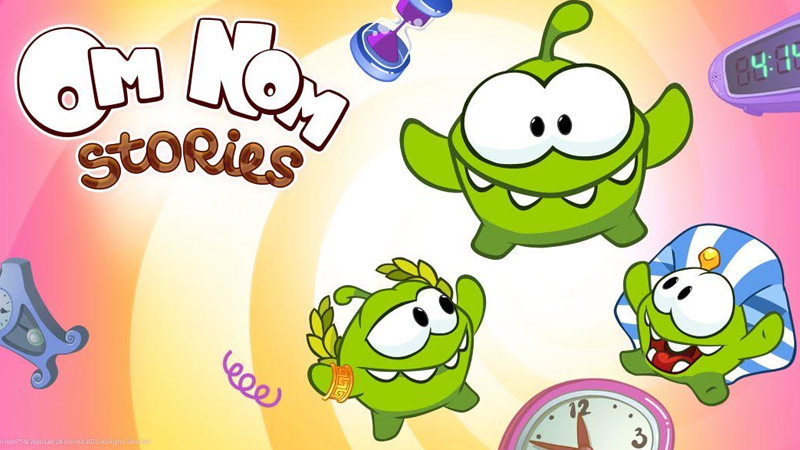
MUMBAI: The little green hero is making a big leap east. Zeptolab has struck a major distribution deal with Warner Bros. Discovery, bringing its hit animated series Om Nom Stories to audiences across the Indian subcontinent.
Under the agreement, Warner Bros. Discovery has acquired the series for exclusive Pay TV broadcast and non-exclusive digital streaming in India, Pakistan, Bangladesh, Bhutan, Nepal and Sri Lanka. The move marks a significant expansion for Zeptolab as it pushes one of its most successful original IPs into one of the world’s fastest-growing entertainment markets.
As part of the deal, all 26 seasons of Om Nom Stories will be rolled out across Cartoon Network, Pogo, Discovery Kids and Discovery+, offering both linear and digital access to the franchise’s slapstick humour and expressive, dialogue-free storytelling.
“We’re incredibly excited to partner with Warner Bros. Discovery to bring Om Nom Stories to the Indian subcontinent,” said Zeptolab executive producer Manaf Hassan, noting that the broadcaster’s reach and legacy make it a strong fit for the series’ growing global fanbase.
Warner Bros. Discovery, meanwhile, sees the acquisition as a natural addition to its children’s portfolio. Warner Bros. Discovery head of factual entertainment, lifestyle and kids for South Asia Sai Abishek, said the series aligns with the network’s focus on cheerful, imaginative and universally appealing content for families across the region.
The timing adds an extra layer of significance. The expansion coincides with Om Nom’s 15th anniversary, underlining the franchise’s staying power and its evolution from a mobile game character into a global animation brand. With this latest bite at the Indian subcontinent, Om Nom’s adventures look set to find a whole new generation of fans.
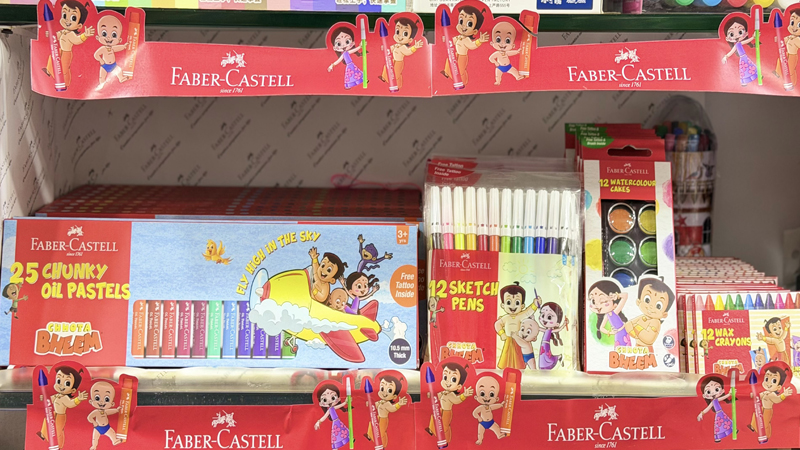
MUMBAI: If childhood memories had a colour palette, Chhota Bheem would likely be right in the middle of it and now, quite literally, in children’s pencil boxes too. Green Gold Animation has announced a landmark licensing partnership with Faber-Castell India, marking the global stationery major’s first-ever licensed character collaboration. The association brings Chhota Bheem to a specially curated range of student art and creative products, blending everyday learning tools with one of India’s most recognisable homegrown characters.
The move is a notable expansion of Chhota Bheem’s footprint beyond screens, reinforcing the character’s status as a multi-generational IP that has steadily grown from a television favourite into a cultural constant. For Green Gold Animation, the partnership signals a sharpened focus on extending its intellectual property into daily touchpoints, where entertainment meets education and habit.
In its first phase, the collaboration will roll out Chhota Bheem-themed products across key student art categories, including watercolour cakes, wax crayons, poster colours, sketch pens, oil pastels and creative bundling kits. The range is aimed squarely at school-going children, tapping into Bheem’s strong emotional connect while encouraging imagination, creativity and hands-on expression.
Green Gold Animation founder and CEO Rajiv Chilaka noted that Chhota Bheem’s journey has long moved beyond episodic storytelling. He said the partnership reflects a deliberate attempt to embed the character into moments of learning and creativity, while building a more purpose-led licensing ecosystem around Indian IP through collaboration with a globally established brand.
From Faber-Castell India’s perspective, the tie-up marks a strategic first. Faber-Castell India director marketing Sonali Shah said the collaboration opens a new chapter by pairing the brand’s long-standing reputation for quality and safety with a character that already commands trust and affection among Indian children. The aim, she added, is to make creativity more engaging and relatable without diluting product standards.
The launch will be backed by a 360-degree promotional push, spanning digital campaigns, social media storytelling, creative usage content and on-ground retail activations across select markets. Both companies have confirmed that this is only the starting point, with additional Chhota Bheem-themed products across new categories planned in the months ahead.
Headquartered in Hyderabad, Green Gold Animation continues to scale its ambition of building globally competitive Indian IPs, with Chhota Bheem leading the charge. This latest collaboration suggests that the brand’s next phase of growth may be less about what children watch and more about what they create.
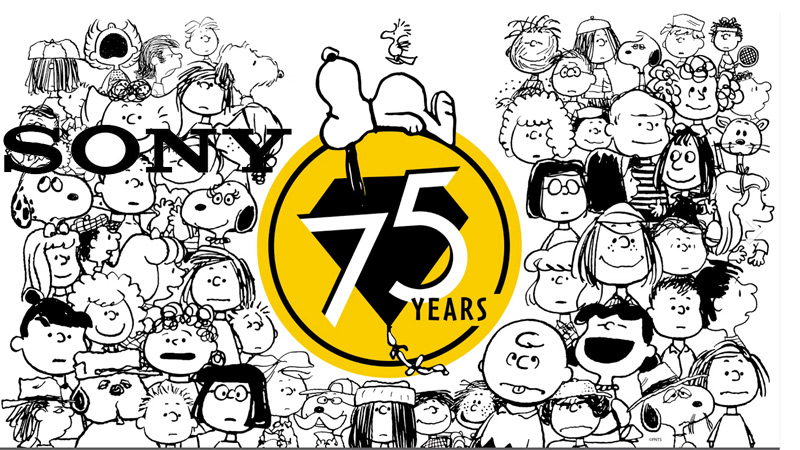
JAPAN: Sony has doubled down on the power of legacy brands, snapping up a majority stake in the Peanuts intellectual property in a late-year deal valued at about $457 million.
Sony Pictures Entertainment and Sony Music Entertainment Japan have acquired the roughly 41 per cent holding in Peanuts Holdings LLC previously owned by Canadian children’s entertainment company WildBrain. The move lifts Sony’s ownership to 80 per cent, with the Schulz family retaining the remaining 20 per cent.
The deal brings one of pop culture’s most durable franchises, home to Charlie Brown, Snoopy and the rest of the Peanuts gang, firmly under the Sony umbrella. The characters were created by Charles M Schulz, whose daily comic strip ran for half a century before ending in 2000.
Sony had already been a long-time partner in the business. The latest transaction consolidates control and sharpens the group’s hand as it looks to keep the characters front and centre across film, television, music and consumer products.
President and group ceo of Sony Music Entertainment Japan, Shunsuke Muramatsu, said the additional stake would allow Sony to further elevate the Peanuts brand by drawing on the group’s global reach and creative expertise, while preserving the legacy of Schulz and his family.
President and ceo of Sony Pictures, Ravi Ahuja, said the combined ownership gives Sony the ability to protect and shape the future of the characters for new generations, expanding their relevance without diluting their charm.
Peanuts long ago escaped the confines of the comic strip, cementing its place in popular culture through perennial television specials such as A Charlie Brown Christmas and It’s the Great Pumpkin, Charlie Brown. More recently, WildBrain kept the franchise active with animated series including Snoopy in Space and The Snoopy Show.
Now, with Sony firmly in control, the message is unmistakable. In an industry obsessed with the next big thing, nostalgia still sells and Sony is betting big on a doghouse that refuses to age.

Mukesh Ambani, Larry Fink come together for CNBC-TV18 exclusive

Nielsen launches co-viewing pilot to sharpen TV measurement

Netflix celebrates a decade in India with Shah Rukh Khan-narrated tribute film

Delhivery chairman Deepak Kapoor, independent director Saugata Gupta quit board

Meta appoints Anuvrat Rao as APAC head of commerce partnerships

Brnd.me enters Europe as haircare brands power global expansion

TechnoSport taps quick commerce with launch on Slikk’s 60-minute platform

These ’90s fashion trends are making a comeback in 2017
The final 6 ‘Game of Thrones’ episodes might feel like a full season
According to Dior Couture, this taboo fashion accessory is back
The old and New Edition cast comes together to perform
Phillies’ Aaron Altherr makes mind-boggling barehanded play
Uber and Lyft are finally available in all of New York State
Disney’s live-action Aladdin finally finds its stars
Mukesh Ambani, Larry Fink come together for CNBC-TV18 exclusive
Nielsen launches co-viewing pilot to sharpen TV measurement
Netflix celebrates a decade in India with Shah Rukh Khan-narrated tribute film
Delhivery chairman Deepak Kapoor, independent director Saugata Gupta quit board
Meta appoints Anuvrat Rao as APAC head of commerce partnerships
Brnd.me enters Europe as haircare brands power global expansion
TechnoSport taps quick commerce with launch on Slikk’s 60-minute platform
-
 News Broadcasting3 days ago
Mukesh Ambani, Larry Fink come together for CNBC-TV18 exclusive
-
 iWorld6 days ago
Netflix celebrates a decade in India with Shah Rukh Khan-narrated tribute film
-
 iWorld12 months ago
BSNL rings in a revival with Rs 4,969 crore revenue
-
 I&B Ministry3 months ago
India steps up fight against digital piracy
-
 iWorld3 months ago
Tips Music turns up the heat with Tamil party anthem Mayangiren
-
 MAM3 months ago
HoABL soars high with dazzling Nagpur sebut
-
 MAM3 days ago
Nielsen launches co-viewing pilot to sharpen TV measurement
-
 News Broadcasting2 months ago
CNN-News18 dominates Bihar election coverage with record viewership

