

Comment
Archival Neglect

It is a matter of prime cultural concern in any nation of heritage to preserve its invaluable assets of antiquity and inherited monuments of fine arts that pass through generations of artistic brilliance. Traditionally, a culture rich nation plans and preserves its monuments of immense cultural value with pride, adequate funds and a sustainable infrastructure. Alas! India has hundreds of so-called protected monuments, but in fact have none to actually guard and protect them and prevent unruly defacing of artefacts that once laboriously were sculptured by efficient hands devoting weary long years.
A population which does not realise the intrinsic value in cultural terms does not even object visitors writing their names or of their loved ones indiscriminately on the walls of our monuments. Our predecessors could not prevent the Portuguese soldiers from using the statues and carvings of immense historic value and elegance as targets for shooting practice in the Elephanta Caves without remorse and defacing cultural treasures on stone preserved for centuries.
The criminal disintegration and powdering of Bamiyan Buddhas in Afghanistan by Taliban rebels could not be averted even by a well meaning and civilised world community. Stealing of deities in stone from the sanctum sanctorum of celebrated Indian temples for money continues even today. India in fact is fortunate to get back its famous dancing Bronze Nataraja Statue of Chola era from the Australian Museum illegally smuggled by cultural traffickers.
India is replete with examples of events missed in history running to thousands of years due to our national character not giving due importance to preservation of invaluable historic cultural works and monuments for varieties of religious and reasons of cultural conflicts. We owe rediscovery of most of our treasures to British pathfinders and inquisitive soldiers, be it Ajanta, Ellora or so many monuments of Buddhist origin.
With preservation of our historical assets not being our national priority and character, we already have lost substantial works of wisdom of our ancestors in Indigenous Medicines, Astronomy, Mathematics and other applied sciences. But the present scientific tools that enable easy preservation of great monuments through chemical and mechanical means and digitisation of potential audio and video materials are being fruitfully utilized the world over. The information technology with its current scientific leap has immensely enabled the world community to preserve great works in print through digitisation instead of managing huge libraries of printed books.
The advent of new media and possibility of preservation of digitised content in cloud form has eased archiving process with excellent networking and retrieval arrangements. Given the wealth of skilled human resource in IT available in our own country, the delay in archiving assets of audio and video content of Prasar Bharati is inexplicable.
The sound archives of All India Radio (AIR) came into existence in April 1954 and can well be termed as the National Audio Archives of the nation being the treasure house of precious recordings in more than 53,000 tapes comprising music and spoken words.
The library has invaluable collection of prayer speeches of Mahatma Gandhi recorded in 1947 at Sodepur Ashram, Kolkata and in 1948 at Birla House, Delhi in addition to his famous broadcast from the Broadcasting House, New Delhi on 12.11.1947. All India Radio has recordings of all the Presidents and Prime Ministers of India besides important voice recordings of eminent personalities like Gurudev Rabindranath Tagore, Constitutional architect, Dr. B.R. Ambedkar, Bismarc of India, Sardar Vallabhbhai Patel and Nightingale of India Ms Sarojini Naidu and many others.
The library is further enriched with numerous radio drama features, documentaries, memorial lectures and radio autography of eminent personalities from various walks of life. Although release of archival materials of All India Radio started in April 2002 under the banner ‘Akashvani Sangeet’, only 76 Albums containing legends of Hindustani and Carnatic Classical and light music have been released so far. This despite AIR holding the richest cachet of sound recordings of almost of all genres of Radio Broadcasting including the rare recordings of freedom fighters, unforgettable and resounding voices of great maestros like Bade Ghulam Ali Khan, Abdul Karim Khan, Krishna Rao Shankar Pandit, Begum Akhtar, Siddeshwari Devi, Rasoolan Bai, Ariayakkudi, Chembai Vadyortha Bhagavatar and others.
On instrumental music, there are invaluable recordings of Pandit Pannalal Ghosh, Dwaram Venkataswamy Naidu, Pandit V.G. Jog, T. Chowdiah, Pandit Nikhil Banerjee and the like preserved for posterity. There are oral histories which provide direct insight into lives and creative process of great writers and artists. In the realm of dramatics, the greatest contribution of radio is Radio play which evolved into an independent creative genre in the hands of very eminent directors and writers.
As of today, AIR has been able to digitize only 6,000 hours since 2002 out of a total of 75,000 hours of archival materials available with Prasar Bharati. The archives have rare collections of speeches by Quaid-I-Azam Muhammad Ali Jinnah and sensational addresses during ‘Bangladesh Liberation’ by Bangabandhu Sheikh Mujeebur Rahman and Ms Indira Gandhi.
Doordarshan archives started in 2003 involving digital restoration, preservation, digitisation of the content, creation of meta-data for easy access and retrieval of archived programmes. The laborious process of cleaning and finally preserving digitised content in file format through Media Assets Management (MAM) saving files on Linear Tape Open (LTO-4) format is on for a very long time.
Doordarshan has digitised programme in 38 subjects to include animation and puppetry, ballot, documentary series, environment and ecology, fair and festival, game show, interview and conversation, light music, literature and poetry, variety entertainment, etc. Out of 21,000 hours of digitised content, Doordarshan is able to bring out only 77 DVDs so far.
The process of digitisation is painfully slow with no technical road map, finalised plan for marketing digitised content as also making free accessibility of speeches by great national leaders to the world at large as decided by Prasar Bharat Board.
Other developed nations which have successfully archived their contents like NHK, Japan and Deutche Welle, Germany in High Definition have their Central Archives networked with programme generating facilities dealing with a single or couple of languages with few dialects. But India suffers from a complex need to document archival materials available in multiple languages and hundreds of dialects in stations and kendras spread over the length and breadth of the nation as also link them up.
Learning from its experience, Prasar Bharati needs to create meta-data at the time of programme production itself, secure produced content online and avoid piracy with a central archive in New Delhi networked with regional centres of rich cultural content. It would be worthwhile for Prasar Bharati either to create a vertical for archives or expedite digitisation of its archival content of historical and monetary value by outsourcing to reputed media houses or facilities with domain experts without any further delay to save on precious tapes from open wooden shelves and gunny bags exposed to vagaries of adverse weather conditions.
While Prasar Bharati Board has conceptually cleared creation of a well-networked data house on the programmes of AIR and DD stations all over India, procurement of equipments connected to MAM needs to be compatible. Piecemeal procurements due to lack of funds should be avoided at all costs and avert resultant obsolescence of technology. Aggressive strategy and an action plan to promote products released by AIR and DD could earn huge dividends and benefit Prasar Bharati monetarily.
The revenue receipts of DVDs and footage sale of Doordarshan has declined by 70 per cent in the year 2015. Despite its rich archival content, Prasar Bharati has been able to earn about only Rs 50 lakh in the last financial year compared to its revenue of Rs 1.5 crore in 2012.
Fast tracking of digitisation and archiving of its audio and video content is workable by an active national level steering committee duly monitored by Prasar Bharati Board on monthly basis for speedy accomplishment of digitisation of born content as also legacy content in gramophone records and analogue magnetic tapes.
Prasar Bharati does not have a recruitment mechanism and in the absence of a statutory body, Prasar Bharati Recruitment Board, there is an emergent need to put dedicated personnel in place to supervise handling of invaluable archival content with inherent security even if outsourced for digitisation to private players.
Establishing an exclusive web portal for AIR and DD archives with a payment gateway for purchase of archived programmes and expeditiously installing digital kiosks of Prasar Bharati in airports and railway stations to access its popular archival content would enable Prasar Bharati Archives self sustain. Prasar Bharati Board on its part had already cleared development of ‘Leaders of India’ website with facility to download famous video clippings and sound byte free of cost.
Training of staff at grass root level with proficient archival procedures would enable Prasar Bharati to achieve its archival goals in a shorter duration. The nation could expect speedy action on the archival front especially with an ex-Secretary of Culture, Jawhar Sircar, CEO who initiated the process and is leading from the front.
(The views expressed here are purely personal views of Prasar Bharati principal advisor, personnel and administration VAM Hussain and Indiantelevision.com does not necessarily subscribe to them.)








MUMBAI: 2025 will be remembered as the year India’s OTT industry stopped chasing scale for its own sake and began reckoning with how audiences actually consume content. Completion rates fell, patience wore thin and the limits of long-form excess became impossible to ignore. In this guest column, Pratap Jain, founder and CEO of ChanaJor, traces how micro-drama moved from the fringes to the centre of viewing behaviour, why short-form fiction emerged as a retention engine rather than a trend, and how platforms that respected time, habit and emotional payoff were the ones that truly grew up in 2025.
If there is one thing 2025 will be remembered for in the Indian OTT industry, it’s this: the industry finally stopped pretending.
Stopped pretending that bigger automatically meant better.
Stopped pretending that viewers had endless time.
Stopped pretending that scale without retention was success.
What began as a quiet reset in 2023 and a cautious correction in 2024 turned into a very visible shift in 2025. Business models matured. Content strategies tightened. And most importantly, platforms started aligning themselves with how Indians actually watch content, not how the industry wished they would.
At the centre of this shift was micro-drama—not as a trend, but as a behavioural inevitability.
When OTT finally understood the time problem
For years, long episodes were treated as a marker of seriousness. A 45–60 minute runtime was almost a badge of credibility. Shorter formats were pushed to the margins, labelled as “snack content” or “mobile-only.”
That belief quietly collapsed in 2025.
What platform data showed very clearly was not a drop in interest—but a drop in patience. Viewers weren’t rejecting stories. They were rejecting commitment.
Across platforms, the same patterns appeared:
* First-episode drop-offs on long-form shows kept increasing
* Completion rates continued to slide
* Viewers were sampling more titles but finishing fewer
At the same time, shows with episodes in the six to 10 minute range started showing the opposite behaviour: higher completion, higher repeat viewing, and stronger daily habit formation.
Micro-drama didn’t win because it was short. It won because it respected time.
Micro-Drama didn’t arrive loudly. It took over quietly.
There was no single moment when micro-drama “launched” in India. It crept in through dashboards and retention charts.
By mid-2025, it was clear that viewers were happy watching four, five, sometimes six short episodes in one sitting—even when they wouldn’t finish a single long episode. Romance, relationship drama, slice-of-life conflict, and grounded comedy worked especially well.
This wasn’t disposable content. It was compressed storytelling.
In shorter formats, there was no room for indulgence. Every episode had to move the story forward. Weak writing was punished faster. Strong writing was rewarded immediately.
Micro-drama raised the bar instead of lowering it.
Where ChanaJor naturally fit into this shift
ChanaJor didn’t pivot to micro-drama in 2025 because the market demanded it. In many ways, the platform was already built around the same viewing behaviour.
From the beginning, ChanaJor focused on short-to-mid-length fictional stories that felt close to everyday Indian life—hostels, rented flats, office romances, small-town relationships, young people figuring things out. Stories that didn’t need heavy context or cinematic scale to connect.
What worked in ChanaJor’s favour in 2025 was clarity:
* A clearly defined audience
* Tight episode lengths
* Storytelling that prioritised emotion and pace over spectacle
While several platforms rushed to copy global micro-drama formats, ChanaJor stayed rooted in familiar Indian settings and conflicts. That familiarity mattered. Viewers didn’t have to “enter” the world of the show—it already felt like theirs.
Why audiences started responding differently
One of the biggest misconceptions going into 2025 was that audiences wanted shorter content because their attention spans had reduced. That wasn’t entirely true.
What viewers actually wanted was meaningful payoff per minute.
On platforms like ChanaJor, episodes didn’t waste time setting the mood for ten minutes. Conflicts arrived early. Characters were recognisable within moments. Emotional hooks landed fast.
A typical consumption pattern looked like real life:
* One episode during a break
* Two more before sleeping
* A few the next day
This is how viewing habits are built—not through marketing spends, but through comfort and consistency.
Viewers came back not because every show was a blockbuster, but because they knew what kind of experience to expect.
2025 was also the year OTT faced business reality
The other big change in 2025 was on the business side. Subscriber growth slowed. Discounts stopped hiding churn. Customer acquisition costs rose.
Platforms were forced to ask harder questions:
* Are viewers finishing what they start?
* Are they returning without reminders?
* Is this content worth what we’re spending on it?
This is where micro-drama began outperforming expectations. A well-written short series could deliver sustained engagement without massive budgets. It didn’t peak for one weekend and disappear—it stayed alive through repeat viewing.
Platforms like ChanaJor benefited because they weren’t chasing inflated launch numbers. The focus was on consistency and retention, not noise.
Failures Became Visible Faster
2025 also exposed weaknesses brutally.
Several platforms assumed micro-drama was a shortcut—short episodes, quick shoots, instant traction. What they discovered was that bad writing fails faster in short formats than in long ones.
Viewers dropped off within minutes. Episodes were abandoned mid-way. Weak stories had nowhere to hide.
Micro-drama didn’t forgive laziness. It amplified it.
The platforms that survived were the ones that treated short storytelling with the same seriousness as long-form—sometimes more.
OTT Stopped Chasing Prestige and Started Chasing Habit
Perhaps the most important shift in 2025 wasn’t technical or creative—it was psychological.
OTT stopped trying to look like cinema. It stopped chasing validation through scale and awards alone. It began behaving like what it actually is in people’s lives: a daily companion.
Platforms like ChanaJor found their space here because that mindset was already baked in. The goal wasn’t to dominate a weekend launch. It was to quietly become part of someone’s everyday viewing routine.
That shift changed everything—from release strategies to how success was measured.
What 2025 Ultimately Taught the Industry
By the end of the year, three truths were impossible to ignore:
* Time is the most valuable thing a viewer gives you
* Retention matters more than reach
* Format must follow behaviour, not ego
Micro-drama didn’t take over because it was fashionable. It took over because it fit real life.
Looking Ahead
Micro-drama is not replacing long-form storytelling. It is redefining the baseline of engagement.
Longer shows will survive—but only when they earn their length. Short-form fiction will continue to evolve, becoming sharper, more emotionally confident, and better written.
Platforms like ChanaJor have shown that it’s possible to grow without shouting—by understanding the audience, respecting their time, and telling stories that feel real.
2025 wasn’t the year OTT became smaller. It was the year it became smarter.
Note: The views expressed in this article are solely the author’s and do not necessarily reflect our own.
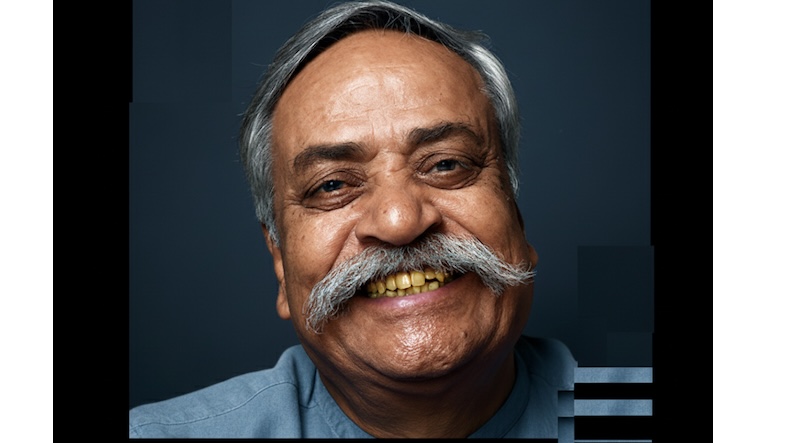
MUMBAI: The lights went out on Indian advertising this Diwali. Piyush Pandey, the wordsmith who turned bus rides and roadside tea into unforgettable campaigns, died on Friday aged 70. Just four months earlier, at the Emvies awards in Mumbai, veterans had touched his feet for blessings while young hopefuls queued for selfies. He looked frail but smiled through every encounter. Humility was his signature; genius was his secret.
Pandey never claimed special talent. His gift was simpler and rarer: he kept his eyes open. The famous Fevicol advertisement—a Jaisalmer bus groaning under passengers clinging to every inch—came from a real sighting. The magic was slapping a Fevicol poster on the back of the bus. “Keep your eyes open, keep your ears to the ground and have a heart willing to accept,” he told newcomers at Ogilvy. It wasn’t a slogan. It was scripture.

He joined Ogilvy & Mather in 1982 at 27, after failing at cricket, tea tasting and construction. When Mani Iyer, who headed the agency, introduced him to me as creative director in the late 1980s, Pandey’s deep, soft voice belied a fierce passion for the craft. Like Roda Mehta, who ran media at Ogilvy, he was generous with his time, patiently explaining the thought behind many a campaign to me. Those campaigns moved hundreds of thousands of crores worth of products off shelves over their lifespans.
His method was observation turned into emotion. The Dum Laga Ke Haisha Fevicol spot was originally made for a smaller brand called Fevitite. The Parekhs, who owned Pidilite, told him the ad was too good to waste. Reshoot it for Fevicol, they urged. He did. That single decision spawned a series of award-winning campaigns and turned Fevicol into the category itself.
His philosophy was disarmingly simple: love life. “Whether you are sipping tea from a roadside vendor or in a five-star hotel, whether you are travelling by second class or in a Mercedes-Benz,” he would say. Great ideas came from loving all of it—the chaos, the mundane, the sublime. “Be open to accepting ideas from the world. Be open to sharing ideas with the world. Learn to talk but most importantly also learn to listen.”
 Pandey despised lazy advertising. Technology for its own sake was pointless; celebrities without ideas were useless. “Many TVCs are pathetic these days when they use celebrities. They are made very lazily,” he once said. For him, the idea came first. Technology could enhance it; fame could amplify it. But without a core truth, it was just expensive noise.
He believed consumers, not suits or pony-tailed creatives, made advertising great. “It’s when he or she accepts the product and emotionally bonds with it, the product becomes a brand,” he said. His advice to brand managers was blunt: stop being salesmen. Build brands, not just products.
I lost touch with him for decades as I went about building the indiantelevision.com group and all its ancillary services. Journalism and writing as I used to practice when I was younger was relegated to the background. It was during the pandemic that I reached out to him and requested him to spare some time for an online interview. To my surprise, he remembered me and he readily agreed. It was an interesting conversation about how Ogilvy was serving clients during the pandemic and how its creative edge was being maintained. We had agreed we would speak for 30 minutes, but the conversation went on for an hour. It was peppered with Pandey-isms. But that was the last time we spoke at length to each other, though we said hello to each other at advertising industry get-togethers which I rarely attended. Sadly, for me.
The man who taught India to watch, listen and love has gone silent. But his voice echoes still—in every vernacular tagline, every slice-of-life commercial, every campaign that dares to see India as it truly is. Pandey didn’t just sell products. He gave an entire nation permission to speak in its own accent, to find poetry in the everyday, to believe that the roadside and the boardroom could meet and make magic.
The lights dimmed this Diwali, but the spark he lit—built on observation, fuelled by empathy, sustained by love—will burn for generations. That’s not advertising. That’s immortality.
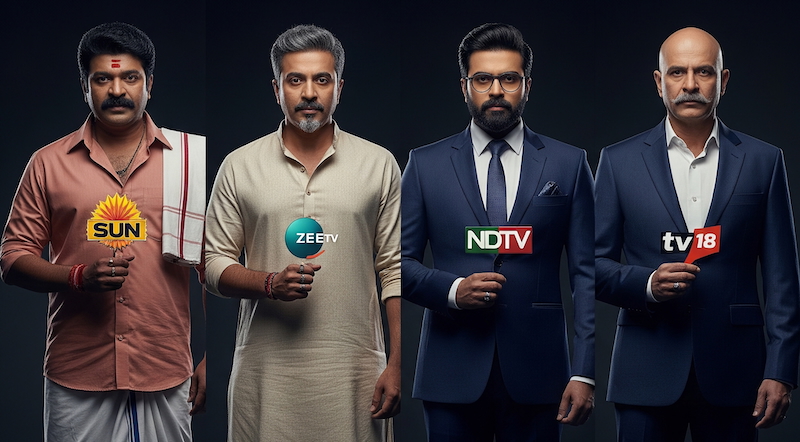
MUMBAI: Once, they blazed across the Indian media landscape with the swagger of pioneers. Entrepreneur-led behemoths like Subhash Chandra’s Zee Entertainment, Kalanithi Maran’s Sun TV, Prannoy Roy’s NDTV, and Raghav Bahl’s Network18 weren’t just market leaders — they were institutions, holding their own even as foreign giants circled hungrily.
Today, those stars are fading. Some have already fallen.
Network18 and TV18 are now firmly in the grip of Reliance Industries and Disney Star. NDTV, long a bastion of editorial independence, is under the control of the Adani Group. Its founders — Roy and Radhika — have exited stage left, their names now relics of an era that once prized journalistic idealism.
Zee, once the crown jewel of Indian broadcasting, is barely hanging on. The Chandra family — once majority owners — now clutch a meagre four-odd per cent stake. It’s a dramatic fall from grace fuelled by Subhash Chandra’s ill-advised adventures into infrastructure. To bankroll these forays, he pledged Zee shares, opening the gates to lenders who came calling. The result: a sharp dilution of promoter ownership and a credibility crisis. The failed merger with Sony’s Indian arm, Culver Max Entertainment, only added insult to injury — scuppered reportedly due to concerns about Zee’s financial hygiene. A company once viewed as squeaky clean had its reputation muddied.
Sun TV, the fourth of the old guard, is also showing cracks. Helmed with iron discipline by Kalanithi Maran, it long stood as a symbol of stability. But the facade is now under strain. A family feud has burst into public view, with brother Dayanidhi Maran accusing Kala of wresting control of Sun TV through backdoor share acquisitions. Legal notices have flown, regulatory filings issued, and the company insists all was above board. Still, some reputational damage has been done — and the gossip mills are churning.
The result is a media map being redrawn in real time. Where once these founders shaped the narrative, today they’re either sidelined, embattled, or ousted. And as corporate titans and conglomerates take over, the question is whether passion-led media can survive in an era of balance sheets, bottom lines, and boardroom power plays.
India’s media isn’t short on ambition. But nostalgia alone won’t stop the sun from setting on yesterday’s giants.

Mukesh Ambani, Larry Fink come together for CNBC-TV18 exclusive

Nielsen launches co-viewing pilot to sharpen TV measurement

Netflix celebrates a decade in India with Shah Rukh Khan-narrated tribute film

Delhivery chairman Deepak Kapoor, independent director Saugata Gupta quit board

Meta appoints Anuvrat Rao as APAC head of commerce partnerships

Brnd.me enters Europe as haircare brands power global expansion

TechnoSport taps quick commerce with launch on Slikk’s 60-minute platform

These ’90s fashion trends are making a comeback in 2017
The final 6 ‘Game of Thrones’ episodes might feel like a full season
According to Dior Couture, this taboo fashion accessory is back
The old and New Edition cast comes together to perform
Phillies’ Aaron Altherr makes mind-boggling barehanded play
Uber and Lyft are finally available in all of New York State
Disney’s live-action Aladdin finally finds its stars
Mukesh Ambani, Larry Fink come together for CNBC-TV18 exclusive
Nielsen launches co-viewing pilot to sharpen TV measurement
Netflix celebrates a decade in India with Shah Rukh Khan-narrated tribute film
Delhivery chairman Deepak Kapoor, independent director Saugata Gupta quit board
Meta appoints Anuvrat Rao as APAC head of commerce partnerships
Brnd.me enters Europe as haircare brands power global expansion
TechnoSport taps quick commerce with launch on Slikk’s 60-minute platform
-
 News Broadcasting1 day ago
Mukesh Ambani, Larry Fink come together for CNBC-TV18 exclusive
-
 iWorld5 days ago
Netflix celebrates a decade in India with Shah Rukh Khan-narrated tribute film
-
 I&B Ministry3 months ago
India steps up fight against digital piracy
-
 iWorld3 months ago
Tips Music turns up the heat with Tamil party anthem Mayangiren
-
 MAM1 day ago
Nielsen launches co-viewing pilot to sharpen TV measurement
-
 iWorld12 months ago
BSNL rings in a revival with Rs 4,969 crore revenue
-
 MAM3 months ago
HoABL soars high with dazzling Nagpur sebut
-
 News Broadcasting2 months ago
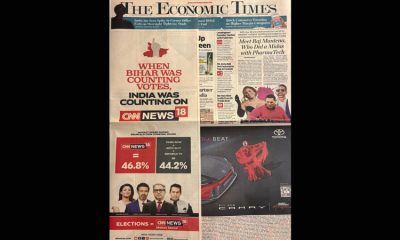
CNN-News18 dominates Bihar election coverage with record viewership
