
Executive Dossier
‘Acting is about good characterisation’ : Neena Kulkarni

That Neena Kulkarni is a good actress has been well acknowledged in the world of Marathi stage, cinema and television. Unfortunately Hindi productions haven’t been as kind and she has been generally typecast in the good mother role. However, even in these stereotyped situations, she has managed to impart her own distinctive stamp to the characters she portrays. Kulkarni has carved a place for herself among Marathi language audiences with the central character of Tara Rani in Smita Talwalkar’s historical venture Peshwai, which recreates the Peshwa era, in a tele-series currently being aired on Zee Alpha. What has given her greater exposure though, has been as Gulnar in Sony Entertainment Television’s Heena as actress Simone Singh’s compassionate mother-in-law. Gulnar made Kulkarni a household favourite.
A graduate in Arts from Mumbai’s Elphistone College, with French as her major, Neena’s tryst with theatre began when she was just nine years old. She was a regular in the skits organised at the Makrand Society colony in Mumbai’s western suburb of Mahim, where she grew up and resides even today. She continued with theatre and carved out a place for herself as a serious and committed actress. Later, she moved to television and started afresh by playing mother roles like “any newcomer”, quips Kulkarni, who says she was aware that she would get categorised as a character artiste when she took the plunge into television. “Given my age and the fact that I was entering a new medium, I couldn’t have been choosy,” she concurs. Kulkarni, who has done a variety of “mother roles”, says she has managed to bring a range of performances within the set character and has no qualms being labelled a character artiste. “The character of Gulnar (in Sony’s Heena) has created a sort of stardom for character artists if I may say so and has at least made me view character artistes differently,” says Kulkarni.
Indiantelevision.com’s correspondent Harsha Khot met Neena Kulkarni at her residence and found that she enjoys playing character roles as much as central roles. Excerpts from the conversation:
With an interesting track record as a theatre actress, what prompted you to join television?
In 1997, we faced financial constraints in the family. My husband was not keeping well and my children were growing up. Being a mother, I did not want to be away from home for long. It’s during that time Ashok Saraf approached me with Chutke Bajake. Since the serial was going to be shot within the city and required comparatively less travel time, I considered the proposal and got into television serials. Not that I was new to television, earlier I had worked for Doordarshan as an announcer so that helped me. It wasn’t an entirely different medium.
 Neena Kulkarni with Bikram Saluja in Panchi |
‘I am a director’s actor and would expect the director to know what is what’ |
What things do you consider while giving commitments to a role or project?
The scripts generally come to you in a verbal story form. Ideally scripts of television serials spring from a seed based on an idea, a central story theme which can be developed over a period of time. And in the case of television serial scripts, you don’t have a bound script, unlike those written for theatrical plays. After hearing the story, I basically mull over the kind of role that I will be playing, and generally I am considered to be in the mother category. Nowadays I also make it a point to consider the production house and most importantly, the director.
The television serial has become a “try-out” medium and I did come across it, especially in the beginning. Because of this I felt absolutely frustrated and it gave me a lot of heartaches. Many channels were coming up and joining the bandwagon so to speak, which gave openings for a lot of inexperienced wannabe directors and somehow I got stuck with them.

I am a director’s actor and would expect the director to know what is what. But at the time I had just stepped into television serials and was quite nervous, especially since the directors weren’t of much help. I had to face a few directors who had the attitude: “I know as much as you do or maybe even less, let us just try this out together.” That used to get on my nerves. I was very vulnerable and felt that if the director doesn’t know what I am capable of and I don’t know what they want me to do then things may not proceed in a proper manner. However, I stuck with it.
What made you stick around?
Financial constraints and hope. I was hopeful that things would get better. Television is a technical medium, not an experimental one. Since I have a theatre background, I would try to put in my best, but would many a time get frustrated looking at the way a lot of other people took things so lightly. But that is where I realised the difference between the theatre and television medium and that there were many other things to learn. I learnt not to jump into any project, and that in television you need not get extremely serious while enacting the character. Now I tend to take up only projects which come to me through reference and this has sorted out the earlier problem.
|
‘The idea is to show more of character with a lesser touch of your own personality’ |
 Receiving the best actress award from evergreen hero Dev Anand for her role in Dhayaniman. |
When did things change for you?
Towards the end of last year I just sat at home for three months debating whether to give up television serials altogether and stick only to movies. I was pondering over why I enjoyed acting in films more than television even though the ‘acting’, which is common to both, is what I liked the most. I became more selective about directors. I recollect playing the role of an old lady in Vikas Desai’s Jootha Sach with Sachin Khedekar. It didn’t do too well, but it introduced me to a good production house, Cinevision. Manish Goshwami of Cinevision may haggle over money and dates but once the project is finalised he sticks to it.
Who are your favorite directors?
Javed Sayeed who made Heena, he is an editor actually. Then the director of Aatish, where I play an old women. Sanjay Upadhaya changed my whole outlook towards serials. He is a good director and knows how to get the best out of his performers. For instance their (Upadhaya’s team) approach to dileanating a character is somewhat similar to what is done in films. Through discussions with the director, the details come out gradually with lot of inputs from both sides. Upadhaya makes us work like dogs getting 10 to 15 scenes done, but at the same time he is particular about time. If the shoot is scheduled at 9 am then it happens then. He and his team treat the project like films in a way.
I had a problem with the way Javed Sayeed functioned when I first began working in Heena. He just wouldn’t handle actors carefully but later with every schedule and episode of the serial he improved as a director while I improved as a tele-serial actress. He has shown that a very capable editor can become a very capable director and Heena proves it. It is one of the top ranking serials and it’s mainly due to the way it has been written and edited. Today I am very comfortable with him because I can understand him.
Why do you feel an actor should not give away too much?
Maybe this is an old way of thinking, but acting also means characterisation. Naseer (Naseeruddin Shah) and Paresh (Rawal) do that, likewise I too characterize the role. Acting by itself is nothing, it’s about building up the background of the character also. They blend with the role so well, showing a little part of themselves but yet not revealing too much by focusing on the profile of character. The idea is to show more of character with a lesser touch of your own personality.
If I didn’t follow this then I would soon get bored. Besides, the day I get bored I’ll leave this field. By way of characterization there are still a few variations of a particular character still remaining to be explored. And since I am playing a variety of characters that makes work interesting. I don’t think all mother roles are the same. The characters I play are very human and yet quite different from the typical doting Hindi movie mother. They say ‘beta’ all the time. I am in the character actress bracket but I am surprised that within this there is so much potential for variety.
What do you dislike about television?
Everyone is working so fast to give or complete the episode that at times the actor becomes quite bale. As long as you say the lines properly it is okay. At times due to various constraints the shots are okayed even if they might not be perfect. There are quite a few people who are not serious actors and who are in this field because they happen to be good looking. Who spend their time on the sets yap-yap yapping away. Then there are people who are on a signing spree doing many serials at one time, while some are here for ‘time-pass’, which can get quite annoying.
|
|
How could the problem be solved? A lot of actors sign a lot of serials at one time. I don’t blame them too much. The problem lies in the fact that a channel starts a serial with four to five options in mind. And at times the circumstances are such that to get a known face they give them so much money that they are willing to compromise on other people. |

Is that the reason why we often see people being replaced in serials?
Probably. The systems in place lead to a lot of insecurity. Then there are actors willing to work for lesser pay which makes even good actors go on signing sprees. The thinking being that you never know when the tide may turn against you. I feel that production houses should assure the actor about the contract and have some consistency in their dealings. And if there are sudden changes at an actor’s expense then she should be compensated. I wonder if this will ever happen though.
I still think people shouldn’t do too many serials as they are a killer as far as an actor is concerned. Ideally, I would like to take only a serial at a time but that doesn’t usually happen. At one point I did a whole lot of pilots and they finally went on the floors over a period of a few years.
Then it becomes terrible. There was a time when nearly seven serials of mine were in various stages of production at the same time and it was a killer. It was absolutely maddening even though they weren’t meaty roles.
How did you manage to work simultaneously in seven serials?
It was because of my quick thinking. When you are in theatre you do tend to become a quick thinker. Soon I realised that you shouldn’t take serials as seriously and intensely as theatre. Earlier, I was trying to put in the same intensity as in theatre and it was affecting me. I was getting frustrated because everyone around me seemed as if they couldn’t care less. I spoilt my health, my sanity. I started hating acting and going to the sets. Serials are a quick business.
How did you take control of the situation?
Between September and December, I sat at home and thought through the whole thing. Why do I like films more than serials when the roles in serial are also good? I was also doing film, because they give some time to the actor to understand what the role is about and not take actors for granted.
Channel interference was getting very irritating. For instance pulling the serial off the air abruptly, but on the other hand maybe it is for the better. It is irritating certainly, but now there is some purpose to all this, asking for certain actors.
 Kulkarni as ‘Gulnar’ in Sony’s Heena with lead star Simone Singh. |
‘When I came to serials my expectations were nil, because I was aware that my age fitted into the mother’s slot’ |
How do you work on your roles? Is acting in television easy?
Serial is more of spontaneity than anything else. Probably that is the reason most newcomers are doing well in serials without any background or any training. It is not about how well trained an actor you are. So I decided to use both together. I have picked up the skills over the years, self-taught by my peers, taught by my gurus. I don’t read too much in the scene and the scripts are generally written one day in advance. But no, acting is not easy. Very few people survive serials and move onto the big screen, which is the true test. That is why you see 20 new faces but hardly one or two of them making it to the big screen.
How do you work on the character you play? How do you make them appear different from each other?
In Heena I was aware that the “Gulnar” was one of many who would behave like any ordinary human, so to add realism the character wore a louder coloured sari, deeper make-up with traditional surma and an Urdu accent. How I did it I don’t exactly know but I am not ashamed to ask questions. I would ask director Rajiv Verma to correct my pronunciation of Urdu vowels. Likewise in Varis where I play a rich widow I wear a stark white sari to give that kind of look, while in Aatish, I wear plain sarees which old women generally wear. And I would never apply unnecessary make-up or nail polish unless the role really requires.
|
Of the roles you have played, which are your favourite ones? Why? |
|

How was it adapting from playing central roles in theatre and a few serials to later getting categorised into roles of character artiste?
When I came to serials my expectations were nil, because I was aware that my age fitted into the mother’s slot. I have played numerous middle-aged characters in theatre. In theatre the central characters are now the side characters in serials and movies. Nevertheless I enjoy the electronic medium. I have mostly played downtrodden characters, which require some acting potential. Besides I can’t do theatre any more because of health reasons and the kind of travelling it requires. Otherwise the roles would have to be meaty enough to make me want to take it. So far I have had a very satisfying theatre life, besides I strongly feel commercialism and theatre don’t go hand in hand.
Which other roles are close to you?
The one in Peshwai. The story is very good and so is the team. Economically it is not lucrative, obviously there has to be something very exciting for me to overlook that factor. I play the central character Tara Rani who was a very fascinating women and towards the end the role has certain shades of grey. Smita Talvalkar’s Peshwai is capturing the Peshwa era on the screen. I have never done a “real” character. The story is about ‘Tararani’ wife of Chhatrapati Shivaji’s younger brother Rajaram. After Shivaji died his Shahu was supposed to take over the reign’s but he is held captive by Mughal king Aurangzeb.
After Rajaram dies and in the absence of Raja Shahu, Tararani takes care of the Peshwa kingdom for 18 years till he returns. The story starts from the point where Shahu is released after Aurangzeb dies and returns to claim the throne. It is then that Tara Rani, who has ruled the kingdom for 18 years, starts questioning herself about giving up the reins of power. She is very upset about giving it away. His only claim to the throne is as a birthright. That is when the grey shades seep in.
Of course Shahu eventually takes the throne. Tara Rani was eventually imprisoned and lived till 86. Even while in prison she does not lose her spirit and despises Shahu and writes letters about what an opportunist he is. Peshwai spans 100 years of which she lives 86. The role is really challenging.
How did you go about sketching character of Tara Rani?
The character is shown in the range of middle age to old and all along with it I changed my voice accordingly. As a woman in her thirties when she takes up the throne her voice is slightly shriller and as she ages it becomes more and more base. At the moment in the serial she is 50 years old and it will continue till she is 86. So there is a range that I am playing which is a great challenge.
Theatre has helped me. Because of theatre I keep a graph to my character. Today normally even the assistant comes and briefs you about the situation and connects it to the scenes shot before and after. Once your graph is clear then there is spontaneity.
Are there others on air that that you rate as good?
I think Neena Gupta has done marvellous work in Saans. How I wish I could do the same! She is the producer and director at the same time.
Another serial is Saaya. I like the way Sanjay Upadhaya has handled it. It made me want to work with him. Alpaviram is another good serial. The lead Pallavi (Joshi) has tremendous potential as an actress and somebody should use it. My daughter aptly put it: ‘Pallavi has done the best acting while in in a coma.’
I would really love to do what Neena has done. I am aware that I have the potential and the capability of writing and producing a serial.
So how soon would you be exploring it?
I am very family oriented, my kids are my first priority. Besides I fear that it will kill the actor in me because the focus would shift from acting to writing. If you are concentrating on one creative activity and take up a second simultaneously, then there is a drift of creativity from one to the other. I experienced that while writing for Loksatta, a Marathi newspaper. My focus shifted from acting to writing.
How do you revitalise yourself?
What you need is tenacity, I often look back at the work I have done. Educating Rita by Santandev Dubey. I cannot afford to expect this from a television serial.
How do you work on the acting?
Many a times by getting into the role, that is my way. It is a little bit of method. When I know a character, what is her background and look closely into the social background, lower middle class or upper middle class. If it is lower middle class out with the nail polish, jewellery. There are little things that others may not think of that automatically come in. I am particular about this and it is very satisfying. Each role is different so I don’t get bored.
Some say getting into the character is a myth, could you explain?
No I don’t think it is a myth. Getting into a character is more of concentrating till a certain point while playing the character. In Ankahee there is a bedai (when the girl leaves for her in-laws place after marriage) scene where there is an argument between me and my daughter and I don’t use glycerine. It is because of my theatre background and it comes naturally to me now. I have learnt all this. It’s memory of emotion, Stanislovsky method, sur (sound). And it still fascinates me.
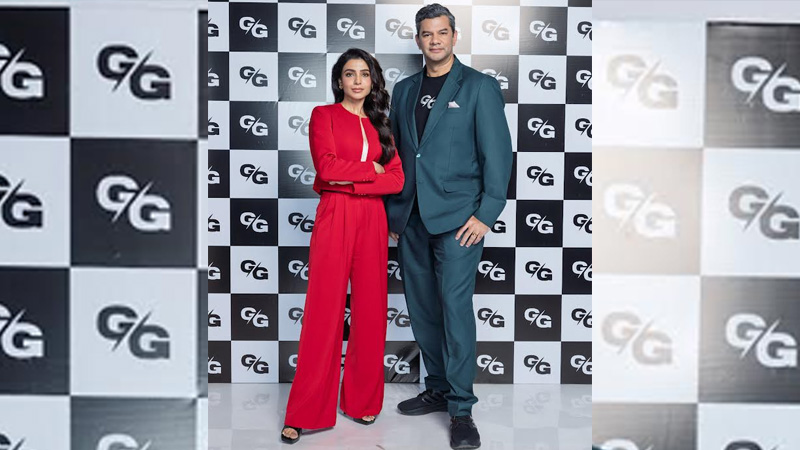
MUMBAI: Game faces on, pressure high India’s gaming ambitions are levelling up. Good Game, billed as the world’s first as-live global gaming reality show, has officially launched in India with a bold mission: to crown the country’s first Global Gaming Superstar.
Blending esports with mainstream entertainment, the show brings together competitive gaming, creativity and on-camera performance in a format that tests more than just joystick skills. Contestants will be judged on gameplay, screen presence and their ability to perform under pressure, reflecting how gaming has evolved from pastime to profession and pop culture currency.
Fronting the show are three high-profile ambassadors: actor and entrepreneur Samantha Ruth Prabhu, Indian cricket star Rishabh Pant, and gaming creator Ujjwal Chaurasia. The winner will take home Rs 1 crore ($100,000) among the largest prize pools for any Indian reality show along with the chance to represent India on a global stage.
Backed by a planned annual investment of up to Rs 100 crore, Good Game is also courting brand partners, promising a minimum reach of 500 million among India’s core youth audience. The creators position the show as a bridge between entertainment and interactive culture, offering long-format content, community engagement and commercial scale.
Auditions are now open to Indian citizens aged 18 and above, inviting amateur and professional gamers, creators and performers alike. Shortlisted candidates will be called for in-person auditions in Mumbai on 14 and 15 February, and in Delhi on 28 February and 1 March 2026.
With big money, big names and even bigger ambition, Good Game signals a shift in how India views gaming not just as play, but as performance, profession and prime-time spectacle.
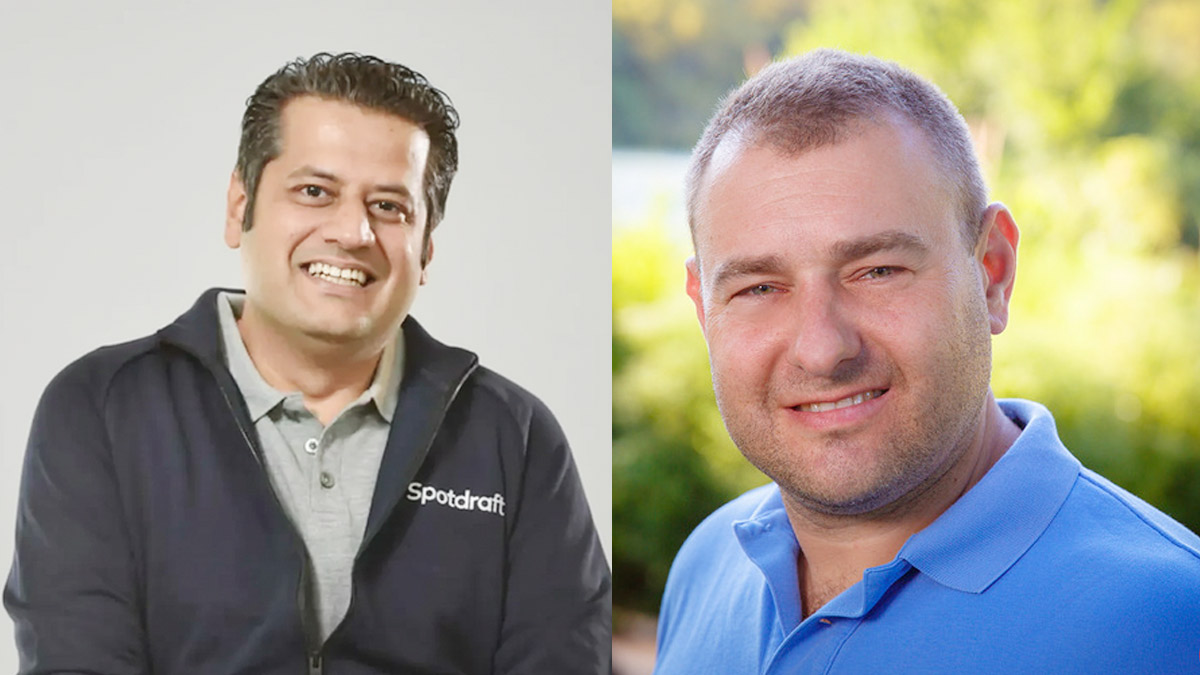
INDIA: SpotDraft has strengthened its senior ranks as it gears up for faster global expansion, naming Alon Waks as chief marketing officer and Amit Sharma as chief financial officer. The appointments follow the firm’s $54 million Series B round earlier this year and mark a push to scale across the Americas, EMEA and India.
The AI-powered contract-lifecycle-management platform has posted 100 per cent year-on-year growth in customer acquisition, counting Apollo.io, IPSY, Mixpanel, Oyster and Panasonic among its global clients. The firm processes more than one million contracts annually, with volumes up 173 per cent and nearly 50,000 monthly active users.
Waks, a veteran of Kustomer, Bizzabo, CreatorIQ, LivePerson and ZoomInfo, will steer global marketing and category positioning as legal teams adopt AI-driven tools. Sharma, who has led finance across scaling tech firms since 2016, will guide financial strategy, investor relations and market expansion.
Both hires aim to sharpen SpotDraft’s bid for a larger slice of the fast-growing legal-tech market, expected to exceed $63 billion by 2032. Co-founder and chief executive Shashank Bijapur said the company is focused on scaling go-to-market operations in the Americas, deepening leadership in EMEA, and accelerating AI capabilities for general counsels and legal-operations leaders.
Clients report shorter deal cycles and better alignment between legal and business teams. “What used to take weeks now happens in days,” said Abnormal Security senior legal operations manager Susan Koenig. DeepL head of legal operations André Barrow, said SpotDraft has helped reframe legal “from a cost centre to a generator of revenue”.
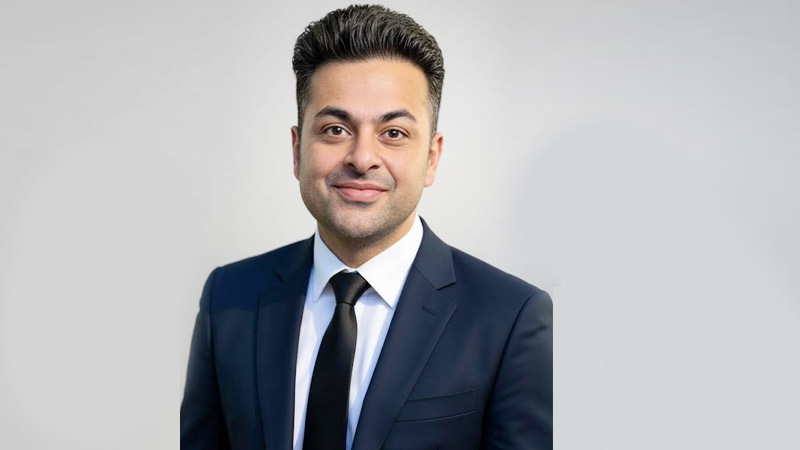
MUMBAI: Out-of-home ads were once the wallflowers of marketing seen by everyone, noticed by few. But in an age where attention has become the world’s most fought-over currency, even billboards are getting a brain upgrade. Enter LOC8, OSMO’s AI-powered attention engine, quietly reshaping the old OOH playbook by measuring not just who could have looked at an ad, but who actually did. The shift is subtle but seismic: impressions are out, impact is in and data, not gut instinct, is calling the shots.
In a landscape where marketers question every rupee spent outdoors, LOC8 is turning lampposts, flyovers and traffic islands into precision-mapped attention laboratories. By crunching dwell time, visibility zones, perceptual size and real-world obstructions, the platform is dragging OOH into a future where creativity meets computer vision and where the best ideas aren’t just eye-catching, but eye-measured. From automotive facelifts to FMCG novelty and real estate trust-building, the message is clear, outdoor has stopped shouting and started listening. Indian Television Dot Com explores more about it in an Interview interview with OSMO co-founder Nipun Arora.
On how OSMO is shifting outdoor advertising from a visibility-led medium to an attention-led one through LOC8.
Traditional OOH has long been measured by visibility and impressions i.e how many people could see an ad. OSMO, through its proprietary AI platform LOC8, is shifting that narrative more towards likelihood of being noticed. Using computer vision and machine learning, LOC8 analyzes real-world video data to measure visibility zones, obstructions, dwell time and perceptual size; bringing precision to how attention is quantified outdoors. It moves the focus from mere impressions to quality of impressions, making OOH a data-verified, attention-led medium comparable to digital in accountability.
On how marketers can use LOC8’s dwell-time, visibility and perception insights to craft more effective, emotionally resonant OOH campaigns.
LOC8 helps brands understand how people truly experience outdoor media how long they look, from what distance, and under what conditions. By quantifying dwell time, visibility duration, and perceptual size; marketers can plan campaigns that align with real human viewing behavior. This empowers creative and strategy teams to design emotionally resonant storytelling where messaging, visual hierarchy and placement are optimized for how people actually notice and process OOH creatives.
About what LOC8 has revealed through campaigns like Renault Triber and Namaste India on how categories such as auto, FMCG and real estate use attention metrics to drive outcomes.
Each category uses attention data differently but all share one common goal: to convert outdoor visibility into measurable engagement.
• Automotive | Renault Triber
For the new Renault Triber facelift, bold creative met data-led planning through LOC8. By analyzing on-ground video data, LOC8 measured real audience attention across placements factoring in visibility zones, obstructions, traffic speed and perceptual size. This enabled Renault to identify corridors that delivered maximum reach, saliency and engagement, optimizing media efficiency and ROI.
• FMCG | Namaste India
In OOH, innovation is the hook and assets are the bait. But bait often hides the hook. With Loc8’s attention metrics, we ensured the bait wasn’t a hurdle, rather it became the perfect stage for innovation to deliver its full impact! The insight proved that creative novelty, when validated by attention data, drives deeper engagement and measurable brand lift.
• Real Estate
For luxury and real estate campaigns targeting HNI/UHNI audiences, attention patterns differ especially between front and rear passengers, who are often the core audience segment for premium sites. LOC8’s ability to distinguish rear vs. front visibility plays a critical role here. It helps identify sites that offer longer viewing windows and stronger perceptual dominance from the rear seat where decision-makers are most likely seated making it a key differentiator for premium and trust-led categories. Together, these insights prove that auto optimizes for impact, FMCG for recall, and real estate for trust visibility showing how attention metrics adapt to category goals while ensuring measurable outcomes.
On how attention analytics will shape the future of brand storytelling and media planning as OOH becomes more digitised and data-driven.
As outdoor digitizes, attention analytics will inform not just where to advertise but how stories are told in public spaces. This evolution transforms OOH from a static broadcast channel into a dynamic attention ecosystem, where creativity is optimized through evidence-based insight.
On how LOC8’s data-led framework helps marketers quantify OOH impact and make outdoor a more accountable, ROI-driven medium.
LOC8 bridges the gap between intuition and evidence. By quantifying metrics like visibility duration, attention opportunity index, and visual saliency rank, it allows brands to benchmark site performance and justify investment. This data-led approach brings transparency, comparability and ROI measurement to a medium historically driven by perception.
On how OSMO ensures AI and computer vision enhance creativity rather than reduce it to numbers.
OSMO believes that technology should enhance creativity, not overshadow it. LOC8’s attention models reveal what naturally draws the human eye helping creative teams refine design cues, contrast, and visual hierarchy for greater impact. By merging art and science, LOC8 empowers creativity with intelligence.
About the creative best practices and design cues LOC8 has uncovered regarding what truly captures consumer attention outdoors.
LOC8’s visual cognition analysis has surfaced clear patterns across campaigns:
• High contrast and minimal messaging outperform cluttered designs.
• Motion cues draw significantly longer dwell times.
• The first two seconds are critical, creatives must establish focus instantly.
• Contextual alignment between the creative and its environment increases attention by over 30%.
These learnings offer a scientific foundation for creative effectiveness helping brands design OOH that’s visually magnetic and emotionally memorable.
On how attention metrics will integrate into omnichannel planning where OOH, digital and social work together for unified brand impact.
Attention can become the unifying KPI across OOH, digital and social to creates seamless storytelling continuity, where outdoor triggers digital engagement. The future of omnichannel planning lies in attention-led integration ensuring that campaigns don’t just reach audiences everywhere but truly capture and hold their focus.


Hamdard honours changemakers at Abdul Hameed awards

Why the Best Campaigns Today Start With Insights, Not Ideas

Ahmad Muneeb elevated to VP – HR centre of excellence at Zepto

Fans Take Centre Stage as Zee Cine Awards Turns the Spotlight Around

GUEST COLUMN: How content leaders decide what gets greenlit

The man who dubbed Lord of the Rings in 50 languages is stunned by Mumbai traffic

Dell names Aishwarya Sudhakar director of marketing intelligence

These ’90s fashion trends are making a comeback in 2017
The final 6 ‘Game of Thrones’ episodes might feel like a full season
According to Dior Couture, this taboo fashion accessory is back
The old and New Edition cast comes together to perform
Phillies’ Aaron Altherr makes mind-boggling barehanded play
Uber and Lyft are finally available in all of New York State
Disney’s live-action Aladdin finally finds its stars
Hamdard honours changemakers at Abdul Hameed awards
Why the Best Campaigns Today Start With Insights, Not Ideas
Ahmad Muneeb elevated to VP – HR centre of excellence at Zepto
Fans Take Centre Stage as Zee Cine Awards Turns the Spotlight Around
GUEST COLUMN: How content leaders decide what gets greenlit
The man who dubbed Lord of the Rings in 50 languages is stunned by Mumbai traffic
Dell names Aishwarya Sudhakar director of marketing intelligence
-

 News Broadcasting4 days ago
Mukesh Ambani, Larry Fink come together for CNBC-TV18 exclusive
-
 I&B Ministry3 months ago
India steps up fight against digital piracy
-

 iWorld1 week ago
Netflix celebrates a decade in India with Shah Rukh Khan-narrated tribute film
-
 MAM3 months ago
HoABL soars high with dazzling Nagpur sebut
-
 MAM4 days ago
Nielsen launches co-viewing pilot to sharpen TV measurement
-
 iWorld12 months ago
BSNL rings in a revival with Rs 4,969 crore revenue
-
 iWorld3 months ago
Tips Music turns up the heat with Tamil party anthem Mayangiren
-

 Film Production1 week ago
UFO Moviez rides high on strong Q3 earnings
