
Applications
“Competition in OTT solutions is what makes it exciting:” Amagi’s Baskar Subramanian

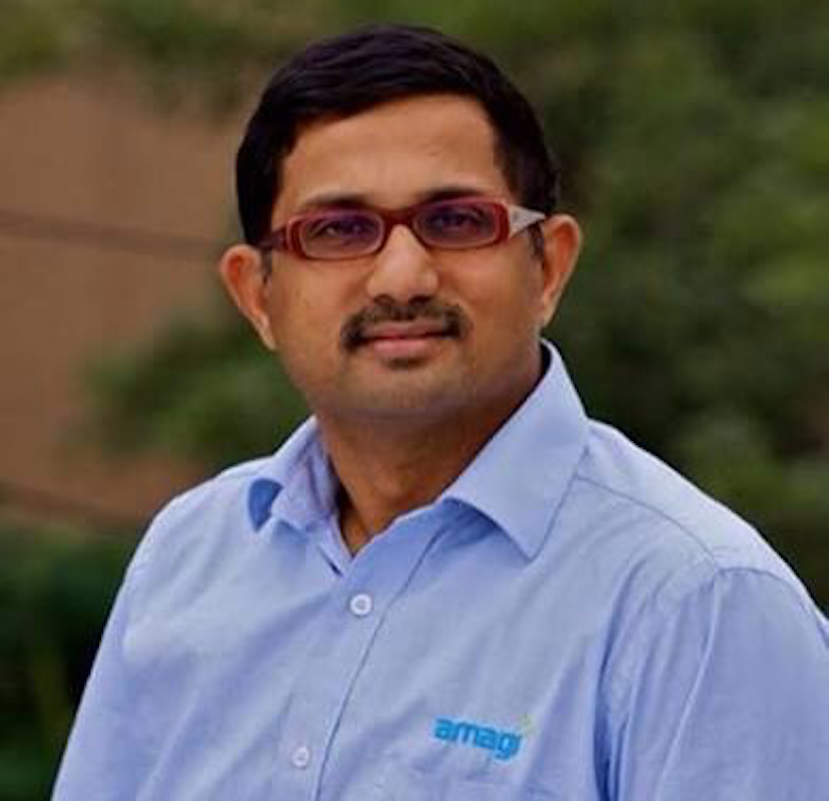
Founded in 2008, Bengaluru-hqed broadcasting, cloud and OTT ad and tech solutions provider Amagi is a homegrown outfit that is slowly and steadily making its mark globally, thanks to its innovative tech prowess. With offices in New York, London and Hong Kong, and its R&D lab in Bangalore, Amagi has made deployments in over 40 countries and delivers more than 80 feeds to audiences worldwide. Its client roster features some big ticket premium players like: Discovery Communications (for DSport), Vice (for its Viceland channel), Turner, AMC, IMG and B4U.
Like previous years, the company is exhibiting at the global broadcast and OTT ecosystem confab, IBC in Amsterdam. Among the tech solutions it is showcasing at the exhibition include: Cloudport channel Playout, Thunderstorm OTT Ad insertion, and Storm TV localization.
Indiantelevision.com’s Kirti Chauhan had a brief conversation with Amagi CEO Baskar Subramanian about the company’s participation in IBC as well as on its journey so far. Excerpts from the interview:
What are the innovations you are bringing to IBC 2017?
This time we are carrying two big innovations. First is related to machine learning capabilities or we call it the new deep learning capabilities, the artificial intelligence approach. For the first time, we are announcing products and services that would leverage machine learning capabilities to create new services. For example, we are demonstrating the sports highlight feature.

In a 90 minutes live soccer match, as soon as the match completes, a video editor identifies and creates a 10-15 minutes highlight show removing injuries, fouls and much more non-highlight things.
But, Amagi has created a system that can automatically spit out 10 minutes highlights without worrying about missing the key factors.
This is one step in the evolution of the bunch of services we are bringing in, which is going to transform how content is processed more in terms of live as well as VOD content.
The new capabilities allow us to create promos, key frames, and much more with the help of our new solutions, which are done manually today.
The second big innovation is the auto ad detection capability. It is an OTT offering. We have created a mechanism that can identify an ad and content separately so that each can be monetized on an individual basis.
What is the amount of investment put in the technologies, which you are showcasing at IBC 2017?
Amagi has raised $60 million to date and a large part of these funds are used on technology and research and development from the past six years. The products and innovations which we are going to present in IBC 2017 are a result of that R&D. We have raised $35 million earlier in this year from KKR Emerald Media.
How much traction has your ad insertion solution got globally?
The total amount of ad insertion transaction we have done is close to about $30 million.
You are entering a competitive market in OTT end-to-end solutions. Comment.
There are three different parts specifically to the OTT value chain today. Looking at it from the technology standpoint, there is a need for OTT platform, that is, first, the software infrastructure, users interface towards the customers and the interaction with the customers. That is the whole customer related platform which is the online platform.
Second is the advertising monetization, which is a separate piece of managing the monetization part. And third is video back pulling which is bringing the content into the system.
Amagi basically focuses on its strength – which is ad monetization as well as video back and forth today. We work with multiple different online platforms.
Yes, it is a competitive market and that is the exciting part. The market is growing dramatically in this segment. Many different players from different parts of the globe are getting into this particular space.
Who is your target clientele for live streaming online?
Our target clientele is everybody who is into live streaming of any sort of content. One bunch is the large professional sports TV channels. Another bunch of clients we are targeting is Youtube stars and wannabes. Those who already exist on Youtube space now are looking to create live events and sessions.
We have few clients worldwide who have started to look at it and lot more is going to happen in the next few months, where we will be seeing digital first companies becoming great consumers of live streaming capabilities on the internet.
For example, we already have channels that are using Amagi’s infrastructure for live sports. In India, DSport, a Discovery Communications sports channel, is run by Amagi. We are handling their live content day in and day out. Content coming in from worldwide is going through our infrastructure where we help them to orchestrate and create live streams for different sports events worldwide. Currently, we are managing their Pakistan vs World XI match via Bangalore.
How you will take out the interruptions (ad breaks) from the live content that you are demonstrating at IBC2017?
When an event happens, we take the whole event content into the cloud, and then there is a stream of the event coming as an IP stream or internet stream into the cloud. In the cloud, Amagi can through a browser insert exact points of the ad. For example, if we are watching a cricket match, exactly at the end of an over to put an advertisement, Amagi uses its browser-based approach. Another current example, in the DSport scenario, the satellite uplink is happening in Hong Kong, the cricket match is happening in Pakistan, the control of the advertising, graphics and sports score card is done in Bangalore.
Amagi does the effective master control of the whole live stream from the Bangalore master control room on cloud infrastructure. Amagi has built out sophisticated and complex architecture that we are demonstrating at IBC 2017 as our new innovation.
What would be the time lag in the telecasting of the live content?
From the time the camera captures the event to the time it comes to on any screen is called glass-to-glass latency. In Amagi, the glass-to-glass latency is about 10 seconds.
How have you scaled up to offer these solutions?
Amagi’s infrastructure has been built from a software architecture standpoint through which we would be able to scale and offer thousands of services. Once, applied on a public cloud infrastructure like Amazon, Microsoft Azure, then it starts scaling up dramatically.
How do you operationalize these channels and run them?
Amagi uses a lot of automation instead of people and has built automated monitoring capabilities, alerts, and system capabilities. Everything is automated, as much as possible, and we minimize manpower, as well as our scalability, is automatically addressed using machines.
How do you manage monetization?
Amagi has the technology to identify the location of all the ads breaks on the online television content, which is available on television today. Once it is identified, we connect with ad networks and ad exchanges and sell the advertisements to them.
What is your expectation from these innovations?
Fundamentally the innovations we are doing are world class and pioneering. We will be probably the only company or one of the companies talking about taking the machine learning and artificial intelligence approach. Also like Google and Microsoft, we will be one of the few companies, which talks about these capabilities for broadcasting as a media business programmer.
Also read:
Managed Broadcast Services Amagi’s Skylight Cloud Platform
Amagi wins IBC Innovation Award








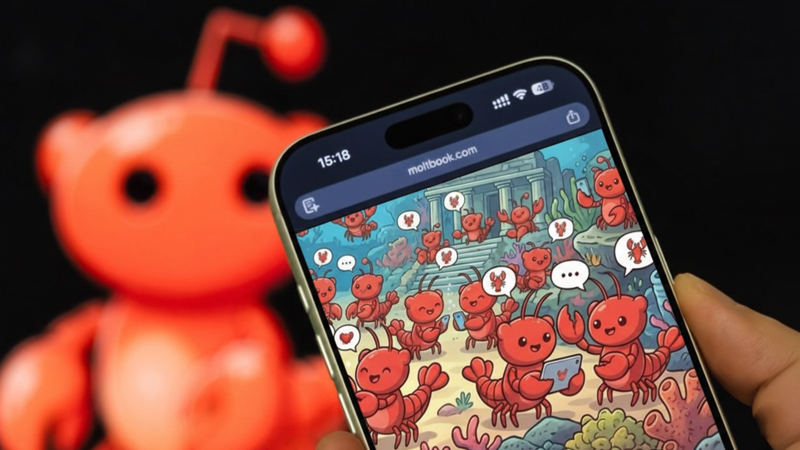
CALIFORNIA: Moltbook, a Reddit-style social platform built exclusively for artificial intelligence agents, has emerged as the latest obsession in Silicon Valley, drawing intense attention for its explosive growth and surreal bot-driven interactions.
The platform hosts more than 100 communities where AI agents post, argue and joke about topics ranging from governance theory to esoteric “crayfish debugging” concepts. Within days of launch, Moltbook recorded tens of thousands of posts, nearly 200,000 comments and more than 1 million human visitors observing the activity.
Yet the numbers and the autonomy are under scrutiny, as per media reports. A security researcher has suggested as many as 500,000 accounts may trace back to a single address, raising doubts about Moltbook’s membership claims. Many posts could also be the result of humans instructing their AI tools to publish content, rather than bots acting independently.
The platform runs on agentic AI, powered by an open-source tool called OpenClaw, formerly known as Moltbot. Unlike chatbots such as ChatGPT or Gemini, these agents are designed to perform tasks on users’ devices, from sending messages to managing calendars, with minimal human input. Once authorised, they can interact freely on Moltbook.
Some tech figures have hailed the platform as a glimpse of a post-human internet. Head of crypto custody firm BitGo Bill Lees, called it evidence that “we’re in the singularity”.
Academics are less convinced. Petar Radanliev, an AI and cybersecurity expert at the University of Oxford, said the idea of agents acting independently was “misleading”, describing Moltbook instead as automated coordination within human-set constraints. Columbia Business School assistant professor David Holtz, dismissed the spectacle as “thousands of bots yelling into the void and repeating themselves”.
Beyond hype, security worries loom large. ESET global cybersecurity advisor Jake Moore, warned that granting AI agents access to emails, private messages and files risks prioritising efficiency over privacy. Andrew Rogoyski of the University of Surrey said high-level system access could lead to serious damage, from erased data to compromised company accounts.
Even OpenClaw’s founder Peter Steinberger, has felt the darker side of attention, with scammers hijacking his old social media handles after the platform’s rebrand.
For now, Moltbook remains a strange digital zoo: part experiment, part spectacle, where AI agents banter about philosophy, productivity and, occasionally, their fondness for their human operators.

CALIFORNIA: Apple has handed a bigger global brief to a long-time insider. Avtar Ram Singh has taken over as head of international marketing for the App Store, Apple Arcade and the Apple Games app, deepening his remit across one of the company’s fastest-growing businesses.
“I’m happy to share that I’m starting a new position as head of international marketing, App Store, Apple Arcade and Games App at Apple,” Singh said while announcing the move.
The promotion crowns nearly seven years at Apple, where Singh has led services marketing across Southeast Asia and India and previously served as head of marketing for Southeast Asia content and services, business lead for Apple Podcasts in the region and interim marketing lead for the App Store internationally.
His new portfolio spans three pillars of Apple’s services push. The App Store, which Apple positions as a safe and trusted discovery platform, now attracts more than 850 million average weekly users globally. Since 2008, developers have earned over $550 billion on the platform.
Apple Arcade, the company’s gaming subscription service, offers unlimited access to a catalogue ranging from brain teasers to big-name franchises. The recent addition of Sid Meier’s Civilization VII Arcade Edition brings a AAA PC title to iPhone, iPad and Mac from 5 February.
Then there is the Apple Games app, unveiled at WWDC as a unified destination for games from the App Store and Arcade. It aggregates titles in one place, surfaces personalised recommendations, tracks events and achievements, and lets users compete with friends or connect controllers for a console-like experience.
Singh arrives with a hybrid background in strategy, data and creativity. His career spans digital and social media marketing, business intelligence, content, editorial and analytics across culturally diverse markets. He has worked on brands including P&G, Accor, Audi, UBS, Nikon, Samsung, Sony, Pizza Hut, HBO and Singapore Airlines-linked businesses such as Scoot.
Before Apple, Singh led strategy at Falcon Agency, focusing on performance marketing and ROI-driven digital frameworks. He earlier ran the social practice at Publicis Singapore, where he oversaw operations, business development and regional social strategy for multinational clients. His career also includes roles at Ogilvy-linked Circus Social, Rocket Internet ventures Lazada and Zalora, and research firm IDC in Bangkok, where he analysed technology markets and won early awards for collaboration and client retention.
At Apple, he has been close to several service launches and expansions, including Apple Fitness+ in Singapore, Apple Creator Studio, global podcast subscriptions and new App Store marketing tools.
The timing is notable. Apple’s services business has posted record years, and gaming is becoming a sharper battleground as platforms chase engagement and recurring revenue. Singh’s brief sits at the intersection of content, community and commerce.
In a market where attention is scarce and loyalty scarcer, Apple is betting that sharper storytelling and smarter marketing can keep users inside its ecosystem. Singh now holds the megaphone. The real test will be how loudly the world listens.
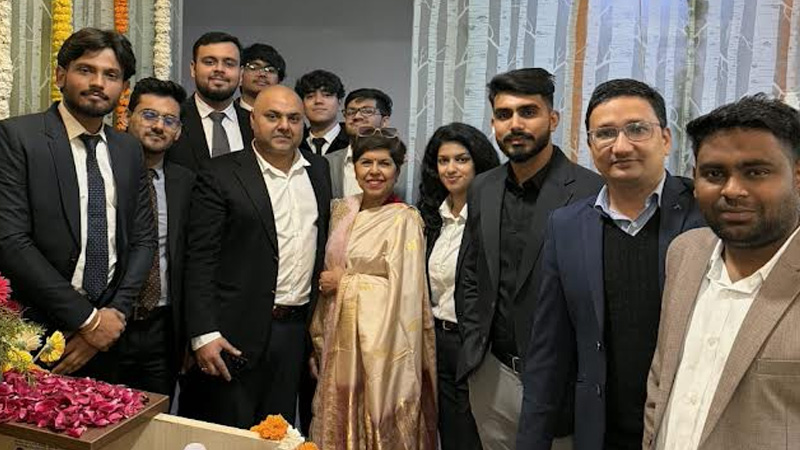
MUMBAI: Bharathcloud is bringing its cloud closer to power. The Hyderabad-based sovereign AI cloud services provider has opened its Delhi office, marking its formal entry into North India and setting the stage for its next phase of growth.
The expansion comes as India’s digital transformation fuels rising demand for AI-ready cloud infrastructure, driven by wider adoption of artificial intelligence, machine learning, the Internet of Things and data-heavy applications. With the new office, Bharathcloud plans to onboard more than 100 employees in 2026, strengthening its workforce to support customers across government, enterprises, MSMEs and social sectors.
The Delhi presence is expected to sharpen the company’s engagement with organisations seeking secure, scalable and cost-efficient cloud platforms that comply with India’s data sovereignty requirements. It also positions Bharathcloud closer to policy, public sector and enterprise decision-makers in the region.
Founded in Hyderabad, Bharathcloud offers AI-ready cloud infrastructure including Kubernetes-as-a-Service, zero-trust security architecture and multi-level data protection frameworks. Its platform supports AI and ML workloads, blockchain application migration from hyperscalers and distributed data management, with an emphasis on reliability, low latency and operational continuity.
“With the Delhi expansion, we are positioning Bharathcloud to engage more closely with AI-driven enterprises and technology hubs in North India,” said Bharathcloud co-founder Rahul Takallapally. He added that the move would help nurture local cloud and AI talent while accelerating the adoption of secure and resilient AI infrastructure across sectors.
The company currently operates in Hyderabad, Bengaluru, Mumbai, Kolkata, Lucknow and Chennai, employing over 200 people and serving more than 1,500 clients across manufacturing, healthcare, financial services, IT and media. Aligned with national initiatives such as Digital India and Make in India, Bharathcloud continues to focus on building indigenous AI-cloud infrastructure to support data localisation and the country’s growing appetite for next-generation digital solutions.
With its Delhi office now live, the company is signalling a clear intent: to make sovereign, AI-ready cloud infrastructure not just an alternative, but a mainstream choice for India’s north as well as its tech capitals.



MIB sets OTT accessibility rules, mandates captions and audio description

Boney Kapoor acquires remake rights of Tamil political satire Thalaivar Thambi Thalaimaiyil

Netflix India names Rekha Rane director of films and series marketing

Zabeen signs off from TV9 after shaping the network’s public voice

Dhawan steps up to bat for Delhi’s grassroots sports push

Orient Beverages pops the fizz with steady Q3 gains and rising profits

Cheekatilo shines in the dark with record debut on Prime Video

These ’90s fashion trends are making a comeback in 2017

Swiggy Instamart’s GOV surges 103 per cent year on year to Rs 7,938 crore
The final 6 ‘Game of Thrones’ episodes might feel like a full season
According to Dior Couture, this taboo fashion accessory is back
The old and New Edition cast comes together to perform
Phillies’ Aaron Altherr makes mind-boggling barehanded play
Uber and Lyft are finally available in all of New York State
MIB sets OTT accessibility rules, mandates captions and audio description
Boney Kapoor acquires remake rights of Tamil political satire Thalaivar Thambi Thalaimaiyil
Netflix India names Rekha Rane director of films and series marketing
Zabeen signs off from TV9 after shaping the network’s public voice
Dhawan steps up to bat for Delhi’s grassroots sports push
Orient Beverages pops the fizz with steady Q3 gains and rising profits
Cheekatilo shines in the dark with record debut on Prime Video
-
 e-commerce4 weeks ago
Swiggy Instamart’s GOV surges 103 per cent year on year to Rs 7,938 crore
-

 News Headline2 months ago
From selfies to big bucks, India’s influencer economy explodes in 2025
-
 iWorld1 year ago
Kuku TV transforms India’s OTT space with vertical microdrama boom
-
 News Headline2 years ago
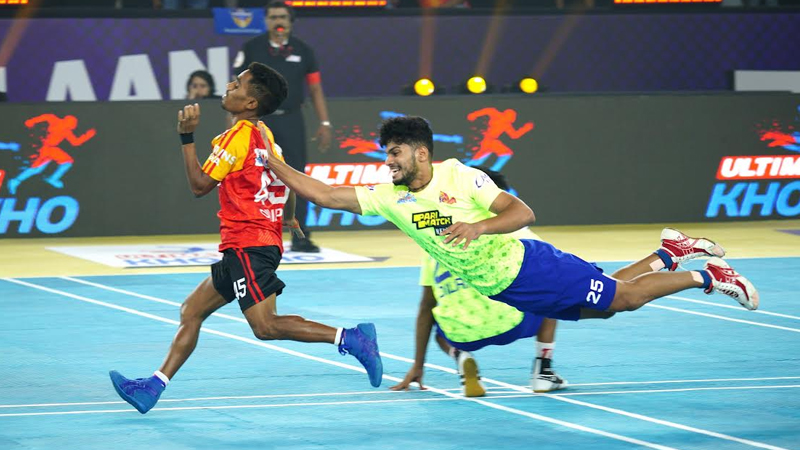
Odisha to host Ultimate Kho Kho Season 2 from December 24
-
 MAM2 years ago
Ultimate Kho Kho raises valuation, secures a series-A PE funding from UK-based BNP group
-
 News Headline2 months ago
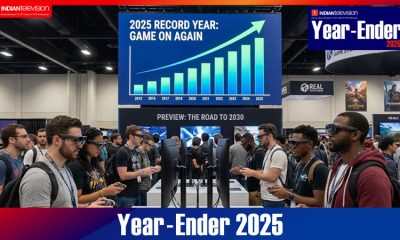
Game on again as 2025 powers up a record year and sets the stage for 2030
-

 News Headline2 months ago
2025: The year Indian sports saw chaos, comebacks, and breakthroughs
-
 iWorld6 months ago
Billions still offline despite mobile internet surge: GSMA


