Connect with us

Applications

CAS switchover modalities will hit broadcasters, MSOs hard; Trai to have final say

Published

on


MUMBAI: A day after the government issued a notification setting 31 December, 2006 as the deadline for the south zones of Delhi, Mumbai and Kolkata to be fully “CAS delivered”, it fired the real bombshell – the framework under which addressability would be introduced in the notified areas.

The backdated (31 July) notification covers a whole range of conditions that impact all constituents of the cable service delivery chain – broadcasters, cable MSOs, last mile operators.


It even delves into issues of advertising.


Interestingly, embedded in the fine print of the notification is a clause that allows the government to extend the time frame for the CAS switchover.

This could be done if the government believes that the arrangements made by MSOs are inadequate and, therefore, “likely to be against the interests of a substantial portion of the subscribers in any notified area.”

Tasked with overseeing all this is the cable and broadcast regulator, which has been given extraordinary powers in regards to the switchover to addressability in the areas that fall under the CAS notification.

The areas for CAS implementation are the Kolkata Metropolitan areas, the areas covered by the Municipal Council of Greater Mumbai and the National Capital Region of Delhi.


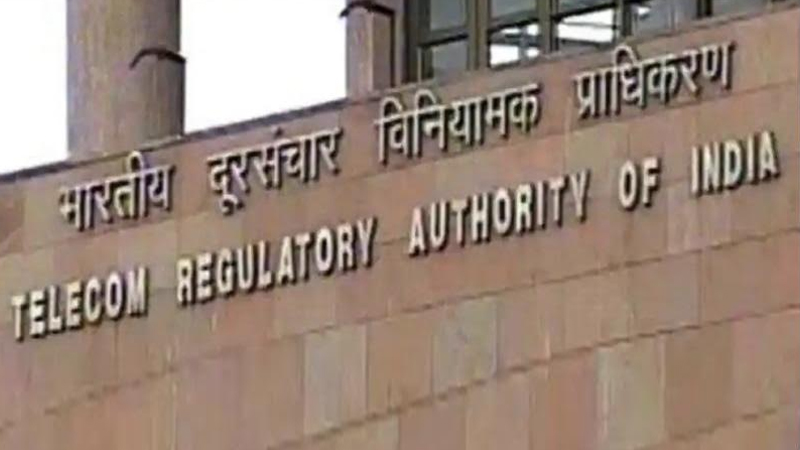
The Telecom Regulatory Authority of India (Trai), will be the final word on not just pricing of pay channels, but also in the granting of permission to cable service providers to offer addressable services, among a host of other extremely restrictive conditions.

Some of the key issues the notification covers are:

Interconnect Agreements

It is Trai that will determine the “standard interconnection agreement to be used for entering into commercial agreements for distribution in the notified areas, of pay or free-to-air channels among (i) broadcasters and multi-system operators; and (ii) MSOs and local cable operators.”

(a) Trai will set the maximum limits of security deposit and monthly rental for supply, maintenance and servicing of set top boxes of prescribed specifications to the subscribers on rental basis by multi-system operators in the notified areas;

(b) tariff for the basic service tier along with the minimum number of free-to-air channels to be provided by the multi-system operators or local cable operators to the subscribers in the notified areas;

(c) regulations for quality of service to be provided by the multi- system operators or local cable operators to the subscribers in the notified areas.

Channel Pricing

(1) Every broadcaster will have to declare the nature of each of its channels as ‘pay‘ or ‘free-to-air‘ channel as well as the maximum retail price of each of its ‘pay‘ channels to be charged by the multi-system operators or local cable operators from the subscribers in each of the notified areas.

(2) Each broadcaster will have to file the declaration of the nature and prices of channels within 15 days of the date of notification by the government.

(3) If Trai believes the price declared by the broadcaster for any of its pay channels is too high, it has the right to fix and declare the maximum retail price of such a pay channel or fix a general maximum retail price for all pay channels within which the broadcasters may declare their individual prices for each pay channel.

(4)Any order issued in this regard by the regulator will be binding on the broadcasters and the multi-system operators and local cable operators.

(5) If a broadcaster fails to declare the price of any of its pay channels within the prescribed time limit, or fails to comply with the direction or refuses or fails to enter into an interconnect agreement with a MSO permitted by the government within the prescribed time limit, the authority can take interim measures to ensure supply of
signals.

(6) If the broadcaster does not comply with the directives issued by Trai, the government may, if asked to do so by the regulator, suspend permission to broadcast the channel in the country.

(7) Every declaration on pricing filed by the broadcaster will remain valid for one Year. If the broadcaster wants to revise the price of any channel or convert a pay channel to free-to-air or a free-to-air channel to a pay channel, it will have to give one month‘s notice to the MSO and subscribers:

Govt Permission For MSOs, Cable Ops To Operate

(1) No multi-system operator can provide addressable cable services without permission from the government.

(2) Every MSO has been given 30 days to apply to the I&B ministry for permission to operate, along with a processing fee of Rs 10,000.

(3) After receiving the application, the I&B ministry has 30 days to either grant or refuse permission on the basis of information that will include existing operational area, actual number of subscribers and addresses of its local cable operators in each of the notified areas, commercial arrangements with the broadcasters and local cable operators, if any, financial strength, management capability, security clearance and preparedness to supply and maintain adequate number of set top boxes for its subscribers, installation of its subscriber management system and compliance with all other quality of service standards that may be specified by Trai.

(4) In the event of an MSO failing or refusing to enter into interconnect agreements with a broadcaster of a pay channel or an adequate number of local cable operators in the notified areas or violates the terms and conditions laid down, Trai can take interim measures to ensure supply of signals. Though what these interim measures might involve is not spelt out, it would appear to indicate that the licence to operate would in that particular area would be given to some other MSO.

(5) MSOs violating the terms and conditions laid down by Trai face revocation of their licence.

Public Awareness Campaign About CAS

(1) Every MSO will have to adequately publicise to its subscribers for a period of 30 days, either through advertisements in the print and electronic media or through other means (e.g. leaflets, printing on the reverse of the receipts, personal visits, group meetings with subscribers or consumer groups etc.) the salient features of the CAS scheme.

These will include:-

(a) A-la-carte subscription rates and the periodic intervals at which such subscriptions are payable for receiving the various pay channels;

(b) The refundable security deposit and the daily or monthly rental payable for the set-top box and its detailed specifications such as make, model, technical specifications, user manuals and maintenance centres etc.;

(c) The number and names of free-to-air channels that the multi-system operator will provide to the subscribers and specific placement of each channel in the prime or non-prime bands;

(d) The prescribed monthly service charge to be paid by each subscriber for receiving the basic tier service and the number of additional free-to-air channels, if any, offered by the MSO.

(e) The quality of service standards specified by Trai and the arrangements made by the MSO to comply with these standards;

(f) The subscriber management system established by the MSO to demonstrate the functioning of the STBs and interacts with the subscribers to explain the various financial, logistic and technical aspects of the system for its smooth implementation;

(g) The arrangements for resolution of disputes between the MSO, LCOs, and subscribers in respect of the quality of service standards, payments and refunds etc.

(2) The Authority may also arrange public awareness activities in the notified areas either directly or through authorized officers or consumer organizations etc..

Supply And Installation of STBs

(1) Every subscriber who wants to receive one or more pay channels shall, during the public awareness campaign or within 15 days after its expiry, apply to any one of the MSOs granted permission either directly or through any of his linked LCOs, to supply and install one or more set top boxes in his premises as per the scheme approved by Trai and deliver the requisite channels through the same:

Provided that every subscriber shall be free to buy an STB of approved quality from the open market, if available and technically compatible with the MSO‘s system. No MSO or cable operator can force any subscriber to buy or to take on rent the STB from him only.

(2) Every subscriber who wants to receive one or more pay channels can either buy an technically compatible STB from the open market or apply to anyone of the MSOs either
directly or through any of his linked LCOs, to supply and install one or more STBs in his.

(3) Every MSO will have to set up and operationalise its subscriber management system within the determined time frame.

Dispute Resolution Mechanism

Every multi-system operator shall be obliged to maintain the quality of service as per the standards, including the arrangements for handling complaints and redressal of grievances of the subscribers, as may be determined by regulation or order by the Authority.

Trai may look into the efficacy of such arrangements and issue necessary directions to the concerned parties for compliance.

Transition To Addressable Systems

(1) Immediately on operationalisation of the SMS and the installation of STBs, every MSO will have to provide pay channels in encrypted as well as unencrypted form for a period of not less than 15 days to test out the quality of service, remove any technical or operational snags and enable the subscribers to become familiar with the operation of addressable systems at their end.

(2) Before the start of the transition period Trai can call for progress or compliance reports from the service providers.

(3) If Trai is of the opinion that the arrangements made by the MSOs are not adequate and the switchover to CAS is likely to be against the interests of a substantial portion of the subscribers in any notified area, it may recommend to the government an extension of the notified date by such period as in its opinion is the minimum required for the satisfactory completion of the necessary arrangements by the MSOs.

Advertisements

No programme shall carry advertisements exceeding 12 minutes per hour, which may include up to ten minutes per hour of commercial advertisements, and up to two minutes per hour of a channel‘s self-promotional programmes.


The Industry Reaction

The industry, which is already reeling under government pressure, reacted cautiously as the impact of the fine print was still being studied.

A cable industry representative, who did not want to be identified, blurted out, “The government seems to have tightened the screws well and proper. The norms are very restrictive.”

Ashok Mansukhani, chief of MSO Alliance (as apex body of MSOs in India), which had waged a legal war against the government on introduction of addressability, was more liberal in approach.

“The rules are tough, but fair. Still, it needs to be studied in detail to realize the full impact on the industry,” Mansukhani said.

As the quick notification of the rules caught the industry napping, a sizeable number of stakeholders were taken by surprise.

“We still haven’t seen the rules in full to study the impact,” NDTV director Narayan Rao said, but added, “We’d do everything to adhere to government norms.”

A seemingly non-plussed joint MD of Global News Network (managers of CNN IBN and Channel7) Sameer Manchanda said, “Prima facie the rules seem to be stringent, but there should be a level playing field for everybody and all types of platform and importance should be given to self-regulation.”

Jawahar Goel, vice chairman of Essel Group (the umbrella organization under which Subhash Chandra undertakes various media and entertainment-related businesses) was more circumspect.

“Jeena yahan , marna yahan; uske siva jana kahan (we have to carry out our business in India, so have little other option),” Goel said taking off on an old Hindi film song from the film Mera Naam Joker (My Name is Joker).

On a more serious note, Goel opined that the Zee Group has to conduct business in India and has no other option but to abide by government regulations.

He, however, did not deny that in the short term, the business of all stakeholders are likely to get affected.

Speaking to Indiantelevision.com over phone from the US, Star Group India CEO Peter Mukerjea felt that certain clauses in the rules would “create an amount of level playing field” as some TV channels go overboard with advertising.

To a specific question on the government mandating the quantum of commercial airtime, Mukerjea said, “ Star channels do follow the global standard of 10 minutes of advertising per hour, which may not be true for all channels. In that sense a level playing field is created.”

Making it clear that he hasn’t yet seen the full text of rules for a CAS regime at the time of filing this report, Mukerjea said that the government’s aim seems to be regulating an area that had been left totally unregulated.

“The positive fallout of such a norm is that there is also a scope for advertising prices to go up if the demand (for airtime) is more and supply is less. And, all this depends on compelling content,” he said.

However, a more forthcoming view came from a MSO, which said beyond the hype one should appreciate the fact that the government has tried to regulate the cable industry and recognized it by “bringing it under regulation and defining its services.”

The MSO added that the industry should have “seen it coming” as the much touted self-regulation was almost absent in the Indian broadcast and cable industry.

“At a time when self regulation is not there, the government is doing what it should do: specify the norms of various services,” the MSO said.


Also Read:


HC sets 1 Jan ‘07 deadline for CAS implementation

Delhi HC orders Government to implement CAS within four weeks

Continue Reading
Advertisement
Click to comment

Leave a Reply

Your email address will not be published. Required fields are marked *

Applications

Moltbook, the AI-only social network, sparks hype, doubt and fear

Published

on

CALIFORNIA: Moltbook, a Reddit-style social platform built exclusively for artificial intelligence agents, has emerged as the latest obsession in Silicon Valley, drawing intense attention for its explosive growth and surreal bot-driven interactions.

The platform hosts more than 100 communities where AI agents post, argue and joke about topics ranging from governance theory to esoteric “crayfish debugging” concepts. Within days of launch, Moltbook recorded tens of thousands of posts, nearly 200,000 comments and more than 1 million human visitors observing the activity.

Yet the numbers and the autonomy are under scrutiny, as per media reports. A security researcher has suggested as many as 500,000 accounts may trace back to a single address, raising doubts about Moltbook’s membership claims. Many posts could also be the result of humans instructing their AI tools to publish content, rather than bots acting independently.

The platform runs on agentic AI, powered by an open-source tool called OpenClaw, formerly known as Moltbot. Unlike chatbots such as ChatGPT or Gemini, these agents are designed to perform tasks on users’ devices, from sending messages to managing calendars, with minimal human input. Once authorised, they can interact freely on Moltbook.

Some tech figures have hailed the platform as a glimpse of a post-human internet. Head of crypto custody firm BitGo Bill Lees, called it evidence that “we’re in the singularity”.

Advertisement

Academics are less convinced. Petar Radanliev, an AI and cybersecurity expert at the University of Oxford, said the idea of agents acting independently was “misleading”, describing Moltbook instead as automated coordination within human-set constraints. Columbia Business School assistant professor David Holtz, dismissed the spectacle as “thousands of bots yelling into the void and repeating themselves”.

Beyond hype, security worries loom large. ESET global cybersecurity advisor Jake Moore, warned that granting AI agents access to emails, private messages and files risks prioritising efficiency over privacy. Andrew Rogoyski of the University of Surrey said high-level system access could lead to serious damage, from erased data to compromised company accounts.

Even OpenClaw’s founder Peter Steinberger, has felt the darker side of attention, with scammers hijacking his old social media handles after the platform’s rebrand.

For now, Moltbook remains a strange digital zoo: part experiment, part spectacle, where AI agents banter about philosophy, productivity and, occasionally, their fondness for their human operators.

Advertisement
Continue Reading

Applications

Apple appoints Avtar Ram Singh as head of international marketing

Published

on

CALIFORNIA: Apple has handed a bigger global brief to a long-time insider. Avtar Ram Singh has taken over as head of international marketing for the App Store, Apple Arcade and the Apple Games app, deepening his remit across one of the company’s fastest-growing businesses.

“I’m happy to share that I’m starting a new position as head of international marketing, App Store, Apple Arcade and Games App at Apple,” Singh said while announcing the move.

The promotion crowns nearly seven years at Apple, where Singh has led services marketing across Southeast Asia and India and previously served as head of marketing for Southeast Asia content and services, business lead for Apple Podcasts in the region and interim marketing lead for the App Store internationally.

His new portfolio spans three pillars of Apple’s services push. The App Store, which Apple positions as a safe and trusted discovery platform, now attracts more than 850 million average weekly users globally. Since 2008, developers have earned over $550 billion on the platform.

Apple Arcade, the company’s gaming subscription service, offers unlimited access to a catalogue ranging from brain teasers to big-name franchises. The recent addition of Sid Meier’s Civilization VII Arcade Edition brings a AAA PC title to iPhone, iPad and Mac from 5 February.

Advertisement

Then there is the Apple Games app, unveiled at WWDC as a unified destination for games from the App Store and Arcade. It aggregates titles in one place, surfaces personalised recommendations, tracks events and achievements, and lets users compete with friends or connect controllers for a console-like experience.

Singh arrives with a hybrid background in strategy, data and creativity. His career spans digital and social media marketing, business intelligence, content, editorial and analytics across culturally diverse markets. He has worked on brands including P&G, Accor, Audi, UBS, Nikon, Samsung, Sony, Pizza Hut, HBO and Singapore Airlines-linked businesses such as Scoot.

Before Apple, Singh led strategy at Falcon Agency, focusing on performance marketing and ROI-driven digital frameworks. He earlier ran the social practice at Publicis Singapore, where he oversaw operations, business development and regional social strategy for multinational clients. His career also includes roles at Ogilvy-linked Circus Social, Rocket Internet ventures Lazada and Zalora, and research firm IDC in Bangkok, where he analysed technology markets and won early awards for collaboration and client retention.

At Apple, he has been close to several service launches and expansions, including Apple Fitness+ in Singapore, Apple Creator Studio, global podcast subscriptions and new App Store marketing tools.

The timing is notable. Apple’s services business has posted record years, and gaming is becoming a sharper battleground as platforms chase engagement and recurring revenue. Singh’s brief sits at the intersection of content, community and commerce.

Advertisement

In a market where attention is scarce and loyalty scarcer, Apple is betting that sharper storytelling and smarter marketing can keep users inside its ecosystem. Singh now holds the megaphone. The real test will be how loudly the world listens.
Continue Reading

Applications

Cloud nine in the capital Bharathcloud plugs Delhi into its AI plans

Published

on

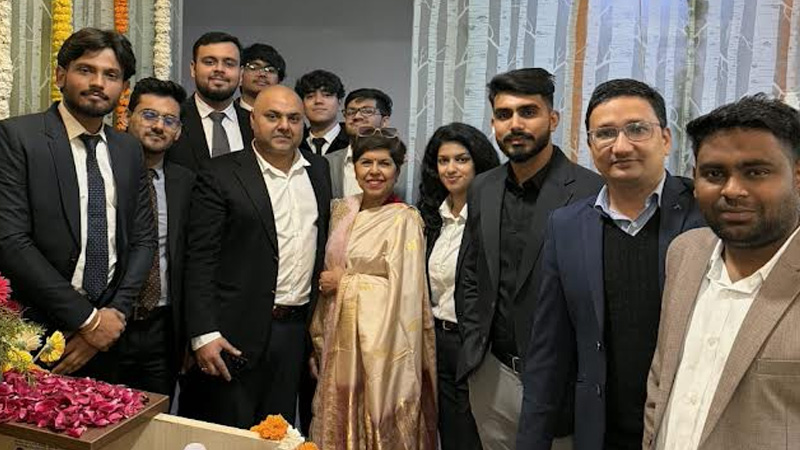
MUMBAI: Bharathcloud is bringing its cloud closer to power. The Hyderabad-based sovereign AI cloud services provider has opened its Delhi office, marking its formal entry into North India and setting the stage for its next phase of growth.

The expansion comes as India’s digital transformation fuels rising demand for AI-ready cloud infrastructure, driven by wider adoption of artificial intelligence, machine learning, the Internet of Things and data-heavy applications. With the new office, Bharathcloud plans to onboard more than 100 employees in 2026, strengthening its workforce to support customers across government, enterprises, MSMEs and social sectors.

The Delhi presence is expected to sharpen the company’s engagement with organisations seeking secure, scalable and cost-efficient cloud platforms that comply with India’s data sovereignty requirements. It also positions Bharathcloud closer to policy, public sector and enterprise decision-makers in the region.

Founded in Hyderabad, Bharathcloud offers AI-ready cloud infrastructure including Kubernetes-as-a-Service, zero-trust security architecture and multi-level data protection frameworks. Its platform supports AI and ML workloads, blockchain application migration from hyperscalers and distributed data management, with an emphasis on reliability, low latency and operational continuity.

“With the Delhi expansion, we are positioning Bharathcloud to engage more closely with AI-driven enterprises and technology hubs in North India,” said Bharathcloud co-founder Rahul Takallapally. He added that the move would help nurture local cloud and AI talent while accelerating the adoption of secure and resilient AI infrastructure across sectors.

Advertisement

The company currently operates in Hyderabad, Bengaluru, Mumbai, Kolkata, Lucknow and Chennai, employing over 200 people and serving more than 1,500 clients across manufacturing, healthcare, financial services, IT and media. Aligned with national initiatives such as Digital India and Make in India, Bharathcloud continues to focus on building indigenous AI-cloud infrastructure to support data localisation and the country’s growing appetite for next-generation digital solutions.

With its Delhi office now live, the company is signalling a clear intent: to make sovereign, AI-ready cloud infrastructure not just an alternative, but a mainstream choice for India’s north as well as its tech capitals.


Continue Reading
Advertisement CNN News18
Advertisement whatsapp
Advertisement ALL 3 Media
Advertisement Year Enders

Trending

Copyright © 2026 Indian Television Dot Com PVT LTD

This will close in 10 seconds

×