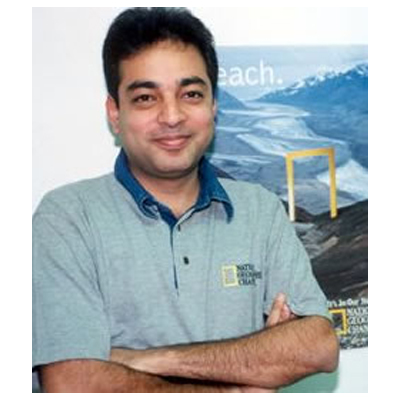
Tag: Zubin Jehanbux Gandevia

  • “The History Channel has a strategy that even the NGC doesn’t have” : Zubin Jehanbux Gandevia NGC India managing director (South Asia)

    “The History Channel has a strategy that even the NGC doesn’t have” : Zubin Jehanbux Gandevia NGC India managing director (South Asia)

    People at NGC India, especially managing director for south Asia, Zubin Jehanbux Gandevia, these days chant the history mantra more than geography. And, why not? The History Channel has arrived in India after 70 countries and its distributor, NGC India, wants to drum up enough noise about the channel as the feeling is that the channel is right for a
    non-addressable environment that prevails in India at the moment.

    The History Channel is being positioned as India’s only television channel purely dedicated to history, bringing the power and passion of the past to life. According to Gandevia, “It not only satisfies the ever-growing demand for historical programming, but also stimulates people’s curiosity to know
    more about the world.”

    The History Channel is owned by A&E Television Networks, a general entertainment network reaching over 76 million subscribers. A&E offers a unique blend of programming, including the highly acclaimed Biography series, intriguing mysteries, original movie presentations and engaging documentaries. In the 13 years that the Emmy Award–winning Biography has been on television, it has profiled more than 700 people, from Sid Caesar to Julius Caesar, Oprah Winfrey to Irving Berlin. Recent A&E Original Movies have included Jeff Daniels as General George Washington in The Crossing and Oscar-winner Timothy Hutton in The Golden Spiders.

    With Star India as the sales partner, The History Channel is looking at carving a niche for itself, the same way as Discovery and NGC have done so. The only difference being that it is targeting the first goal in a shorter period of time compared to other such infotainment channels.

    In this interview with indiantelevision.com, Gandevia; sitting in the NGC office in Delhi that has congratulatory messages of all types (‘The world’s best dad’ and ‘Congrats for completing five years’ are just a few amongst many); talks about the new channel, the targets and part of the business
    plan.

    Excerpts:

    Give us an overview of The History Channel.
    The History Channel, like any other product of its genre, is unique. But what is good about it is that it does not just bring alive the history, it entertains, while educating. It’s a place where people experience history personally and connect their own lives to the great lives and events of the past. That, I’d say, is the biggest connect with the viewers, apart from the fact that the channel does not look at history in the strictly traditional sense.

    As part of an international award-winning network, The History Channel has exclusive access to a vast library of the world’s best historical and factual programming offering a high standard of quality in both production value and research – not just from every corner, but every corner of the world.

    The channel, and its other siblings, is owned by A&E Television Networks, a joint venture of the Hearst Corporation (37.5 per cent is held by it; 37.5 per cent by ABC Inc. and 25 per cent by NBC). The company is an award-winning, international media company offering consumers a diverse communications environment ranging from television programming, magazine publishing, Web sites, books and music CDs, to home videos and support of nationwide educational initiatives.

    The History Channel, launched in 1995 reveals the power and passion of history as inviting and is the only place “Where the Past Comes Alive.” The History Channel received the prestigious Governor’s Award from the Television Academy of Arts & Sciences for the network’s “Save Our History” campaign dedicated to historic preservation.

    “Mind it, The History Channel is not a kiddy channel”

    Hype apart, what do you think is the key to success?
    It has a strategy that even the NGC doesn’t have. The three cornerstone for the channel are the product, brand and localisation.

    Where the product is concerned, the underlying theme is that people want to watch historical events and personalities worldover and not just from their own country. So, have a product that would have universal appeal. There are some 2000 hours of programming in the library and every year 400 to 500 hours of programming is added to it.

    Where the brand is concerned, the philosophy is to create a product with global appeal that is fit for family viewing so that the elders would not be embarrassed to watch along with the kids in the family. But mind it, The History Channel is not a kiddy channel. So the branding, to put in a nutshell, has to be fascinating, compelling, premium, informative and entertaining.

    Localisation helps the channel to have a positioning that is custom-made for every different market so that each country can have prime time and premium programming during its own prime time, not depending on the US or other countries’ timing. That is why the much-acclaimed Biography is run every day of the week at 10 pm IST and not at some unearthly hour just because in some other country it’s prime time there. Localisation also helps in local packaging, using local people and personalities. Moreover a local feed helps. Not even the NGC started with a dedicated India feed, but The History Channel has done so from the first day.

    Can you give an example of local packaging?
    Well, if there is a programme on Arnold Schwarzenegger, then we can have a famous action hero from Bollywood to host the programming before the show goes on air. Things like this are being explored and soon people would see local faces on The History Channel. But these local faces would be more like guest anchors and presenters.

    Would we see more programming being sourced out India, then?
    Sure. The idea of localisation of The History Channel is to create more programming out of India not only for the domestic market, but for the global audiences. That’s something that we are looking at during phase two, probably one year from now.

    The History Channel is committed to presenting a perspective of the world through the eyes of Indians as the channel is managed and programmed locally. This is to ensure a fresh and relevant on-air presentation.

    “By June 2007, 15 per cent of the global viewing, 10 per cent of the global revenue & 10 per cent of global programming should be sourced from India”

    Which area of programming do you think can originate from India?
    I guess it would be in the Biography section because India has some towering personalities who have had influences all over the world (the only two persons from India who now feature in the channel’s list are Mahatma Gandhi and Mother Teresa).

    Do you think that the channel would manage to keep away from controversy in India, considering in India history is a sensitive topic and everybody and anybody has an opinion?
    Agreed that in India most people have an opinion on almost everything. But then India is not so unique after all. The trend has been witnessed worldover. However, since A&E Networks dabbles only in history-related programming, it has carved an expertise for doing so, managing to steer clear of controversies wherever the channel is aired. We think, the channel would keep clear of any controversy in India too.

    What are the targets that the channel and NGC has set for themselves?
    To start off with we’d like to have 25 million viewers in a year’s time. Our target is that by June 2007, 15 per cent of the global viewing, 10 per cent of the global revenue and 10 per cent of global programming being sourced from India.

    Distribution may look easy, as we have begun with approximately 15 million homes (that were getting Adventure One), adding another 10 million homes means more work and more networking. We would soon be launching a host of activity for the cable fraternity and we are optimistic that the existing relationship with cable operators would help The History Channel.

    We are also slated to spend Rs 250 million on all our business activities relating to the channel over the next one year.

    Why phase out Adventure One? Is it a reflection of NGC’s failure to market and distribute it effectively?
    We were looking at ways to make the entry of The History Channel swift and replacing Adventure One with the historical fare seemed like the best bet.

    However, we also feel that in a non-CAS environment or an environment where addressability is still in its infancy, The History Channel has a better prospect. Adventure One airs very niche programming that would fit when CAS has been implemented or when DTH becomes more popular. Still, one can watch Adventure One from midnight to 8 am on the same frequency on which The History Channel is beamed.

    But DTH is already here. Has NGC decided that it would give its channels only to the Star-backed DTH platform and not to one backed by Zee?
    As a broadcaster, we are open to all options. But considering the great relationship that we have with Star, we’d be comfortable with what Star does in this regard.

  • I was all set to retire at 27…. – Zubin Gandevia

    I was all set to retire at 27…. – Zubin Gandevia

    Young Turks. Indiantelevision.com’s new series profiling the brightest and the best among the youth brigade in the Indian television industry. Under the spotlight are the men and women on the “right side” of 35 who are serving it up stirred and shaken. And making a huge difference, each in their own right, to the way in which the TV business is managed.

    In this, the second of the series, we get up close and personal with Zubin Gandevia, managing director, South Asia, National Geographic Channel.

    What will a teenager do if his father refuses to buy him the snazzy mobike on which the youngster has lost his heart ? There are two options, possibly, before the teenager: one, he either forgets about the mobike or, second, he earns enough money to buy the two-wheeler.

    Zubin Jehanbux Gandevia , the young managing director for South Asia of National Geographic Channel (NGC) , went in for the second option (“I thought if my father wants me to earn to get the mobike, so be it.”). He not only managed to buy the particular model of Japan-made Yamaha in the mid-80s, but, in the process, also set up one of Mumbai’s oldest cable network, along with two other associates, United Cable Networks (sold later).

    No wonder, a card from his parents, occupying the pride of places in Zubin’s room in the Star office in Delhi, aptly has the message: “Beta, I am proud of you.”

    Zubin, as he is more commonly known to friends, colleagues, associates and the media, actually fits in very well with the NGC culture which is all about adventure, outdoor sports and, more importantly, the curiosity to know more about our immediate surrounding and people.

    “When I look back now at my stint at NGC, which is about two and half years old, I think we have got a good stable business with a sound revenue model. There is also a dedicated band of viewers and advertisers and the effort is to increase the base,” Zubin says, as he stretches his legs in his room that houses a computer, apart from other office knick-knacks. Sitting atop the PC is a Star Trek-type gadget which Zubin finally reveals is for his “back which is giving a bit of a problem.”

    But the road to the managing director’s chair at NGC India has been a roller-coaster ride for Zubin, every moment of it cherished and enjoyed. Surprisingly, not also tinged with much regrets, says the 35-year-old.

    As the MD, South Asia, for the National Geographic Channel, Zubin is responsible for running the business of the channel in India, Sri Lanka, Bangladesh, Nepal and Bhutan. With over 14 years of experience in India’s cable and satellite television industry, he was among the first in the country to establish his own cable business with United Cable Network (UCN) which went on to become the largest single headend in the country.

    Zubin joined the television industry in 1996, as director of cable affairs (read managing cable operators) of Star India Pvt Ltd and was responsible for managing the Zee relationship in Siti Cable (the days when Rupert Murdoch and Subhash Chandra dreamt together they could build an unbeatable media company in India and later, probably, Asia; a dream which has long since gone sour). Zubin has also worked in Star’s DTH division as senior vice-president in-charge of technical services and business development (again a division which has seen more downs than ups).

    But these hiccups somehow failed to deter Zubin or his enthusiasm. In line with the spirit of National Geographic Channel, Zubin enjoys the outdoors, has a passion for motorsports and — no surpsies — is a big fan of Michael Schumacher. In this interview, Zubin, a person who is very reluctant to talk to the media (“I have had some bad experiences with the media with journalists mis-quoting me completely out of context”) lets indiantelevision.com’s Anjan Mitra enter his private world and speaks on the industry, his urge to innovate to avoid perishing and, of course, how he entered the TV industry.

    “If I am hardworking, the least that I expect from my colleagues is that they also should put in their best”

    How did you foray into the TV industry ?
    I was about 18 when I asked my father to buy me a Yamaha mobike . He refused, telling me ‘if you want the mobike, buy it out of your money’. That inspired me to join the cable industry which was then in its very early stage and a far cry from what it is today. I joined my uncle who was in this business and later with some friends set up my own company, UCN.

    How was it starting a business venture in India in your early 20s?
    Now when I think about it, the experience was a learning process of trial and error. The cable business, along with my friends, was started with almost no money. Rather, it was the subscription money collected from people in an area near Breach Candy in south Mumbai which set the whole thing rolling. We went to this society where there were about 50 families residing and told them of the cable service. About 16 of them opted to subscribe to the service after giving Rs 600 as installation fee and agreeing to pay Rs 75 per month.

    So, the subscription money collected saw you guys setting up shop. But was the money enough to start a cable service, no matter how much limited?

    (Laughs) The money that we collected just gave the green signal to our intention. We also did not have enough money to buy a VCR to show movies. So, the first week we rented the VCR from the neighbourhood electronics shop! The response on movies, some of them new, was good. So we went back to our subscribers and requested them that if they were happy with the cable service and wanted efficiency, it’d be great if they gave us three months of money in advance. Having managed to convince them, the collection was enough for us to buy a VCR and that was it.

    Did you manage to buy the mobike which, in a way, was instrumental in bringing you into the broadcasting industry?
    Oh, yes. I still retain that mobike (smiles, as nostalgia sweeps over his face).

    “If at all I do miss something and feel about is not having enough time to spend with my family”

    UCN and the cable business expanded pretty well. Why did you sell off the business in the mid-90s when the industry was just about picking up?
    There were several reasons for this. Because of the expansion, the business did not look like a revenue making one. Agreed, we had acquired assets and had a huge capital asset base, but at the end of the day we thought it was getting a bit too big for us. That was when we sold part of it to (the Business India group owner Ashok Advani-promoted ) Business India TV.

    How much did you make by selling off the business?
    I cannot tell you that. But it was an okay sum.

    Why did you join Star?
    Since my cable days, I had a working relationship with Star India. When the word went around that I had sold off part of the cable business, Star asked me whether I would be interested in joining them. I joined Star in 1996 to manage the relationship with Siti Cable (which was then a 50:50 joint venture between Star and Zee Telefilms). A year later on 1 April, I was shifted to Star’s DTH division.

    It is said that you still retain part of the cable business. Has Star allowed you do that?

    Yes, I still have some personal cable subscribers and before joining Star I apprised them of the situation. The company was nice enough to allow me to do that even though I became an employee of Star India.

    How has it been with National Geographic and being its managing director for South Asia when rival Discovery is openly saying these days that it’s a leader?
    Is Discovery saying so ? Good for them and for me also. You see, in India, NGC is a comparatively younger channel as Discovery’s Indian operations were set up much before NGC’s (Discovery started its Indian operations in 1995 with Kiran Karnik as its first country head). But if Discovery is accepting our existence in such a short period , I can only feel good for the NGC team. But I must admit that at NGC it has been an enriching experience. National Geographic is a hallowed brand with a rich legacy. At present, we have managed to set up a sound foundation, but because we are still such a small player, I feel there still lots needs to be done.

    After having informally interacted with your colleagues, I get this impression that you are quite a Hitler in the office. Right or wrong?
    Hitler, me? That must be a joke. I don’t believe in cracking the whip because I firmly believe one can still learn from anybody and everybody. Every colleague of mine here can walk into my office whenever he or she wants to and speak to me on any issue. Yes, but if I am hardworking, the least that I expect from my colleagues is that they also should put in their best.

    So, what is your business philosophy or what is the mantra that you have for succeeding ?
    It’s all about common sense. It is also about going back to your customers to know more and especially of their needs. But in short, I would say the business mantra is : innovate or perish.

    I feel, if you don’t do things differently you won’t go far. To give you an example, I still go back and interact with the cable subscribers that I have to know their problems, the issues involved and what more can be done for them. One has to be in constant touch with one’s customers and the feedback is very important.

    Do you have regrets in life?
    (Thinks a bit) Probably not. May sound strange, but I don’t have many regrets. Life has been kind to me. If at all I do miss something and feel about is not having enough time to spend with my family.

    Have you ever thought of retirement?
    I was all set to retire at 27 when I sold part of the cable business. And then Star happened. But now I don’t think about retirement. I love my job and want to continue exploring life in the true tradition of NGC.