Tag: ZTL

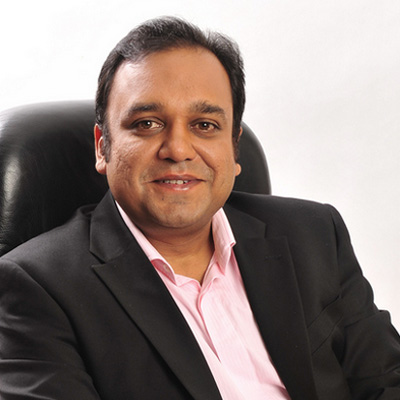
  • ‘We have a 3-tier growth plan and are eyeing a bn viewers internationally in 3 years’ : MD & CEO – ZEE Punit Goenka

    ‘We have a 3-tier growth plan and are eyeing a bn viewers internationally in 3 years’ : MD & CEO – ZEE Punit Goenka

    For Subhash Chandra the last 20 years has been one man‘s war. He has allied and fought against Rupert Murdoch, fallen and bounced back in winning spirit, triumphed over the competitors, and grown a media empire that can make anybody proud. A nationalist to the core, he has a strong footprint in all the value chains of the media business and stands independent in a media landscape that is occupied by the multinationals.

    When in my early years of journalism, I remember the day I rushed to my editor. I told him that I heard from a source that the merger talks between Chandra and Murdoch had snapped. He told me to go ahead with the story and I was afraid that I could be proven wrong.

    I felt happy that the divorce took place. Some may call this a sadistic pleasure but it made me feel nice that my story in The Financial Express was right and, more importantly, allowed me to observe the growth of a warrior who was blessed with intuitive powers, strong business acumen and an innate ability to get into untapped areas.

    Chandra showed his true colours very early in life and in 1991 got the better of Hong Kong tycoon Li Ka-Shing who asked for $5 million to lease a transponder on AsiaSat. He signed a deal with Richard Li a few months later that would kick-start his Zee empire.

    Zee‘s unchallenged growth from its origins in October 1992 halted in 2000 when Murdoch‘s Star launched Kaun Banega Crorepati (KBC) and the three Balaji ‘K‘ soaps. Chandra‘s convergence game also went nowhere and kicked in losses. But Zee expanded into the regional language markets and Chandra also ventured into online lottery with Playwin.

    The rebound in the Hindi entertainment business happened slowly. Chandra appointed Pradeep Guha as CEO in 2005 and inducted his son Punit Goenka  into the organisation.

    Zee Telefilms Ltd (ZTL) got demerged in late 2006 into Zee Entertainment Enterprises Ltd (Zeel), Zee News Ltd (ZNL), Wire and Wireless India Ltd (WWIL) and Dish TV (DTH). He acquired Ten sports and has a growing sports broadcasting business.

    Chandra‘s sprawling empire is not just in India but has strong positions in different corners of the world with his Indian content.

    Even in 2012, Chandra is not in full retreat. He has passed on the baton to his son but is still around. His overwhelming personality can‘t be missed in the Zee office.

    Asked to “get off the fence” and “get in the game” as head of Zeel in 2008,Goenka has proved that he definitely is his father’s son. He ended the rivalry with Murdoch and formed a distribution joint venture company in 2011 to correct revenue leakages and lift subscription revenues. He has identified growth areas in regional, international and new media. His target: to reach a billion viewers internationally in three years.

    Punit (as he is called by his colleagues in the Zee group) is hungry to grow his charge; whether it is sports broadcasting, entertainment, overseas or in niche genres. In a tete a tete with Indiantelevision.com’s Sibabrata Das, he speaks pretty forthcomingly about the road ahead.

    Excerpts:

    Q. When did you first realise that your father was building a media powerhouse in India and that you would be part of this momentous history of television broadcasting?
    For over 12 years, he was practically handling the business by himself. He was running around, surmounting all hurdles, and being a pioneer in all ways to spearhead private satellite television in India. I never thought I would run this kind of organisation. But when he told me to get into it, I quickly became a part of the Zee culture and liked it.

    Q. Now when you look back, do you see any lost opportunities amid this explosive growth of the company?
    The company has grown so rapidly in such a short span of time that it completely overshadows everything else. Zee started in 1992 from a single channel network and two hours of original programming – and look at where it is today! In fact, the first ten years were maddening growth. We have grown to 31 channels spread across genres, languages and geographies. Our international business is also very healthy. And today Zee (read Zee Entertainment Enterprises Ltd) is one of the top ranked Ebitda delivered companies in the media sector.

    Q. What did you feel when the joint venture with Rupert Murdoch collapsed and your father bought out New Corp‘s stakes in Asia Today, Patco and Siticable?
    The split was bound to happen. Murdoch violated the JV agreement and began to show Hindi content. The pact prescribed Star to focus only on non-Indian language programming. When Zee bought out the JV companies, it was a proud moment for all of us.

    Q. You broke this 12-year divorce three years after you took charge as CEO of Zeel and inked a JV agreement for the distribution business. What made you overcome the past enmity?
    We formed Media Pro Enterprise to correct the faulty distribution structures of the analogue cable TV business. It took us almost a year to finalise the agreement. The purpose is to fix the problems of the industry. There are revenue leakages in the distribution business and broadcasters get a small share of the subscription income collected by the cable networks.

    The media industry has matured and we are living in a period of history when there is need to both compete and co-operate. That is what Star and Zee are doing in India. And it has been beneficial for all the partners. Zee and Star were growing their subscription incomes from domestic cable by 6-7 per cent when they were handling the distribution of their bouquet of channels independently. But both the companies are seeing 15 per cent growth from cable subscription income in the first year of operations of Media Pro itself. We are happy with the way Media Pro is shaping up.


    ‘The industry can’t survive on ARPUs of Rs 180. Broadcasters have heavily subsidised the content cost to support the DTH companies to grow. A similar trend is happening in digital cable‘


    Q. Media Pro is currently distributing 75 channels and more launches are planned by the JV partners. Won‘t this be too heavy a load and the logic of a distribution JV become irrelevant in a completely digitised television carriage-services environment? Are we completely different from the rest of the world where broadcast companies manage their carriage agreements independently?There is no reason why we can‘t work independently in India as well. In a transparent environment, there may not be a need. In any case, the JV agreement is only for five years. We will weigh the market conditions then and take a call after that.

    But having said that, Media Pro has been set up not to just take care of revenue leakages. There are other challenges in the distribution side of the business. The industry can‘t survive on ARPUs (average revenue per user) of Rs 180. Broadcasters have heavily subsidised the content cost to support the direct-to-home (DTH) companies and allow them to grow. A similar trend is happening in digital cable. But content is worth much more and we will have to lift ARPUs.

    Q. Zeel gets subscription income of Rs 4.58 billion from content supply to 20 million paying DTH customers while domestic income from analogue cable is Rs 4.14 billion. What is the potential revenue growth from cable after the networks are digitised?
    We expect healthy growth in subscription income over the next few years. As the cable TV subscriber universe becomes transparent, the paying subscribers will automatically become much more than DTH. Zee will be able to monetise its digital cable subscribers and the revenue gains will be significant. ARPUs will also have to go up.

    Q. Since you have taken charge of Zee‘s broadcasting business, what are the future growth engines that you have identified amid new challenges of digitisation, audience fragmentation and competition from multinationals and big Indian corporates who are tiptoeing into the media business?
    We have identified three-tier strategies for our growth. On the domestic front, regional will drive growth for us. We will participate in fragmenting the regional markets. Our launch of a Bengali movie channel, Zee Bangla Cinema, is part of this game plan. We are working on other genres and in other languages.

    On the international front, we plan to expand our reach from 650 million viewers to 1 billion viewers within three years. We will not just restrict our focus on South Asian audiences; we will have to address local audiences in those geographies as well.

    We have identified Middle East as a key market for us and intend to invest between Rs 1 billion and Rs 2 billion over the next two years. We have just launched our second Arabic channel, Zee Alwan. This will complement Zee Aflam, our first Arabic channel that shows Bollywood movies dubbed in Arabic. We plan to invest $100 million in that market.

    Q. What made Zee so bullish about the Middle East market?
    We had success with Zee Aflam which is a profitable channel. We are also look aggressively at growing in Russia (digitisation by 2014 in that market) and Africa. Russian audiences love Bollywood and our drama content. Besides, we are doing extensive research for the Indonesian and Malaysian markets where we are growing in single digits.

    Q. Is new media a big growth piece for you?
    Yes, this forms the third pillar of our future growth strategy. We have launched our over-the-top (OTT) television distribution platform, Ditto TV, in India and plan to take it to the rest of the world next year. We also have India.com and will continue to offer content across leading genres. With these content formats and advanced distribution avenues, we intend to target new audience segments. I cannot give you a number (in terms of investments or revenues), but we are committed to see that these businesses become successful.


    ‘On the domestic front, regional will drive growth for us. Internationally, we plan to expand our reach from 650 mn to 1 bn viewers in 3 years.New media forms the third pillar of our future growth strategy‘

     
    Q. Digitisation will throw open a lot of growth opportunities. Will we see a more aggressive Zee launching new genre channels and addressing new geographies as distribution costs fall?
    We are getting into the kids TV segment and will be launching Zee Q. The content will aim at ‘learning through fun and entertainment.‘ In the past year, we have already launched six channels.

    But only the four metros will have digital cable. The real action will start in the second phase of digitisation when we go to the smaller towns. We have not studied the potential yet. We will have to wait for knowing the impact after the first phase of digitisation rollout. And then possibly you will see a flurry of channel launches.

    We will also have to keep in mind what we are launching and whether it is going to cannibalise on our Hindi product. And let us not forget that there may be free-to-air (FTA) opportunities in the broadcasting space as well.

    Q. Zeel is sitting on a cash pile of Rs 11 billion. Will you acquire channels to grow in a digital environment?
    We are looking at acquisition opportunities if they come at the right price and make business sense for us. But we are also aware that it is cheaper to build.

    Q. Zee has always been conscious of its costs and its Ebitda margins from non sports business is around 34 per cent and is higher than Star‘s. But with plans to increase original content hours on flagship Hindi GEC Zee TV and more channel launches in the pipeline, will Ebitda margins fall?
    There should be some fall. Even in this fiscal, we are increasing our original content from 24.5 hours to 32-34 hours. This in itself will amount to a rise in content cost by 14-15 per cent. Our revenue in the first quarter of this fiscal has also seen strong growth.

    Q. Zee has already renewed the South Africa and Zimbabwe cricket boards at around 10 per cent inflation cost. But Star has bought out Disney‘s stake in ESPN Star Sports and Sony, deprived of the BCCI rights, will be hungry for acquiring cricket rights. There is also the threat of ESPN entering the marketplace after the two-year non compete contract with Star is over. So will we see Zee bid aggressively to renew the rights for the three boards that are going to come up?
    We are in active negotiations with two boards. But we will be aggressive up to a reasonable level. We realise that sports is a strategic business for us. It gives us dedicated youth and male audiences and adds to our viewership base.

    Q. Will forex fluctuations affect the earlier target of the sports business turning around in FY‘14?
    Yes it could, as most of our sports content is contracted in dollars. But we expect our sports business to come out of the negative zone. We also realise at the same time that sports broadcasting across the world is a low Ebitda margin business.

    Q. Is Zee News Ltd planning to launch an English-language general news channel?
    At ZNL, we are working on our English language strategy. We believe the news channel business will go through a phase of consolidation.

  • Zee News, WWIL to list by February 2007; Dish TV likely by March

    Zee News, WWIL to list by February 2007; Dish TV likely by March

    MUMBAI: Zee Telefilms Ltd (ZTL) expects its two demerged entities, Wire & Wireless India Ltd (WWIL) and Zee News Ltd, to be listed by February 2007. This follows the approval of the demerger scheme by the Bombay High Court.

    The listing of Dish TV, Zee’s demerged direct-to-home (DTH) business, is likely to be by March. The scheme relating to the de-merger of DTH has not yet been listed for hearing at the Bombay Stock Exchange or in the Delhi Stock Exchange and will take some time. The listing date will be known only after the court gives the nod.

    “WWIL and Zee News Ltd should list by February 2007. We expect to list Dish TV by March,” says Essel Group CEO, corporate strategy and finance, Rajiv Garg.

    ZTL today announced the approval of its demerger scheme by the Bombay High Court. This paves the way for setting the record date for the demerger of the cable distribution and news and regional broadcasting businesses of Zee into WWIL and ZNL respectively.

    The Record Date is likely to fall in the latter half of December.

    The shareholders of Zee as on the Record Date shall be allotted shares in WWIL and Zee News. The respective companies would then be applying for listing of such shares to the BSE, NSE and CSE, in compliance with SEBI guidelines.

    Zee expects this process to be completed by February 2007.

  • Zee’s Q1 net shows a marginal rise of 5%

    Zee’s Q1 net shows a marginal rise of 5%

    Zee Telefilms along with its subsidiaries has registered what could be its lowest Q1 net profit in the recent past. The company showed a rise of a meagre 5% in its net profit for the first quarter of the year 2000-2001. The consolidated net profit for the current quarter is Rs 32 crore as against the corresponding figure of Rs 30.5 crore for the same period of the last year.

    Various reasons can be stated for this poor performance. To begin with, the unaudited results of the company reveal that a large amount has been written off for the total operating profit of 50 crore. Zee has hived off Rs 18.3 crore as “exceptional items”. Of these exceptional items, Rs 9.8 crore has been written-off on account of the film library sold by ZTL to its subsidiary. It can be mentioned that a lot of controversy was generated when this sale was shown by ZTL as a profit in its books in the previous financial year. And according to analysts, it is likely that the remaining amount from the sale of the library might be written-off over a period of time, which in turn might mean that Zee might show lower net profits for the remaining quarters as well.

    Also the company has accrued losses on account of its new interactive services like E-Connect and Zee Interactive Learning Systems. Zee has registered losses of 5.2 crore and 1.4 crore respectively on the two new subsidiaries.

    Interestingly, the company has shown other income as Rs 10.9 crore. This is a five times increase from the previous years figure of Rs 2 crore. Had it not been for this income, the consolidated net profit would have been even lower.

  • ‘Zee Telefilms to see ad revenue growth of 12 – 15% in FY07’ : Rajiv Garg – Essel Group CEO of corporate strategy and finance

    ‘Zee Telefilms to see ad revenue growth of 12 – 15% in FY07’ : Rajiv Garg – Essel Group CEO of corporate strategy and finance

    Cable and direct-to-home (DTH) is where Zee Telefilms Ltd (ZTL) chairman Subhash Chandra is planning to put the accelerator on. Wire and Wireless India Ltd (WWIL), the cable outfit, will enjoy an investment of Rs 5 billion to lay out a digital platform, gear up for triple play and expand in value-added services. And to fight Tata Sky in the DTH business, he will pump in Rs 2.5 billion over two years.

    Zee News Ltd. (ZNL), which will have news and regional channels under its umbrella, is looking at a turnover of Rs 2.5 billion this fiscal. The listing of these demerged companies is expected to be in September-October.

    In an interview with Indiantelevision.com’s Sibabrata Das, Essel Group CEO of corporate strategy and finance Rajiv Garg talks about the reasons for the demerger and the expansion plans of these separate entities.

    Why did Zee Telefilms Ltd (ZTL) decide to demerge its businesses into separate entities?
    The driving argument for demerger was that all these businesses had become big in themselves. Huddled together under Zee, they were not given the right strategic focus as the company was very broadcast-oriented. In cable, for instance, we felt that we were not doing justice to its growth potential. Also, in certain lines of activity the government regulations were impinging upon the growth prospects of the company. The idea was to see if we could create that focus and comply with the government guidelines. With so many technological advances taking place, we felt it was the right environment to carry this out. We decided to create independent governing structures and managements, delink cable from broadcasting, and put together certain news-bearing channels into an independent entity.

    Why was the direct-to-home (DTH) business housed in complex structures which did not allow for tax efficiencies?
    The idea was to provide specialist services in specific entities. As the competencies lay in them, the DTH business was spread across three outfits. Integrated Subscriber Management Systems Ltd, for instance, has an expertise in such areas like subscriber billing. Siticable has been negotiating content from the time the cable industry began in India. New Era Entertainment formed the marketing and ad sales arm. The aim was to create a revenue-sharing arrangement with ASC Enterprises Ltd (Ascel), the DTH license holder. When we did this structuring, there was no service tax applicable to the industry which was introduced later. We did not anticipate taxation developments to happen so quickly and cause financial inefficiencies. Besides, demerger will provide clarity of structure and add value to shareholders.

    Since regulation allows for a broadcast cap of 20 per cent, why didn’t ZTL hold stake in the DTH business?
    It would have happened in due course. We were in no hurry as we wanted to present the DTH platform as broadcast neutral. The internal intention was to acquire equity once the key relationships came in.

    What does the demerger process in the DTH business involve?
    In the first stage, Siticable will hive off its cable TV business into Wire and Wireless India Ltd (WWIL). The residual Siticable and its wholly owned subsidiary New Era Entertainment Network Ltd will then merge with Ascel, thus consolidating all the DTH operations under one company. Zee Telefilms shareholders will get 23 shares of Ascel for every 10 shares held.

    How did you arrive at this exchange ratio and why did you prescribe for a subsequent cancellation of shares?
    It is the independent valuer (Deloitte Haskin & Sells) who came up with this ratio. As for cancelling three of every four shares held in Ascel, this is to bring back the capital base to the pre-merger level. The paid-up equity of Ascel would have bloated to around Rs 1.66 billion after the merger, up from the base of Rs 411 million. This would have been too large an equity for a company of this size. So we wanted to compress the capital base. We could have given a predetermined base, but didn’t know the ratio the valuer would arrive at.

    DTH revenues will touch Rs 8 billion in FY08 as subscribers rise to 3.15 million and ARPU to Rs 310

    Zee’s operating revenues from the DTH line of business was Rs 818 million in FY06 while losses stood at Rs 790 million. What is the investment plan and how do you see subscribers and average revenue per user (ARPU) size up over the next two years?
    The net expense for DTH operations so far is Rs 3.8 billion. We are planning to pump in a further Rs 2.5 billion over the next two years. But we are sitting on a dynamic model and if Tata Sky and us are aggressively competing, there is a possibility of the subsidy amount further increasing. It is a factor of what strategies we adopt to develop our subscriber base. By the end of FY06, we reached close to one million subscribers. We project a gross revenue of Rs 3.2 billion in FY07 on a subscriber base of 2.4 million and an ARPU of Rs 250 (up from Rs 190) mainly because of the launch of value-added services. And in FY08, we see ourselves growing to a revenue of Rs 8 billion as subscribers rise to 3.15 million and ARPU to Rs 310.

    When do you expect to sign up with Sony and how do you see content growing?
    We expect Sony to happen within a month. Gradually, the content kitty is filling up. We are also looking at creating new DTH channels. Our plan is to expand to 200 channels.

    Will transponder space be a limitation?
    We will have to find space. We may have NSS when Doordarshan’s DD Direct vacates the satellite to move to Insat 4B. We are also talking to Isro (Indian Space Research Organisation) to launch a dedicated satellite for us.

    Are your Korean set-top vendors planning to set up a manufacturing facility in India?
    I don’t think it is viable at this stage. The volumes are too small for us to ask our STB vendors to manufacture in India. When we scale up to five million (boxes a year), then it may be a feasible project.

    Which do you think will attract investors first, the DTH or cable company?
    Both have attractive growth paths. We are looking at a mix of debt and funding coming from strategic or private equity investors.

    Are you looking at a small dilution initially of up to say 26 per cent?
    It all depends on what is the offer. Yes, if you initially dilute a small stake you have the advantage of discovering value as the company grows. But we have a flexible approach and it all depends on how lucrative the proposal is.

    Have you started talking to investors?
    We have been approached by many, but nothing is imminent yet.

    Will WWIL infuse massive capital towards digitisation of cable and triple play?
    We know the cable business has a lot of undiscovered value and will be giving it a big push. WWIL has a business plan which would take in an investment of Rs 5 billion over three years to drive digitisation, broadband and triple play rollout. It is a classic example of how the focus has been lacking and we have not taken advantage of the technology advances. We are looking at a million digital cable subscribers in the first year as we bundle service and hardware together in some form of subsidy. We also plan to make the network available to telecom operators for voice. Valuation of the cable business can only go up as the industry is badly suppressed. Conditional access system (CAS), digitisation and triple play will liberate the industry and growth in revenues can be rapid.

    How much debt you will raise to fund the expansion?
    We are looking at a debt-equity ratio of 1:1. The net worth of the company currently is not that strong to support that size of debt. We are, after all, planning to pump in Rs 5 billion to expand the business.

    What was the need for restructuring Zee News again?
    The restructuring started a couple of years ago when the uplinking guidelines were changed. Since we had a substantial foreign holding in ZTL, broadcasting of news and news-bearing channels were placed on a separate footing. Gradually as a response we shifted news gathering and uplinking to a separate company, Zee News Ltd, which was in compliance with the guidelines.

    But in the last few months, we have been mutilating this model as we found that there is a lot of strategic gap or clarity between the thinking of the producer (Zee News), the distributor (Zee Telefilms) and the team that exploits the commercial rights (Zee Telefilms) to such channels. So we thought we would close the gap and put everything in an entirely separate entity. All strategic decisions should be taken in an integrated manner by one team – be it production, news gathering, programme slotting, distribution or commercial exploitation.

    So what were the strategic gaps?
    The differences sprung because there was a revenue sharing arrangement between the two, but I can’t give you the minute details. It is not a good idea tactically to unite even if both of them are part of the same family.

    Zee news and regional channels had a combined turnover of Rs 2 billion in FY06. Were regional channels brought under Zee News Ltd (ZNL) because they could add to the company’s topline growth?
    The main reason for this kind of arrangement is that they are news-bearing channels; the regional channels have a strong component of current affairs and news programming. One of the consequences of this combination, of course, can be fattening of the topline. We are projecting a revenue of Rs 2.5 billion in FY07 and Rs 2.9 billion in FY08.

    As part of the restructuring, 137 ZNL shares will fetch 100 shares in ZTL. But with the total foreign shareholding in ZTL at 54.69 per cent, how does ZNL fall within the regulatory cap of 26 per cent?
    ZTL chairman Subhash Chandra will be transferring his foreign holdings (22.77 per cent is foreign promoters holding in ZTL) to an investment company in India. Also, foreign institutional investors (FIIs) will be given preference shares to bring the cap under limit (FIIs hold 31.51 per cent in ZTL).

    When are you planning the launch of Tamil and Malayalam language channels? How much are the new southern channel launches consuming as investments?
    The two channels should see launch in the current fiscal and in FY08. Along with the Kannada launch, the total investments would be in the region of Rs 350 million.

    With the demerger, won’t the topline of core Zee Telefilms see an erosion?
    Even after physically transferring the topline out, there is enough of a mandate to register growth. We have the number two and three (Zee Cinema and Zee TV) channels in the country. If they continue to focus on the products they have, their growth path is mandated. The flagship channel, Zee TV, is seeing a surge in ratings and ad rates.

    For core ZTL (after demerged businesses), we expect an advertising revenue growth of 12-15 per cent in FY07. While international business will sustain its 10-12 per cent growth (adding of channels and gain from Middle East), domestic subscription will stay steady. Overall, the core ZTL (after demerged businesses) will see a growth of 10 per cent in the current financial year.

    Will the bottomline look healthy after hiving off the loss-making businesses?
    The pullout is of minor loss-making businesses. The impact will largely even out as Zee News and the regional channels were profit-making. Still, there will be some positive outcome.

    How will Zee Sports play out on ZTL’s bottomline, particularly after bagging at a whopping price of $219.15 rights to 25 offshore cricket matches over five years?
    Zee Sports is at a development stage and there will be investments made for the long term development of the channel. There is a particular sequence in which we have to pay and the outgo for the first year will be $5.04 million per match. That will give us reasonable time to drag on the investments and build the channel. Besides, we will be bidding for other major sports properties including the ICC World Cup which is coming up for grabs.

  • Zee consolidated net skids 30% at Rs 2.21 billion in FY06

    Zee consolidated net skids 30% at Rs 2.21 billion in FY06

    MUMBAI: Zee Telefilms has posted a 30 per cent fall in consolidated net profit at Rs 2.21 billion for the fiscal ended 31 March 2006, as against Rs 3.17 billion a year ago.

    Total income, however, rose to Rs 14.87 billion, up from Rs 13.3 billion.
    For the last quarter of the fiscal, the company has reported a 27.2 per cent decline in consolidated net profit to Rs 675.5 million, as compared to Rs 925.7 million in the corresponding period of the previous year.

    Total income, however, rose 10 per cent to Rs 4.1 billion, up from Rs 3.8 billion. The operating profit stood at Rs 761 million, after expensing of initial investments in new activities viz. Zee Telugu, Zee Smile, Zee Sports and others, amounting to Rs 525 million (13.2 per cent of consolidated revenues). As a result, consolidated operating profits of continuing businesses were Rs 1.28 billion. These are higher by 4.8 per cent as compared to the corresponding quarter last year. “The growth rate is subdued mainly due to investments in marketing focused on long-term buildup of mainline channels,” Zee said in an official release.
    On a standalone basis, Zee Telefilms has posted a 54.39 per cent fall in net profit to Rs 740.00 million for the year ended 31 March 2006 as compared to Rs 1.62 billion a year ago. Total Income has increased to Rs 8.84 billion, up from Rs 6.93 billion.

    For the quarter ended 31 March 2006, the company reported a net loss of Rs 132.5 million as compared to a net profit of Rs 370.40 million a year ago. Total income, though, has increased to Rs 2.66 billion, up from Rs 1.75 billion during the period.

    “The business of Zee Sports channel started on 8 June 2005. Zee Sports Ltd is re-organised in ZTL during current quarter and content gathering and space selling activity is retained in Zee Sports through an agency arrangement. Hence the standalone results of the company for current quarter and year are not comparable, said the company.

    Commenting on the results, ZTL chairman Subhash Chandra said, ““We are pleased to report the continuing uptrend in advertising revenues and the strong recovery in our market position. You are aware of the hike in advertisement rates announced by Zee Network, which we are confident would start reflecting in FY2007 revenues.”

    “The Board has also given approval for the hiving off of Zee’s direct consumer business. All DishTV operations would now be under a single corporate entity, bringing strategic clarity to this high growth business. This shall complete the restructuring agenda we had set for ourselves to create four focused, pure play, listed companies ready to exploit the vast emerging opportunities in each line of business. Subject to necessary approvals, this would result in streamlined operations in each area to build long-term shareholder value. It would also clear the ground for acquisitions and strategic or financial partners in the de-merged businesses, apart from unlocking shareholder value,” said Chandra.

    Commenting on the results, ZTL CEO Pradeep Guha said, “While general entertainment (GE) as a genre has posted a 5 per cent decline in time spent, Zee TV has increased its viewership share from 16 per cent to 22 per cent along with a significant growth in time spent. Even within prime time Zee TV is the only channel to have grown, by 21 per cent, while its main competitors have dipped between 7 per cent and 12 per cent. Zee TV now conclusively occupies the second place in the pecking order of GE channels. With an average of 180 GRPs, we are fully 30 per cent higher than the number three GE channel, which continues to be behind Zee Cinema as well.”

    “The cinema space has shown a decline except however for Zee Cinema, which has grown 7 per cent, with a channel share of 37 per cent. Recently we won the BCCI Cricket Rights for the one-day internationals to be held in non-ICC countries.This further strengthens the long term business prospects of the company,” Guha added.

    The Board of Directors in its meeting held today, has taken on record the unaudited consolidated financial results of Zee Telefilms Limited and its subsidiaries for the quarter ended 31 March, 2006.

    REVENUE STREAMS:
    Zee’s advertising revenues increased to Rs 1.96 billion, a 11.7 per cent growth as compared to the corresponding quarter last fiscal. “This growth in advertising revenues was a result of higher average rates on most of the network channels,” the company said.

    Overall subscription revenues at Rs 1.76 billion registered an increase of 5 per cent over the corresponding quarter last fiscal. Domestic pay revenues stood at Rs 717 million. Other sales and services grew to Rs 253 million. “From 2Q FY2006, we are recording the net income component of the trading of set top boxes as part of other income”, the company said in the release.

    EXPENDITURE:
    Overall, the cost of goods and operations went up 44.8 per cent compared to a year-ago period, mainly due to investments made in new channels like Zee Sports, Zee Smile, Zee Telugu and Zee Jagran.

    Personnel costs were 6.5 per cent higher than corresponding period last year. Other costs, particularly marketing expenses have increased by 24.4 per cent. As a result, total expenses were higher by 35 per cent.

    From FY2006, the Company has accelerated its investments in the development and expansion of its network. “This has taken two directions. One, substantial marketing and content improvement initiatives have been put through and second, a number of new channels have been launched, to fill out our content offerings,” states the company.

    “As a result, Zee is in a phase in which the initial investments have been made and expensed fully, while the corresponding revenue build-up is to be realized in the next several quarters. The immediate impact is lowering of operating profits, which we hope to recover in successive quarters through increasing revenues and progressive reduction in costs,” the company adds.

    Zee’s Q4 segment-wise revenues are indicated in the table below:

    OTHER HIGHLIGHTS

    Cable Network
    Zee is looking forward to reinvention of its cable TV business and augmenting revenues. “The cable business is poised to pursue new technology opportunities with renewed focus including ‘triple play’ offerings, digitisation of cable, broadband and other similar initiatives that form the frontiers of cable today. Firm business plans are being given shape and field launch is due to commence shortly. There is more visibility now on the path of transition in the cable business towards digitalization. The recent regulatory and legal developments look set to lead to a roadmap for digitisation initially in the metros,” the company said.

    Direct Consumer Services business
    The DTH subscriber numbers have crossed 900,000 and are growing at the rate of about 2,500 per day. “We are poised to execute market expansion strategies which would lead to a ramp up of subscription from the urban markets, based on value added services not presently available on cable,” the company said.

    At the Bombay Stock Exchange today, the Zee scrip opened at Rs 241.50 and closed at Rs 246.65, after touching a high of Rs 253 and a low of Rs 242.50.


  • Zee bucks the trend as Sensex crashes

    Zee bucks the trend as Sensex crashes

    MUMBAI: The Sensex underwent a dramatic “corrective” drop of 157 points on 7 April but Zee Telefilms Ltd (ZTL), was among the few stocks that bucked the trend.

    ZTL, which closed the previous day’s trade at Rs 246.60 on the BSE, had opened the day on a strong note. Zee’s acquiring the telecast rights for one day international matches to be played by India on neutral venues over the next five years yesterday seems to have made the market hungry and it was just waiting for the next day’s trading to open to pounce on the stock. The buying spree even saw the stock price touching its 52-week high of Rs 270 (Rs 291 at NSE) before falling prey to the negative sentiment that gripped the market, around afternoon.

    The Bombay Stock Exchange (BSE) ended the session at 11,589.44, lower by 1.34 per cent than its previous closing mark, while the National Stock Exchange’s (NSE) 50 stock Nifty index settled at 3454.80, recording a 56.10 points or 1.6 per cent loss.

    During the early day trade, the Sensex had surged past the 11,900 mark to a new lifetime high of 11,930.66. Just when it seemed that the12,000 mark was within reach, the Sensex took a beating amid rumours that the regulator had banned eleven foreign institutional investors from participating in the market. Consequently, ZTL also took a plunge from its day’s best Rs 270 to a rather poor score of Rs. 244.60.

    Then, after SEBI came out with a denial of that report, the stock made a timely recovery along with a few blue chip stocks which also regained some lost ground. ZTL finally saw it closing for the day at Rs 250.10 at the BSE, up by 1.42 per cent or Rs 3.50 higher than its previous closing mark. At the NSE, it closed at Rs 250.45, up by 1.42 per cent or Rs 3.50 than the previous closing mark.

    A total of 2 million ZTL shares were traded during the day, while the average number of shares traded per day during the last two weeks period is 1.5 million.

    According to broking analysts indiantelevision.com spoke to, the positive performance ZTL has been displaying in the recent times shows that the stock is on its way to reach a value that is more in conformity with the levels that the Sensex has reached. “ZTL is yet to reach its real value and speaking about the overall performance of the stock in the recent times, we can assume that it is in the process of realising its actual price at the Sensex,” says an analyst.

    “Acquiring the neutral venue International cricket rights might have helped the stock to buck the negative trend at the Sensex today. But, there are more significant factors that have been boosting the stock overall. The four-way demerger, the remarkable improvement on the programming front, the advertising rates consequently going up, all have been helping the stock to attract buyers,” he adds.

  • Zee Telefilms creates 3 new business entities; to list them

    Zee Telefilms creates 3 new business entities; to list them

    MUMBAI / NEW DELHI: The Subhash Chandra promoted Zee Telefilms board today approved splitting of its broadcasting business into three entities — news operations, broadcast and content creation, and Siti Cable, which will also include the initiatives on the CAS front.

    After the restructuring, which is expected to be completed within six to eight months, the new entities involved in cable business, and news operations, would be listed on the stock exchange.
    It also announced an ‘in principle’ approval of a proposal to demerge the consumer services business for Dish TV. The board of directors has approved the restructuring proposal related to the de-merger of news and cable business while directing the management to evaluate the direct consumer services business (Dish TV related) and the assess the effect of de-merging it.

    According to Zee Telefilms chairman Subhash Chandra, the company had a complex structure, which needed to be simplified as required by the regulatory environment and market needs.

    * ZTL holds 33 per cent in Zee News Limited, while promoters of Zee hold the balance. Zee News Ltd delivers news uplinked fto the satellite for Zee News, Zee Business and News content of regional channels.
    He added, “Due to regulatory restrictions, the business of Dish TV was structured in a very fractured manner and hence was difficult for ZTL shareholders to understand.

    “At the same time, the structure was also tax inefficient. The management of the businesses under the same board was not focused and thus unable to capture the growth opportunities in the market as different skill sets are required for distribution to trade, which in this case is cable business.”

    He continues that the regulation in the news and news related broadcast content is different from regulation in entertainment and other content.

    Due to technological advancements and changes, the media businesses have to be prepared for a forthcoming digital age, the company said.

    “We feel confident that these measures of restructuring these businesses subject to necessary approval would result in streamlining operations and better exploitation of opportunities in each area to build long term shareholder value. It would also clear the ground for acquisitions and strategic or financial partners in the demerged businesses, apart from unlocking shareholders value,” Chandra says.

    Queried as to whether he saw the demerged cable business (Siti Cable) and the direct consumer services business (Dish TV) as being the most likely to invite international interest for strategic and financial partnerships, Chandra replied in the affirmative.
    Restructuring of consumer business for Dish TV
    The direct consumer business is marked by division of activities between the DTH license holder ASC Enterprises Limited (ASCEL) and the subsidiaries of Siti Cable.

    * Percentage holding to be decided by the board after valuation by independent valuers.
    As per the proposal, the direct consumer related business of ZTL would be de-merged into ASCEL, with the shareholders of ZTL receiving shares in ASCEL in proportion.

    This has been done due to lack of clarity in structure, inefficiencies in tax and diffuse strategic focus.

    The proposal has met with in principle approval of the Zee board. The board has authorised management to evaluate the proposal and its effect and present to board for final approval.

    The scheme of arrangement would require approval of the stock exchange, shareholders and creditors of Zee and from Bombay High Court.

    Restructuring of news business; regional channels included

    # ZTL shareholders would get 137 shares of Zee News Ltd for 100 shares in ZTL. ZTL foreign shareholders will get upto a maximum of 26 per cent. Any additional shares accruing would be converted into Preference Shares. Currently the FII holding is 31 per cent, hence everyone will get equity shares. The equity shares held by foreign promoters would be shifted to India as domestic holdings.
    In compliance with the news uplinking guidelines with effect from October 2005, newsgathering activities of ZTL were transferred to Zee News Limited, while downlinking and commercial exploitation of all news-bearing channels was retained under ZTL.

    “Despite a compliant corporate structure for news bearing channels (particularly regional channels), we have felt it important to bridge the divide and bring all the operational activities together, to create strategic focus, remove tax efficiencies and unlock shareholders value,” Chandra said.

    Under the scheme of arrangement, the news-related business (Zee News, Zee Business, Zee Bangla, Zee Punjabi, Zee Marathi, Zee Telegu and shortly to be launched Zee Kannada will be subsumed into Zee News Limited (ZNL).

    The company will in due course be suitably changing the name of Zee News Ltd.

    As the result of preparation of news business the shareholders of Zee Telefilms will get proportionate shareholding in ZNL. As per the formula that has been worked out 137 ZNL shares will fetch 100 shares in ZTL.

    In case the allotment works out to more than 26 per cent (which is the permissible limit of foreign investment in news ventures in India), the FIIs would be allotted preferentail shares of equivalent value on a proportionate basis.

    Zee News Limited would be listed on all stock exchanges where ZTL is listed.

    Restructuring of cable business

    Siti Cable has been hived off into a separate entity, Chandra pointed out, as the cable assets were under-utiliseted, despite large and well-positioned investments in the cable business.

    To properly address the emerging business opportunities in digitisation of cable and convergence, there also are large funding requirements. And the regulatory requirement applicable to cable distribution is very different to broadcasting.

    Combined with the fact that the competitive environment of distribution business is also different, the Zee board felt that an invigorated corporate and governance set up was essential to aggressively address the emerging opportunities.

    * Shares held by foreign promoters will be shifted in India as domestic holding to bring down the overall foreign holding to about 35 per cent. Cable business is allowed foreign holding upto 49 per cent.

    As per the scheme of arrangement, the cable business of Siti Cable, a 100 per cent subsidiary of ZTL, and the cable related business of ZTL would be de-merged into Wire and Wireless (India) Limited (WWIL), a new company incorporated for the purpose.

    The shareholders of ZTL would receive shares in WWIL in proportion, as consideration.

    WWIL would in turn issue preference shares to the shareholders of ZTL.

    Meanwhile, the Zee scrip moved in a narrow band today. While opening at the BSE on 238.90, the scrip touched a high of 243.35 and a low of 236.10 before closing the day at 239.55. The stock is expected to react tomorrow as the restructuring of Zee’s businesses was announced in the evening, after the bourses had closed.

    MY Khan joins Zee board

    Dr MY Khan, chairman of Banking and Advisory Council, YES Bank Ltd, has joined Zee as a director on the board of the company. Dr Khan has previously served as chairman of J & K Bank. He is also a director on the Board of Bharat Hotels, as well as an advisor for Berenson & Company, New York.