Tag: Zoozoos

  • Vodafone launches first IPL 2018 campaign with ZooZoos

    Vodafone launches first IPL 2018 campaign with ZooZoos

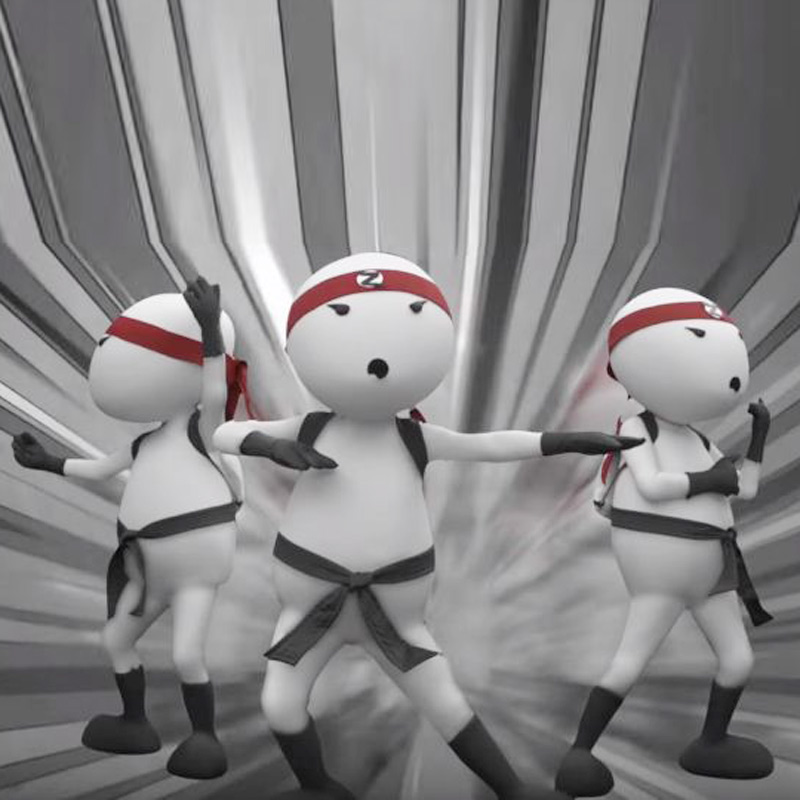
    MUMBAI: With great customer service at the core of its philosophy, Vodafone India has developed new age digital experiences for its 210 plus million customers. Vodafone is now bringing back the ZooZoos in a new Ninja avatar and communicating about “Happy to Help – In a click”.

    Like every cricket season, Vodafone is back this year with a big bang ZooZoo campaign.

    With the world going digital, customer service across categories has evolved from being a human led, call centre-based query resolution mechanism to a more digitally evolved, self-care and 24/7/365 experience. Vodafone is leading this evolution, handholding customers to move from assisted only care to digital self-care and anytime and doorstep services.

    With speed and efficiency at the core of its service philosophy, Vodafone focuses on convenience across channels for the customers. For example, customers can now customise their plans and numbers online and have a connection home delivered. They can also manage their entire family’s accounts on the My Vodafone App and pre book appointments before they visit a store.

    Vodafone India executive vice president of marketing Siddharth Banerjee says, “As technology drives the changing customer behaviour and expectations, we at Vodafone have driven our digital transformation initiatives hard and also evolved our Happy to Help philosophy for the 2018 Digital Customer to “Happy to Help – IN A CLICK”. Further, in keeping with the topicality of our campaign break, we are bringing back our much loved ZooZoos in a brand-new Ninja avatar, they are quick, agile and efficient; much like our service experience, enabled by the digital transformation initiatives at Vodafone India.”

  • Why do we lack animated ads despite their popularity

    Why do we lack animated ads despite their popularity

    MUMBAI: Do you recollect the much-loved Zoozoos, the evergreen Amul girl or the crazy alien dance when they find Cadbury Chocolate on their planet? Most of us might because these are iconic animated characters that create a higher brand recall in the consumer’s mind.

    Eye-catchy visuals in animated ads not only help push brand advertising but also have a 30 per cent higher engagement rate making it an essential piece for the marketing heads in order to drive more consumer engagement and conversation.

    The claim to the first animated advertisement is a much-debated subject but one of the oldest recorded animated ads was named ‘Matches an Appeal’ that utilised stop-motion to illustrate a matchstick man spelling out the company’s name. Although animation in advertising dates back to as early as 1940, the phenomenon hit India only in late 90s. Brands such as Amul, Vodafone, Appy Fizz, Mortein and Red Bull, etc, are the brands that successfully used animation in ads.

    Dentsu One national creative director Titus Upputuru points out that, while some great animation ads have been created in the past, there is a lack of innovation in animation for television advertising. Though, we are more advanced today, the same is not reflected in the advertising industry through animations.

    Explaining that India has a long heritage of drawing and painting, Publicis India MD and chief creative officer for South Asia Bobby Pawar draws attention to technology and newer well equipped animation studios that have created animations for Hollywood blockbuster Avatar, in turn aiding the evolution of the art of animation in India.

    Time still remains a major constraint while creating animated ads. Titus adds, “We don’t see a lot of animated ads because it is time consuming to create each frame and see progression of movement or any action in the frame.”

    According to a recent FICCI KPMG report on the Indian media and entertainment industry, Indian animation and VFX industry grew at 16.4 per cent in 2016 and is projected to expand at a CAGR of 17.2 per cent over 2017–21 to reach a size of Rs 131.7 billion, driven by a steady 9.5 per cent growth in animation and a 25 per cent growth in the VFX segment. Although the numbers look decent, we lag behind the West when it comes to the quality of animation and seamless VFX.

    Bobby Pawar suggests that, “There is a serious dearth of talent for animation directors; people who can imagine characters, write about them and have fun with them.” While lack of talent, studio-set ups, animation artists, time, and the high cost of execution remain a challenge for the industry, brands are slowly inclined to experiment.

    Indiantelevision.com takes you through some of most memorable and milestone moments (ads) in the Indian ad world.

    Maggi noodles, as we know now, once had flavours like Fruitti fruitti (more like Toofi Frooti) and Toffi Toffi back in 1986. Although the ad was loved by the kids, the sweet flavours did not work for the brand and were soon discontinued. Maggi hasn’t gone the animated ads way after that and decided to get celebrities instead or showcase the ‘2-minute’ cooking.

    OLD MAGGI TVC:

    Created by Sylvester da Cunha in 1966 to rival Polson’s butter girl, the Amul Girl which was a 2D animation character was first used in outdoor advertisement and later made her way to television ads.

    OLD AMUL TVC:

    AMUL TVC (2013):

    The poofy-loveable white creatures, Zoozoos have been a hit ever since they were launched in 2009 during the second season of Indian Premier League. The white creatures with ballooned bodies and egg heads have been used to promote various value added services of Vodafone and remain a favourite among the viewers. Vodafone continues to leverage the popularity of Zoozoos even today.

    Vodafone Zoozoos TVC:

    Nestle India has experimented on an array of products from their kitty with animation and VFX in their ads, be it the singing Squirrel ad, the dancing babies ad, love birds ad for Kitkat or the Kangaroo mother ad for Nestea. The ads have helped the brand in creating higher brand recall and driving more sales.

    NESTEA TVC:

    Mondelez International created animated ads as early as 1980’s in the United States and other markets but the concept came to India only in 2004 when Mondelez India (then known as, Cadbury India) decided to have an animation film to promote its new product. Although Dairy Milk has always been associated with its iconic ads and the song ‘Kuch khaas hai, kya swaad hai zindagi mein,’ the brand decided to adopt a new song this time that would be a hit with their target audience (kids) for this new product (Dairy Milk 2 in 1). The ad became an instant hit and it also used the animated series to advertise another product (Dairy Milk Whoopie). In October 2016, Cadbury Dairy Milk introduced an animated alien series to promote its product with #InterstellarParty where the alien was thoroughly enticed by the chocolate. The song became an instant viral hit.

    DAIRY MILK TVC (2004):

    DAIRY MILK TVC (2016) :

    Havmor ice creams is the latest entrant to join the bandwagon of animated ads. With an aim to create a property that reflects what Havmor stands for, the brand has launched a #MadeOfMilk campaign to grab the attention of the consumer and create a lasting impression.

    HAVMOR TVC (2017) :

  • Vodafone launches marketing campaign for app featuring ZooZoos

    Vodafone launches marketing campaign for app featuring ZooZoos

    MUMBAI: The popular army of mini ZooZoos, Zumi Army, is back to help customers discover the world of Vodafone with the MyVodafone App.


    Vodafone launched the app, which hcan be accessed by customers as per their convenience 24X7, free of any internet charges (in India). The app provides a personalised experience to postpaid and prepaid customers as well as non-Vodafone customers.


    Vodafone India retail and digital national head Kavita Nair said, “Customers are gaining comfort with apps and are using them to shop, subscribe to services and access news/information. Keeping these evolving needs of customers in mind, the MyVodafone App is designed to provide them at their fingertips, a personalised interface of everything that is Vodafone. From accessing their services to managing their accounts or transacting or even getting their problems resolved, the app is a manifestation of Vodafone, on the smartphone.”


    An energetic and spirited television campaign, supported by presence on social media, prominent and a series of on-ground activations will communicate the app’s various features and benefits.


    Speaking about the theme of this marketing campaign, Vodafone India brand communication and insight national head Siddharth Banerjee added, “The new MyVodafone app campaign aims at citing feature-led benefits of adopting and using the app, thereby driving home the key point that one can avail of Vodafone services, now on one’s phone. Accordingly a 360 campaign has been designed that clearly establishes MyVodafone App as a one-stop shop for all Vodafone related services. The much loved Zumi army will engage with customers through different mediums, showcasing key features of the all new MyVodafone App.”

  • ‘Break-even year for first eight IPL teams” : GroupM ESP managing partner Hiren Pandit

    ‘Break-even year for first eight IPL teams” : GroupM ESP managing partner Hiren Pandit

    The Indian Premier League (IPL) has seen an erosion in brand value due to governance issues. Two franchises got termination notice from India‘s cricket board but are still alive in IPL 4.0 as the court has come to their rescue.

    In an interview with Indiantelevision.com‘s Ashwin Pinto, GroupM ESP managing partner Hiren Pandit talks about how the IPL can still be a revenue earner for the franchises as new advertisers take to the sport.

    Excerpts:

    Will there be revenue pressure for the IPL franchisees to break even now that two teams have been added?
    The first eight teams that came in have done well for themselves – and will continue to do so. They will operationally break-even this year.

    The two new franchises, however, will have to have a serious ace up their sleeves to achieve their numbers. It is a tight situation and will take at least eight to nine years for them to break-even.

    Is it a good time for a franchise to sell a stake?
    At any point in time, people will be in the market trying to find the value that they can get. The question is whether they need the money or if they can hang on. Now a lot of feelers have been in the market. Kings XI Punjab was nearly sold at one of time, but then issues came out.

    Deccan Chargers were in the market after the first year, but now they have Saina Nehwal with them. They seem to have a sports strategy in place. They are trying to have a play in sports by building sporting properties and icons.

    What about Sahara?
    Sahara picked up Pune and it could be related to Amby Valley. They might try to make each property feed of each other. Otherwise, they should have chosen Lucknow. Obviously, the play goes beyond owning a cricket team. It makes sense for them to leverage the IPL across other properties.

    Can Kochi run a smooth ship given that there are so many owners?
    My first take has been that the strength of a team is as good or bad as the strength of a franchise. If the people who are there cannot run and act like a team, then the players will not fare well. This could be an internal problem and if they have resolved it then good for them. Team owners buy a team and give to a professional body or a professional set of people to run.

    They are responsible to deliver for the team. In Kochi‘s case it is the team owners who are trying to run it. The scary part here is that the glamour element that is so huge and you can‘t hobnob with the team. If this is not managed properly, then it can become a problem. I have a feeling that Kochi still has to get its act together.

    They came into the market with serious sponsorship numbers which they are not getting. This is going to have an impact on their cash flows.

    How has off-the-field controversies impacted the IPL?
    The off-the-field activities affected the IPL itself. It impacted when the auction was held. All this is behind us. However, certain issues will have to be addressed after IPL 4 is over. It is not that the off-the-field issues have disappeared; it is just that they are on the backburner.

    With India lifting the World Cup, what viewership gains do you expect?
    IPL should get a boost from the World Cup. Viewers will want to see more of the Indian players. But I don‘t see a dramatic change in viewership. Keep in mind the fact that team compositions have changed drastically – except for Mumbai and Chennai.

    How is GroupM ESP involved with the IPL this time around?
    Maxus is the agency of IPL. In the first year, we did the deal with Citibank, which continues this year. GroupM ESP has got in Volkswagen as car partner for the IPL.

    We also went outside GroupM and did deals with outside clients who wanted to be associated with the IPL franchises. It could be awareness tracks, helping a client taking on competition or helping them form an association. We have also done licensing and merchandising deals that help the brand.
    ‘The Champions Twenty20 League is a great initiative that happened may be a little too early. It will become serious five years from now. But I am not so sure if it will be as big as the IPL‘

    What growth in revenue will franchises see this time around?
    Two new teams coming in means that the central kitty will be distributed among eight to 10 teams. The franchises will see growth from stadium income.

    Some franchises went to the market with high sponsorship price points. They then had to reduce their prices. Good marketing and good performances have helped.

    Mumbai and Chennai have done well and will see substantial revenue growth. Then you have Kolkata and Delhi in the middle. I have a feeling that Pune will pull through while Kerala will struggle.

    In terms of ticket revenues, the Wankhede Stadium will make a big difference to Mumbai. It is in the heart of the city. It is also possible that Mumbai will make more money on licensing and merchandising than any other team.

    The key to success is to reduce the heavy dependence on the central pool. Do you this happening this year?
    While some franchises may manage to up their local revenues, the Central pool may stay stagnant. But Chennai and Mumbai, and perhaps Kolkata, may manage to change the percentage ratio between central and local revenue in favour of the latter.

    The World Cup meant that franchises could not carry out activation with sponsors in the lead up to the IPL. What has been the impact?
    Every sponsor was aware of this problem. But if sponsors are smart enough, they will look at it from the longevity point of view so that they can build an association. Some companies like Luminous are doing activities. It is a tight situation, though, with players not being available. Sponsors will do such things during the IPL.

    Also, with the team structure changing, the task of building a fan base becomes that much more harder. Chennai and Mumbai are, of course, better positioned to strengthen their existing fan base.

    Rajasthan brought in Floriana which is a company that has never advertised in cricket. Are we going to see more of new advertisers taking to the sport?
    You will see a lot of newcomers as there is a churn happening. Some sponsors got in due to the glamour of the IPL without understanding what their objectives were; their relationship with the franchise owner may not have been good.

    In years four and five, you will see this settling down. Sponsors now have a clearer idea of what they want; franchises also realise that you cannot have a revolving door policy where you take money and not do anything.

    Which brands have done a good job?
    Nokia and Aircel are some of the companies that have stayed on with the franchise. Vodafone has benefited with the Zoozoos as its idea. Those sponsors who only looked at it as a piece of real estate for a logo are the ones who got screwed.
     

    Will we see more advertisers this year?
    The number of advertising opportunities on clothing will stay the same. This year, though, we will see advertisers coming in as partners and doing on-ground activation. An entrepreneur in a city like Hyderabad could decide to open two restaurants and bars named after the Deccan Chargers. The logo part is static, but the number of partners can increase.

    You will see more people moving in to the licensing and merchandising space. The franchises also have to look at this more seriously. At the same time, it is a slow burner.

    Wearing the team colour is the starting point; you will see clothes, watches, etc. But a pub or a shop like what Manchester United has is still a long way off. However, licensing and merchandising will still be a small part of a team‘s revenue.

    Two more teams mean more ad clutter. Is this going to be a major challenge for brands?
    Clutter was there with eight teams. Anybody who wants to break this, must do something different.

    Of all the brands that were associated with the ICC World Cup, the one that stands out is Pepsi. The whole creative concept that they did like the ‘helicopter shot‘ gave it a different flavour. The viewers saw something different, which stood out.
     

    Some feel that having two groups was the BCCI‘s way of trying to solve a problem of 10 teams. Do you agree?
    This is a format issue. You would have had 94 games. This is a lot of games. I remember traveling the first year with the Deccan Chargers. I wasn‘t even playing, but I was still tired. If you expect people to play so many games, it is unfair.

    The BCCI has tried to fit things in the best possible manner. They will review the current situation. But the window available is 45 days; this is not going to increase.
     

    What we have seen so far over three years is loyalty to the IPL and not so much for teams. Will this situation change this year?
    This has changed. In the Mumbai versus Chennai match, the yellow and blue colours were very dominant. People were talking about teams. This time it might get affected due to a new team structure. But over a period of time, the relationship will build. Team loyalty should grow for certain franchises.
     

    Some franchises were thinking of forming alliances with clubs globally. Will this concept work?
    It is great to have a relationship. The question is what is that relationship built on? Rajasthan went abroad to play matches in the first year. It cannot just be a piece of paper, though; both parties must benefit. How many franchises have built a school to develop cricket and build a base that will feed into their team? These things need to happen. Just tying up with a foreign club is not the solution. Not enough has been done during the ‘off season‘. At the same time, money must make money.
     

    Can the Champions Twenty20 League be declared a dud?
    It is a great initiative that happened may be a little too early. It will become serious five years from now. But I am not so sure if the Champions Twenty20 League will be as big as the IPL.