Tag: Zoo Media

  • The challenges and benefits facing martech in India

    The challenges and benefits facing martech in India

    NEW DELHI: Martech sounds like quite a jargonistic word to many. But, put simply, it is the tech stack run by backroom geeks in glasses who use software and web-based services to manage, automate, or execute marketing tasks and processes. Data and analytics lie at the heart of martech, giving companies better customer and market insights, helping them to respond accordingly. 

    Globally, it is a booming business touching Rs 739,200 crore ($121 billion) in 2019, according to a report by advisory and research firm BDO and WARC in conjunction with the University of Bristol. In India, it is coming out of  its infancy  with marketers just about waking up to its utility, though the software development  sector has bitten a sizable piece of the global pie.

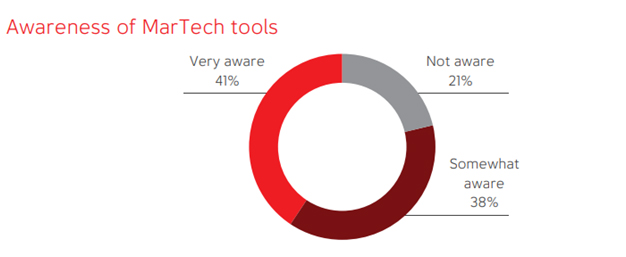
    Earlier this year,  WPP group company  Mirum India released its Martech Survey 2020 report, which did not give any indications of the sector’s size and scale, but it revealed that  marketers across India are bullish, with as many as 80 per cent of those surveyed expecting their organisation’s spends on these technologies to increase over the next five years. 

    Xaxis India country lead Bharat Khatri told Indiantelevision.com that there has been a significant rise in the investments that Indian brands and marketers are making in the martech space. “Around one-fourth of the overall marketing pie is being directed towards martech right now and this shift has occurred within the past few years only. Earlier, we were getting a minuscule share in the marketing pie, and it is definitely bound to grow further.” 

    However, according to him, despite growth in adoption, the core challenge for the industry remains that most of the people who are investing in the technologies are not aware of how it is benefiting them. “Around 50 per cent of the marketers today don’t know the exact functions of martech. There is a great need to educate the industry.” 
    Business head of a leading insurance company acknowledges in the Mirum India report that the biggest challenge is that there are too many hands involved in the martech implementation broth, thus leading to delays. “Adding to this is the pressure caused by marketers evaluating solutions only after they identify a specific business need, which leaves them with little time to plan before arriving at a decision,” he adds. He also points out to problems of integrating the martech tools with existing technologies in an organization and the pushback from internal stakeholders towards adopting change. 

    Another issue stifling  the sector’s growth is marketing budgets, which are limited. 
    Khatri explains that martech’s limitation, in the Indian context, is that one cannot instantaneously get to know if the investment being poured into it is worth it.

    “It takes two to three  years to understand the kind of impact the martech tools have had and the ROI. Now, for some marketers, it gets difficult to get the budgets sanctioned, and with a pandemic like Covid-19, when everyone is holding back their budgets, it is creating a big problem,” he says. 

    However, the industry believes that Covid2019 pandemic has certainly opened up newer and exciting opportunities for martech, and it will be wiser for the brands to latch on to it. 

    “COVID2019 has impacted consumer behaviour a lot and accentuated some of the consumer trends too. In the past four months, we have seen how the adoption and usage of online channels have increased,” says Logicserve Digital founder &  CEO Prasad Shejale. “Consumer journeys have changed significantly and have also affected brand loyalty. This is actually a great opportunity, and smart marketers are investing in analytics tools to understand changing customer behaviour.” 

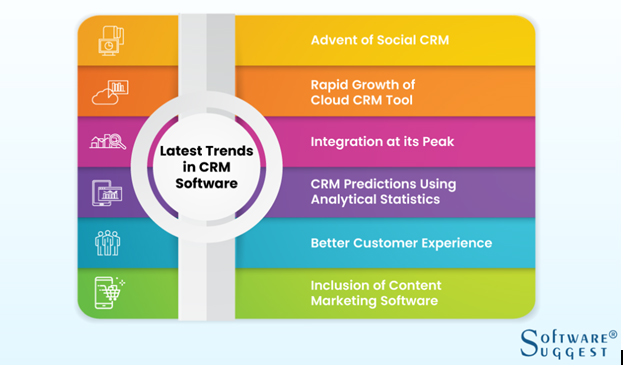
    Adds Khatri:  “What brands are using martech for most is understanding the consumer behaviour and their journeys –  what they like, where and when they shop, etc. This has resulted in marketing being market-driven instead of sales-driven. This has resulted in great demand for technologies like customer data platforms (CDMs), tools for customer relationship management (CRM), and mobile phone data.”

    Shejale agrees: “The most important tools right now are the combination of analytics-insights-CRM/CDP. These tools, along with a focused approach on the consolidation of consumer data to understand them better, are important to provide better service to the consumers across their journeys, whether online or offline. For a smooth and convenient journey across online and offline channels, CRM tools can be very effective. They can also assist in sending the right communication to your audience at the right time through the right channels.” 
    Another interesting trend that is, arguably, impacting the growth of martech in India is global domination in the arena. The Indian industry is currently dotted by a lot of foreign players who have been active in the space for a long time. Khatri suggests that platforms like Salesforce are quite popular. 

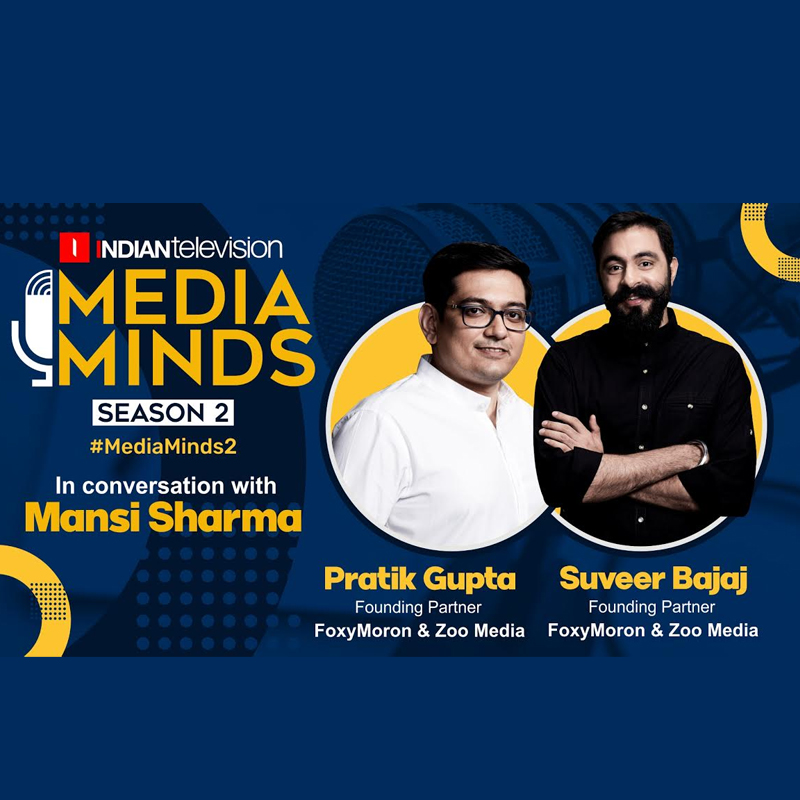
    In a e previous episode of the Media Minds  2, Zoo Media & FoxyMoron co-founders Suveer Bajaj and Pratik Gupta had said, “India, by virtue of the fact that we have been a tech hotspot so as to speak, with big boys at Infosys, Wipro  and TCS setting the agenda, is globally acting as a back office for a lot of martech and a lot of adtech companies for generations. It’s funny though, like for example, even if you look at programmatic, we are about 18 months behind and what the rest of the world is.” 

    But Indian players are also catching up fast. 

    “India has a big advantage in making technology in-house and there are a lot of independent firms and also companies like ours who are a part of big global networks investing great time and energy in creating tools and technologies here. For example, last year we launched Xaxis Places, a completely homegrown technology and now 30 plus  markets across the globe are using it,” Khatri shares.

    Adds Zoo Media’s Pratik Gupta:  “We are struggling as an agency to be able to wrap our heads around all of the marketing tech and adtech that exists pretty much out there (but) there are a lot of things that we are doing. For example, there is a marketing technology and ad technology platform that we are building inside of Instagram, which is a landing page solution providing first-party data on e-commerce.” 

    Ambient, C Lab, ROOH, Brandscope director Deepak Kumar, also sheds some light on the in house technologies that the agency is working on. “We created a tool called Star Metrics, which helps identify the geographical heat map indicating where the fanbase of a particular star is and where the consumers of a brand are. If those heat maps match, a darker hotspot is created indicating the perfect fitment of both, ensuring maximum engagement.”

    He also mentions that the team is about to launch another technology to complement this in the coming weeks. 

    According to Khatri,  many independent firms are also getting active in this space. Albeit one problem that these players might face in the coming few months is  the market sentiment that has been created due to the pandemic, but he is sure that this is temporary. 

    Indeed, with the tide now rising for martech in India, it won’t be too long before it washes over many more who have been playing a wait and watch game.  
     

  • Media Minds 2 | Want to be an Indian network that travels the world: Suveer Bajaj, Pratik Gupta

    Media Minds 2 | Want to be an Indian network that travels the world: Suveer Bajaj, Pratik Gupta

    NEW DELHI: Starting a digital agency at the young age of 19 and over a dozen years later transforming into a full-fledged integrated creative and tech solution-providing network has made FoxyMoron and Zoo Media co-founders Suveer Bajaj and Pratik Gupta wise beyond their ages. The duo sat down to share their inspiring journey, thoughts on current industry trends and plans for an international expansion on the fresh episode of Indiantelevision.com’s Media Minds 2. 

    Gupta said, “We started off as just wanting to do something for three months. Now, we have been at it for over twelve years. It’s been one of the most real journeys that you can think of and it’s been an absolute pleasure.” 

    The duo grew the network from flagship FoxyMoron to a vast network including content studios, production house and everything else that the current digital ecosystem requires, under the umbrella of holding company Zoo Media. 

    Bajaj highlighted, “We like to be a full-service agency and we like to offer our clients holistic solutions but of course the breadth of digital as an industry also kind of diversified and found areas for specialities as time progressed. So, in 2016 we spun off a creative technology company called Phosphene, which dabbled in the space of AR, VR, MR, does a little bit work with AI, ML, NLP, image recognition. In 2017, we spun off our own production house called The Rabbit Hole, In 2018, we partnered with a marketing technology company called Noesis Technology that works in the space of marketing tech; we also spun off a talent management and influencer management company called Pollen. In 2019, we spun off a small consultancy company called Doyen Oink Consulting that works, that aims to work with young companies, startups, that want to work with us as a network for our expertise. Last year, we also spun off a media company called Mammoth Media that dabbles in the space of media assets and IPs but not for brands.”

    The duo, which believes that India has a great potential to be a trendsetter and leader in the martech, ad tech, and advertising, marketing space, wants to be an Indian network that goes international. “We do see international networks that come to India and consume a large chunk of the market share and while of course, we are a small drop in the ocean and it will take us generations to keep building out this vision, but we should be very excited of taking our vision to the world and becoming an Indian network that starts going from India to the world.” 

    Watch the full episode here:

  • Zoo Media promotes Aarushi Sethi  as Director of  Influencer, Creator and Talent Management Agency, Pollen

    Zoo Media promotes Aarushi Sethi as Director of Influencer, Creator and Talent Management Agency, Pollen

    Zoo Media has promoted Aarushi Sethi as Director of the influencer, creator and talent management agency, Pollen. Zoo Media is the media network which owns 7 agency brands including the flagship digital agency FoxyMoron. 

    Aarushi, will be managing teams across Delhi NCR, Bombay & Bangalore and will report into Pratik Gupta, Co-Founder of Zoo Media & FoxyMoron. Aarushi will be responsible for spearheading the agency’s P&L, overseeing portfolio expansion and contributing to the overall business growth.

    Speaking on the appointment, Pratik Gupta, Co-Founder, FoxyMoron and Zoo Media, said, “Over the last two and half years of working with Aarushi, we realised the immense potential that she brought with her. She was able to work with complex business challenges with extremely scalable solutions at a lightning pace. Looking at all of the above, we decided to work with her to structure and scale our newest agency, Pollen. Whilst there is immense business potential with clients across the board, the business needs a lot of organising and also avenues of focussed growth; which is what we envision to achieve under Aarushi’s leadership. While we’ve been at work for over a year, we’ve recently handed over the P&L responsibilities to Aarushi and the results have been amazing to see so far. We’re looking forward to working closely with her and creating a highly scalable and profitable business”

    Before taking over the role of Director, Pollen, Aarushi spent 18 months in FoxyMoron running the data and insights department across all client partners. Prior to FoxyMoron, she had her own design firm called ‘Ampersand Design’ and was also a Brand Partner at Vyas Giannetti Creative for two years. She was also a line producer and celebrity manager for BBC Entertainment where she worked on shows like KBC and Jhalak Dikhlaja. Aarushi holds a diploma in graphic designing from the London College of Communication. Prior to that she had done her Bachelors in Management Studies (BMS) from HR college while doing a diploma in Event Management. 

    Expressing her delight at the appointment, Aarushi added, “Before we even started Pollen, FoxyMoron provided influencer services to clients. When we looked deeper, we realised that the entire landscape is exploding and has huge potential for growth. We’re excited about the future of Pollen, we’ve  spent the last few quarters building business models that seamlessly combine our expertise – on creative technology, SEO, ORM and video production, across our network, to provide impactful solutions for brands using content creators . Since customisation is the biggest advantage of digital today, we’ve been working closely with regional content creators to produce vernacular and localised content for brands. Our ambition is to start productising all our services in order to marry the brand and the creator ecosystem to create scalable and measurable content. We are also passionate about nurturing new-age creators and empowering  them to utilise their complete potential across digital platforms ”

    Since it’s set up in 2019, Pollen has worked for brands, Gulabari, Fem Creme Bleach, Real, Burger King, Hershey’s Kisses, Sofit Kellogg’s, Maybelline, Chinese Wok, Wok to Walk, Pulse, Chingles, ABC, Gillette Venus, NYX, Celio, Manyavar Mohey, Spaces, Sofy, OBL tiles, McCain, Netflix, Amazon, Ishq FM, Alt Balaji , Huawei, SanDisk, WD, Emami , Stonelam and Glance, to name a few.

  • Zoo Media promotes Rishabh Khatter as business head of The Rabbit Hole

    Zoo Media promotes Rishabh Khatter as business head of The Rabbit Hole

    MUMBAI:  Zoo Media’s video content solutions agency, The Rabbit Hole has promoted Rishabh Khatter, to the business head of the agency. Zoo Media is the media network which owns 7 agency brands including the flagship digital agency FoxyMoron. Khatter in his role will be responsible for leading the vertical’s business operations in India and contributing to the overall growth.

    He has over 7 years of experience in creating content and technology and has been associated with Zoo Media for close to 5 years. Moving up the ranks from the Sr. Creative Innovations Associate to Business Head Content and Technology at FoxyMoron to spearheading, The Rabbit Hole as its Business Head. In his tenure with Zoo Media, Rishabh has led some prominent projects for clients like Netflix India, Hershey's, Kraft Heinz India, Maybelline New York, Burger King, Volvo, Dyson, HBO India, Amazon & Colgate.  He brings with him a widespread industry experience spanning across verticals and extensive knowledge on all things content and creative tech.  

    Speaking on the appointment,  FoxyMoron and Zoo Media co-founder Pratik Gupta said, “Rishabh is one of the founding members of The Rabbit Hole. The business has seen unprecedented growth over the last few years and is today one of India’s leading video content solutions agencies. With Rishabh at the helm, we feel proud of the work that they have been able to do, and the path that we’re on. As a network, we’re confident of The Rabbit Hole’s progress under Rishabhs leadership and we’re excited to go down The Rabbit Hole, together!”

    Prior to joining Zoo Media, Khatter was creative conceptualizer and copywriter at Wizcraft International Entertainment for close to three years. Where his primary responsibilities included Creative Conceptualisation and Strategy. He holds a Masters in Media Communications with a specialization in Advertising from Auckland University of Technology. He has also done his bachelors from AUT, in Creative Technologies.  

    Commenting on his new role, Rishabh Khatter said, I am excited to take up this role. Our journey so far has been about experimenting and delivering work that makes waves in the brand & branded content ecosystems. Our vision is to create a future-focussed content burrow which works across various formats, bringing together the best talent in the industry that uses human and marketing insights to create compelling stories. I am also chuffed about the team that we’ve managed to put together during the last few years and the mad hatter solutions we’ve managed to create. Looking forward to continuing on this journey with The Rabbit Hole & Zoo Media

    Since its setup in 2015, The Rabbit Hole has become one of the most sought-after video content solutions agencies in the country. This ‘Content Burrow’, has evolved from being a digital video first agency to a full-service new age content creation ecosystem. Under the leadership of Rishabh Khatter, TRH will continue to scale its business, working with noteworthy brands across industries, turning ideas into reality, and delivering outputs that cut through the clutter. The Rabbit Hole is headquartered in Mumbai, with regional offices in Gurgaon and Bengaluru. Its client roster includes brands like Netflix Netflix, Burger King, L’Oreal India, TataQ, Orient Bell Tiles, Hershey’s India, Motorola, Maybelline, Heinz, Volvo to name a few. 

  • Six months of struggle but 6 golden years ahead for digital marketing

    Six months of struggle but 6 golden years ahead for digital marketing

    NEW DELHI: It has been stressed enough that Covid2019 has come as a catalyst for the digital marketing industry. However, this growth is not going to be visible in the immediate CAGR this year, but instead in the increasing share of the overall advertisers’ marketing pie, noted the eminent panel discussing the widening scope of digital marketing in the new world in an exclusive discussion with Indiantelevision.com founder, CEO and editor in chief Anil Wanvari over a digital webinar.

    The panel consisted of Team Pumpkin co-founder and CBO Swati Nathani, Zoo Media and FoxyMoron co-founders Suveer Bajaj and Pratik Gupta, White Rivers Media CEO and co-founder Shrenik Gandhi, iProspect India AVP-strategic solutions Nihal Nambiar and Wavemaker India chief client officer and head–west Shekhar Banerjee.

    Nambiar noted, “Digital, in 2020, will definitely not have a similar CAGR of 27 to 30 per cent as it has been recording for the past few years.” But he is looking forward to some positive quarters ahead in terms of brands moving to digital platforms.

    Nathani mentioned that the Covid2019 period saw a lot of influx by brands, including the more traditional ones in the digital domain and that will enable the industry to make up for more than what was lost in the past quarter in the coming months.

    Gupta insisted that the funnel moving downwards on advertisers who were using all the options that digital provides as a marketing tool was very low earlier and because of the exposure that the advertisers got to the digital realm during Covid2019, this number will now go up quickly.

    Gandhi added, “Going ahead, it is six months of struggle for the digital agencies (given the dip on ad expenditure by advertisers) but six golden years ahead.”

    The panel also discussed the new trends and technologies that will be dominating the digital marketing domain in the coming years, including blockchain, IoT, and online events.

    Speaking about the massive popularity that online events earned during the lockdown, Bajaj quipped, “Obviously there is a cost-reduction of around 65 per cent in taking an event online for the event companies, and they have to sell the tickets at reduced rates as well, but at the same time they can get more and more people come online and watch the event.”

    He added, “BookMyShow expanded its base dramatically by introducing online theatre shows and treasure hunts etc. And then Paytm Insider took it a notch higher by offering live shows, and even various classes including photography.”

    Banerjee cited the example of his client 5Stars Do Nothing show that they did with OML. “The show managed to reach an audience of fifty million digitally, which wouldn’t have been possible in the case of an offline event.”

    Nathani added an interesting insight as she noted that not only brands are collaborating with event companies to curate these shows, or running ads there, but are themselves also running training classes or entertainment events as they have realised a vast pool of opportunities lies in the online events space.

    The panel also extensively touched upon the topic of IoT opening newers realms of marketing opportunities for the brands.

    While Nambiar was of the view that IoT is still at a very nascent stage and is more of a utility than marketing platform, Banerjee highlighted, taking his experience of working with Vodafone in account that the roll out of 5G will lead to an explosion of IoT in the country.

    Bajaj insisted that marketing will greatly benefit from the contactless experience that IoT will soon bring forth, as the brands will have more targetted information about the consumer as it starts relying on technology even for most basic needs like grocery shopping.

    Nathani seconded the thought as she noted, “What IoT will be doing is creating hyper-personalised data, thus seamlessly helping the brands to reach out to the consumers with very targetted needs and that is the space we as marketers and brand consultants will need to explore.”

    Watch the full discussion here:

    Embed: