Tag: Zomato

  • Zomato launches operations in 17 new Indian cities

    Zomato launches operations in 17 new Indian cities

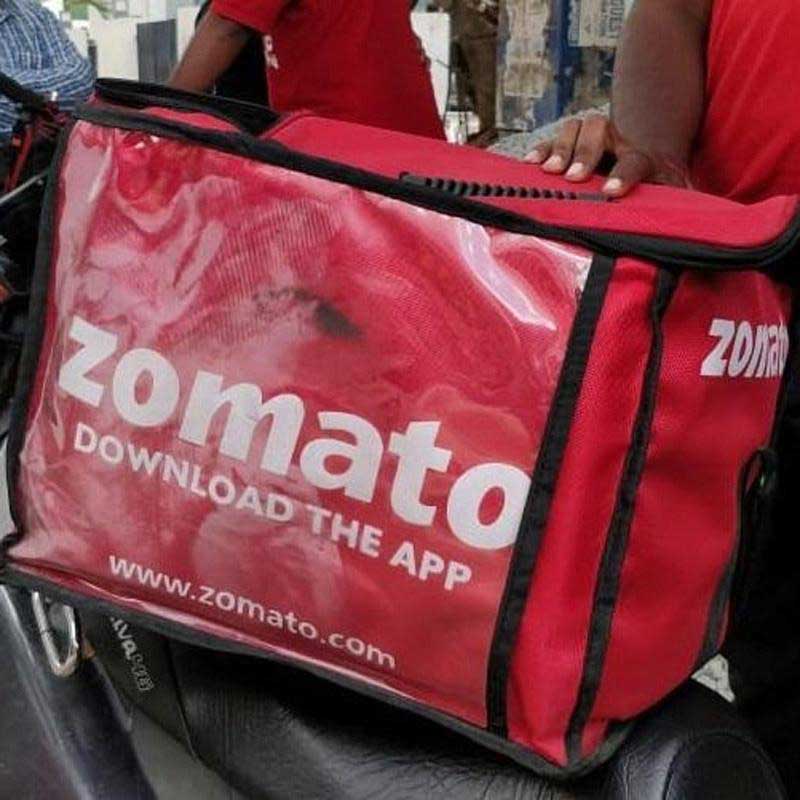
    MUMBAI: Online restaurant guide Zomato has expanded its online ordering and food delivery services to 213 cities in India with the launch in 17 new cities.

    The newly launched cities include Bulandshahr, Shahjahanpur, Solan, Palwal, Rewari, Machilipatnam, Nandyal, Bhimavaram, Ongole, Srikakulam, Kadapa, Kottayam, Kollam, Khanna, Gurdaspur, Ambur and Deoghar, Zomato said in a statement.

    "Emerging cities are a major growth avenue for us and we expect them to constitute more than 50 per cent of our total order volume by the end of the year," Zomato founder and CEO Deepinder Goyal said.

    "With 1.8 lakh delivery partners, we are creating jobs and skill-building opportunities for many in India. We are developing Zomato Kitchen hubs in smaller cities in India to drive growth for our restaurant partners," Goyal added.

    Zomato is a restaurant reviews, restaurant discovery, food delivery and dining out transactions platform providing information for over 1.4 million restaurants across 24 countries.

  • Zomato enters experiential events segment with Zomaland

    Zomato enters experiential events segment with Zomaland

    MUMBAI: Online restaurant guide and food ordering firm Zomato has announced its entry into the experiential events segment with the launch of Zomaland—a multi-city food and entertainment carnival. The carnival will be held across Delhi, Pune, and Bengaluru.

    Zomato COO Gaurav Gupta said, “We believe that if there is an experience to be built around food, Zomato has a significant role to play in making it happen. The introduction of Zomaland is a step forward towards Zomato's goal of 'better food for more people'.”

    Zomato Live global head Chaitanya Mathur said, "Although we are starting with 3 cities, we will extend the joy to many more cities around the world as we move ahead.”

  • Zomato to launch in 30 more cities

    Zomato to launch in 30 more cities

    MUMBAI: Restaurant search and discovery platform Zomato is launching in 30 more cities which will include Ajmer, Ambala, Anand, Anantapur, Bareilly, Bathinda, Bhavnagar, Bhilai, Durg, Haridwar, Jamshedpur, Kakinada, Karnal, Katni, Kolhapur, Kurnool, Meerut, Puducherry, Puri, Rajahmundry, Rajkot, Ratnagiri, Roorkee, Saharanpur, Sangli, Sangrur, Siliguri, Thrissur, Tirupati, and Ujjain.

    Zomato confirmed that its online ordering and food delivery service will now be present in 93 Indian cities. Zomato also added that it has 75,000 listed restaurants for food delivery and will be adding more 5,000 delivery personnel.

    As Zomato’s delivery services are currently available from 11am to 11pm, the company will soon introduce breakfast delivery and midnight meals as well. Zomato also added that they will expand HyperPure ingredients delivery service to Delhi NCR this month.

    Zomato CEO – food delivery Mohit Gupta said, “We have been surprised by the demand in tier II tier III cities and are therefore gung-ho on serving every last customer, in the smallest of towns in India. We will be the first to hit the 100 city mark and will continue to invest heavily to lead geographical penetration, in the food delivery market in India. We have seen market share grow in our main markets through the festive season and have plans for growth in December as well.”

    Zomato Founder and CEO Deepinder Goyal added, “We have experienced an overwhelming reaction to our expansion across all of our businesses – Gold, Food Delivery and Supply. The number of Gold memberships sold in Manila and Jakarta within a week is beating early numbers of Delhi and Mumbai. HyperPure has had great reception, and we are opening up our next centre in the NCR in a couple of weeks. The Food@Work business has also been expanding into new markets. And of course, the Food Delivery business is ramping up really well with the growth in main markets, as well as the reception in tier II tier III cities.”

  • Zomato announces Rohithari Rajan as new global head Ad Sales Business

    Zomato announces Rohithari Rajan as new global head Ad Sales Business

    MUMBAI: In a recent development,  Zomato has appointed Rohithari Rajan as business head, global ad sales. Prior to joining Zomato, Rajan was leading Egon Zehnder digital practice in the Asia Pacific, and consumer, retail and media practice in India.

    Earlier Rajan was a principal in the New Delhi office of the international consulting firm Bain and Company, where he advised clients across consumer products, private equity, telecom, and industrial goods in organisational and growth strategy, go-to-market strategy, and new business development. 

    Zomato Founder and CEO Deepinder Goyal said, “I worked with Rohit while I was at Bain, and learned a lot from him in my time there. Rohit has played an instrumental role in driving growth at all of the previous organisations he’s been at, and we’re thrilled to leverage his knowledge and experience to strengthen our ad sales business globally.”

    Commenting on his new role, Zomato global head, ad sales Rohithari Rajan says, “Zomato is arguably one of the most resilient and innovative companies in its space. I’m delighted to be a part of Zomato and look forward to working with this team towards our mission of delivering better food to more people across the world.”

    Rohit is an MBA from the Indian Institute of Management Ahmedabad, and studied economics at Delhi University. He is also the author of IIM-Ganjdundwara, a short novel based in rural India

    Rajan has also spent six years at Hindustan Unilever, where he helped set up Shakti, a business initiative that doubled Unilever’s direct reach in rural India. As a rural business specialist, he also worked with the United Nations Development Program in New York, developing a toolkit for pro-poor business models to deliver development goods in low-income regions, and helping the UNDP formulate its strategy for private sector engagement. 

  • Zomato appoints Mohit Gupta as CEO of food delivery

    Zomato appoints Mohit Gupta as CEO of food delivery

    MUMBAI: Restaurants Discovery and Online food ordering app, Zomato, yesterday appointed Mohit Gupta as CEO for its food delivery business.

    Zomato has been working on strengthening its leadership team and aims at a long-term vision of “better food for more people”. The company is also experimenting with products that solve for affordability, accessibility, assortment and quality of food for the users, within India as well as globally.

    “We’re thrilled to have Mohit join our team – he is one of the few internet industry veterans who has helped build a formidable transactions business in India. He’s a widely respected leader, and we’re excited to learn from him, and further build our rapidly growing food delivery business with him,” said Zomato founder and CEO Deepinder Goyal as quoted by DNA.

    Gupta, who has about 20 years of experience joined MakeMyTrip in 2008 and worked in several senior positions in the company. As the chief operating officer he was responsible for the business delivery, growth and profitability of the entire online business for Makemytrip India. In between, he also worked with e-commerce website like Zovi.com for one year. Before joining Zovi.com, he worked with PepsiCo for about seven years where he last served as vice president marketing.

    He holds an MBA degree from Indian Institute of Management Calcutta and has studied mechanical engineering from Sardar Patel University.

    Also Read :

    Zomato and PayTM feature in Interbrands’ ‘Breakthrough Brands’ report

    “Zomato adds value to users and restaurant owners alike:” Pankaj Chaddah

  • A year after demonetisation: E-payment services emerged winners

    A year after demonetisation: E-payment services emerged winners

    MUMBAI: 8 November 2016 was a day that took the world by storm. While the world was stunned with Donald Trump’s victory as the new US president, Indian prime minister Narendra Modi decided to give the country a shocker of its own- demonetisation.

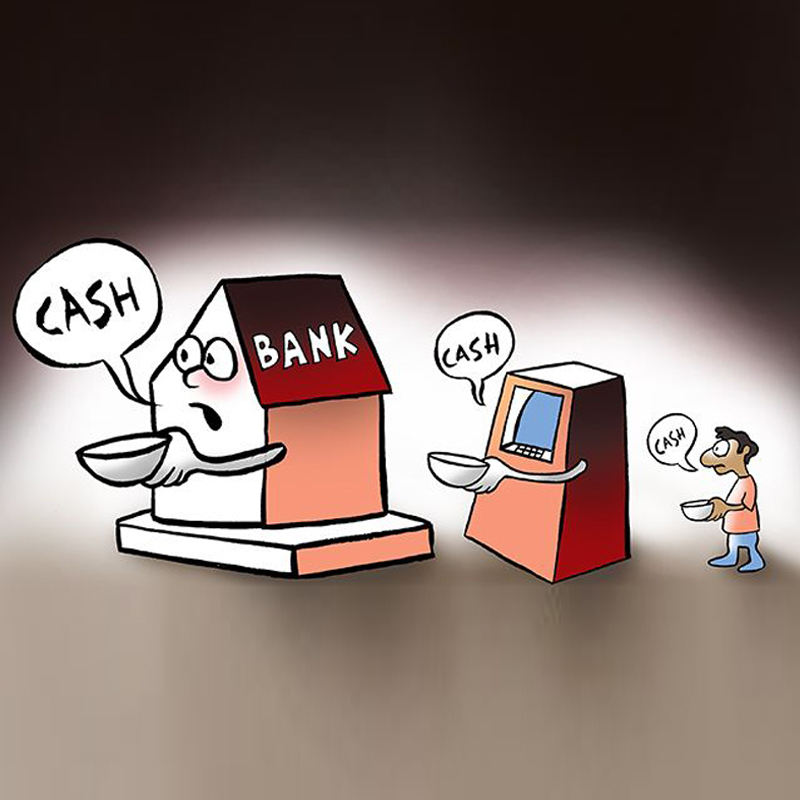
    An ordinary Tuesday evening saw all news channels and radio stations halt their programmes to listen to Modi, assuming it as another Mann Ki Baat. Instead, what followed was the shocking revelation that all the Rs 500 and Rs 1000 notes in the country will be invalid post midnight. As people scrambled to get rid of their notes and lined up for new ones, they were restricted to just Rs 10,000 a day and Rs 20,000 a week for the next 4 days (10-13 November).

    A severe cash shortage in the hands of the public forced them to seek alternative modes of payment. Companies too weren’t spared. By the second week of demonitisation, cigarette sales had dropped by 30-40 per cent and cash on delivery (COD) orders fell by 30 per cent for e-commerce companies. Dabur India corrected its advertising spends for November by almost 50 per cent and many prominent brands decided to hold the rolling out of new campaigns for a few months. The festive October-December quarter, this year, ended up draining out over Rs 2000 crore.

    Amidst this confusion and loss, if there was a clear winner, it was the class of startups offering online wallets and digital payments. Brands offering online payment ‘cashed’ out the most from the prime minister’s move. It was time for overlooked and unrecognised players like Paytm, Freecharge, Mobikwik, Swiggy, Zomato, Foodpanda and others to make optimum utilisation of the situation. These brands had found people’s Achilles heel and created campaigns, tweaking their communication, to show people that you don’t need to worry about less cash.

    public://F1_20.jpg

    With this, digital payments became India’s new currency and debit card transactions surged to over 1 billion in January this year from 817 million last year.

    public://1_5.jpg

    Foodpanda India co-founder and CEO Saurabh Kochhar says that there were positive implications of demonetisation on its platform. “Before demonetisation, on a regular day, our platform would receive close to 70,000 orders. While that shot up by 40-50 per cent, around 92 per cent of payments were made online after demonetisation. As our order value ranges between Rs 400-500, consumers did not mind paying online,” he reveals.

    As consumers were forced to get acquainted with digital payment modes, they got comfortable with the idea of paying for their orders online. Brands ensured their technology backend could support the surge in payments so that no glitches would leave people harassed or with bad experiences.

    One of the biggest beneficiaries of demonetisation was online wallet app Paytm. Within only 12 days after the move was announced, Paytm witnessed over Rs 7 million transactions worth Rs 120 crore a day and Rs 5,000 crore worth of transactions in the month of January 2017.

    Even though India was cutting down on spending, online travel grew between November 2016 and June 2017. Indians spent $246.6 million in overseas travel-related payments in November 2016, up 581 per cent as compared to $36.2 million spent in the same month in 2015. Arrivals from India to Australia since the demonetisation period (Nov 2016 – Aug 2017) grew at an average of 15 per cent.

    A year on, are people still transacting online at the same pace or was it just the momentary fluster? Kochhar optimistically says, “As valid currency got into a normalised flow in the country, there was an increase in COD orders. However, we have seen more uptake in users paying online for their orders. It is more about the change in the mindset of the users and demonetisation pushed them in that direction for sure.”

    While demonetisation opened people’s eyes to digital avenues, adex was briefly hampered. Overall brand revenues fell and there was a clear dip in sale, but all of that is now in the past. The advertising and marketing industry revved up but was assured that India’s suspicious view towards digital had surely been changed.
     

  • Vodafone gives students value for money packs

    MUMBAI: It’s the beginning of a new academic year and with colleges set to reopen in a few days, students of Delhi-NCR are gearing up to one more exciting and challenging chapter of life.

    For every college going student, one element that tops the list of priorities, is balancing their expenses with limited allowance allocated. For collegians, the mobile phone is the one most critical companion keeping them constantly connected with friends on Social media. For needs of every collegian, Vodafone India presents Vodafone Campus Survival Kit, a smart solution offering students unlimited calls, 1GB/day for 84 days to take care of their data need and the need to stay connected at all times. In addition there are multiple campus hacks to save pocket money and a trendy messenger bag free as part of the offer.

    Vodafone Campus Survival Kit offers unlimited calling and 1 GB daily data packs to the students*. Each kit also contains a booklet of deals including recharge vouchers, discount coupons from Ola, Zomato and various other brands, plus a series of value for money life hacks.

    Additionally Vodafone is engaging with young consumers on radio and other platforms by sharing fun value for money hacks.

    Vodafone Delhi-NCR business head Alok Verma said, “The beginning of college life opens a world of opportunities and experiences for youngsters. While they want to use their new found freedom to explore these opportunities, their tight pocket allowance proves challenging.”

    Vodafone has also set up free Wi-Fi hot spots across north campus; these locations are primarily favorite hangout places of students. Hudson Lane, Kamla Nehru market are among the other locations where free Wi-Fi has been made available by Vodafone. In addition Vodafone has a network of 110+ Wifi hotspots across Delhi-NCR.

  • Zomato and PayTM feature in Interbrands’ ‘Breakthrough Brands’ report

    Zomato and PayTM feature in Interbrands’ ‘Breakthrough Brands’ report

    MUMBAI: A unique business model that is driven by innovation and technology is the trademark key to success among the emerging businesses in the world. Under tough competition, it is no longer enough to have hard working product or service. Smart brand building is the need of the hour. Keeping that in mind, Interbrand in partnership with Facebook, Ready Set Rocket and New York Stock Exchange (NYSE), has released its ‘Breakthrough Brands’ report that examines strong emerging brands.

    Of the 200 brands nominated, 60 ended up being featured in the Interbrand Breakthrough Brands report, although the list does not rank the brands.

    India- founded Zomato has been featured in the Food and Beverage category along with Deliveroo from UK, Blue Apron from US and do dem from Brazil. Zomato’s mission is to facilitate better dining experiences for food seekers all over the world. Founded in 2008, this brand’s food discovery platform is now a part of India’s biggest personal assistant app, HelpChat, which will be able to anticipate users’ food-related desires. Zomato also offers online ordering and table reservations, as well as tools that allow restaurants to manage demands, thus creating better food experiences for both its users and one million restaurants partners worldwide.

    Also, PayTM has been featured in the prestigious ‘Growing global’ category. This category celebrates the brands that have created a unique, differentiated approach which is global from day one. Breaking ground fast and too big to ignore, these brands are poised, or already on the path, to creating a significant global footprint. PayTM’s growing mission to create a one-stop, mobile shop has caused it to flourish in the population-dense country of India, where online platforms serve a growing need to get things done, quicker and more conveniently. Launched in 2010, PayTM began as mobile charging and bill payment service and has since become a full mobile commerce platform, with 20 million registered users and growing. It’s poised to break through in other Asian markets, where the one-stop-shop proposition is becoming increasingly popular. The brand has featured in the category along with Xiaomi from China, WeChat from China and DJI Global from Hong Kong.

    “In this ‘Age of You’ brands are being used by people to design better experiences in their day to day lives. That is what necessitates the conventional brands themselves to move at the Speed of Life. The Breakthrough Brands are born into the new cognitive era and are unencumbered. They can therefore create bespoke experiences per people’s needs and desire with a clear purpose to provide solutions through a sustainable business model. The task thus is not so much technology-out as much as it is solution focused. Then on, all the regular tools of running a good business need to be put in place – a scalable resource plan with internal clarity, responsiveness and governance models; external differentiation to ward –off imitability and consistency while the scale up. The stronger the solution and its focus, the better would be the earned media and buzz that are the decisive promotional vehicles for today’s breakthrough brands,” said Interbrand India MD Ashish Mishra in parting.

  • Zomato and PayTM feature in Interbrands’ ‘Breakthrough Brands’ report

    Zomato and PayTM feature in Interbrands’ ‘Breakthrough Brands’ report

    MUMBAI: A unique business model that is driven by innovation and technology is the trademark key to success among the emerging businesses in the world. Under tough competition, it is no longer enough to have hard working product or service. Smart brand building is the need of the hour. Keeping that in mind, Interbrand in partnership with Facebook, Ready Set Rocket and New York Stock Exchange (NYSE), has released its ‘Breakthrough Brands’ report that examines strong emerging brands.

    Of the 200 brands nominated, 60 ended up being featured in the Interbrand Breakthrough Brands report, although the list does not rank the brands.

    India- founded Zomato has been featured in the Food and Beverage category along with Deliveroo from UK, Blue Apron from US and do dem from Brazil. Zomato’s mission is to facilitate better dining experiences for food seekers all over the world. Founded in 2008, this brand’s food discovery platform is now a part of India’s biggest personal assistant app, HelpChat, which will be able to anticipate users’ food-related desires. Zomato also offers online ordering and table reservations, as well as tools that allow restaurants to manage demands, thus creating better food experiences for both its users and one million restaurants partners worldwide.

    Also, PayTM has been featured in the prestigious ‘Growing global’ category. This category celebrates the brands that have created a unique, differentiated approach which is global from day one. Breaking ground fast and too big to ignore, these brands are poised, or already on the path, to creating a significant global footprint. PayTM’s growing mission to create a one-stop, mobile shop has caused it to flourish in the population-dense country of India, where online platforms serve a growing need to get things done, quicker and more conveniently. Launched in 2010, PayTM began as mobile charging and bill payment service and has since become a full mobile commerce platform, with 20 million registered users and growing. It’s poised to break through in other Asian markets, where the one-stop-shop proposition is becoming increasingly popular. The brand has featured in the category along with Xiaomi from China, WeChat from China and DJI Global from Hong Kong.

    “In this ‘Age of You’ brands are being used by people to design better experiences in their day to day lives. That is what necessitates the conventional brands themselves to move at the Speed of Life. The Breakthrough Brands are born into the new cognitive era and are unencumbered. They can therefore create bespoke experiences per people’s needs and desire with a clear purpose to provide solutions through a sustainable business model. The task thus is not so much technology-out as much as it is solution focused. Then on, all the regular tools of running a good business need to be put in place – a scalable resource plan with internal clarity, responsiveness and governance models; external differentiation to ward –off imitability and consistency while the scale up. The stronger the solution and its focus, the better would be the earned media and buzz that are the decisive promotional vehicles for today’s breakthrough brands,” said Interbrand India MD Ashish Mishra in parting.