Tag: Zenith

  • Zenith: global ad spend to dive 9.1% in 2020

    Zenith: global ad spend to dive 9.1% in 2020

    MUMBAI: There appears to be doom and gloom for the media sector, considering the sharp downturn in consumer sentiment and in advertising courtesy Covid2019.  Global agency Zenith concurs with this view and has revised its numbers for 2020.

    In its latest Advertising Expenditure Forecasts report, it says that the decline in global ad spend will be 9.1 per cent in 2020, much lower than the 9.5 per cent drop experienced during the recession of 2009. And it is also optimistic about 2021 when it says ad dollars will rise by 5.8 per cent buoyed by the Olympics in Tokyo and the UEFA Cup in Europe.

    It explains that advertisers pulled the plug when the scale of the pandemic started becoming clear and the worst period was between March and May 2020, with the timing varying by country, the agency said. But with the unlocking happening in many territories ad spends will start climbing back again.  

    Zenith pointed out that various regions are expected to decline with differing intensities. US adex is expected to dip just seven per cent, benefiting from political spending around the presidential elections in November. Asia Pacific is forecast to shrink by eight per cent, thanks to the success of some markets in keeping the virus under control. Advertisers in western Europe cut spend aggressively in Q2 and there the shrinkage will be a sharper 15 per cent. Central and eastern Europe will decline eight per cent, Latam 13 per cent and MENA by 20 per cent.

    Legacy media such as print, television and radio are all expected to be impacted, though the latter two will have it easier. TV and radio are expected to be hit by 11 per cent and 12 per cent drops, while newspaper and magazine advertising are expected to get 21 per cent and 20 per cent shaves in what advertisers spend on them. Zenith says that the crisis has only exacerbated the long term decline that print advertising has been witnessing for some time now. Out-of-home and cinema have suffered the most from government restrictions on movement, and consumers’ avoidance of public places. Out-of-home advertising is forecast to shrink by 25 per cent in 2020 and cinema by 51 per cent.

    Digital advertising will end 2020 with just a thin slice of two per cent cut out of its growth. Consumption of digital media, along with television, spiked in the early weeks of lockdown. Although both are now trending down again, they are not expected to retreat to pre-crisis levels any time soon. Together with the rise of e-commerce and data, this has driven a rapid shift in media budgets from traditional to digital media, accelerating the trend that was already taking place. Zenith now forecasts that digital advertising will account for 51 per cent of global ad spend this year, up from the 49.5 per cent it forecast in December.

    Digital ad budgets were cut quickly in the crisis’ first phase, says Zenith, given that it is generally easier to cut without penalty. But as time progressed, brands allocated more budget into digital channels to take advantage of their flexibility and ability to optimise performance, particularly important qualities in an uncertain time. Zenith does not expect any of digital’s share to return to traditional media as the crisis eases – its market share is forecast to reach 54.6 per cent in 2022.

    The agency disclosed that the pandemic has imposed some behavioural changes in consumers, they are relying increasingly on e-shopping and e-commerce. It cited global research by Criteo which said that in recent months 53 per cent of consumers have discovered at least one form of online shopping that they plan to continue. Retail footfall will be subdued for months, if not years, to come, says Zenith. This has forced brands to accelerate digital transformation efforts and made it critical to have a robust commerce strategy in place, either D2C or through retail partners.

    The crisis also raised the value of first-party data for brands. First-party data gives brands powerful insights into their customers’ behaviour and provides a real competitive edge. It will allow brands to navigate changes to consumers’ behaviours and attitudes as the crisis develops, and identify when it’s time to start investing for the upturn.

    Zenith is not optimistic about the prospects for advertising in newspapers and magazines in 2021, both will continue to slide. As compared to this TV and radio will grow two per cent and one per cent respectively. While OOH and cinema will spurt 16 per cent and 65 per cent respectively in 2021, they will not revert to the 2019 peak even by 2022.

    “The Covid2019 forced brands to embrace digital advertising even faster than expected and made digital transformation of businesses more urgent than ever,” said Zenith’s head of forecasting Jonathan Barnard. “This year will be the first in which digital advertising will attract more than half of total global ad spend, a milestone we previously expected in 2021.”

  • Zenith bags media mandate for HONOR Smartphones

    Zenith bags media mandate for HONOR Smartphones

    MUMBAI:  Zenith has won the media mandate of HONOR, a global leading smartphone e-brand, in India.  This includes the mainline media and digital duties of the brand. The business was won after a tightly contested multi-agency pitch.

    HONOR India CMO Winston Li said, “It was a comprehensive pitch process and among other agencies, we were impressed with Zenith’s approach to drive business results. As a TechChic brand, we were looking for innovative ideas and fresh thinking that matches our style of working, brand and product proposition. We look forward to work with them.”

    Zenith India CEO and Publicis Media India global partnerships head Tanmay Mohanty said, “We are tremendously delighted at the win. Zenith will look to leverage its strong ROI+ proposition and  expertise in digital marketing to building market leadership for HONOR. Our focus on the full
    consumer journey and a single view across touchpoints  will unlock new opportunities for the brand.”

    Working towards their 1+8+N strategy, HONOR recently launched a series of products in smartphone and wearables category – the first pop-up camera smartphone – HONOR 9X, the smart and stylish HONOR MagicWatch 2, versatile HONOR Band 5i and HONOR Sport and Sport Pro Bluetooth Earphones.

  • How digital technologies are reshaping pharma marketing in India

    How digital technologies are reshaping pharma marketing in India

    MUMBAI: India holds an important position in the global pharmaceutical sector. As per an IBEF report, it is the largest provider of generic drug globally and supplies over 50 per cent of global demand for various vaccines, 40 per cent of generic demand in the US and 25 per cent of all medicine in the UK. However, marketing and advertising spends of pharmaceutical giants have been minimal for the past many decades, focusing mainly on B2B aspects of it and catered mainly through newspapers.

    But the advent of digital technologies, social media, and a whole new culture of evolving direct marketing, marketers associated with pharmaceutical and healthcare industries in India are exploring new ways to reach out to not only business partners but consumers as well.

    MedTrix Healthcare founder and CEO Vimal Narayan feels that doctors and patients both have become comfortable in accessing medical information on the internet, thus increasing the scope for healthcare and pharma marketers exponentially.

    He says, “With the rise of chronic illness, increased per capita income, disease awareness, and immediate access to healthcare facilities, marketers in India have plenty to room to innovate. The traditional marketing channel and campaigns may not work due to the above-mentioned reasons and we need a specialised marketing strategy for each disease/therapy areas. For instance, up until 6-8 years ago, patients were not comfortable searching for doctors online, but they are comfortable now and the trend doesn’t seem to slow down. This simple example illustrates that both patients and physicians are online.”

    This increasing scope of opportunities to innovate and scale a client’s business has pushed pharma & healthcare marketers to spend better and across platforms.

    ‘Healthcare Advertising Expenditure Forecasts 2019’ report by Zenith indicates that India is the fastest-growing market when it comes to spends on healthcare, surging at an average of 26 per cent a year between 2018 and 2021. The report also states that rising incomes and increased access to health insurance are making healthcare more accessible and encouraging a more direct-to-consumer marketing of healthcare products and services.

    Publicis Worldwide MD Srija Chatterjee notes, “Traditionally pharma marketing was all of a nattily clad medical representative with glossy literature trying to impress upon the doctor. Over the years, this has changed to a much more complex process. Hyper-fragmentation of the market, breakdown of legacy models, patient empowerment and changing definition of care has brought in greater opportunities for marketers. A number of global brands losing patents have led to Indian generics competing at lower price points. MR time with doctor has gone below 30 seconds. Hence, there is more emphasis on 1:1 relationship, richer consumer behaviour, newer sales model design and newer points of engagements.”

    Mirum general manager-sales Srikant Subramanian adds that there has been a tremendous growth from the digital perspective in Pharma marketing in India.

    He says, “With the advent of social media, and digital in general, in this post-Jio world, we see a lot of fragmentation of core audiences of doctors, patients, and policymakers. As a result, contextual communication becomes a necessary tool, and there is larger scope for innovative, creative marketing to be done across the entire marketing sphere of digital, social, ATL as well as BTL.”   

    Surely, the growth of digital medium within the country has given birth to newer dimensions of healthcare and pharma business. Online platforms such as Curofy, DocPlexus, Practo, Medshr, Lybrate, Healtho5 Solutions, myhCue and Docquity are helping doctors communicate with their peers. Online pharmacies such as Netmeds, 1 mg, Pharmeasy are offering stiff competition to the traditional high street pharmacies. Then there are portals such as VEEVA and AGORA while knowledge dissemination portals such as ‘Knowledge Genie’ (Abbott) are the latest examples of tech affinity.

    Narayan shares, “Digital transformation is revolutionising pharma and healthcare industry and is expected to transfigure medical communication strategies of pharma and healthcare companies. Some of the most preferred technologies adopted by companies are smart apps, patient chatbots, virtual assistants, virtual reality and augmented reality. These technologies seem to be the most preferred part of the go-to-market (GTM) strategy of pharma and healthcare companies in India and in the global markets. The way these technologies communicate with patients and physicians 24/7 is something that is widely appreciated.”

    Another important change that has occurred in healthcare and pharma marketing in the country and across the globe, in the past few years, is that the lines between the language used for B2B and B2C marketing are blurring for good.

    Subramanian quips, “Bryan Kramer puts it best when he said, that "It’s Human to Human H2H". The idea is that B2B is no longer about communicating from company to company, but person to person. We have to understand that need, and look to appeal to the emotional needs of our customers and how it relates to their business.”

    He further adds that the only difference in communicating with these two sets of consumers lies in the scale and frequency of marketing depending on the audience.

    “In our healthcare business, for OTC, we still need to drive awareness and availability of the store, as digital has still not become de-facto for purchase, so the application of your strategy will still need to appeal to a larger audience set. In a B2B scenario, however, the audience scale will always be smaller in comparison, and the messaging for individual audiences will be different basis their current stage in the buying cycle.”

    Narayan insists that there has been a significant difference in approaches that marketers and companies adopt for B2B and B2C activities. He mentions that platforms like 1mg, Medlife, Practo, and Healthkart, etc, have used digital technology and communication methods to build B2C domains from scratch, which is very different from healthcare and pharma companies. The strategies adopted by pharma companies, in general, is driven by physician engagement level with other dynamics such as market growth rate, competition level, awareness matrix and so on.

    “B2B marketing in this space is categorised under “One-Time Digital” solution and “Systematic Scalable Modular” solution. Many marketers prefer the latter, as they can replicate the model and fine-tune the marketing development plan at the execution stage year-on-year.  At the same time, some pharma and healthcare clients prefer developing a custom Health CRM platform for their internal and external communication activities. This is an early sign of adoption of Systematic Scalable Modular solution, as you can integrate Medical Case player and email marketing along with Health CRM platform,” he elaborates.

    Chatterjee also notes, “Communication in the health and pharma industry is complex. For one, it is heavily regulated, as it should be. Therefore, marketing to the consumer is largely on disease awareness, patient care, post-procedure maintenance care etc. For example, you can talk of diabetes and how to manage it, but you cannot advertise the drug because most of the complex drugs are ‘prescription only’.”

    She further says, “To the HCP (health care professional) on the other hand, it is all about how they can help their patient. At the core of it, the communication is based on science – what the drug does, how the molecule can help, what research went into creating it, what studies were conducted on the drug and what were the outcomes and of course, advantages over a competitor drug. These are communicated through various channels, some borrowed from other industries like advertisements, information leaflets, etc. but more importantly, seminars, ISPs (international speaker programmes), camps. There has been a lot more adoption of digital channels in recent years.”

    Marketers can fine-tune their strategies further using the heaps and bounds of data available online to strengthen their core strategies and curate personalised solutions for their respective audiences.

  • Innovation, customer-centric approach core to JHS Svendgaard’s marketing strategies

    Innovation, customer-centric approach core to JHS Svendgaard’s marketing strategies

    MUMBAI: One of the leading oral-care product manufacturers and exporters, JHS Svendgaard Laboratories Ltd, had an exciting 2018 with the company clocking in revenue of Rs 143 crore, besides adding some impressive clients towards its core contract manufacturing business of toothpaste, toothbrushes and mouthwash.

    Last month, the company even announced the expansion of its production capacity in South India to go beyond its current portfolio into other beauty items like creams, hair oils and shampoos. This will ease the company’s dependency on just the two northern plants.

    MD Nikhil Nanda, in an exclusive conversation with Indiantelevision.com, shared some insights into the marketing strategies of the company for the year that went by and what he is looking forward to in 2019. He also spoke on the evolving marketing scenario and how various brands are adapting to it.

    Edited excerpts:

    What was the year 2018 like for JHS Svendgaard and what are your plans for the coming year?

    We had a very exciting 2018 as we clocked in some good revenues and added new clients to our manufacturing business. Also, we saw our proprietary brand Aquawhite steadily gaining its market share in the category. Apart from that, we invested heavily in the kid’s range of Aquawhite™, which we are planning to launch in phases. The initial thrust is on Delhi/NCR market. The range has already been very well accepted at e-commerce platforms along with Big Bazaar, In&Out and leading outlets in Delhi.

    For the coming year, we have planned to invest in our newly launched character driven innovative and concept based kids range. We would like to create distribution benchmarks through the modern trade channel, e-commerce platforms and build our success through class A outlets in top cities around the country.

    What are the key marketing strategies that you are banking upon in 2019?

    As a company, we are driven by innovation and a consumer-centric approach. We want to consistently stay true to that and we believe that will be a strong reason for the consumers to accept us.

    Apart from the regular media and PR activities, we have recently signed Tiger Shroff as the brand ambassador for Aquawhite. He has a strong connection with the kids and we are sure the brand will thus be accepted by the audience at large. We are also looking at doing geography-targeted marketing through radio promotions in our key markets in order to engage our audience alike.

    According to you, how are the advertising and marketing trends evolving these days?

    Good content is ruling the market these days. Online video and paid search are driving the growth in global ad-spend, as advertisers focus on personalised and targeted communications. With advertisers now being able to use these channels to target with pinpoint accuracy and serve personalised messages, they are increasing both the efficiency and effectiveness of campaigns. Between 2018 and 2021, online video advertising will grow at an average of 18 per cent a year, twice as fast as other forms of internet display advertising and well ahead of any other channel. As per the recently launched Zenith’s Advertising Expenditure Forecasts, advertisers are now able to use personalised communication channels to serve targeted messages increasing the efficiency of campaigns.

    Can you present a brief on how ad-spends being made and managed between various media by the brands across categories in India?

    Currently, the ad-spends share stands at 45 per cent on television, 40 per cent on print, 10 per cent on digital and OTT, radio, OOH share the remaining 10 per cent. Growing allocation towards digital, radio, and OTT is being witnessed, but all this is still at an experimental stage. Having said that, I believe that, the CMOs have built considerable confidence in these new and emerging channels and thus they are increasing allocations. These segments are growing at much faster than traditional channels like television and print. OOH has literally lost its sheen and very large brands are able to afford and using as reminder media.

  • India is third largest contributor to Zenith’s 3-year global adex prediction

    India is third largest contributor to Zenith’s 3-year global adex prediction

    MUMBAI: Zenith has predicted that the global ad expenditure will grow 4.5 per cent in 2018, reaching $581 billion by the end of the year. For the coming years, the agency expects the advertising expenditure to grow behind the global economy and its forecast has mentioned 4 per cent growth for 2019, followed by 4.2 per cent in 2020 and 4.1 per cent in 2021.

    The forecast for 2019 is slightly down from its September prediction of 4.2 per cent growth.

    The report has indicated that regions in ‘Fast-track Asia’ (India, China, Indonesia, Malaysia, Pakistan, Philippines, Taiwan, Thailand, and Vietnam) are expecting the growth to rise to an average of 6.2 per cent a year to 2021.

    India has been ranked third (followed by USA and China) in the list of top ten contributors to ad-spend growth 2018-2021 and is expected to see $4,506 million in ad-spends, which is 6 per cent of the expected total global advertising expenditure

    North American ad-spend will grow 3 per cent in 2019 and will show an average 3.4 per cent growth each year to 2021 as the “ad market has been growing fairly steadily but unspectacularly since 2010”. Latin America is expected to record an average growth rate of 4.1 per cent a year to 2021. Combining “large scale and rapid growth” China will contribute 19 per cent to the global growth rate and will spend $14,461 million for advertisements.

    The forecast has further revealed that six of the ten largest contributors will be rising markets (China, India, Indonesia, Brazil,  South Korea and Russia), and they will contribute 37 per cent of new ad-spend over the next three years.

  • Zenith India creates new COO & CCO roles

    Zenith India creates new COO & CCO roles

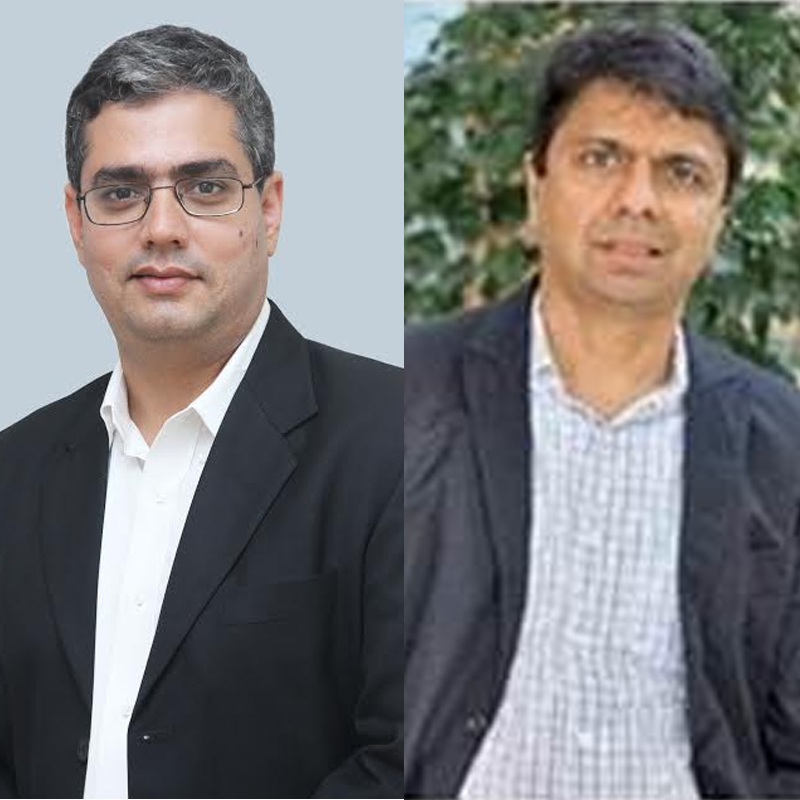
    MUMBAI: Jai Lala has joined for the newly created position of chief operating officer (COO) at Zenith and will oversee operations, structure and expansion in addition to the scaling up of specialised, future-facing offerings for the agency. The focus will be on areas where Zenith is already market-leading such as data, dynamic content, tech, analytics, performance and programmatic.

    In addition, Zenith has elevated its managing partner and head, West & South Ajit Gurnani to the newly created role of chief client officer. He has already had a great role in firming up client relationships for Zenith and will continue to interface with key clients, bringing in new and critical perspective on businesses and enhancing Zenith’s overall strategic product and delivery.

    Jai Lala has over two decades of experience across media planning, buying, research & sales. He is has worked in organizations such as UTV, ESPN Star Sports and leading media agency groups. His last stint was with MediaCom as chief strategy & growth officer. He has serviced clients across the country such as Unilever, PepsiCo, GSK, ICICI, Castrol, Lenovo, USL, Coke, Marico and many more in various capacities. He has created multiple & unique trading practices in the industry.  Jai is also a visiting faculty at ISB & MICA.

    Elaborating on the appointments, Zenith India group CEO Tanmay Mohanty said, “ Zenith stands at an important growth juncture; we have witnessed an absolutely spectacular year so far in terms of new business wins and performance on key client businesses. In our endeavour to build further on our ROI+ offering, delivering transformational growth to our clients, we are announcing two big appointments at senior levels. Jai Lala needs no introduction and has over 20 years’ experience in media planning and buying. He will aid me in client deliveries,  keeping up the scale and momentum of operations,  integration of existing talent and new hires and the expansion in the overall footprint for Zenith. Ajit, on the other hand, has been with us for over three years and brings in huge expertise and value to every client conversation. He has transformed the way we deliver to clients and will shape our client relationships further. Both these appointments will help Zenith put out passionate, exciting and compelling work.”

    Jai Lala said, “I am delighted at this opportunity. Zenith has market-leading expertise in data, technology and innovation. Offering a strong, long-term consultative approach to clients, Zenith is already working on what lies at the corner tomorrow; whether it is automation, machine learning or artificial intelligence. Its pedigreed A-list clients, outstanding work and motivated teams make me excited about the possibilities.”

    Ajit Gurnani says, “ Zenith with its ROI push and accent on business deliverables, truly leverages the power of integrated communications and media-neutral solutions.  As part of my role, I will look to cement and enhance Zenith’s existing client relationships in addition to forming new connections.  I look forward to driving results, and creating award-winning, business -building work.”

    Ajit Gurnani has 20 plus years of work experience across client leadership, brand management and media investment management.  He has worked as a brand and media custodian at Marico and IIFCO, and has driven media investment management for The Aditya Birla Group and its companies, Mercedes-Benz, NIVEA, Zee TV, Unilever and Colgate Palmolive in previous stints with agencies. At Zenith, he has led the media investment mandate for businesses such as Parle, Toyota, Singapore Airlines, Singapore Tourism Board, HDFC Life among others.

  • HDFC Life hands media mandate to Zenith

    HDFC Life hands media mandate to Zenith

    MUMBAI: Following an extensive pitch involving multiple media agencies, Zenith has won the agency of record (AOR) mandate for HDFC Life. This is for the entire traditional media mandate. The digital duties already lay with Performics.Resultrix.

    Zenith India group CEO Tanmay Mohanty says, “This win is a matter of great pride for us and an extension of our existing, very fruitful digital relationship with HDFC Life. Our teams were able to demonstrate an effective ROI-focused, data-driven approach to media. Zenith’s strong suite of tools, proprietary research and analytics will unlock new consumer connections for HDFC Life and will deliver on seamless, integrated communications.”

    HDFC Life CMO and EVP strategic alliances, bancassurance and specialty sales Pankaj Gupta adds, “We are happy to associate with Zenith and believe that it would be an exciting partnership, since Zenith’s view on the brand mirrors that of ours. Zenith exhibited fresh thinking and insights on the life insurance category during the pitch. Hope that through its forward-thinking and disruptive approach, Zenith would help us stay ahead of the curve in a dynamic media environment; thereby, deepening our market presence and highlighting our customer-centric value proposition.”

    HDFC Standard Life Insurance company is a joint venture between HDFC Ltd, one of India’s leading housing finance institutions and Standard Life Aberdeen, a global investment company. HDFC Life is a leading long-term life insurance solutions provider in India, offering a range of individual and group insurance solutions that meet various customer needs such as Protection, Pension, Savings, Investment and Health.

  • Zenith report says online video viewing to cross 1 hour a day

    Zenith report says online video viewing to cross 1 hour a day

    MUMBAI: Consumers across the globe are becoming increasingly engaged with online videos. Zenith’s Online Video Forecasts 2018 reveals global consumers will spend watching online videos more than one hour on average this year. From 2017’s 56 minutes, the average will go up to 67 minutes.

    In addition to that, the report also predicts this time span will go up to 84 minutes in the next two years. Viewers from China, Russia and the UK are expected to watch the most online video at 105, 102 and 101 minutes per day respectively.

    “It [online video] accounts for almost all the growth in total internet use, and is growing faster than media consumption overall, so it is taking consumption time from traditional media,” the report says.

    Still now, ad spends for online video is very less compared to traditional media. The report predicts that by 2020, online video adspend will reach 23 per cent of the size of television adspend. In 2015, online video ad market was 10 per cent of the size of the TV ad market.

    “The rapid rise in video viewing makes online video the world fastest-growing advertising format, creating new strategic and creative opportunities. Brands that do not currently have a strategy for online video need to think about getting one,” Zenith’s global intelligence director Jonathan Barnard said.

  • Mobile internet consumption to hit 28% of media use by 2020: Zenith Report

    Mobile internet consumption to hit 28% of media use by 2020: Zenith Report

    MUMBAI: The spread of mobile devices and rapid mobile data networks has transformed global media consumption in recent years. A recent report by Zenith Media Consumption Forecasts 2018, reveals that 24 per cent of all media consumption across the world will be mobile this year, up from just five per cent in 2011. The report highlights that by 2020 internet usage will reach 28 per cent, taking share from almost all other media.

    The rise of mobile is also forcing brands to transform the way they plan their communications across media, focusing less on channels and more on consumer mind-set as the distinctions between channels are eroded.

    The report surveys changing patterns of media consumption since 2011 and forecasts how the amount of time people allocate to different media will change between 2018 and 2020, in 63 countries across the world.

    Mobile internet use has eroded the consumption of almost all other media. Newspapers and magazines have lost the most, as between 2011 and 2018 time spent reading them has fallen by 45 per cent for newspapers and 56 per cent for magazines. However, this refers only to time spent reading printed publications. Time spent reading newspapers and magazines online is included in the internet total, and for many publications the time they have gained online more than makes up for the time they have lost from print.

    Zenith’s head of forecasting and director of global intelligence Jonathan Barnard says, “Under traditional definitions, all other media are losing out to the mobile internet. But the truth is that the distinctions between media are becoming less important, and mobile technology offers publishers and brands more opportunities to reach consumers than ever.”

    Television and radio have also lost out, though not on the same scale. The time spent watching television shrank by three per cent between 2011 and 2018, while time spent listening to radio shrank by eight per cent. Again, television channels and radio stations have gained audiences online at the same time as they have lost them offline, but they have faced stiff competition from native digital platforms such as YouTube and Spotify.

    The rise of mobile has blurred the boundaries between different channels: it can be used for entertainment, news, information, research, socialising and communication. For brands it can play the role of building awareness, creating direct responses, allowing one-to-one communication, or generating earned content, depending on how the consumer is using the device, and in particular their mind-set while using it.

    A consumer who is actively searching for a specific information is in a very different mind-set from one who is sharing holiday photos with friends, or leaning back and enjoying a video. Brands need to understand the signals a consumer’s activity provides about their mind-set, and therefore what forms of communication are appropriate.

    Focusing on mind-set also dissolves the distinction between traditional and digital media: it’s more important that a consumer is reading news, than whether they are doing so using a printed newspaper or newspaper websites. People who are watching video content on television sets, laptops or smartphones have much in common, though people watching long-form entertainment can have quite different mind-sets from people scrolling short-form content on social media. Brands need to decide the role each platform plays in their communications strategies, however the consumer happens to access it.

    The rapid expansion of mobile internet use has increased the amount of time the average individual spends consuming media, by giving people access to essentially unlimited content almost everywhere, and at any time of the day. The report estimates that the average person will spend 479 minutes a day consuming media this year, 12 per cent more than in 2011 and will reach 492 minutes a day in 2020.

    Time spent at the cinema actually increased three per cent between 2011 and 2018 as cinema owners have invested in more screens and a better experience for visitors, while studios have marketed their films more effectively at international audiences. On average, though, people spend much less time at the cinema than they do with any other medium.

    Zenith’s global brand president Vittorio Bonori mentions, “Mobile technology is challenging brands to rethink how they communicate with consumers. Brands need to understand both the consumer’s mind-set and where they sit on the consumer journey, to determine how to communicate with them. By using data, ad tech and now artificial intelligence, brands can co-ordinate their communications across media and mind-sets to move them along the consumer journey most effectively.”