Tag: Zenga TV

  • What Indian OTT players can learn from the US market

    What Indian OTT players can learn from the US market

    India’s consumers are just about beginning to experiment with video on demand content delivered over the internet. And a flood of OTT platforms and content creators has suddenly flowed onto the digital highway. Whether it is YouTube or Hotstar or DittoTV or Zenga TV or Hooq or Voot or Arre or nexGTv they have taken their first few steps to understand what consumers want, how they want to consume their content, and how much are they are willing to transact to view that content. 


    More evolved OTT markets like the US have already got a headstart and have got immense learning thanks to the availability of fat pipes of bandwidth making OTT almost ubiquitous. Can Indian OTT players learn from those experiences? Some tend to disagree, because the Indian consumer is unique and as different from the American subscriber as chalk is rom cheese. 


    But nonetheless for those who want to still find out how the US OTT market is performing and have not managed to get their hands on this study we are encapsulating it for you. Clearleap is a company that works with the likes of HBO, Scripps, and A+E Networks to deliver viewing experiences across screens. It has conducted a survey to learn more about which streaming services US consumers use, what their viewing habits are, and what they value most in an OTT offering. The results offer a look at how average users perceive streaming services, and how they engage with them.


    The Key Takeaways from the report are:


    Going OTT isn’t an option anymore – it’s a mandate. To stay relevant, reach audiences and grow revenue, content providers need to not only provide a streaming option to consumers, but also address the unique behaviours of today’s younger television viewers. In order to be successful in today’s television market, prospective OTT providers should follow the best practices below:


    (a) Ensure a good value. Consumers are willing to pay slightly more (up to $25 per month) if the service has the content they want. Balancing great content and a fair price is the key to attracting viewers and minimising churn.


    (b) Make it easy to browse, discover new content, and channel surf. While younger viewers may be more knowledgeable about what they want to watch after they log in, older viewers may not be as familiar with the content available on each service. Improve your user experience by including simple features that encourage discoverability and surface relevant content proactively.


    (c) Optimise for screens of all sizes, as tablet and smartphone viewing is significant. Mobile video will only grow in popularity. Get ahead of your viewers’ evolving habits by optimising your service for all screens at launch, and offering apps on key devices such as streaming boxes, mobile phones, and gaming consoles.


    (d) Offer tiered pricing solutions to match login-sharing habits. Especially since younger streaming service users are prone to sharing, new services should offer tiered subscription packages that prompt users to pay slightly more to watch content on multiple devices at the same time.


    (e) Consider the gaps in the market. While movies and TV series are widely available on Netflix, Amazon, and Hulu, live television is missing from the streaming market. Many current streaming service users wanted broadcast channels (41.26 per cent) in their ideal offering, with sports (28.15 per cent), local (20.28 per cent), and news (15.91 per cent) also highly rated by respondents. Content owners should capitalise on the white space by investing in live content that isn’t already easily accessible online.


    To Read the full report, click here

  • OTT, video apps can work progressively with cable & satellite platforms

    OTT, video apps can work progressively with cable & satellite platforms

    MUMBAI: The market for Over The Top (OTT) services has been rapidly growing in the United States. However, can the same model be adopted for the Indian market? That was the key question asked at a discussion at FICCI Frames 2015 on the topic – ‘Clash of the Walled Gardens: OTT and Video apps versus cable and satellite.’


    Joining the panel were Zenga TV founder and CEO Shabbir Momin, DGive director and CEO GD Singh, IndiaCast group COO Gaurav Gandhi, Videocon d2h CEO Anil Khera, Eros Digital COO Karan Bedi, Hungama.com CEO and Hungama Digital COO Siddhartha Roy and Hinduja Ventures whole time director Ashok Mansukhani. The session was moderated by Whats ON chief executive officer Atul Phadnis.


    Sharing some insights from the US market, Gracenote general manager – video Richard Cusick said that according to a study conducted by the company, nearly 50 per cent of the US broadband households used OTT video services. Young viewers were particularly driving the change as 18 to 24 year olds watched less than half as much traditional TV as 50 to 64 year olds. “Netflix for example has 57 million subscribers worldwide and is a top OTT service provider,” he said.


    Cusick said the study increasingly found that networks and studios were resorting to unbundling to single channels as well as live TV bundles. “In such a scenario, consumers benefit the most as great content is served to them,” he said.


    The question posed to panelists was whether the US implications were similar to that of India and if cable and DTH operators were changing the landscape? Gandhi felt that the implications were not similar to the Indian market because channel specific models like HBO were not available in India. “As a content broadcaster or distributor, the US markets are very clear that they will follow a proper pay model. Here it is still very disruptive,” he opined.


    Moving to the experience of launching an OTT in India, DGive’s Singh said that while they still struggled to generate the right revenues, they did in fact receive 25 million downloads. He said when his company approached someone from the US for guidance for the company’s growth charter in India, the executive told him, “If you’re buying content, you cannot give it for free to audiences.” That was a major learning from the US market.


    On the content front, Singh said that currently the company had 30 per cent of its content set under the pay wall, which was premium content. “We sell our service for $1 per month per subscriber. We have a million users paying us since we are screen, operator and consumer agnostic. We are looking at breaking even in the next seven to 10 months.”


    Sharing his experience, Momin said that Zenga TV had started in 2009 and he was happy with the response from users. “What was surprising in the initial stages was that we saw response patterns coming in from Tier II cities. We now have 20 to 22 million active users per month and have been profitable for the last three years,” he informed. The company also launched a show called India’s Digital Super Star on its platform, which sold sponsorship slots.


    Bedi opined that Eros Digital had 14 million active users, wherein the company followed a transactional as well free model that catered to Indian audiences as well as NRIs. “Some key points for our industry is that we will take a leap; a steroid growth will be seen. Two, revenue models like ad dependent, subscription based, free as well as paid will have to work in tandem,” he said.


    The true value of the customer in the coming years will move towards mobile screen consumption, informed Roy.


    Speaking from the perspective of a direct to home (DTH) operator, Khera was of the opinion that while OTT players may have a million plus subscribers, the content from OTT was for second screen consumption. Technology like 4K is only for television. On a lighter note, he added, “India gets entertained heads up and not heads down.”


    Mansukhani too had a similar opinion. According to him, being an old cable company didn’t mean being out of date. He said that they too provided pay channels on a pre-paid model. “Most Indian homes today use multiple screens. It doesn’t matter who wins. There is space for all as content is being consumed via tablets, mobiles as well as television.”


    Mansukhani went on to compliment Star India’s Hotstar app saying that it was a fantastic proposition.


    “As a businessman, I am interested in exploring various opportunities but I’m worried about providing free content as high content cost is not justified in providing the content without a price tag. I am against giving free content on OTT,” Khera opined. He also hinted at Videocon d2h entering the OTT space but refused to give any details.


    Speaking on the challenges of the OTT space, Roy said that for them to benefit from the digital advertising pie, the pie itself should grow in order for profits to trickle in.


    The notion that OTT platforms are for free should be broken. “OTT is about the bundle and there is no choice if one has to pay or not. Cable companies are our allies as they provide us pipes for distribution,” Bedi said.


    Having the last word, Mansukhani said that all stakeholders should come together and ask customers on the kind of content and pricing for platforms. The profits could then be shared, he suggested.


    In conclusion, the panelists agreed that the three key challenges were cash flow, content windowing and specific business models.

  • FremantleMedia launches India’s first ‘Digital Talent Hunt’

    FremantleMedia launches India’s first ‘Digital Talent Hunt’

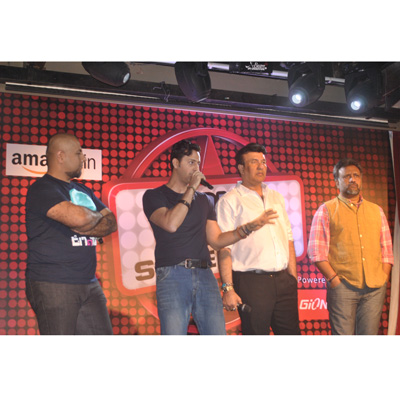
    MUMBAI: FremantleMedia has partnered with mobile video streaming service Zenga TV and YouTube MCN of India, OneDigital Entertainment to launch its first digital talent show ‘India’s Digital Superstars.’


    This will a first of its kind digital talent hunt, where the audience will judge the next ‘Big Digital Star.’ The show will be presented by Amazon.in, powered by Gionee in association with radio partner RedFM.


    The auditions for the show, which began from 19 January, will culminate with a finale in May. The winner will be given a contract worth Rs 20 lakh from FremantleMedia and One Digital. The auditions are open to all Indians across the world.


    Auditions will span across 13 weeks. The 14th week is the grand finale to be held in Mumbai. The Indiasdigitalsuperstar.com platform will encourage participants to upload multiple videos of the talent that they wish to showcase, and will be judged by the audience through the number of views and likes across Youtube, ZengaTV and Facebook.


    Fresh videos can be uploaded until a week before the ‘Finale Night’. The host will come online thrice a week – Mondays, Wednesdays and Fridays for 10 continuous weeks starting from the fifth week of audition.


    FremantleMedia India managing director Anupama Mandloi said, “After the super success of Indian Idol, India’s got Talent, we at Fremantle are delighted to launch a platform that will be accessible to everyone with internet access. Given that India is a priority market for FremantleMedia and a popular destination for many of our hit international brands, we want to continue driving our strategy of aggregating talent across media with India’s Digital Superstars. We have been instrumental in sourcing, discovering and unleashing talent across television and this is the obvious next step for us to take the talent hunt to the internet which is a world unto itself.”


    Amazon.in director integrated marketing Manish Kalra added, “The digital medium democratises opportunities and choices and enables easy access to them for everyone like no other medium. We are very excited to be part of India’s Digital Superstar and support this effort to celebrate the immense talent that is waiting to be discovered.”


    “The youth today is hungry for exciting and engaging content and ‘India’s Digital Superstar’ is an opportunity where every moment will count and adrenal will be on the high. This gives everyone a chance to showcase talent from anywhere in the world and be the next start in this world which has no boundaries,” informed ZengaTV & OneDigital MD & CTO Shabir Momin.


    “Digital as a a platform is connected to the youth of this country. IDS as a digital platform is the first in the country, which creates the opportunity for the youth to showcase the talent and get recognized. We at Gionee are proud to be associated with IDS as this allows the youth to follow their passions and this has got a great synergy with our brand as we also want our consumers to follow the passions and we help them as an enabler for it,” added Gionee Smartphones India head Arvind R Vohra.


    “With the unique format of the show specially created for the digital platform, India’s Digital Superstar will create opportunities for Indians globally to showcase their talent without having to stand in queues or reach specific locations at specific time. Moreover the show is not about highlighting only a couple of contestants but we want to showcase as many talented Indian creators, and that is why the call for entries never stops during the show. As long as the show is on, people can participate and stand a chance to win,” concluded One Digital Entertainment COO and co-founder Gurpreet Singh.


  • Zenga TV has high growth ambitions in the mobile TV segment

    Zenga TV has high growth ambitions in the mobile TV segment

    Everybody yearns for a big-bang entry when they start off their career. The same can be said about Zenga TV which decided to take the path one would rarely tread upon.

    At a time when most of the mobile TV platforms were approaching mobile operators to be carried, Zenga TV offered the first free 'live TV' service in the country. People scoffed and laughed but two years after a debut with IPL 2009, serving seven million viewers in over 140 countries, the company has turned profitable. Now, after adding more than 150 channels and 18,000 movies to its kitty, the platform will soon be venturing into delivering original content in 52 genres.

    Shabir Momin, who made Zenga TV from scratch, will look for investors in some years to scale up the free mobile TV platform's ambitions

    Out of these, production in four genres namely fashion, styling, comedy, fashion and cooking will be done by Zenga, itself while the rest will be aggregated from all over the world such as music, gaming, extreme sports, travel and other fashion. "These four genres need localisation," says Zenga TV founder, MD and CTO Shabir Momin.

    A technologist all his life, Momin and his friend Vikramjiet Ray invested about six to seven million dollars into this venture which started reaping profits within two years. Industry sources put it at anywhere between Rs 2-3 crore per annum.

    Starting off at a time when the minimum bandwidth was 20-25 kbps in India as compared to 78 kbps in other parts of the world, they developed a code to provide live streaming at 2.5G and at this low bandwidth. Even though 3G is being promoted, only 10 percent of Zenga TV's users are 3G users. The arrival of 4G will only enhance the picture quality, according to Momin.

    Zenga TV has a long list of Indian channels as well as 30 international ones which are genre specific. However, 70 per cent of the traffic comes from movies while 30 per cent from channels out of which Aaj Tak, Pogo, 9xm are some of the popular ones. Animated content being in the top ten has surprised even those at Zenga TV. Some of the other channels it streams live are NDTV Profit, Raj News Kannada, Focus TV, Big Magic, 9XM, Sahara filmy.

    One of the news channels on the portal which wished to remain unnamed said that two years ago when they got into a deal with Zenga TV it helped it because it targeted non-smartphone users, even though it had an application of its own. However, its expectations from the association has been only 'just met' and in order to have more control from its side it is looking at revaluating the contract and seek more opportunities outside of Zenga TV.

    "Zenga TV is not very viable because broadcasters do not want to lose big money from their DTH and cable operators who may object to live streaming for free on the internet at the same time making money on advertising," says media consultant Sanjeev Hiremath. This could be why Star, Zee, Sony etc are not part of the bouquet but are available on its competitors Ditto TV and Apalya. Demand for these channels is there; according to Momin, but since there is no ROI for it and so he opted to not negotiate with them. To date a 50:50 revenue share is maintained with all its channels. Market estimates varied from approximately Rs 25,000 to Rs 7-8 lakh per channel. 

    "I would rather give you exciting and intriguing content which is cost effective for me as well," states Momin.

    Speaking in terms of demographics, 45 per cent of viewership comes from rural India while 35 per cent comes from urban cities, Delhi and Mumbai being the larger chunk of it; the rest from tier II cities. Local retailers propose a data plan to customers which will let them watch free TV on mobile. This benefits the customers as a lot of times electricity isn't available to watch TV and the plan is approximately Rs 200 a month. It also means customers coming back to them every month.

    Abhishek Joshi joined the team a few months ago to spearhead the project from Mumbai The time when most traffic is on it is from 11:00 am to 2:00 pm. The average time span is 10 minutes per view and six to eight views per month each amounting to 250 million views per month. And is a male dominated area wherein 70 per cent viewers are men. The target group is 13 to 65 years but a majority of the viewers are the young audience between 18 to 35 years. About 85 per cent of viewers are from India while UK, US and UAE keep juggling in the top three spot from the international countries.

    It has an automatic system that adds servers to tackle unexpected increase in traffic, when it isn't manned and when traffic goes down, it automatically kills the servers. From two, the team now consists of 55 to 60 people in Delhi and Mumbai with an attrition rate of just 0.5 per cent most of the team being freshers who are brimming with ideas. Momin who was formerly the CEO, gave way to Abhishek Joshi to be the CEO in July 2012, marking the beginning of the Mumbai office. Bangalore and Kolkata are the next expansion destinations.

    At inception it was available on Windows, Android and iOS while Symbian 60 was added recently. Anybody with a browser could view. Everything is cloud based with seven Amazon servers across the world. It was only in 2012 that the app was created. Momin maintains that an app will not be made for Blackberry phones. It has over 10,000 fans on its Facebook page.

    Zenga TV works purely on advertising with more than 60 brands currently, most of them from India. It got its break when it bagged Pepsi during its telecast of IPL 2009. Cadbury, Red Bull, Aditya Birla, Fiat are some of the other brands it has deals with. Both video and banner ads are present but what is prevalent more is video ads that are either pre roll or mid roll. Industry sources put the CPT for a video ad at Rs 300- 350 and a banner ad at Rs 180-190. The annual revenue would be around Rs 13-14 crore per annum. Just like on television, depending on the customer's brand campaign the ads can be modified such as L-shaped ads or bugs. It can also be targeted based on content, channel and geography. A team of five works on ad sales.

    Media planners seem to be skeptical despite Zenga TV's claims. Ignitee digital media planner Saurav Kumar says that it is a good advertising platform if the client is targeting mobile phone customers. However, he adds that mobile phone commerce is still at a very nascent stage. "There is not much ROI on mobile advertising," points out Kumar. Lodestar Universal vice president Deepak Netram believes that Zenga TV is yet to gain critical mass but as an add-on, it is a great platform available.

    Money spent on mobile advertising is just five to ten per cent of the total as of now and the only way an increase can be seen is when the coverage of 3G increases and the price of 3G subscription decreases. In a mobile TV market of 30 million dollars, Momin claims Zenga TV owns about 60 per cent of it. "If you ask me, mobile TV advertising is the future," says Hiremath.

    Momin stated that he had initially approached mobile operators, which was the custom around 2007 but the business model was hitting a negative end for him so he decided to set up his own brand and connect directly with the users. It could have been a risky stance, but he decided to be his own master than be someone's slave (in this case the operators). "We are the only profitable company in this space. All the others are more than fifty points negative," he claims. "Most of my competitors work for operators," he says. Had Zenga TV decided to go the same way they wouldn't have been able to control price point.

    Apparently, not a single penny goes into marketing Zenga TV and everything was done by word-of-mouth. More than 50 per cent of users tend to come back and Momin attributes it to the fact that they have no system of registration or forcefulness.

    Changes have also come about since then. To increase content discovery, a search bar and index were added. Some football sports are being reviewed but only half of sports content is financially viable for it.

    Consumption patterns have changed from channel specific to genre specific viewership. 

    Predictions are that the current space of mobile TV advertising is about Rs 150 crore and in two years time it is set to multiply to Rs 3,000 crore due to better network. Zenga TV sets itself a target of doubling its viewership, profit and revenue and for the last three years they've surpassed their own predictions.

    As for the future, Momin says he might think of raising investors or IPO someday but he will not give up ownership of the company. "I didn't want to have investors initially because they have their POV and they drive it in a way you may not want to," he says.

    There is a general feeling that digital is the way forward. Zenga TV has achieved some success but still stays relatively unknown. In Momin's words, "Those who don't know Zenga TV don't use Zenga TV."

  • Mobile streaming platform Zenga TV looks to double revenues

    Mobile streaming platform Zenga TV looks to double revenues

    MUMBAI: Zenga Media, the mobile and web streaming company, has set itself an ambitious target of doubling its revenues in the current financial year.

    Zenga Media, which owns the mobile and web streaming platform Zenga TV, is promoted by former Sony TV executive Shabir Momin and Vikramjiet Roy.

    Shabir Momin, the MD and CTO of Zenga TV, says that the company‘s total revenue in the last fiscal was in the region of $2-3 million.

    According to Momin, the company has turned RoI (Return on Investment) positive in the last two fiscals and is paying for its own expenses.

    “The promoters did not have to infuse funds in the company as it is RoI positive,” he adds.

    No equity divestment is planned either, rather the aim is to grow the company before exploring fund raising avenues.

    Zenga TV is an ad-supported mobile and web streaming platform. It claims to have 22-23 million active users every month. Zenga‘s biggest differentiator, according to Momin, is that it is compatible with even feature phones and the technology is in-house.

    The digital streaming platform has content partnerships with the NDTV group, Times Television Network, BAG Network, Reliance Broadcast Network, and Raj TV Network.

    However, the big three television networks Star India, Zee Network, and MSM are missing from the platform. The Viacom18 channels too are no longer available on the platform.

    “While we don‘t have Star, Zee and Sony, we do have a lot international channels in our offering. Over and above that, we also produce content in various genres for our platform,” he avers.

    The absence of these powerful networks from Zenga TV means that the platform‘s entertainment bouquet is a a bit of a non-starter.

    However, Zenga TV has strong news offering with the presence of NDTV, Times Now, CNBC TV18, Aaj Tak and Headlines Today amongst others.

    News is one of the most consumed genres on mobile after entertainment and movies, says Momin. After news, the sports genre has a lot of traction among mobile TV consumers.

    However, the cost of acquiring sports rights makes it an unviable proposition to monetise, reveals Momin. After flirting with IPL rights in 2009, Zenga gave it up as it discovered it could not recoup its investments.

    “It‘s better to be profitable rather than taking risks with cricket rights,” he asserts.

    Zenga TV generally does 50-50 revenue share deals with broadcasters which means that its content costs is zilch. However, monetising content through advertisement is still not that easy a task.

    Reason: The ad spends on mobile are still very low compared to the kind of reach that it delivers. However, Momin is optimistic. His optimism stems from the predictions that mobile ad spends are expected to grow to Rs 3 billion by 2015 up from the current Rs 1.5 billion.

    Zenga TV plans to play the volume game by being a free content platform. Going pay is not a good option as one has to be at the mercy of telecom operators, who dictate terms to platform owners on revenue share, points out Momin.